





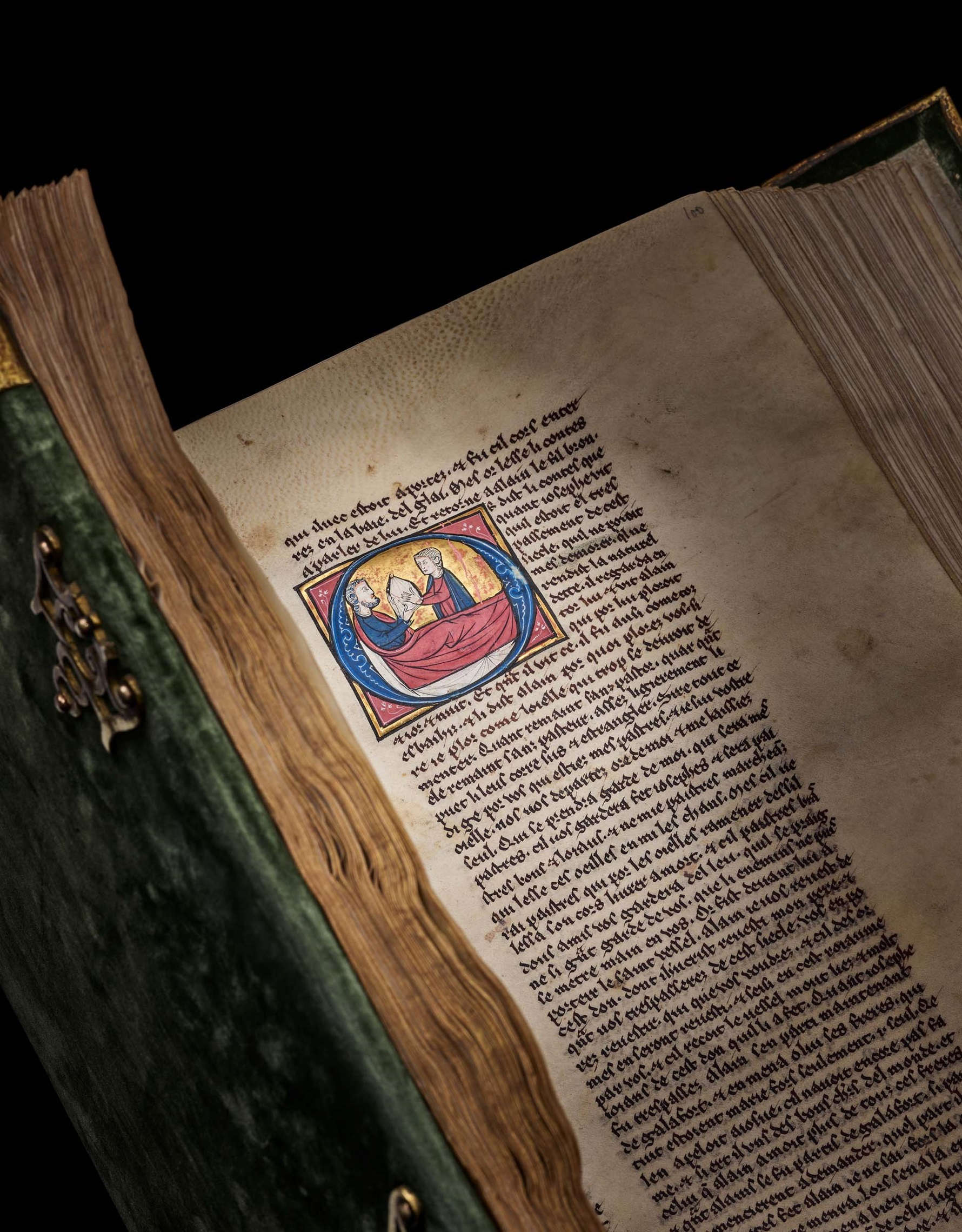
A monumental illuminated manuscript dating back more than seven centuries, which preserves some of the most famous legends of the Arthurian cycle, is set to return to the spotlight. On July 8, 2026, Christie’s will present it in Londonat an auction dedicated to rare books and manuscripts, offering the public and collectors the opportunity to admire one of the most important artifacts of the medieval tradition associated with King Arthur, the Holy Grail, and the figure of Merlin. The estimate is 1.2–1.5 million pounds (1.4–1.73 million euros). Known as the Grail of Clermont-Tonnerre, the volume dates from approximately 1290–1310 and takes its name from the French aristocratic family that owned it in modern times. Its imposing dimensions are reminiscent of those of a church Bible. The wooden covers are lined with dark green velvet, embellished with ornate brass corner pieces and sturdy metal clasps that once allowed the volume to be sealed like a precious casket. The spine bears the title “Roman de Artus,” an indication that immediately draws the reader into the narrative world of the Arthurian legends.
The manuscript is written in Old French and comprises three independent yet closely interconnected narratives. Together, they form the opening section of a vast literary cycle that, in the centuries that followed, would fuel the European imagination surrounding the Round Table, Lancelot, Guinevere, and the fall of the kingdom of Camelot.
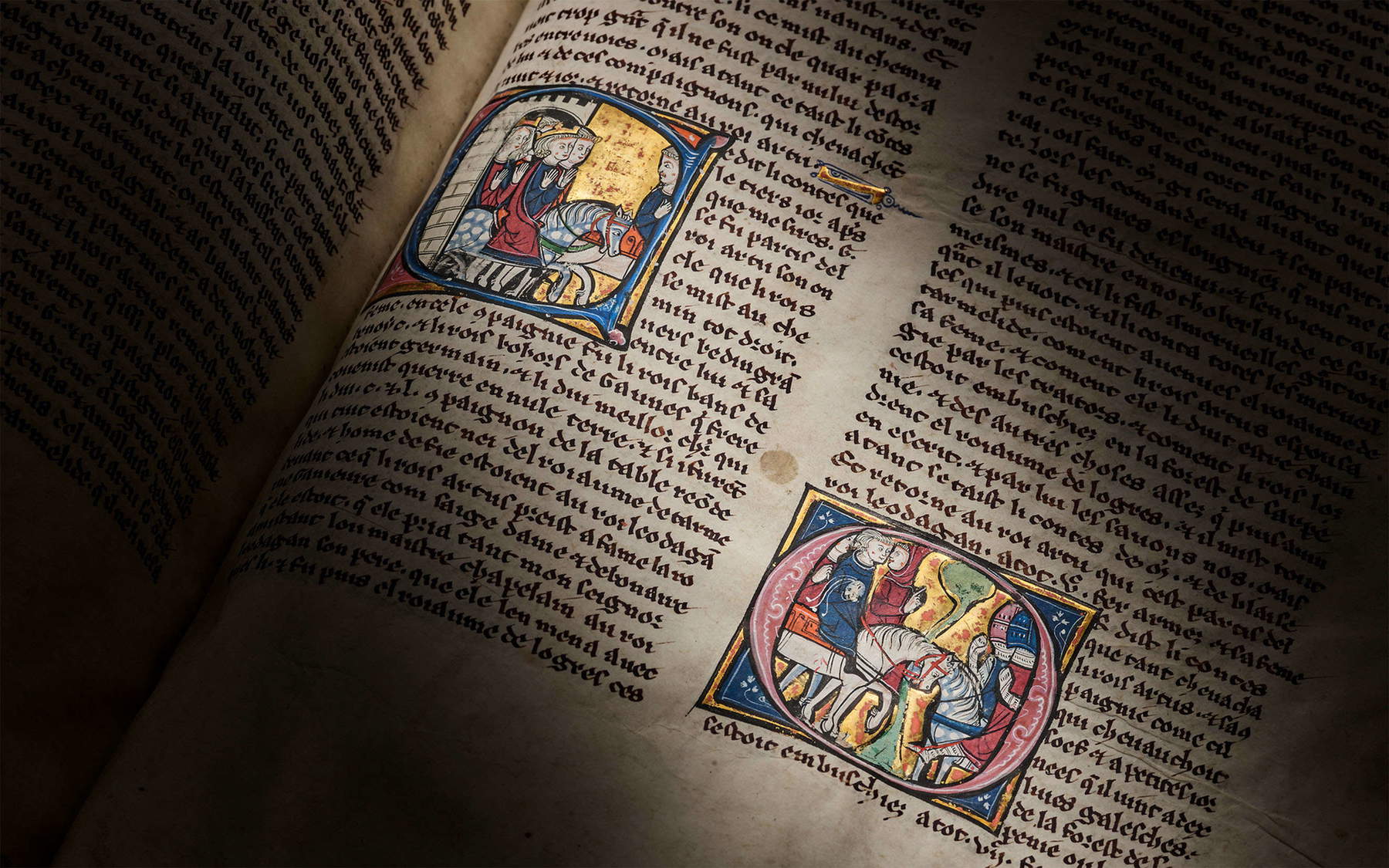
The first part, known as “Joseph of Arimathea” or “The Story of the Holy Grail,” tells the story of the Holy Grail, its origin, and its journey to Britain. The second section, “L’Estoire de Merlin,” is dedicated to the life of the famous wizard and advisor to Uther Pendragon, father of King Arthur. The third section, known as “Suite Vulgate,” continues the narrative, tracing the early years of the Arthurian reign, marked by wars, conflicts, and the consolidation of power.
These works belong to a literary tradition that enjoyed extraordinary popularity in medieval France. The Arthurian tales were true bestsellers of the era, read and copied in numerous versions and passed down for centuries. The popularity of these stories continued well beyond the Middle Ages, so much so that in the 17th century, the manuscript was given the sumptuous binding that still characterizes it today, created for Charles-Henri de Clermont-Tonnerre.
One of the most significant aspects of the manuscript concerns its literary authorship. The first two works are in fact derived from the prose tales attributed to Robert de Boron, an author originally from eastern France who was active in the early 13th century. Robert claimed that his narrative was a translation from a Latin text dictated directly by Christ to an anonymous hermit. This claim was intended to confer a special religious and historical authority on the story, presenting the tale of the Grail not as a legend but as a narrative grounded in truth.
The third section of the manuscript, however, is attributed to an anonymous author, likely connected to the narrative project conceived by Robert de Boron or tasked with completing his vision. All three texts exhibit linguistic characteristics attributable to the Lorraine dialect, a detail that reinforces the connection to the cultural milieu in which Robert worked.
The element that more than any other ensured the success of these works, however, is the reinterpretation of the Holy Grail. Before Robert de Boron, the nature of the Grail was in fact rather ambiguous. In earlier tales, such as those by Chrétien de Troyes, the object lacked a precise religious identity. It could be described as a plate, a tray, or even a piece of jewelry, without any particular sacred connotation. Robert de Boron, however, completely revolutionized this tradition. He was the first author to identify the Grail with the chalice used by Christ during the Last Supper. Not only that: in his version, Joseph of Arimathea receives the vessel from Pontius Pilate and uses it to collect a few drops of Jesus’ blood after the crucifixion.
This narrative insight transformed a relatively insignificant object into one of the most powerful and symbolic relics in the Western imagination. From that moment on, the Grail became the focus of countless tales, influencing medieval and modern literature, cinema, and popular culture. From the cinematic adventures of Indiana Jones to contemporary interpretations of the Grail mystery, and even the works of writers such as T.H. White, many modern depictions derive directly from the vision developed by Robert de Boron.
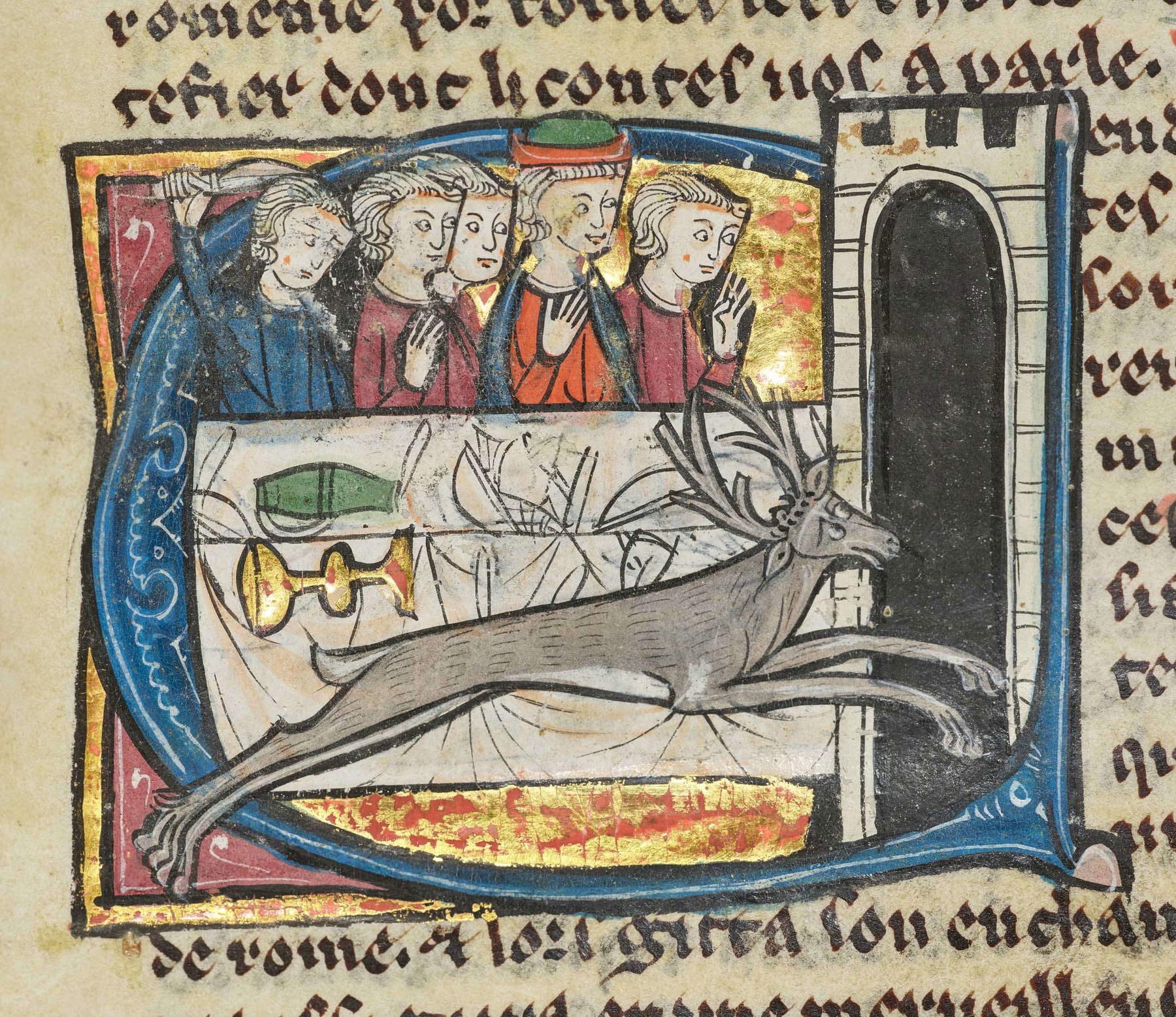
Curiously, although the text clearly identifies the Grail as a chalice, the artists who decorated the manuscript seem to have had some difficulty depicting it. In the miniatures, the Grail often appears more like a monstrance than a cup. Furthermore, it is almost always hidden behind veils that conceal its shape—a choice that could be interpreted as an attempt to emphasize its mysterious and inaccessible nature.
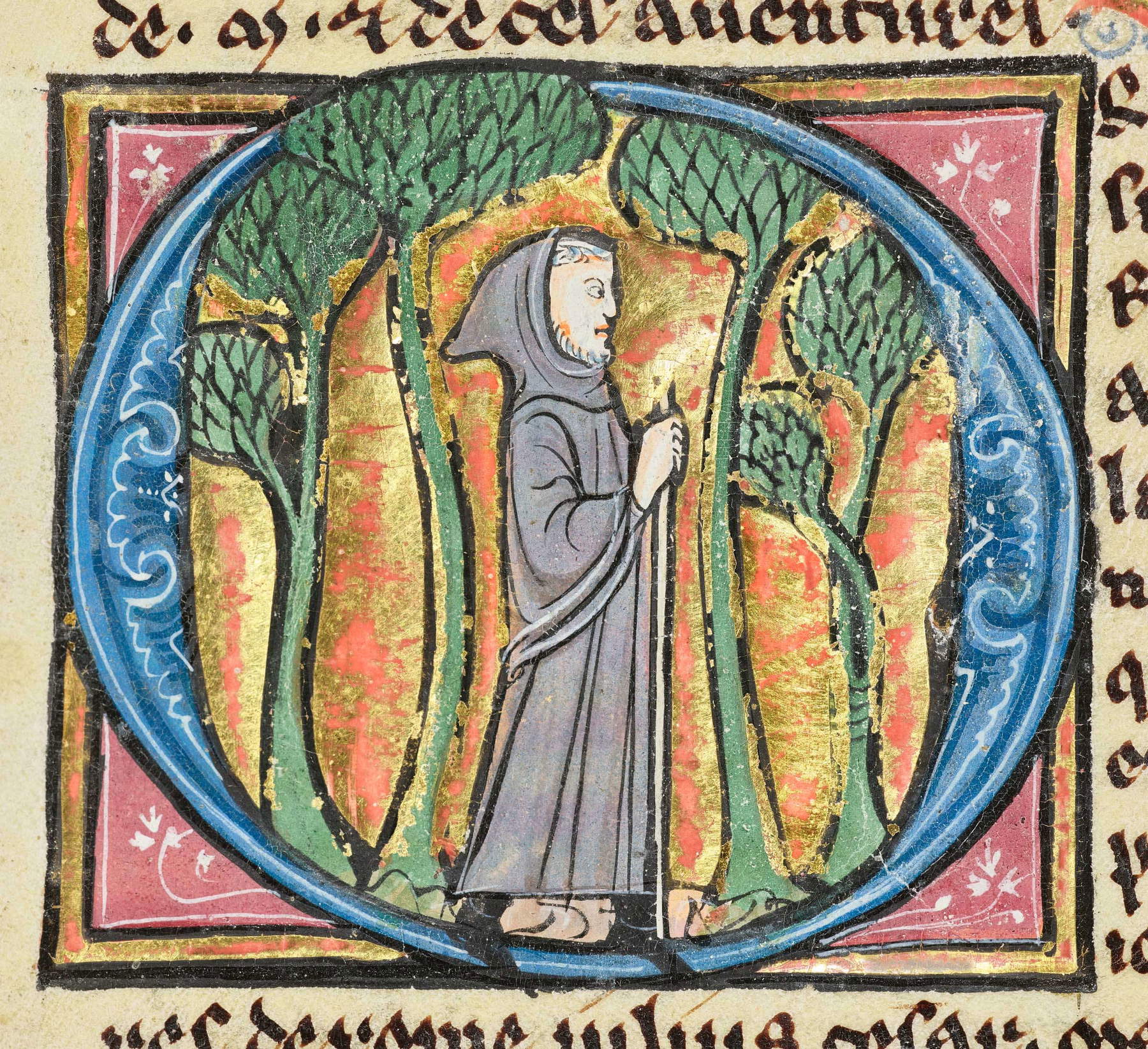
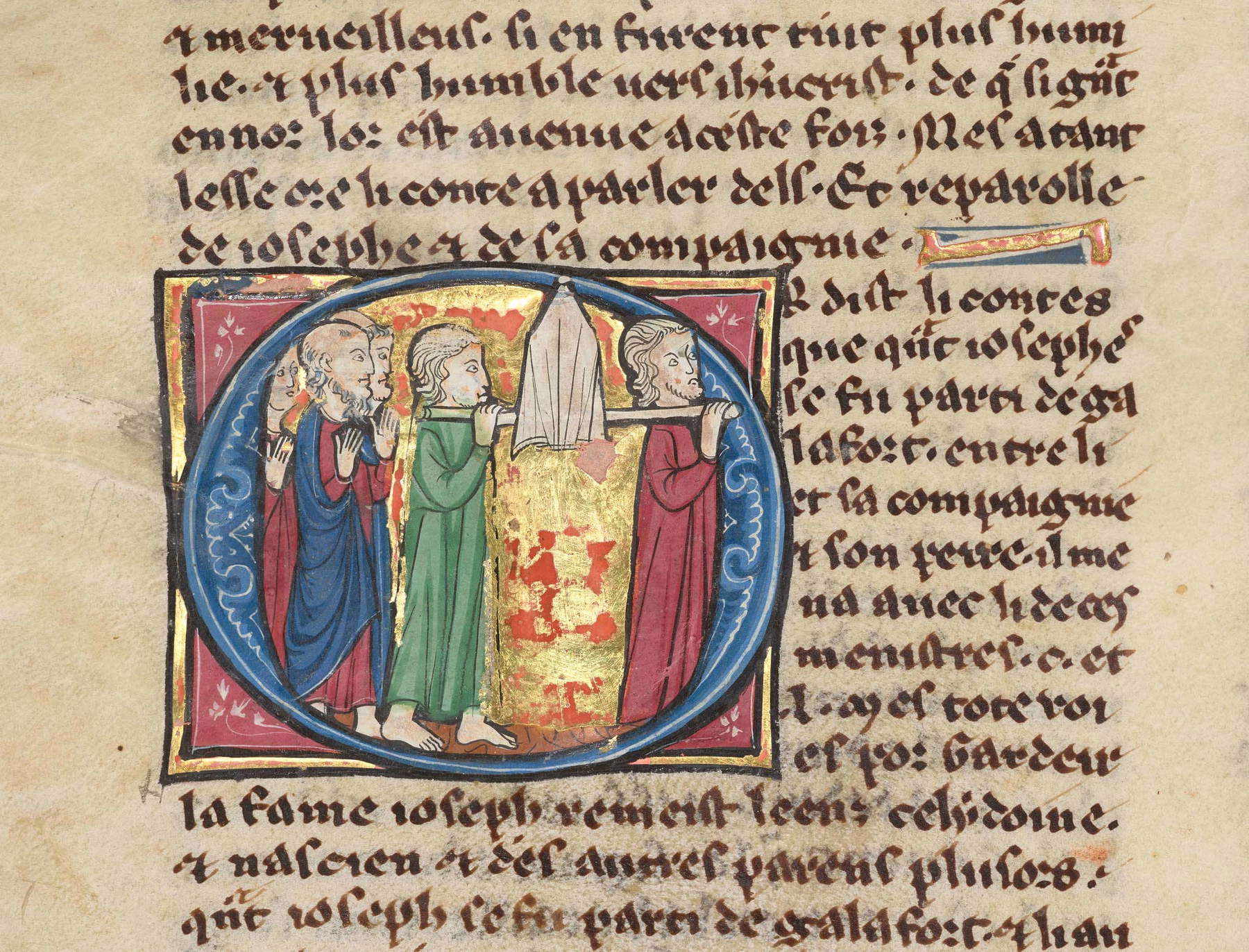
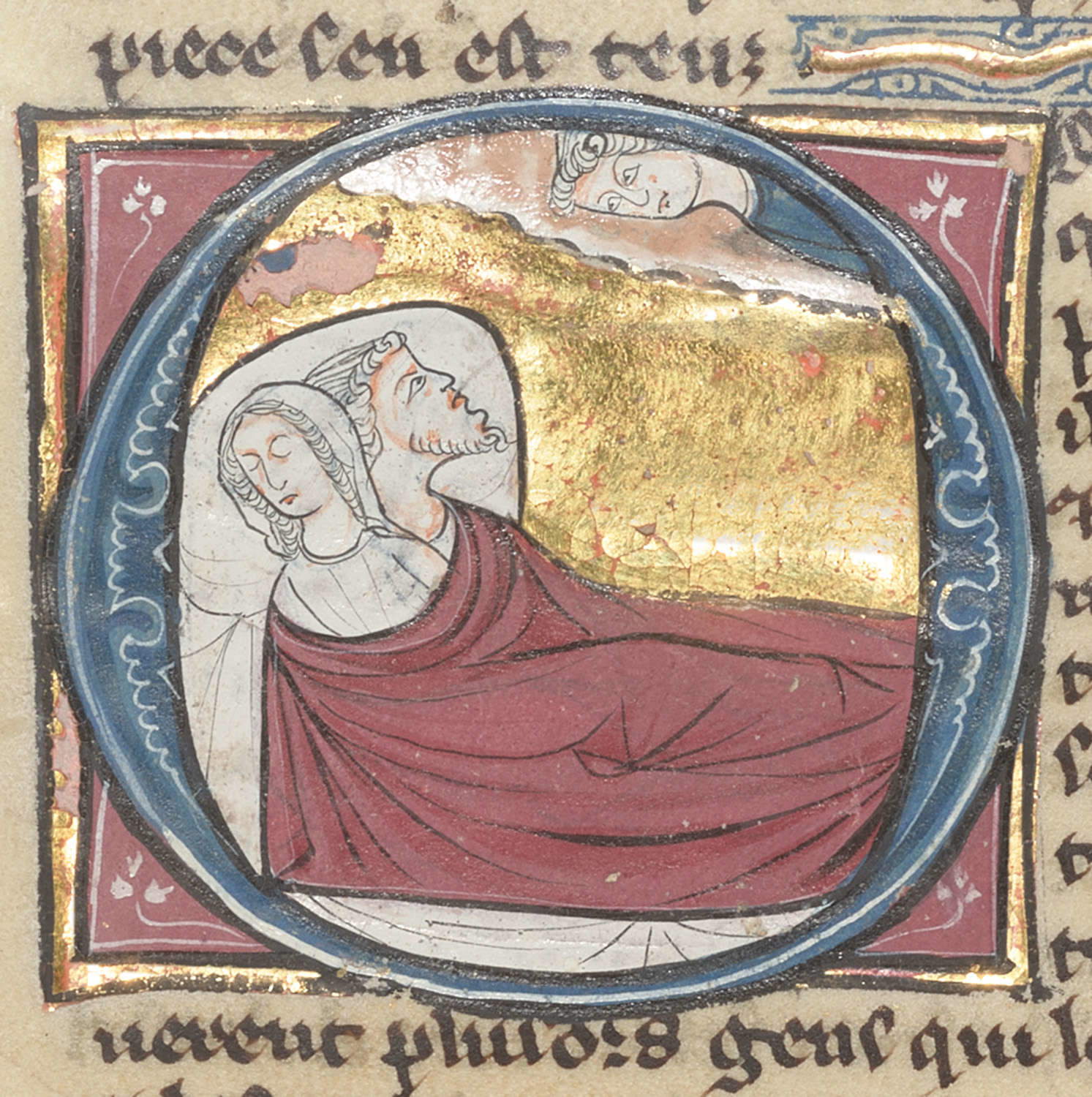
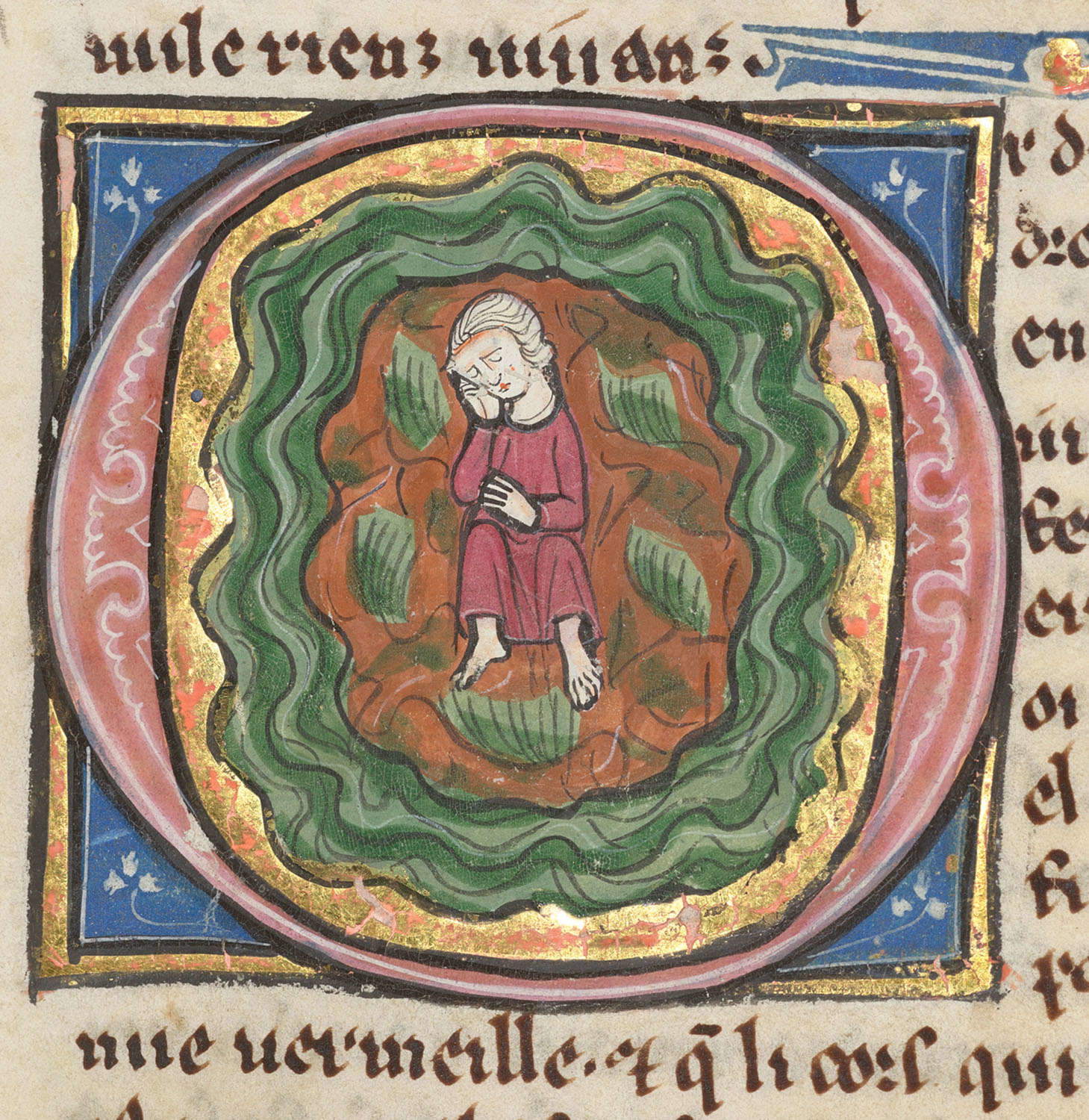
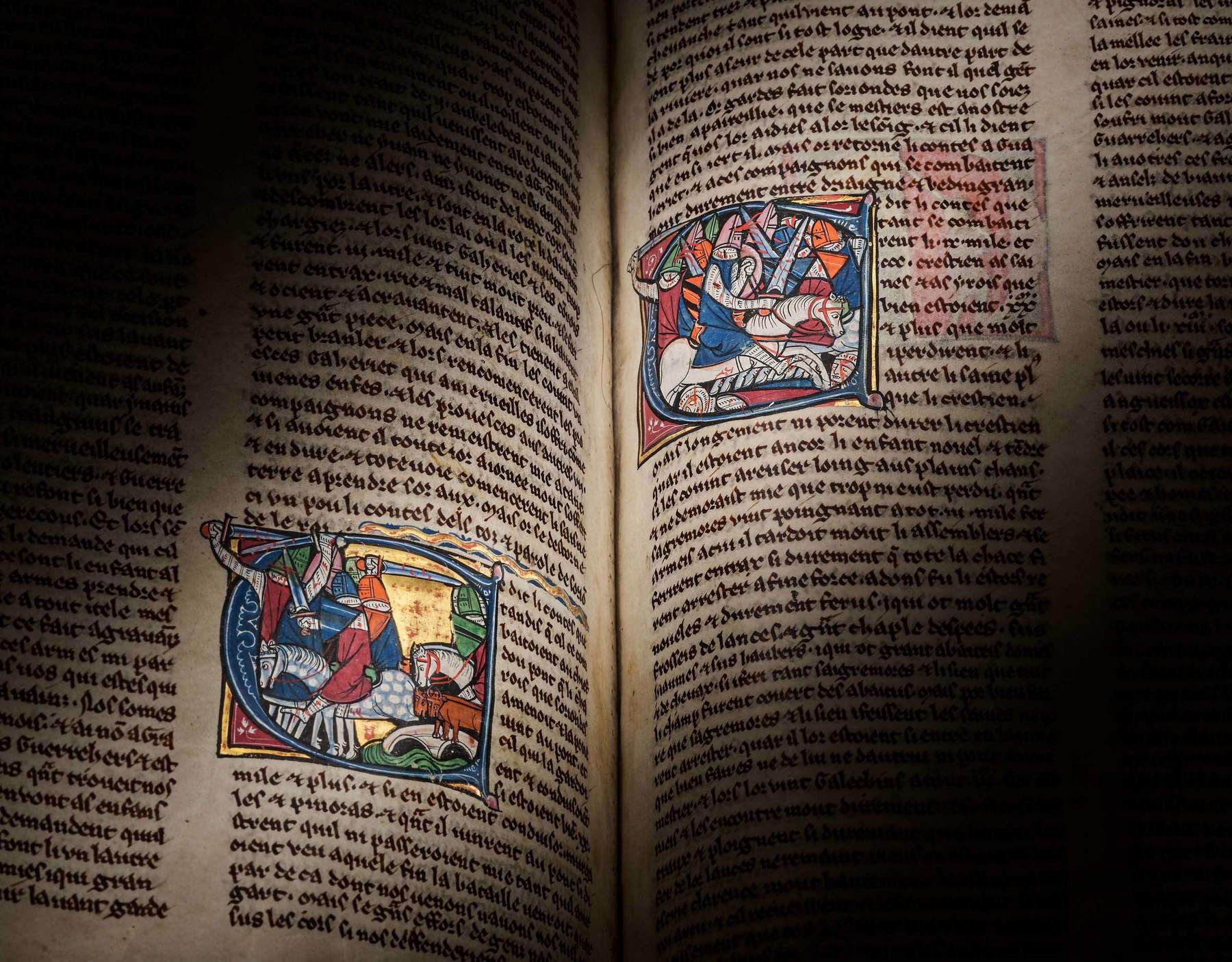
The manuscript also stands out for its extraordinary iconography. Its 241 folios are embellished with 126 historiated initials—true narrative miniatures illustrating episodes from the tale. Created in Metz, where the codex was copied, the decorations are attributed to a group of artists associated with the so-called Master of the Liège Apocalypse. The miniatures constitute a fundamental element of the work: each one depicts a specific scene and offers a valuable insight into the artistic sensibility of the 14th century. In one of the most evocative images, Joseph of Arimathea is depicted receiving a visit in a dream from an angel who invites him to father a son, while his wife sleeps beside him, unaware of the supernatural apparition. Another miniature shows Nascien, an ancestor of Galahad, asleep on a magical island capable of spinning on its own axis. The scene combines elements of the marvelous and the everyday, creating a depiction that is at once fantastical and surprisingly human.
Among the undisputed protagonists of the images is, of course, Merlin. The wizard is depicted in numerous transformations that reflect his changeable and elusive nature. In one miniature, he takes the form of a stag that bursts into a princess’s hall, overturning tables and goblets in its path. In another, he appears as a simple shepherd at the foot of Camelot’s walls, while later on he transforms into a black knight leading Arthur’s army. Particularly spectacular is the scene in which Merlin leads the cavalry, brandishing a banner magically transformed into a fire-breathing dragon. The creature fills the page with a tongue of red flames extending toward the top margin, an element that highlights the creative freedom of medieval artists.
The figure of Merlin that emerges from the manuscript is complex and far removed from the more reassuring portrayals offered by contemporary culture. He is certainly a wise counselor, endowed with extraordinary foresight, but he is also an ambiguous, capricious, and unsettling character. His nature, in fact, stems from a demonic origin. According to the tale, Merlin is the son of a demon who deceived his mother. His ability to shapeshift stems precisely from this dark heritage, though it is balanced by his mother’s virtue, which allows him to use his powers for good.
This moral ambiguity represents one of the most innovative aspects introduced by Robert de Boron. Merlin is not a wholly positive figure. In some instances, he even appears cruel, such as when he mocks a peasant who has just repaired his shoes, knowing—thanks to his prophetic abilities—that the man will die before he can wear them out.
The role he plays in Arthur’s birth also reflects this complexity. It is, in fact, Merlin who uses magic to enable Uther Pendragon to assume the appearance of the Duke of Tintagel and seduce his wife, Ygraine. From that union, the future king will be born. The wizard’s actions appear morally questionable, but they are justified by his knowledge of the destiny that awaits the child.
The manuscript thus depicts a world in which good and evil are deeply intertwined. There are no figures who are completely pure or utterly evil, but rather complex characters who act within a reality dominated by conflicting forces. It is perhaps precisely this psychological depth that explains the extraordinary longevity of the Arthurian legends.
|
| A rare medieval manuscript featuring the legend of the Holy Grail is set to go up for auction at Christie's |

Warning: the translation into English of the original Italian article was created using automatic tools. We undertake to review all articles, but we do not guarantee the total absence of inaccuracies in the translation due to the program. You can find the original by clicking on the ITA button. If you find any mistake,please contact us.




















 IT
IT FR
FR DE
DE ES
ES CN
CN


