





An exceptional preview turns the spotlight on one of the leading figures of the Dutch seventeenth century. On the occasion of TEFAF Maastricht, the Centraal Museum in Utrecht, Netherlands, is presenting theEcstasy of Mary Magdalene-a rare early work created in Rome by Gerrit van Honthorst (Utrecht, 1592 - 1656) between 1618 and 1620 and just acquired by the Dutch museum, which has announced the painting’s arrival on the very eve of the Maastricht kermesse. This is the first public exhibition of the painting before the it reaches the museum: the “debut,” so to speak, is scheduled as part of the major exhibition Gerard van Honthorst - Different to Rembrandt, scheduled at the Centraal Museum from April 25 to September 13, 2026.
The work, oil on canvas, was recently acquired by the Dutch museum with the support of the John & Marine van Vlissingen Art Foundation. Its presentation in Maastricht represents not only a preview of the spring exhibition, but also a significant moment to rediscover a figure who, although he experienced greater success in his lifetime than many of his contemporaries, is now often overshadowed by the most celebrated names in 17th-century Dutch painting.
The 2026 review will be a major monographic exhibition devoted to Honthorst. Born in Utrecht in 1592 and dying in the same city in 1656, the painter was a contemporary of Rembrandt and shared with him the artistic climate of the Dutch Golden Age. While still a young man, he left the Netherlands for Italy, settling in Rome, where he quickly made a name for himself with his nocturnal scenes illuminated by strong contrasts of light. It was precisely this predilection for artificially lit settings that earned him the nickname “Gherardo delle Notti.”
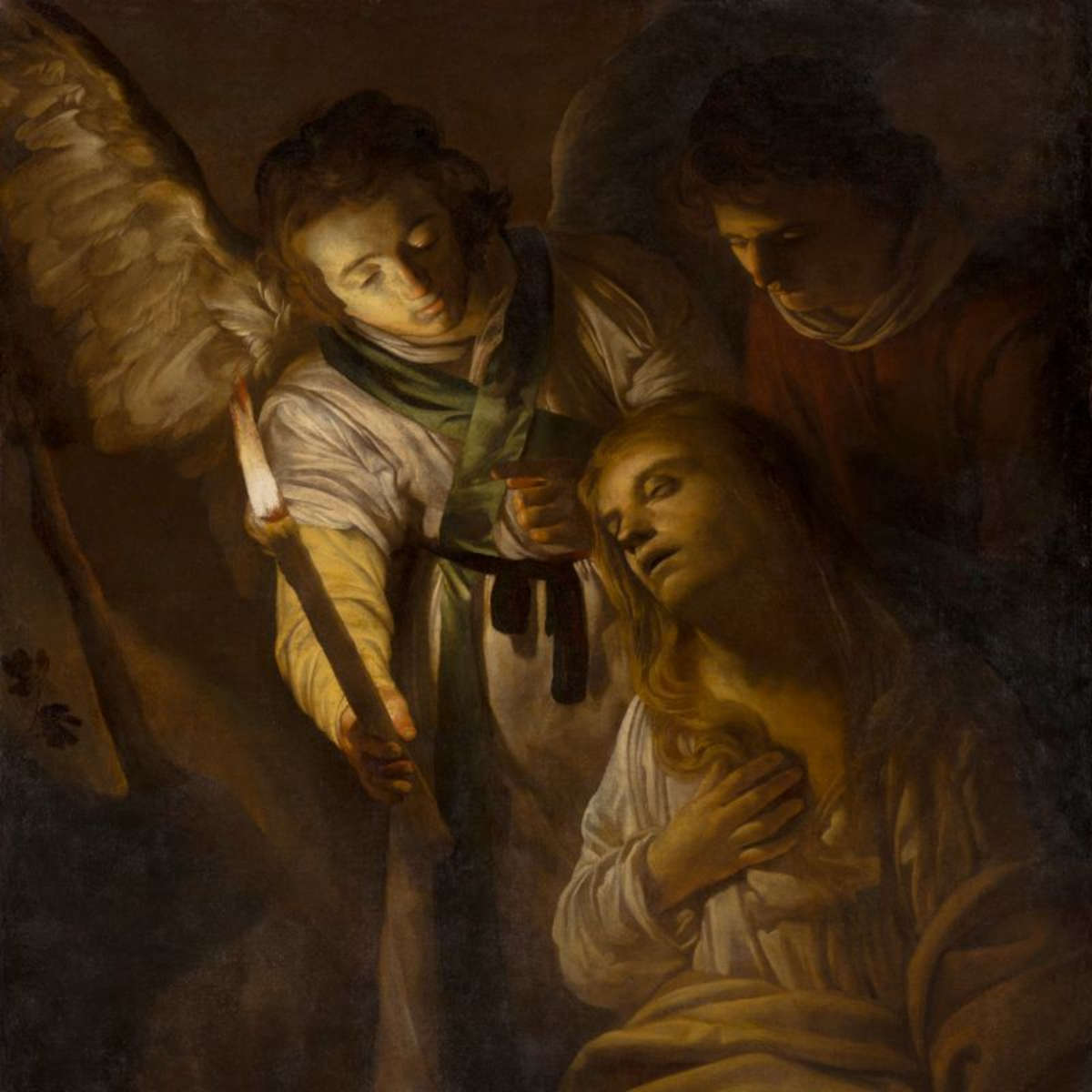
In Rome Honthorst was among the few non-Italian artists to receive prestigious commissions for altarpieces and managed to attract influential collectors. The Italian experience profoundly marked his production, both stylistically and iconographically. TheEcstasy of Mary Magdalene, executed during these Roman years, testifies to the dramatic intensity and luministic focus that characterized his early creative phase.
After returning to Utrecht in 1620, the artist oriented his activity toward lively genre scenes and musical gatherings, perfecting the pastoral genre and the so-called portrait historié, in which the portrait is interwoven with narrative or allegorical elements. As the years went by, he devoted himself more and more to portraiture, demonstrating an extraordinary ability to interpret the expectations of clients and to adapt his style almost intuitively. This ability won him important commissions from royal and aristocratic families throughout Europe, establishing him as one of the most sought-after artists of his time.
The Utrecht exhibition aims to restore centrality to the figure of Van Honthorst, finally offering in the artist’s hometown a platform commensurate with his importance. The Centraal Museum will bring together some 60 paintings and some 30 drawings from museums and private collections in Europe and the United States. Institutions involved include the Musée du Louvre, the British Royal Collection, and the Galleria Borghese, reflecting the international reach of Honthorst’s works and the interest generated by the exhibition project.
The exhibition Gerard van Honthorst - Different to Rembrandt will be staged in the spaces of De Stallen, located in the former stables of the former Agnietenklooster convent. Twice a year this environment hosts thematic exhibitions dedicated to one of the museum’s subcollections, ranging from ancient to modern and contemporary art, from design to fashion to city history. De Stallen represents the museum’s largest exhibition space and will provide an appropriate context to highlight the complexity of the artist’s journey.
The preview at TEFAF Maastricht is part of a strategy aimed at reviving Honthorst’s figure on the international scene. The fair, among the most important in the world in the field of art and antiques, constitutes a privileged stage to present to the public and insiders a work that anticipates the contents of the retrospective. In this way, the painting enters into a dialogue with the market and the scientific community, before finding its definitive place in the museum itinerary.
The decision to present TheEcstasy of Mary Magdalene as an exclusive preview underscores the symbolic value of the acquisition. It is not only a matter of enriching the collections of the Centraal Museum with a work of great quality, but also of recovering a fundamental piece for understanding Honthorst’s stylistic evolution and his role in the European context of the early 17th century. The Roman work, with its luministic intensity and emotional charge, represents a key moment in the definition of the artist’s language.
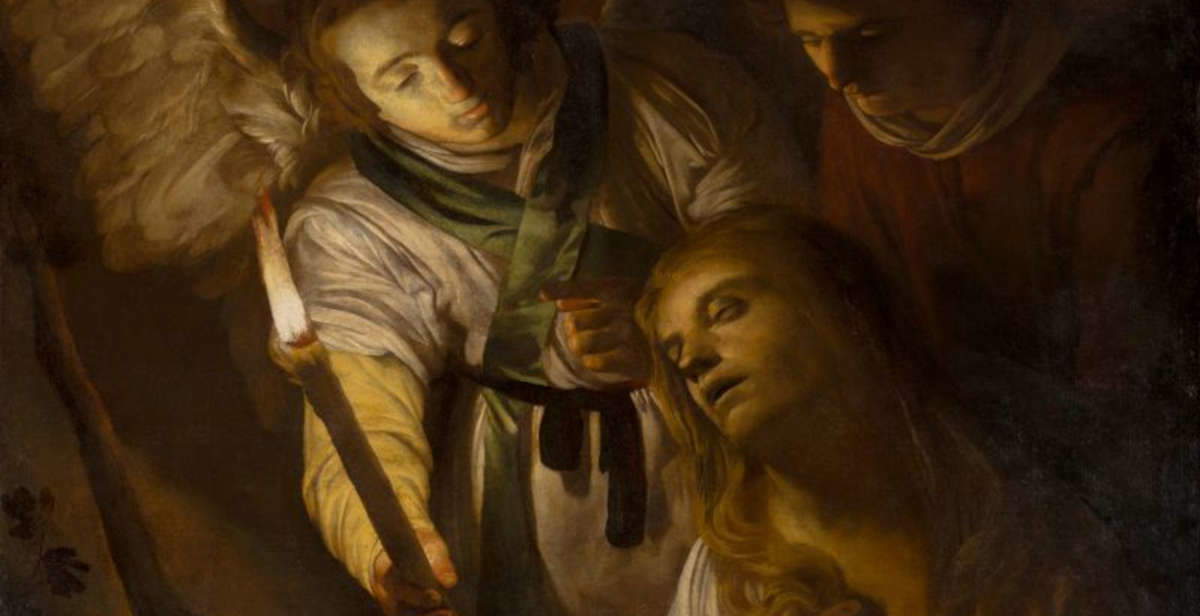 |
| An important early work by Gerrit van Honthorst purchased by the Centraal Museum in Utrecht |

Warning: the translation into English of the original Italian article was created using automatic tools. We undertake to review all articles, but we do not guarantee the total absence of inaccuracies in the translation due to the program. You can find the original by clicking on the ITA button. If you find any mistake,please contact us.























 IT
IT FR
FR DE
DE ES
ES CN
CN


