




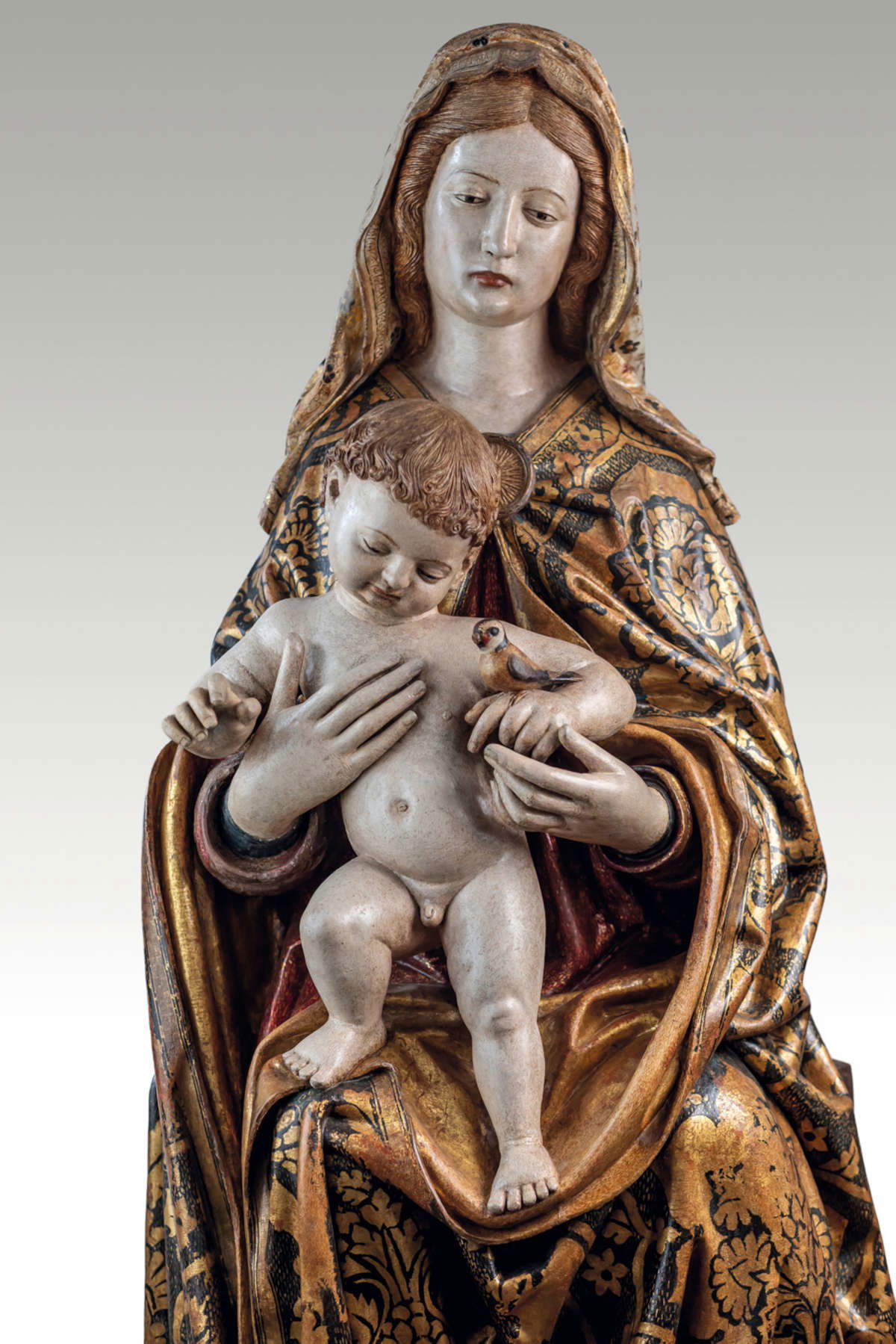
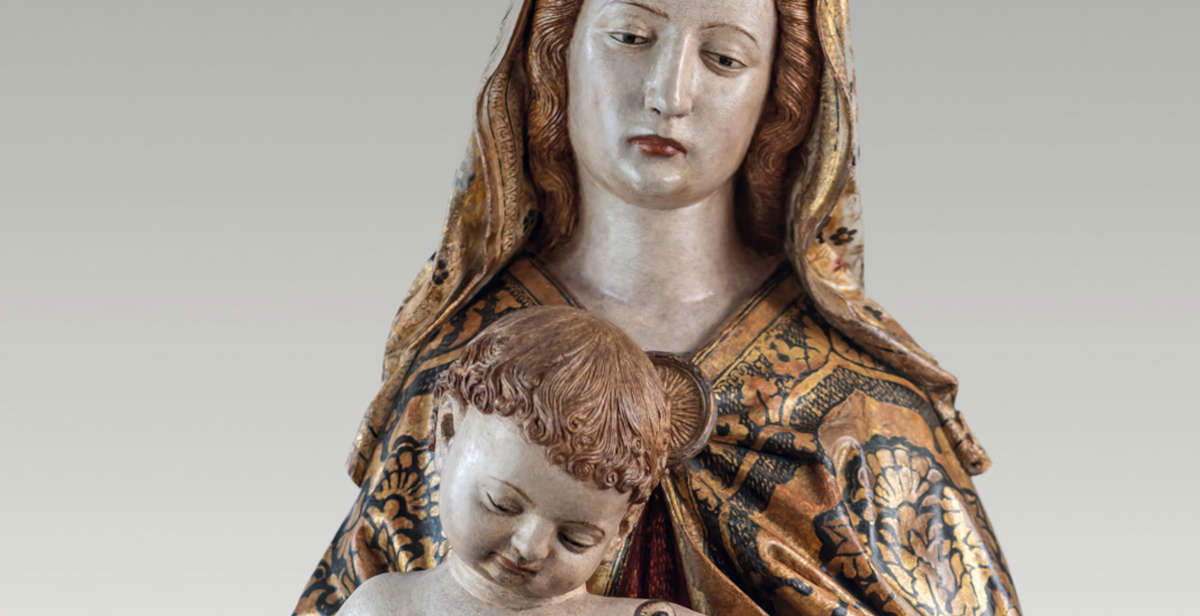
The Diocesan Museum of Capua (Caserta) presented the restoration of a polychrome wooden sculpture depicting a Madonna and Child attributed to sculptors Pietro Alemanno and Giovanni Alemanno and dated around 1480. The intervention is part of the 20th edition of Restituzioni, the two-year program promoted by Intesa Sanpaolo for the protection and enhancement of the national artistic heritage. The work, which came from the church of Sant’Eligio in Capua but has long been located in the city cathedral, depicts the Virgin seated on a throne while holding the Child in her arms. A significant iconographic element is the goldfinch resting on the left hand of the baby Jesus, a symbol hinting at the future Passion. The sculpture was originally part, along with four other figures, of an articulated wooden polyptych located in the church’s choir, set in a niche in the main register of the imposing structure.
The restoration was carried out by Giuseppe Di Palma, Giuseppe Ricciardi and Orsola Riccio, under the direction of Paola Coniglio and Giulia Nanfa of the Soprintendenza Archeologia, Belle Arti e Paesaggio for the provinces of Caserta and Benevento. The intervention made it possible to restore legibility to a work that had lost much of its original brilliance over time due to surface deposits and a waxed varnish that altered its perception.
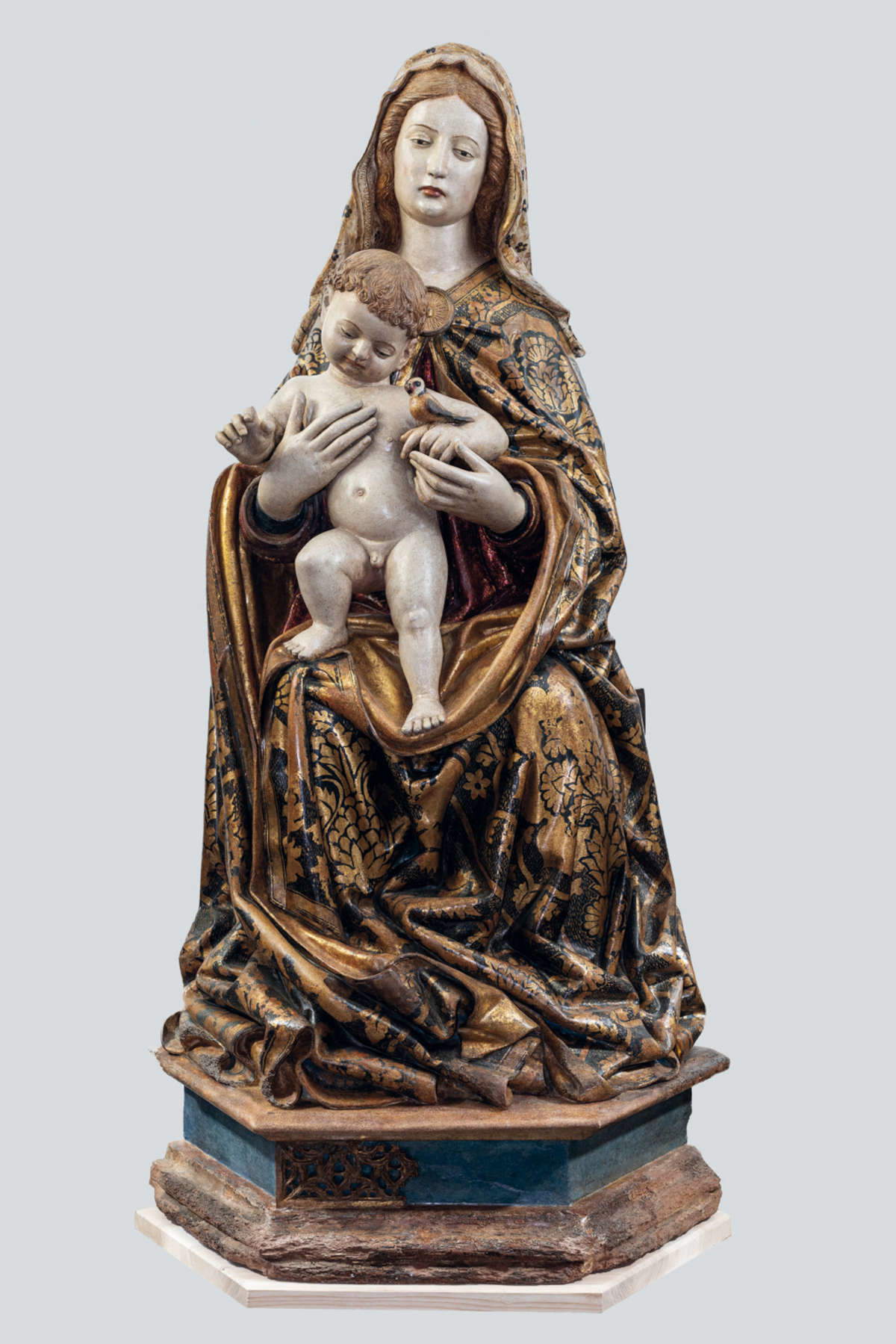
The historical events of the sculptural group were reconstructed by Elisabetta Fadda, who confirmed with pointed arguments the attribution to the Alemanno, already proposed in the past by Raffaello Causa. The two artists, of Nordic origin but active in Naples at least since 1478, represent a significant presence in the panorama of late Gothic southern sculpture. Further useful elements for the reconstruction of the original layout of the work come from the accounts of the Capuan scholar Fabio Vecchioni, who lived between 1597 and 1675. According to his descriptions, to the right of the Virgin were placed the figures of St. Catherine and St. John the Baptist, while to the left were St. Agatha and St. Eligius. The complex was completed in the upper part by spires and pinnacles, according to the typology of large late Gothic wooden polyptychs.
The history of the work is also marked by traumatic events. The polyptych gained notoriety following an episode in 1501, during the Sack of Capua, when French troops unsuccessfully attempted to steal the altarpiece, an episode interpreted as a miraculous event. Despite its fame, in 1747 the Theatine fathers, who had settled in the church of Sant’Eligio, decided to dismantle the complex, preserving only the Madonna and Child.
Recent restoration has offered new evidence to support the attribution to the Alemanno. The long and careful cleaning has brought to light the original chromatic vivacity, the material quality of the robes and the refinement of the ornamental details, long concealed. This “new” aspect now makes it possible to grasp more clearly the stylistic affinities with other works attributable to the two sculptors.
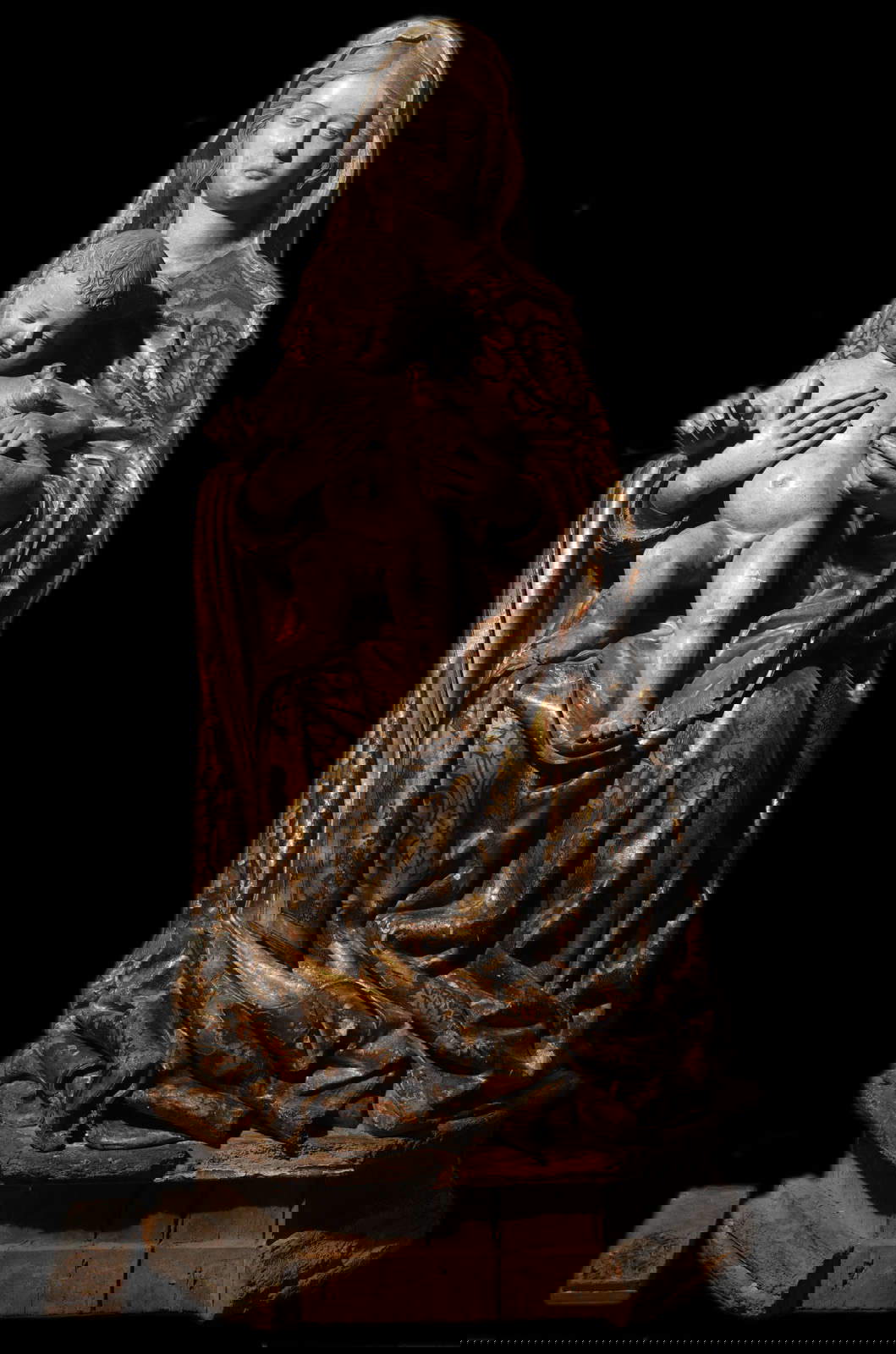
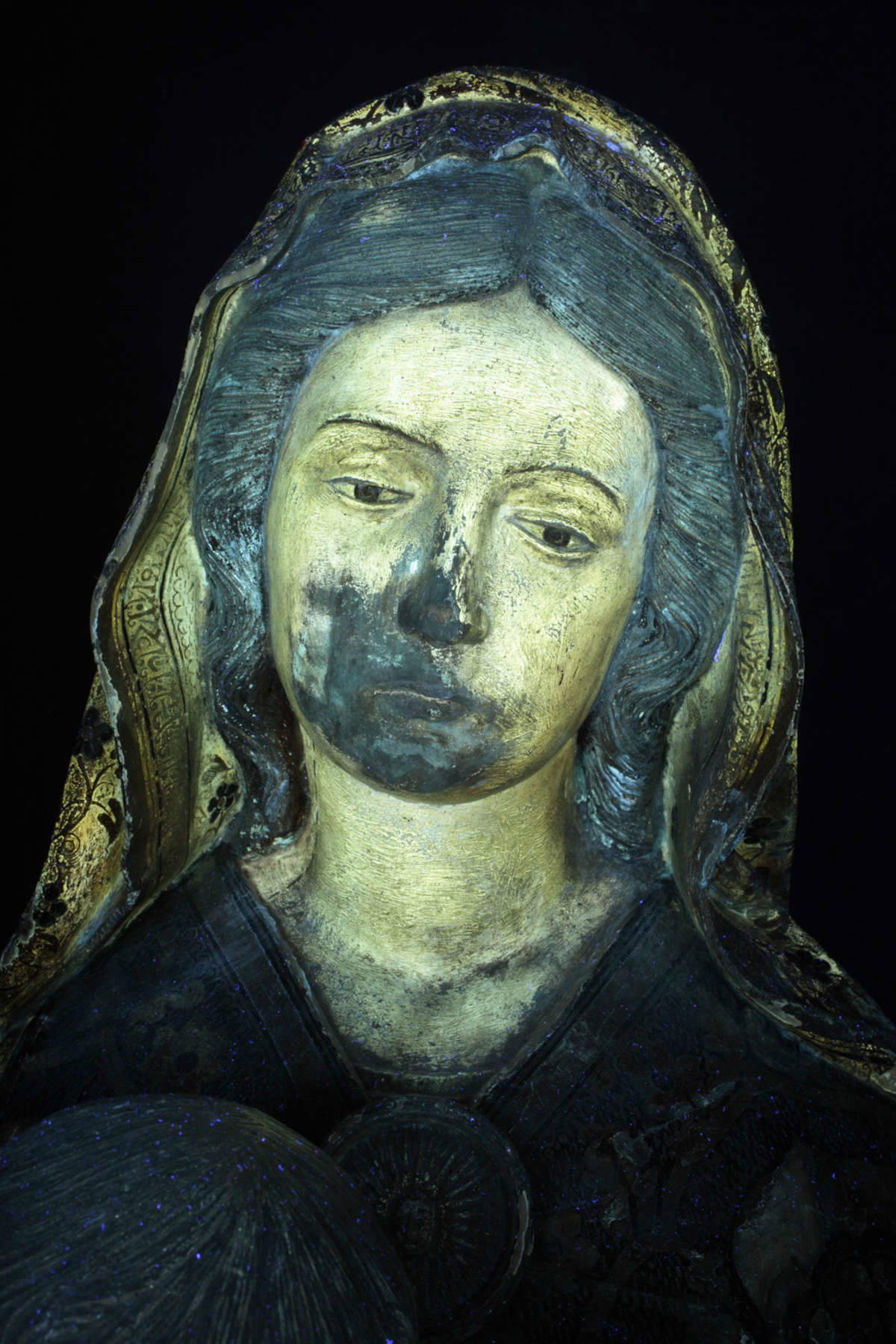
Significant comparisons include that with the Madonna preserved in the Museo Nazionale di San Martino in Naples, part of the nativity scene from the church of San Giovanni a Carbonara, and an as yet unidentified figure exhibited in the Museo Nazionale del Palazzo Venezia in Rome. Elements such as the rounded face, the cut of the eyes, the rendering of the hair in thick locks, and the treatment of the drapery, characterized by deep folds and marked chiaroscuro contrasts, strengthen the attribution.
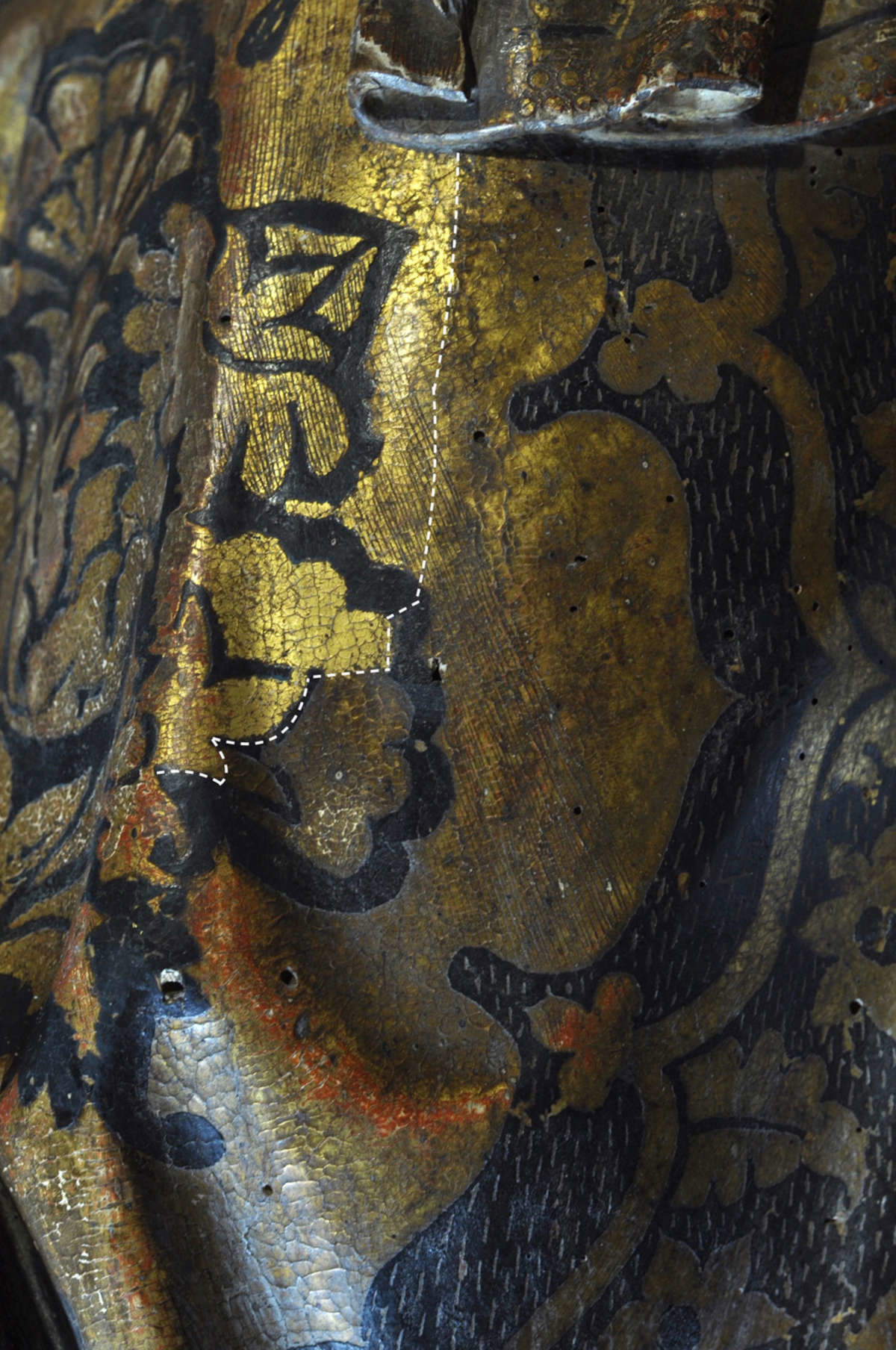
A distinctive aspect of Capuan sculpture is the use of the estofado de oro technique. This procedure involved covering the wooden surface with pure gold leaf, on which colors were applied-in this case, red lacquer for the Virgin’s robe and azurite for the cloak-then etched by sgraffito to bring out the underlying foil.
Diagnostic investigations, including specially performed infrared spectrophotometry, identified the use of an oily binder in the pigments used. This technical fact, which contributes to enhancing the translucent effect of the colors, is found in other works by the Alemanno, such as those of the nativity scene preserved in San Martino, and constitutes a further element in favor of the attribution.
The restoration thus restores not only the aesthetic integrity of the work, but also a more precise historical and critical placement, confirming the value of the sculpture within the Alemanno’s production and more generally in the context of Italian late Gothic wooden sculpture.
 |
| Capua, restored the wooden Madonna by Pietro and Giovanni Alemanno |

Warning: the translation into English of the original Italian article was created using automatic tools. We undertake to review all articles, but we do not guarantee the total absence of inaccuracies in the translation due to the program. You can find the original by clicking on the ITA button. If you find any mistake,please contact us.























 IT
IT FR
FR DE
DE ES
ES CN
CN


