





The meeting Beyond the Canvas will be held on May 5 in the Sala di Liegro of Palazzo Valentini in Rome. Caravaggio’s Roman Models, an appointment dedicated to the analysis of one of the most discussed aspects of the production of Michelangelo Merisi known as Caravaggio ( Milan, 1571 - Porto Ercole, 1610). The initiative will see the participation of scholars Michele Cuppone, author of Caravaggio, the Nativity in Palermo, and Francesca Curti, art historian, called to discuss the relationship between documentary data and reconstructions developed over time around the female figures in the painter’s works.
The topic of Caravaggio’s models continues to arouse interest both in academia and in popularization. Madonnas, saints, biblical heroines, as well as commoners, gypsies and courtesans compose an iconographic repertoire that has fueled numerous interpretations. According to various sources, some of these figures can be traced back to women actually frequented by the artist, a circumstance that has helped to reinforce the image of a biography marked by controversial episodes and complex relationships.
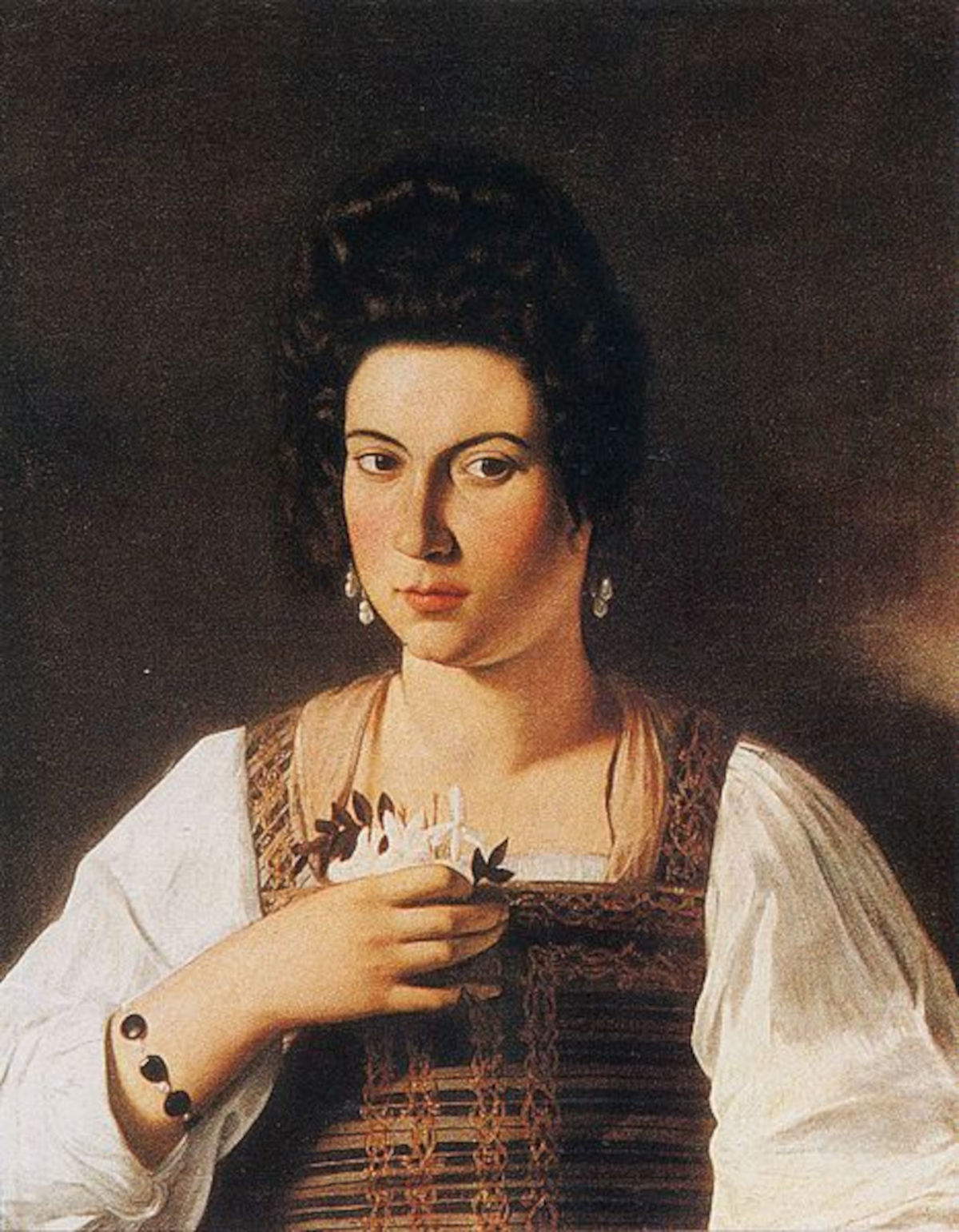
Over time, the attempt to identify the models has resulted in reconstructions that often lack certain evidence. In many cases, attempts have been made to attribute a name to the faces depicted in the paintings, hypothesizing personal or sentimental ties to the painter. This meeting aims to test the resilience of such hypotheses in light of available sources, distinguishing documented elements from later elaborations. Among the figures for whom there is documentary evidence is Fillide Melandroni, a Sienese courtesan described as having a violent temperament. Caravaggio portrayed her in a painting that belonged to Marquis Vincenzo Giustiniani, a leading figure in collecting at the time. Before entering the Giustiniani collection, the portrait was reportedly in the possession of the man of letters Giulio Strozzi, listed as the woman’s lover.
“There have been no traces of the painting since May 1945,” Cuppone immediately points out, “since when, in the days of the liberation of Berlin, a fire that was probably arson devastated the depository where the canvas was located with 430 other works.”
“The affair had to disrupt the young man’s life,” Curti explains, “to such an extent that he wanted to marry the courtesan, defying common morality and the wrath of his father, who convinced the pope to expel the woman from Rome.”
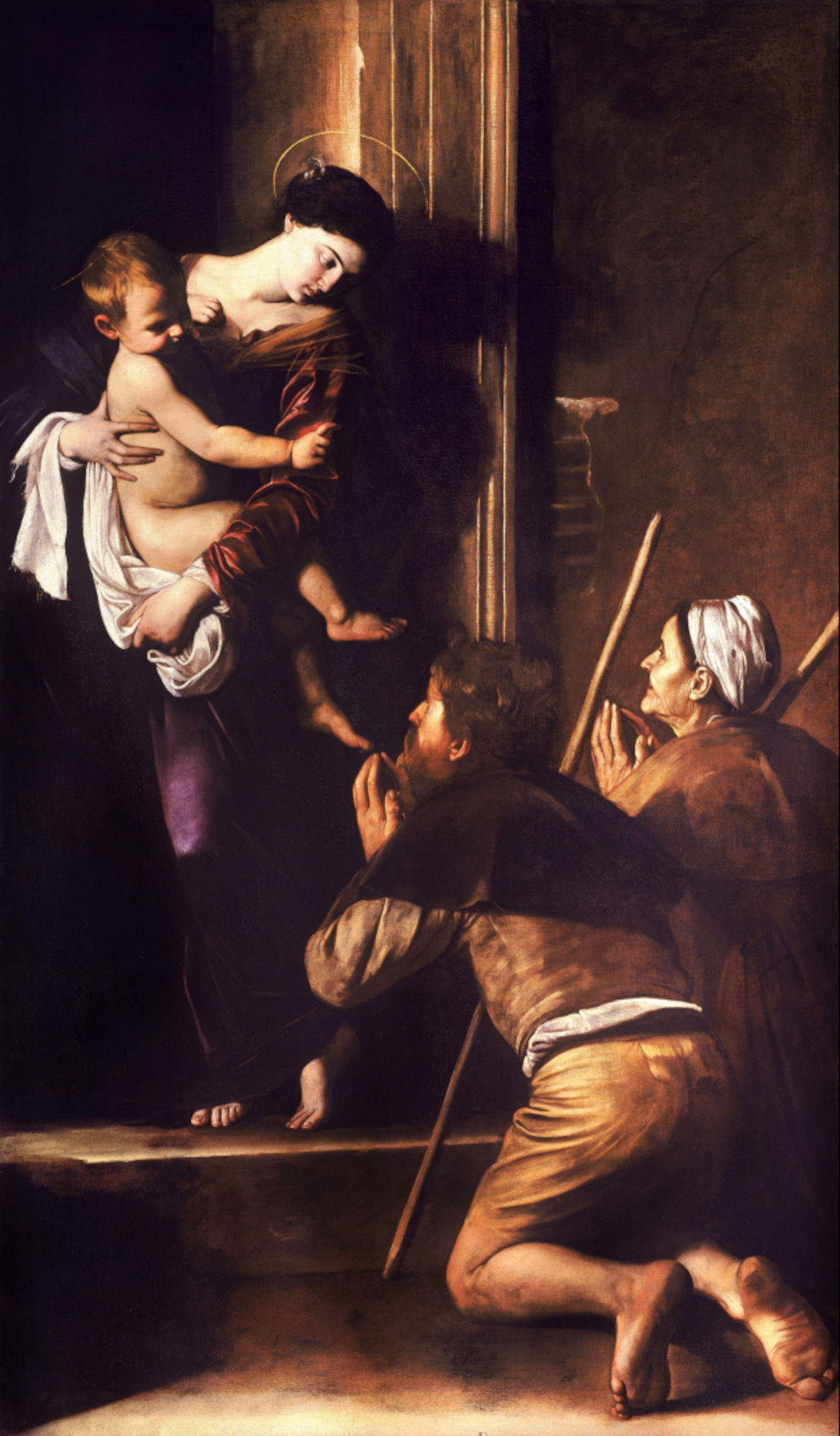
Other cases present wider margins of uncertainty. Lena, for example, is traditionally identified as the model for the Madonna of the Pilgrims and perhaps the Madonna of the Pallbearers. Her name appears in a lawsuit filed by notary Mariano Pasqualoni, who accused Caravaggio of assault in an incident that took place in Piazza Navona. In the document Lena is referred to as “Michelangelo’s woman.” Following the affair, the painter temporarily left Rome to take refuge in Genoa. The Pasqualoni family itself, despite the dispute, was reported to be in possession of a painting attributed to Caravaggio, a Christ at the Column now lost.
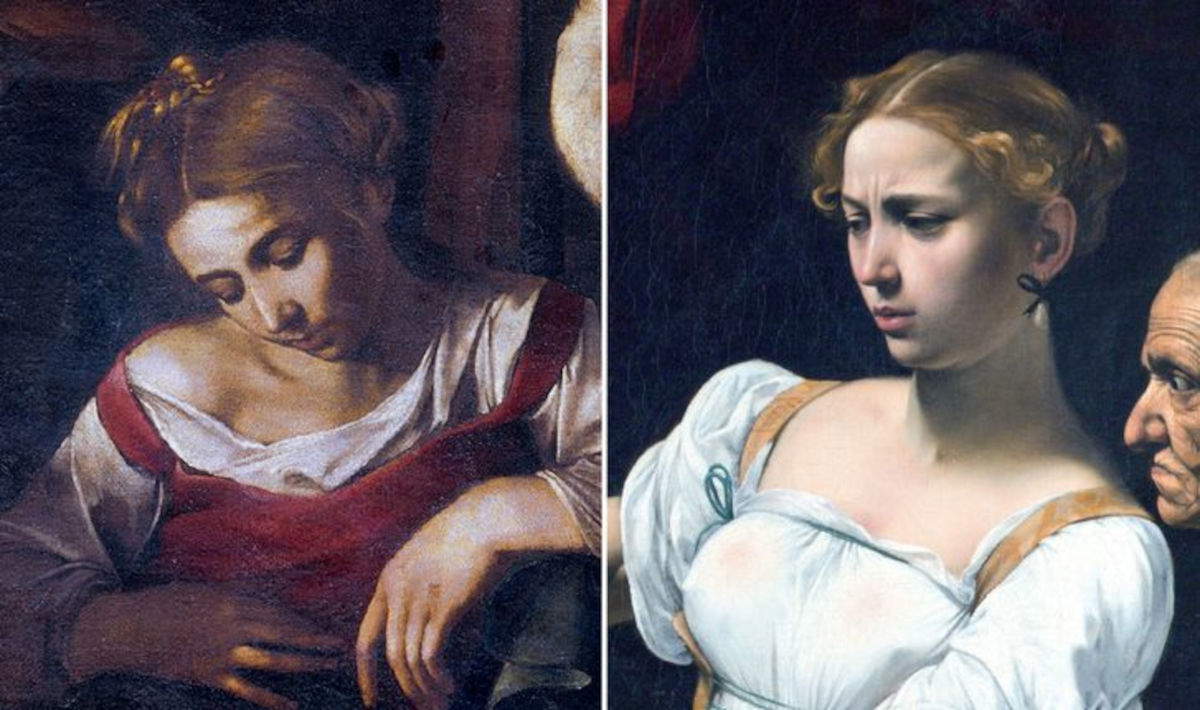
“On closer inspection, it seems that the ’Berlin’ painting is the only one in which Fillide appears,” Cuppone continues, "while a regular model may have been a certain Lena. Not to be confused, as is often done, with the prostitute Maddalena Antognetti, a character who really existed but whose relations with the painter are not documented. The resemblance between the maiden we see in the Palazzo Barberini’s Judith and Holofernes and in the Nativity stolen in Palermo in 1969 is remarkable, and this is a further piece in dating the latter altarpiece to the Roman period and not the Sicilian one, as was once believed. One must resign oneself to the fact that, at present, this remains one of many nameless faces, despite the proposals of narrators and even mystifiers of Caravaggesque biography to attribute one to him."
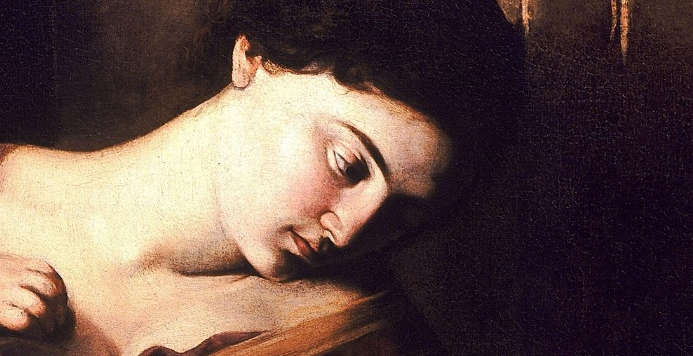
Among the names associated with the painter’s private sphere also appears Domenica Calvi, belonging to a curial context. However, there is no evidence to establish with certainty her involvement as a model, nor to clarify the nature of her relationship with Merisi.
The meeting will also provide an opportunity to present a novelty related to the lost portrait of Marsilia Sicca, referred to in the documents as “Matrona lombarda.” Francesca Curti has identified in Roman parish registers the baptismal record of an “Arsilia Sicca di Caravaggio,” who was born in the Urbe to a family originally from the same Bergamo area as the painter and almost her age. The finding suggests new hypotheses about the making of the work, which may have been executed after the artist moved to the papal capital, rather than during the Lombard period, as previously assumed.
The event is part of the Cronache Romane review, curated by Stella Fanelli, and will be introduced by Dario Nanni, Capitoline councilor and chairman of the Jubilee Commission. Admission is free at 5:30 p.m. from 119/a Via IV Novembre.
 |
| Caravaggio and his models: a survey of sources and reconstructions of female figures |

Warning: the translation into English of the original Italian article was created using automatic tools. We undertake to review all articles, but we do not guarantee the total absence of inaccuracies in the translation due to the program. You can find the original by clicking on the ITA button. If you find any mistake,please contact us.






















 IT
IT FR
FR DE
DE ES
ES CN
CN


