





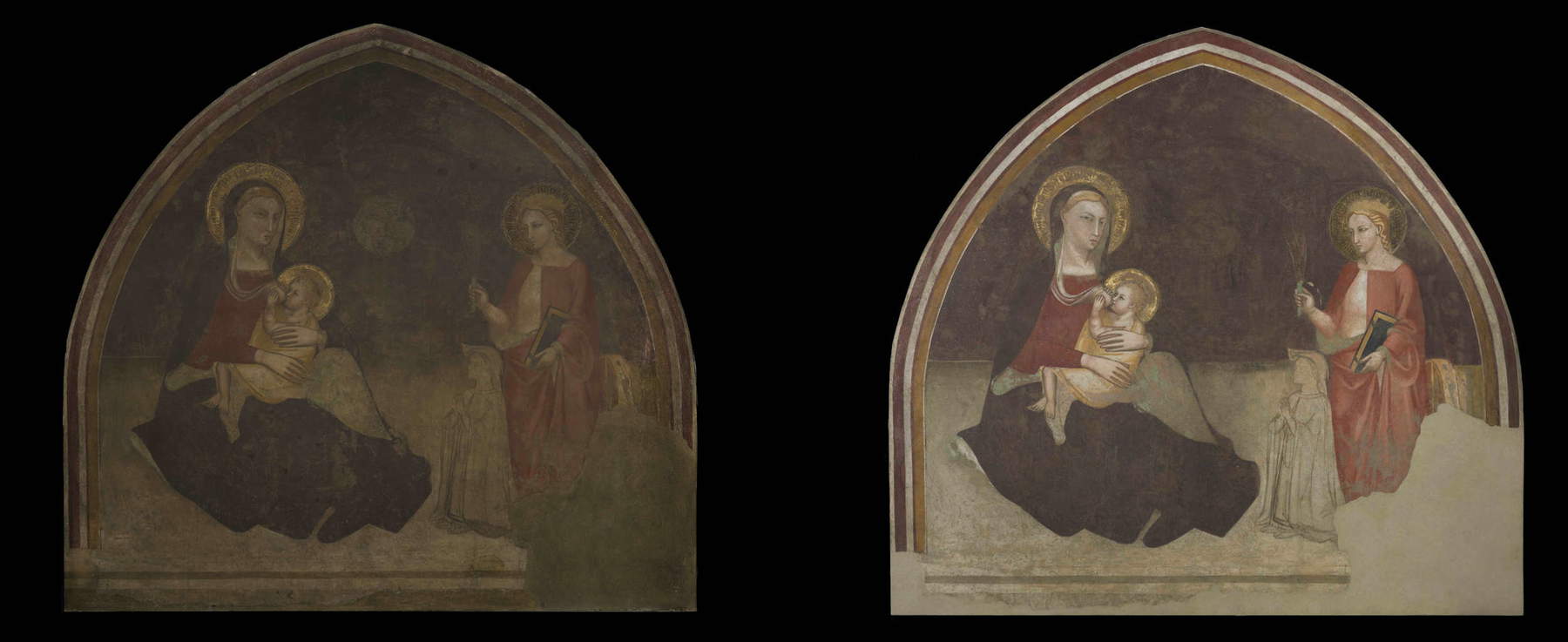
In Florence , one of the most significant images of Florentine Marian devotion is once again fully visible in the Basilica of Santa Maria Novella . The restoration of the fresco of the Madonna della Pura was unveiled today; this project has restored the clarity and visual quality of a work that for centuries has served as one of the primary spiritual landmarks within Florence’s large Dominican complex. The conservation work was carried out by Andrea Vigna of Habilis Srl, in collaboration with Paola Viviani and Stefania Franceschini, under the supervision of the Superintendence of Archaeology, Fine Arts, and Landscape for the metropolitan city of Florence and the provinces of Pistoia and Prato. The support of Friends of Florence was crucial; the organization funded the project thanks to the generosity of donors William and Jeanne Bice.
The restoration was not limited to the physical conservation of the work but also provided an opportunity to deepen our understanding of the techniques and methods used by the painter who created the fresco, offering new insights into its conservation history and its complex devotional background.
“We are particularly pleased to have supported the restoration of the Madonna della Pura, an image deeply rooted in the devotional history of Santa Maria Novella and in the collective memory of the city of Florence,” said Simonetta Brandolini d’Adda, president of Friends of Florence. “This project has made it possible to restore the legibility and beauty of a work that for centuries has accompanied the spirituality of generations of the faithful and visitors. We thank the Superintendency for High Supervision, the Dominican Fathers for their cooperation, and the conservators who made this important conservation project possible. Our deepest gratitude goes to donors William and Jeanne Bice for their support and their passion for the art of Florence.”
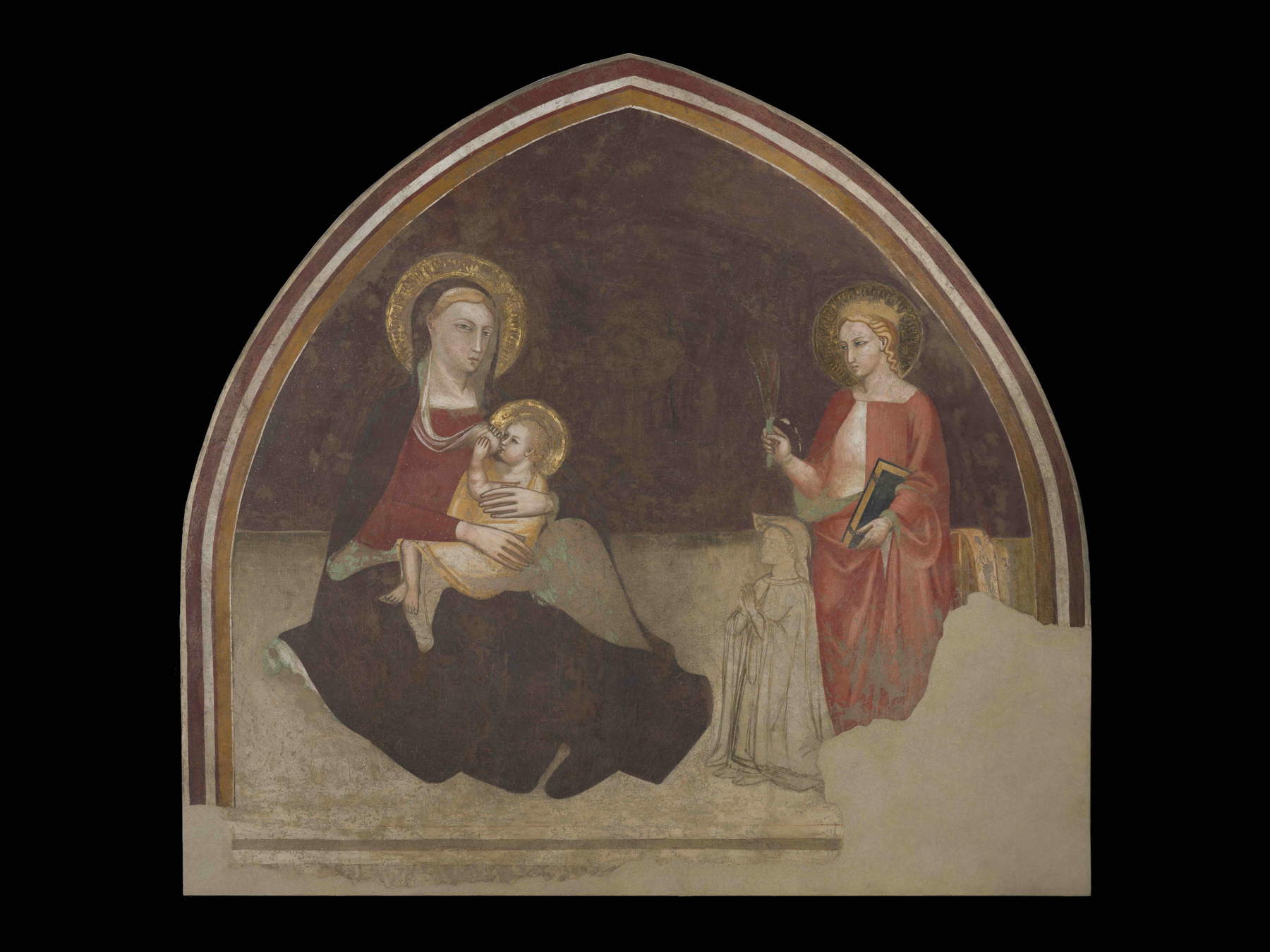
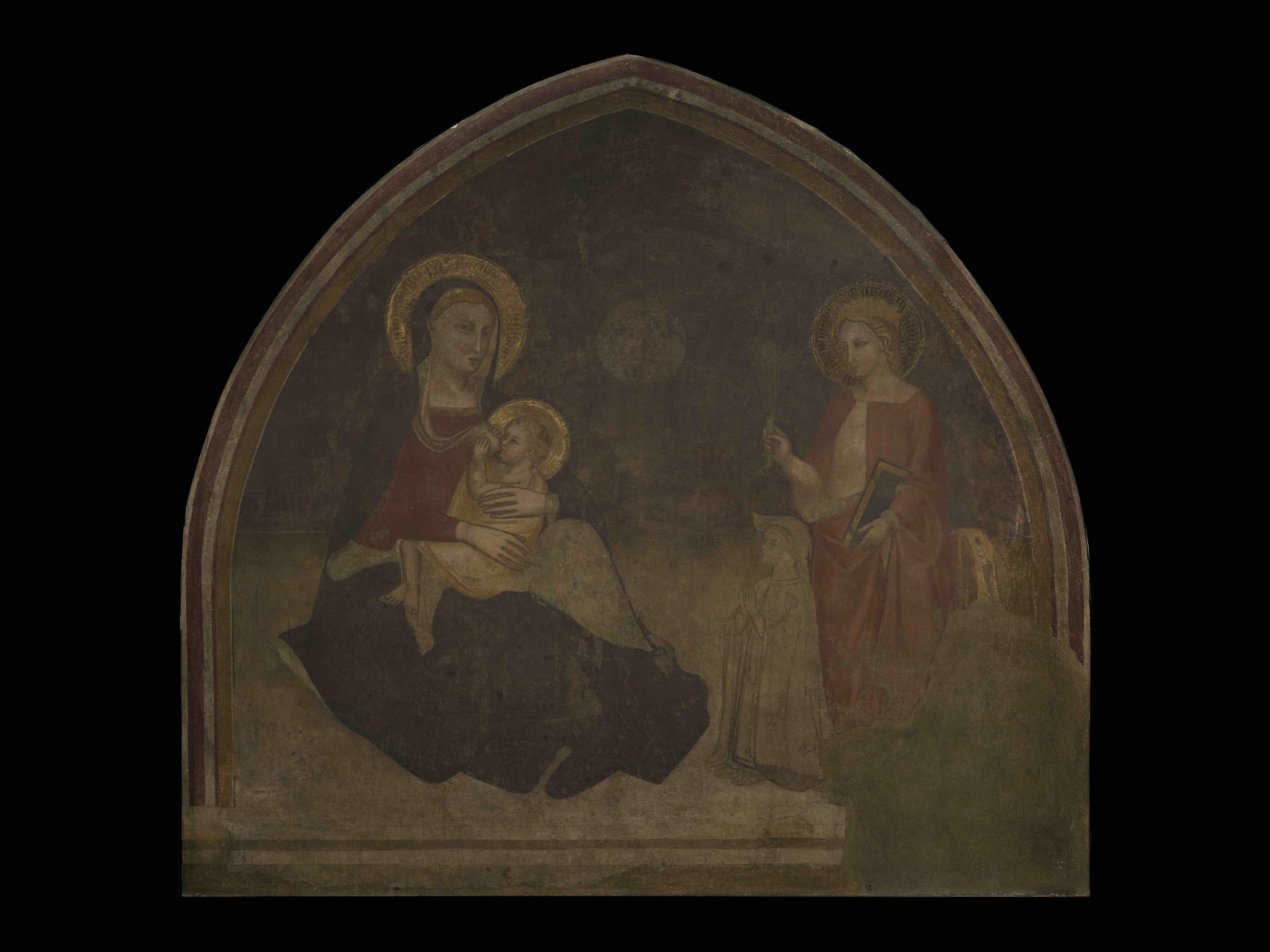
The history of the Madonna della Pura has its roots in late-medieval Florence and is closely intertwined with the spread of Marian devotion promotedby the Dominican Order. From the very beginning of their pastoral work, the friars encouraged the formation of lay confraternities dedicated to the Virgin Mary, forging a direct relationship with the city’s population and fostering forms of popular devotion that would leave a profound mark on the city’s religious life. According to tradition, the image now preserved in the chapel of the same name was originally located at the back of the Della Luna family’s burial vault, situated in the cemetery adjacent to the basilica and abutting the building’s eastern side. At the end of the 14th century, a fresco was painted there depicting the Virgin and Child, accompanied by Saint Catherine of Alexandria and the patron who commissioned the work.
The origins of popular devotion are linked to an episode considered miraculous. Tradition holds that some children playing near the tomb witnessed an apparition of the Virgin Mary. The Virgin is said to have asked one of them to clear the image of dust and cobwebs using a leafy cane. The episode contributed to the rapid spread of the cult of the so-called “Virgin Mary of the Cemetery,” giving rise to an increasingly intense veneration.
The importance attributed to the event is evidenced by the speed with which the cult developed. In fact, within a year of the alleged miracle, a first altar was built in front of the image. A devotion to the so-called “children of purity”—so named in reference to the purity evoked by the Marian figure—took such firm hold that it convinced the Dominicans to grant the Ricasoli family permission to build a chapel designed to house and showcase the fresco. The new chapel was completed in 1476 and represented a significant architectural and artistic achievement. The image was incorporated into an elegant aedicule designed by Giovanni di Bertino, conceived according to a sophisticated perspective and characterized by references to classical architecture. From that moment on, the Madonna della Pura became one of the most significant objects of Marian devotion at Santa Maria Novella, maintaining a central role in the spirituality of the Dominican complex over the centuries.
The work’s long history has also been marked by significant conservation efforts. In the 1950s, the fresco was detached from its original location and subsequently mounted on a rigid, three-layer Masonite backing, following a method widely used at the time for the conservation of detached wall paintings.
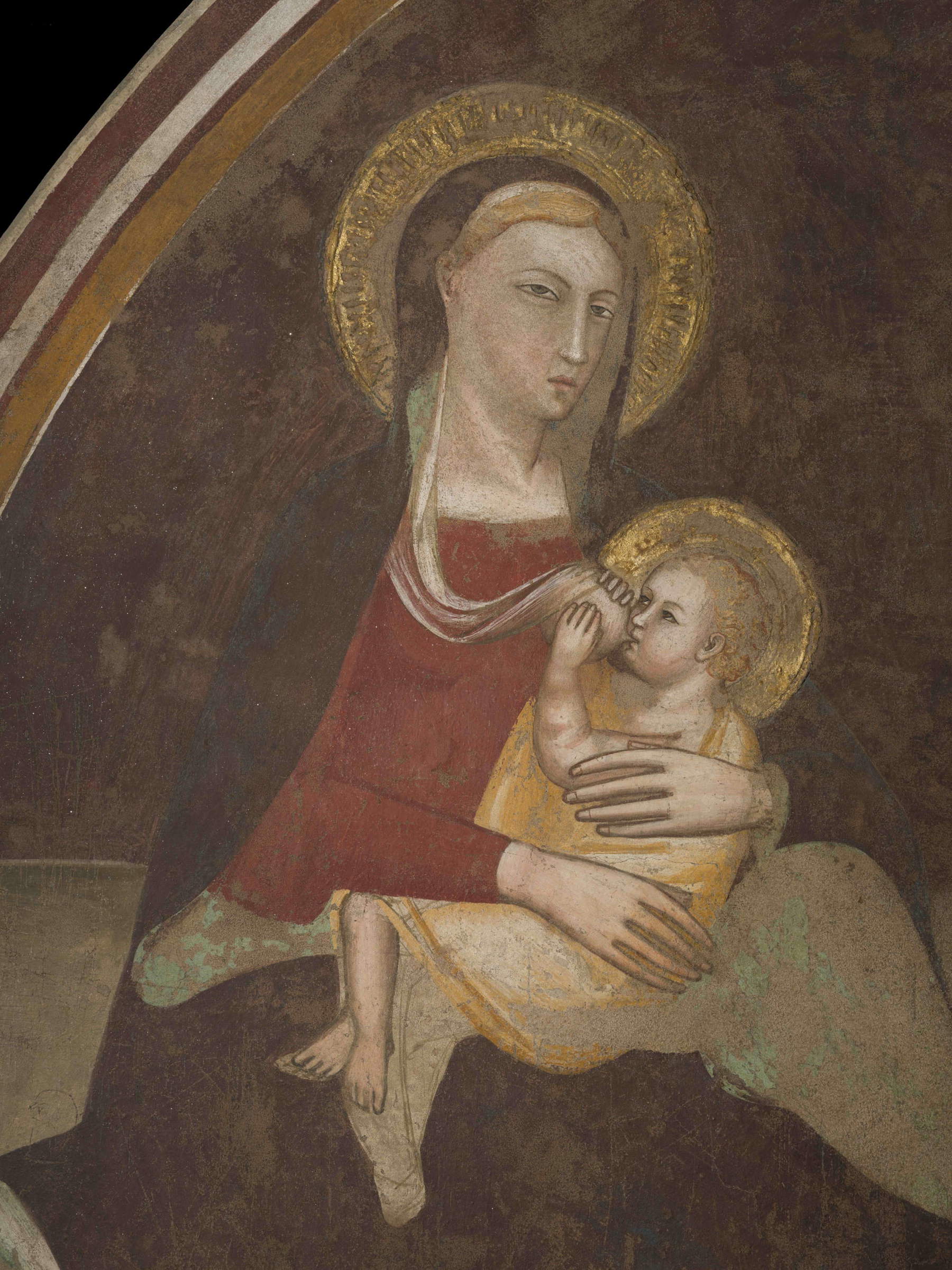
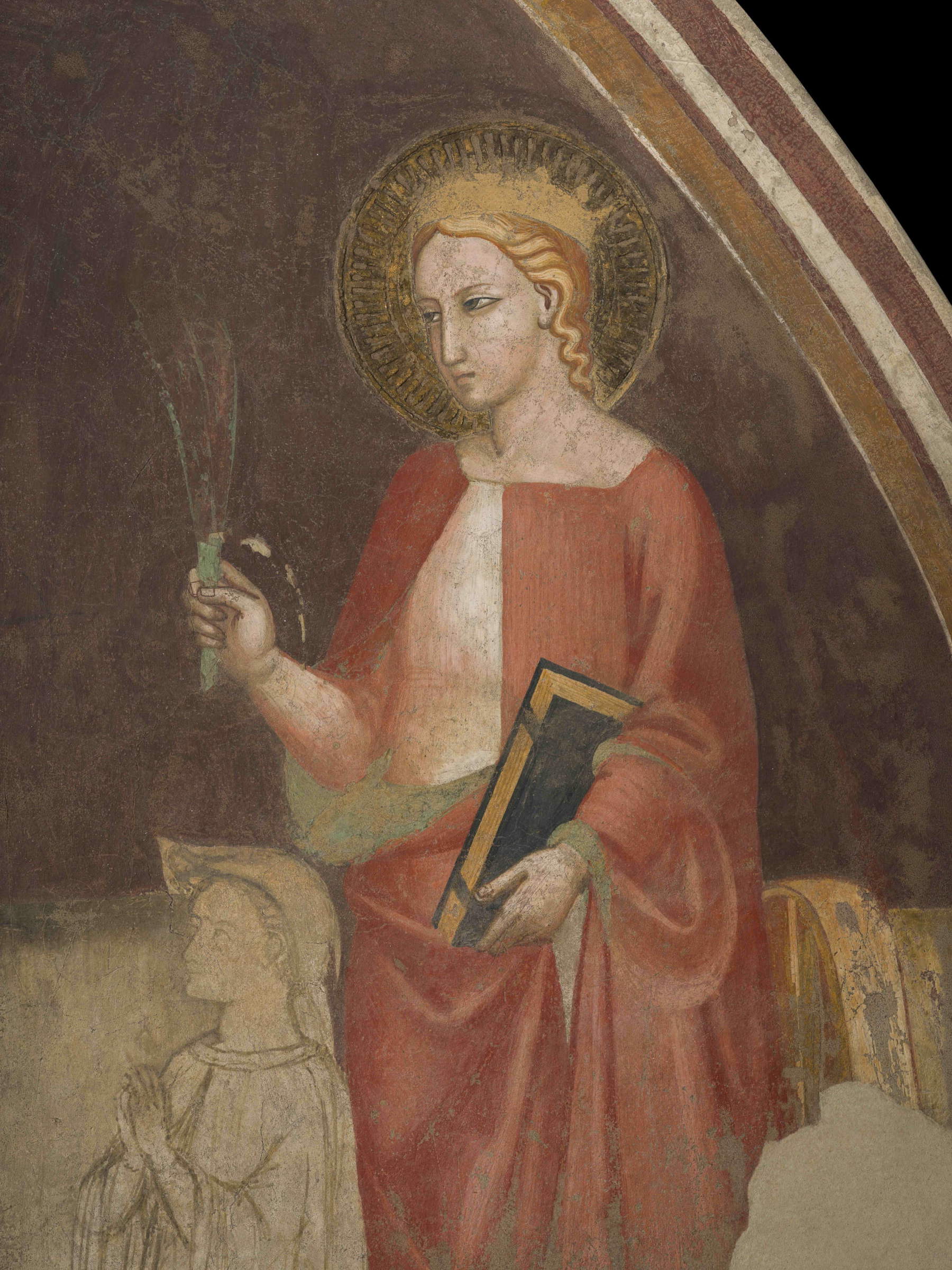
Before the recent restoration began, the support was essentially stable and showed no structural problems severe enough to require invasive intervention. The situation of the painted surface, however, was more complex, as it had been affected by deterioration that had accumulated over time. The work exhibited widespread surface deposits—some loose and others firmly adhered—consisting of dust and atmospheric particulate matter. There were also abrasions and scratches that locally disrupted the continuity of the paint film, compromising the visibility of the image in certain areas. Particularly evident were the repainting of the flesh tones carried out during previous conservation treatments. Created with organic materials, these additions had gradually altered their chromatic appearance, changing the original balance of the composition and compromising the authentic perception of the faces. Added to this was the presence of stucco applied during previous restorations, which, in several cases, extended beyond the edges of the original lacunae, interfering with the proper interpretation of the work and creating elements that were visually foreign to the painting.
The restoration was designed with the goal of restoring the fresco’s legibility and improving its state of preservation while fully respecting the original material and its history. The first phase of the work involved thorough dry cleaning using soft-bristled brushes and controlled, low-power vacuuming. This process made it possible to remove loose deposits without subjecting the painted surface to potentially damaging stress. This was followed by wet cleaning, carried out using natural sponges lightly moistened with demineralized water. The treatment removed the most stubborn dirt residues and restored greater clarity to the image. Particular attention was paid to the repainting on the flesh tones. The conservators applied localized compresses of Japanese paper soaked in a solution of ammonium carbonate. This treatment softened and rehydrated the overlying organic materials, which were subsequently removed using cotton swabs soaked in demineralized water.
The next phase addressed the incongruous stucco work. Any stucco that was protruding or no longer compatible with the artwork was reduced or removed using a scalpel and micro-chisels. The gaps and material discontinuities were then filled with a mortar consisting of aged lime putty and carefully selected silica sand. The new restorations were finished with strict adherence to the boundaries of the gaps and the level of the surrounding surface.
Upon completion of the restoration, the abrasions and missing areas were pictorially reintegrated using watercolor pigments. The approach of tone reduction and color selection was adopted—a methodology that mitigates the visual impact of the gaps without blurring the distinction between the modern restoration and the original material, in full compliance with the principles of recognizability and reversibility that guide contemporary restoration.
The results of the restoration have restored a more authentic perception of the fresco. The removal of the 20th-century overpainting made it possible to restore the proper chromatic balance of the flesh tones and to bring to light pictorial details that had been obscured by alterations and deposits accumulated over time. The cleaning process has also highlighted the quality of the work’s execution, allowing for a clearer understanding of the artist’s technical and stylistic choices. At the same time, the restoration has reinforced the image’s devotional function, restoring to the faithful and visitors a work that once again expresses its spiritual significance more effectively.
The Madonna della Pura represents, in fact, much more than an important work of art. Its history bears witness to the deep intertwining of art, religion, and city life that has characterized Florence’s history for centuries. Through the conservation and restoration of the fresco, a significant testament to Florentine devotional culture is now returned to the community, one capable of recounting a tradition that spans over six centuries of history. Thanks to the restoration project supported by Friends of Florence, the image once again occupies its rightful place within the Basilica of Santa Maria Novella: that of a familiar and recognizable presence, a guardian of memory, spirituality, and cultural identity, now accessible once more in its full historical context.
 |
| Florence: The Madonna della Pura Is Once Again on Display at Santa Maria Novella Following Restoration |

Warning: the translation into English of the original Italian article was created using automatic tools. We undertake to review all articles, but we do not guarantee the total absence of inaccuracies in the translation due to the program. You can find the original by clicking on the ITA button. If you find any mistake,please contact us.




















 IT
IT FR
FR DE
DE ES
ES CN
CN


