







From March 5 to June 29, 2026, Palazzo Madama in Turin is hosting in the Atelier Room one of the best-known works by Johannes Vermeer (Delft, 1632 - 1675), Woman in Blue on loan from the Rijksmuseum in Amsterdam. This is the first time that Turin has welcomed a painting by the Dutch artist, giving the public a chance to see one of the pinnacles of seventeenth-century European painting in the city. The arrival of the masterpiece inaugurates the initiative Incontro con il capolavoro, a new exhibition cycle dedicated to the great protagonists of ancient and modern art history, curated by Clelia Arnaldi di Balme, Anna La Ferla and Giovanni Carlo Federico Villa. The project aims to configure itself as a path of scientific and cultural in-depth study, conceived as a narrative device that aims to generate knowledge, stimulate interdisciplinary dialogue and open new perspectives on the reading of heritage.
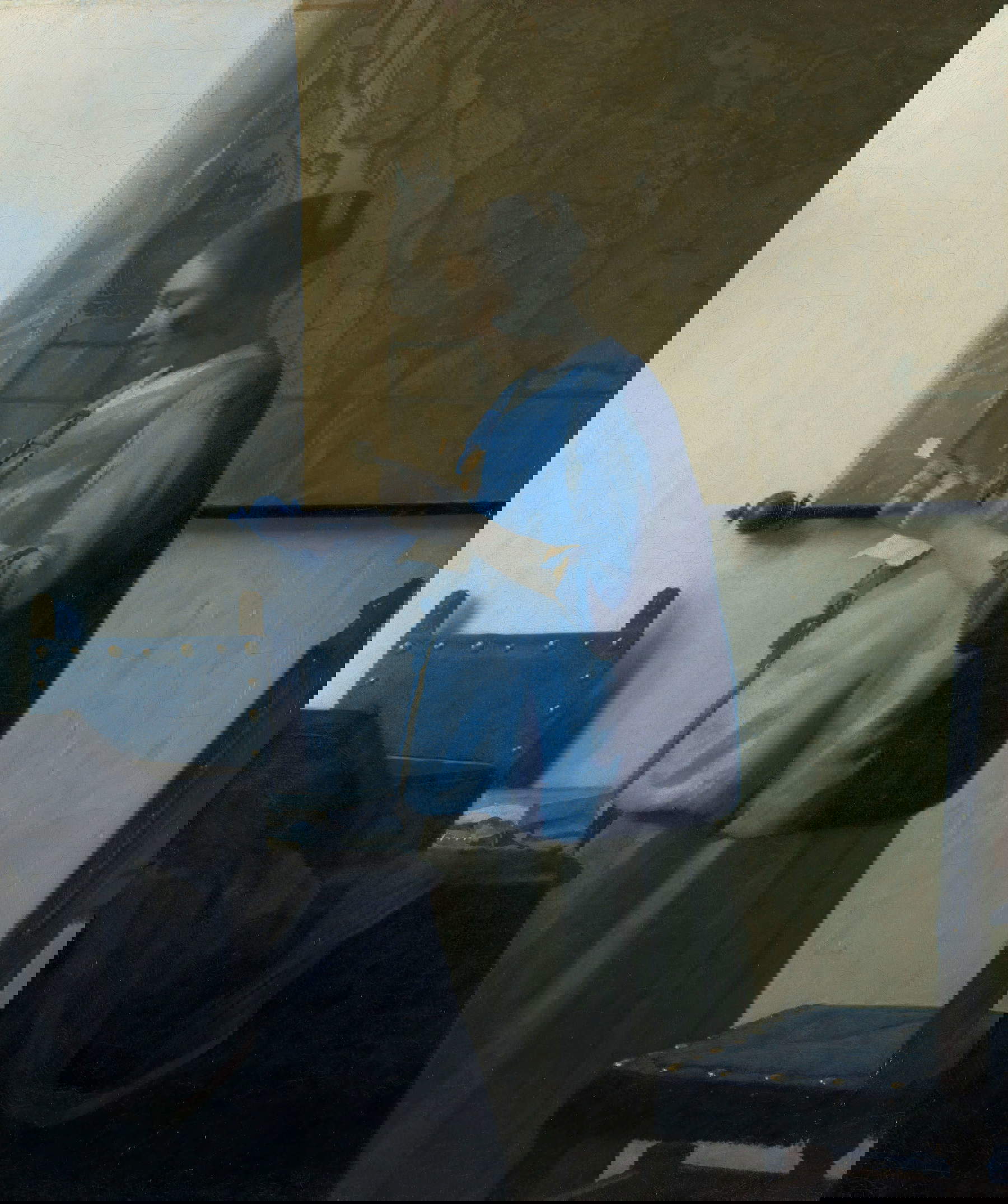
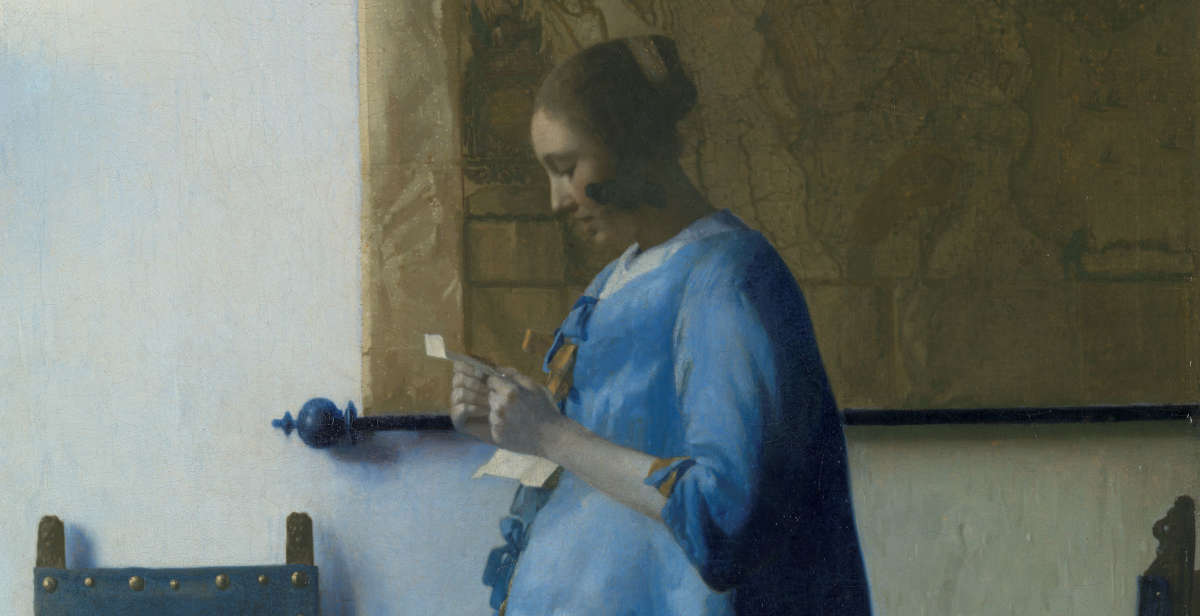
The scene painted by Vermeer takes place in a domestic interior by day. The protagonists are a silent interior, a young woman caught in profile reading a letter, cold light enveloping the scene, and a deep blue that dominates the space like a magnetic field. The young woman, with her hair up and wearing a house dress, holds the letter with both hands. Her belly, soft and round, suggests a possible pregnancy, accentuated by her blue tunic, a beddejak, bed jacket closed with small bows of the same color. Around her, a few essential furnishings: dark wooden chairs with brass studs, a table covered with a drape on which are laid a pearl necklace, a sheet of paper, perhaps another letter, and an open box, as if it had just been rummaged through. Behind, a large map occupies part of the wall. The viewer is excluded from this private scene, suspended in a dense, restrained silence. Nothing is made explicit, everything remains suggested. What the letter contains, who wrote it, why the young woman clutches it so tightly are questions that remain unanswered, generating the subtle narrative tension that characterizes Vermeer’s painting.
The visual focus of the painting is the blue stain of the dress, which dominates the entire composition with a silent force. The blue is not simply a chromatic element, but a field of energy around which the image is organized. Vermeer achieves this intensity by using a rare and precious pigment, lapis lazuli, imported from distant regions via the trade routes that connected Europe to Asia. The choice implies a significant economic investment and a profound awareness of the perceptual value of color: blue absorbs light and returns it diffusely, creating an expanding effect that envelops the figure and amplifies its presence.
The background is also loaded with meaning. On the light wall hangs a map ofHolland and West Frisia, recognizable in that printed in 1621 by Willem Janszoon Blaeu from a drawing by Balthasar Floriszoon van Beckernrode. The map evokes the Dutch Golden Age, the trades, discoveries and explorations that marked the economic and cultural rise of the Republic of the United Provinces. That map, almost a window drawn on the outside world and the kingdom’s possessions, places the intimacy of the scene on a global horizon.
The Delft of the second half of the 17th century was not just a prosperous town, but a cultural laboratory where religious freedom, mercantile spirit and technical innovation were intertwined. Craftsmen’s workshops dialogued with cartographers’ studios, merchants’ houses guarded scientific instruments and rare objects, and in taverns, advances in lens-making were discussed. It is in this context that Vermeer’s gaze is formed, anything but isolated from his time. The presence of Antonie van Leeuwenhoek and the ideal proximity to the thought of Baruch Spinoza delineate a symbolic triangle that restores the complexity of the intellectual horizon in which the artist operated.
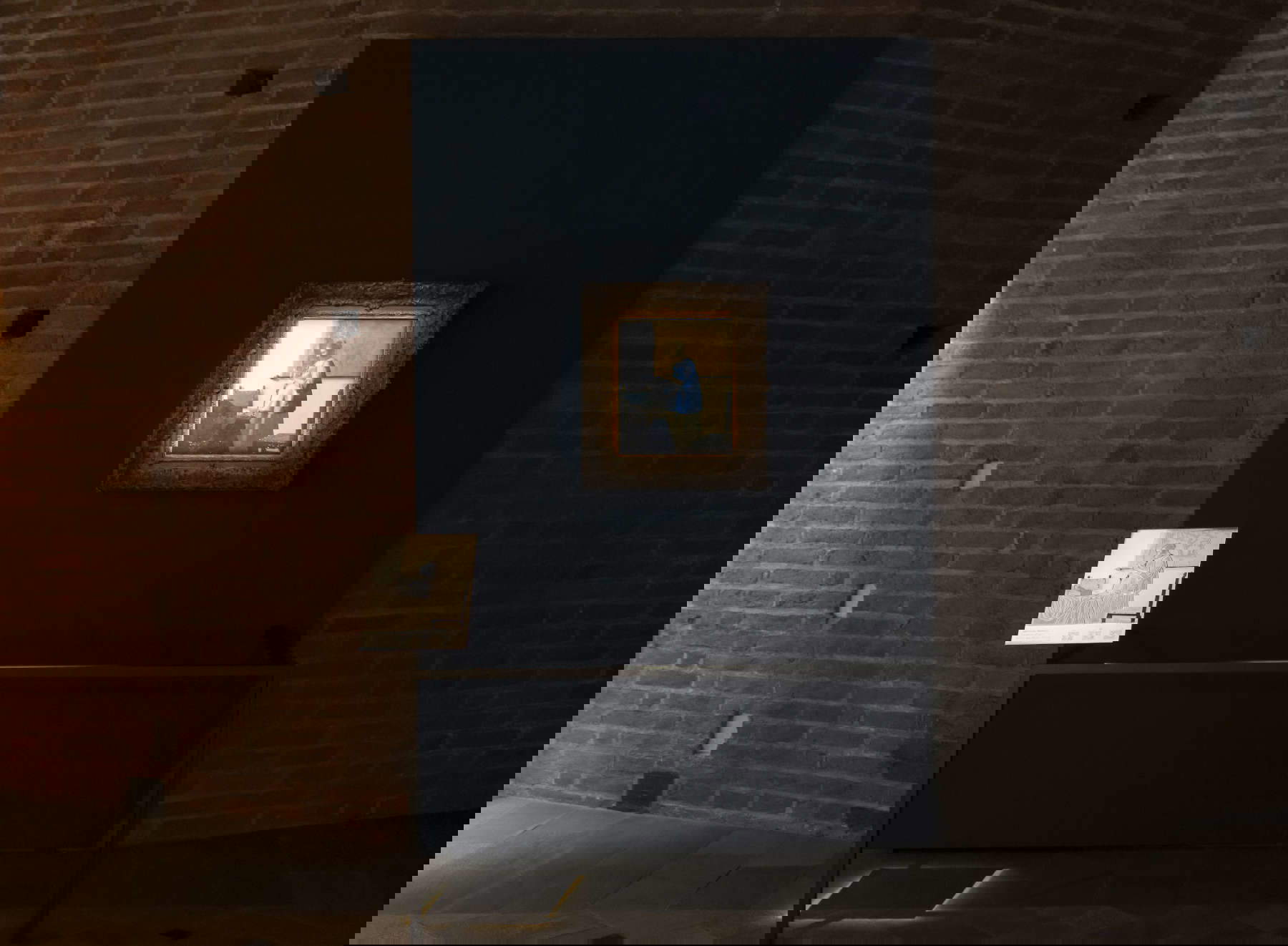
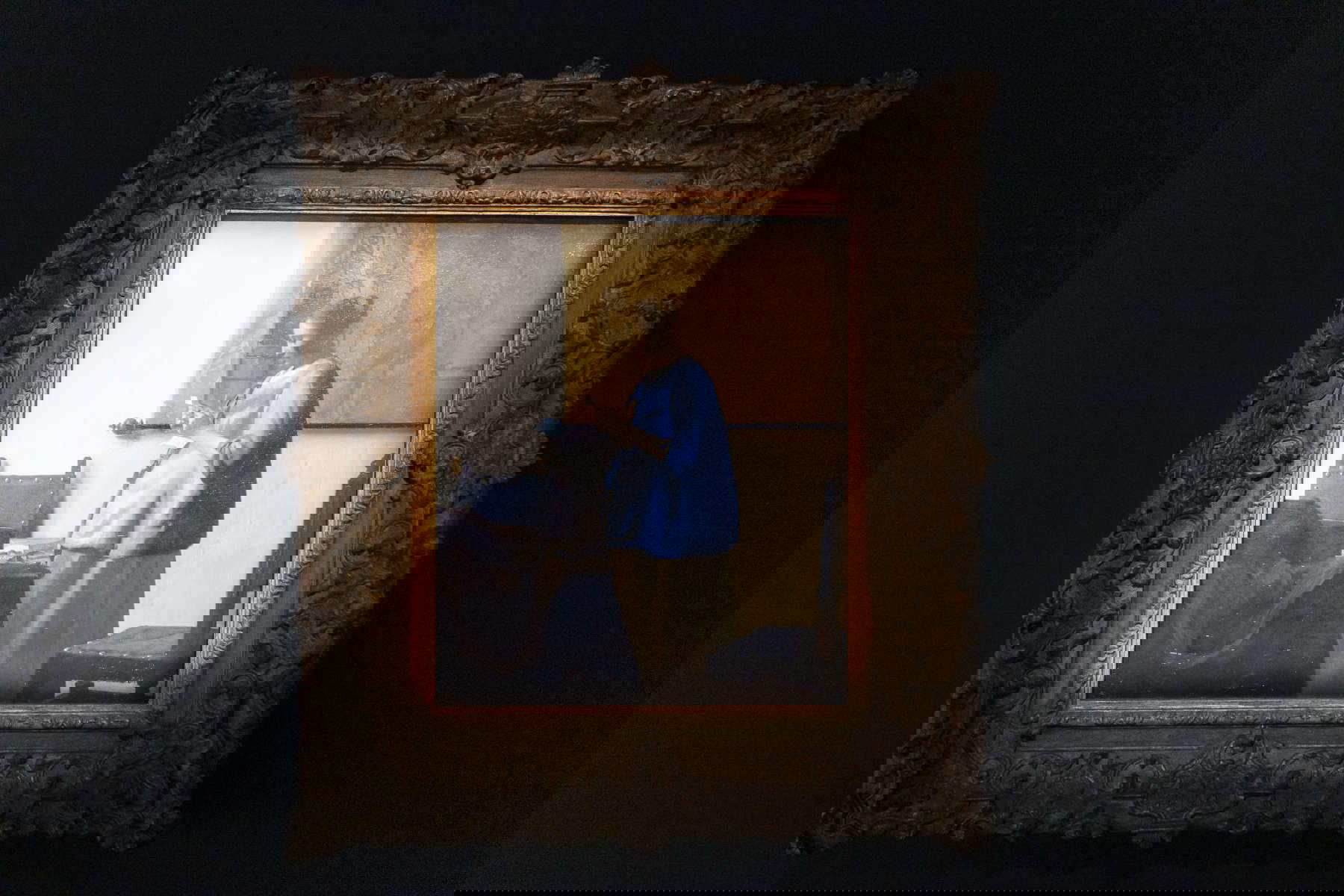
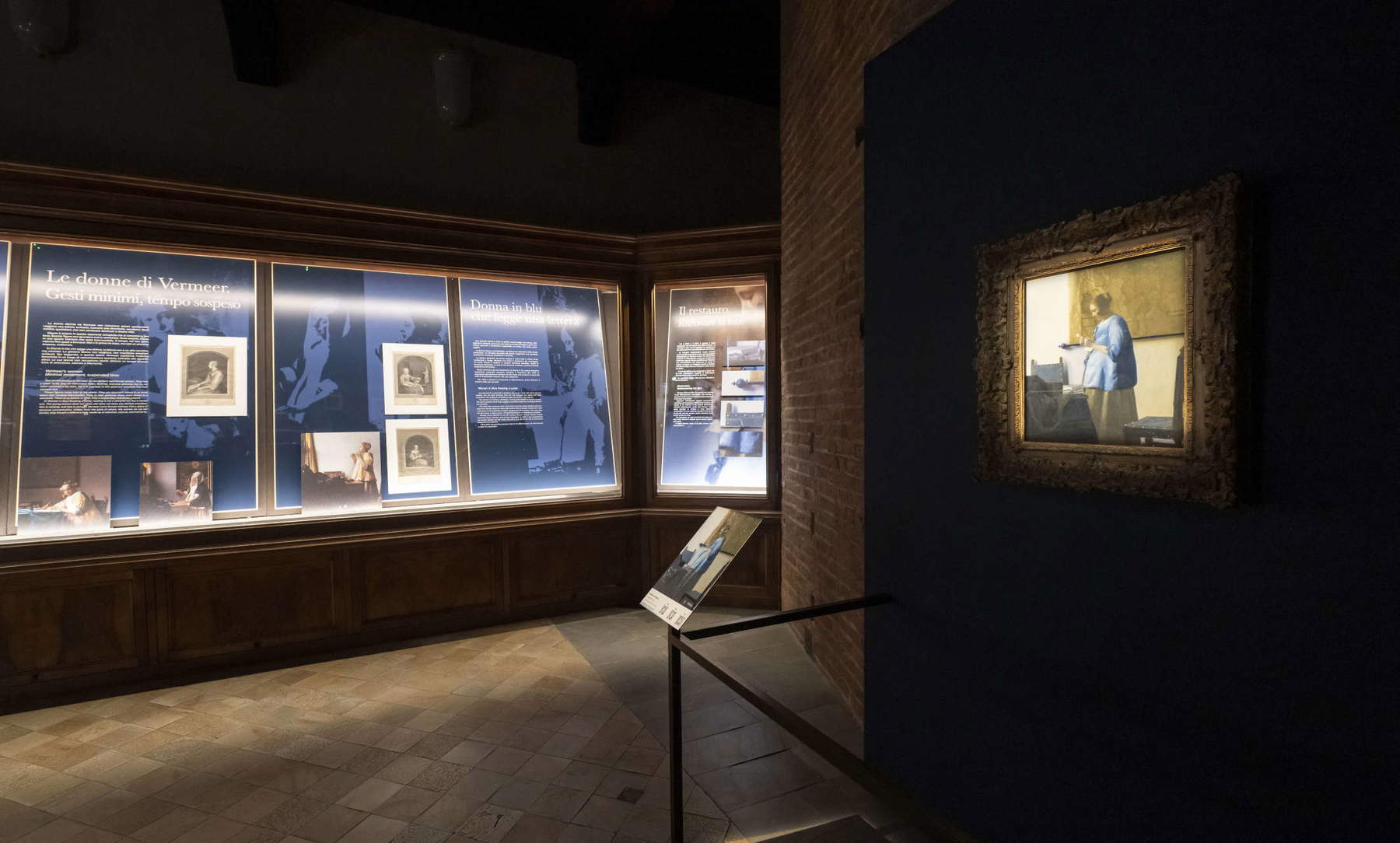
The Turin exhibition proposes a reading of Vermeer not only as a master of light and domestic interiors, but as the author of a mental painting, the outcome of an optical and conceptual revolution that runs through seventeenth-century Dutch culture. The ability to represent reality is intertwined with a rigorous construction of space and a skillful use of perspective and camera obscura, tools that help define the balance between observation and invention.
Through the juxtaposition with a selection of works from Palazzo Madama’s collections, including engravings, furniture and ceramics, the tour allows visitors to explore some of the painting’s central themes. The intimate and markedly feminine dimension of the scene appears strikingly modern. The poetics of subtraction, which eliminates the superfluous and focuses attention on a few elements, generates anticipation and intensity. The observation of the multiple shades of blue builds a calibrated alternation of shadows and light, while the role of the Dutch Golden Age maps and the corresponding Savoy maps, often edited by the Dutch geographers of the Blaeu family themselves, allows us to retrace the milestones in the history of cartography, from the first nautical charts to the atlases printed in Holland in the 18th century.
The layout of the painting is designed as a space for study and insight. Thematic panels accompany the visitor along a path that deals with the history of Holland, Dutch painting and its ability to represent reality, the use of the camera obscura and the laws of perspective, color composition, trade and the East India Company, and Vermeer’s critical fortune in later centuries.
Special attention has been paid toaccessibility. The exhibit includes a table with a high-definition reproduction of the painting and relief drawing. Through three Qrcodes it is possible to access an audio description in Italian and English and a description in Italian Sign Language with subtitles. The tools were created by Tactile Vision Lab and the Institute of the Deaf of Turin in collaboration with the Italian Union of the Blind and Visually Impaired, Turin section. Sections of the exhibition can also be enjoyed through a free downloadable audio reading in Italian at the beginning of the tour, while a print-out of the texts in enlarged, highly readable characters in Italian and English is available in the room.
Completing the initiative will be a catalog published by Silvana Editoriale, with contributions from the curators. Admission to the exhibition is included in the ticket to the permanent collections of Palazzo Madama.
 |
| Vermeer for the first time in Turin: the Woman in Blue at Palazzo Madama |

Warning: the translation into English of the original Italian article was created using automatic tools. We undertake to review all articles, but we do not guarantee the total absence of inaccuracies in the translation due to the program. You can find the original by clicking on the ITA button. If you find any mistake,please contact us.















 IT
IT FR
FR DE
DE ES
ES CN
CN