




by Redazione 25/03/2026


Categories: Archaeology / Disclaimer
The 2025 underwater excavation campaign on the wreck of the brig Mentor, which sank in 1802 near Kythera, an island in Greece and was used by Lord Elgin to transport antiquities, has returned for the first time a fragment of marble architectural decoration linked to cargo from the Acropolis in Athens.


Systematic underwater archaeological research on the historic wreck of the brig Mentor, conducted by theEphorate of Underwater Antiquities of Greece under the direction of archaeologist Dimitrios Kourkoumelis-Rodostamos, deputy director of the service, has begun in 2025. This was announced by the Ministry of Culture of Greece in a press release. The investigation concerns one of the wrecks linked to the affair of the relocation of the Parthenon sculptures in the early 19th century. The brig sank in September 1802 off the port of Avlemonas, in the southeastern part of the island of Kythira, Greece, while carrying a cargo of antiquities destined for Britain on behalf of Lord Elgin.
The Mentor was being used to transfer archaeological materials from Athens to Britain, including parts of the rich sculptural and architectural apparatus of the Acropolis monuments. During the 2025 excavation campaign, investigations focused on certain areas located west and north of the preserved portion of the hull.
A first section of excavation, referred to conventionally as Section 1/2025, was opened about five meters west of the preserved wreck. The objective was to verify the possible presence of remains of the brig’s hull in that area of the seabed. However, the operations did not lead to the identification of structural elements of the ship. The result seems to confirm the hypothesis that, after sinking, the hull was exposed for a relatively long period on the seabed, undergoing a process of rapid decomposition until it almost completely disappeared.


The destruction of the wreck was probably also contributed to by the first attempt to salvage the cargo made as early as 1802. The divers engaged in the operation, mainly sponge fishermen, encountered considerable difficulties in accessing the hold and decided to open a breach in the hull to reach the interior of the ship. The opening was made at the very spot where the vessel had been breached during its impact with the rocks, an episode described in the letters of William Hamilton, Lord Elgin’s secretary and the person responsible for coordinating the salvage operation. This intervention accelerated the deterioration of the brig’s wooden structure. The excavation of Section 1/2025 ended at a depth of about one meter below the seabed level, at an elevation of about 21.9 meters below the sea surface, without returning any remains of the hull.
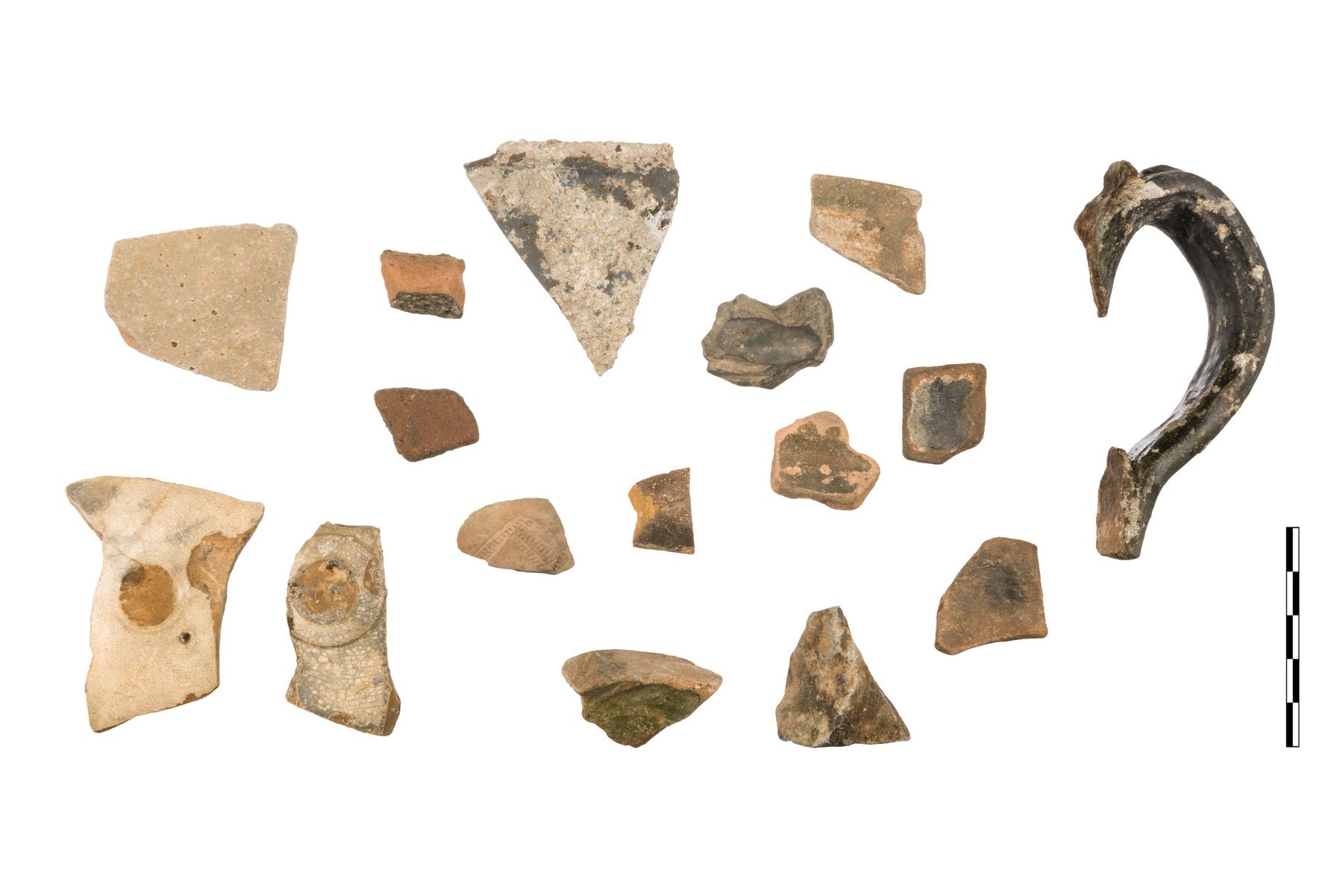
A second section, named Section 2/2025, was opened to the north of the preserved section of the keel, with the aim of checking for any dispersion of materials from the ship’s structure in that direction. Again, no structural elements such as fragments of the frames or parts of the planking were found. However, several items related to the brig’s equipment emerged, as well as fragments of tools and vessels of daily use.
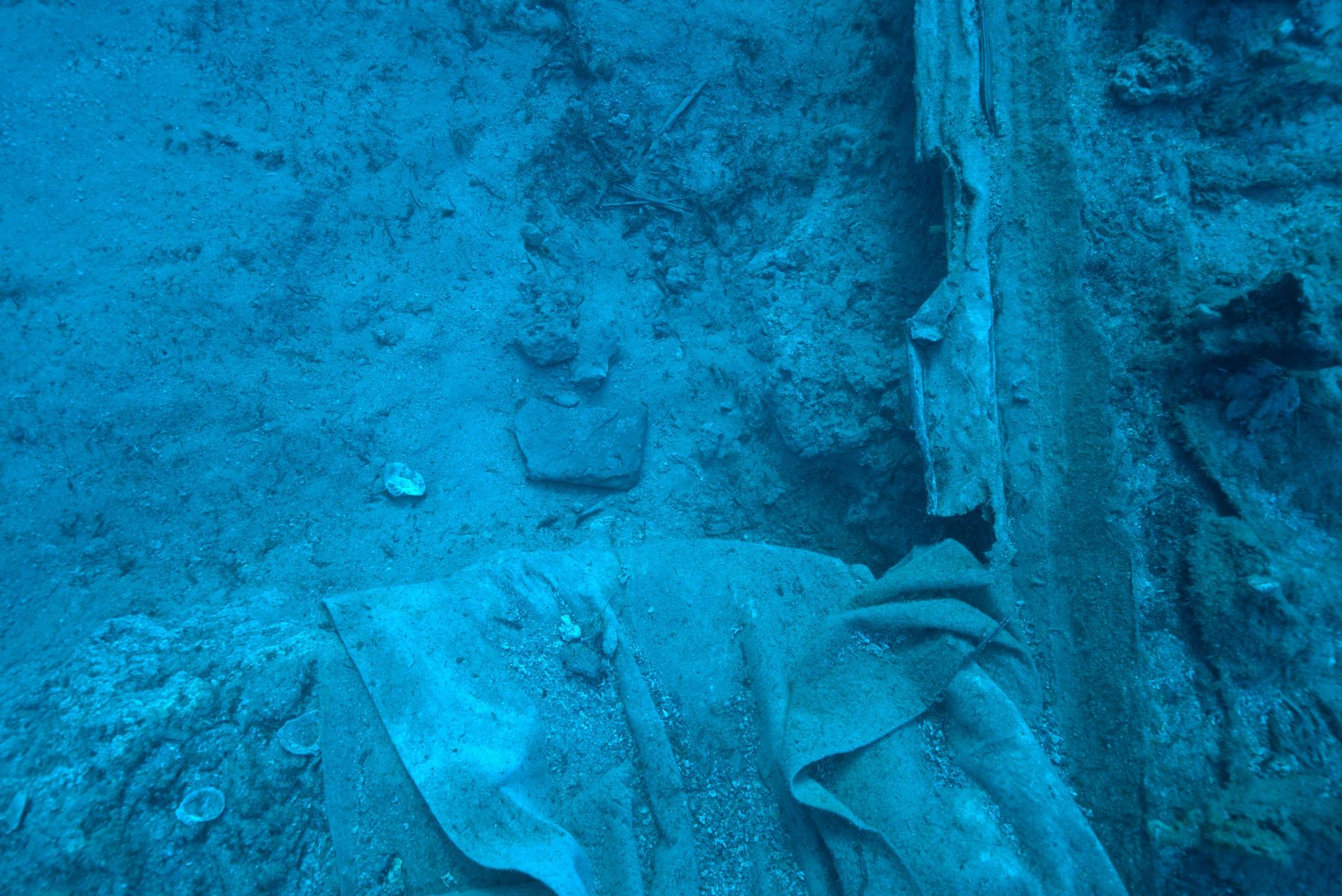
The findings also include parts of the copper coating that protected the submerged portions of the hull. The application of copper plates represented a widespread technique in shipbuilding at the time to defend the hull from the action of marine organisms and wear and tear. Investigations also suggest that the lower part of the ship, and particularly the keel, was further reinforced with lead sheets. One item of particular interest consists of a fragment of lining that can be placed exactly at the point of connection between the copper and lead sheets, a detail that offers insight into the vessel’s construction technique.
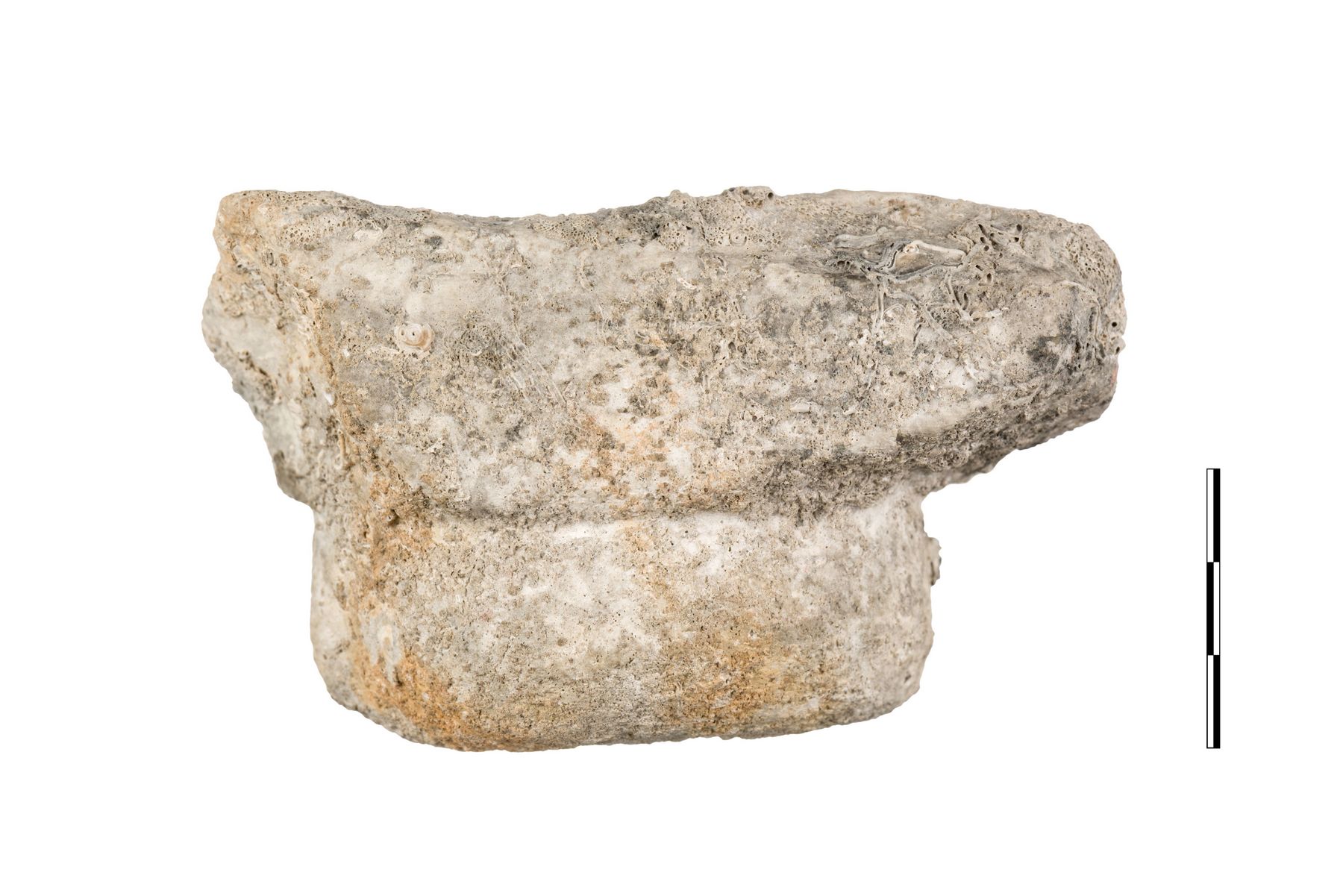
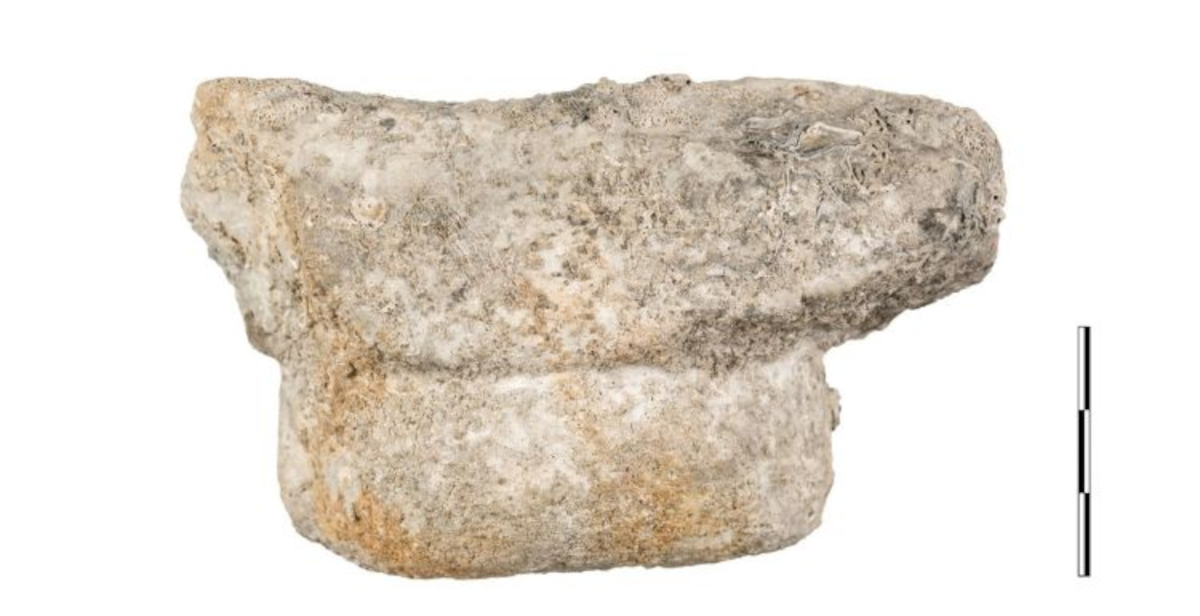
A fragment of a terracotta slab, probably connected to the insulation system of the galley on board, was also found during the excavation. The find was located a short distance from the ship’s keel and provides evidence of the functional structures on the brig. The most important find of the 2025 campaign, however, concerns a small decorative marble element, identified as a fragment of an architectural slab with a decorative drop. The piece could belong to a crowning element of an architrave or to a mutulo (an ornamental motif of the Doric architectural order) cornice. The fragment measures about 9.3 centimeters long and 4.7 centimeters wide, while the decorative drop has a diameter of 6.51 centimeters and a height of 2.2 centimeters. The dimensions are comparable to those previously recorded for the decorative drops of theParthenon lintel.
This is the first time that a fragment of sculptural decoration attributable to the valuable cargo of antiquities carried by the ship has been identified at the Mentor wreck site. Most of the materials were already recovered during salvage operations initiated in 1802, but the new find shows that some of the cargo remained on the seabed. Conservation analysis and subsequent studies should clarify more precisely the fragment’s monument of origin. Specialists from a variety of disciplines participated in the 2025 underwater excavation campaign, including archaeologists, marine biologists, underwater instructors, underwater photographers, restorers, and seafloor technicians. The team included Alexandros Tourtas, Elena Bonelou, Aris Michail, Giannis Issaris, Elpida Karadimou, Vasilis Tsiairis, Chrysa Fouseki, Irini Malliou, Spyros Moureas, Giorgos Bouzalakos, Stefanos Kontos, Manouil Kourkoumelis, and Maria Tsokla, among others.
 |
| Greece, marble fragment possibly linked to Parthenon marbles emerges from 1802 shipwreck |
Warning: the translation into English of the original Italian article was created using automatic tools. We undertake to review all articles, but we do not guarantee the total absence of inaccuracies in the translation due to the program. You can find the original by clicking on the ITA button. If you find any mistake,please contact us.