




Enslaved people in some cases seem to have receivedbetter nutrition than free individuals. This hypothesis, suggested by written sources, is now finding new confirmation in the excavations of the villa of Civita Giuliana near Pompeii, financed with a 140-thousand-euro grant as part of the “National campaign of excavations in Pompeii and other national parks,” supported by the Budget Law 2024 at the proposal of the Ministry of Culture.
As reported in theE-Journal of the Pompeii excavations, amphorae containing fava beans, one of which is still half-empty, and a large basket with fruit including pears, apples or sorbs were found in one of the rooms located on the second floor of the servile quarter of the large villa. These were supplementary foods for enslaved men, women and children, who lived in small rooms of about 16 square meters, each with up to three beds. Since these individuals were considered “tools of production,” the cost of which could reach several thousand sesterces, the owner had probably seen fit to enhance their grain-based diet with foods rich in vitamins (such as apples or pears) and protein (such as fava beans).
The storage of these products on the second floor, in an area that will be the subject of further investigation in the coming months, must probably have had a dual function. On the one hand, the foods were better protected from pests such as mice and rats: in fact, as early as 2023, remains of several rodents had been identified in the ground-floor living quarters, which had no real floor but only a layer of beaten earth. On the other hand, it is plausible that a rationing system was in place, with careful control of the quantities taken daily, varying according to age, tasks, and gender. Storing food upstairs would have facilitated such management, perhaps entrusted to the owner’s most trusted servants, who exercised control over others according to a system previously reconstructed through analysis of the servile neighborhood.
It is estimated that to support about fifty workers (a number corresponding to the capacity of the servile sector of the villa, one of the most extensive known so far in the Vesuvian area) about 18500 kilograms of grain per year were needed. To obtain such a quantity, it was essential to cultivate at least 25 hectares of land. However, to prevent diseases due to a deficient diet, it was crucial to add other foods to that base. As a result, it was not uncommon for slaves in villas around Pompeii to be better fed than many free citizens, whose families often lacked the necessities to survive and were forced to beg alms from influential figures in the city.
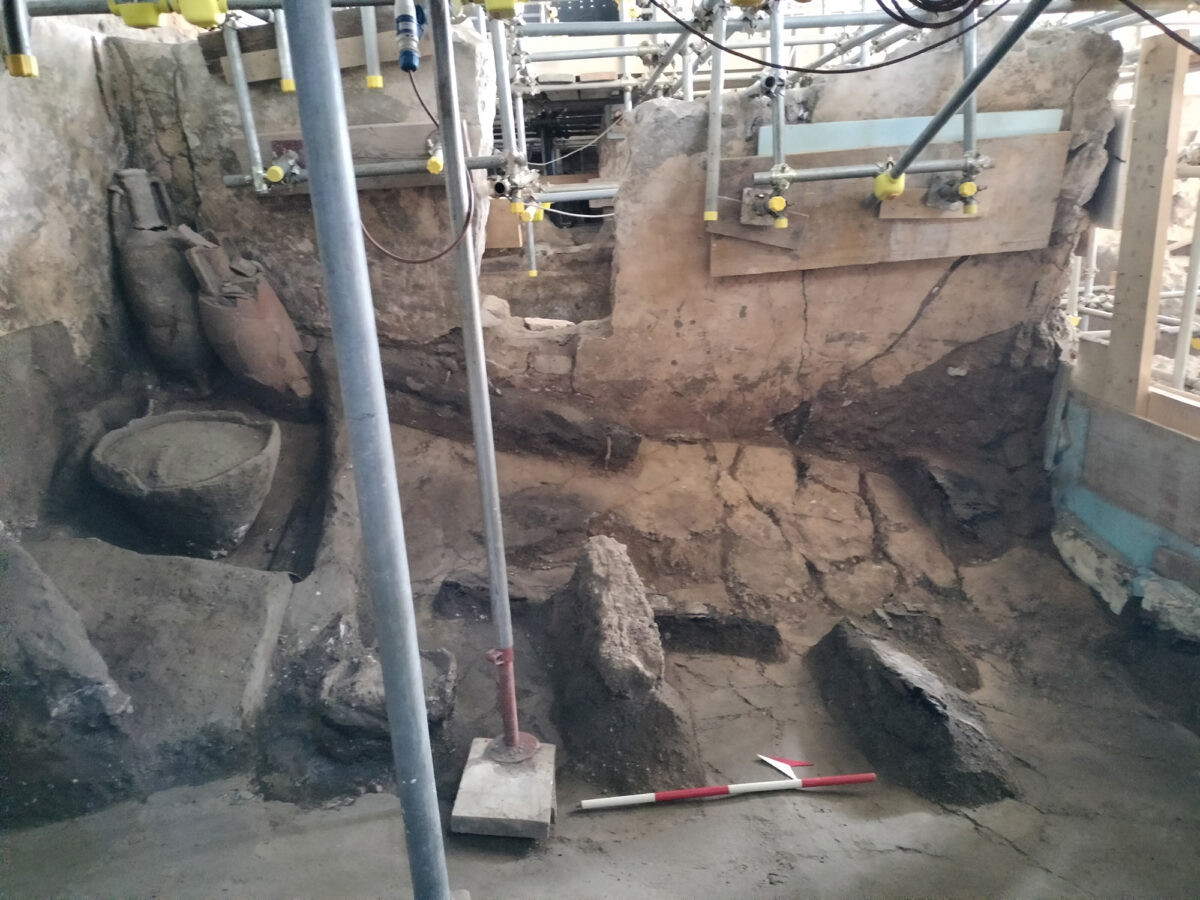
The archaeological research focused on the northern sector of the servile quarter, under the current layout of Via Giuliana, where wall structures referable to the upper floors of the villa emerged, in particular four rooms delimited by partitions in opus craticium.
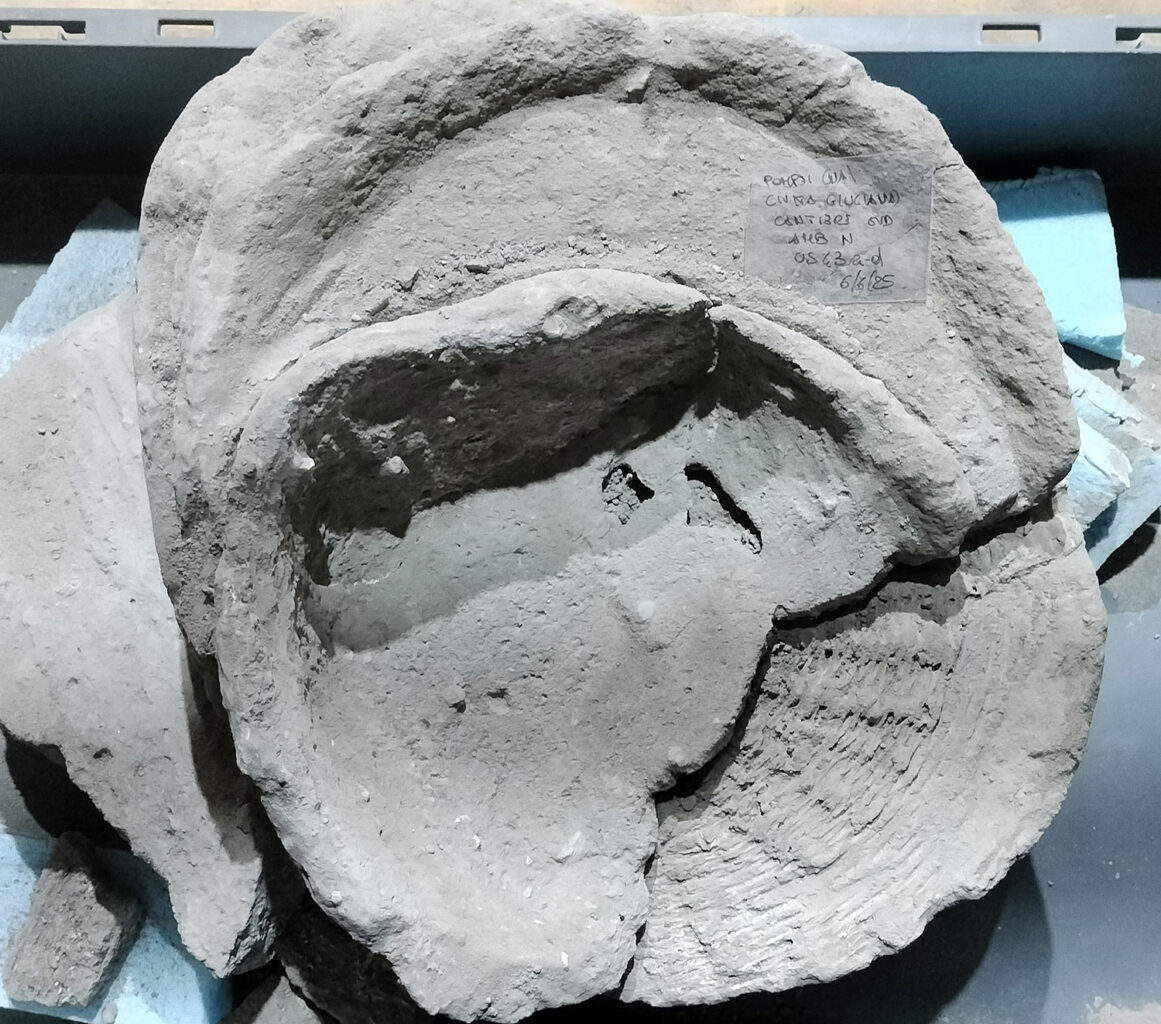
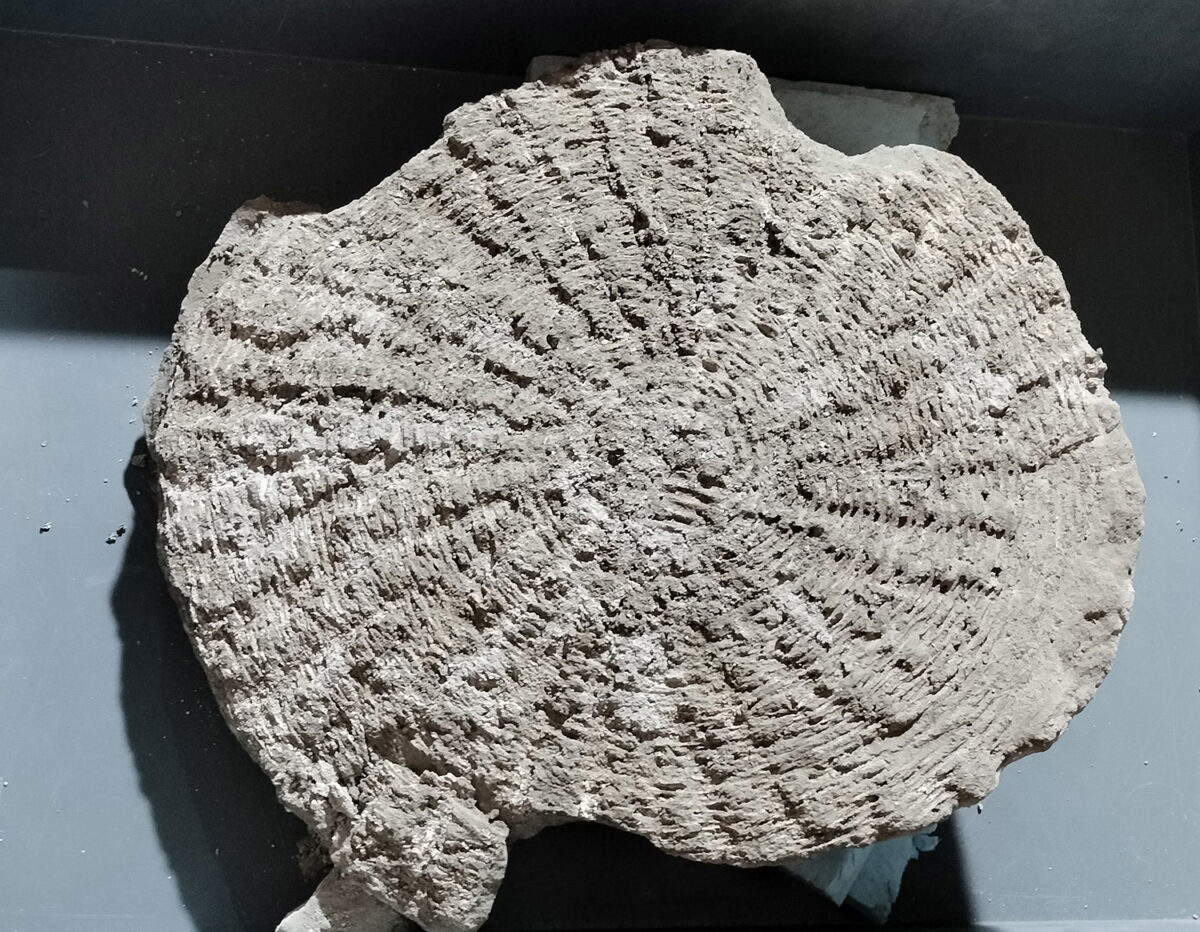
The spaces examined on the ground floor returned the cast of a door leaf formed by two rectangular panels, still provided with the iron studs. This is probably one of the doors of the double-leaf doorway that led from the portico to the corridor that ended at the entrance to the shrine. Another cast appears to belong to an agricultural implement, perhaps a shoulder plow or a stemma, the element used to direct an animal-drawn plow. A further cast, of considerable size, may represent the door leaf of a large gate, which, judging from the joints and accommodations on the top, must also have been double-leafed. Its location, tilted slightly toward the wall, and its proximity to the so-called carpenter’s room suggest that it was awaiting workmanship or repair.
“It’s cases like this where the absurdity of the ancient slave system becomes blatant,” commented Pompeii Archaeological Park director Gabriel Zuchtriegel, co-author of the study on the servile neighborhood of Civita Giuliana. “Human beings are treated as tools, as machines, but humanity cannot be so easily erased. And so, the boundary between slave and free was constantly in danger of vanishing: we breathe the same air, we eat the same things, sometimes slaves eat even better than the so-called free. Then it explains how at that time authors like Seneca or St. Paul could come up with the idea that in the end we are all slaves in one sense or another, but we can also all be free, at least in soul. It is, after all, a theme that does not belong only to the past, since slavery, in other forms and under other names, is still a reality globally; some estimates speak of more than 30million people in the world living in conditions comparable to modern forms of slavery.”
The Civita villa was the subject of an excavation campaign that began in 2017 thanks to collaboration with the Torre Annunziata Public Prosecutor’s Office, which in 2019 was sanctioned by the signing of a Memorandum of Understanding, renewed several times, aimed at halting the systematic looting that had affected the villa for years. The 2023-24 investigations focused along the urban stretch of the road, investigating for the first time an area interposed between the two already known sectors, the residential one to the north and the servile neighborhood to the south, in order to verify the reliability of the information recovered from the judicial investigations conducted by the Prosecutor’s Office. Currently underway is the project “Demolition, Excavation and Enhancement in the Civita Giuliana locality,” financed with ordinary Park funds, which involves the demolition of two buildings that insist on the servile quarter and the subsequent expansion of archaeological excavation activities in this quarter of which, at present, we know only a part. The excavation will make it possible to reconstruct a more complete and articulated picture of the planimetric organization of the villa and its extension into the servile quarter, an element of fundamental importance for fine-tuning new conservation and enhancement strategies for the entire area in question.
|
| Pompeii, new findings on slave feeding in the villa of Civita Giuliana |

Warning: the translation into English of the original Italian article was created using automatic tools. We undertake to review all articles, but we do not guarantee the total absence of inaccuracies in the translation due to the program. You can find the original by clicking on the ITA button. If you find any mistake,please contact us.






























 IT
IT FR
FR DE
DE ES
ES CN
CN


