




by Redazione 17/01/2026



Categories: Archaeology / Disclaimer
A stone structure dating from the Neolithic period, dated between 4495 and 4335 B.C., has been found in the Terme di Sorano area in the province of Grosseto, testifying to the use of thermal waters as early as prehistoric times.


A stone structure dating from the Neolithic period, datable between 4495 and 4335 B.C., has been discovered in the area of the Sorano Baths in the Tuscan Maremma, in the province of Grosseto. The discovery was made as part of an ongoing archaeological excavation authorized by the Ministry of Culture. The discovery testifies to the use of thermal waters as early as prehistoric times and represents some of the oldest known evidence of human presence in the area.

The structure emerged within a large cavity carved out of a travertine shelf, with a surface area of about 320 square meters and a maximum depth of 3.60 meters from ground level, above the so-called “Bath of the Friars,” a historic thermal pool dating back to the 15th century that was once used by the religious of the parish of Santa Maria dell’Aquila.
During the first excavation campaign, which began in July 2024, the removal of the surface layer of humus allowed the identification of a funnel-shaped entrance, equipped with three steps carved directly into the rock. A stratigraphic assay conducted inside the cavity, to a depth of about 2.50 meters, revealed at the bottom an ellipsoid-shaped structure, with dimensions of 2.60 by 2.20 meters, built with travertine and tuff blocks arranged on several levels, with an internal fill consisting of minute stones and external retaining ballast.


An ancient thermal water table, never previously documented in this area of the site, was also identified during the investigation. Radiocarbon analysis (C14), performed on charcoal fragments found in direct contact with the stones of the structure, allowed its construction to be attributed to the Neolithic age. This dating is also confirmed by the finding of lithic tools and ceramic fragments, which indicate that the thermal waters were used for therapeutic and, in all likelihood, ritual purposes.
Although a significant portion of the cavity has yet to be investigated, the data collected so far already highlight the high scientific value of the site and its important contribution to the knowledge of the Neolithic period in Italy, particularly with regard to the relationship between human communities and hot springs.
The executive phase was entrusted to a team of archaeologists and collaborators, directed by Stefano Giuntoli, with the deputy direction of Domenica Palmieri and Francesco Zabban, with the collaboration of geologist Fabio Lorenzi and under the supervision of the competent Soprintendenza Archeologia, Belle Arti e Paesaggio for the provinces of Siena, Grosseto and Arezzo, in the person of officials Giovanni Altamore and Jacopo Francesco Tulipano.
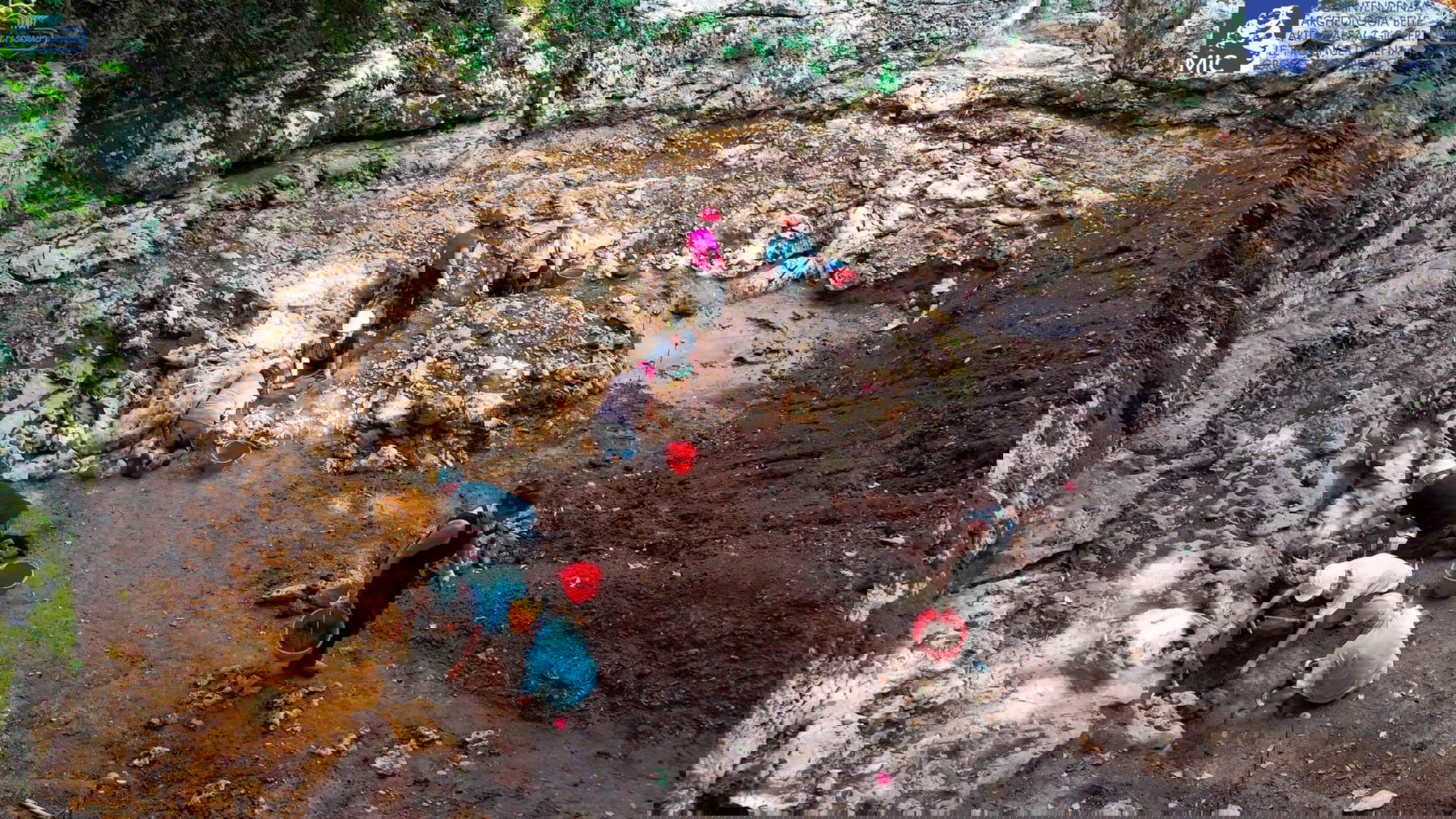 |
| Sorano thermal baths, Neolithic structure discovered that testifies to use of thermal waters as early as prehistoric times |
Warning: the translation into English of the original Italian article was created using automatic tools. We undertake to review all articles, but we do not guarantee the total absence of inaccuracies in the translation due to the program. You can find the original by clicking on the ITA button. If you find any mistake,please contact us.