





An archaeological discovery in northern Sinai could help redefine the religious and cultural role of the ancient city ofPelusium (or Pelusium) in the eastern Mediterranean. After six years of excavations at the site of Tell el-Farama, corresponding to historic Pelusium, an Egyptian archaeological mission of the Supreme Council of Antiquities has unearthed the remains of a religious building dedicated to the local god Pelusius (or Pelusium).
According to a statement from the Egyptian Ministry of Tourism and Antiquities, the structure unearthed has novel architectural features and documents an important cultural interweaving between Egyptian traditions and architectural models from the Hellenistic and Roman periods. The Minister of Tourism and Antiquities, Sherif Fathy, stressed that the discovery confirms the archaeological and strategic importance of the North Sinai area, which is rich in as-yet unexplored sites potentially relevant to historical research. The ministry also reiterated its intention to continue excavations and scientific investigations at the site to expand knowledge about the region.
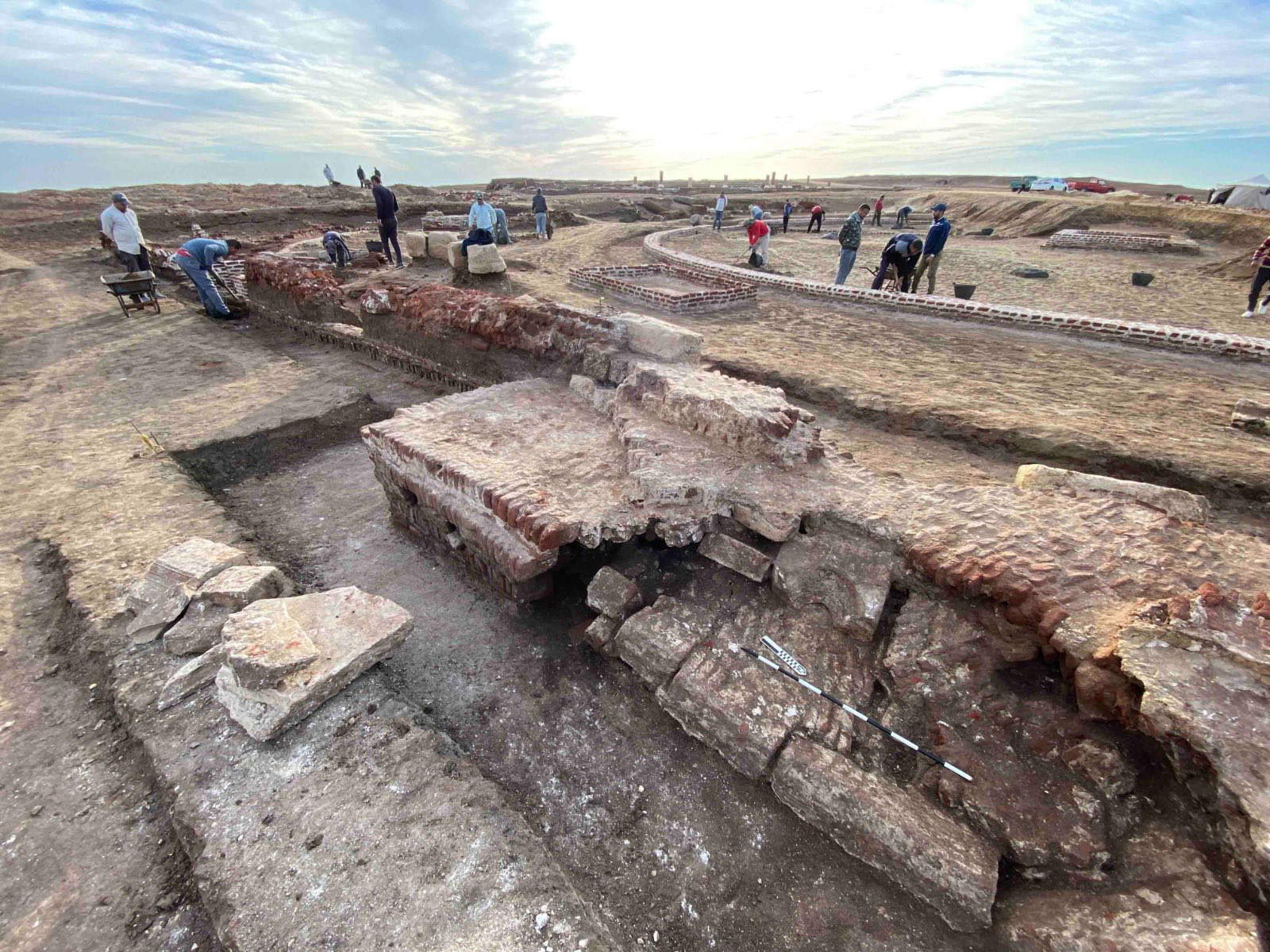
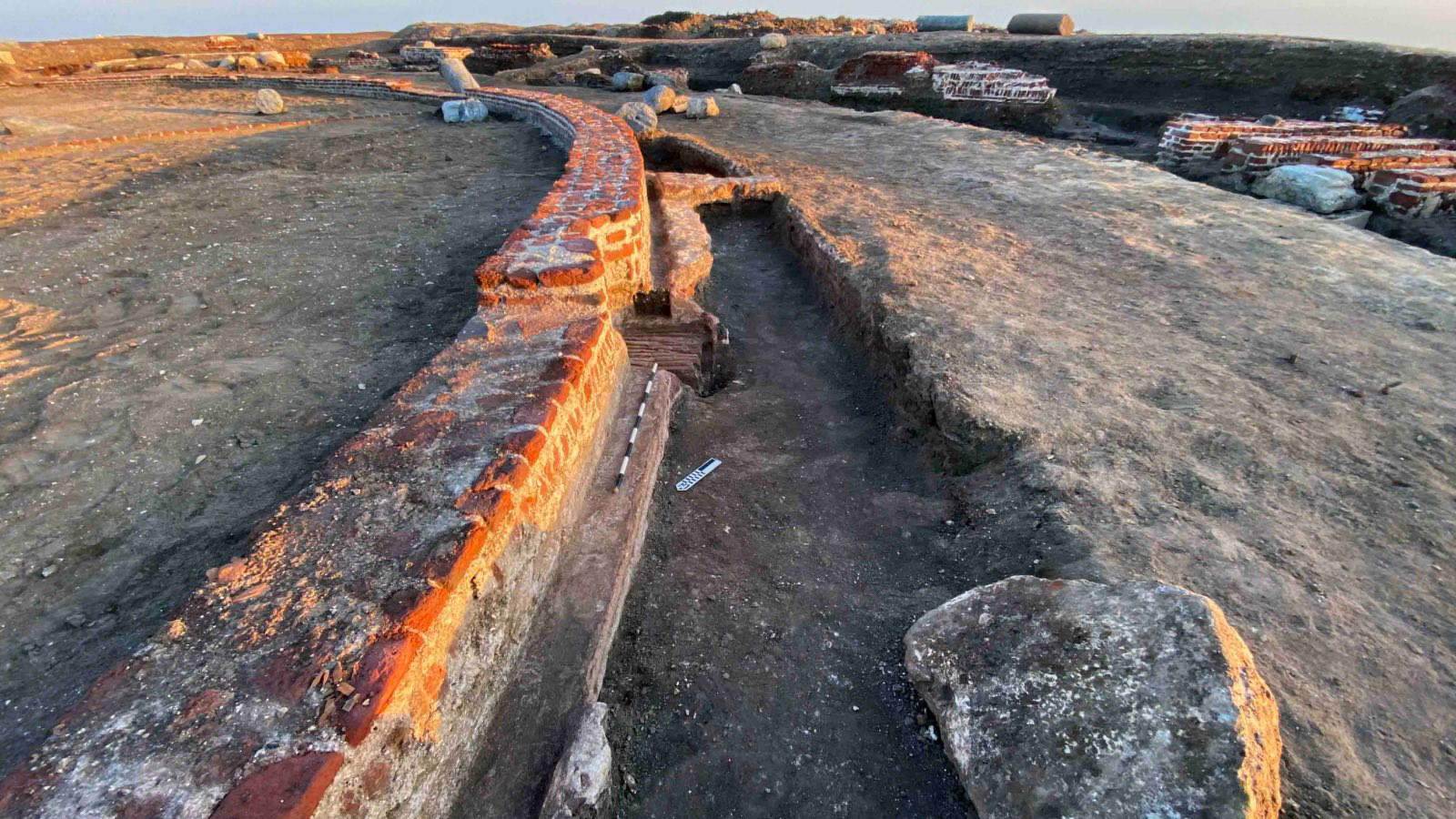
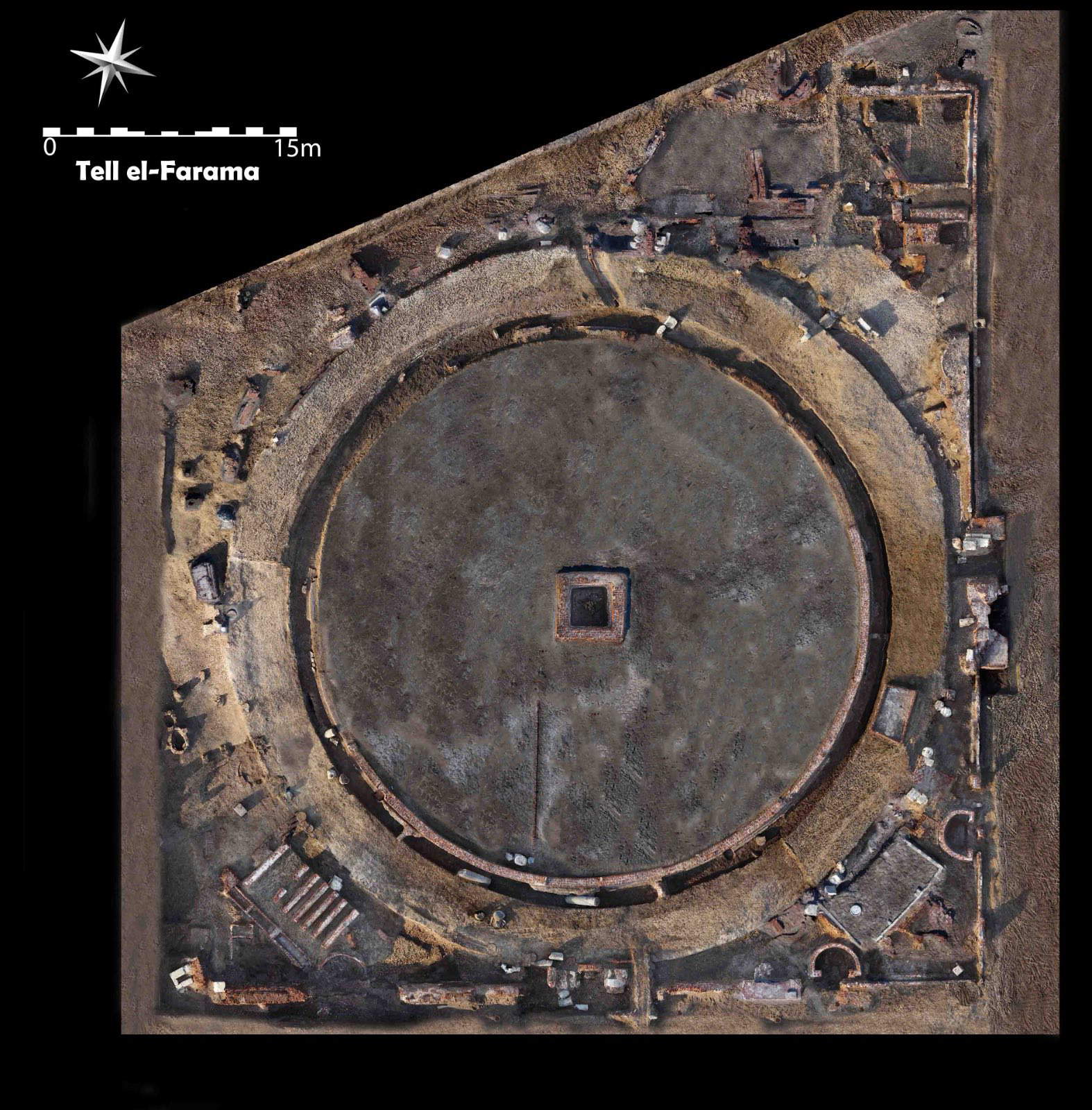
For Hisham El-Leithy, secretary general of the Supreme Council of Antiquities, the find helps clarify the position occupied by Pelusium in antiquity. Indeed, the city was a crossing point between Egypt and the Levant and played an important role in the dissemination of religious and cultural ideas in the ancient world. Archaeological evidence also indicates a continuity of use of the building between the second century B.C. and the sixth century A.D., with limited architectural changes over the centuries.
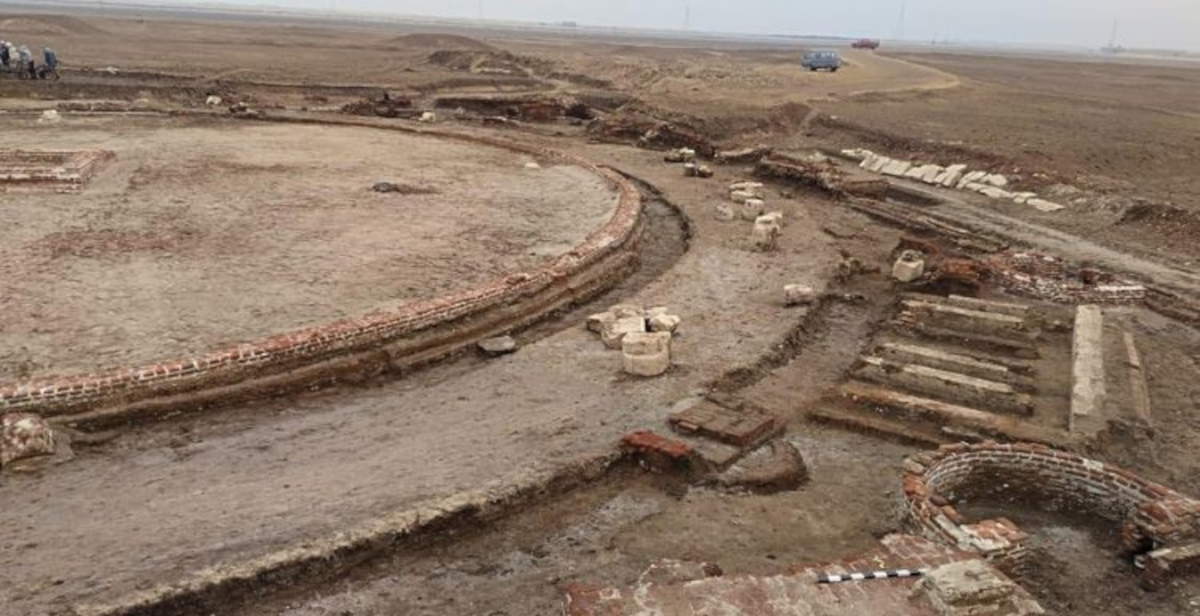
Mohamed Abdel-Badi, head of the Egyptian Antiquities Sector at the Supreme Council of Antiquities, indicated that the sacred complex is characterized by a large circular basin with a diameter of about 35 meters, connected to a branch of the Pelusian Nile. The basin was filled with silt-laden water from the river, an element that suggests a definite symbolic value. In fact, the name of the Pelusian deity would derive from the Greek word “pelos,” meaning “mud” or “clay.” Surrounding the basin is an intricate system of canals designed for water runoff, while a square base has been identified in the center that may have supported a monumental statue of the deity.
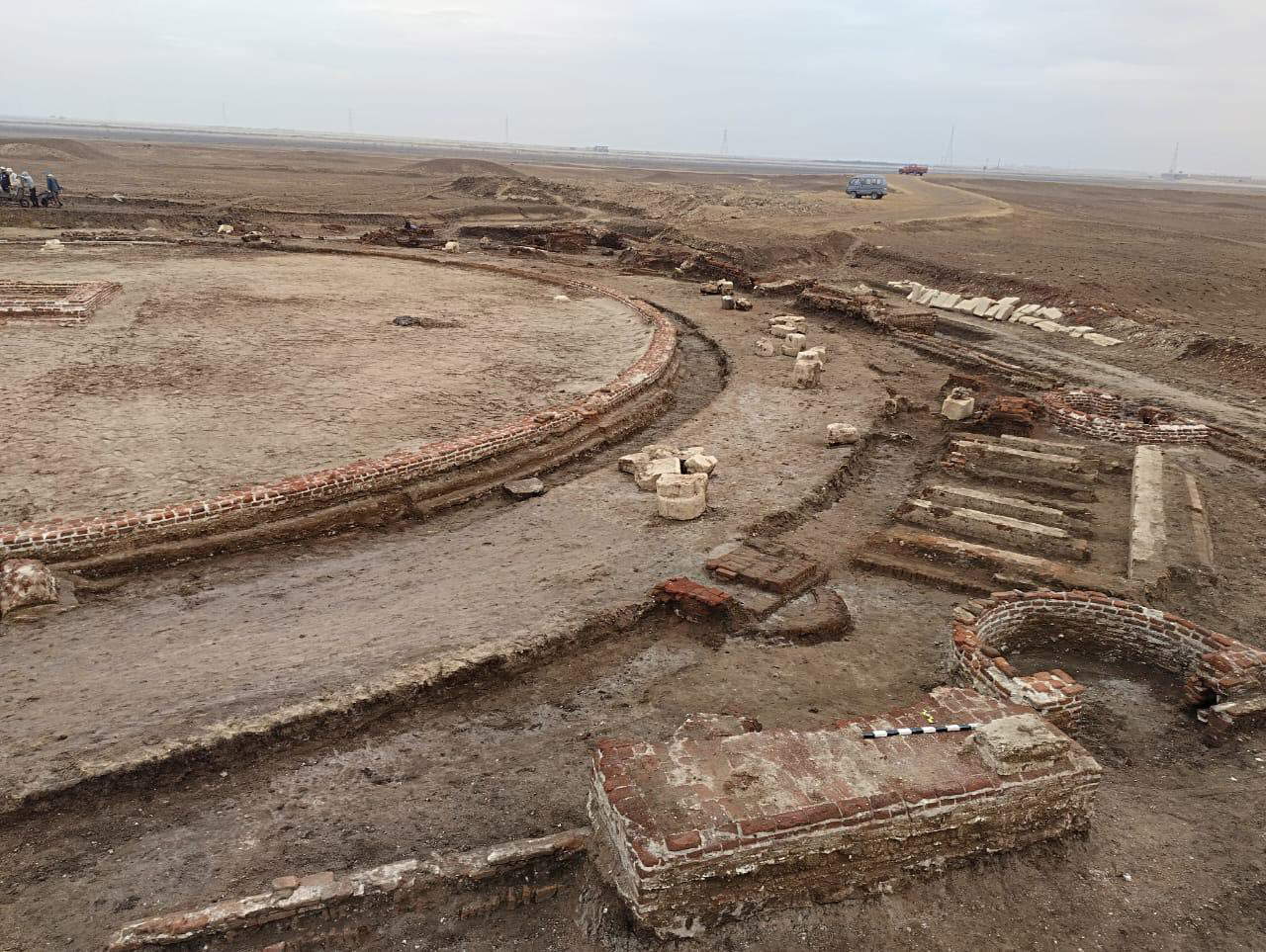
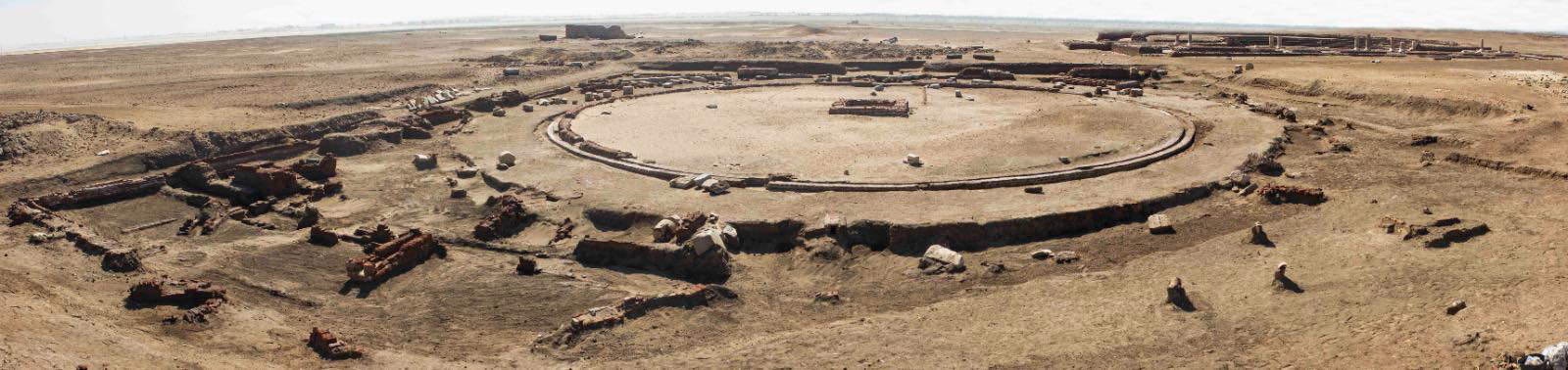
The head of the mission, Hisham Hussein, director of the Central Administration for Antiquities of Lower Egypt and Sinai, explained that archaeological investigations at the site began in 2019, when the mission identified a limited portion, amounting to about 25 percent, of a circular structure built of red bricks. At first, the building was interpreted as a possible seat of the city council. Subsequent excavation campaigns, however, allowed the entire complex to be brought to light and its function to be understood.
In fact, the monument has an articulated system of courtyards, cisterns and water channels, as well as multiple entrances located on the eastern, southern and western sides; however, the northern sector is severely damaged. The scientific re-examination, also carried out in collaboration with international scholars including archaeologist Jean-Yves Carrez-Maratray of the Sorbonne University in Paris, led to the conclusion that the structure was not a civil building, but rather a sacred installation related to water-related religious rituals.
 |
| Temple of the god Pelusium discovered in Sinai: a shrine rewrites the history of Pelusium |

Warning: the translation into English of the original Italian article was created using automatic tools. We undertake to review all articles, but we do not guarantee the total absence of inaccuracies in the translation due to the program. You can find the original by clicking on the ITA button. If you find any mistake,please contact us.


















 IT
IT FR
FR DE
DE ES
ES CN
CN


