



by Redazione 26/02/2026



Categories: Art and artists / Disclaimer
Two cultural projects, Waral and DeRive, bring murals and urban art to the historic centers of Varallo and Rive (Vercelli), creating a link between local tradition and contemporary experimentation and transforming Piedmontese villages into veritable open-air museums.

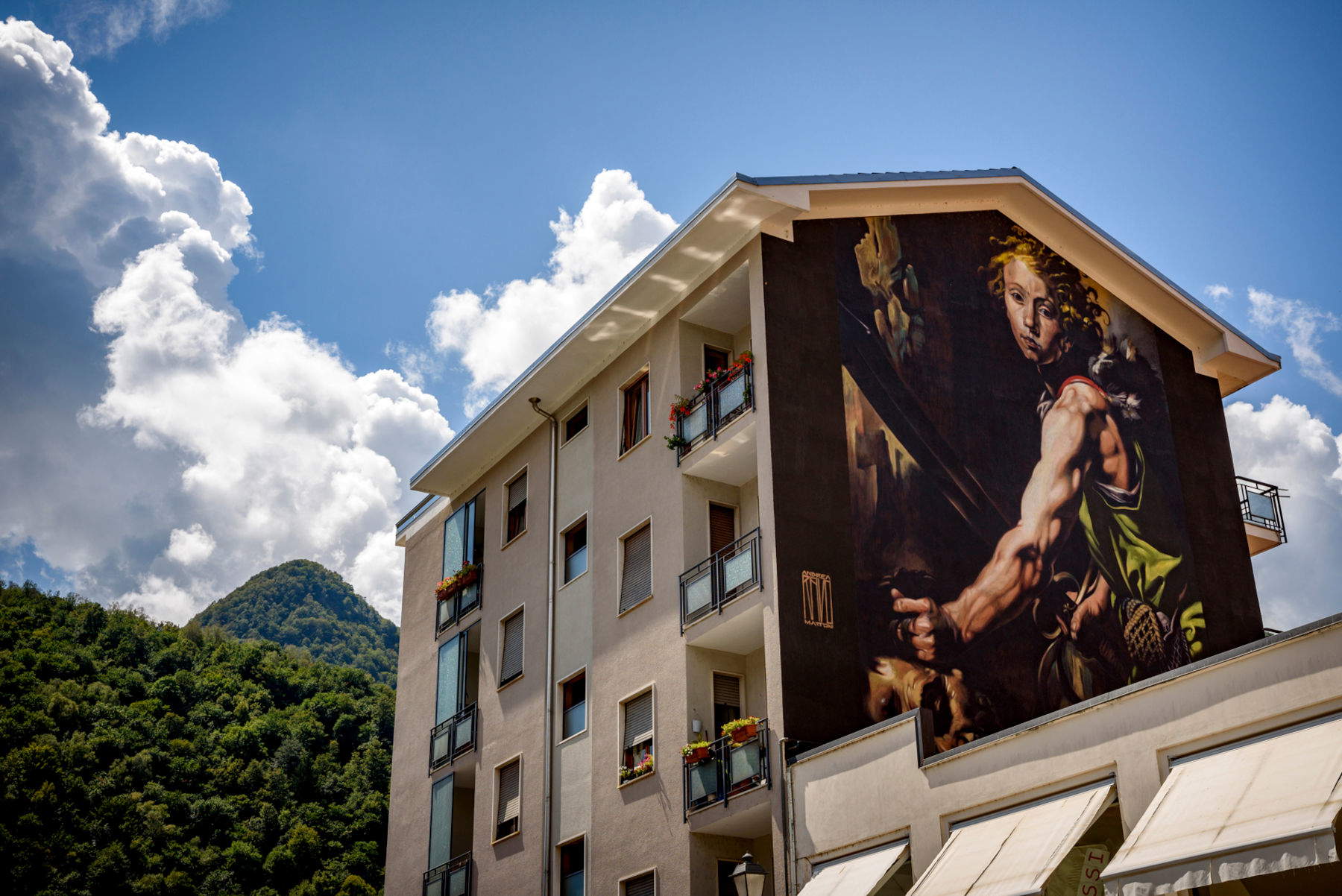
In recent years, the Piedmont cultural scene has seen the phenomenon of Street Art consolidate in the Province of Vercelli thanks to two distinct but complementary initiatives: Waral - Urban Art Project and DeRive - Public Art in Rural Space. Both projects aim to transform villages into containers of contemporary art, creating a direct link between urban works and the historical and cultural heritage of the centers involved.

Waral - Urban Art Project is developed in Varallo, a center known for its artistic and religious heritage, with the Sacro Monte, a UNESCO heritage site since 2003, consisting of 44 frescoed chapels and a Basilica positioned in a natural park. The initiative brings color and new languages to the village through murals that decorate facades and historic buildings, fitting harmoniously into the existing urban fabric. Conceived and curated by photographer Alessandro Dealberto under the artistic direction of Giovanni Magnoli, aka reFRESHinK, the project takes the form of an open-air museum in constant evolution, where architectural surfaces become supports for works that dialogue with the town’s cultural tradition. The artists involved portray local historical and cultural figures as well as pay homage to Renaissance artists such as Tanzio da Varallo and Gaudenzio Ferrari. They are therefore not limited to purely abstract or contemporary works.


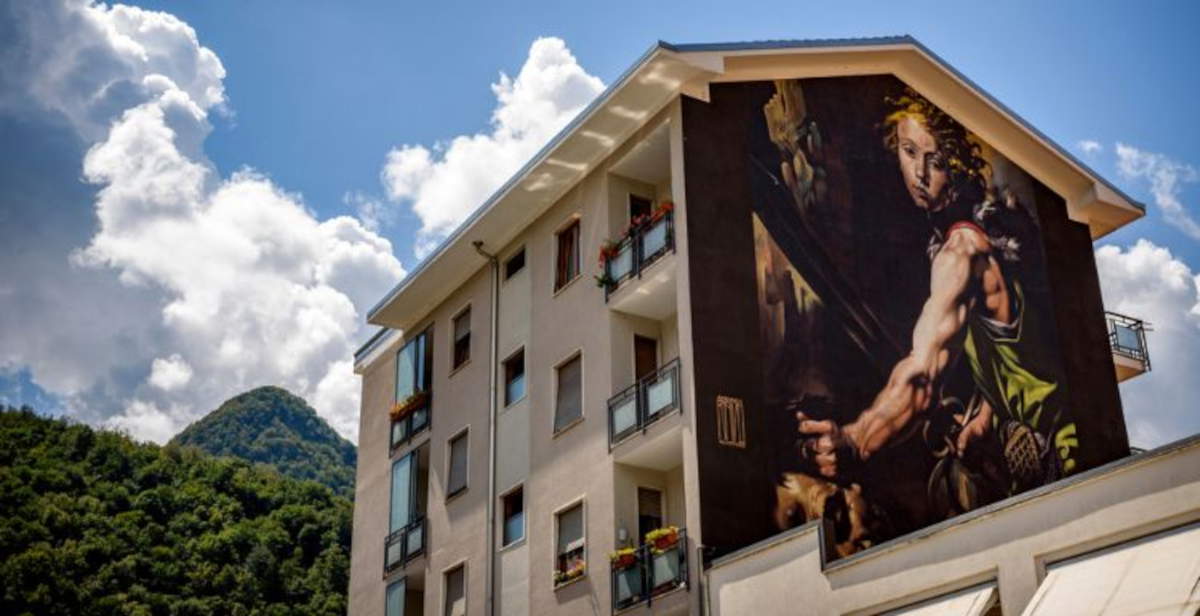
The project’s first intervention was entrusted to Andrea Ravo Mattoni, aka Ravo, an artist born in 1981 originally from Varese, who is known for spray-painting wall reproductions of masterpieces from art history. In 2017 in Varallo he chose to confront David and Goliath, a 1625 painting by Tanzio da Varallo, preserved at the city’s Pinacoteca. The work, executed on an urban facade of about 120 square meters, offers a personal reinterpretation of the painting by the Valsesian master, nicknamed by some the “Caravaggio of the Alps.” In Varallo, in addition to the reinterpretation of David and Goliath, Ravo also translated on wall a detail of the Battle of Sennacherib by Tanzio da Varallo, a masterpiece preserved in the Basilica of San Gaudenzio in Novara, created on a wall in Via Durio. Adding to these interventions is the mural dedicated toThe Renaissance - Adoration of the Child with a Bishop from 1530 by Gaudenzio Ferrari, which further expands the comparison between urban art and the local painting tradition. Ravo’s interventions in Varallo are part of a journey that began in 2016 with the creation of Caravaggio ’s The Capture of Christ at a festival in Varese. From that first mural took shape the project on the recovery of classicism in the contemporary, which aims to make masterpieces of painting accessible through their transposition into public space. Attention to the correlation between work and territory is a central element of the artist’s research, which identifies the link with place as a criterion for iconographic selection.


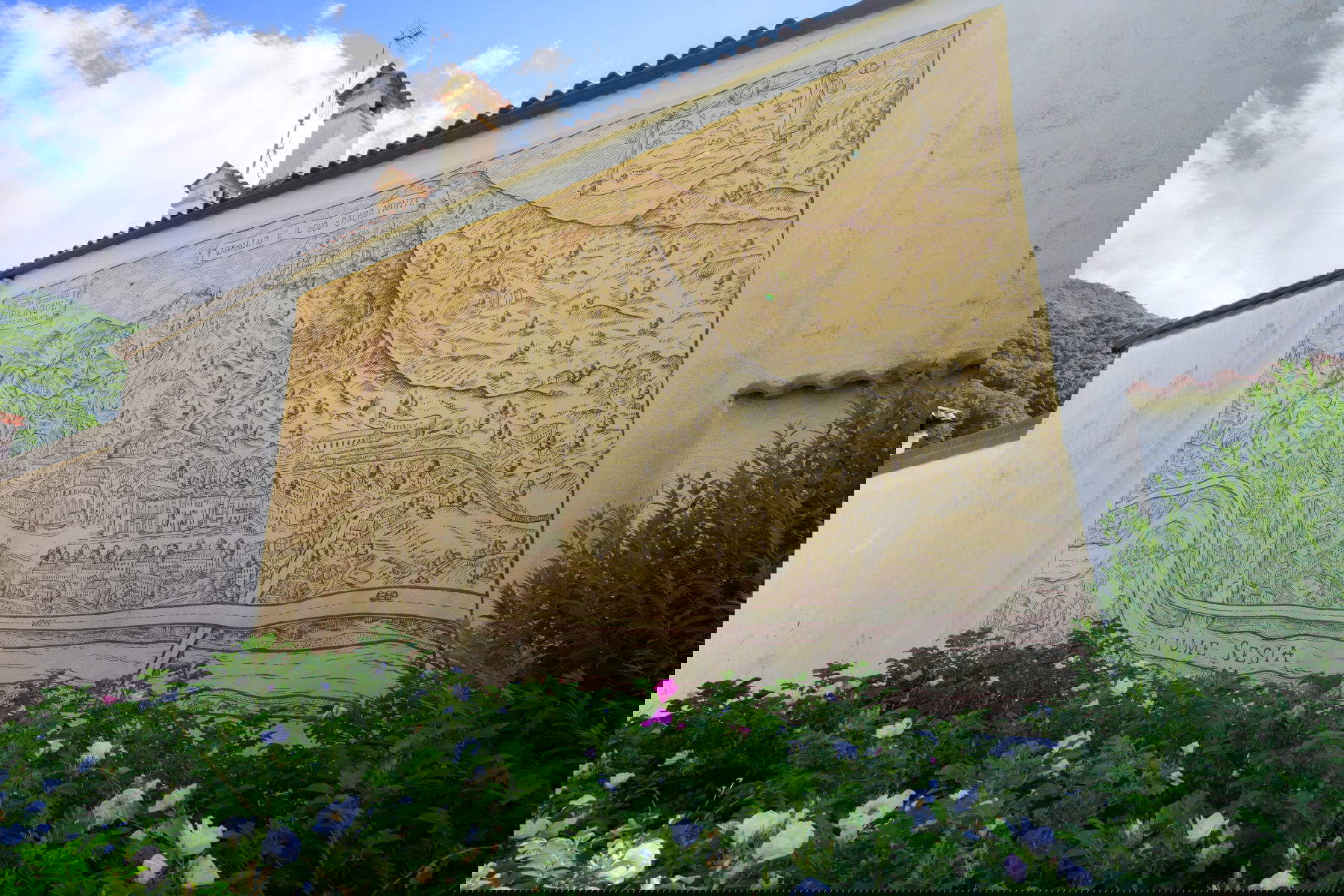
Waral also involves other artists who have contributed to expanding the map of the village. Matteo Capobianco, aka Ufocinque, intervened with a reinterpretation of the general view of Sacro Monte taken from the 1688 etching by Giovanni Blasio Manauft, titled La Nuova Gierusalemme nel Sacro Monte di Varallo (The New Jerusalem in the Sacred Mount of Varallo), now kept at the Sacro Monte Park Museum in Varallo. The artist reinterpreted the cartographic and narrative layout of the 17th-century print by translating it into a contemporary language on a wall scale. Giovanni Magnoli has instead created The Hawk and the Owl. Next to references to the great painting of the past, there are also references to popular culture, such as Cecca and Marcantonio, protagonists of the Varallo carnival, reproduced by Fabrizio Sarti, known as SeaCreative.
Varallo, already a historical and cultural destination in itself, presents a peculiar context for the project. The Sacro Monte, conceived by Milanese Franciscan Bernardino Caimi in 1491 to recreate the holy places of Palestine, is enriched by more than 4,000 frescoed figures and about 800 statues depicting Gospel scenes, created by local artists including Giovanni d’Enrico, Tabacchetti and Francesco Mazzucchetti, known as il Morazzone. Against this backdrop, contemporary murals confront centuries-old artistic tradition and offer visitors a new and articulate reading of the village’s heritage.
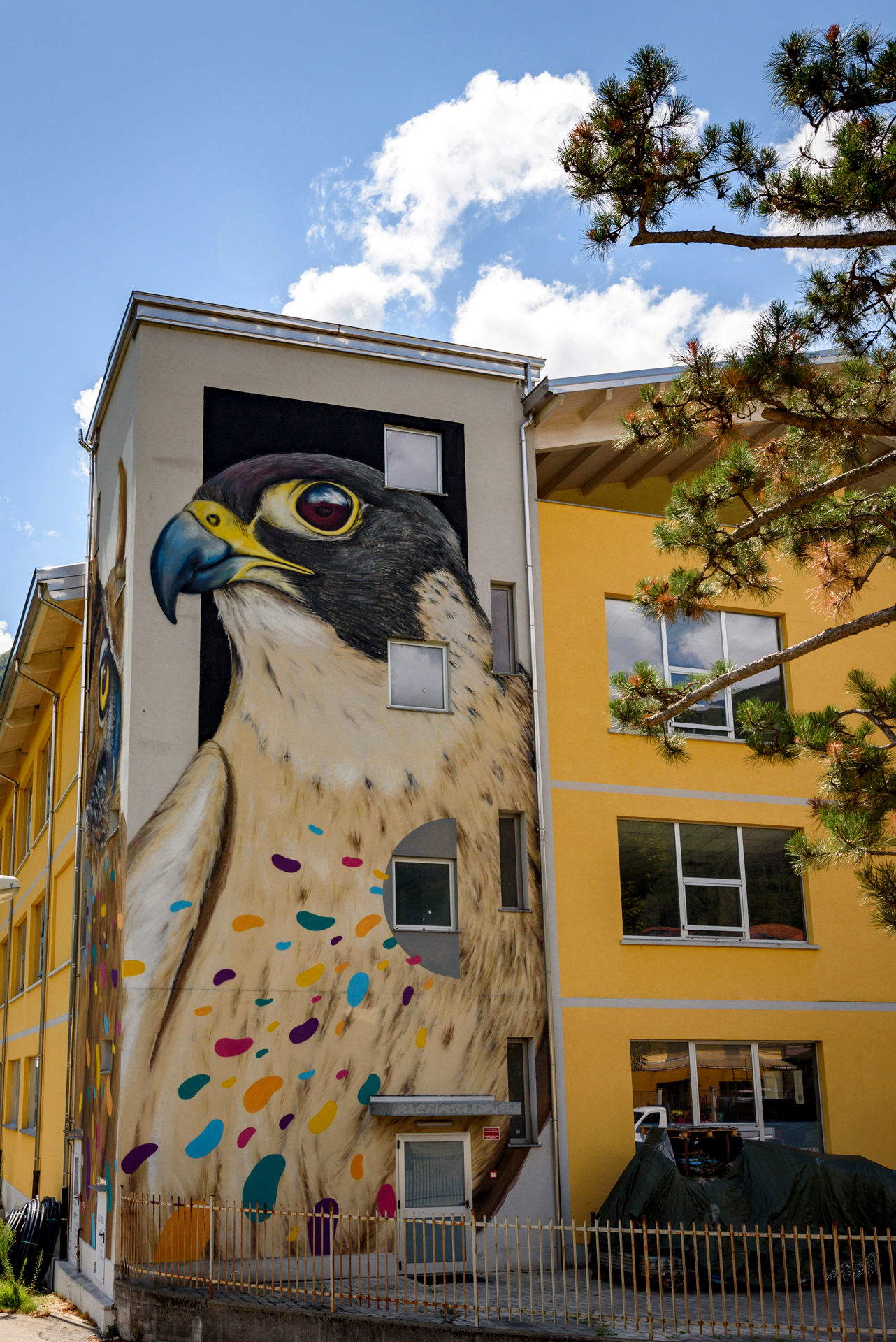
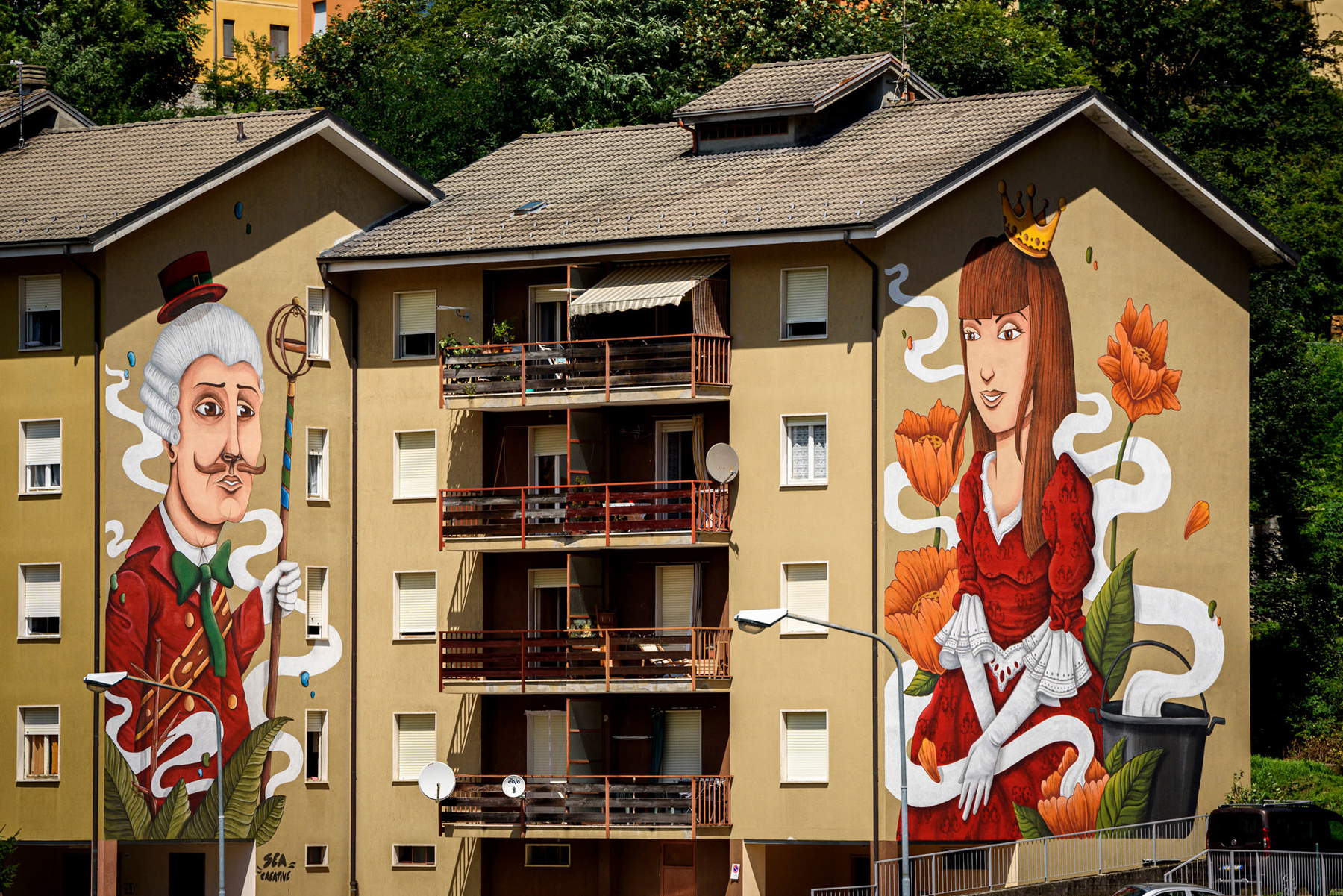
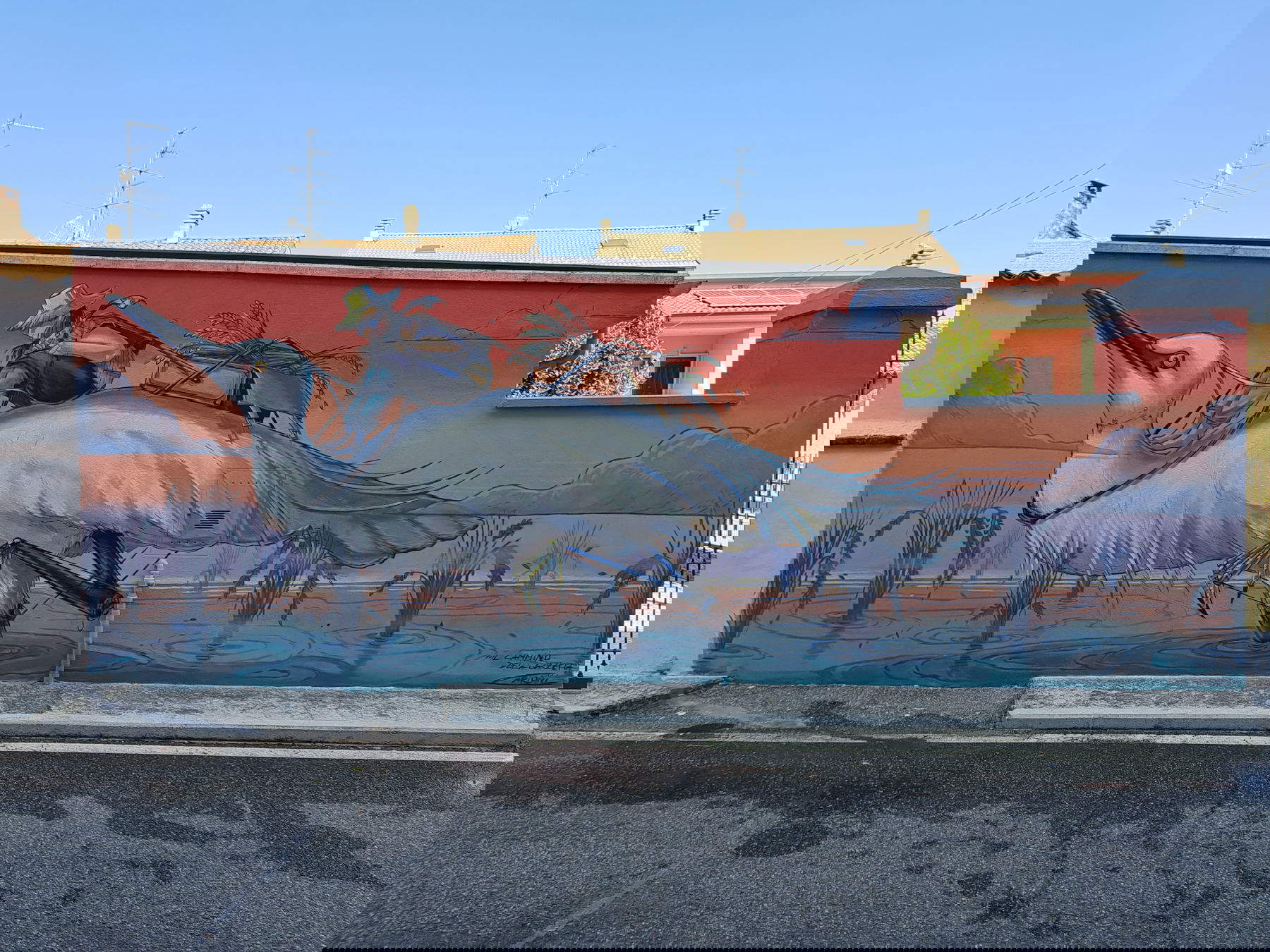
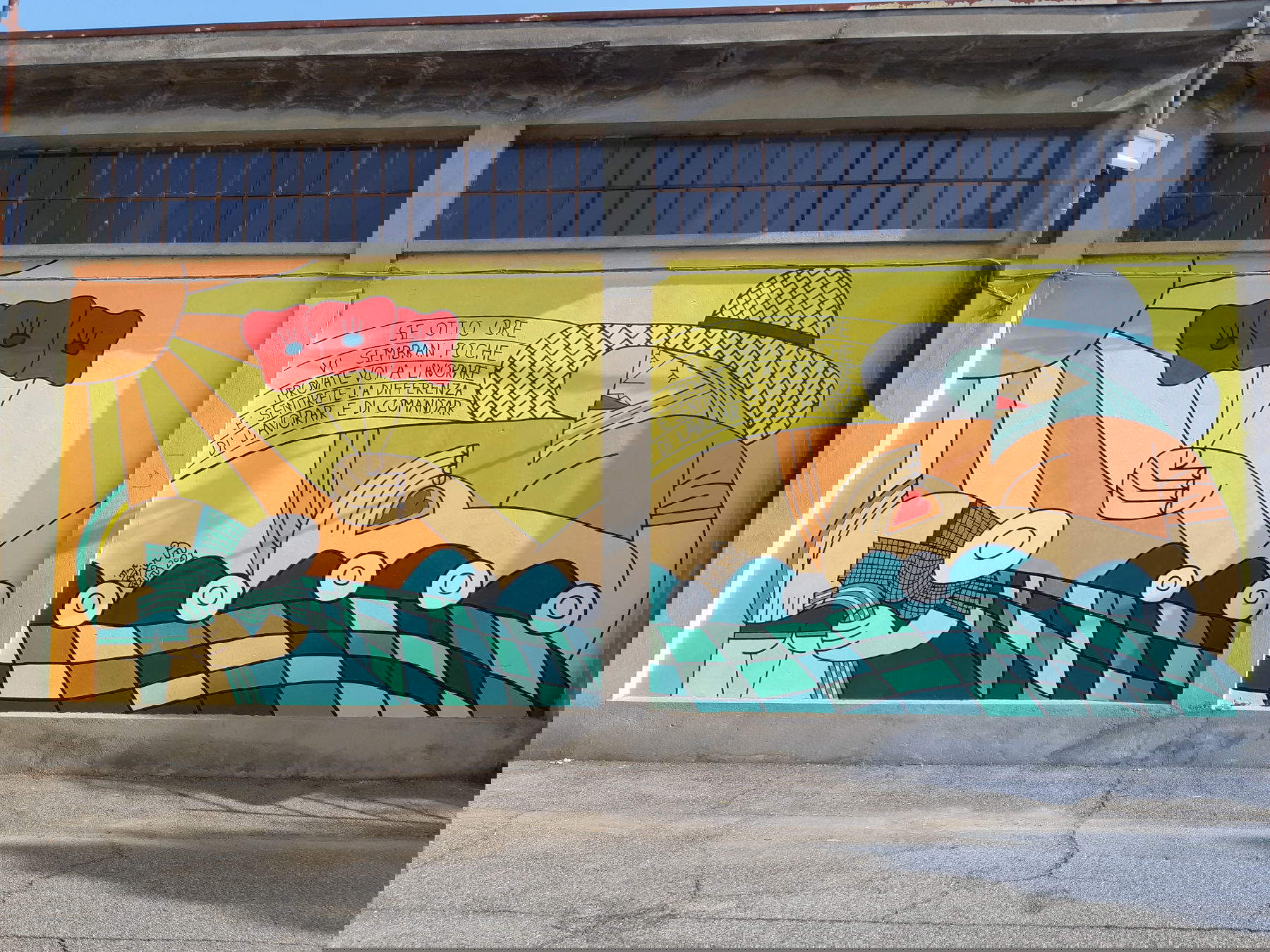
At the same time, the village of Rive, also located in the province of Vercelli, saw the birth of DeRive, a project similar to Waral, but with a different approach related to rural space. The name of the village comes from the Latin “ripae,” indicating a strip of land washed by the waters of rivers or streams, in this case the Marcova stream. The earliest documented records date back to 1268, when the Tizzoni family held the local stronghold. Since 2020, through the DeRive project, the municipality has been promoting the creation of murals on the facades of homes in the center, shaping Rive into a true street art village. The project also includes an annual update: around September, artists from all over the world enrich the village with new works, while residents and visitors can take guided tours that tell the story of the murals already created and the work in progress. Currently, Rive has 27 murals distributed among streets and small squares, works that blend elements of local culture with contemporary languages and create a widespread experience that transforms public space into an open-air gallery.
Among the works created are Vincenzo Suscetta’s Bitter Rice, Alessandra Carloni ’s The Way of the Little Egret, and again Alex Ermini’s The Child and the Robin. Particularly Suscetta’s mural from 2023, Riso Amaro addresses the theme of women’s work in the rice fields, depicting the mondine in the fields, during the struggles for rights and in moments of family life, up to the representation of activities traditionally considered male, such as that of the watermaker. The images restore the centrality of women in agricultural work, with their feet dipped in water and under the sun, and highlight their role in the social transformations that have marked the territory; today that role has been replaced by the use of herbicides.
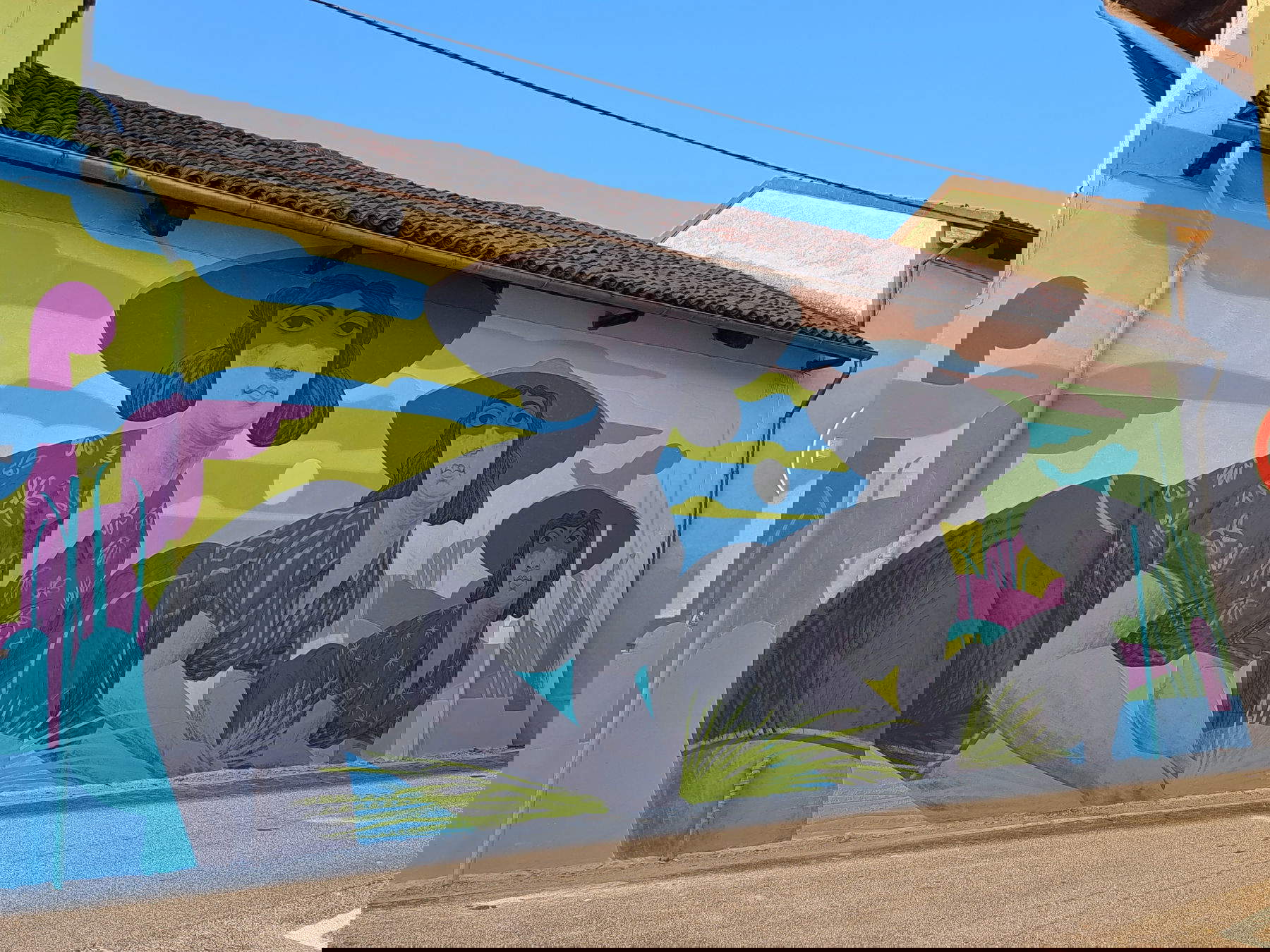
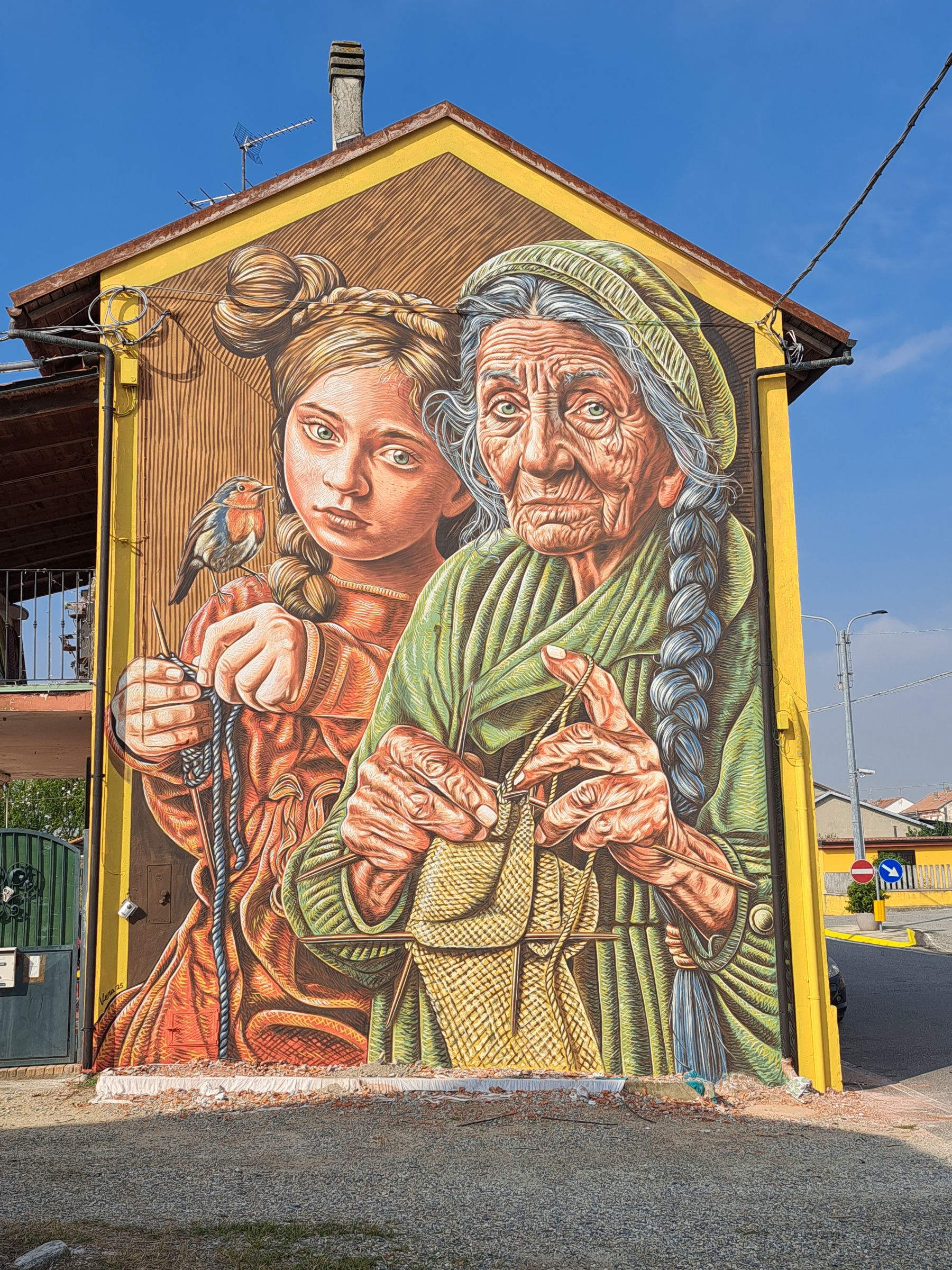
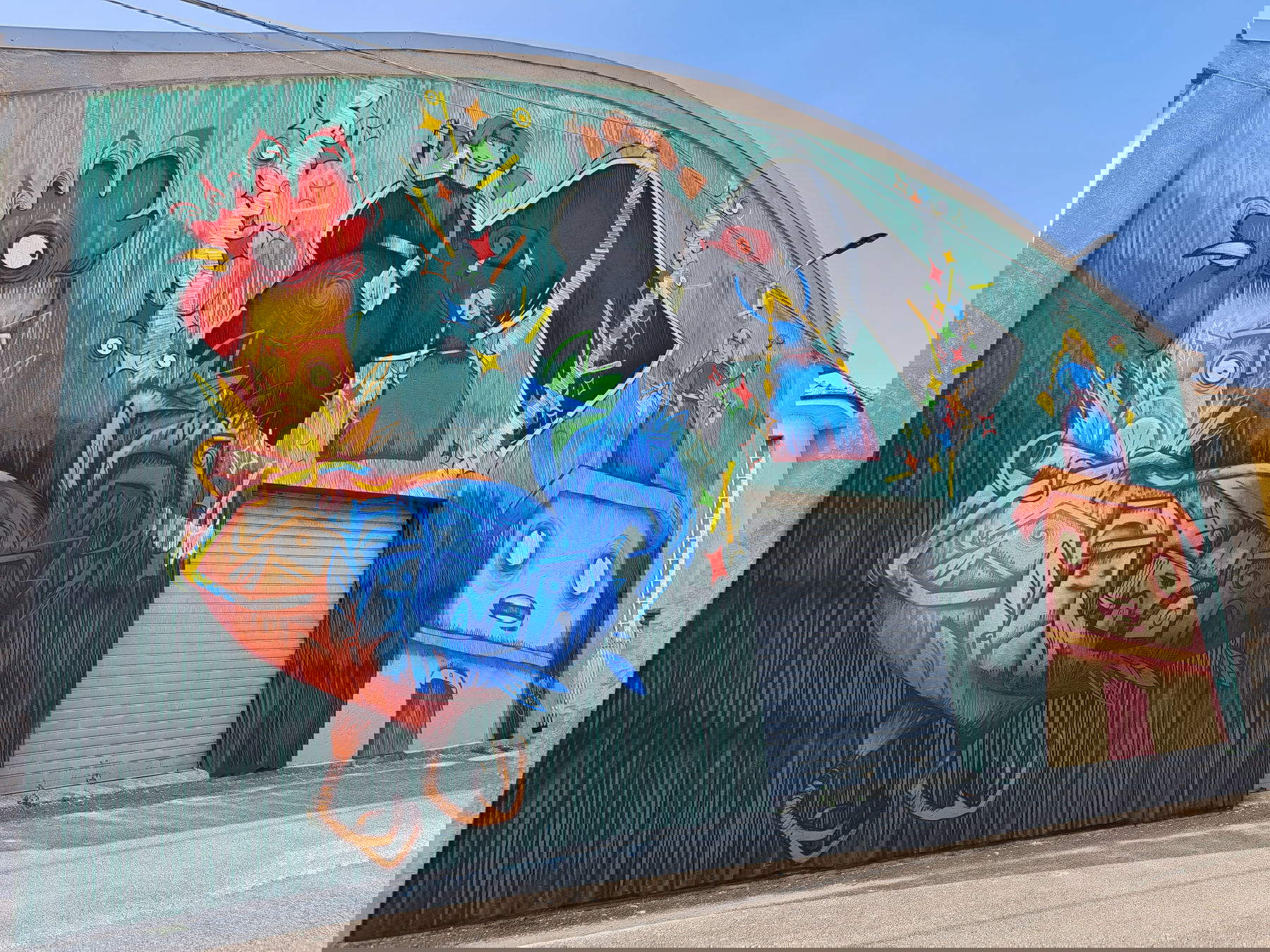
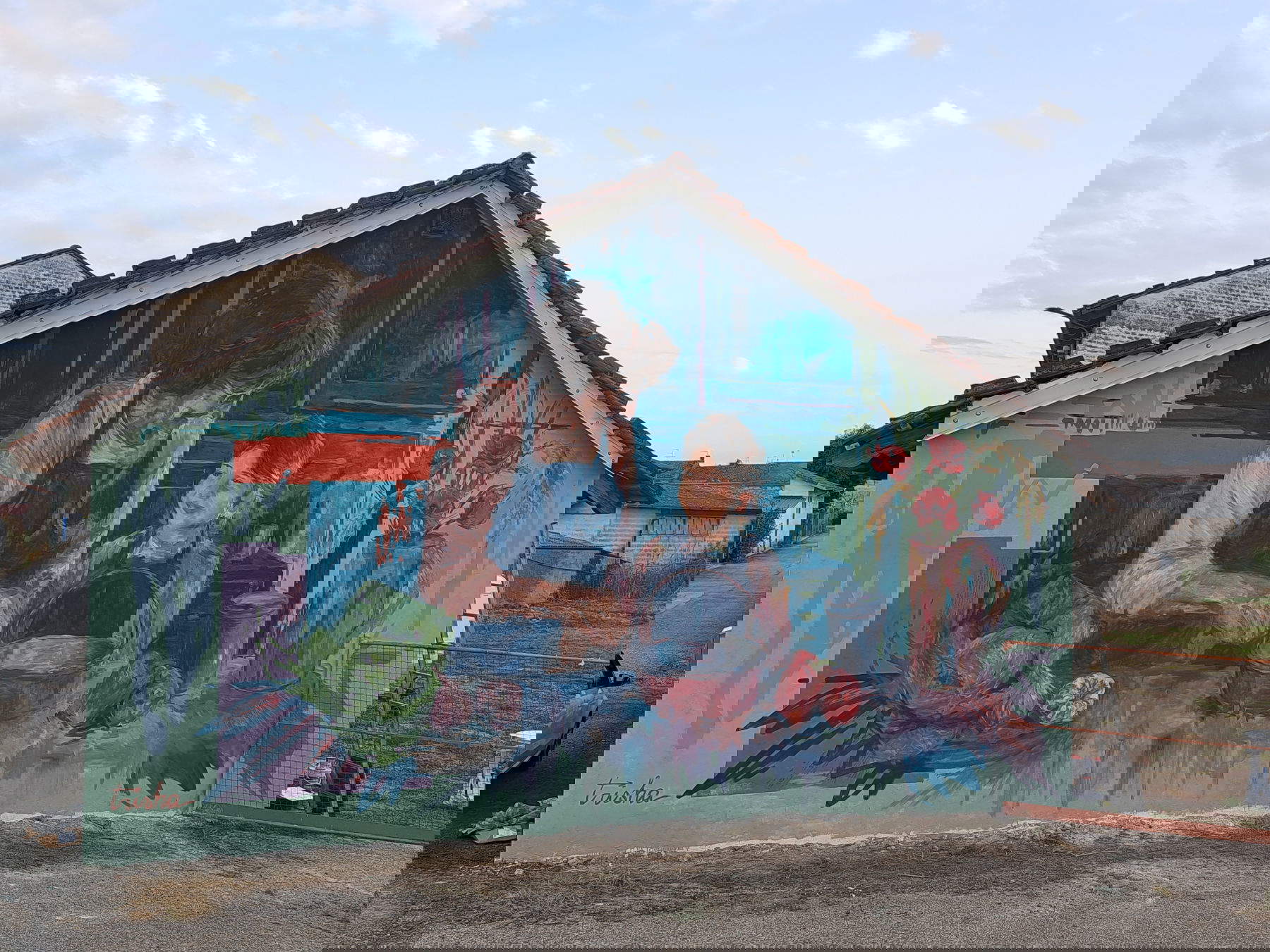
As reported by INWARD National Observatory on Urban Creativity, the 2024 edition of DeRive, promoted by the city administration of Rive was curated by INWARD’s own art direction team. Giulia Pasa Frascari, Trisha Palma and Maria Bressan, aka Rosmunda signed three works dedicated to themes related to local identity: the figure of the waterman and the relationship with the water lands, the gastronomic tradition and the legendary heritage of the village. It is precisely from a popular narrative that the mural The Legend of Villa Chioso by Rosmunda takes shape, inspired by the legend of Villa Chioso. According to the tale handed down, nightly gatherings took place at the place, during which some maidens danced naked in the light of flashlights until dawn; to the eyes of any strangers, however, the presences appeared as black cats. The artist therefore chose to represent the scene from the point of view of the outside observer, depicting felines whose extremities take on humanoid features, to suggest the dual nature of the figures and to evoke the imagery associated with masche, the witches of local tradition. For the initiative, the artists involved worked in dialogue with the community and the organizing team. The project, desired by the municipal administration, was supported by Carlo Borgatelli and Massimo Patriarca, the main private funders, the Fondazione Cassa di Risparmio di Vercelli and CaresanablotColor Officina del Colore for the supply of materials.
DeRive thus presents itself as a diffuse pathway in which urban art becomes a tool for identity narrative. The murals build a narrative that runs through memories, local legends but also traditions. The artistic intervention thus takes on a connecting function between memory and contemporaneity, in a landscape context characterized by rice fields and a small-scale housing fabric.
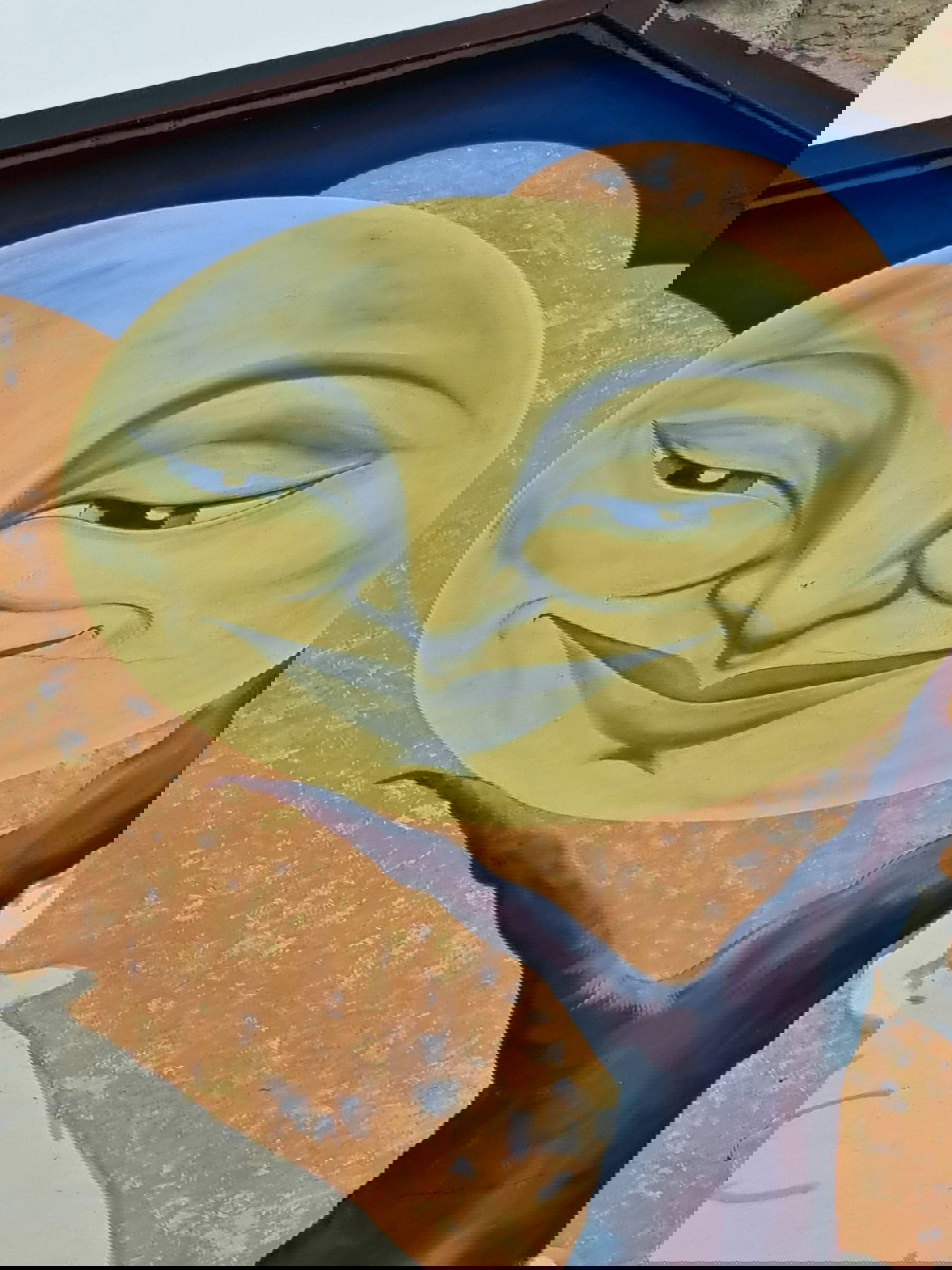
The strength of the two projects therefore lies in their ability to dialogue with tradition without distorting it. Both projects also contribute to increasing the tourist attractiveness of villages by presenting new ways of enjoying historic centers and fostering greater awareness of cultural heritage. Waral and DeRive demonstrate how Street Art, often perceived as an ephemeral or frontier phenomenon, can integrate in a lasting and harmonious way with the urban and social fabric of the villages, becoming a tool for cultural and educational enhancement. In this way, artists’ work interprets spaces, transforms them and generates new perspectives on the relationship between tradition and contemporary art. All this makes the boroughs living and walkable places in a participatory way.
 |
| Varallo and Rive, street art transforms Vercelli villages into open-air museums |
Warning: the translation into English of the original Italian article was created using automatic tools. We undertake to review all articles, but we do not guarantee the total absence of inaccuracies in the translation due to the program. You can find the original by clicking on the ITA button. If you find any mistake,please contact us.