





Presented today at the Italian Pavilion at the 61st Venice Biennale: Con te con tutto, a project by Chiara Camoni (Piacenza, 1974) curated by Cecilia Canziani. Promoted by the General Directorate for Contemporary Creativity of the Ministry of Culture, the exhibition intends to present itself as a collective call, an invitation to rethink the way of inhabiting the world through the encounter and sharing with other forms of life, leaving room for wonder, dialogue and the continuous transformation of time. Underlying the project is Camoni’s artistic practice, founded on collaboration and co-creation. This approach is also reflected in the curatorial framework, which takes on a choral and open dimension, including different voices, languages and temporalities. The exhibition alternates works made especially for the occasion with pre-existing works, according to a combinatorial logic involving reuse and resemantization of materials, a recurring element in the artist’s research.
Alongside the materials already known in Camoni’s production, such as clay and natural elements, new materials such as recycled plastics, industrial waste and found objects appear. These elements help build a contemporary landscape in which even waste becomes a bearer of meaning and beauty, inviting the public to reconsider the value of waste.
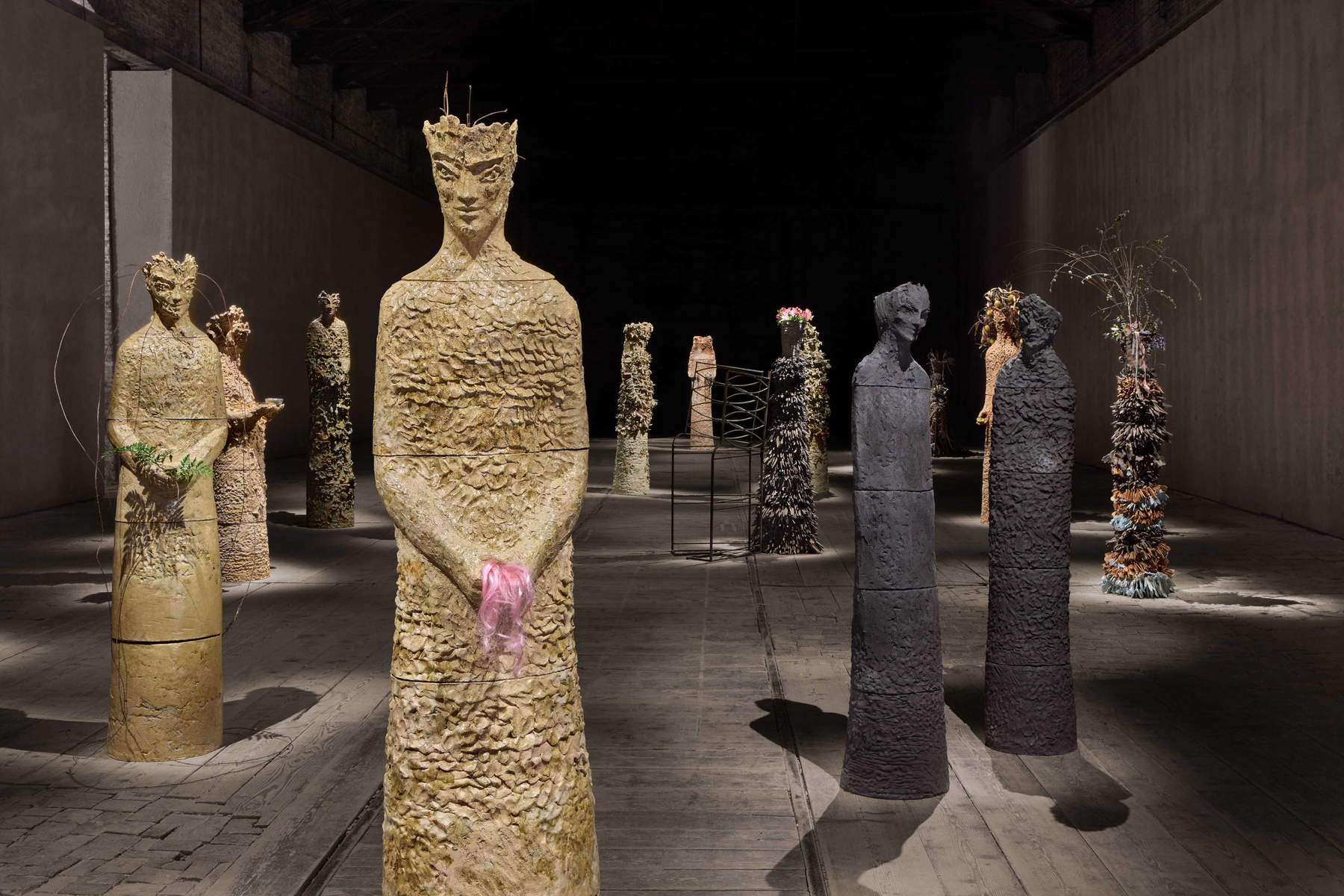
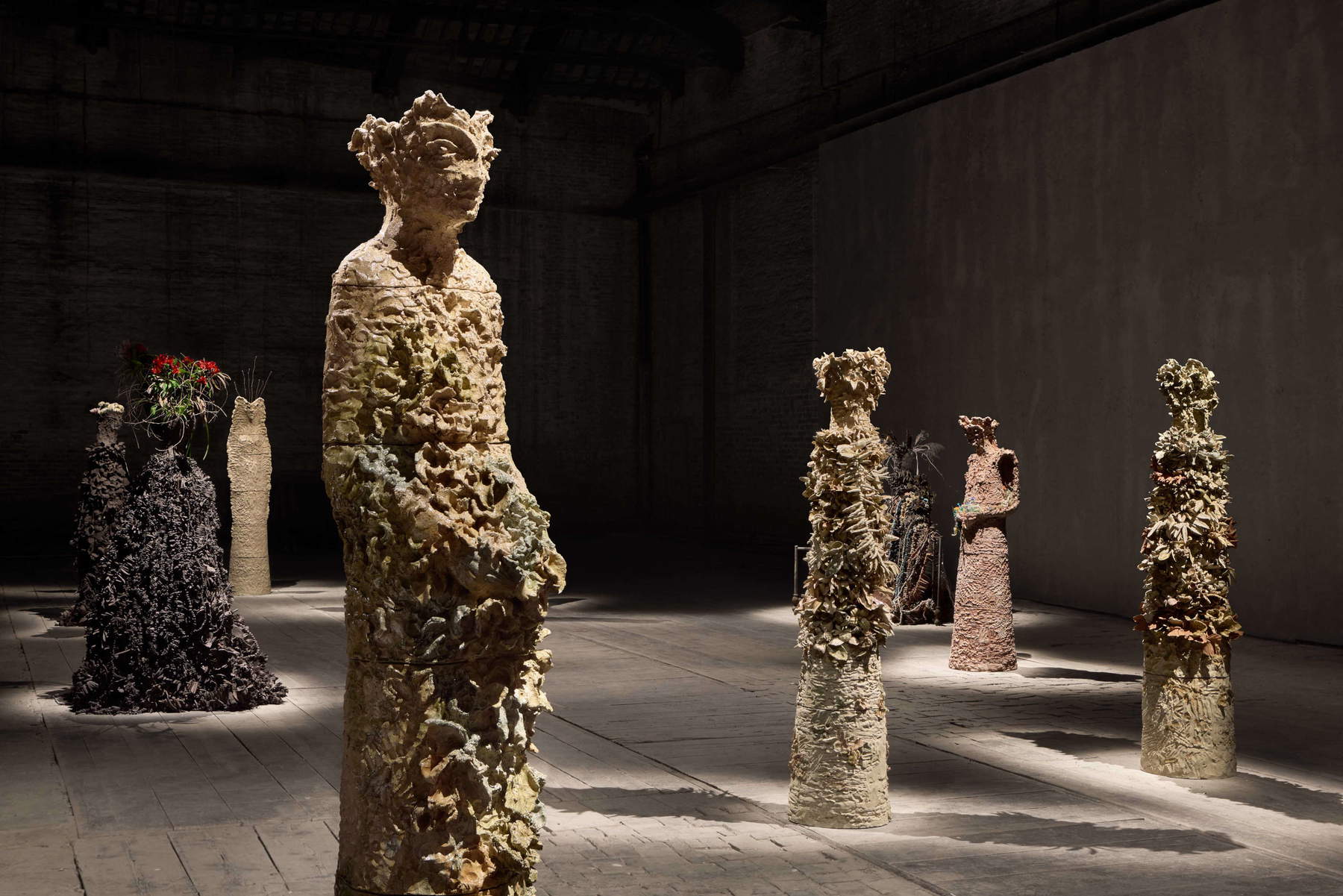
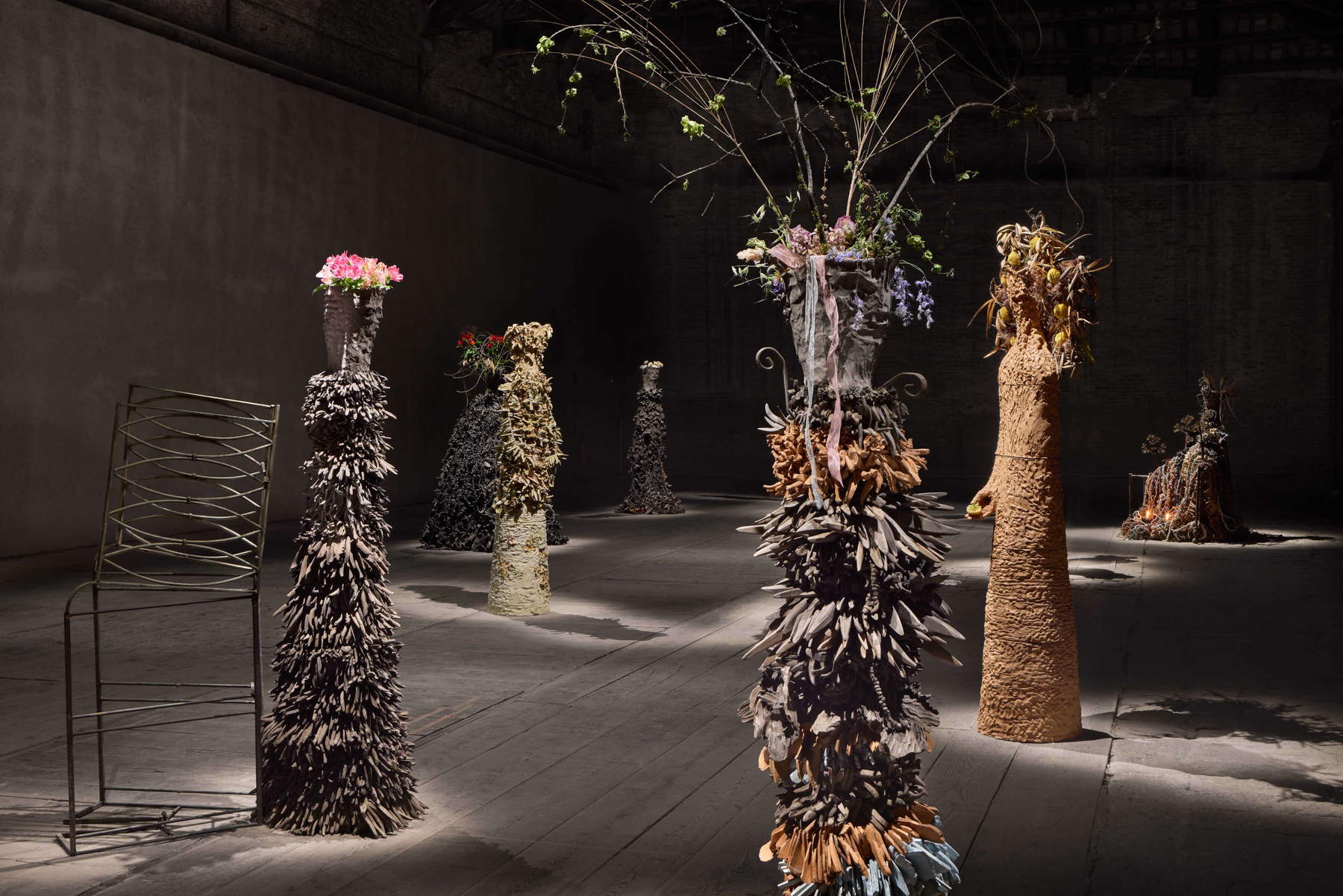
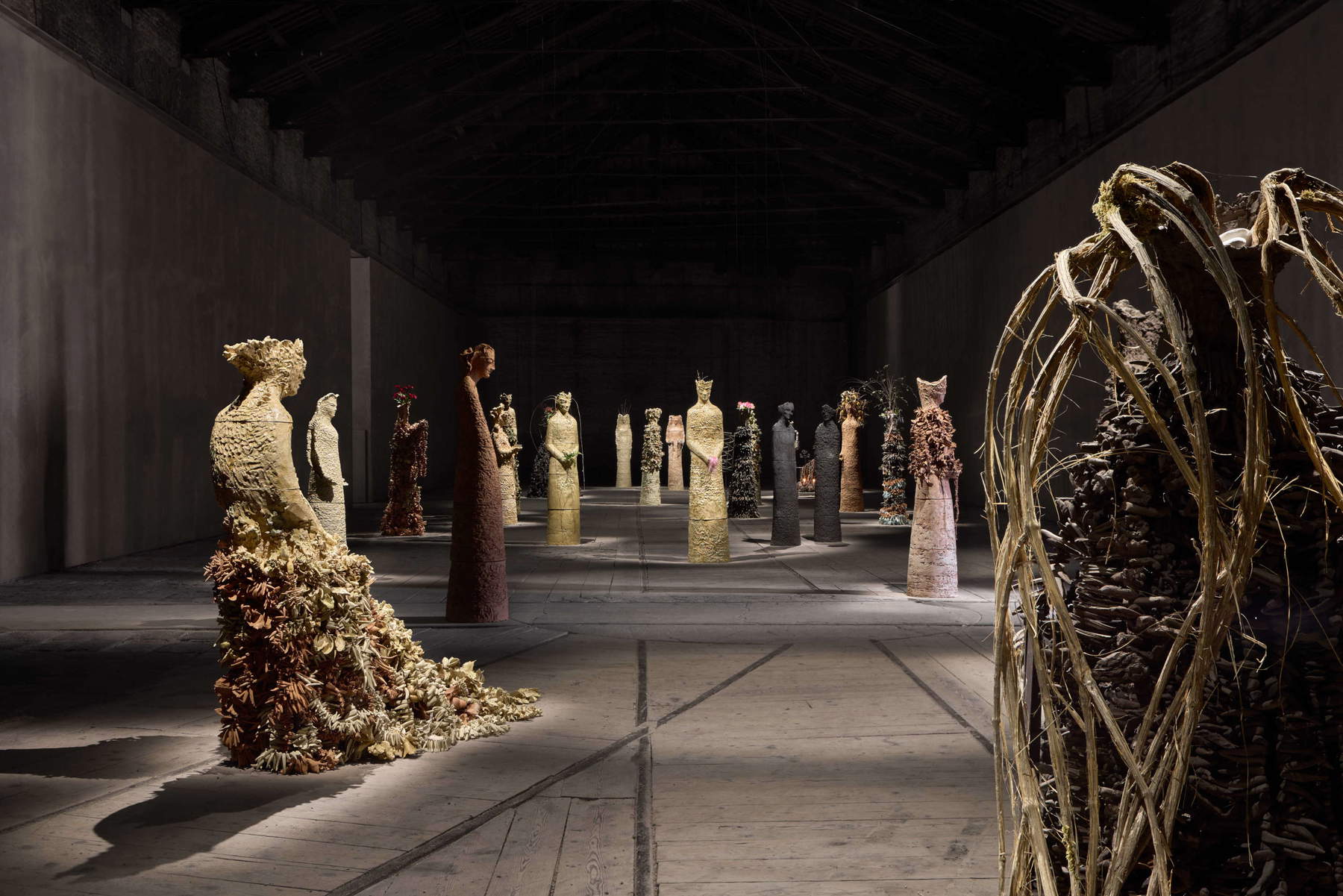
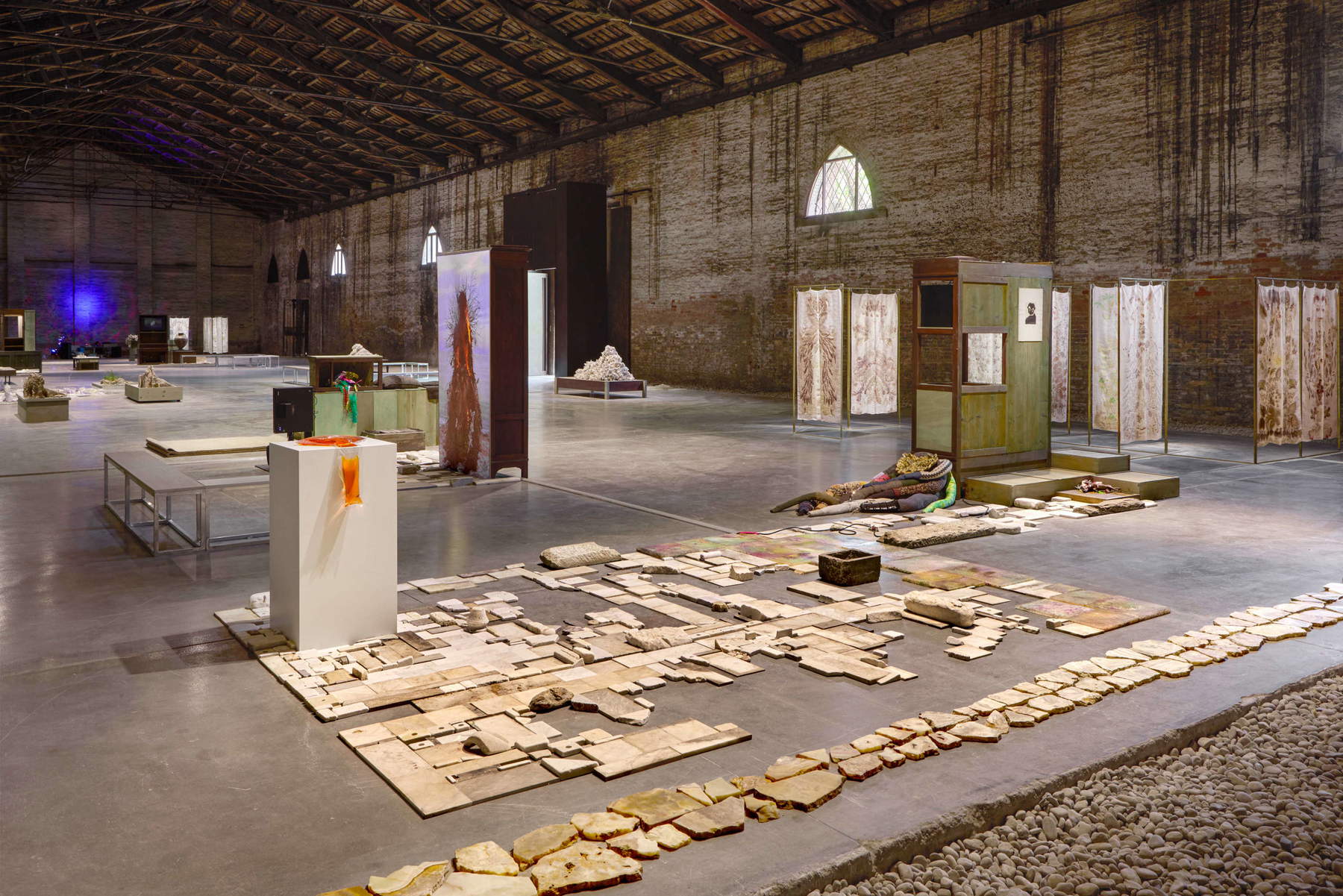
The exhibition itinerary unfolds through distinct environments. In the first brim, immersed in an almost sacred penumbra, a “forest” of twenty-four anthropomorphic sculptures unfolds, including Columns, Sisters and Daimons. The figures, slightly larger than human, establish a direct relationship with visitors, symbolically turning toward the entrance as if gathered in an assembly. Made of terracotta using the columbine technique or through assemblages of small elements, they appear as entities in transformation, decorated with natural materials and plastic fragments recovered from near the artist’s studio. In their formal diversity, they oscillate between recognizability and abstraction, evoking ancestral presences that question the present.
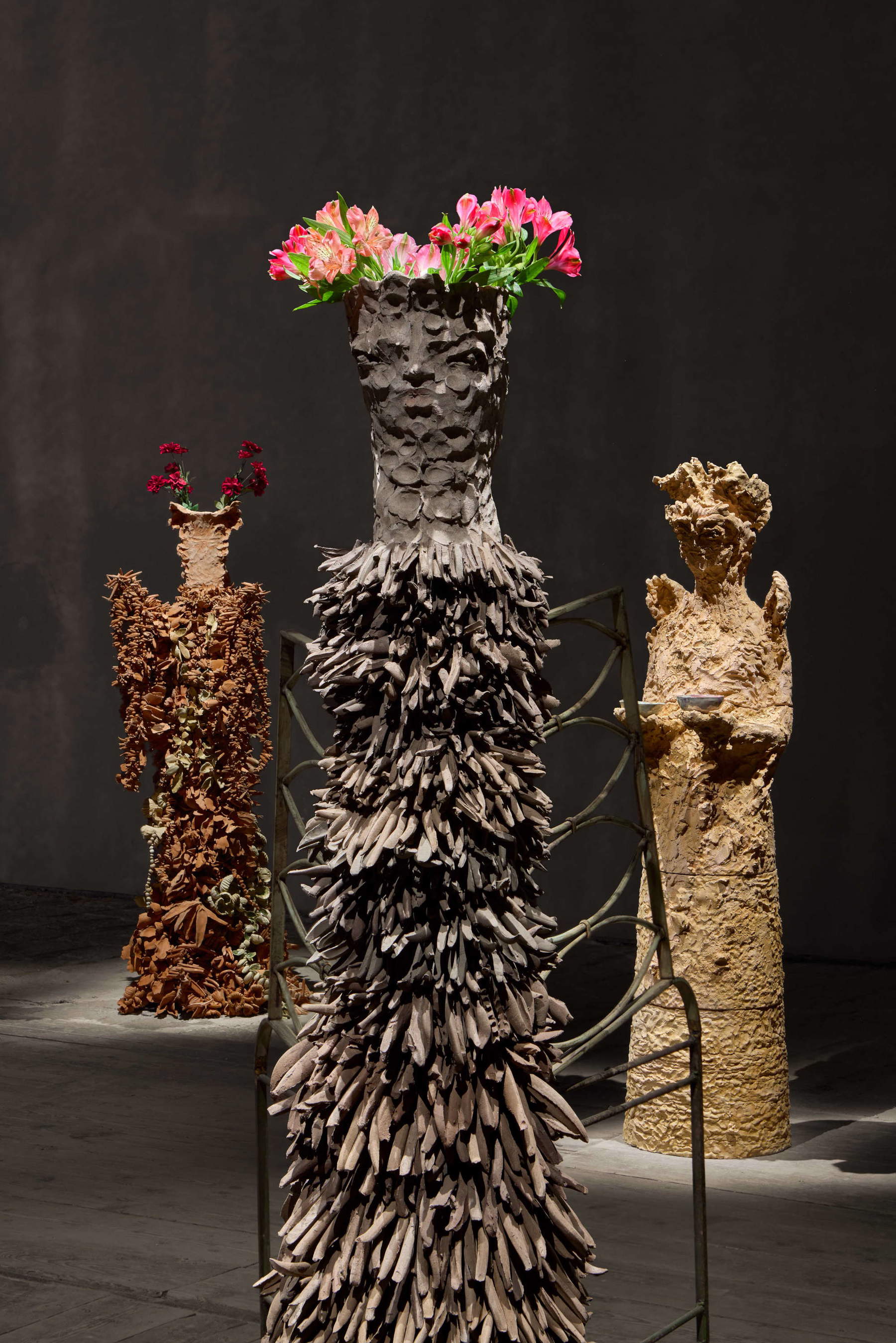
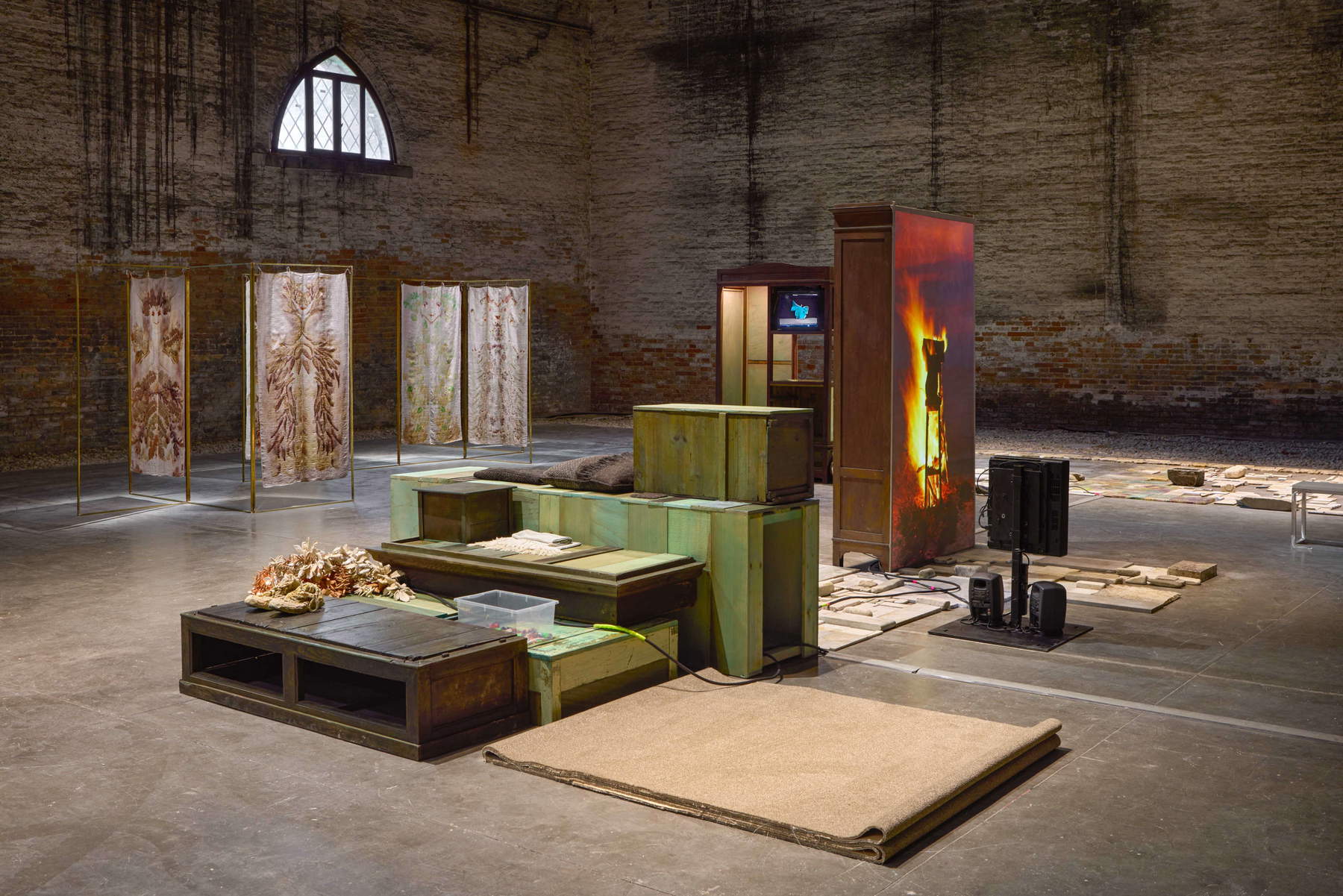
The transition to the second brim marks a change of atmosphere: the space opens to light and introduces the flow of human time. Here an environment under construction develops, composed of natural elements, recycled objects and structures that expand the reflection on matter and its transformations. On either side are two main groups of works, including marble floors and domestic sculptures called Casette, obtained from the recombination of furniture and treated with verdigris.
Inside the Casette houses is the Dialoghi section, curated by Lucia Aspesi and Fiammetta Griccioli, which relates Camoni’s work to different artists and languages. References include Fausto Melotti, Alberto Martini and Marisa Merz, alongside works by Luca Bertolo, Lucia Leuci, Alessandra Spranzi and Bettina Buck, who have already been featured in previous works by the artist. Among the most significant juxtapositions emerges the one between the video “What Remains,” commissioned from Alice Rohrwacher, and an Attic amphora from the 7th century B.C. from the Rovati Foundation.
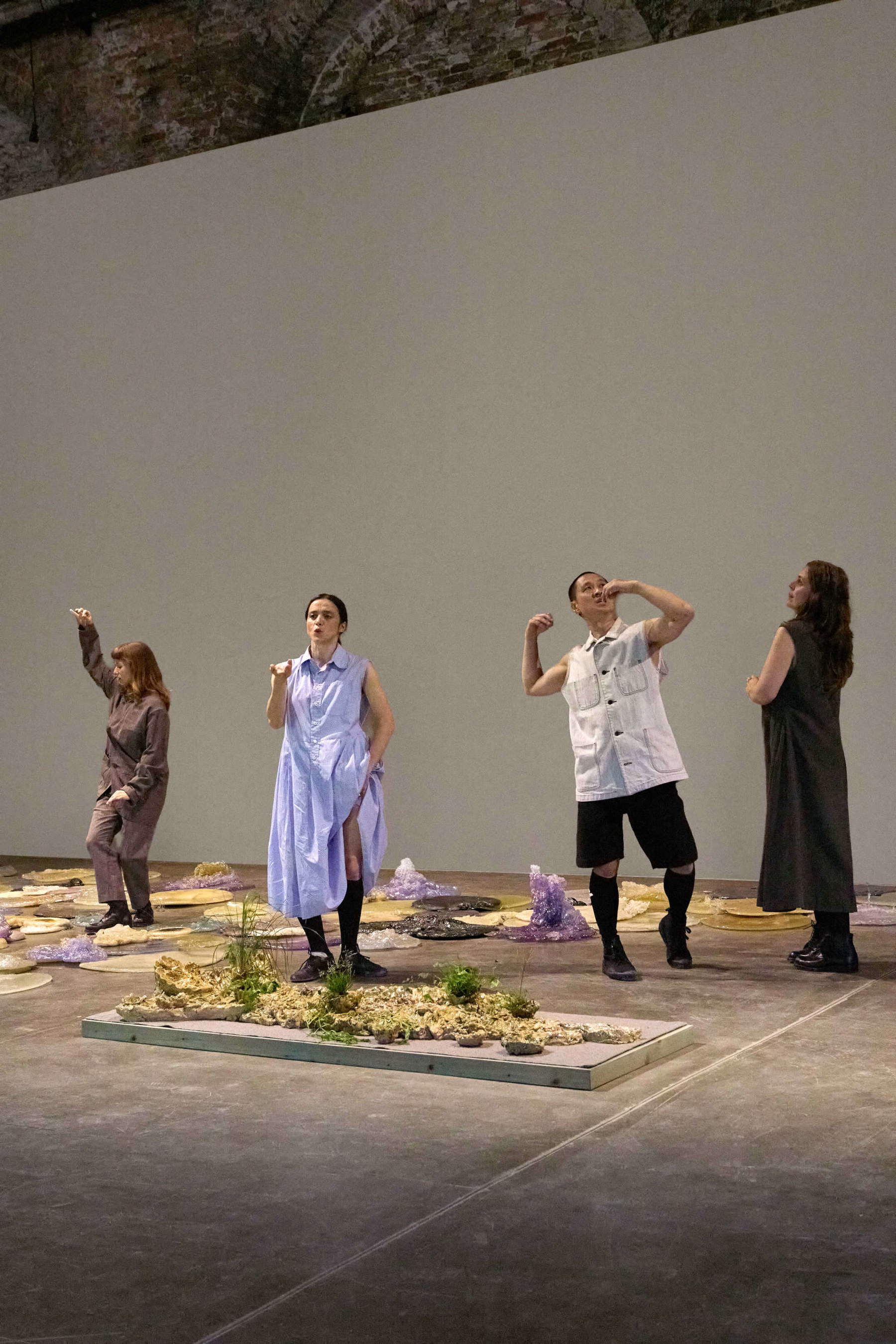
Also within the Dialogues section is Annamaria Ajmone’s performance Canti fossili, conceived as a widespread presence in the exhibition space, including through a dedicated publication. On the opposite side, Chiara Camoni’s installation Disco Tornio, created in collaboration with the Centro di Sperimentazione, involves the direct activation of the public, strengthening the participatory dimension of the project.
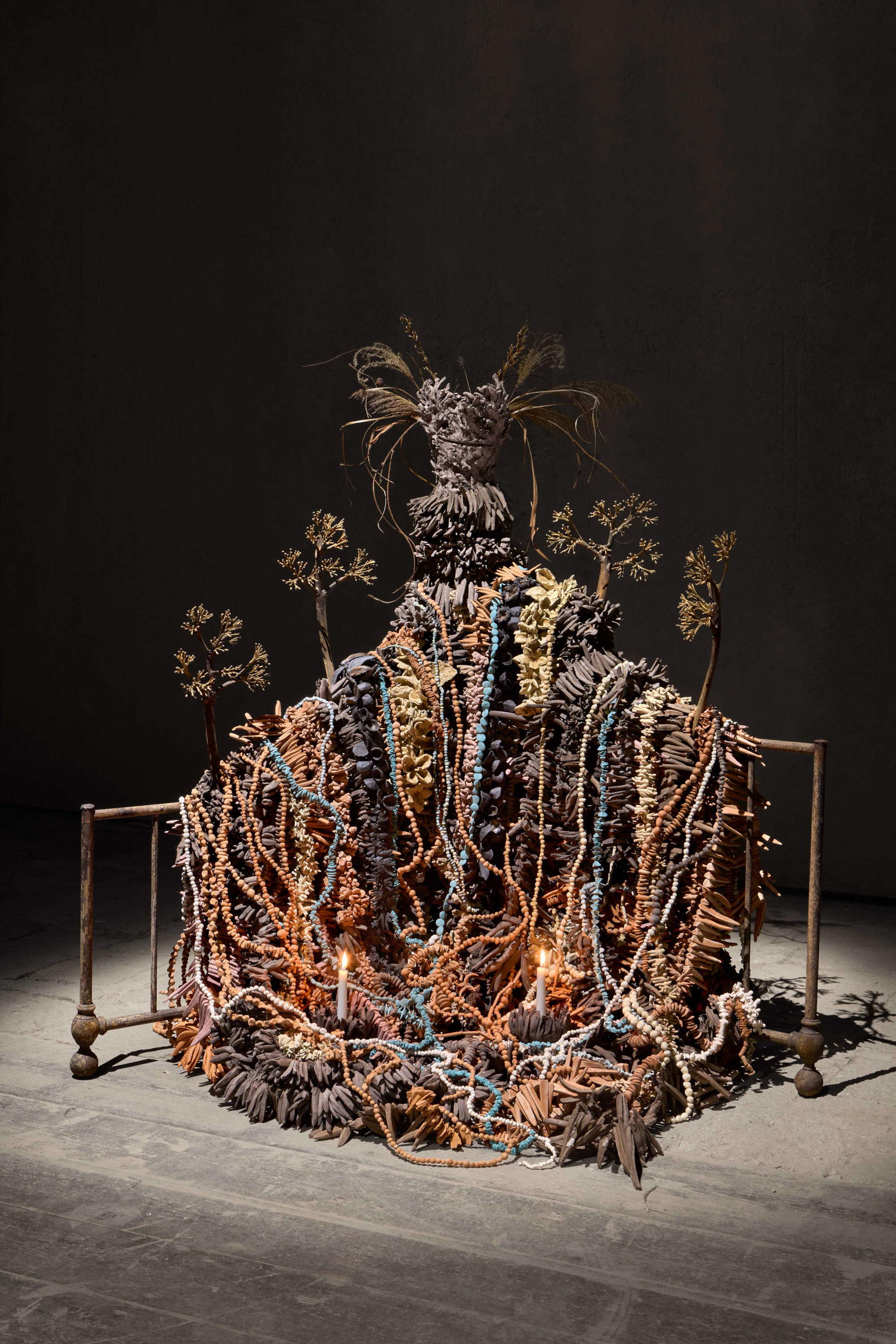
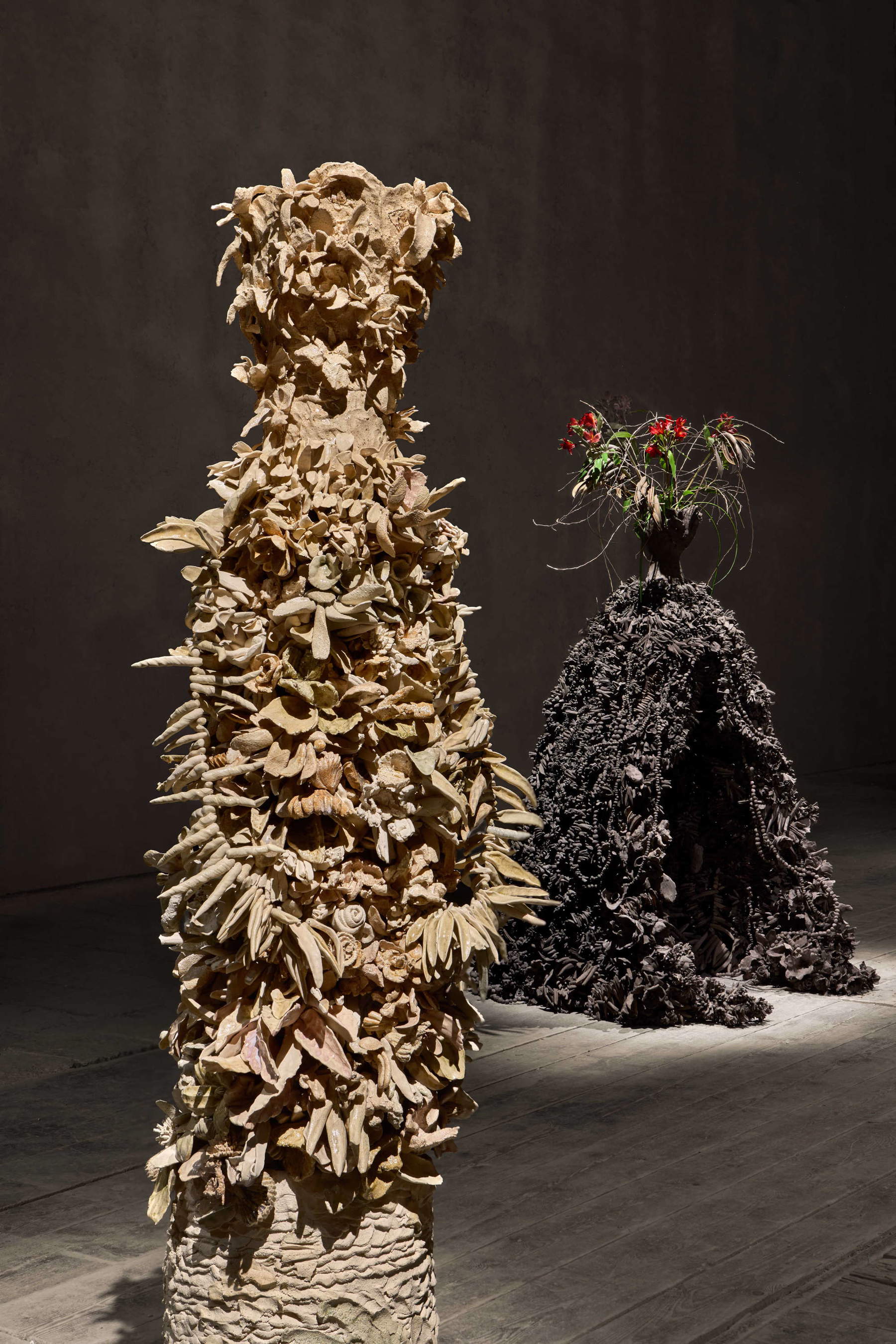
In the center of the second brim is a group of four reclining sculptures, one Venus and three Odalisques, arranged on either side of a large recycled plastic floor whose surface reflects light like water. The figures seem to emerge from a liquid environment, taking in plant elements and artificial materials within them. A short distance away opens up a space that can be likened to a small agora, equipped with seating and designed as a place to stop, observe and meet. This is where educational activities and moments of the public program are held, aimed at schools, academies and universities.
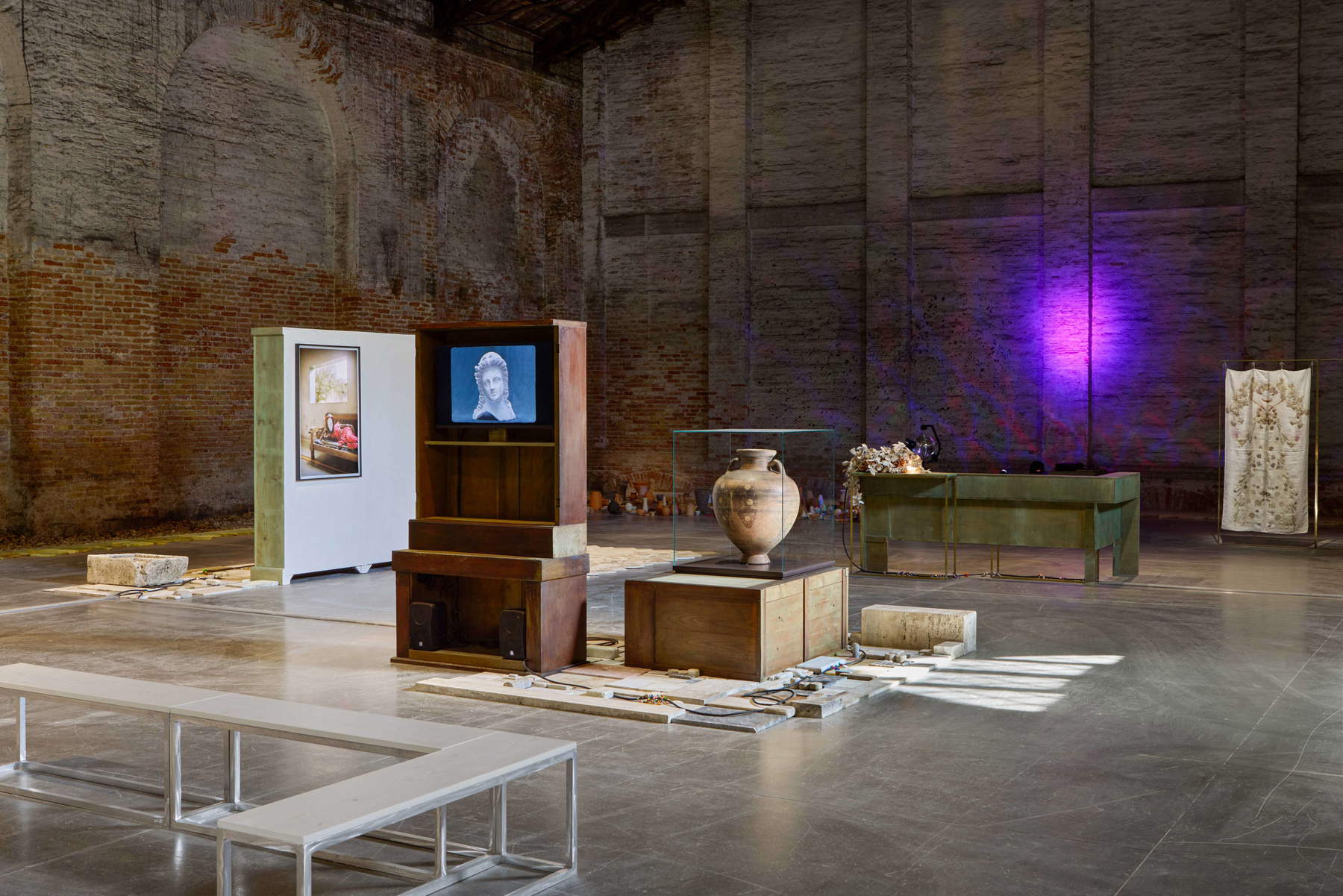
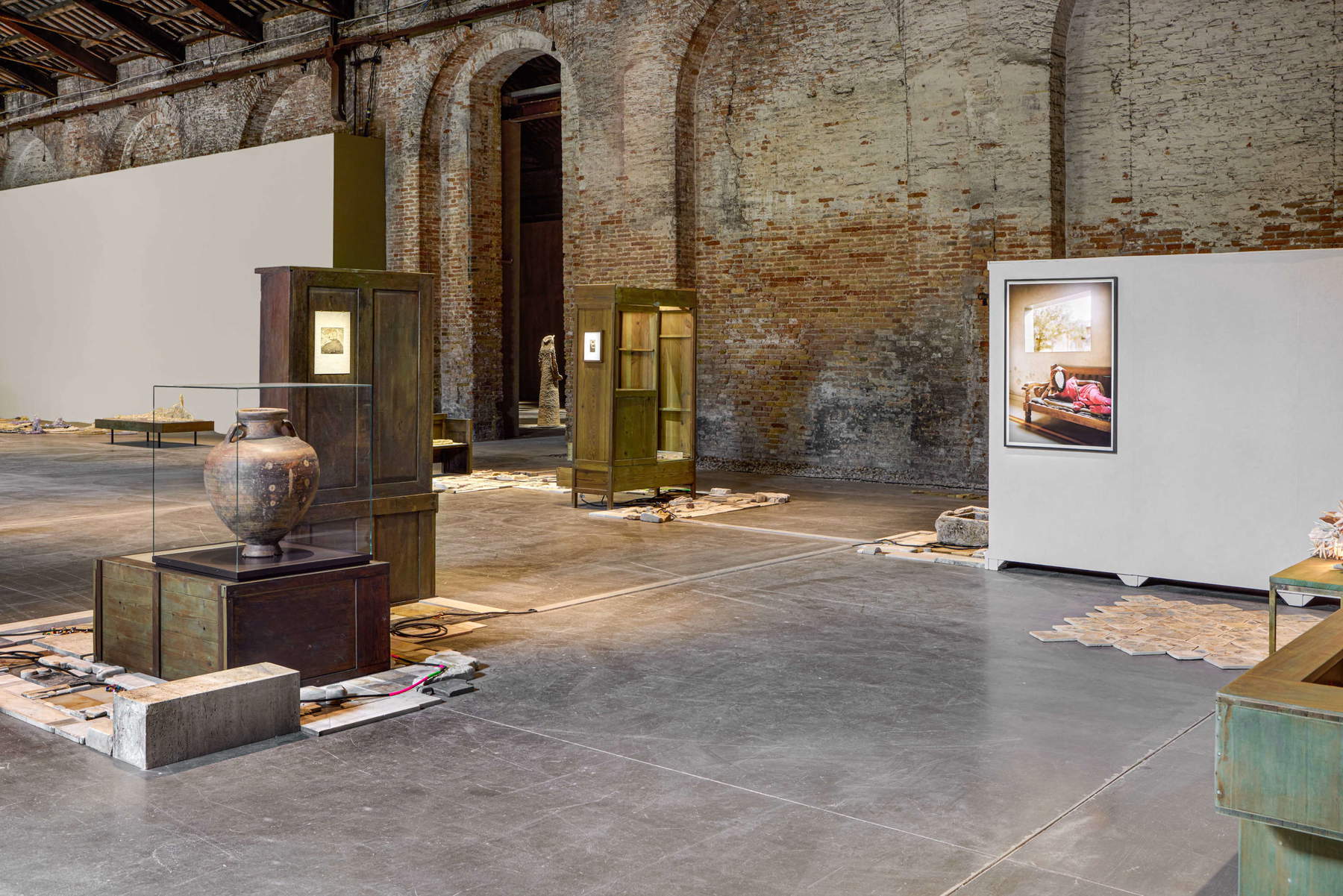
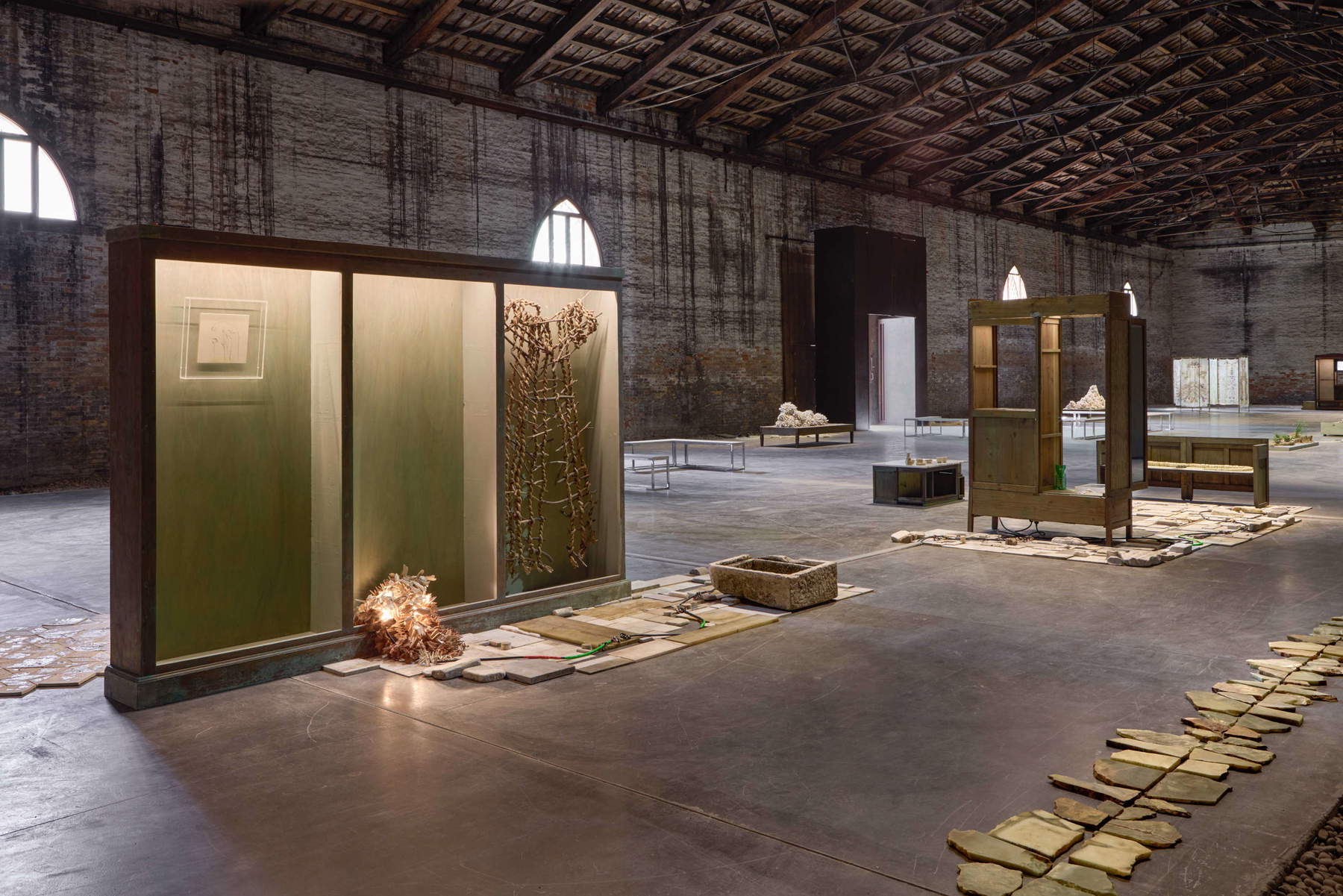
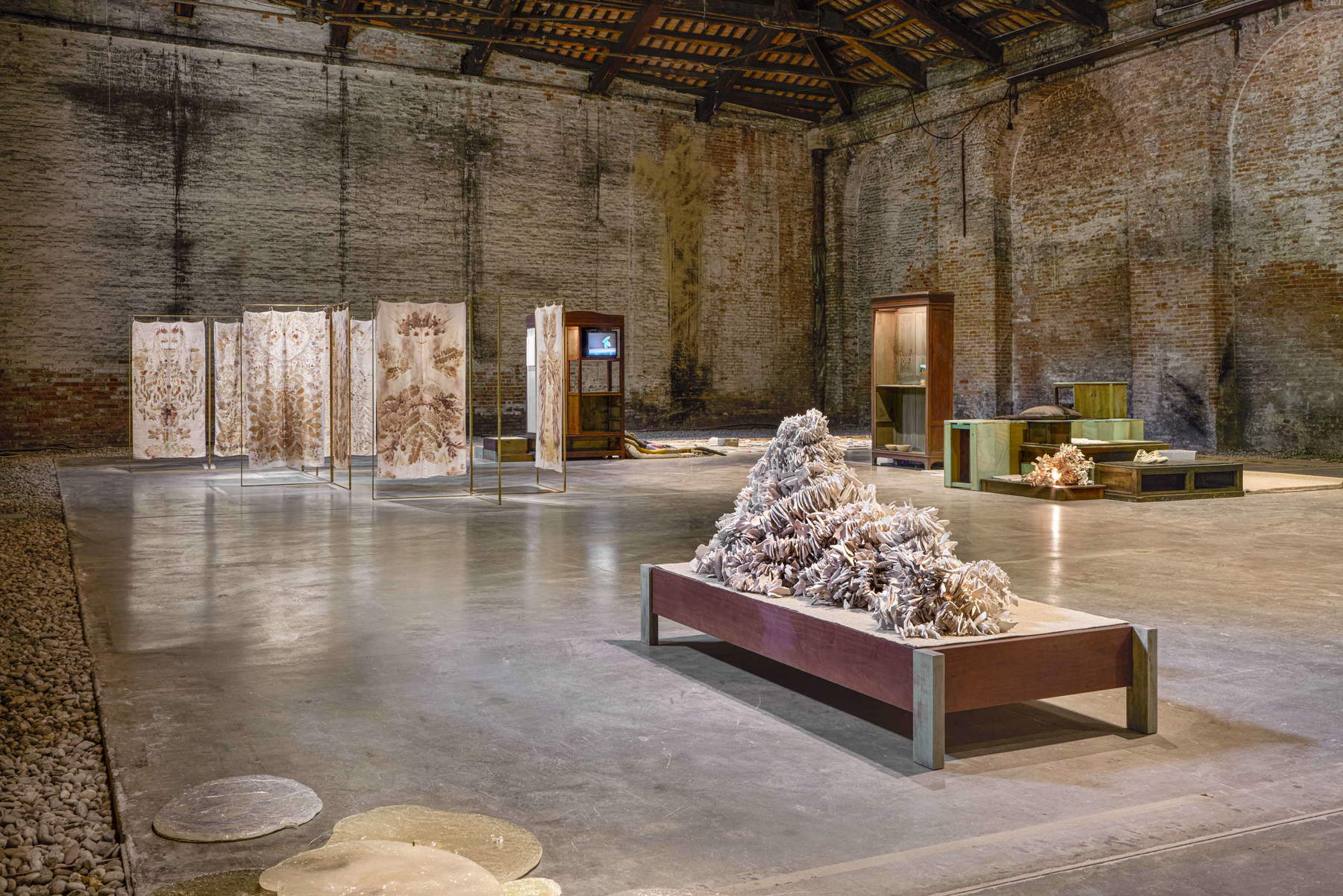
For the duration of the Biennale, the Italian Pavilion is animated by a calendar of events that extends beyond the exhibition space, involving Venetian institutions and realities. The public program, curated by Angelika Burtscher and Daniele Lupo of the Lungomare collective, runs throughout June, September and October with guided tours, walks, performance interventions and meetings. Partners include Arcicoro, Microclima, NABA of Rome, the NICHE Centre for Environmental Humanities at Ca’ Foscari University Venice and Spazio Punch, as well as academic institutions such as the Academy of Fine Arts of Rome and Venice, the Iuav University of Venice and Roma Tre University.
Related events also include La Giusta Misura, a traveling seminar conceived by Cecilia Canziani and Chiara Camoni, which interweaves theory and practice through workshops and moments of discussion. The first meeting will be held on September 27, 2026 at the Villa Fürstenberg International Sculpture Park of Banca Ifis, sponsor of the exhibition.
The project pays special attention to accessibility and inclusion. Communication tools in simplified language, digital devices to facilitate orientation, and an exhibition itinerary enriched with interpretive supports have been developed. This includes collaboration with the Amplifon Foundation’s Ciao! project, which enables 30,000 elderly residents in seven countries to visit the exhibition remotely. The team also consulted with the National Heritage Cultural Activities School as part of the “Personeper” program. The exhibition catalog is published by NERO Editions with graphic design by Lungomare. The Italian Pavilion is realized thanks to the support of main sponsor ZEGNA and sponsor Banca Ifis, as well as contributions from numerous donors.
|
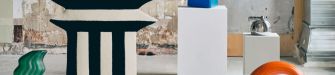
| This is what the Italy 2026 Pavilion looks like: images from "With you with everything" by Chiara Camoni |

Warning: the translation into English of the original Italian article was created using automatic tools. We undertake to review all articles, but we do not guarantee the total absence of inaccuracies in the translation due to the program. You can find the original by clicking on the ITA button. If you find any mistake,please contact us.




















 IT
IT FR
FR DE
DE ES
ES CN
CN


