





At the Venice Biennale, after much controversy on the eve of the event, the Pavilion of Russia returns to open, marking Moscow’s return to the exhibition for the first time since its invasion of Ukraine in 2022. The opening is one of the most controversial issues of the 61st International Art Exhibition, but finally today the press got to see what the Russians brought to the lagoon. The project, titled The tree is rooted in the sky (“The tree is rooted in the sky”), is coordinated by commissioner Anastasiia Karneeva and brings together a large group of mostly Russian artists, musicians and performers, with a few additions from Africa and Latin America. The initiative presents itself as a kind of folk music festival, with the stated goal of redefining the boundaries between the center and the periphery and relating tradition and contemporaneity.
However, despite its reopening, the pavilion will not be accessible to the public during the six-month event: in fact, the festival will be held only on preview days for industry professionals (May 5-8). Visitors will only be able to watch video projections (recordings of the performances of musicians who take turns in the pavilions during the closed-door preview) on the building’s exterior walls and perceive from the outside the sound and musical activities taking place inside. The decision is linked to European sanctions against Russia, which prevent a full opening to the public, as clarified by the organization’s lawyers.
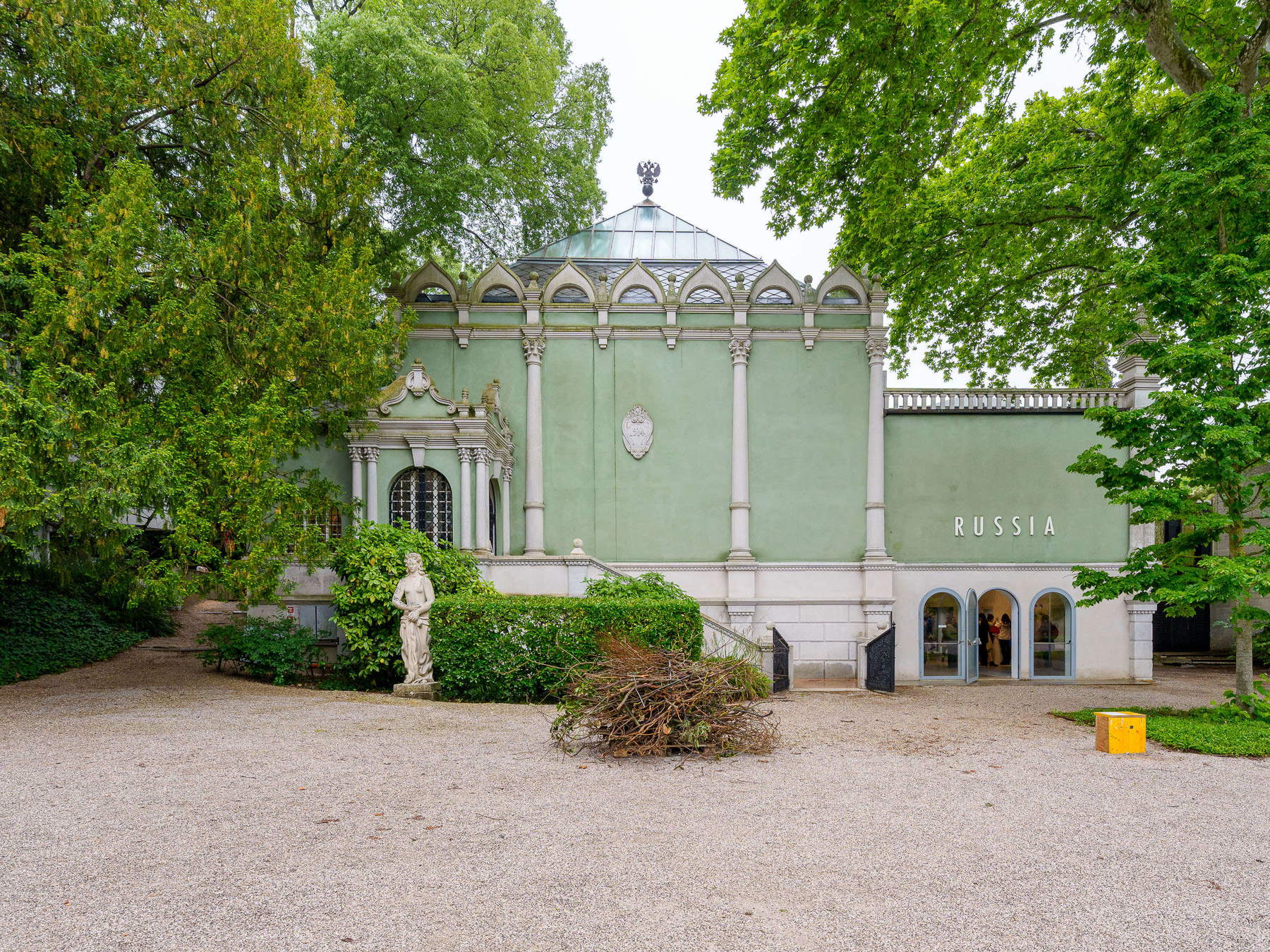


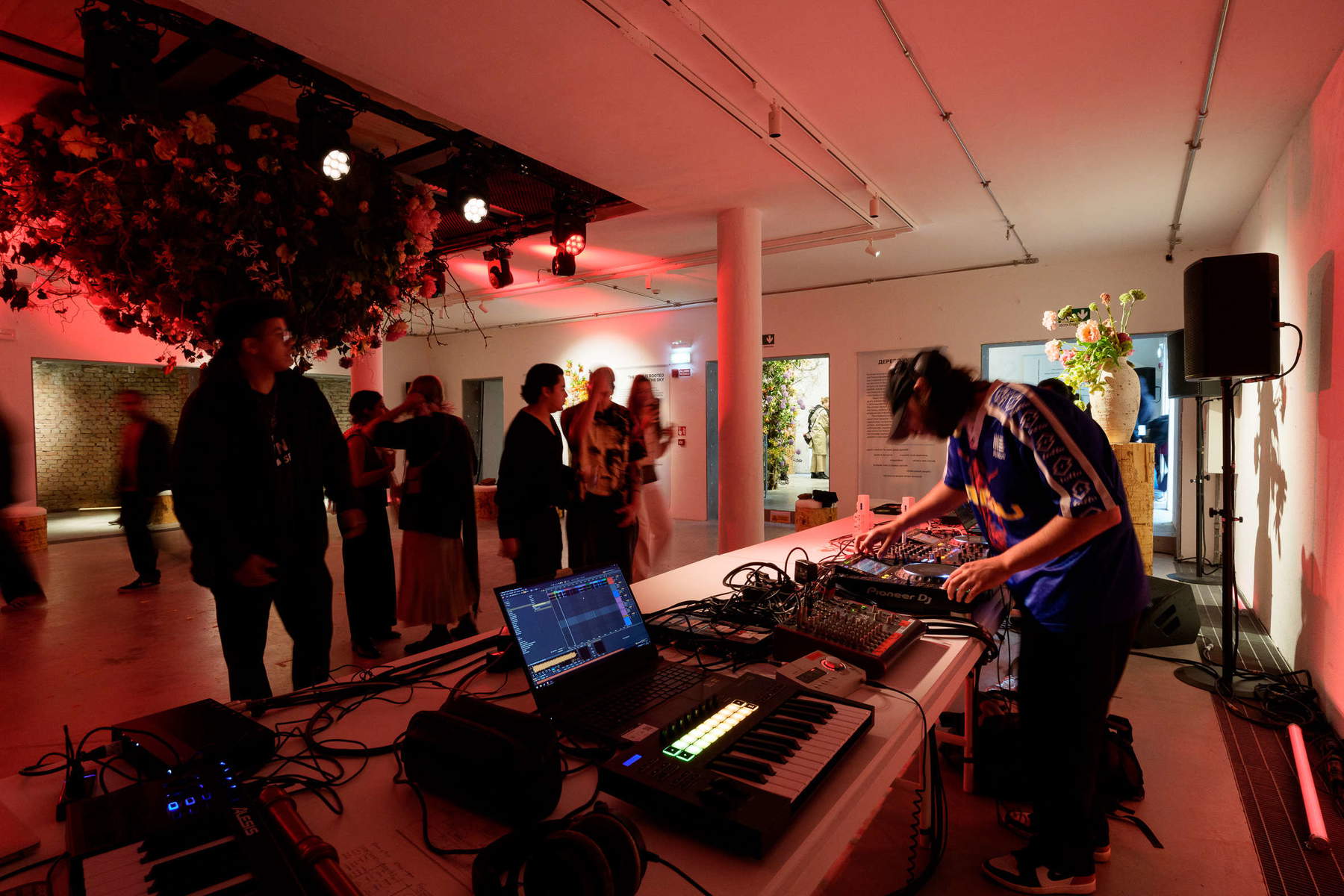
The pavilion’s program includes a calendar of events reserved for insiders. The exhibition space has been transformed into an environment reminiscent of a flower store pervaded by scents and sensory atmospheres. Inside are musical improvisations, performances by folk ensembles, concerts and participatory actions, with moments also dedicated to electronic and techno music. Initiatives also included the free distribution of used clothing, which was met with great interest, and the possibility of access to more intimate spaces, such as a hall featuring a small coniferous forest and video projections.
Despite the limitations, Russia welcomed its return to the Biennale. Commissioner Karneeva expressed satisfaction with the opportunity to represent the country in an international context, stressing the importance of an inclusive presence of all nations. At the same time, the reopening has divided public opinion and visitors: there are conflicting positions among Venice residents and tourists, between those who consider the return legitimate and those who fear a propagandistic use of art.
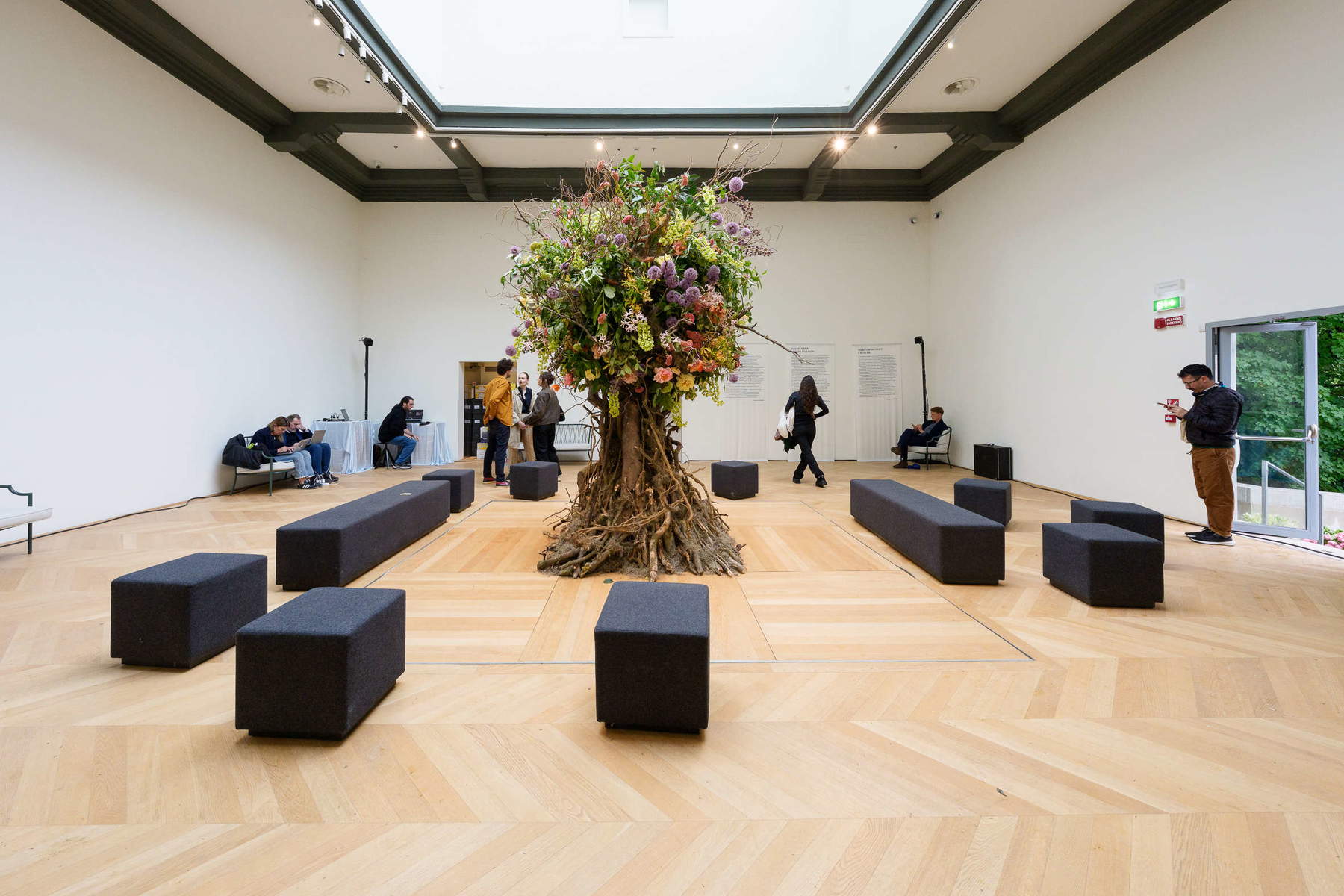
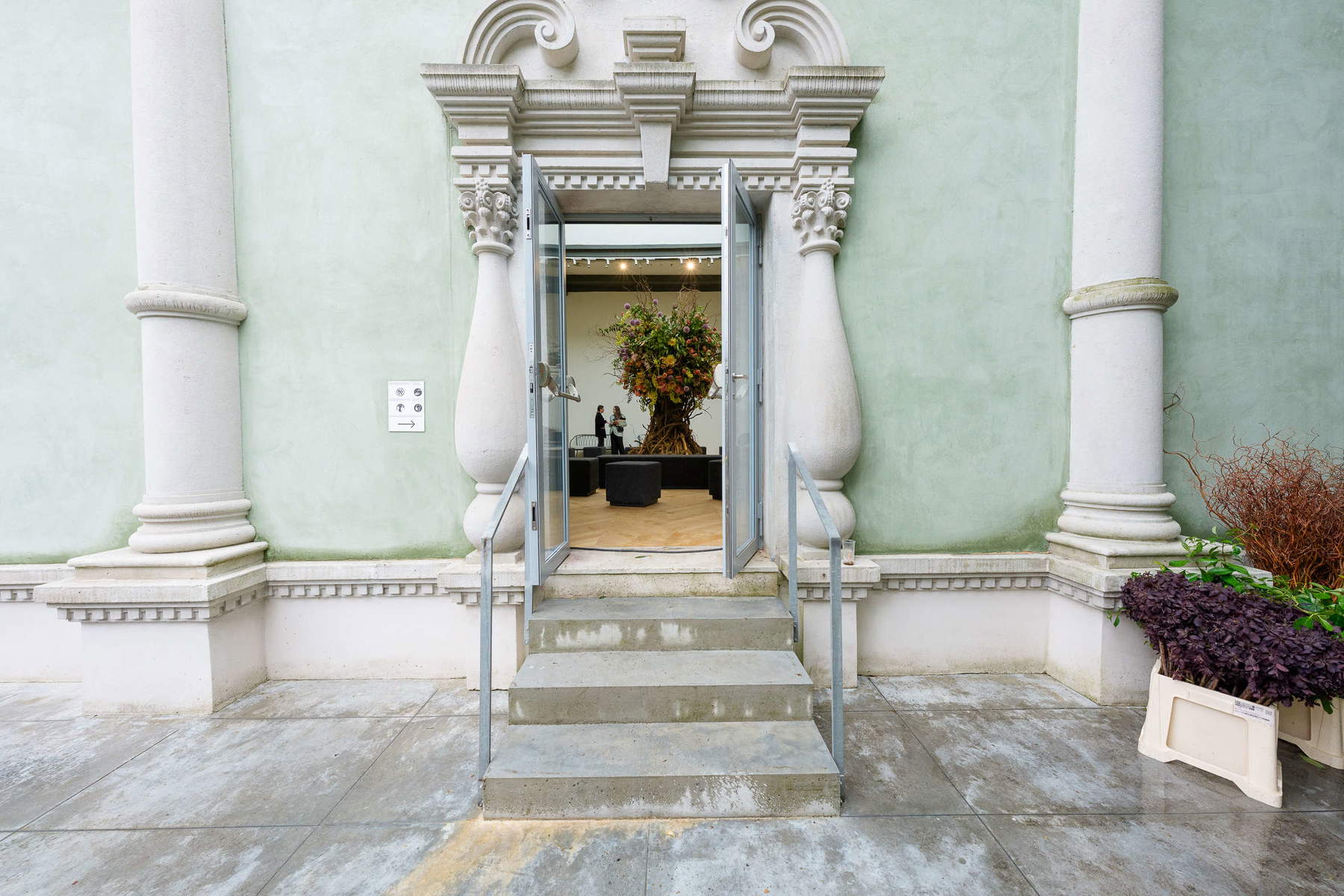
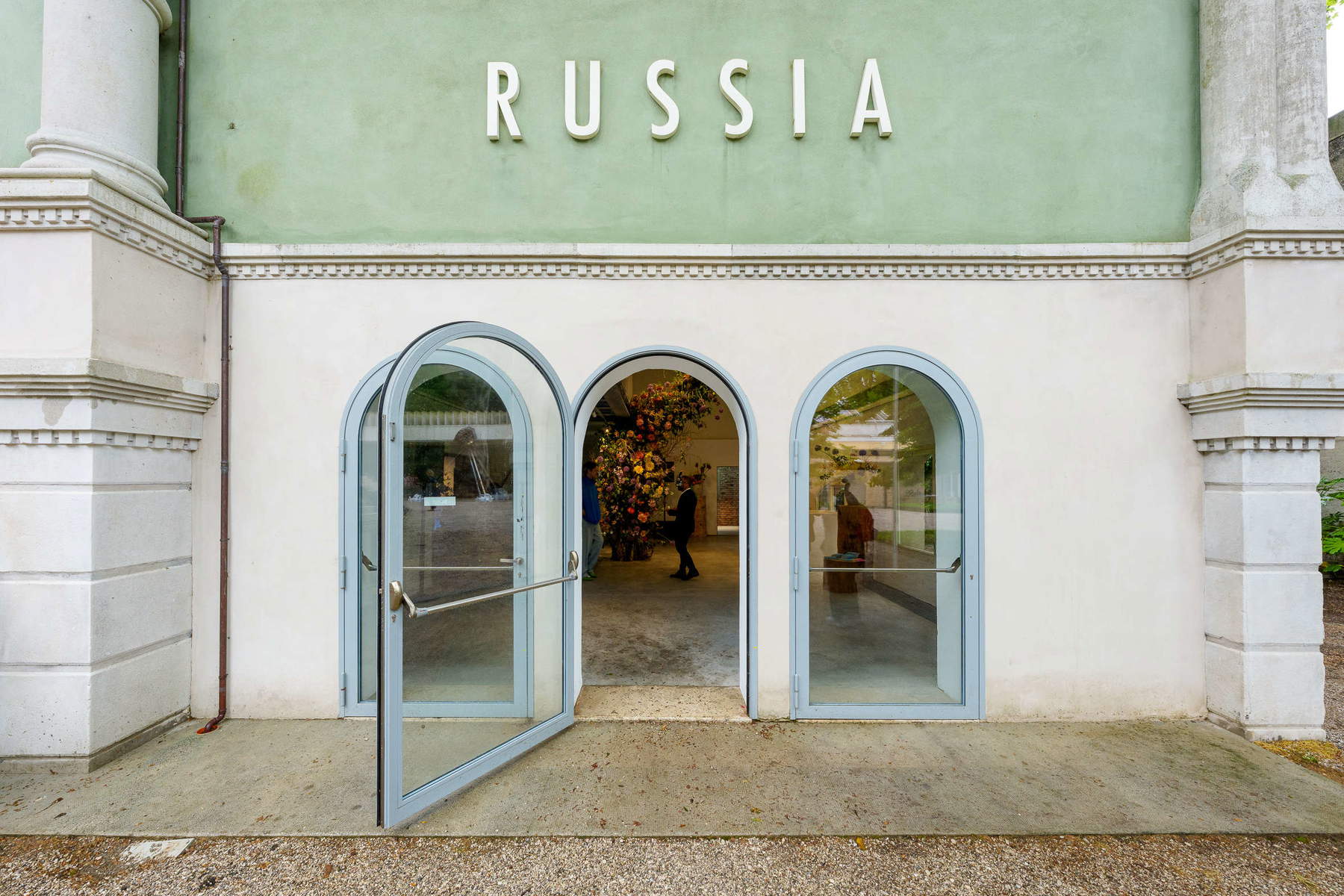
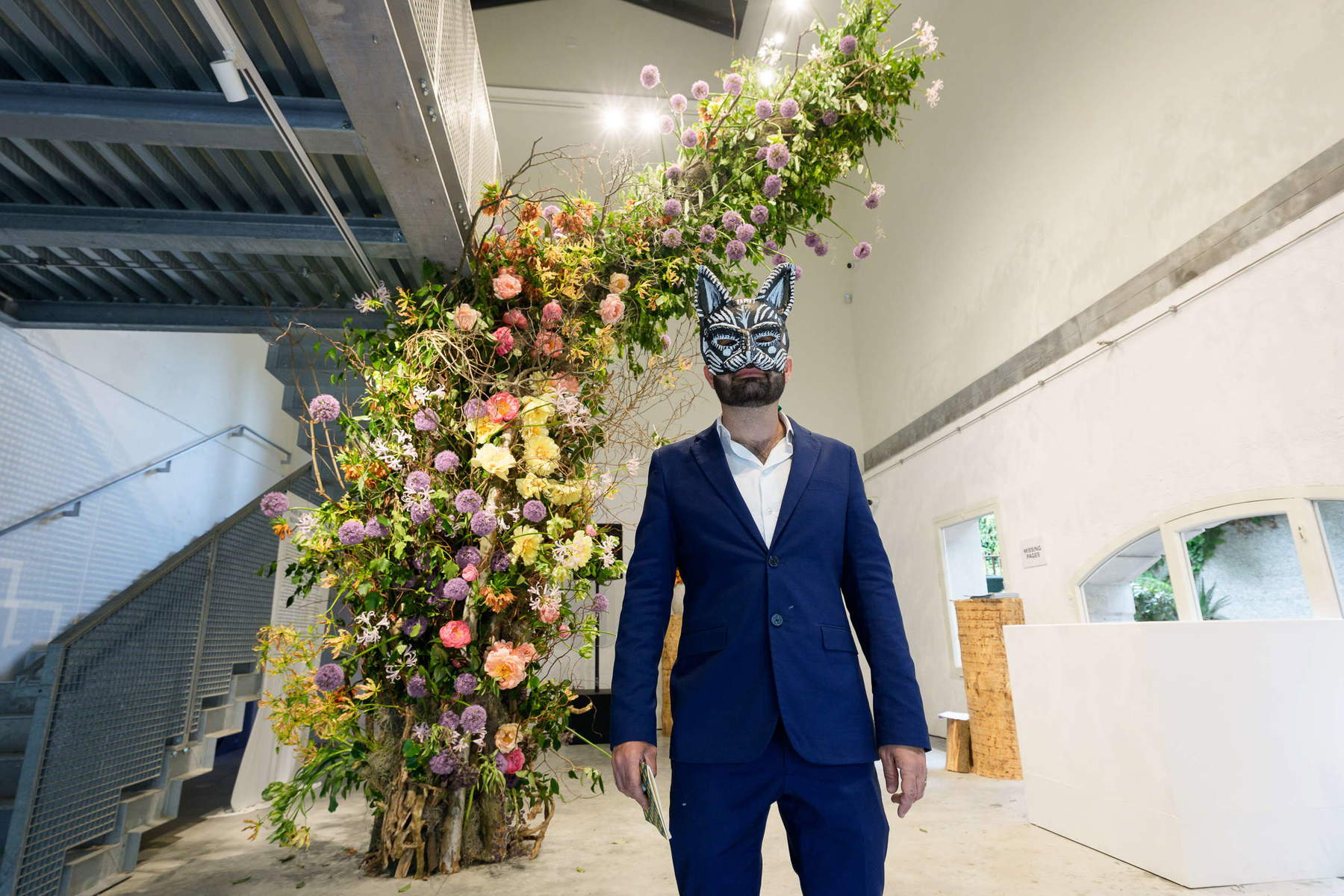
The tree is rooted in the sky project will not end with the Biennale, however. It is already planned to be revived as part of the St. Petersburg International Cultural Forum, scheduled for September 24-26, 2026, as announced by Mikhail Shvydkoi, Russian President Vladimir Putin’s special representative for international cultural cooperation. The goal is to offer the Russian public and forum participants an opportunity to engage with a project that has generated wide international debate.
It is therefore against this backdrop that the Russia Pavilion opened its doors. There is no end to the controversy, however, related to Russia’s war of aggression against Ukraine, the fact that the Russian Federation is a state under sanctions, and the roles of the people involved in the project ( we had discussed this previously in an article). The fact that the pavilion has opened certainly does not make the Russian presence at this Biennale any less objectionable.
|
| Venice Biennale, despite everything open the Russia Pavilion. Here's what it looks like |

Warning: the translation into English of the original Italian article was created using automatic tools. We undertake to review all articles, but we do not guarantee the total absence of inaccuracies in the translation due to the program. You can find the original by clicking on the ITA button. If you find any mistake,please contact us.



























 IT
IT FR
FR DE
DE ES
ES CN
CN


