




by Redazione 04/12/2025



Categories: Events / Disclaimer
The Gallerie d'Italia in Turin will welcome Federico Barocci's Madonna of the Cherries from the Vatican Museums as part of the exhibition The Illustrious Guest. December 10, 2025 to January 11, 2026.

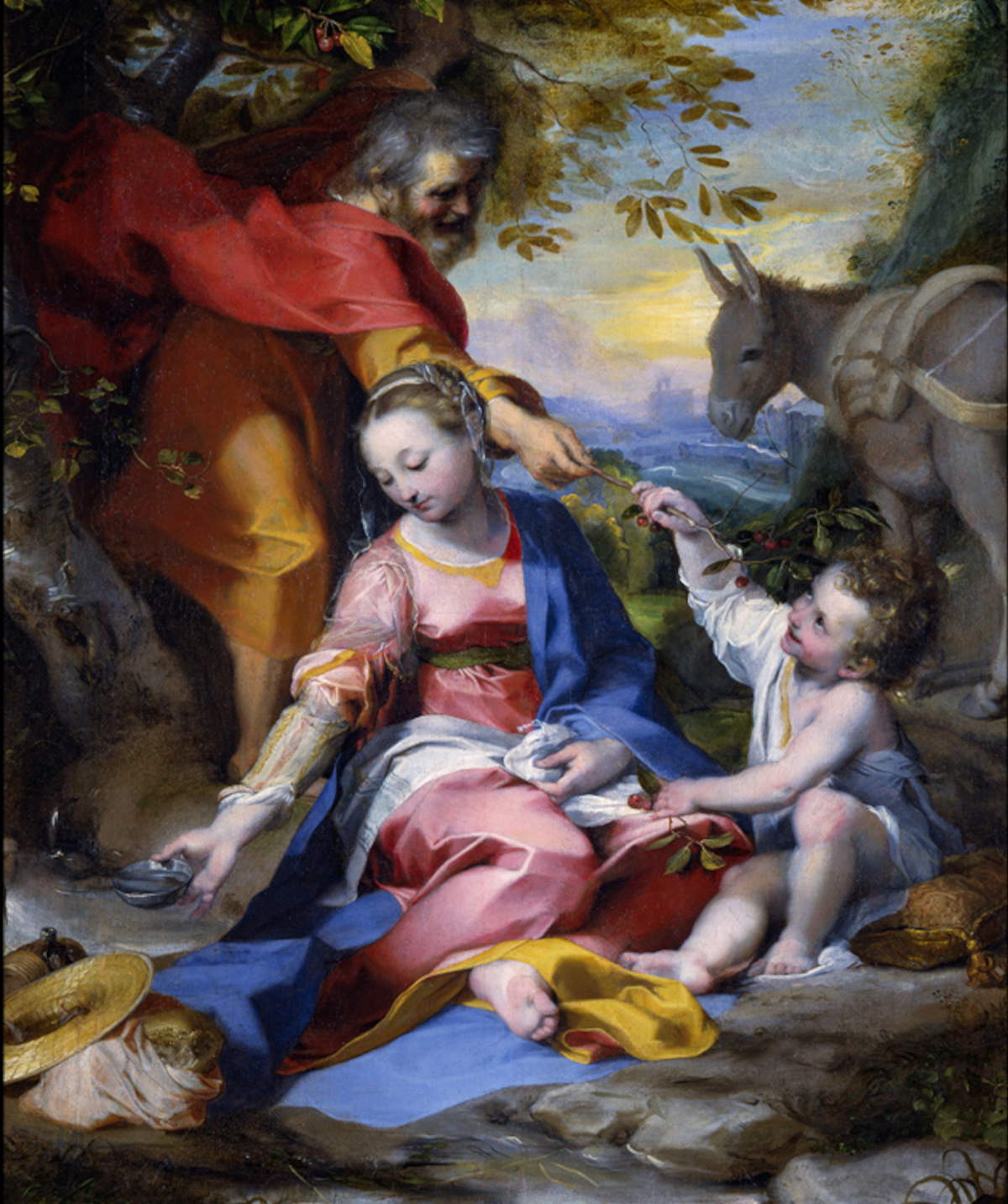
The Gallerie d’Italia in Turin will welcome, as part of the exhibition L’Ospite illustre, Federico Barocci’s Madonna of the Cherries, among his most famous masterpieces, coming for the occasion from the Vatican Museums. Visitors will be able to admire it from December 10, 2025 through the Christmas season, until January 11, 2026.
The Madonna of the Cherries is considered one of the pinnacles of the late Italian Renaissance. Subtle glazing and gradual tonal transitions give the fabrics an almost tactile softness, while the red of Mary’s dress harmonizes with the blue of the mantle, an emblem of purity; touches of yellow and pink in the draperies complete the harmony of colors.


The theme derives from an episode in the apocryphal Gospel of Pseudo-Matthew (XX, 1-2), in which the infant Jesus bends a palm tree to gather its fruit and causes water to gush from its roots. Barocci reworks the story with inventive freedom, replacing the palm tree with a cherry tree and transforming the miracle into a moment of intimate family sweetness. The Virgin, in a gesture of affectionate maternal tenderness, welcomes the Child who reaches out toward the cherries offered by St. Joseph. The donkey on the right sets the scene in an everyday context, while a bright landscape stretches in the background. Next to the Madonna, a container of water hints at the Eucharist, enriching the theological value of the work.


The work was commissioned by Simonetto Anastagi in 1570 and sent to Perugia in 1573. Upon the death of the commissioner (1602), the painting passed to the city’s Jesuits. With the suppression of the order in 1773), it was transferred to the Quirinal Palace; in the 19th century it entered the Pinacoteca of Pius IX, in 1908 that of Pius X, and, in 1935, it was placed in the new Vatican Pinacoteca commissioned by Pius XI, where it is still kept.
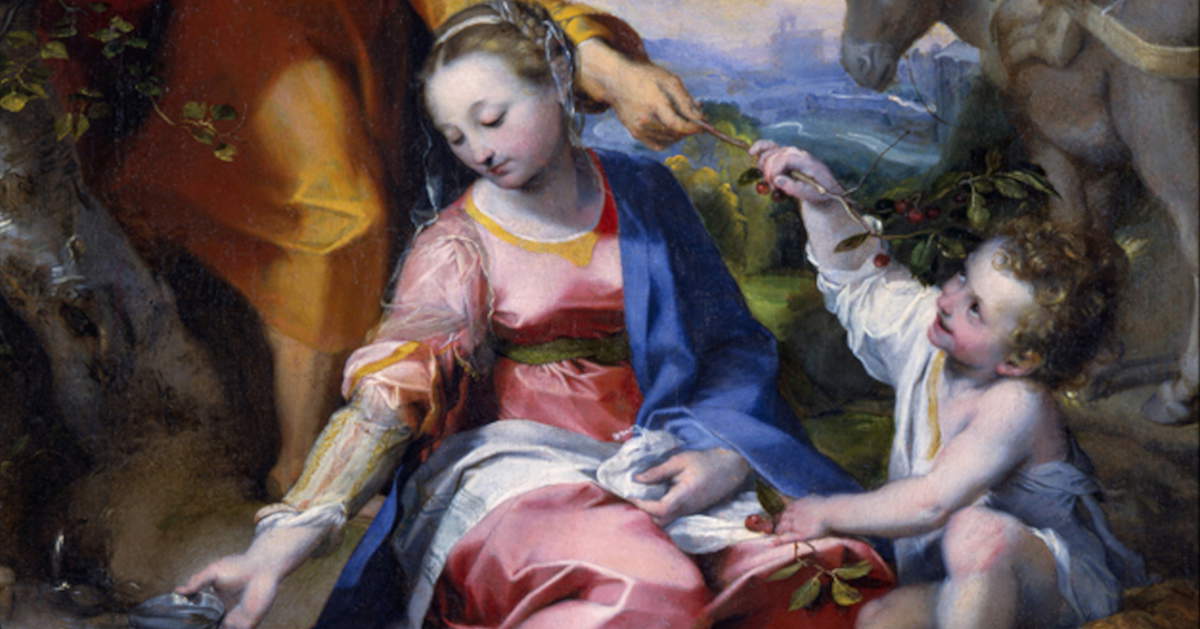 |
| Barocci's Madonna of the Cherries from the Vatican Museums arrives for Christmas in Turin, at the Gallerie d'Italia |
Warning: the translation into English of the original Italian article was created using automatic tools. We undertake to review all articles, but we do not guarantee the total absence of inaccuracies in the translation due to the program. You can find the original by clicking on the ITA button. If you find any mistake,please contact us.