





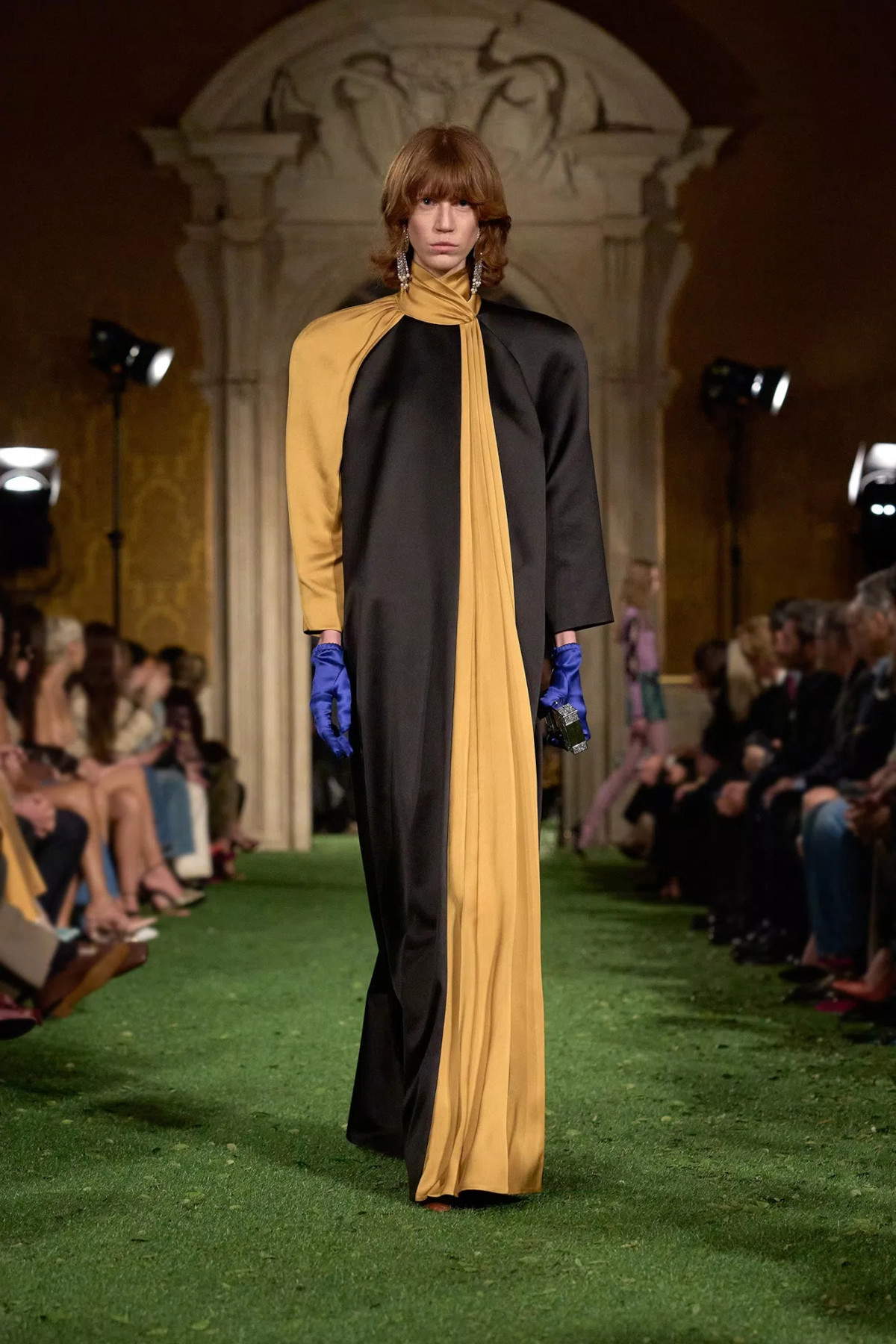
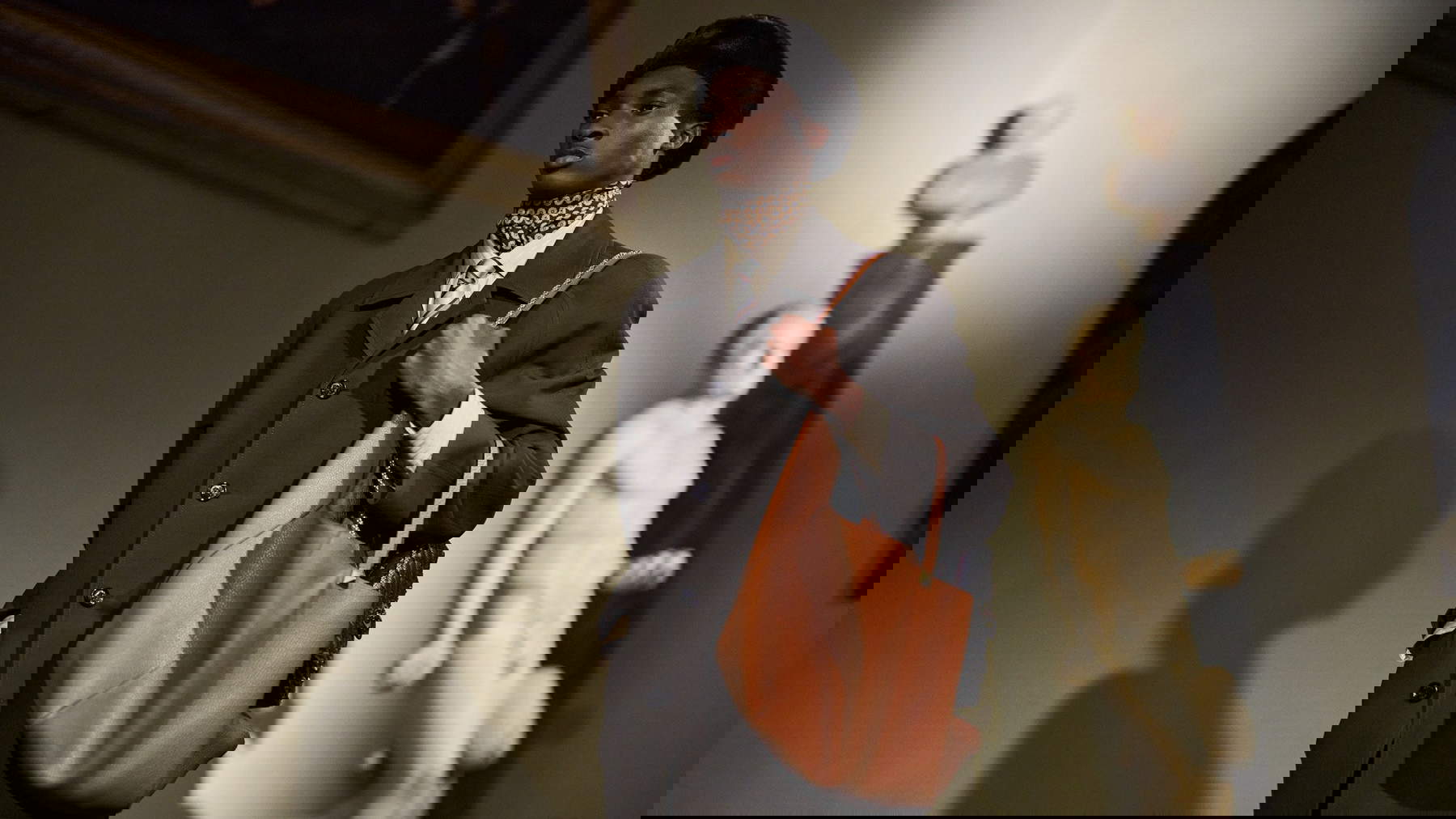
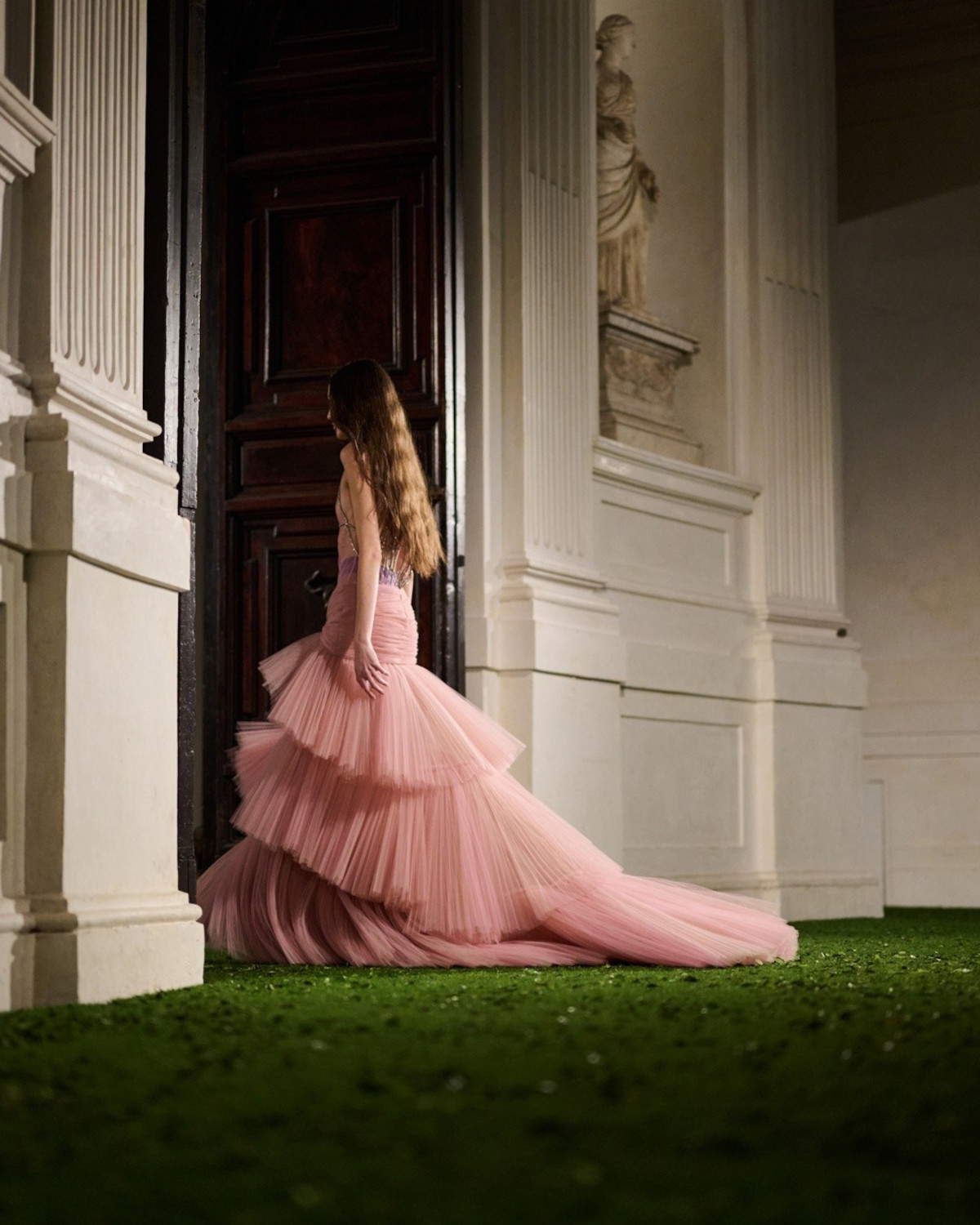
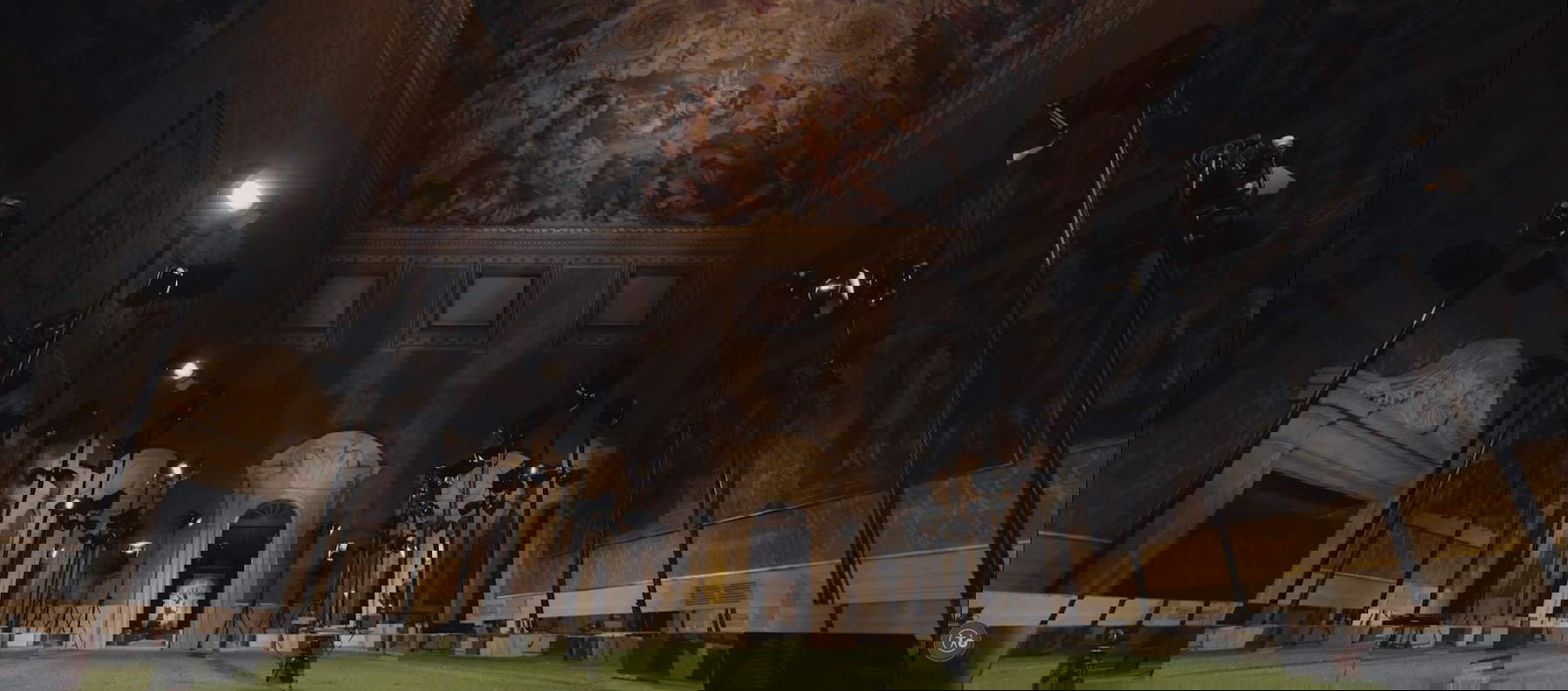
It was Palazzo Barberini, last night, Thursday, March 12 starting at 7 p.m., that hosted the presentation of Maison Valentino’s Fall Winter 26/27 collection, Interferences. The collection was unveiled by creative director Alessandro Michele, who accompanied the fashion show with a lengthy note, in which the term interference appears several times, to emphasize how the choice of the collection’s name is linked precisely to the structure of the Palazzo. He also pointed out how Palazzo Barberini was not a “mere backdrop” on the occasion of the fashion show, but a “device of critical reactivation,” which “does not simply welcome bodies, but orients and exposes them, forcing them to measure themselves against a history made of hierarchy and torsion, axes and curves.”
“Palazzo Barberini,” says Michele, "is not a pacified architecture, but a field of conflict in which multiple devices concur to question the form’s claim to stability. The building does not seek a synthesis between order and movement: it exposes their forced coexistence, their permanent friction, the interferences generated in their overlapping. In this sense, the building can be read, in a Nietzschean key, as the site of an unresolved tension between an Apollonian principle marked by measure, clarity and hierarchy, and a Dionysian impulse of intoxication, slippage and loss of boundaries. At first reading, the layout of the building appears solid, regular, governed by a symmetrical and legible distributive clarity. [...] Yet, inside, this regularity is traversed by centrifugal forces that crack its compactness. In the great hall, Pietro da Cortona’s fresco of the Triumph of Divine Providence breaks that geometric rigor. The ceiling dissolves, opens up, dematerializes. Skies terremote the architecture; nature unhinges the underlying orthogonality; light and wind penetrate the disciplined space. Above the regularity of the layout a swirling, ascending, atmospheric movement unfolds. A structural friction is thus generated: on the one hand, architectural stability, heir to hierarchical thinking; on the other, the pictorial illusion that breaks boundaries and transforms the ceiling into an event."
Michele goes on to observe that “this same dialectic between opposing forces becomes particularly legible in the comparison between Gian Lorenzo Bernini and Francesco Borromini, called to intervene in the same palace and bearers of two radically different conceptions of space.” If in fact “Bernini’s staircase affirms a legible, hierarchical, oriented geometry. The body is guided, the path is clear, the ascent coincides with adherence to a geometric principle that presents itself as natural,” Borromini’s elliptical staircase “does not accompany the body but exposes it to a loss of orientation. Geometry curves, verticality becomes an unstable experience. Movement is no longer linear but torsion, slippage, continuous adaptation.”
The building is thus revealed as a “field of interference in which opposing forces cohabit without canceling each other out. It is a space inhabited by tensions, by overlapping wills, by visions that are measured in matter. The configuration that drives and the one that cracks can share the same perimeter, the same representational ambition. It is this co-presence that generates density. The linearity that disciplines and the curve that disorients do not exclude each other: together they produce a space that cannot be reduced to a single grammar.”
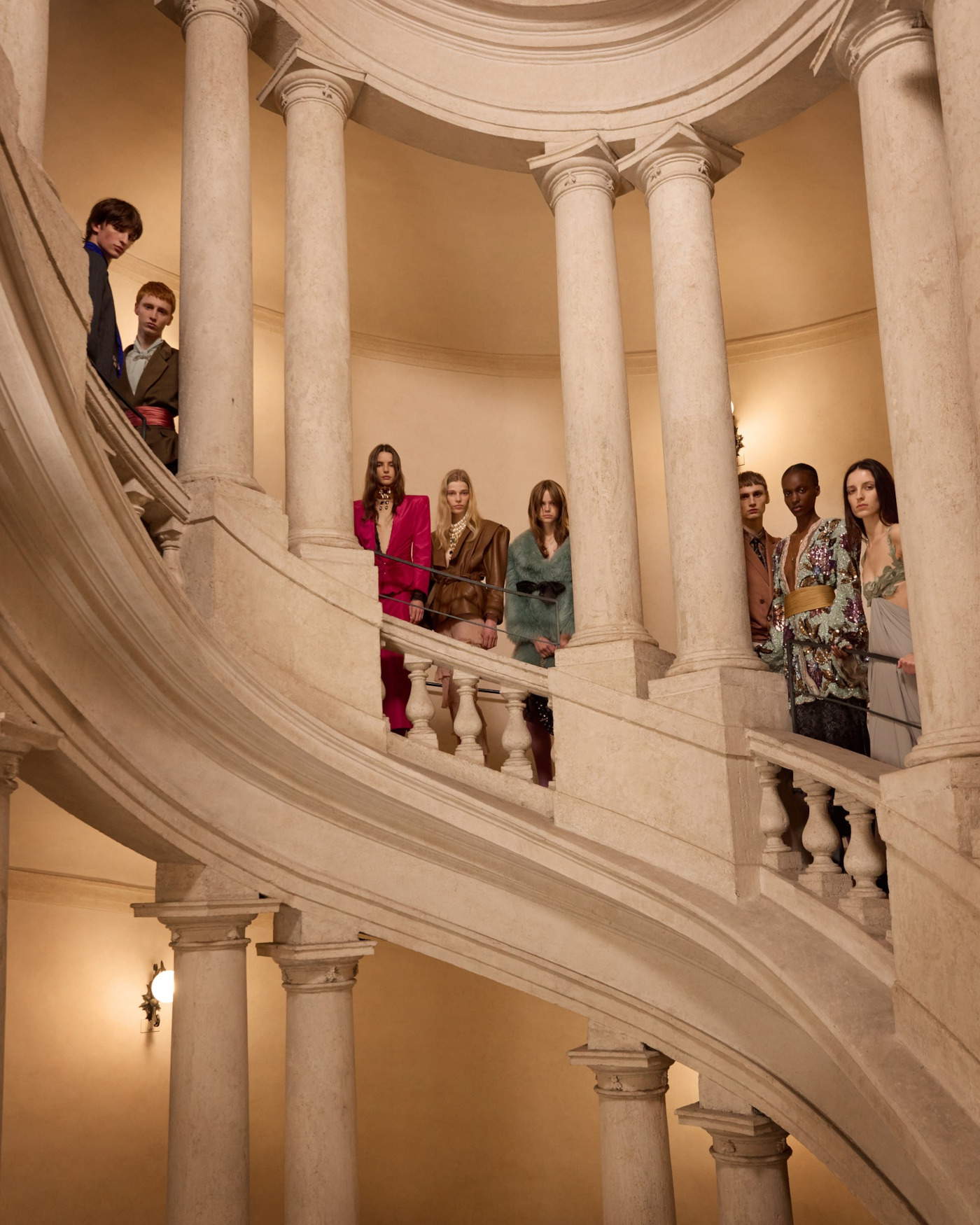
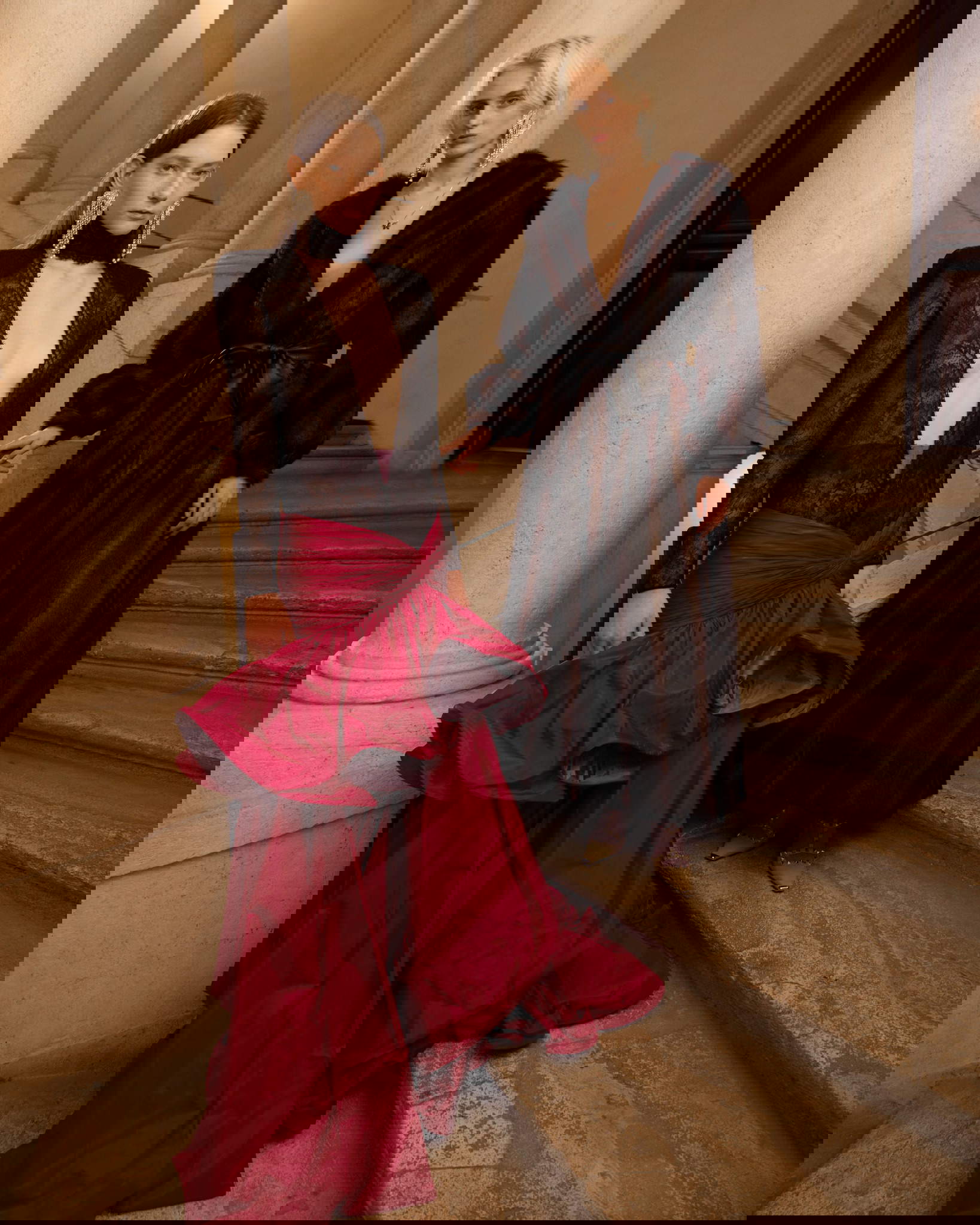
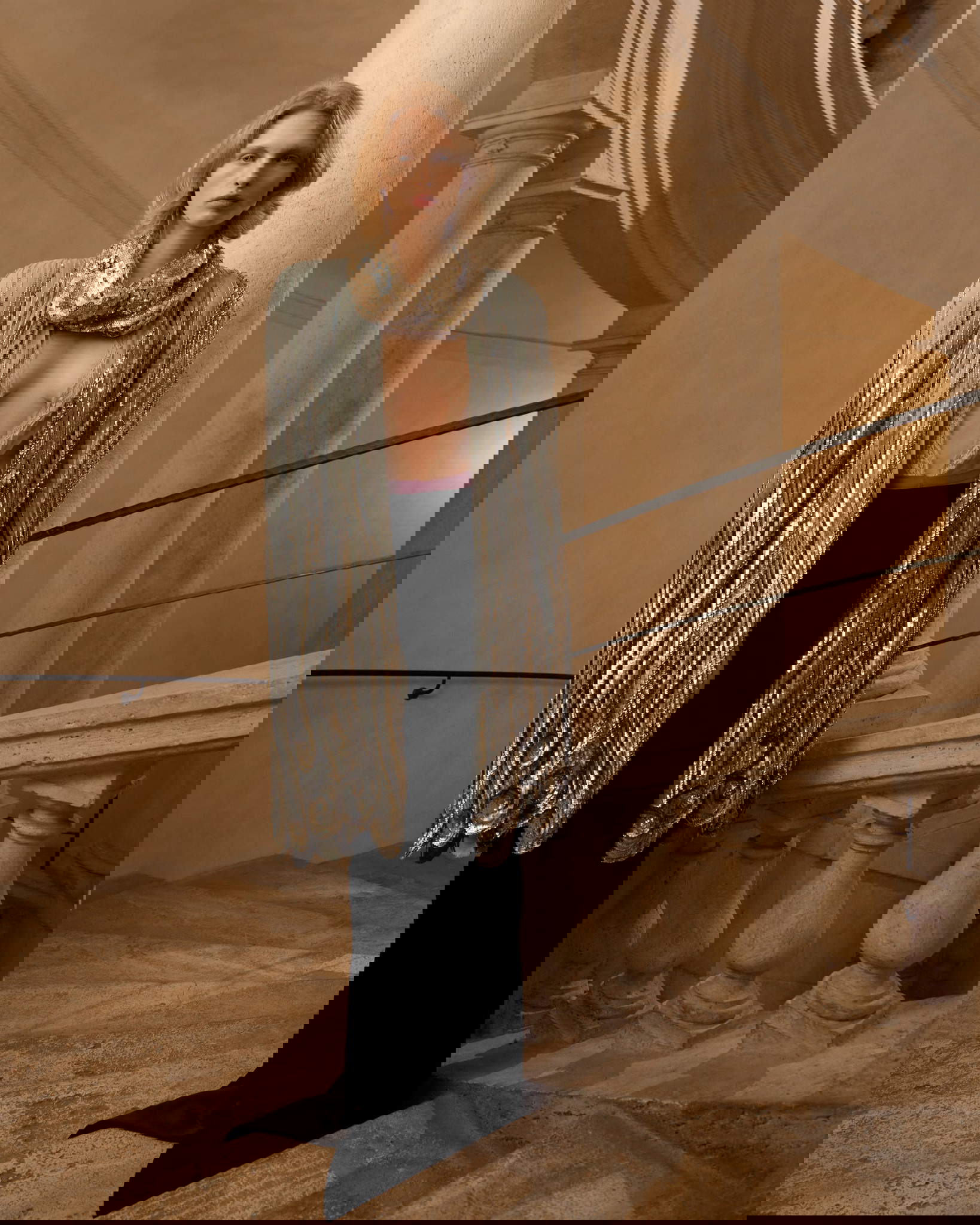
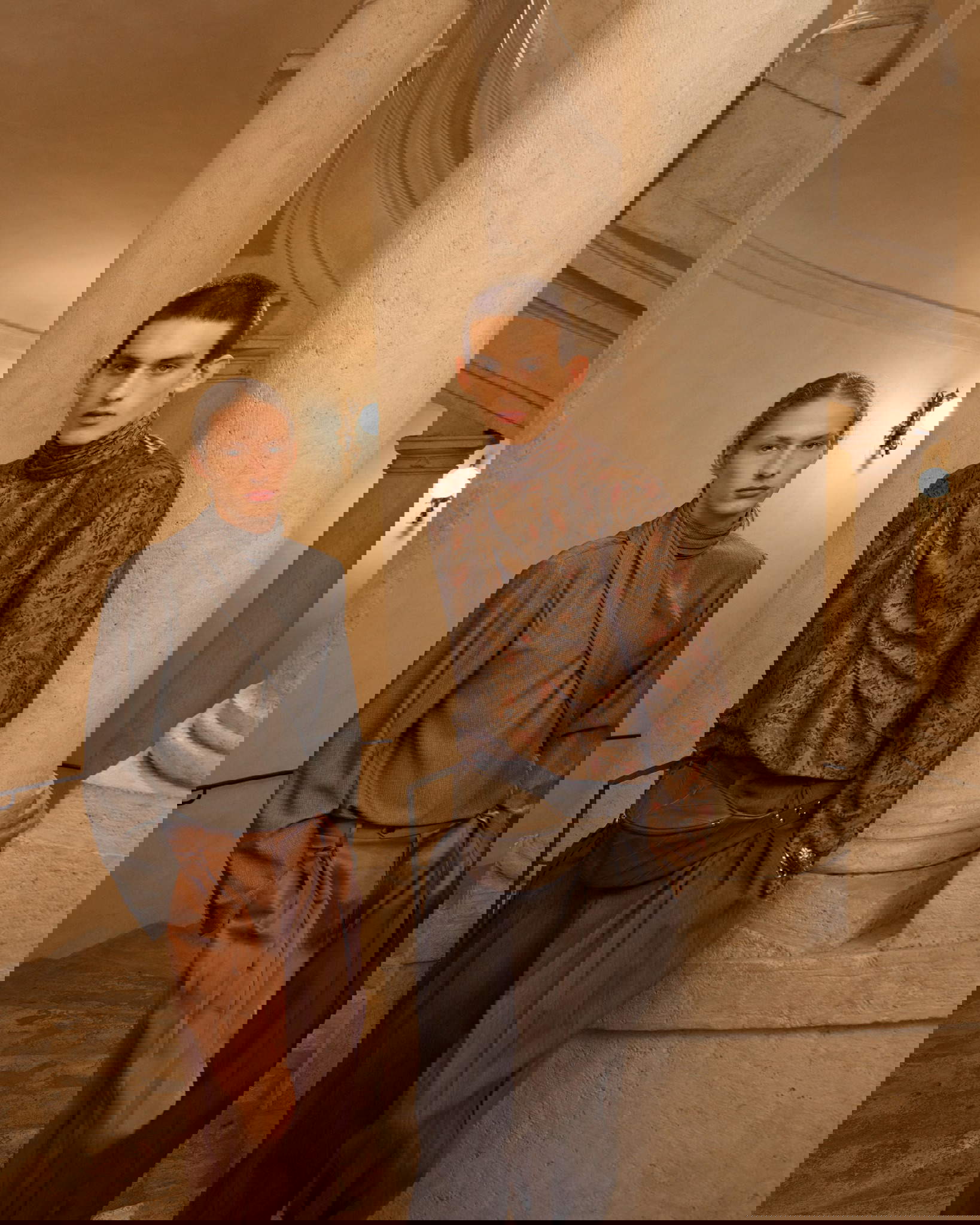
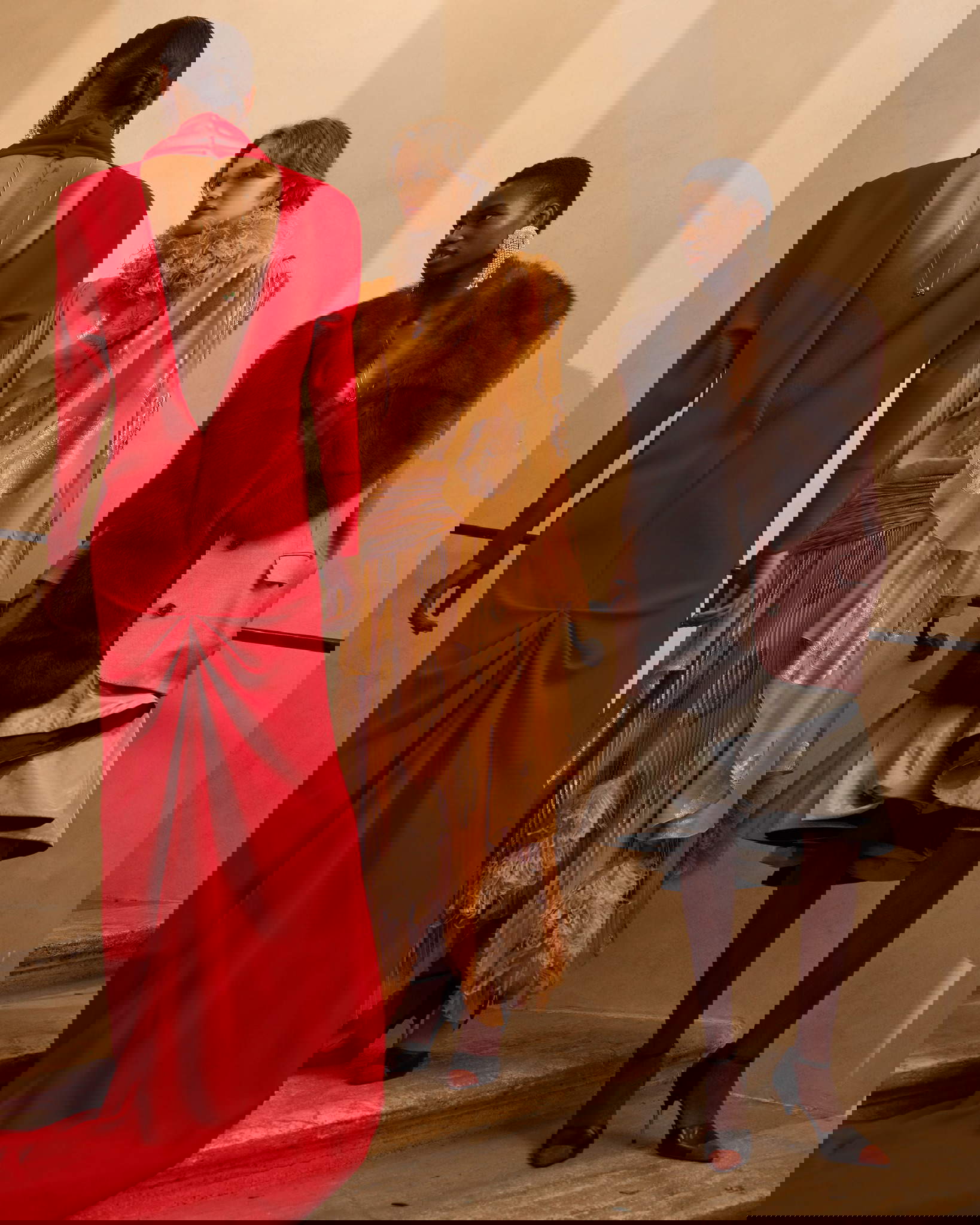
Hence, according to Alessandro Michele, the parallel with fashion, which, similar to architecture, “stabilizes and destabilizes, orients and decenters, affirms and undermines. It makes a hierarchy visible, but it can also subvert it. The form of dress is the result of an ongoing negotiation between structure and movement, between gravity and levitation, between control and openness. It is in this friction that dress acquires reflexive density: not pure adherence to a code, but a dynamic space in which power-aesthetic, symbolic, social-is manifested and at the same time questioned. The construction of a dress, like that of a building, is always the provisional outcome of a negotiation between code and invention, between memory and mutation. Every creative gesture is measured against a tradition that precedes it, and it is precisely in this confrontation that it finds the possibility of a shift capable of undermining a pre-established normative structure. It is not the victory of one polarity over the other that generates meaning, but their being in co-presence: an unstable balance that makes form a field of continuously operating forces, an open system of interferences. In this sense,” Michele explains, “Palazzo Barberini is configured as the ideal container for a fashion show, because it makes visible the constitutive friction between rigor and trespass that runs through both architecture and dress. The analogy is not aesthetic in nature, nor is it based on simple formal references. Rather, it arises from the recognition of a polar structure in which Apollonian and Dionysian are not opposed, but operate as simultaneous principles that animate both languages from within.”
“In this tension that runs through both stone and fabric,” he concludes, “the Interference show makes visible the friction between code and deviation, lightness and gravity, rule and excess, transparency and opacity, conformity and transgression. What emerges is a collection that celebrates order and, at the same time, reveals its structural vulnerability, exposing it to the possibility of its own overcoming.”
The event was attended by many famous faces from film, fashion and entertainment.
|
| Interferences, Valentino's FW26/27 collection designed by Alessandro Michele, debuts at Palazzo Barberini |

Warning: the translation into English of the original Italian article was created using automatic tools. We undertake to review all articles, but we do not guarantee the total absence of inaccuracies in the translation due to the program. You can find the original by clicking on the ITA button. If you find any mistake,please contact us.

























 IT
IT FR
FR DE
DE ES
ES CN
CN


