




From May 6 to Nov. 22, 2026, the Fortuny Museum in Venice presents Dreamers, an extensive monographic exhibition dedicated to Erwin Wurm (Bruck an der Mur, Austria, 1954), among the most relevant figures of the contemporary art scene. Curated by Elisabetta Barisoni and Cristina Da Roit, the exhibition focuses on research that, over the decades, has redefined the boundaries of sculpture, expanding its traditional parameters and questioning categories such as time, mass, surface, abstraction and representation.
Wurm’s work is based on a reflection that interweaves the human body and everyday objects, bringing both to the center of a practice that sits between art and life. Irony, a structural element of his production, becomes a tool for addressing philosophical and social questions. The works stage tensions specific to contemporaneity, between economic pressures and identity constructions, placing themselves in an intermediate space between monumental dimensions and the banality of the everyday.
The inclusion of the exhibition in the halls of the Fortuny Museum introduces a twofold tension. On the one hand the physical one, related to gravity and the management of volumes and masses, and on the other hand the historical one, determined by the cultural stratification of a building deeply rooted in Venetian memory. In this context, the presence of Wurm’s works takes the form of an element of interference and dialogue.
“The ordinary,” Erwin Wurm declares, “is so close and so familiar to us that we are inclined to overlook it. Looking at the ordinary from the perspective of the absurd and the paradox gives us the opportunity to see something different, perhaps more interesting.”
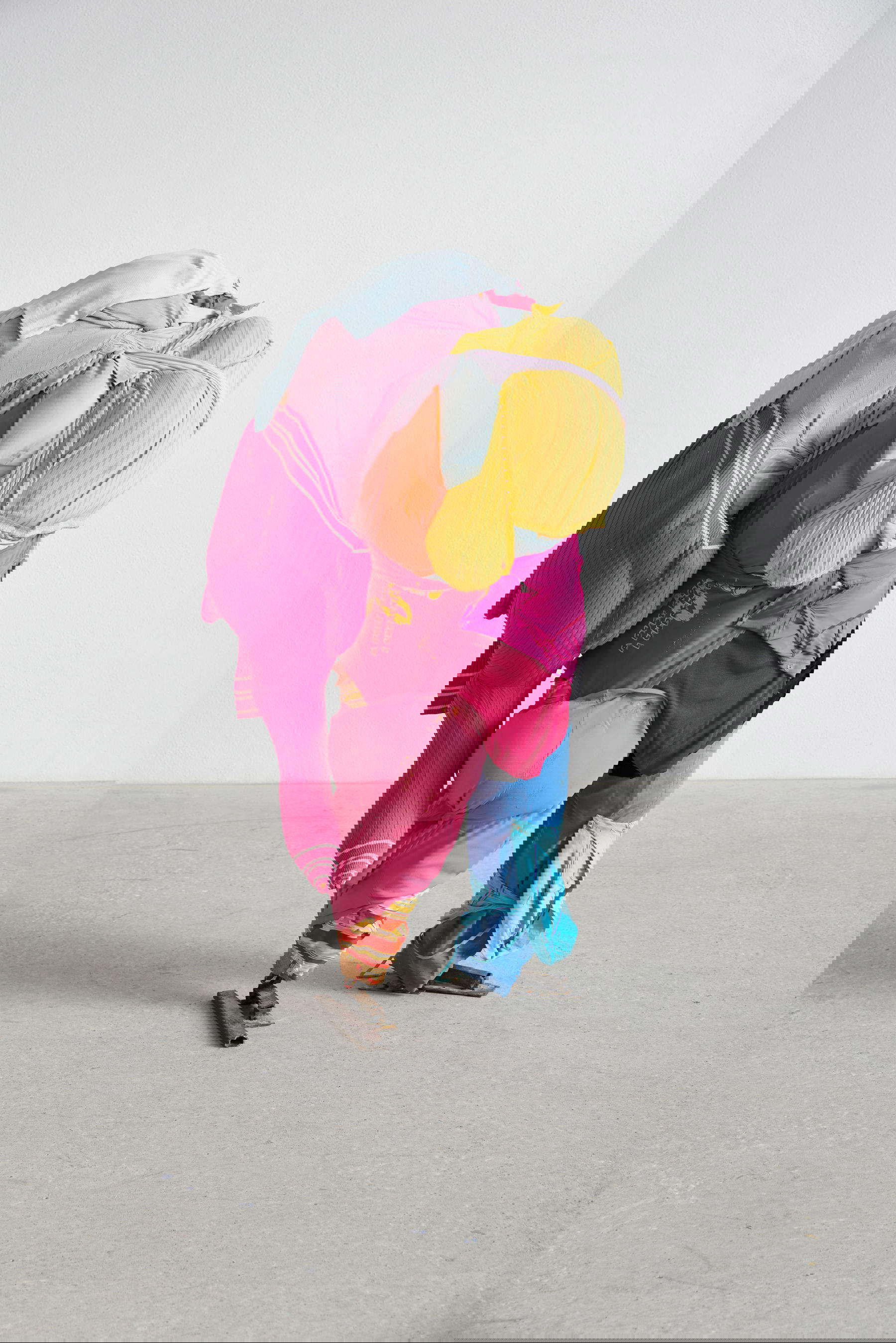
An important section of the itinerary is devoted to the famous One Minute Sculptures (1996-97), which contributed to the artist’s international notoriety. Installed on the second floor of the museum, these works involve the direct involvement of the public, invited to perform actions or assume poses with everyday objects such as chairs, bottles, books or clothing. The sculpture is configured here as a temporary event: it exists in the gesture and its short duration, only to survive in the photographic documentation, often made with Polaroids, intended as forms of immediate recording of the action.
Alongside these experiences, the exhibition presents works in which ordinary objects take on anthropomorphic characteristics. In the Dreamers series, elements such as oversized pillows supported by human limbs shape unstable and sometimes grotesque configurations. These works allude to the dream dimension and relate the physical body to the psychological sphere of the unconscious, highlighting a state of tension between material presence and mental perception.
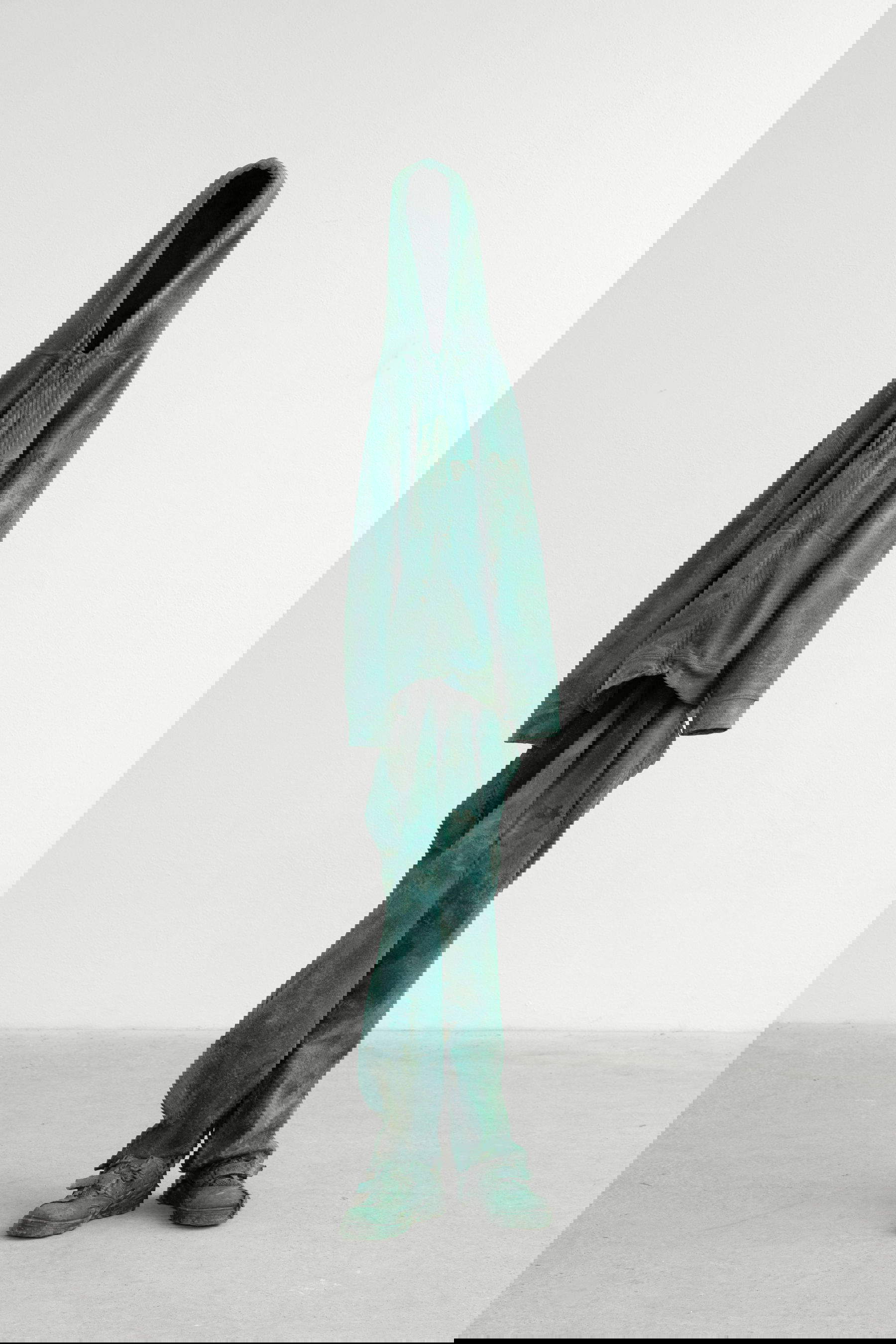
A further thematic core concerns the relationship between body and dress, understood as a sculptural extension. In the series Substitutes, Wurm exhibits clothing devoid of a human figure, conceived as traces or wrappings that preserve the memory of a now-absent presence. In particular, the dialogue between the Knossos shawl and the sculpture Yikes highlights how seemingly simple forms acquire meaning through interaction with the body. If the shawl presents itself as an open structure, requiring active intervention to take shape, Yikes returns a crystallized moment, suspended between action and dissolution.
The these terms take shape connection to the figure of Mariano Fortuny helps to further define the context of the exhibition. A multifaceted artist, active as a stage designer, inventor, painter and designer, Fortuny transformed Palazzo Pesaro degli Orfei into a space of total experimentation. The current Fortuny Museum is configured as a complex environment in which materials, languages and memories overlap and interact. Within this structure, Wurm’s works are inserted as elements capable of altering balances and activating new readings.
The experience of the exhibition thus unfolds in a space conceived as a dynamic organism, in which container and content influence each other. The sculptures, characterized by deformations, expansions and contractions, introduce a dimension of instability that invests the entire exhibition path. The museum thus becomes a place of observation of the transformations of contemporary identity, in continuity with the stratifications of the past. In the dialogue between permanence and precariousness, therefore, there emerges a reflection on the role of the individual in a society that constantly demands to assume defined forms.
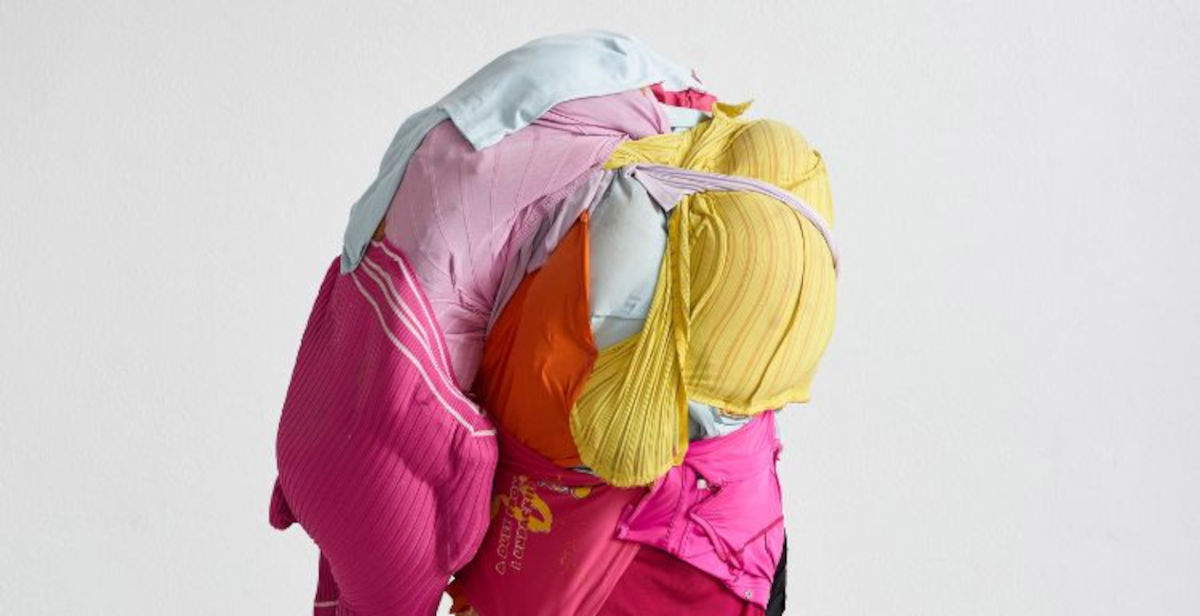 |
| Erwin Wurm at the Fortuny Museum in Venice: an exhibition that transforms the body into living sculpture |

Warning: the translation into English of the original Italian article was created using automatic tools. We undertake to review all articles, but we do not guarantee the total absence of inaccuracies in the translation due to the program. You can find the original by clicking on the ITA button. If you find any mistake,please contact us.


























 IT
IT FR
FR DE
DE ES
ES CN
CN


