





Dia Art Foundation brings to Venice one of the most important exhibitions dedicated to Lee Ufan (Haman, 1936) in recent years. Starting May 9, 2026, SMAC Venice, the San Marco Art Centre inaugurated in 2025 in the Procuratie of St. Mark’s Square, will in fact host a major solo exhibition by the Korean naturalized Japanese artist as part of the official Collateral Events of the 61st International Art Exhibition of the Venice Biennale. Curated by Jessica Morgan, director of Dia Art Foundation, the exhibition, simply titled Lee Ufan, was developed in close collaboration with the artist and traces more than six decades of research through historical and previously unseen paintings, monumental installations and new site-specific works conceived specifically for the Venetian spaces.
The exhibition occupies the eight rooms of SMAC Venice and is intended as a broad and articulate reading of the evolution of the visual language of Lee Ufan, a central figure of both the Japanese Mono-ha and the Korean Dansaekhwa movement. The Venice exhibition complements a major exhibition of paintings and sculpture opening simultaneously at Dia Beacon in the United States. Together, the two projects celebrate the artist’s 90th birthday by emphasizing his international contribution to redefining the relationship between painting, sculpture, space, and philosophy.
The Venetian installation begins with the pioneering works of the 1960s and 1970s belonging to the From Point and From Line series, considered fundamental to understanding the artist’s entire poetics. These paintings focus on the repetition of the painterly gesture and the physical relationship between body, breath and material. In fact, Lee Ufan conceived each sign as a living entity. “It must be a living point, a living line,” he stated several times throughout his career. Between the late 1960s and early 1980s, the artist developed a deeply meditative and bodily method of working. During the execution of the paintings he held his breath until the pigment on the surface of the canvas was gradually exhausted. This process transformed painting into an experience of extreme concentration and reflection on the duration of gesture, and this helped solidify Lee’s reputation as a painter-philosopher capable of fusing artistic practice and existential thought.
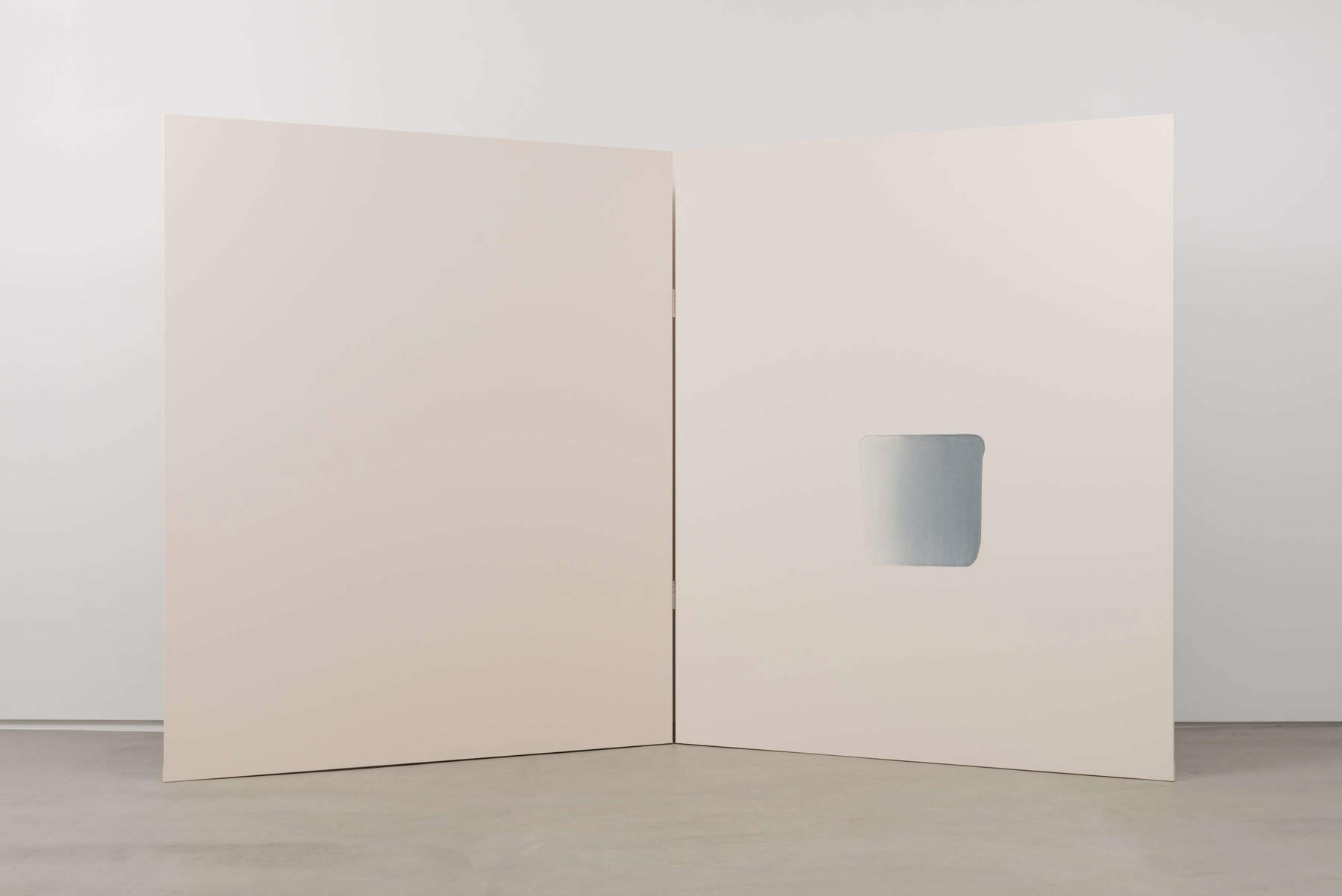
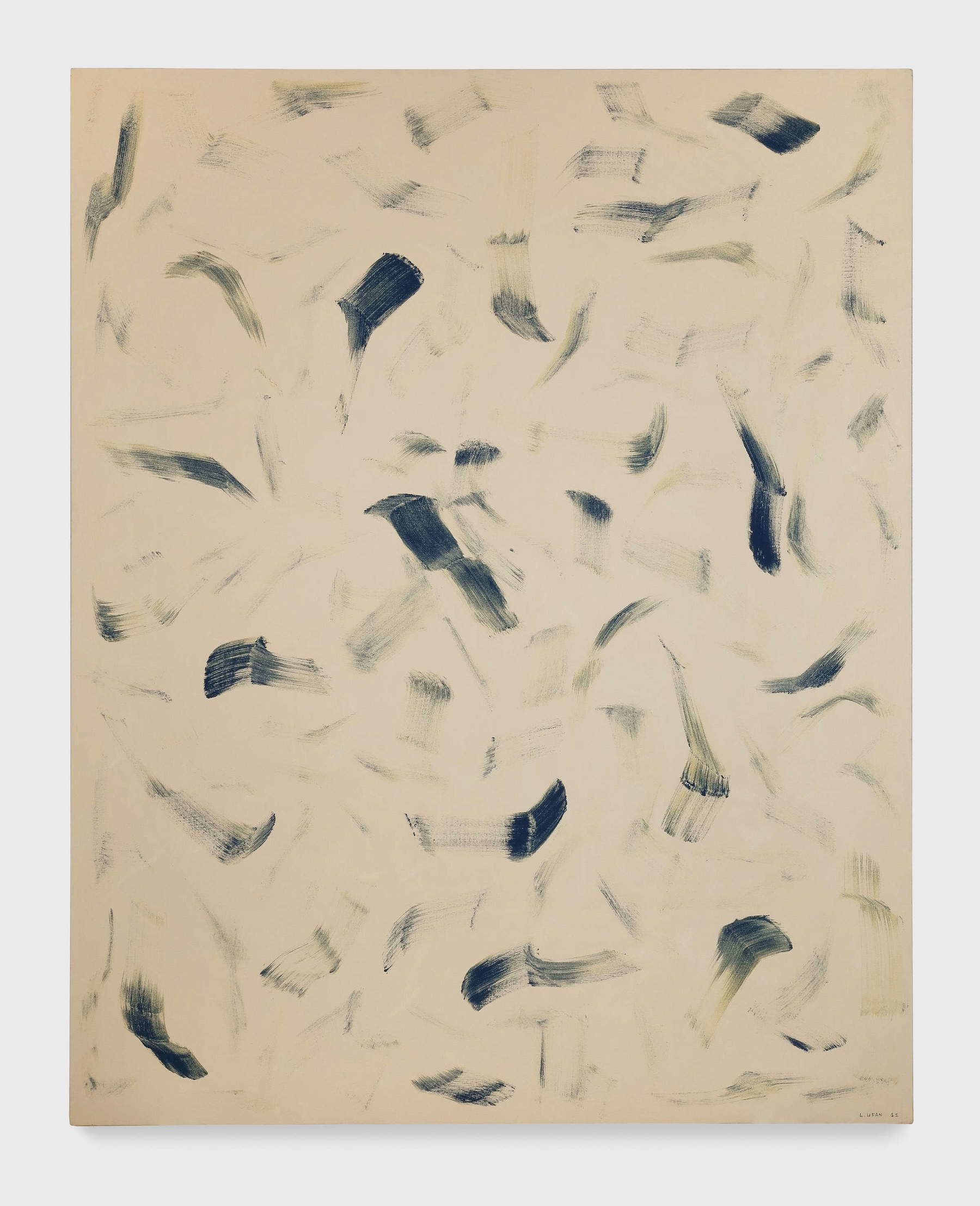
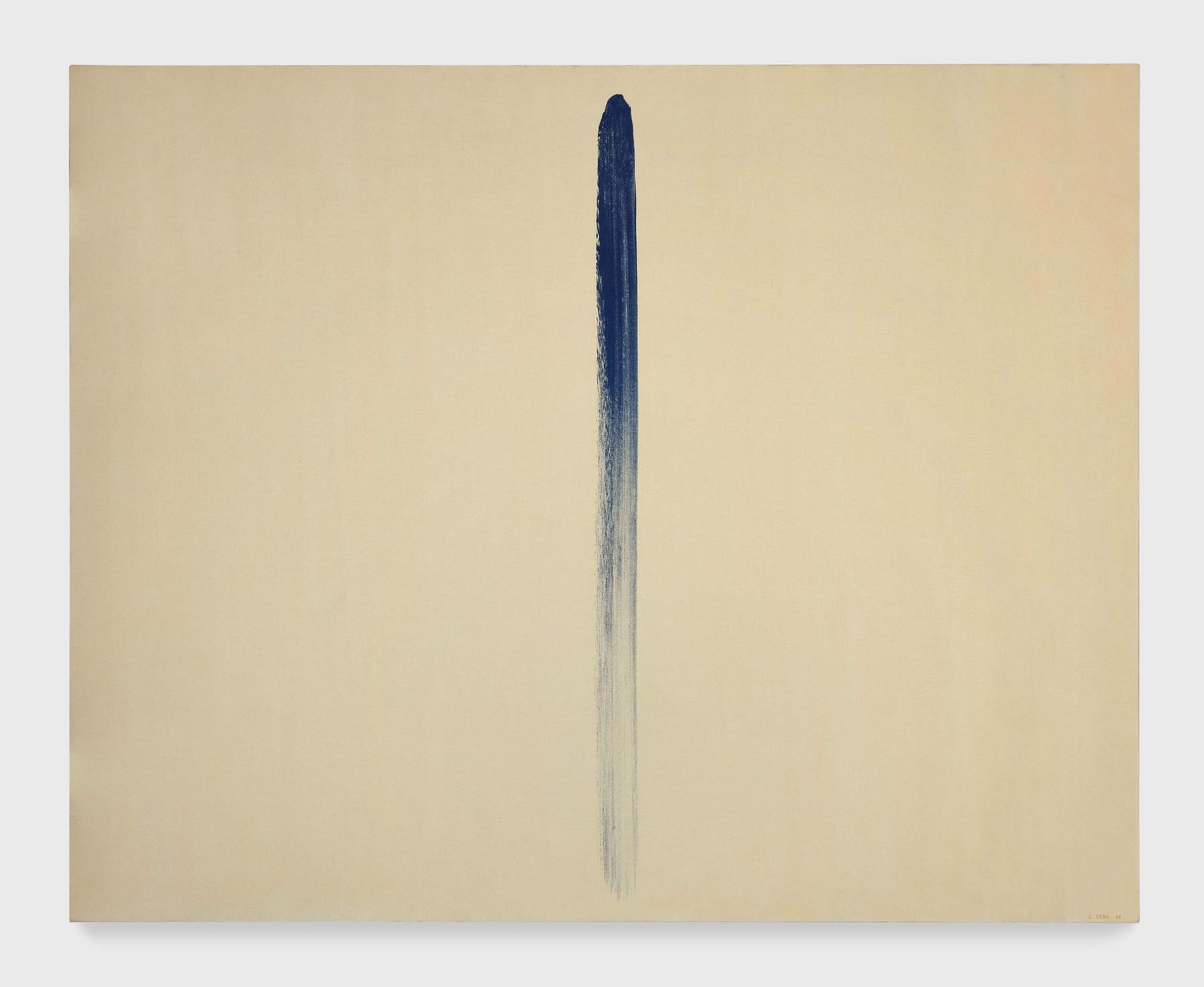
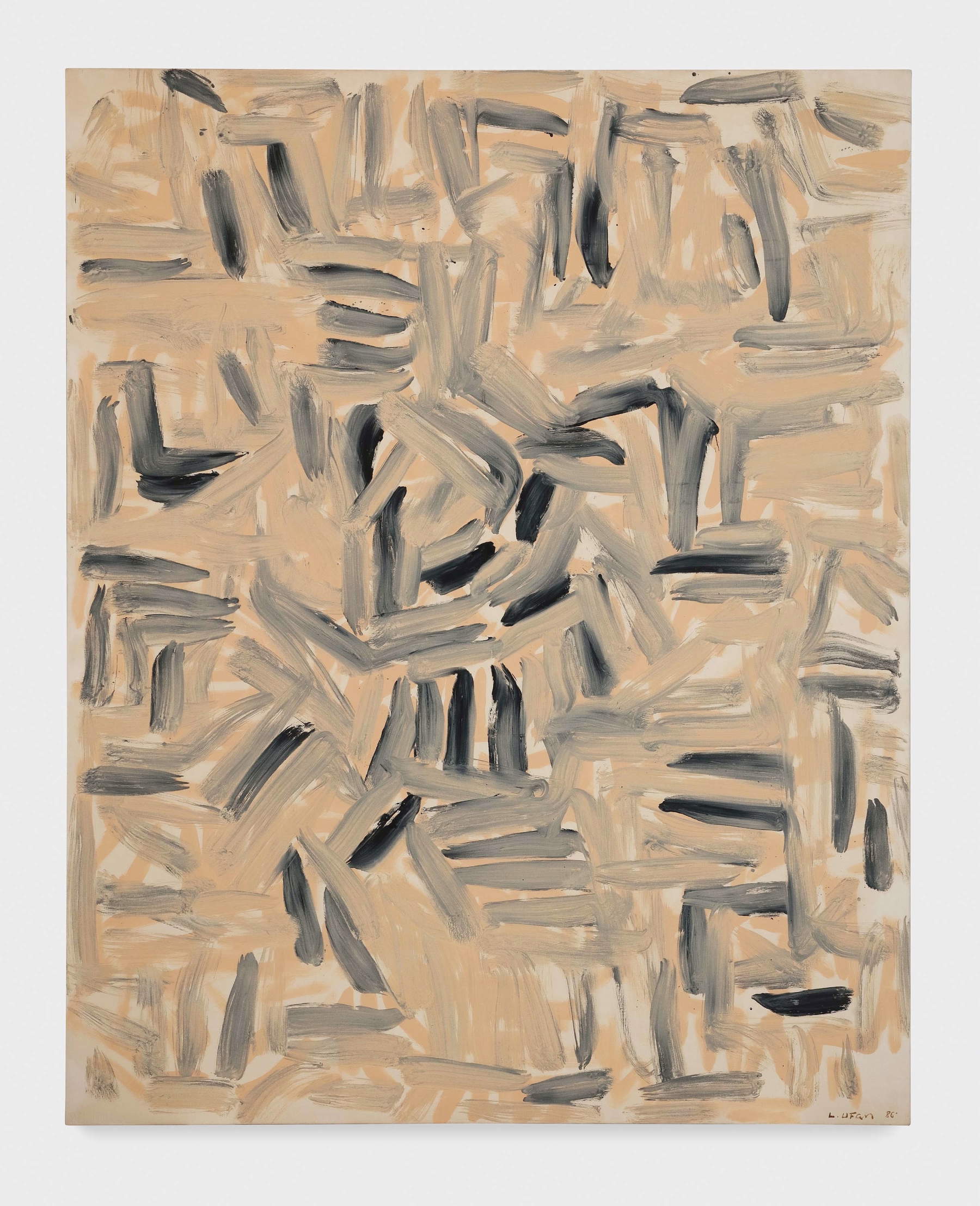
The second room of the exhibition is devoted to the From Winds and With Winds series, made between 1982 and 1991. In these works the pictorial sign becomes more rhythmic, dynamic and expressive. If in earlier works the breath was held, here the artist regulates it and accompanies it in the movement of the brush. Lee describes these paintings as “living compositions of empty spaces,” in which large portions of canvas left untouched dialogue with broad brushstrokes charged with energy and tension. The exhibition continues with the Correspondance and Dialogue series, developed since the 1990s and presented in the third and fourth rooms. In Correspondance , the gesture becomes deliberate and controlled again: large geometric brushstrokes stand out against white backgrounds, building a subtle balance between presence and absence. The works in the Dialogue series further deepen this quest through monumental paintings based on a single, powerful brushstroke, capable of transforming the surface into contemplative space.
Alongside the historical works, the exhibition also includes very recent works from the Response series, begun in 2021 and still ongoing. In these paintings Lee Ufan explores new chromatic possibilities through expressive brushstrokes in intense red and blue tones. For the occasion, the artist will also create two site-specific interventions directly on the floor and walls of the sixth room, conceived in relation to the architecture of SMAC Venice and the historical and symbolic identity of the lagoon city.
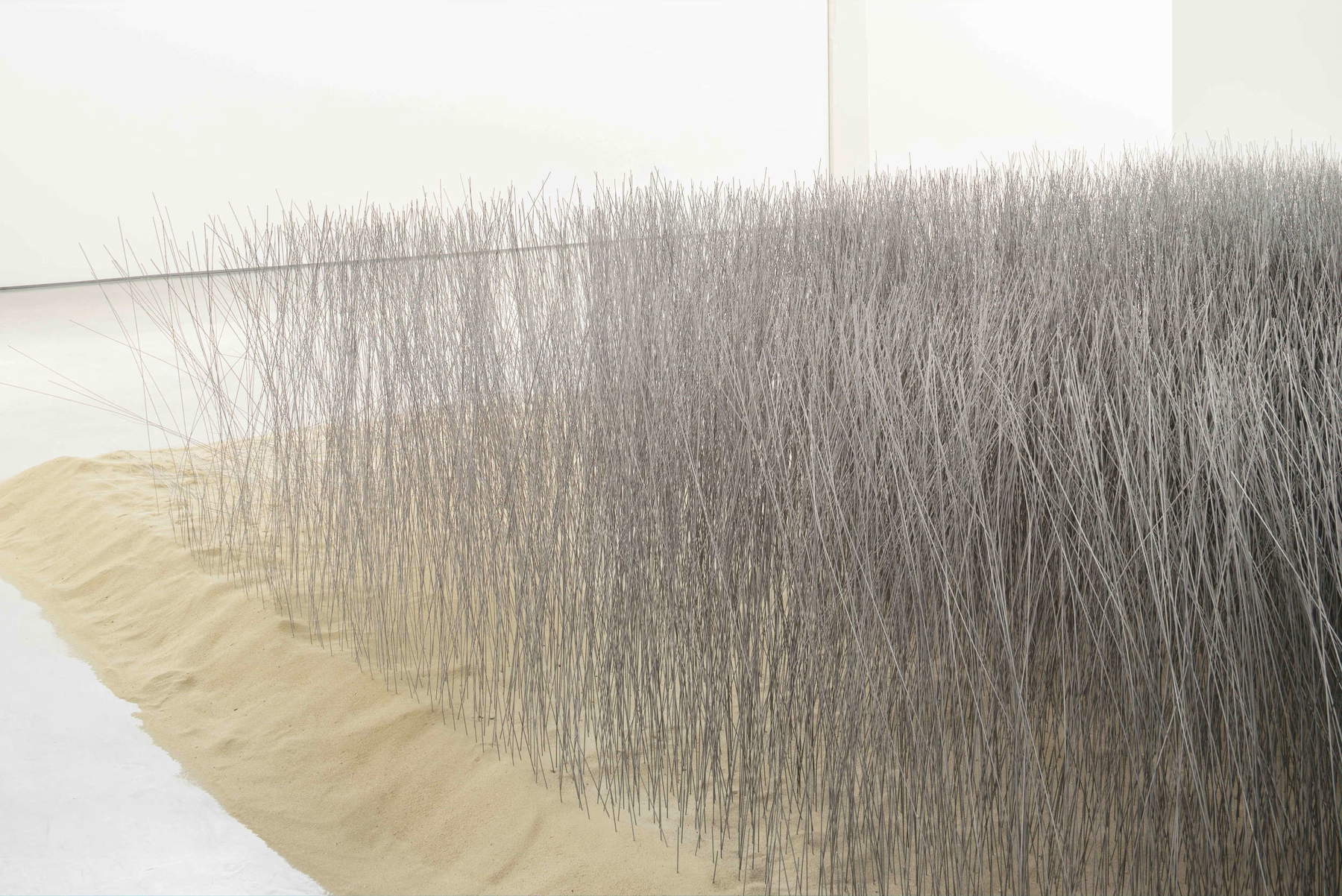
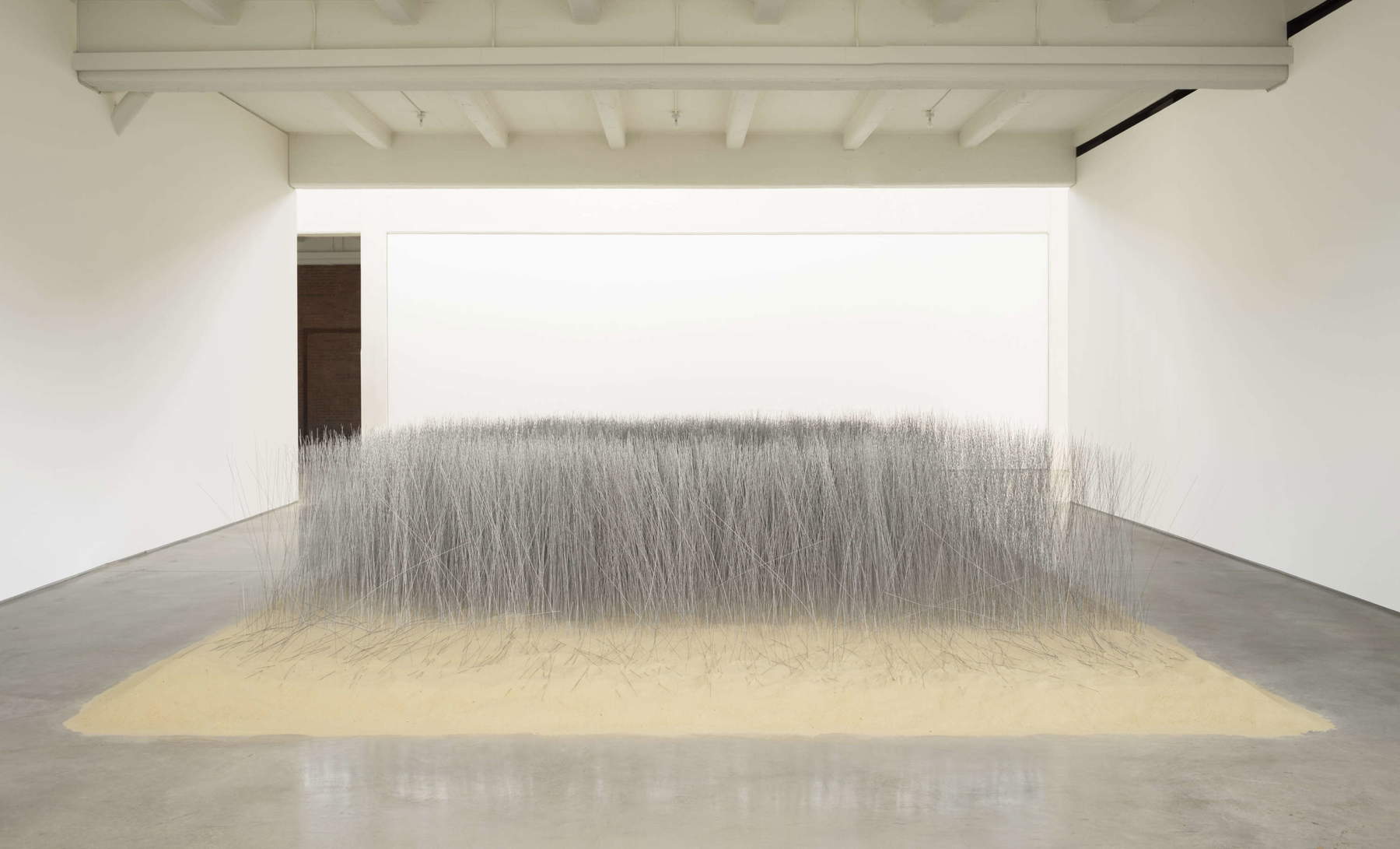
The last two rooms are devoted instead to the artist’s sculptural production, which began in the late 1960s and became central to his reflection on the relationship between matter, space and perception. Among the works on display is Relatum, formerly known as Iron Field, a historical installation composed of steel rods driven into a bed of sand. The work, originally made in 1969 and repurposed in Venice in 2026, represents one of the most emblematic works of relational thinking developed by Lee Ufan. In fact, in 1972 the artist decided to rename all his three-dimensional works with the term Relatum, a philosophical word that expresses the mutual relationship between elements. For Lee, no object exists in isolation: matter, space, light and the viewer’s presence participate together in the construction of the work. His sculptures thus do not merely occupy a space, but activate a network of perceptual and mental relationships.
The Venetian exhibition also presents a new monumental installation conceived especially for SMAC Venice. Entitled Relatum - Infinity, the work continues the iterative series developed by the artist since the 1960s and takes the form of an inner garden built through two large slabs of polished steel separated by two monumental stones. Once again natural and industrial materials are placed in dialogue to generate a space of meditation and suspension.
The entire exhibition aims to confirm the centrality of Lee Ufan’s relational philosophy, a quest that spans painting, sculpture and theory. Born in 1936 in the Gyeongsangnam-do region of Korea during the Japanese occupation, Lee initially trained in the tradition of ink painting at Seoul National University High School before moving in 1956 to Tokyo, where he studied philosophy at Nihon University. His first solo exhibition was held in 1967 at the Sato Gallery in Tokyo. The following year his work was included in the Korean Contemporary Painting exhibition at the National Museum of Modern Art in Tokyo. In 1969 Lee participated in the ninth Japan Exhibition of Contemporary Art at the Tokyo Metropolitan Museum of Art with ephemeral happenings and contingent structures that marked a decisive break from the earlier optical and discrete paintings. That exhibition helped define Mono-ha, the “School of Things,” a movement that brought together Japanese artists interested in the relationship between raw materials, space and perception. During the 1970s Lee participated in numerous international exhibitions that placed Asian, European, and North American artists in dialogue who shared a focus on process, material, and relationship to site.
Parallel to his artistic activity, Lee Ufan developed an intense theoretical and critical output. A prolific teacher, philosopher, and author, he has published seventeen books devoted to art, philosophy, and contemporary culture during his career. In recent decades, international recognition of his work has grown steadily, leading to exhibitions in museums and institutions around the world.
In 2010 the Lee Ufan Museum designed by architect Tadao Ando opened in Naoshima, Japan, a place that perfectly synthesizes the dialogue between architecture, nature and contemplation present in his research. His sculptures, increasingly essential and monumental, continue to relate natural and industrial materials consistently with his philosophical thinking. Today the artist lives and works between Kamakura and Paris.
|
| Lee Ufan stars in Venice with a major exhibition by Dia Art Foundation |

Warning: the translation into English of the original Italian article was created using automatic tools. We undertake to review all articles, but we do not guarantee the total absence of inaccuracies in the translation due to the program. You can find the original by clicking on the ITA button. If you find any mistake,please contact us.
























 IT
IT FR
FR DE
DE ES
ES CN
CN


