




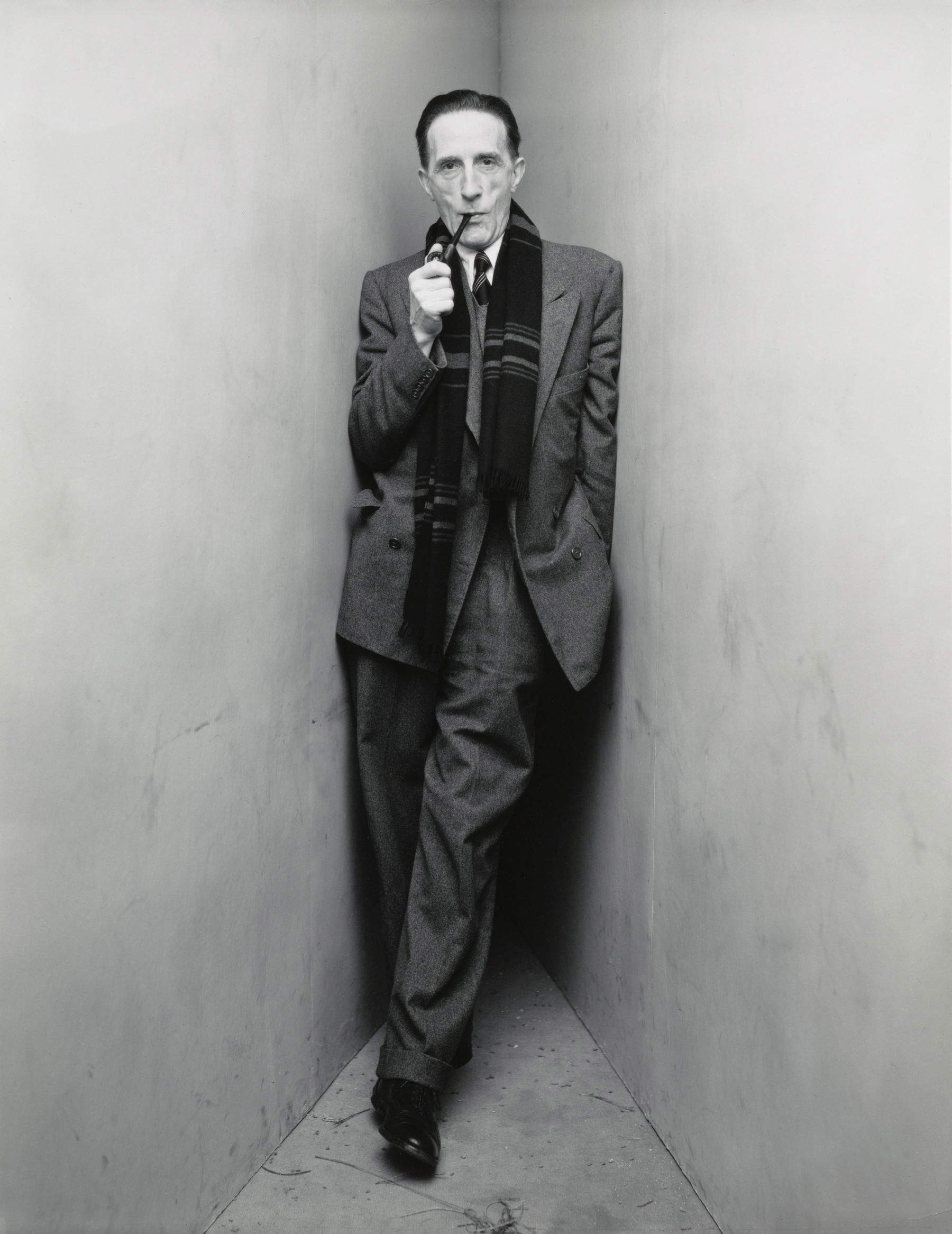
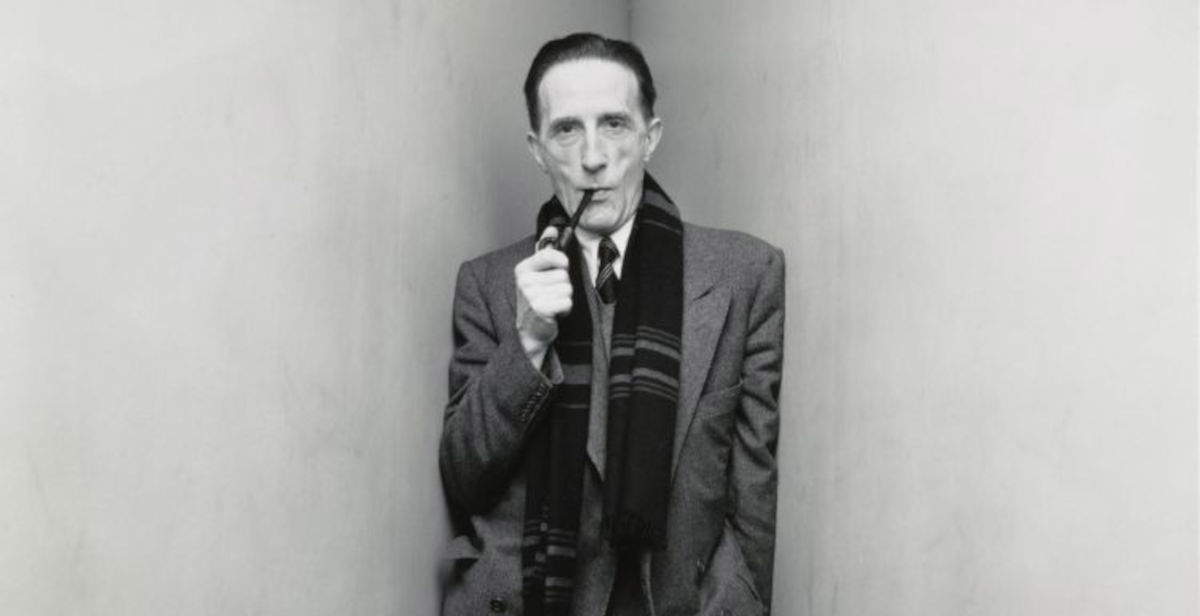
Thaddaeus Ropac Milan opened on March 17, 2026 the exhibition Marcel Duchamp & Sturtevant. Dialogues are mostly fried snowballs, a direct confrontation between two central figures of the 20th century, distant in age but united by a critical approach to artistic production. The exhibition, which can be visited until July 23, 2026 at Palazzo Belgioioso, aims to be a dialogue between the father ofConceptual Art and an artist whose radical repetitions questioned the conceptual structures of art in the post-Duchamp world.
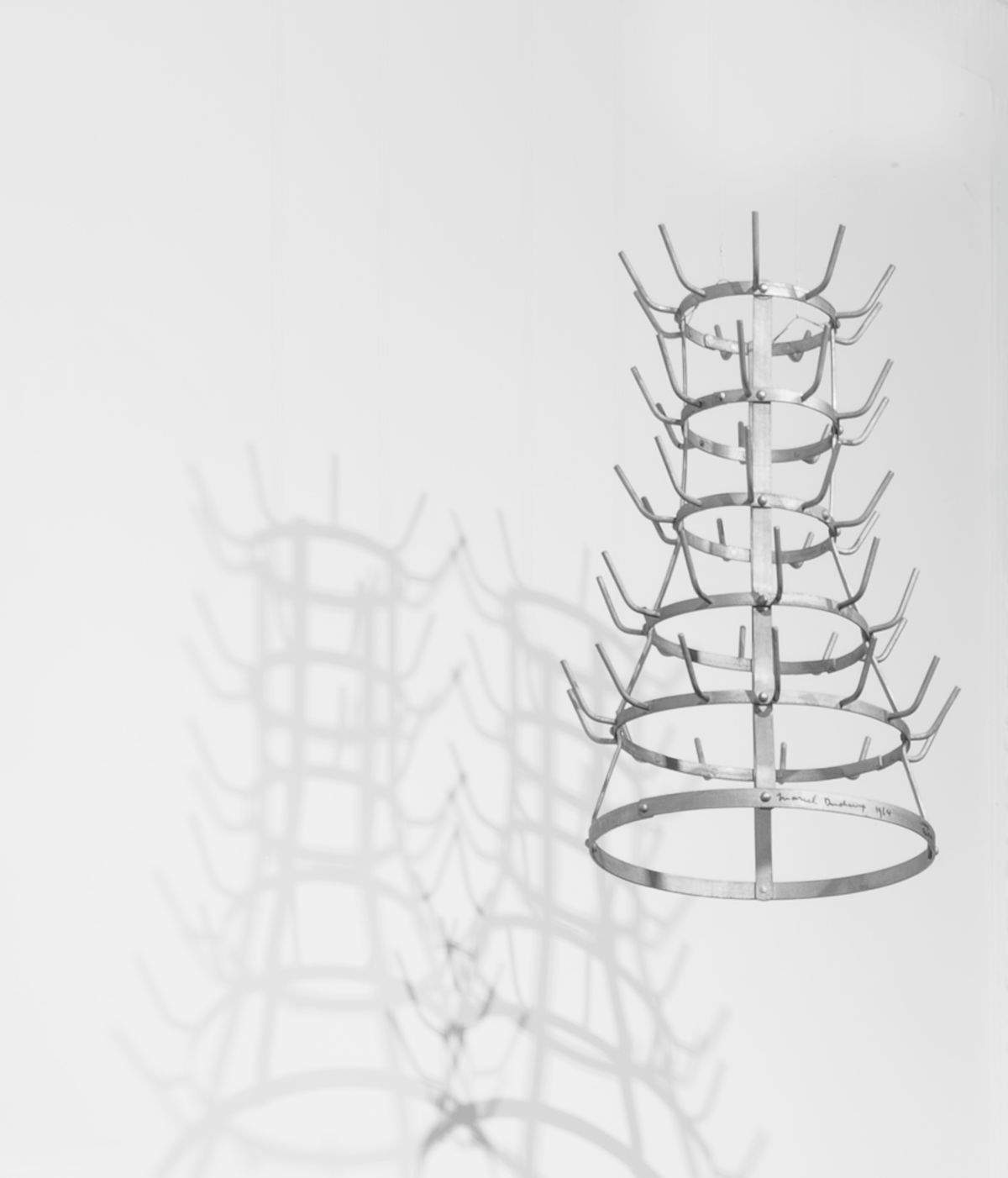
Marcel Duchamp (1887-1968) introduced an aesthetic revolution through his ready-mades, ordinary objects elevated to the status of works of art through the artist’s choice. His work, defined by Willem de Kooning as an “individual movement,” was characterized by a rejection of traditional visual art and the irony that permeated his gestures, from Porte-bouteilles (1914/64) to the more transgressive erotic works. Sturtevant (1924-2014), on his side, developed a method of systematic repetition of the works of his contemporaries, including Duchamp, transforming visual memory into conceptual inquiry. His repetitions aim not to replicate the original aura of the works but to dissect it, highlighting the deep structures of art and interrogating the dynamics of creation, consumption and canonization.
The title of the exhibition, borrowed from Sturtevant’s ironic observation Dialogues are mostly fried snowballs, recalls Duchamp’s playful approach. The exhibition includes Sturtevant’s repetition of the famous Fountain (1917) and Nu descendant un escalier (No.2) (1912), works that cross photography, collage, drawing and sculpture, exploring the relationship between original and copy. Duchamp’s 1937 collotypes of Nu descendant un escalier, one of which is on display in the exhibition, had already challenged Duchamp’s conception of the aura of the work of art, as noted by Walter Benjamin. Sturtevant, decades later, repeated the same work in Duchamp’s Nu descendant un escalier (1967/68), turning it into a film that dissects the artist’s movement down the staircase, without aspiring to recreate its evocative power.
“My intention is to expand and develop our current conception of aesthetics, to investigate originality and to examine the relationship between original and origins, opening the space for a new way of thinking,” Sturtevant said.
The exhibition stages a visual and conceptual dialogue between Duchamp’s ready-mades and Sturtevant’s repetitions. The Porte-bouteilles is displayed above the main space, while the Trébuchet (1917/64) sits on the floor, threatening to trip the viewer, in a direct quotation of the artist’s original practice. Duchamp sought to de-divinize the artist through the non-artisticity of his ready-mades, paradoxically contributing to the construction of his apotheosis in art history, a process carefully observed by Sturtevant. For Sturtevant, Duchamp’s work embodied a “force of resistance”: the renunciation of apparent creativity became a creative act in itself. Sturtevant’s repetitions aim to dematerialize the original works, investigating their inner silence.
“What Duchamp did not do, not what he did-which is what he did, identifies the dynamic of his work. [...] So the great contradiction is that renouncing creativity made him a great creator,” Sturtevant argued.
The exhibition presents numerous variants of the 1917 Fountain, including photographs, drawings and sculptures, underscoring how Sturtevant focused more on the discourse around readymades than on the objects themselves. Recurrent themes in Duchamp’s work, from the kinetic to the erotic, are taken up and reworked by Sturtevant. Duchamp’s Rotorelief (1965) is joined by Sturtevant’s Duchamp Rotary Disc (Lanterne Chinoise) (1969), with annotations and diagrams analyzing the construction of the work. Duchamp’s erotic objects, such as Objet-dard (1951/62) and Feuille de vigne femelle (1951/61), find correspondence in Sturtevant’s repetitions, such as Duchamp Coin de chasteté (1967), highlighting a path of dematerialization and redefinition of the metaphysical power of objects.
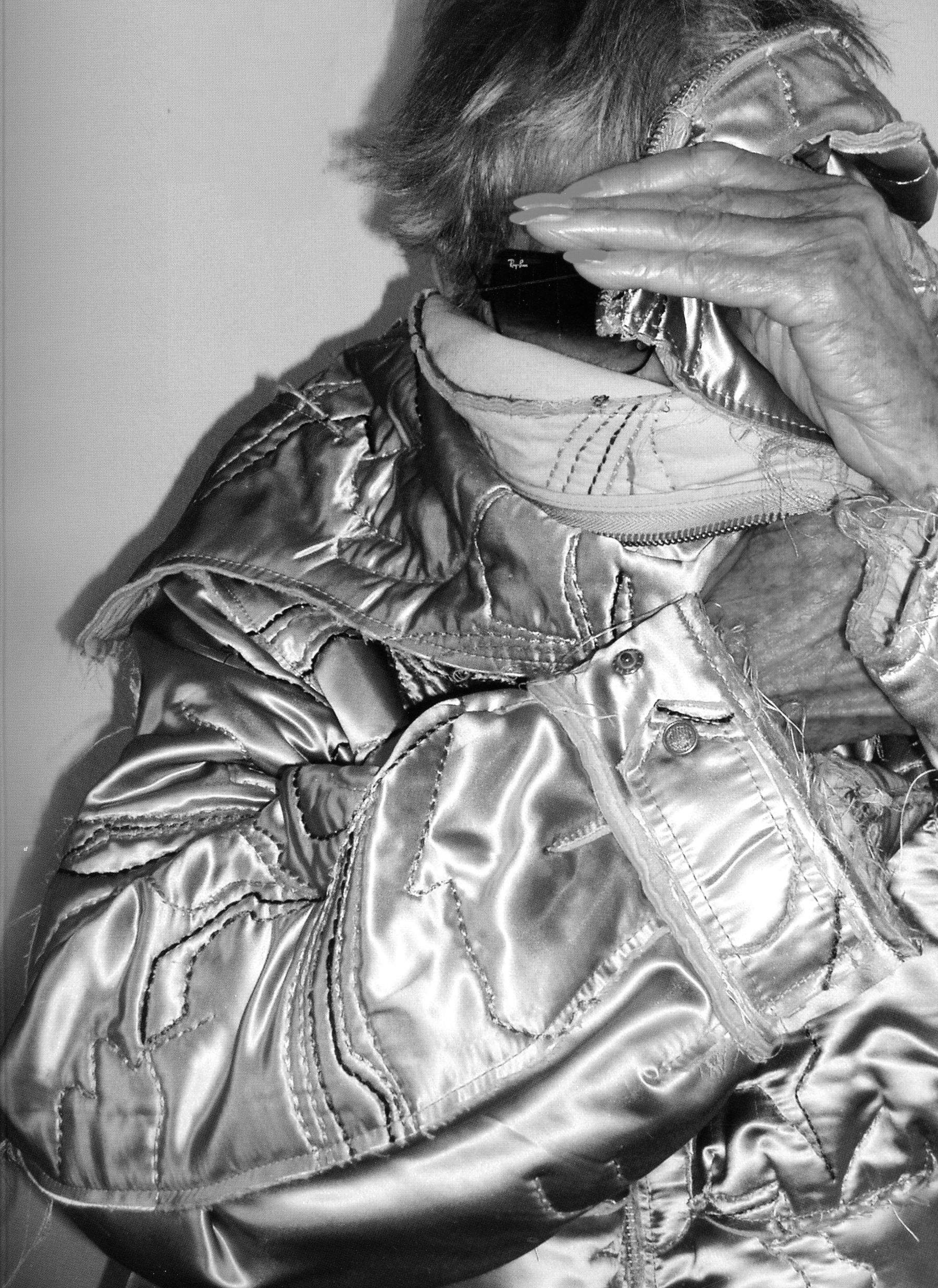
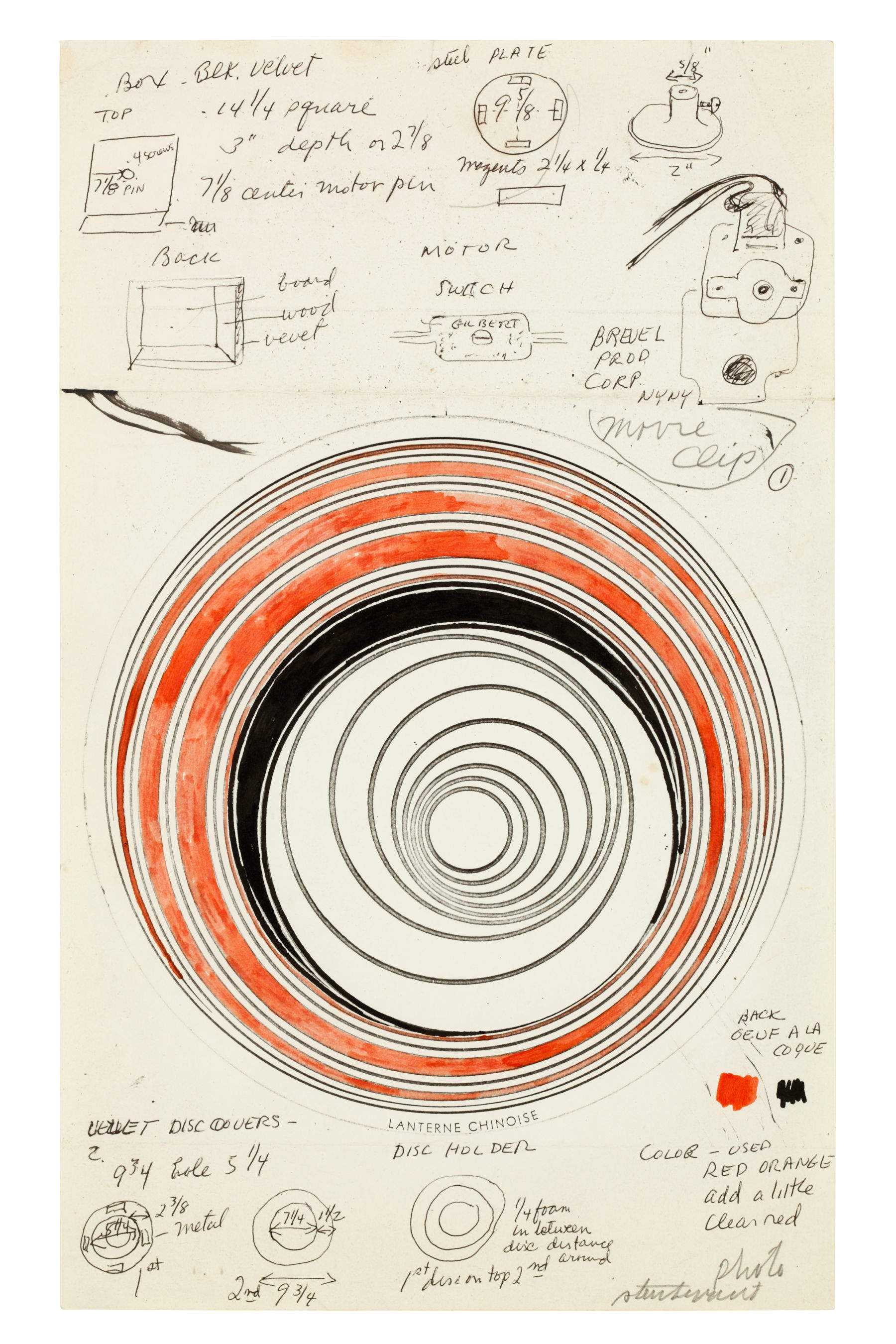
For writer Bruce Hainley, “Sturtevant repeats works out of a need for catalytic recognition, stimulating an inquiry into what allows art to be art, so that the whole structure of art is reconsidered in a horizontal, nonlinear way.”
Among the exhibition’s central works is Duchamp’s La Boîte-en-valise (1966), the “portable museum” that brings together 77 reproductions of his works, along with a 1936 Man Ray photograph of Porte-bouteilles. Sturtevant responds with Duchamp Ciné (1992), an interactive work that, through the crank of a coffee grinder, projects vignettes of his Duchamp repetitions, evoking the peephole tableau of Étant donnés (1966). The overlap between Sturtevant’s artistic identity and Duchamp’s alter ego Rrose Sélavy accentuates authorial ambiguities and the possibilities of co-creation.
A curious episode recalls the meeting between the two artists, when Sturtevant showed Duchamp the repetition DuchampRelâche (1967), made with Robert Rauschenberg: Duchamp asked, “Marcel [...] said, ’Where did you get that?’ So it was never known whether he realized it was not his picture or whether he really thought it was his,” without clarifying whether or not he recognized his own hand. The exhibition thus takes the form of an investigation into the practices of subversion shared by the two artists, who were engaged in constantly redefining the meaning of art. Dialogues are mostly fried snowballsopens simultaneously with the major Duchamp retrospective at the Museum of Modern Art in New York, set for April 12, 2026.
 |
| Marcel Duchamp and Sturtevant: a conceptual dialogue at Milan's Thaddaeus Ropac |

Warning: the translation into English of the original Italian article was created using automatic tools. We undertake to review all articles, but we do not guarantee the total absence of inaccuracies in the translation due to the program. You can find the original by clicking on the ITA button. If you find any mistake,please contact us.




















 IT
IT FR
FR DE
DE ES
ES CN
CN


