





From April 15 to May 28, 2026, the M45 exhibition space in Milan presents Corpo a Corpo, a project curated by Marco Senaldi that brings together for the first time the plastic research of Giovanni Ruggiero and Paolo Grassino. The exhibition, set up in the rooms of the venue directed by Marco Bertoli and Angelo Enrico, takes the form of a structured confrontation between two sculptural practices that, while starting from different technical assumptions, converge on a shared reflection regarding vulnerability, trauma and persistence of the human trace in the present.
The title summarizes the nature of the project: it is a continuous tension between matter and thought. The dimension evoked is that of a clash, as much physical as conceptual, that runs through the entire exhibition. Paolo Grassino’s sculptures, characterized by a strong volumetric and scenic presence, confront Giovanni Ruggiero’s introrilievi, works that develop an opposite research based on the subtraction and incision of space. The result is a balance built on contrasts, in which surface and depth enter into a direct relationship.
The installation is articulated through a system of visual weights and counterweights. Black, the dominant element in Grassino’s production, defines a stable and dense perceptual center. Ruggiero responds to this compactness with works that overturn the traditional notion of relief: his works do not emerge outward, but dig into the material, configuring images through absence, imprint and trace. The figure is built in emptiness rather than presence.
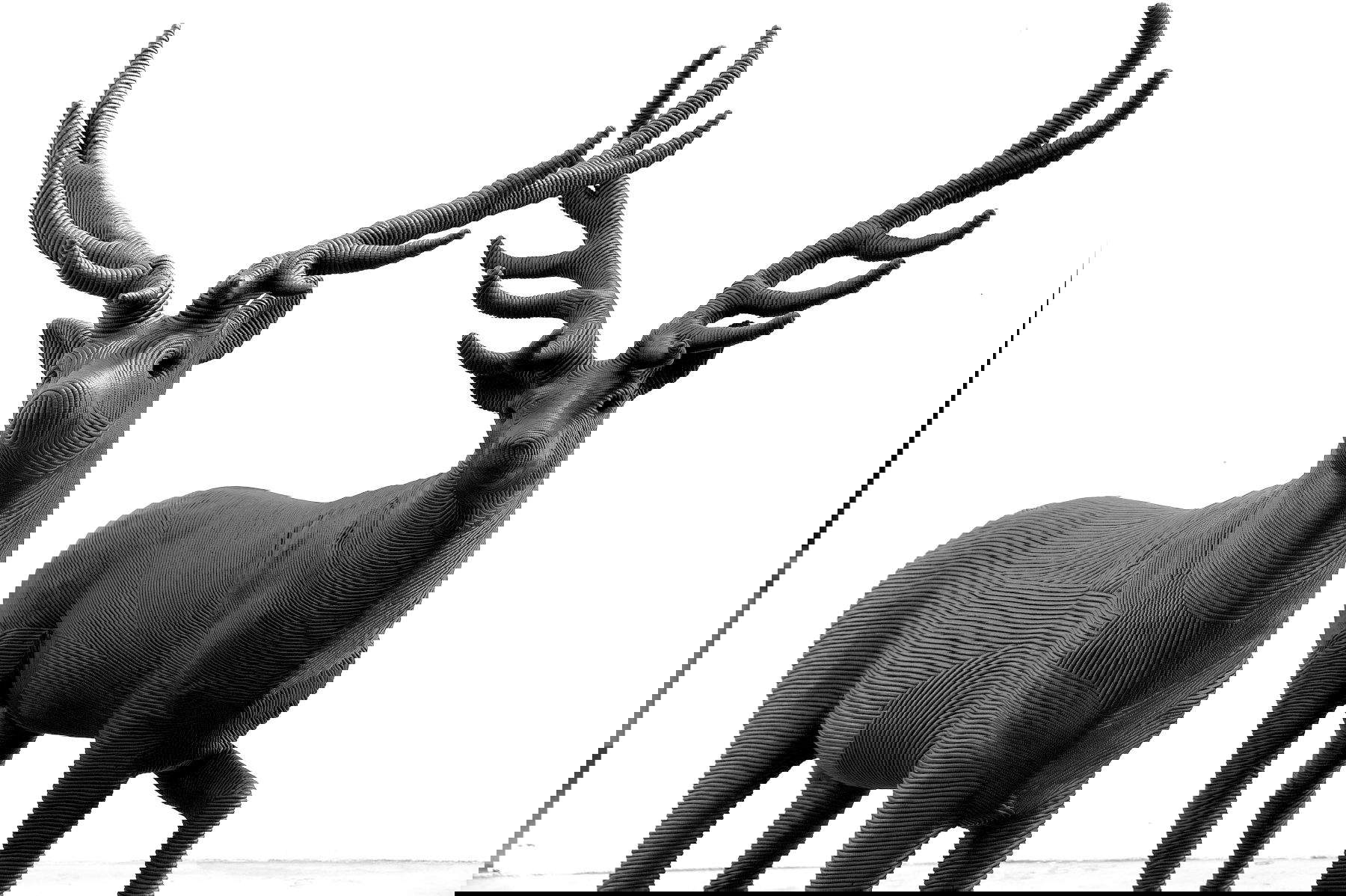
In the first room, a first direct dialogue is established between the works. The motionless dogs of Grassino’s Tumult introduce a restrained tension, which is echoed by Ruggiero’s Vivi respiri and Passi perduti, a work in which the imprint of a military boot is fixed on ceramic. The relationship continues in the next room, where Ciò che resta, a large elephant skull made by Grassino, finds a counterpoint in Ruggiero’s three colored ceramic introriliefs. The path reaches a moment of greater intensity in the third room: here Ruggiero’s large ceramic Non tutti gli amori confronts Travasi, Grassino’s anthropomorphic aluminum casting, shaping a more explicit visual clash.
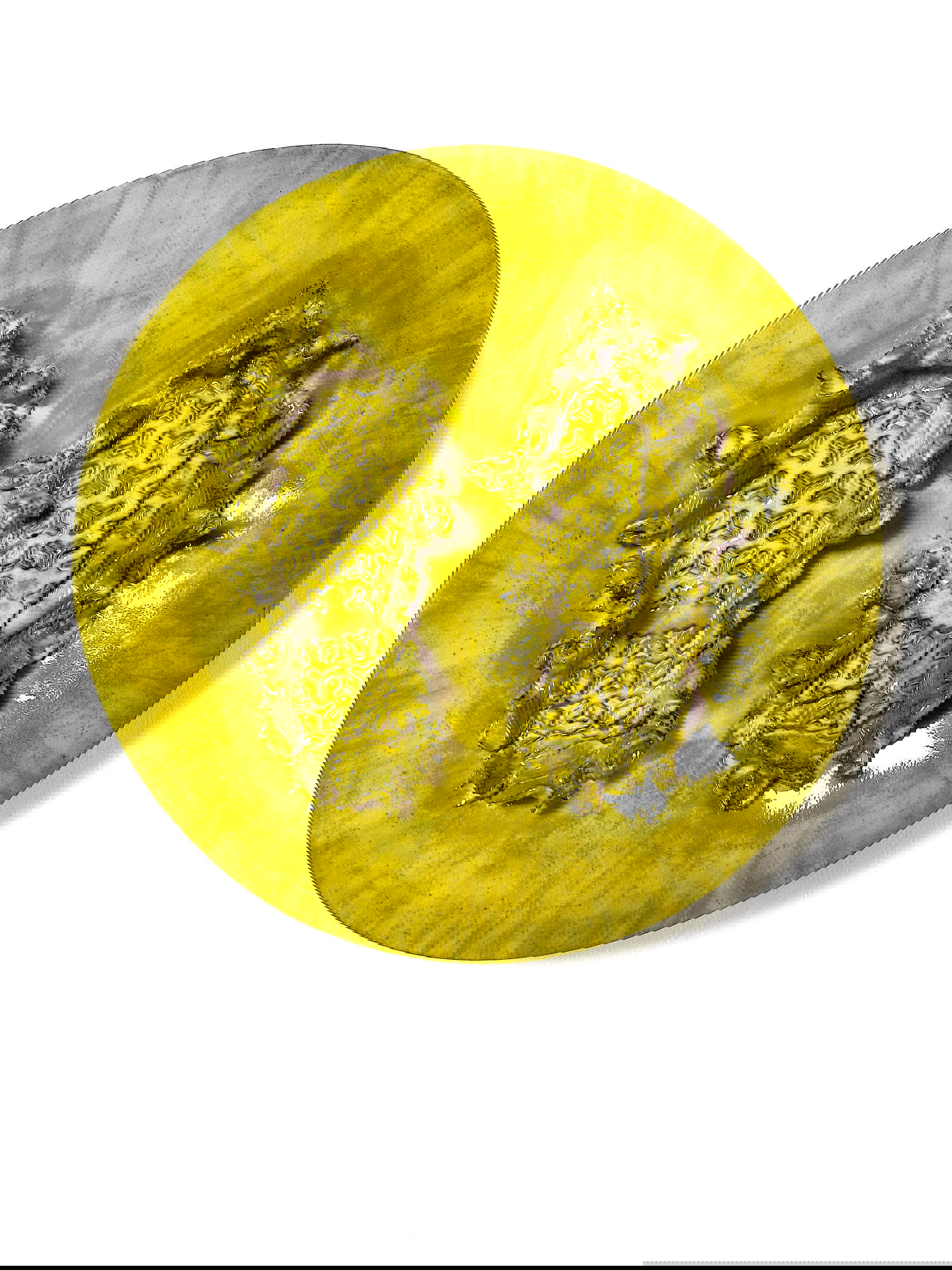
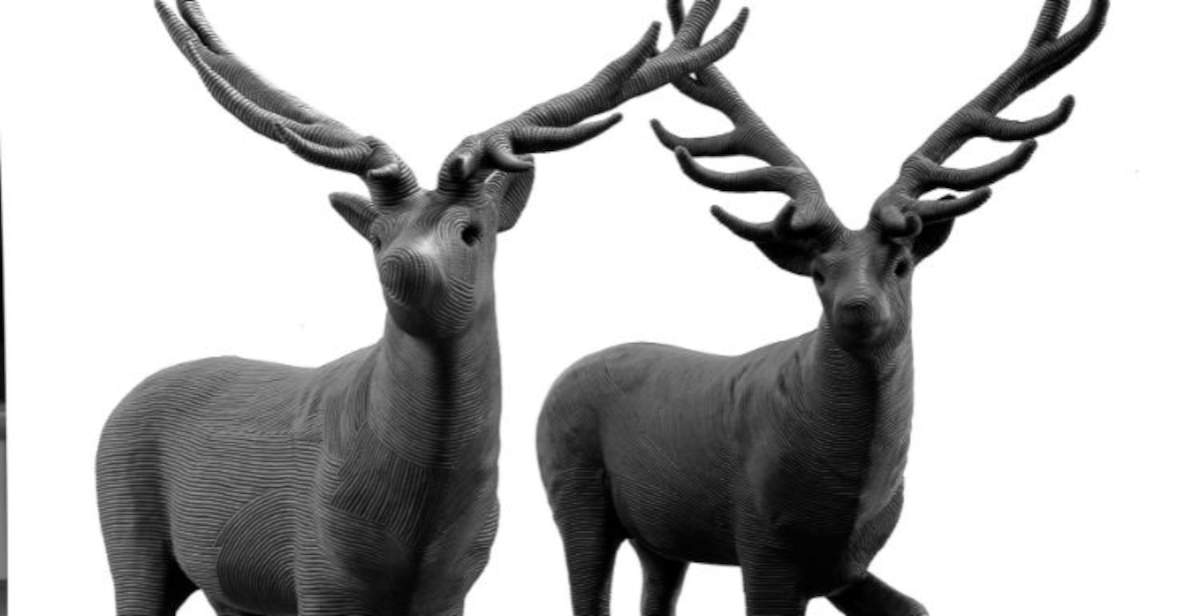
Differences between the two artists also emerge on the level of materials and techniques. Grassino uses synthetic sponge and resin to construct wrinkled, artificial-skin-like surfaces that cover human, animal or object figures. Ruggiero, on the other hand, works on ceramics and aluminum castings with an approach that alternates between impulsive gesture and formal control. On a chromatic level, Grassino’s insistent monochrome finds a counterpoint in Ruggiero’s choices, who introduces inserts of yellow, green and blue glazes on dark backgrounds, transforming the surface into a kind of luminous scar. Color takes on an evocative function, linked to spiritual dimensions and memories of a collective nature. The setting of the installation accentuates a theatrical dimension that leads toward a radicalization of the visual narrative. The viewer is confronted with presences that elude immediate reading, immersed in an atmosphere of estrangement.
“He leaves a large, almost unlimited space for the representation of enigmatic, often savage, almost cruel, disturbing events, in any case difficult to explain, to which the observer must go,” writes critic Lorand Hegyi about Grassino’s research.
A similar tension can be found in Ruggiero’s works, where each work presents itself as a trace of an action, violent or meditated, capable of interrupting a condition of inertia. Works such as the large aluminum castings, including INTRO, or the ceramics marked by the boot print, stand as evidence of a conflict between thought and gesture. Such elements dialogue with Grassino’s monumental presences, such as the Travasi, which occupy the space with a staticity charged with ambiguity. Thus, the confrontation between the two artists is articulated on a double level: on the one hand, an external dimension dominated by surfaces and volumes, and on the other, an internal tension that crosses the material and highlights its fractures.
 |
| Milan, Corpo a Corpo: Ruggiero and Grassino compare notes on sculpture |

Warning: the translation into English of the original Italian article was created using automatic tools. We undertake to review all articles, but we do not guarantee the total absence of inaccuracies in the translation due to the program. You can find the original by clicking on the ITA button. If you find any mistake,please contact us.






















 IT
IT FR
FR DE
DE ES
ES CN
CN


