




by Redazione 03/03/2026



Categories: Exhibitions / Disclaimer
On the occasion of the Milan-Cortina 2026 Paralympic Winter Games, Farsettiarte in Cortina d'Ampezzo is hosting Casa Paralimpica Italiana with the project "Italia in Gioco," a journey that interweaves contemporary art, sports and social vision in the sign of abstraction.

On the occasion of the Milan-Cortina 2026 Paralympic Winter Games, Cortina d’Ampezzo welcomes Casa Paralimpica Italiana in the spaces of Farsettiarte, former home of Casa Italia olimpica. The choice of location responds to a precise address: to place Olympic and Paralympic sports on the same level, in a setting that combines institutional dimensions and cultural vocation. The gallery thus becomes the context in which art, sports and society meet within the exhibition project entitled Italia in Gioco.
Cortina, destined to host most of the sports disciplines and the closing ceremony of the Games, takes on a central role on the cultural level as well. Italia in Gioco is presented as a declaration of identity: the country presents itself as host, cultural system and inclusive community. The concept of play extends beyond the sports sphere and is taken as an educational, social and design metaphor. In this perspective, abstraction is configured as a universal language, capable of transforming signs, surfaces and colors into a shared and accessible experience. The itinerary brings together well-known figures inItalian art of the second half of the 20th century. In Luci di Venezia, Tancredi Parmeggiani evokes the city where he studied and lived until his death. In Venice the artist matured his informal language, in dialogue with American Abstract Expressionism. The work returns a surface traversed by luminous trajectories and dynamic signs, transforming the pictorial plane into a vibrant space.


With Rondò I and Rosa-rosae-rosa, Piero Dorazio constructs interweaving lines and color bands in continuous vibration. The eye is called upon to discern variations in brightness and saturation as the work changes with distance, slant, and ambient light. The lines offer themselves as a metaphor for relationship: each color finds meaning in its relationship with the other. In Rosso of 1976, Agostino Bonalumi transcends two-dimensionality through the eversion of the canvas. The surface takes on a plastic texture, becomes body and tension. Structural intervention from within generates reliefs and curvatures that place the work on the border between painting, sculpture and architecture, redefining the perception of space. Enrico Castellani ’sWhite Surfaces asserts the autonomy of painting as a real object. Neutral color eliminates narrative and emotional references, while rhythmic repetition produces a visual field in continuous transformation. The image tends to disappear, replaced by a structure that exists according to internal rules, without representative function.
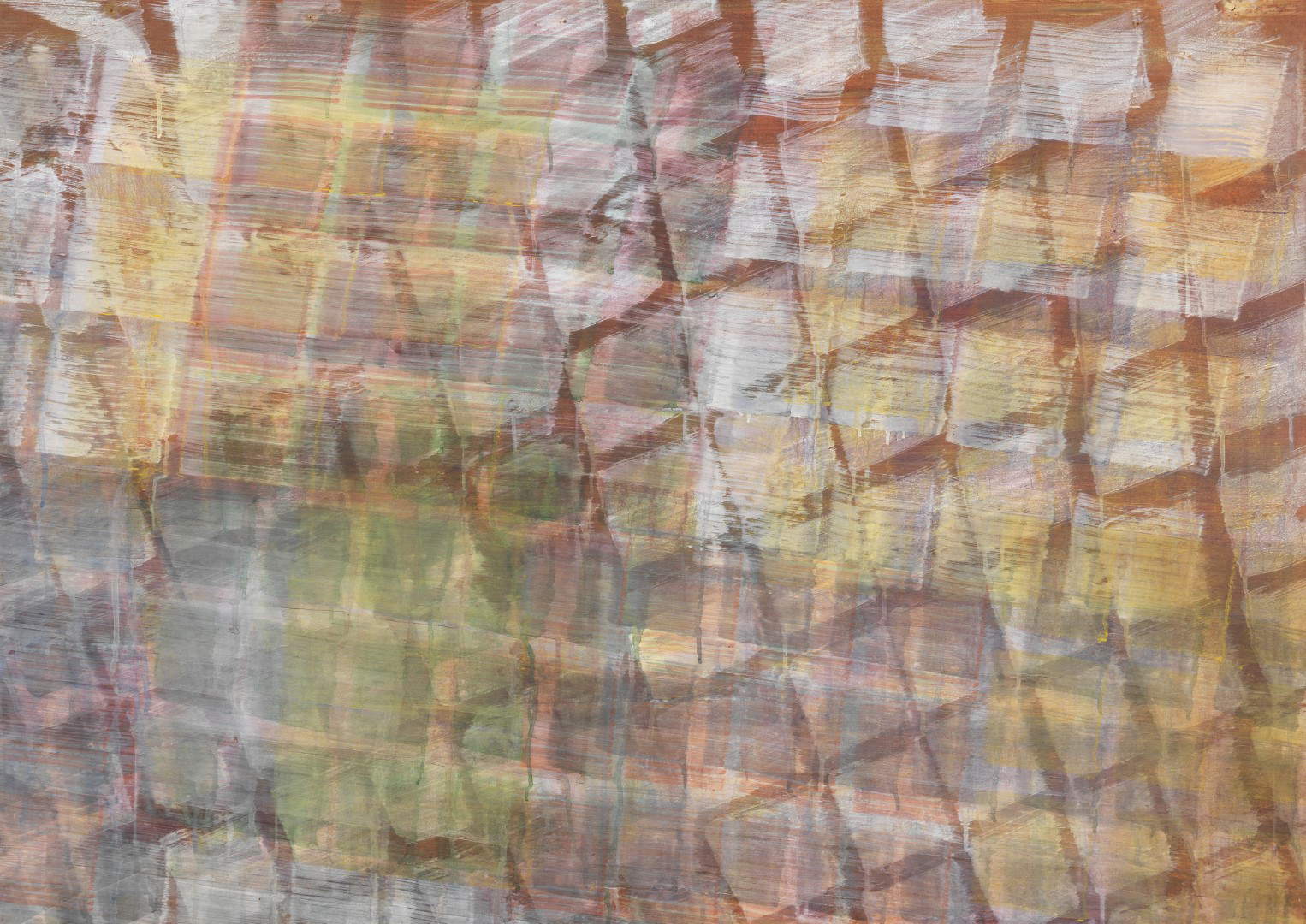
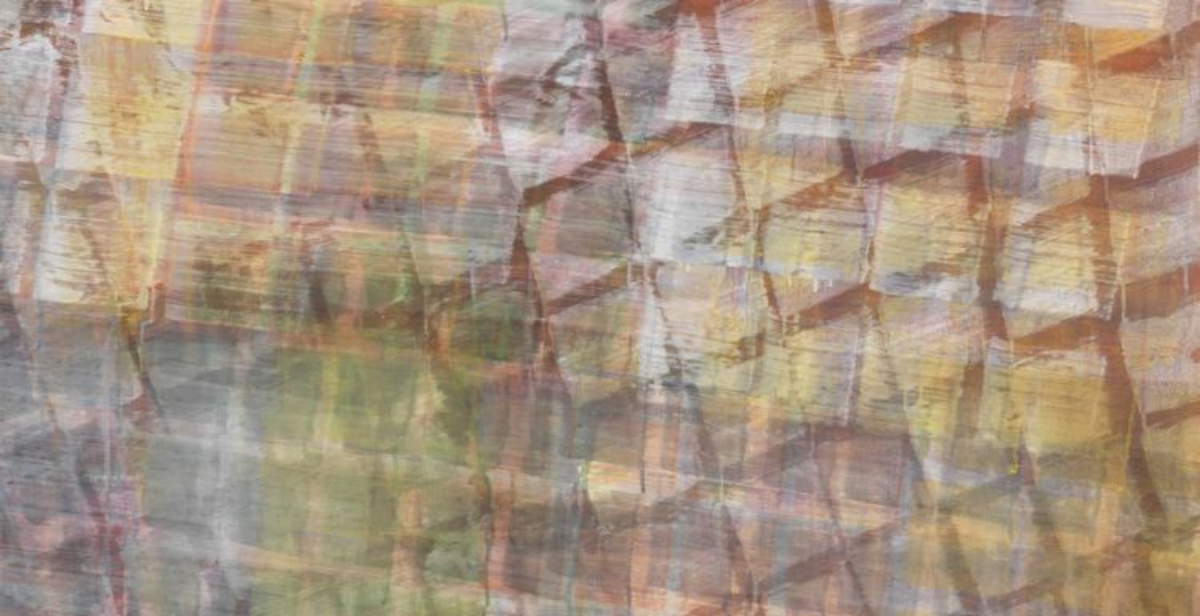
With The Aerial Cycle of 1990, Achille Perilli proposes an unstable, open geometry in which forms seem to float in a space devoid of gravity. The composition suggests a system in motion, like a mechanism under construction or disassembly. The symbolic reference to freedom of movement and the crossing of boundaries fits in coherently with the sports context.
“Within this environment,” explains Stefano Farsetti, “the selection curated by Farsettiarte of works by masters of Italian abstraction of the second half of the twentieth century becomes an active part of the narrative, dialoguing coherently with the Paralympic values of inclusion, transformation and uniqueness.This selection is not only a tribute to the excellence of Italian art, but becomes an integral part of the conceptual ”game“ of Casa Paralimpica. The works dialogue with tangram portraits of athletes, interactive installations, the Wall of Emotions and immersive virtual reality experiences, helping to build a living mosaic of stories, identities and visions.”
“Casa Paralimpica in Cortina,” says the President of the Italian Paralympic Committee, Marco Giunio De Sanctis, "is not just a reception point, but a cultural manifesto that, through the Italia in Gioco concept, celebrates excellence and overcoming limits. Choosing the Farsettiarte Gallery, the same venue as the Casa Italia Olimpica, underscores our desire to put Olympic and Paralympic sports on the same level. In this space, works by the masters of Italian abstraction dialogue with the stories of our athletes: as in a canvas by Bonalumi or Dorazio, where form is shaped and difference generates richness, so the Paralympic movement transforms the perception of disability into a universal narrative of talent and inclusion. It is an invitation to look beyond appearance, to discover that every challenge is, first and foremost, an extraordinary opportunity for collective participation."
 |
| Milan-Cortina 2026, an artwork trail at the Italian Paralympic House |
Warning: the translation into English of the original Italian article was created using automatic tools. We undertake to review all articles, but we do not guarantee the total absence of inaccuracies in the translation due to the program. You can find the original by clicking on the ITA button. If you find any mistake,please contact us.