




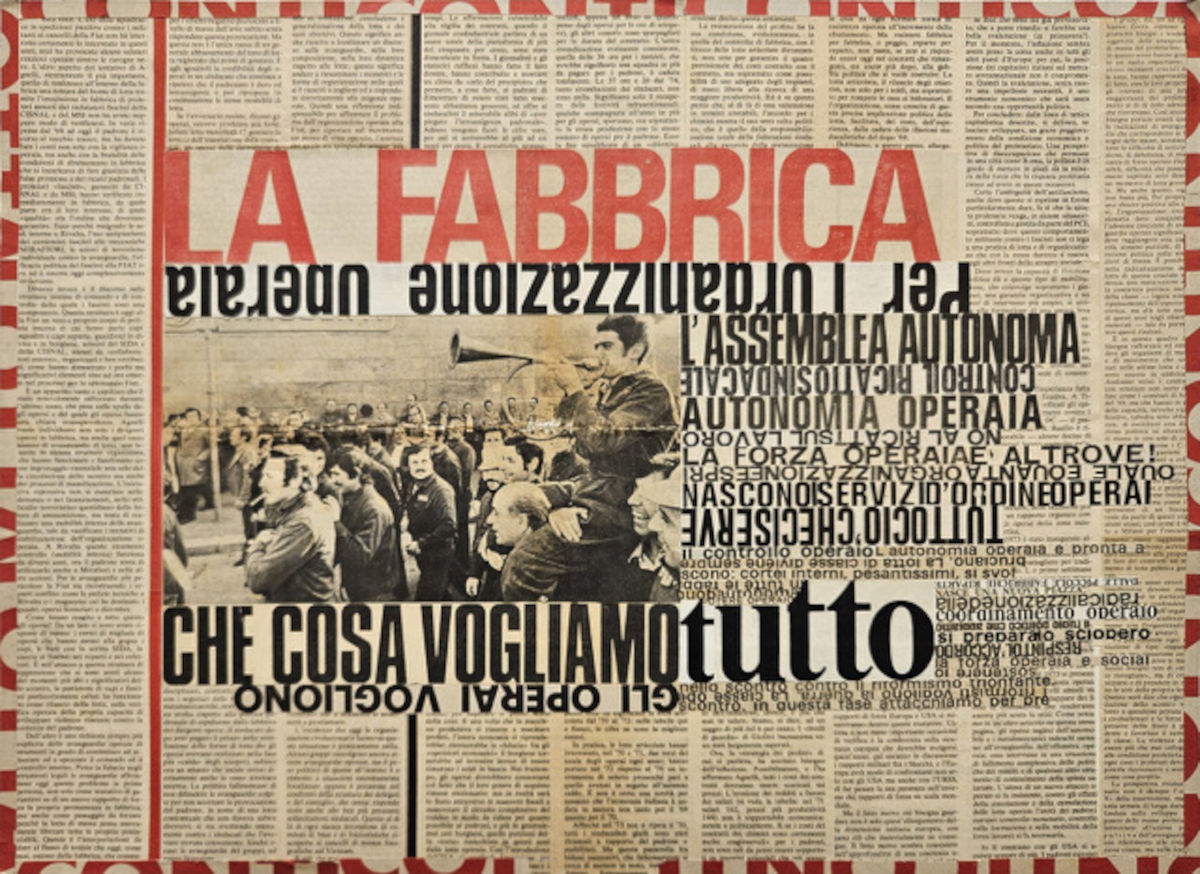
Frittelli arte contemporanea opens Nanni Balestrini ’s (Milan, 1935 - Rome, 2019) solo exhibition entitled La rivolta illustrata, curated by Marco Scotini, in Florence on January 17. The exhibition, which will remain open until April 17, 2026, brings together more than 100 works by the Milanese artist, most of them previously unpublished, and represents Balestrini’s third appointment with the Florentine gallery. The opening will include the special participation of Antonio Rezza, who will voice excerpts from the novel Vogliamo tutto.
The exhibition traverses Balestrini’s entire production, from collages on paper to acrylics and plastic materials, presenting the variety of his expressive means and his constant interest in linguistic and visual experimentation. The title of the exhibition directly recalls the book La violenza illustrata published by Einaudi in 1976, in which the author uses words as images, without resorting to iconographic elements, but giving the verbal form a strongly visual character. Balestrini’s artistic operation transforms the text into a visual object, fragmenting and recombining words and syntax until abstract patterns are obtained, while retaining traces of their original meaning.
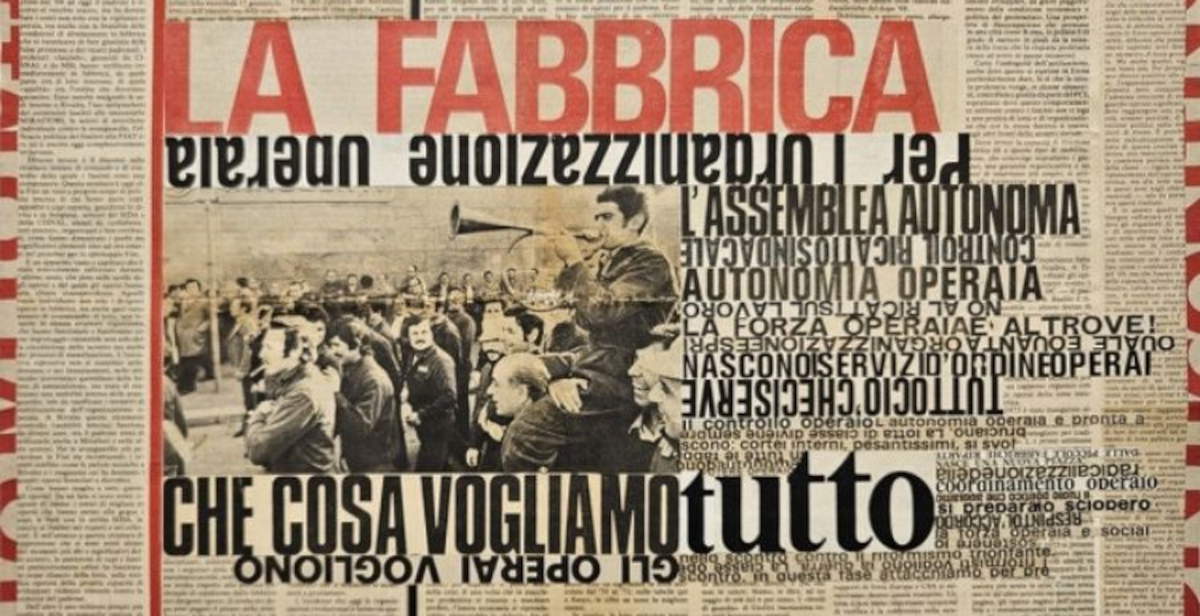
The collages presented in La rivolta illustrata are not limited to being read or observed separately: each work requires a simultaneous reading of verbal and visual material. The artist reworks pages from magazines, newspapers, political weeklies and headlines documenting historical events, particularly those related to the Italian revolutionary waves. In this sense, the exhibition takes up the episodic mechanism of the novel, articulating the works in autonomous cycles that document, reinterpret and critique the history of street struggles, antagonist movements and social contestations, themes to which Balestrini also adhered in life.
Balestrini’s interest in visual linguistics is manifested in his ability to free text from the constraints of chronological linearity and temporal sequence. Through collages and textual manipulations, the artist releases reading from sequential obligation, offering multi-directional paths and multiple interpretations. This approach also confirms Balestrini’s role as a master of contemporary visual art, capable of transforming language into a field of aesthetic and conceptual experimentation. The exhibition offers a comprehensive overview of his artistic production, from the Pagine series of 1962 to the Potere Operaio cycles of 1975, from the CagedIris and Ondulé sequencesof 1980 to more recent works such as Guarda qui of 2009 and 2Cento flowers of 2018, all characterized by an innovative approach to the manipulation of linguistic and visual matter.
 |
| More than 100 works by Nanni Balestrini on display at Frittelli arte contemporanea in Florence |

Warning: the translation into English of the original Italian article was created using automatic tools. We undertake to review all articles, but we do not guarantee the total absence of inaccuracies in the translation due to the program. You can find the original by clicking on the ITA button. If you find any mistake,please contact us.
















 IT
IT FR
FR DE
DE ES
ES CN
CN


