




by Redazione 11/02/2026



Categories: Exhibitions / Disclaimer
For the first time since their seventeenth-century dispersal, canvases featuring Jacopo Tintoretto's Stories of Genesis are returning to Venice. The exhibition at the Gallerie dell'Accademia also presents the results of restoration and diagnostic investigations conducted between 2024 and 2025.


More than two centuries after being dismembered, the cycle featuring Jacopo Tintoretto ’s Stories of Genesis is back reunited at the Gallerie dell’Accademia in Venice. The exhibition Tintoretto Tells the Genesis. Research, Analysis and Restoration, curated by Roberta Battaglia and Cristiana Sburlino, with installation design and technical coordination by Maria Antonietta De Vivo, was presented to the press today and can be visited from Feb. 11 to June 7, 2026. The exhibition recomposes for the first time, after the dispersion of the original nucleus, the three canvases conserved at the Gallerie dell’Accademia, The Creation of the Animals, Original Sin and Cain Kills Abel, together with Adam and Eve before the Eternal One, on loan from the Uffizi Galleries in Florence. The operation makes it possible to reestablish the compositional and iconographic unity of one of the most important cycles of 16th-century Venetian painting, offering the public and scholars a chance to reread its overall layout.


“This exhibition stems from an idea of the museum as a living place of research, capable not only of protecting, preserving and enhancing its collections but also of producing paths of knowledge,” says Giulio Manieri Elia, director of the Gallerie dell’Accademia in Venice. “The project on Tintoretto demonstrates how scientific study and restoration can be transformed into a powerful storytelling tool, making knowledge accessible to the public, through scientific investigation and historical research, of the execution process of the paintings and their subsequent conservation events. Reuniting the Genesis cycle today means not only restoring a masterpiece to its original coherence, but also offering the public an experience that combines emotion, rigor and discovery. It is in this direction that the Gallerie dell’Accademia intends to develop its cultural mission.”


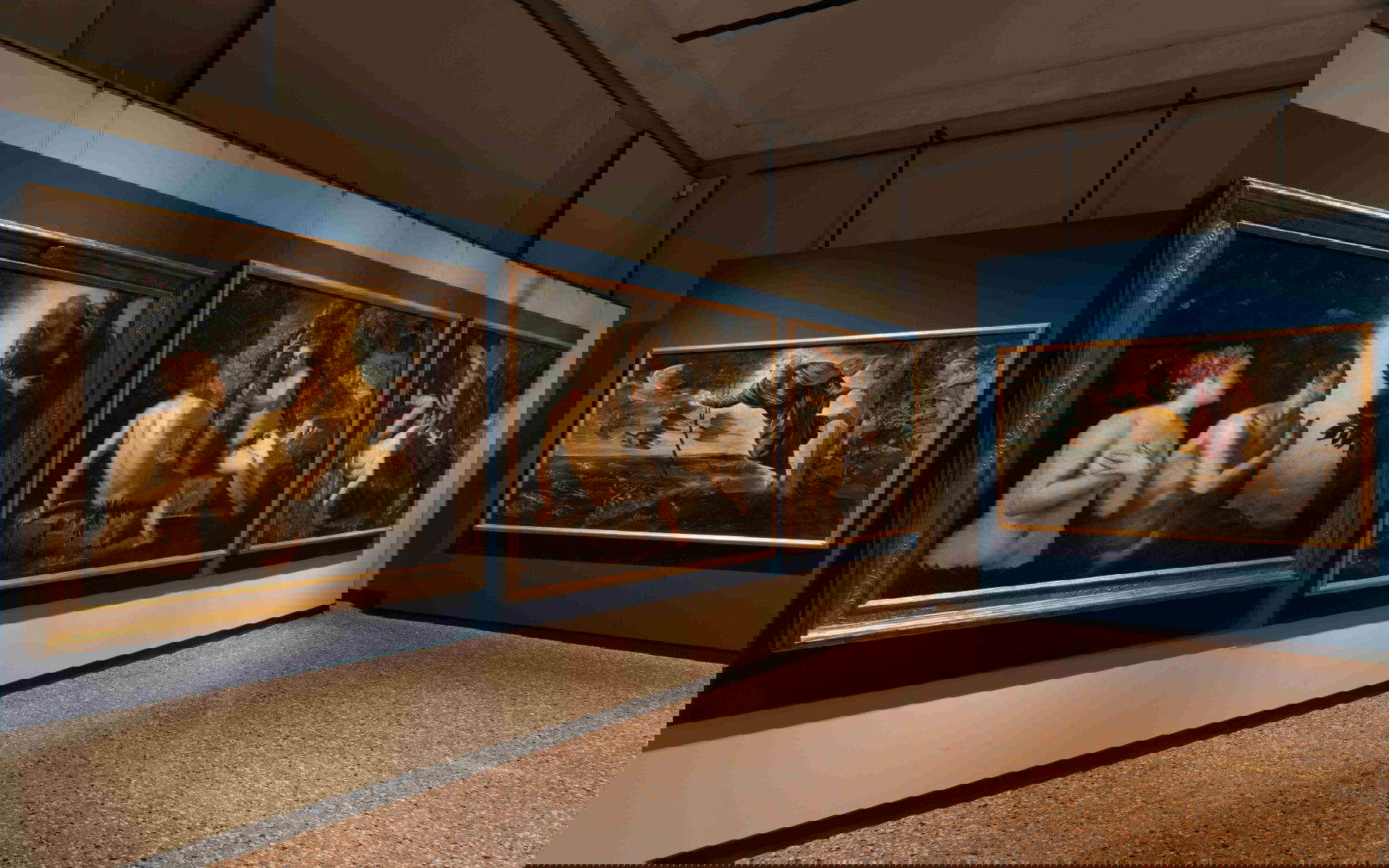
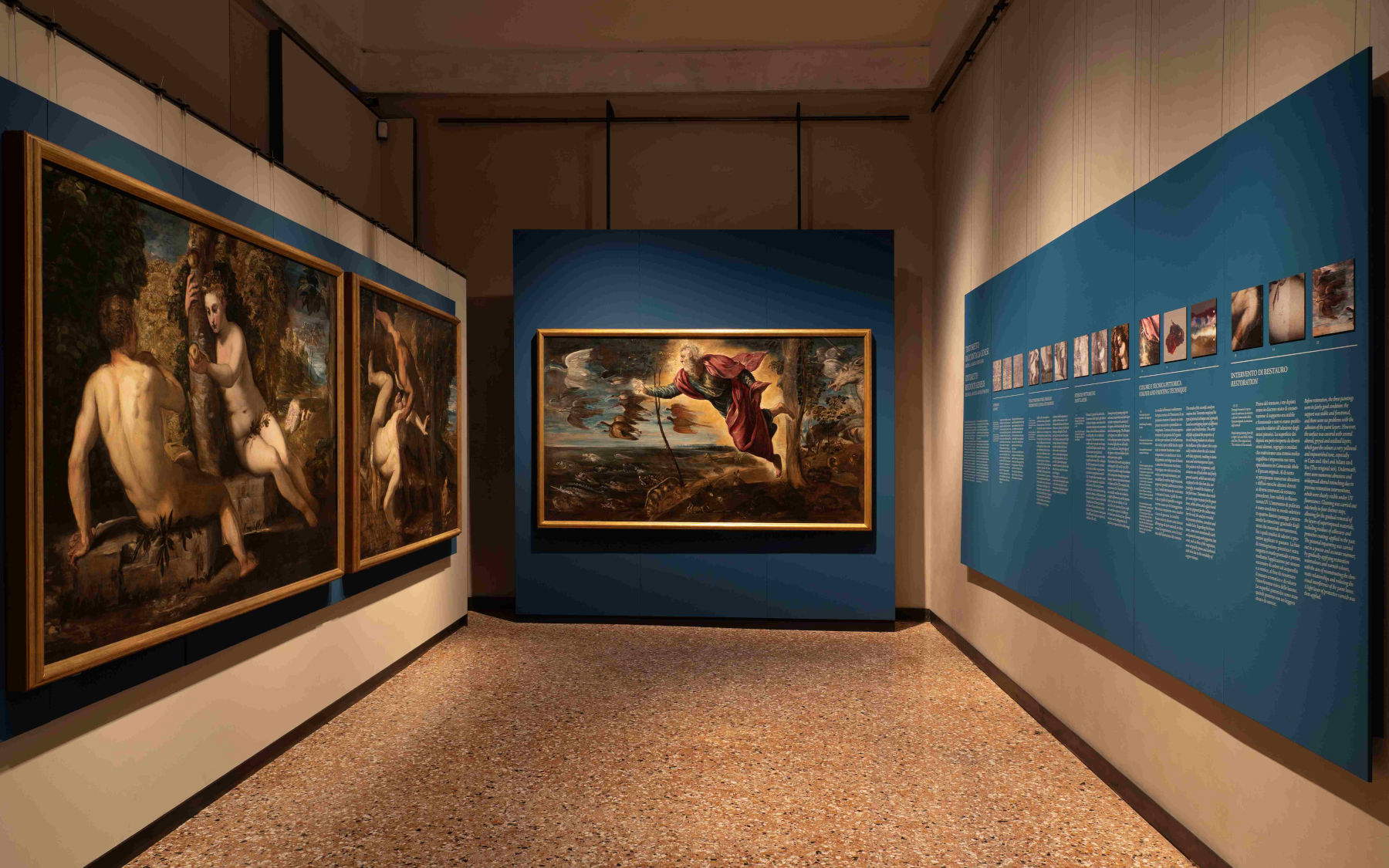
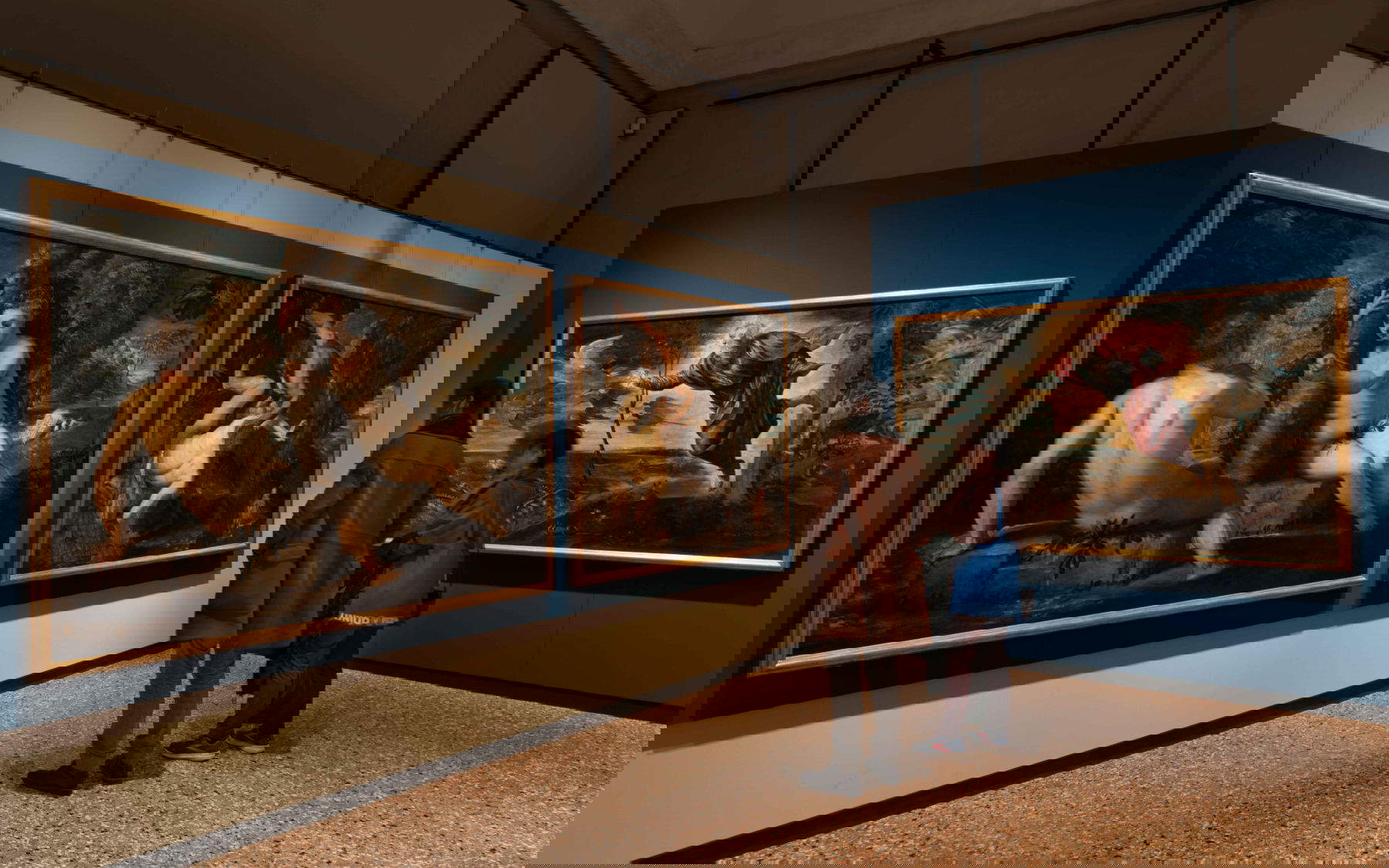
The exhibition represents the outcome of a complex restoration project carried out between February 2024 and January 2025 by restorer Claudia Vittori, on the occasion of the exhibition Tintoretto’s Genesis held at the Cincinnati Art Museum from April 18 to September 1, 2025. The research and conservation project, sponsored by the Gallerie dell’Accademia in Venice with the contribution of the Foundation for Italian Art & Culture in New York and the U.S. museum itself, allowed for a deeper understanding of the execution processes adopted by the artist and to clarify the manner in which the work was originally set up for the commissioning venue. The cycle was created in the early 1550s for the Scuola della Santissima Trinità, a lay confraternity active since 1420 in a portion of the monastic complex overlooking the Grand Canal at the far end of the Dorsoduro sestiere.
In 1547 the Scuola initiated a decorative program that included four paintings with the Creation of the World entrusted to Francesco Torbido and five canvases with episodes from the Book of Genesis commissioned from Tintoretto. Over the course of the seventeenth century, the confraternity changed locations several times, a circumstance that resulted in moves and complex conservation events for the works. In addition to the three canvases now in the Gallerie dell’Accademia, Adam and Eve before the Eternal, now in the Uffizi, and the Creation of Eve, currently in a private German collection and not in the exhibition, have survived. Other paintings executed by Tintoretto for the same School, with Evangelists, Apostles and an Annunciation, are lost.

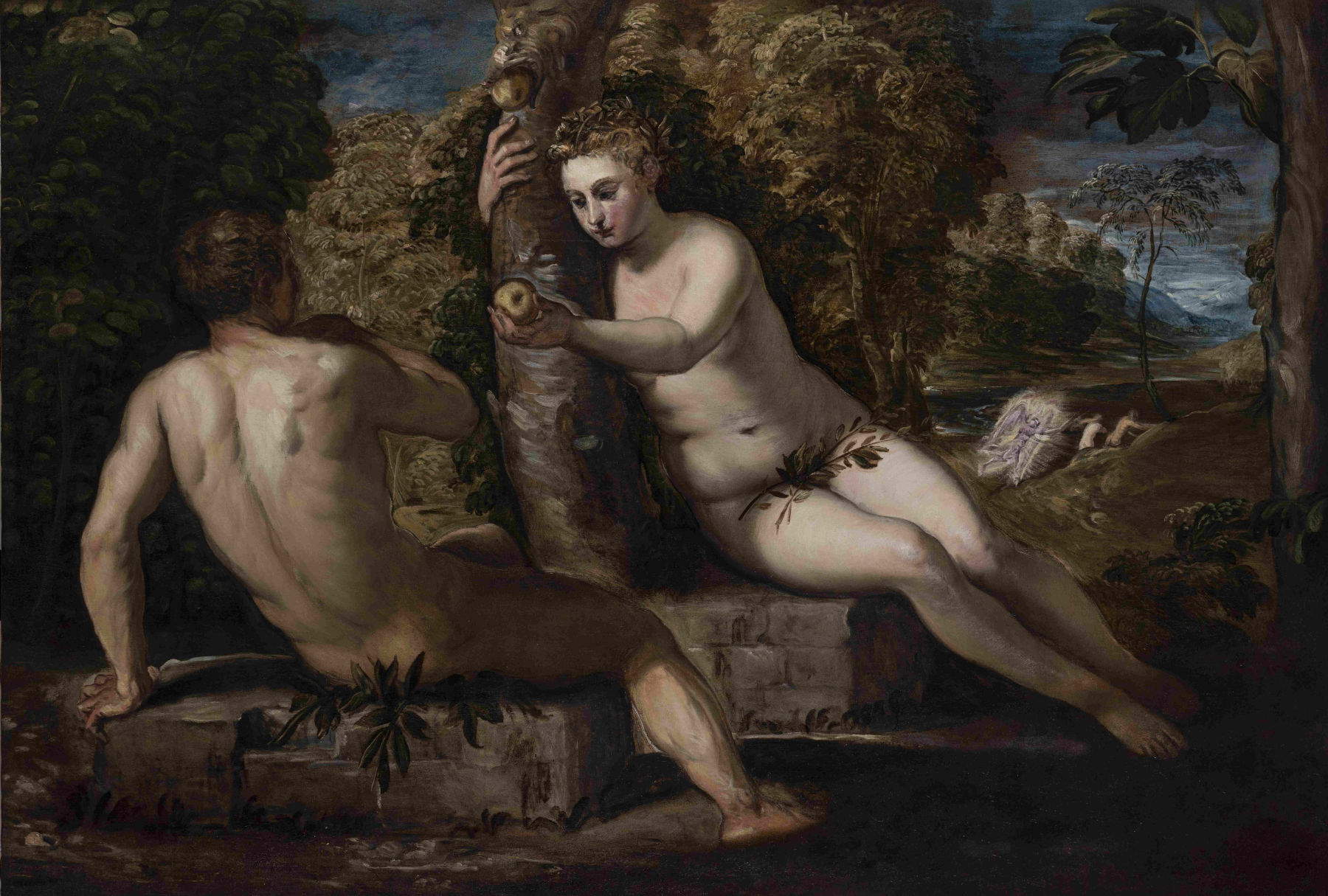
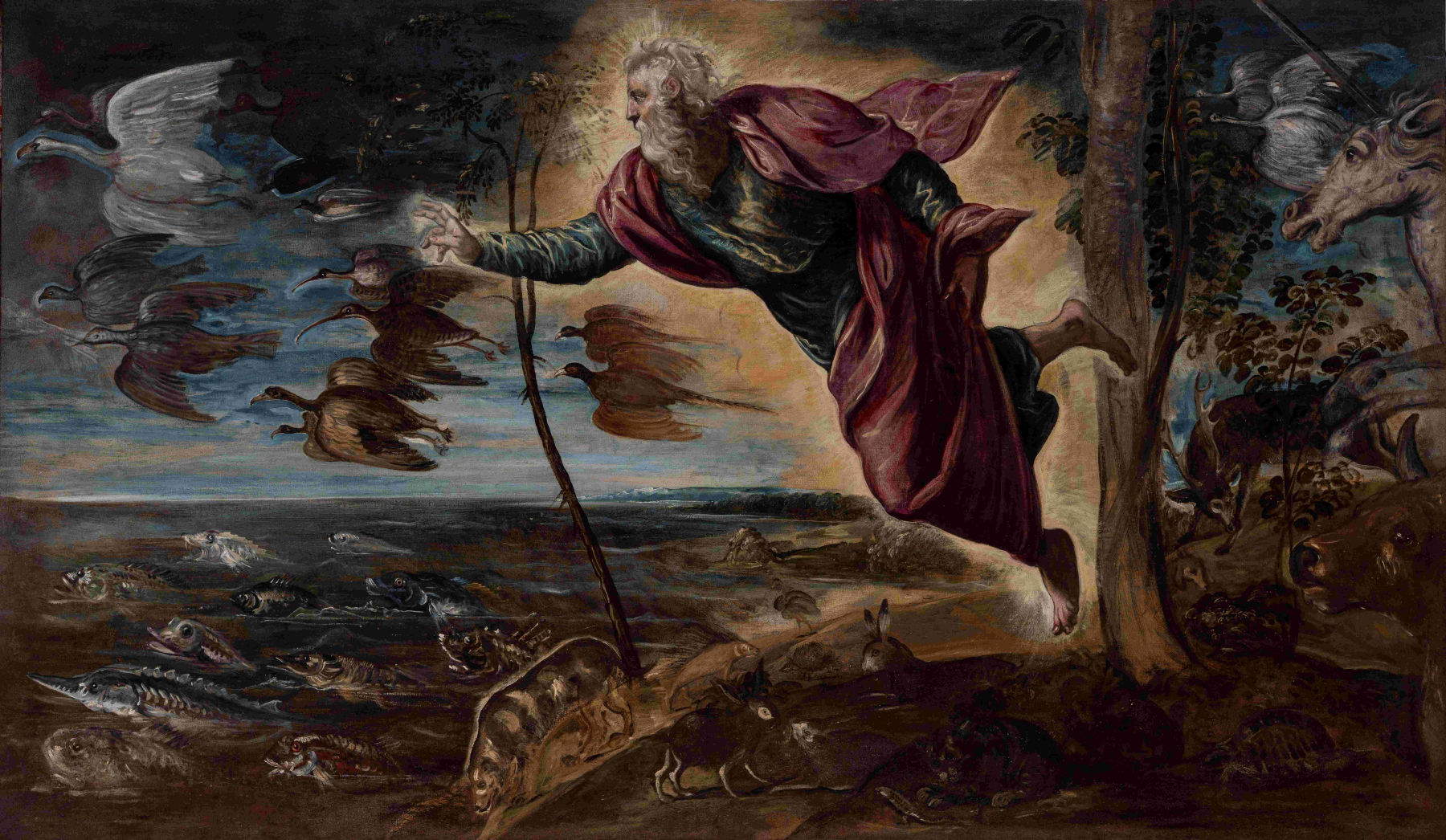
Datable to the artist’s early maturity, the canvases combine the plastic solidity of Michelangelo’s ancestry and the color of Titian tradition with the usual energy of sign and dynamic tension typical of Tintoretto’s language. The restoration work removed altered patinas and varnishes, restoring legibility and luminosity to the surfaces and highlighting the centrality of the natural landscape, which in this cycle takes a prominent role in the narrative construction. The diagnostic investigations, conducted with advanced imaging technologies, enabled the Galleries’ conservation, curatorship and scientific research staff to analyze materials and execution techniques.
The analyses have made it possible to observe the underlying layers, reconstructing the stages of work from the preparation of the supports to the transfer of preliminary ideas through charcoal or brush drawings to the revisions made during the pictorial drafting. Studies have also revealed the use of a single large textile support for three of the canvases and the presence of compositional variants introduced during the course of the work. The exhibition focuses attention on the outcomes of the diagnostic campaign and the phases of the restoration, complementing the display with a video that reconstructs the original context of the School of the Holy Trinity, once located at the area of the current Dogana de Mar, and further delves into execution technique and conservation interventions.
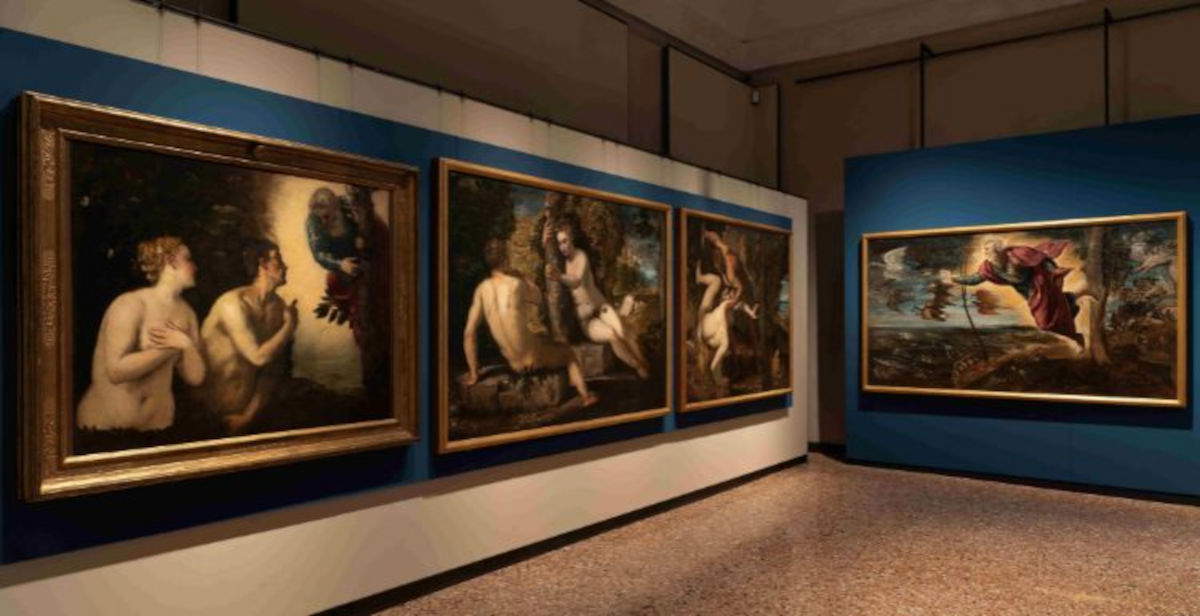 |
| Tintoretto, recomposed after two centuries the Genesis cycle at the Gallerie dell'Accademia in Venice |
Warning: the translation into English of the original Italian article was created using automatic tools. We undertake to review all articles, but we do not guarantee the total absence of inaccuracies in the translation due to the program. You can find the original by clicking on the ITA button. If you find any mistake,please contact us.