




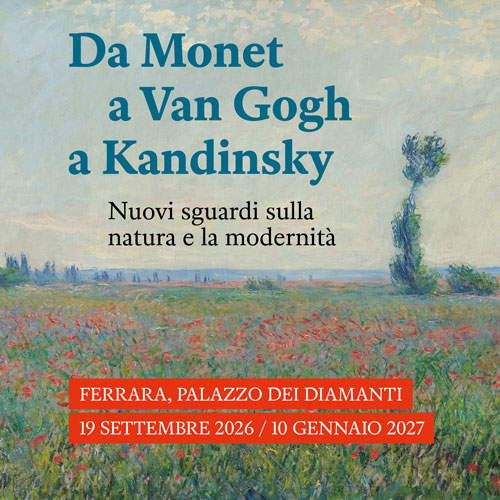
Monet, Van Gogh, Kandinsky, Mondrian: these are names that mark the milestones of an epochal turning point in the history of European art. In less than eighty years, between the 19th and 20th centuries, painting shifted from the direct observation of nature to the dissolution of reality. The exhibition *From Monet to Van Gogh to Kandinsky: New Perspectives on Nature and Modernity, on view in Ferrara at the Palazzo dei Diamanti from September 19, 2026, to January 10, 2027, featuring works from the Museum Boijmans Van Beuningen in Rotterdam and other major collections. At the heart of the narrative curated by Sandra Kisters and Vasilij Gusella are landscapes— both natural and urban— and modern life, which serve as the vantage point for an era in which the relationship between the artist and the visible world was radically redefined, paving the way for new ways of perceiving and representing reality.
The exhibition brings together 120 works, including paintings, drawings, and engravings, most of which come from the Dutch museum’s collections and are complemented by a selection from major Italian public and private collections. The exhibition is organized by the Ferrara Arte Foundation in collaboration with the Museum Boijmans Van Beuningen in Rotterdam and the Galleries of Modern and Contemporary Art in Ferrara. The exhibition, divided into nine sections, traces the key stages in the evolution of painting between the 19th and 20th centuries. It begins with the sensibility of the Barbizon School, founded on the direct observation of the landscape and destined to profoundly influence the Italian Macchiaioli, who developed a visual language built on light and color. WithImpressionism, a modern style of painting emerged, capable of capturing the fleeting perception of the subject, while in the Netherlands, artists of the Hague School applied the same principles to a more subdued and atmospheric vision.
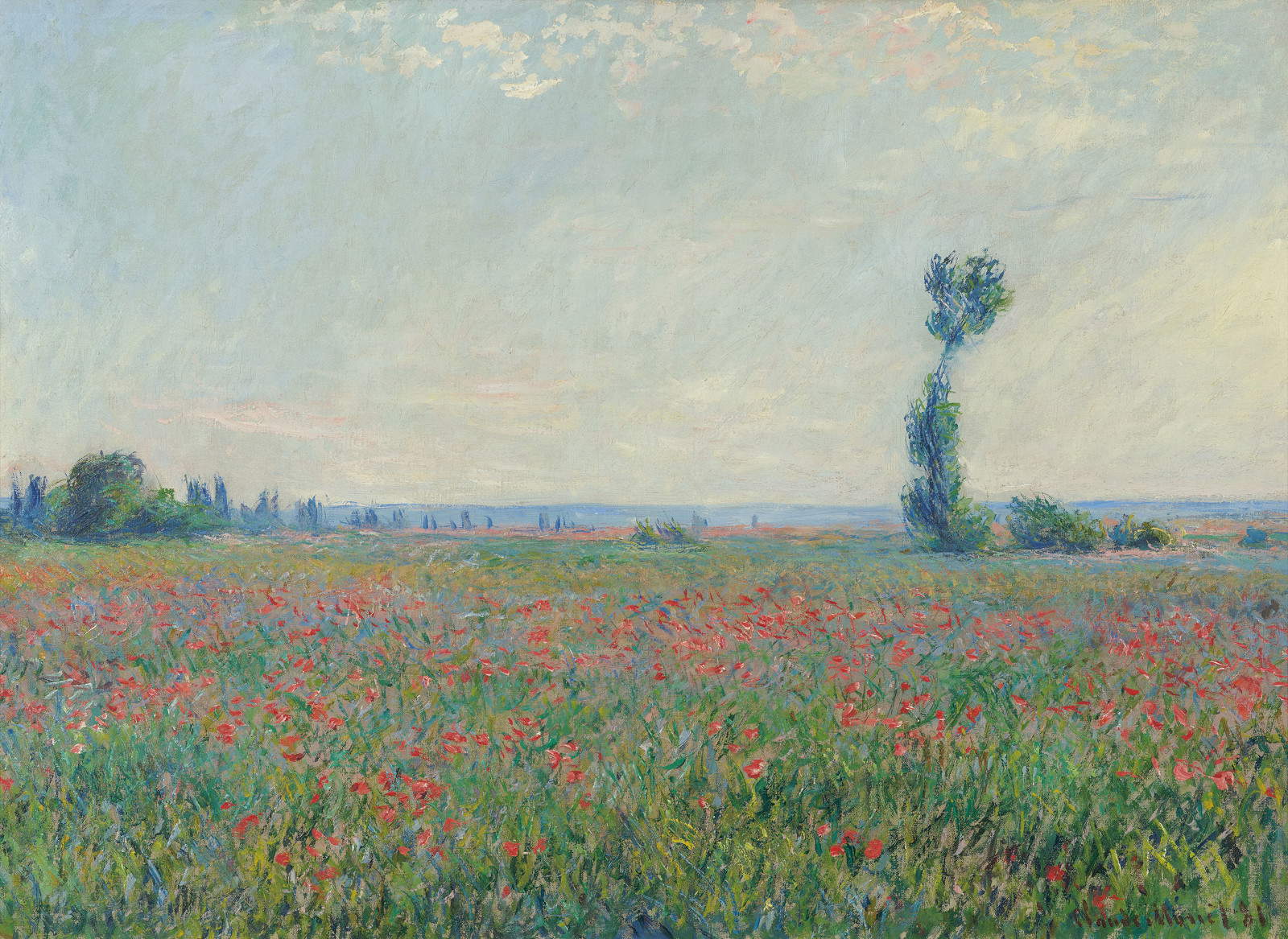
From the 1880s onward, the Post-Impressionists challenged the idea of art that was faithful to nature. Color and form gained autonomy, space was reinterpreted, the image became more essential and laden with symbolic meanings, and color took on an increasingly emotional value. In Italy, Divisionism reworked these explorations in a lyrical key, emphasizing the vibration of light, while urban life became central to narrating the social and cultural transformations of the time. At the beginning of the 20th century, Futurism celebrated the movement and energy of the city, followed by various artistic movements, including a return to order that reclaimed balance and classicism. Meanwhile, in Europe, many artists embarked on the path of abstraction, progressively simplifying and dissolving reality until they arrived at an autonomous language, free from the representation of the visible world.
Among the leading figures were Gustave Courbet, Claude Monet, Berthe Morisot, Camille Pissarro, Auguste Renoir, Alfred Sisley, Edgar Degas, Paul Gauguin, Vincent van Gogh, Jacoba van Heemskerck, Paul Signac, Odilon Redon, Pablo Picasso, Pierre Bonnard, Édouard Vuillard, Wassily Kandinsky, and Piet Mondrian. Alongside them are the Italian masters: Giovanni Fattori, Telemaco Signorini, Giuseppe Pellizza da Volpedo, Giovanni Segantini, Gaetano Previati, Giovanni Boldini, Umberto Boccioni, and Mario Sironi.
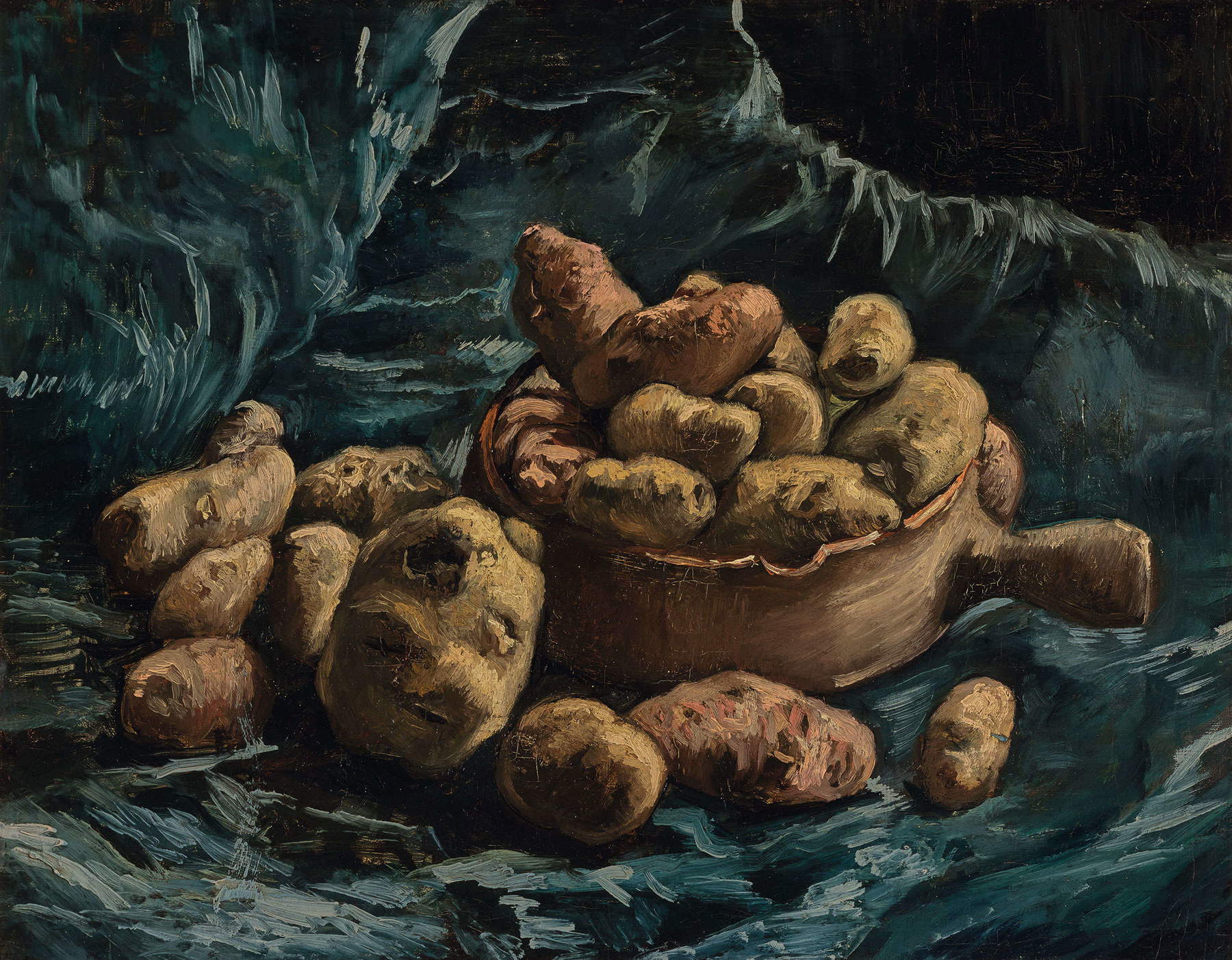
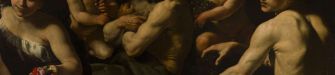
The narrative and critical evolution begins with the Barbizon School and the birth of plein air painting. In the 1830s, a group of artists—including Camille Corot, Théodore Rousseau, and Constant Troyon—chose to leave their urban studios to immerse themselves in the forest of Fontainebleau. This move ushered in a methodological approach based on direct engagement with nature and the analytical study of light and atmospheric phenomena. Outdoor painting was not merely a stylistic choice but also became a tool for documentation and for social and ecological reflection. Emblematic in this regard is the painting *The Massacre of the Innocents*, executed by Théodore Rousseau in 1847, in which the biblical theme is reinterpreted as a protest against the indiscriminate felling of trees in the forest.
The Barbizon school’s artistic exploration was rooted in the tradition of 17th-century Dutch landscape painting, with particular reference to the stylistic models of Jacob van Ruisdael and Albert Cuyp, as well as the teachings of Georges Michel. This phase of experimentation also saw the involvement of key figures of international renown. Among the first Dutch painters to frequent the Barbizon area was Martinus Kuytenbrouwer, whose work helped spread the new figurative principles beyond French borders. At the same time, the work of Eugène Boudin played a central role in conveying the importance of direct observation from life to the young Claude Monet, laying the groundwork for the future developments of Impressionism.
The analysis of the exhibition continues by examining the influence of the French movement on the Italian context, focusing on the Italian Barbizon painters and the Macchiaioli movement. In the second half of the 19th century, the figurative art of the Italian peninsula embraced the principles of Positivism, translating them into a renewed interest in reality and contemporary life. In Florence, the Caffè Michelangiolo became the driving force behind a radical challenge to academic dogmas and traditional painterly conventions. Artists such as Vincenzo Cabianca, Odoardo Borrani, and Giovanni Costa gathered around this circle.
The Macchiaioli’s artistic approach was based on rendering reality through contrasts of light and shadow, defined by synthetic chromatic fields, known as “macchie” (spots). This technique assimilated and reworked the influences of Barbizon painting and the theory of ton gris ( gray tone), while also making use of supporting optical tools such as the black mirror. The parallel rise of photography—represented in Florence by the work of Studio Alinari—also played a decisive role in the development of this new vision. The Macchiaioli’s artistic experience reached its peak of cohesion and expressiveness during their shared working retreats. Among these, the summers spent in Castiglioncello, on the estate of the critic and patron Diego Martelli, and the painting retreats held in the rural village of Piagentina—settings in which the artists succeeded in translating everyday life and the Tuscan landscape into images of rigorous formal simplicity.
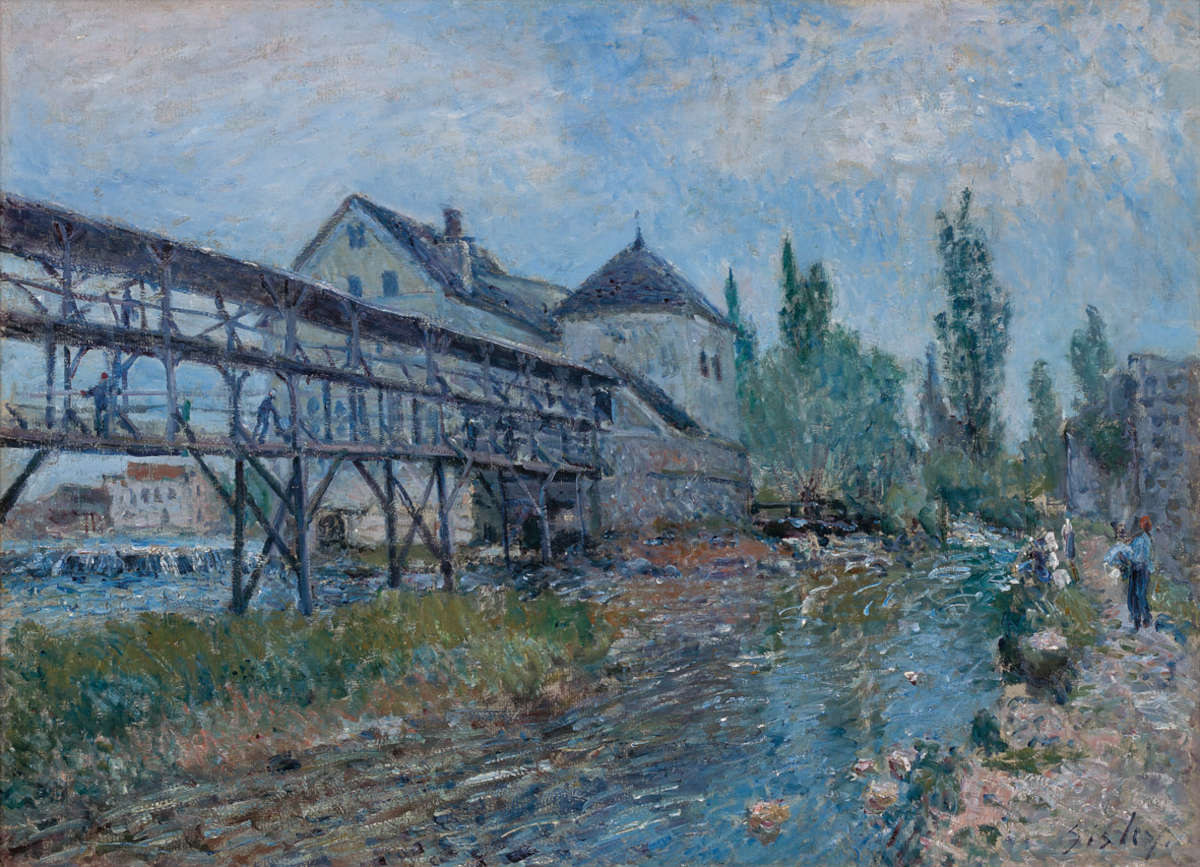
Another conceptual focus explores the Impressionist shift and the transition from depicting the city to depicting the countryside. The artists belonging to this group—including Claude Monet, Edgar Degas, Pierre-Auguste Renoir, Camille Pissarro, and Berthe Morisot—openly broke with the official institution of the Paris Salon. Rejecting academic selection criteria, the painters decided to organize themselves, launching a series of eight independent exhibitions held between 1874 and 1886. On a technical level, Impressionism revolutionized the figurative language through the adoption of a rapid, fragmented, and vibrant brushstroke, designed to capture the changes in light and atmospheric variations. The color palette became significantly lighter thanks to the use of pure, brilliant colors, applied directly to the canvas without prior tonal blending. From an iconographic perspective, the Impressionists turned their attention both to urban modernity—depicting train stations, industrial infrastructure, bridges, and steam—and to natural landscapes, with a marked preference for rural settings, waterways, and seascapes.
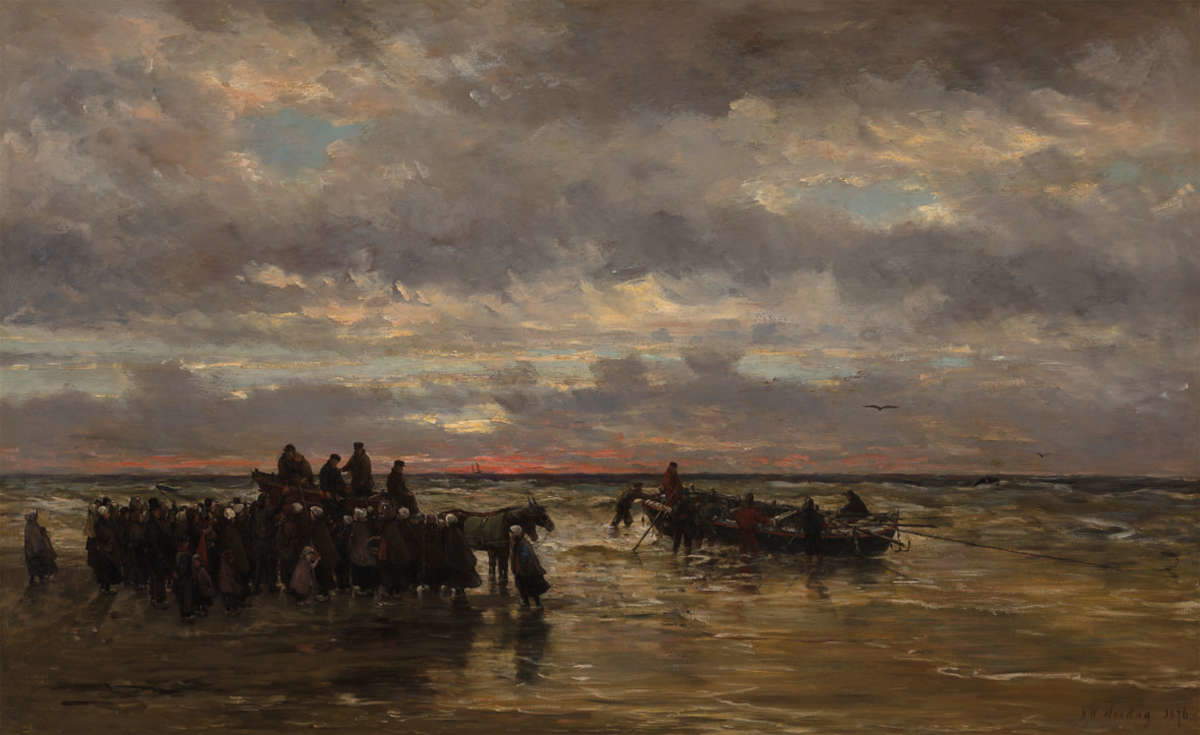
The exhibition then explores the Hague School and its original interpretation of the Dutch landscape. Active roughly between 1860 and 1890, this artistic group distinguished itself through a body of work characterized by the predominant use of subdued color palettes, centered on shades of gray and green—a feature that earned the group the name “Gray School.” The leading figures of the Hague School were Willem Roelofs, Jacob Maris, Anton Mauve, Hendrik Willem Mesdag, Johan Hendrik Weissenbruch, and Paul Constantin Gabriël. Among the most notable works of the period is the monumental *Panorama Mesdag*, a grandiose circular panoramic view created by Hendrik Willem Mesdag in collaboration with other artists from the group.
The Hague School’s artistic exploration focused on the observation of polders, windmills, the beaches of Scheveningen, and the cloudy skies typical of the Netherlands, combining an attention to atmospheric conditions with depictions of the traditional work of farmers and fishermen. The artists of this movement deliberately avoided including signs of impending industrialization in their compositions, preferring to capture an idyllic and timeless image of the Dutch countryside and coastline.
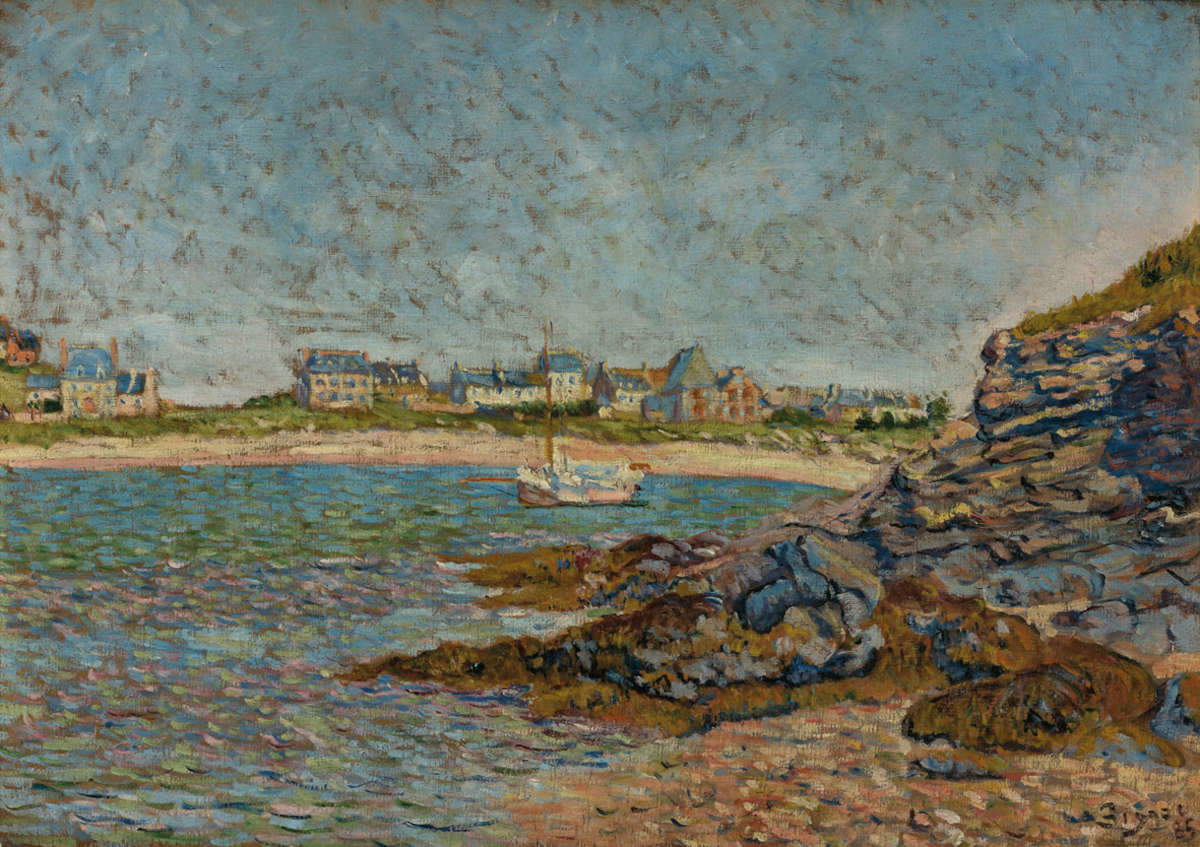
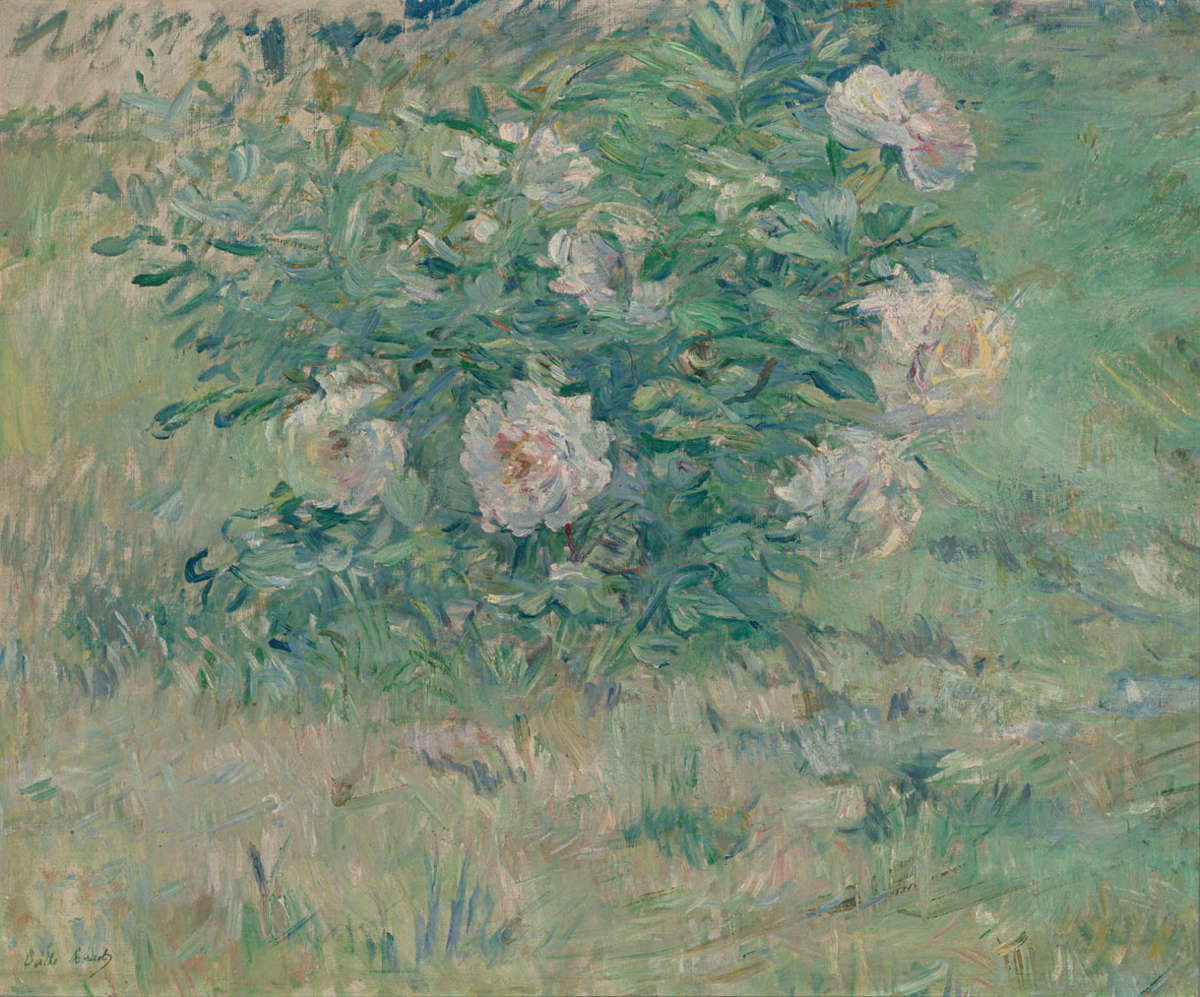
Ample space is devoted to the diverse manifestations of Post-Impressionism and Neo-Impressionism in Europe and Italy. Beginning in the mid-1880s, artistic exploration moved beyond Impressionist empiricism to adopt more rigorous or analytical approaches. With French Pointillism and Divisionism, led by Georges Seurat and Paul Signac, the application of color was subjected to scientific laws based on studies of optics and visual perception conducted by Eugène Chevreul and Ogden Rood. Pigments were applied to the canvas in the form of small dots or separate strokes of pure color, leaving it to the viewer’s eye to optically reconstruct the tones.
This technique had a wide international impact and influenced subsequent research on color and light conducted by figures such as Kees van Dongen and Jan Sluijters, leading figures of the so-called Luminism, as well as the developments of the Fauvist movement in France, represented by Henri Matisse and Albert Marquet, as well as the work of the Belgian Théo van Rysselberghe. In Italy, the Divisionist movement developed with its own distinct characteristics and a strong symbolic and social impact. The turning point for the movement’s establishment was the first Brera Triennial in 1891, an event in which the new theoretical and stylistic approaches received official recognition, thanks in part to the promotional and critical efforts of the art dealer and gallery owner Vittore Grubicy de Dragon. The leading exponents of Italian Divisionism were Giovanni Segantini, Gaetano Previati, and Giuseppe Pellizza da Volpedo. In their works, the decomposition of the brushstroke into overlapping chromatic strands was combined with a profound meditation on the themes of nature, spirituality, and the demands of the working world, marking a pivotal moment in late-19th-century Italian painting.
Another key strand shifts the focus to the urban dimension, examining the metropolis as the new landscape of modernity. Toward the end of the nineteenth century, Paris established itself as the artistic and cultural center of Europe, aided by the radical urban transformation spearheaded by Baron Georges-Eugène Haussmann, who had redesigned the structure of the French capital byopening up grand boulevards and squares. Artists of the time found new subjects to explore in neighborhoods synonymous with nightlife, such as Montmartre, and in venues of bourgeois entertainment. Painters such as Pablo Picasso, Henri de Toulouse-Lautrec, Edgar Degas, Pierre Bonnard, Édouard Vuillard, and Mary Cassatt depicted the world of café-concerts, theaters, circuses, racetracks, and domestic interiors, capturing the social complexity and frenzy of metropolitan life. In this Parisian context, Giovanni Boldini, a native of Ferrara, distinguished himself, becoming one of the most sought-after and celebrated portraitists of the Belle Époque. Boldini developed a painterly language characterized by rapid, fluid brushstrokes and swaths of color, capable of conveying the elegance of the society of the time and capturing the dynamism, speed, and fragility of modern life.
![Edgar Degas, Young Dancer, Age 14 (1880–1881 [1922]; bronze and fabric, 98 x 49 x 50 cm; Rotterdam, Museum Boijmans Van). Photo: Studio Tromp](https://cdn.finestresullarte.info/rivista/immagini/2026/fn/edgar-degas-giovane-ballerina-di-quattordici-anni.jpg)
The critical discussion then examines the transformations of the landscape during the era of the historical avant-garde movements, analyzing the trajectory that leads from Futurism to the Return to Order. Founded in 1909 with the publication of the manifesto drafted by Filippo Tommaso Marinetti and formalized in the field of painting in 1910, Futurism proposed a radical rejection of the past and of academic tradition, extolling speed, the machine, technology, and the expansion of the industrial city. Among the leading figures of this period was Umberto Boccioni, whose painting *Meriggio. *Officine a Porta Romana* bears witness to the transition from Divisionist decomposition to the depiction of the constantly transforming urban periphery. Alongside Boccioni, the exhibition documents the explorations of Aroldo Bonzagni and the movement’s subsequent developments, such as Aeropittura—theorized and expressed by Tullio Crali—as well as the contributions of Anselmo Bucci.
Reflections on the urban landscape of the future also found significant expression in the utopian visions and theoretical projects of architects Antonio Sant’Elia and Mario Chiattone, whose drawings depicted multi-level metropolises dominated by towers, power plants, and traffic hubs. After the devastation of World War I, however, the European cultural climate underwent a profound change: the iconoclastic fervor of the avant-garde gave way to the phenomenon of the “Return to Order.” Artists felt the need to reclaim the solidity of form, compositional balance, proportion, and a renewed figurative humanism, reconnecting with the great classical and Renaissance traditions.
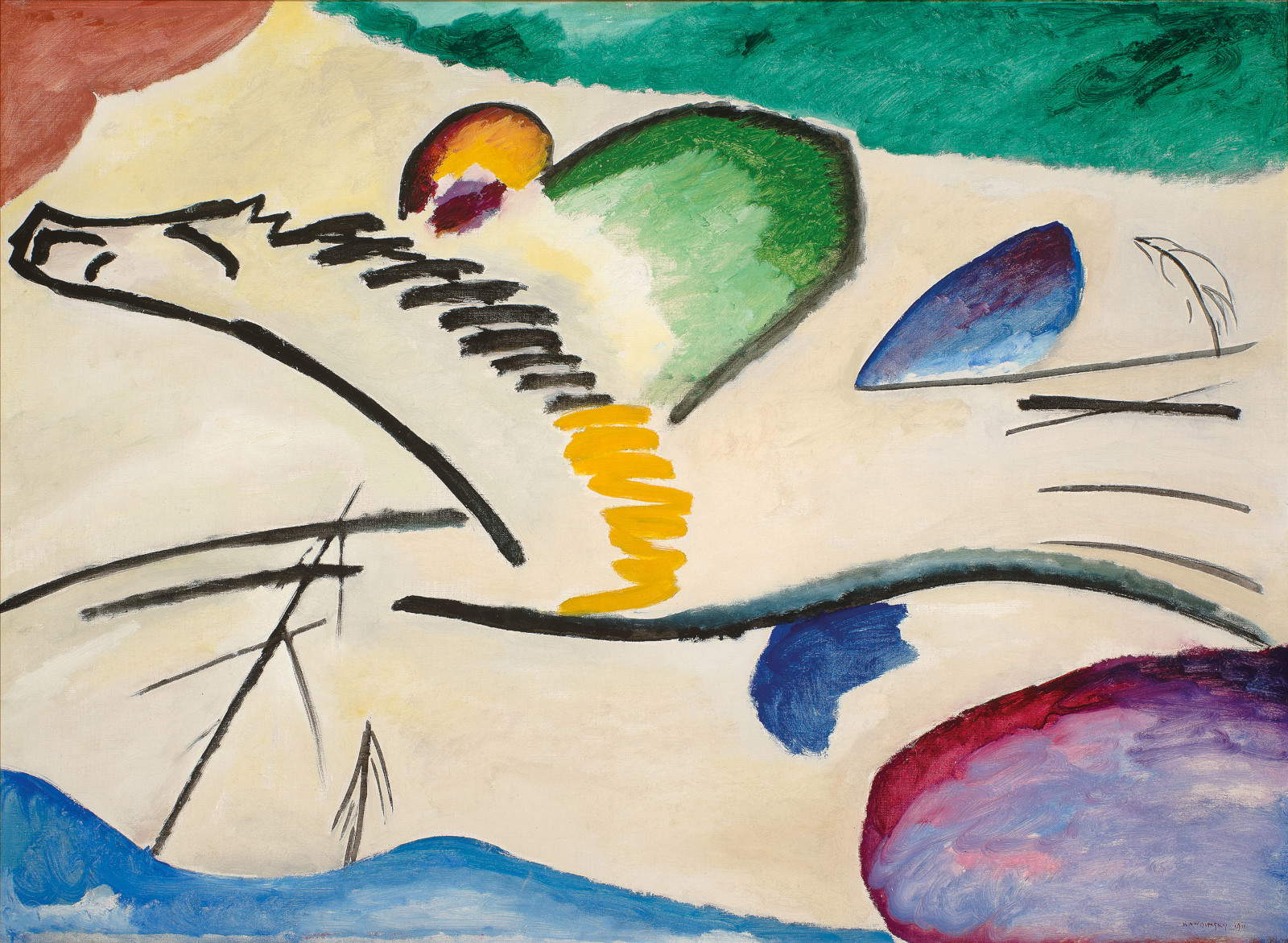
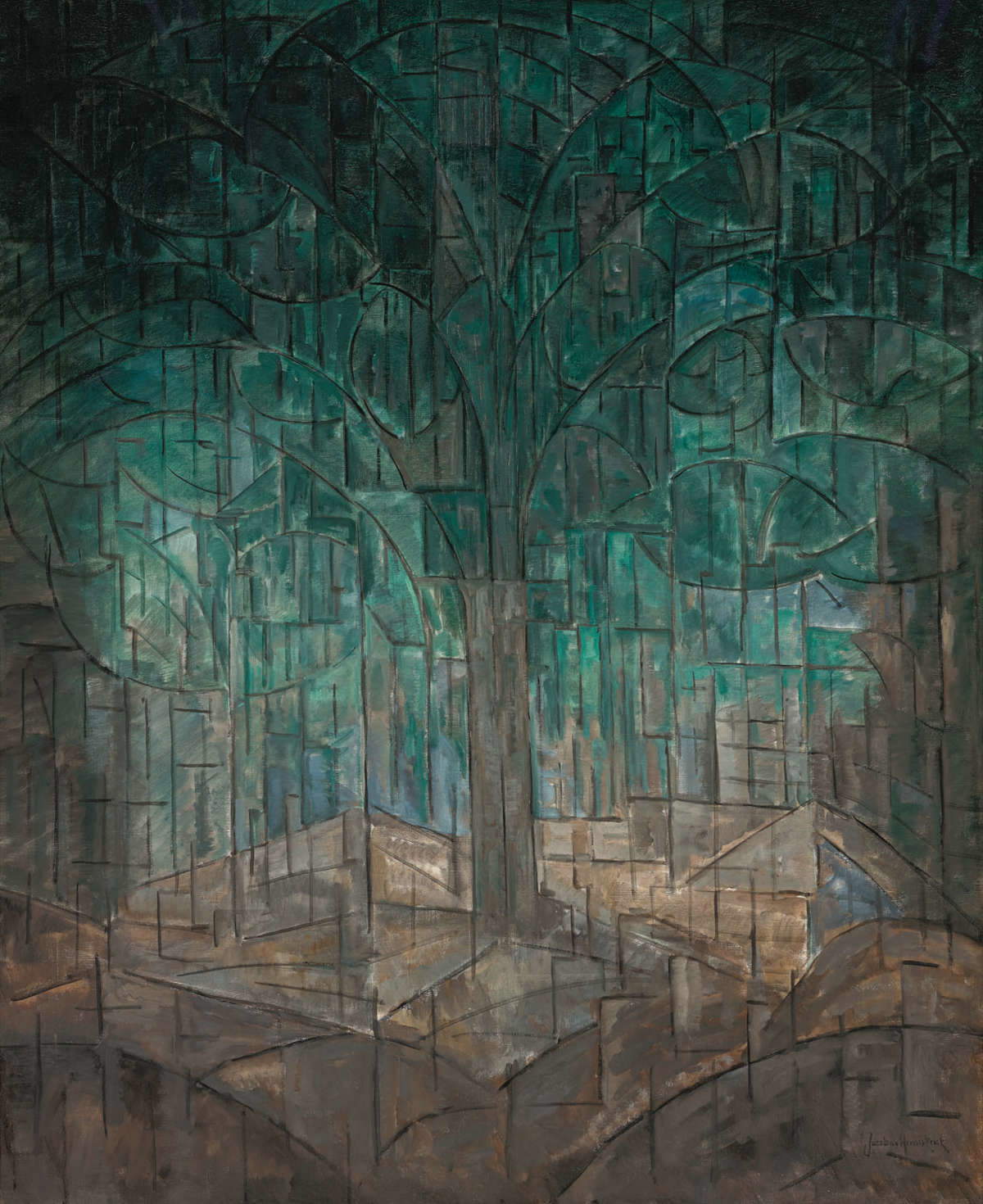
The conceptual survey concludes with an analysis of the dissolution of form and the emergenceof pure abstraction. Between the first and second decades of the 20th century, the centuries-old tradition of figurative landscape painting reached a radical turning point. Artists such as Wassily Kandinsky and Piet Mondrian took the process of simplifying and synthesizing natural reality to its extreme consequences. Kandinsky, drawing on Fauvist color theory and the correspondence between painting and music, eliminated all figurative references, transforming the landscape into an orchestration of lines, shapes, and patches of color capable of directly affecting the viewer’s sensibility.
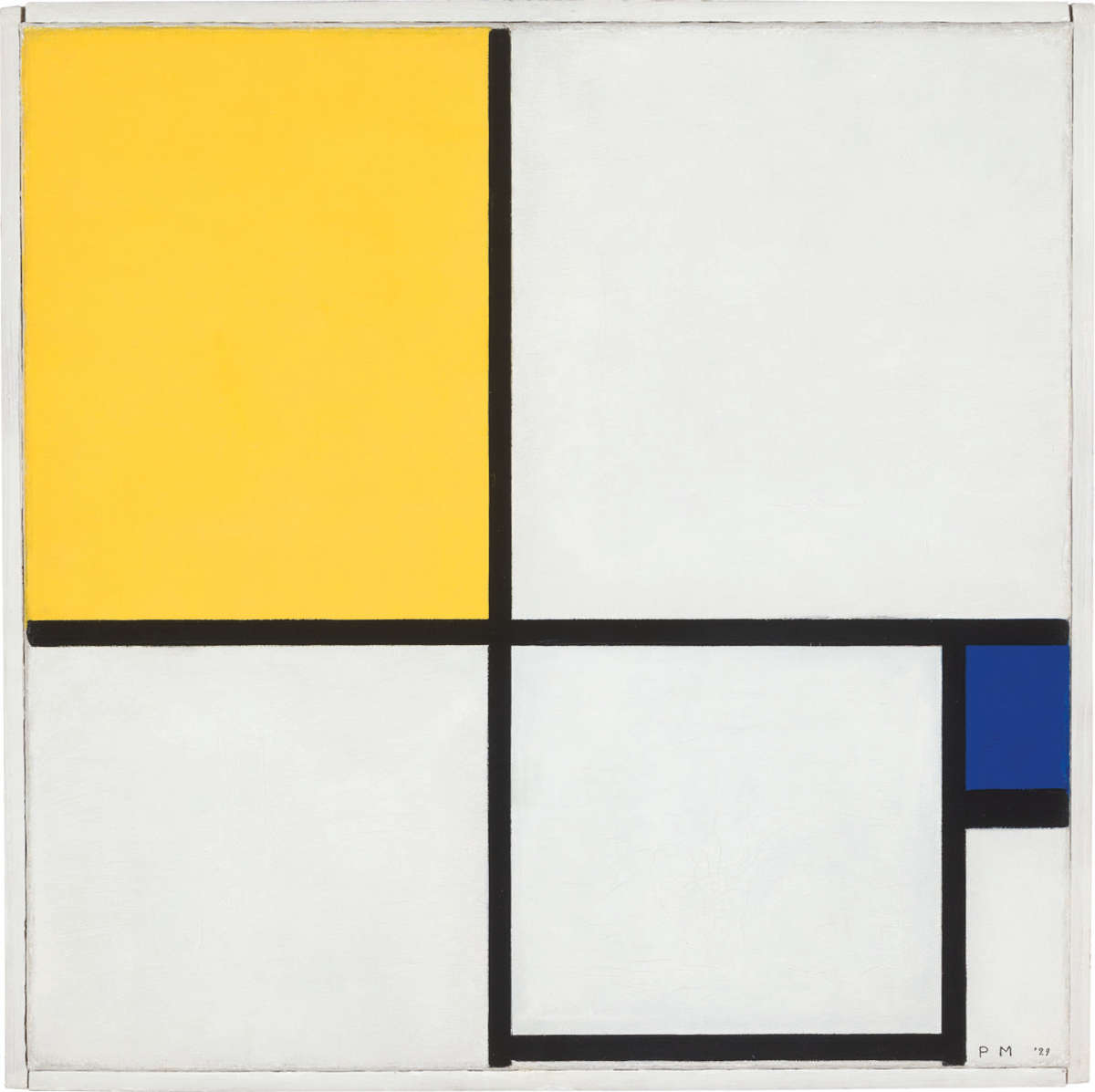
At the same time, Piet Mondrian embarked on a path of progressive analytical abstraction, beginning with the study of trees, building facades, and the sea. Through a rigorous reduction of reality to orthogonal grids and fields of primary colors, Mondrian arrived at Neoplasticism, identifying in geometric structure the universal order underlying nature.
The conceptual exhibition concludes with an analysis of the dissolution of form and the emergence of pure abstraction. Between the first and second decades of the 20th century, the centuries-old tradition of figurative landscape painting reached a radical turning point. Artists such as Wassily Kandinsky and Piet Mondrian took the process of simplifying and synthesizing natural reality to its extreme consequences. Kandinsky, drawing inspiration from Fauvist color and the correspondence between painting and music, eliminated all figurative references, transforming the landscape into an orchestration of lines, shapes, and patches of color capable of directly affecting the viewer’s sensibility. At the same time, Piet Mondrian embarked on a path of progressive analytical abstraction, beginning with his studies of trees, building facades, and the sea in the Netherlands. Through a rigorous reduction of reality to orthogonal grids and fields of primary colors, Mondrian arrived at Neoplasticism, identifying in geometric structure the universal order underlying nature.
The experience at Palazzo dei Diamanti is complemented by a multisensory project of sounds, scents, and installations that accompanies the transformation of the viewer’s perspective. The figures of Monet, Van Gogh, and Kandinsky mark the transition from the observation of reality to abstraction, reflecting how, in less than eighty years, painting has transformed nature from an object to be represented into a lived experience and a mental construct. The sound-and-scent journey is divided into four segments that evoke the artists’ way of seeing rather than the painted object itself.
In the Macchiaioli room, the wind rustling through the grass, seagulls, footsteps on the ground, the sea, and the scents of minerals and damp earth aim to convey the tangibility of nature and plein air painting. For the Hague School, the wind across the plains, the blades of windmills, the movement of water, and notes of wet grass create a contemplative and damp atmosphere, typical of the Dutch polders. In the section on urban life, murmurs, tinkling sounds, the rustle of clothing, footsteps on hardwood floors, piano music, and hints of powder evoke metropolitan and feminine sophistication. Finally, in the section on abstraction, excerpts from Schönberg’s *Drei Klavierstücke, Op. 11* interact with Kandinsky’s *Lyric* and the works of Feininger, Marc, Gestel, and van Heemskerck, highlighting the autonomy of form and color, while synthetic and iris-like notes replace any naturalistic references.
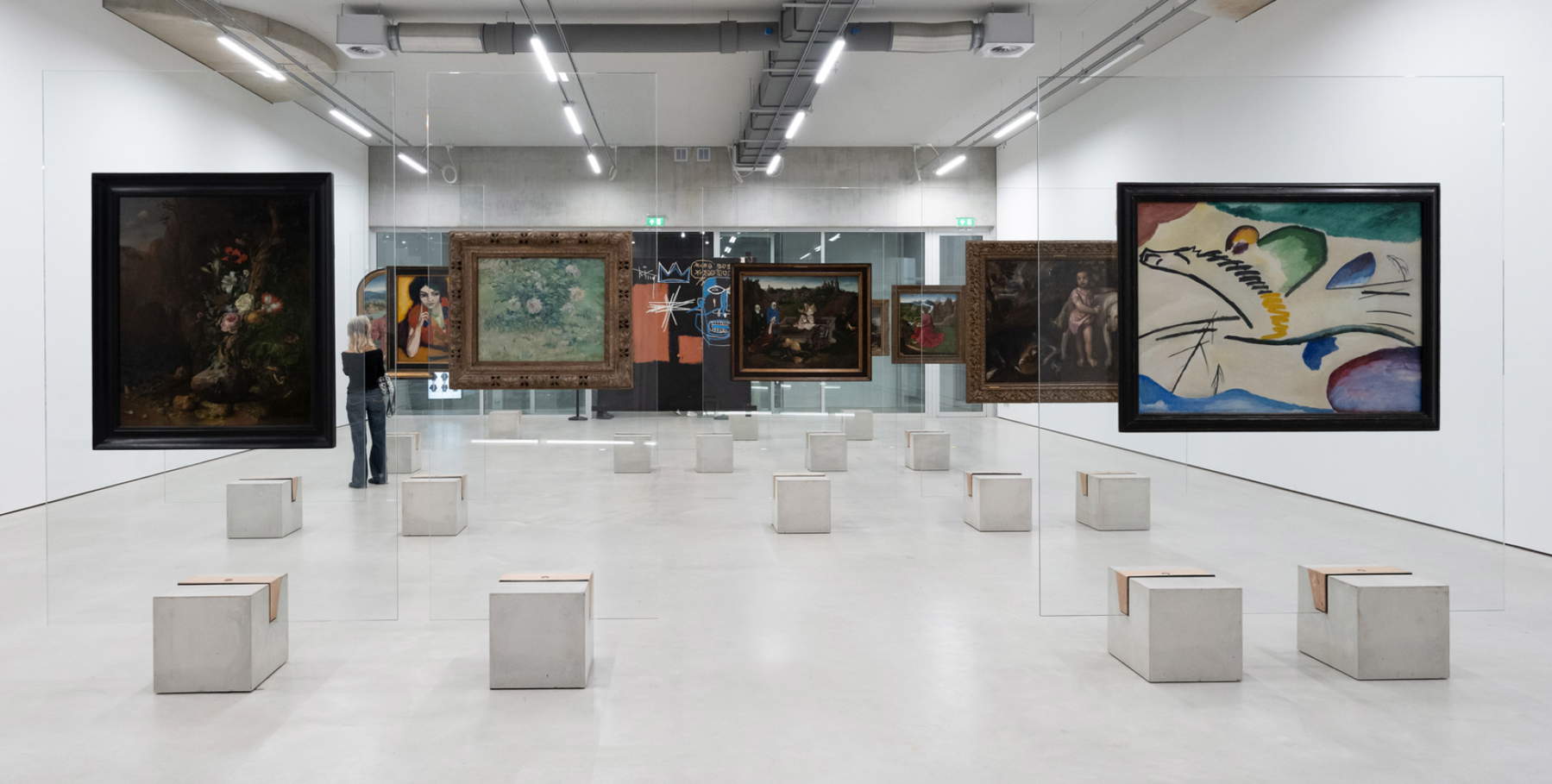
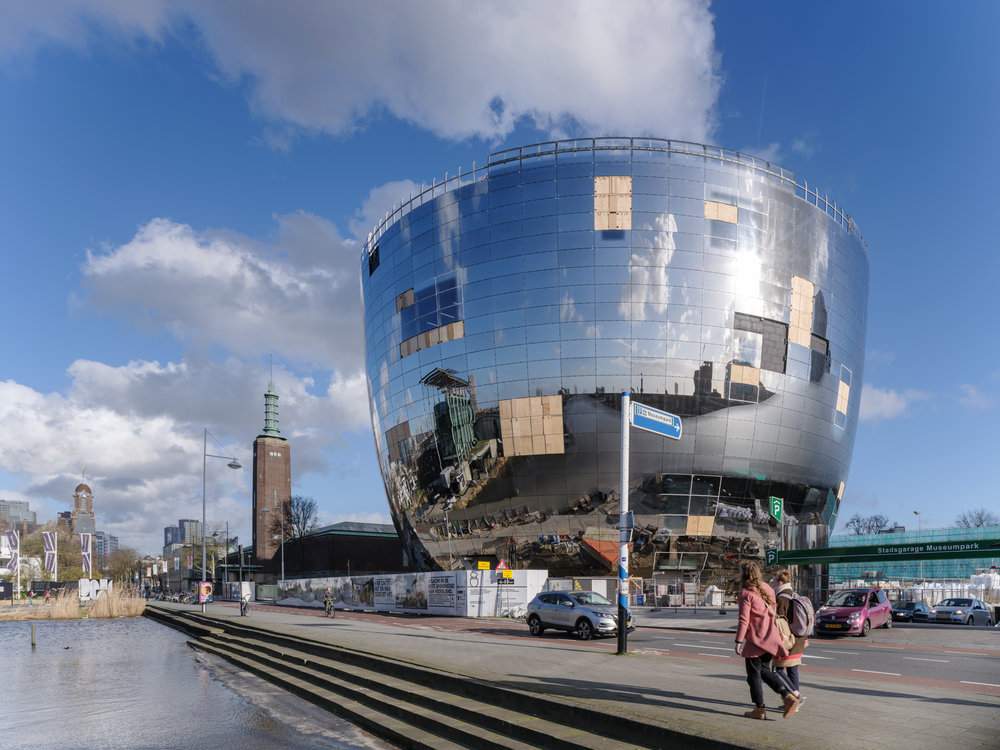
The scenographic design accompanies this journey with chromatic variations ranging from shades of brown to the white of the final room. Five luminous portals act as architectural diaphragms and perceptual thresholds to reset the viewer’s perspective: the first at the entrance for Barbizon and the Macchiaioli; the second before the immersive room on Impressionism, the Hague School, Post-Impressionism, and Divisionism; the third for urban modernity, spanning Futurism and the Return to Order; the fourth leading toward abstraction; and the fifth before the epilogue—a white space reserved for a single painting by Mondrian.
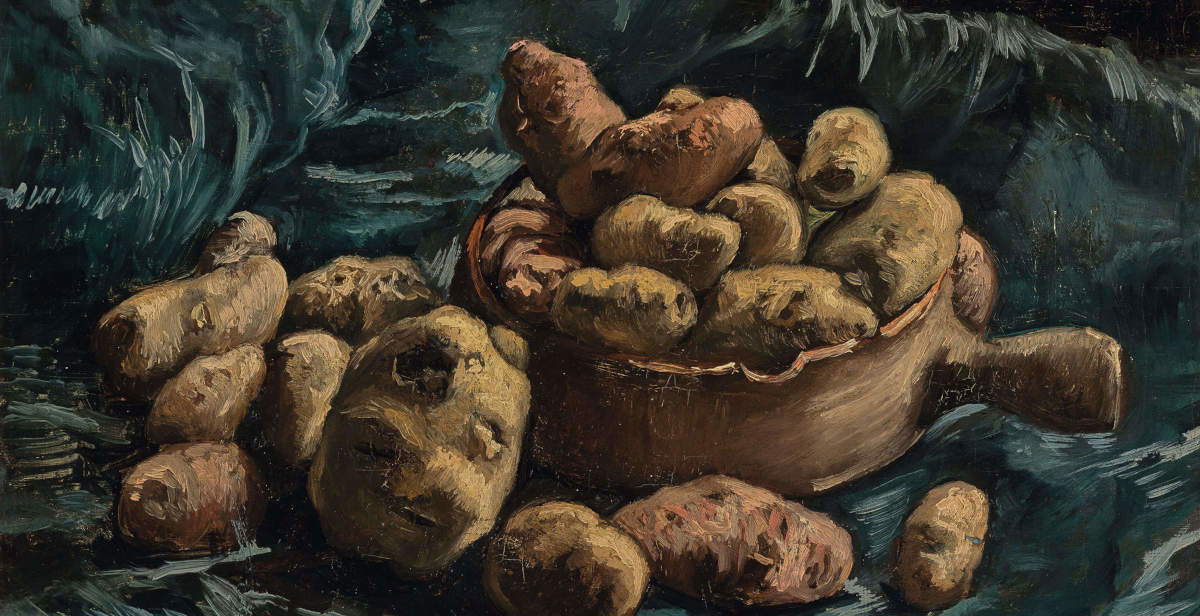 |
| Works from the Boijmans Museum in Rotterdam on display in Ferrara to explore the revolution in landscape painting |

Warning: the translation into English of the original Italian article was created using automatic tools. We undertake to review all articles, but we do not guarantee the total absence of inaccuracies in the translation due to the program. You can find the original by clicking on the ITA button. If you find any mistake,please contact us.


















 IT
IT FR
FR DE
DE ES
ES CN
CN


