





The director of the Diocesan Museum, Nadia Righi, looks at the museum as one looks at a question that never stops working under the skin, something that does not allow itself to be closed within the walls of a building nor within the tranquility of labels, but continues to breathe in the long time of images and in the restless gaze of those who enter. When it arrives at the Diocesan Museum of Milan in the late 1990s, the institution does not yet have a defined form: there is a rich and stratified picture gallery, there are works scattered in the offices of the Curia, there is above all the vision of Cardinal Carlo Maria Martini, who imagines for the city a place capable of bringing to light that artistic memory and returning it to the life of the community. Around that intuition takes shape the work of Paolo Biscottini and a group of young art historians called to do something rare and laborious: to search, recognize, study and recompose a constellation of dispersed works, giving them back a common history. The Diocesan Museum opens to the public on November 5, 2001. It will be twenty-five years old in 2026. A short time for a cultural institution, yet enough time for that initial project to turn into one of the most singular places in Milanese cultural life, where ancient painting, photography, civic reflection and dialogue with the contemporary continue to meet without losing the link with the tradition from which everything originated. From this interview that Francesca Gigli did with Nadia Righi, one gets the impression that that work that began in the archives and sacristies has never really ended: every exhibition, every loan, every dialogue between works reopens the same starting question, the one that concerns the meaning of images and their stubborn ability to remain alive in time.
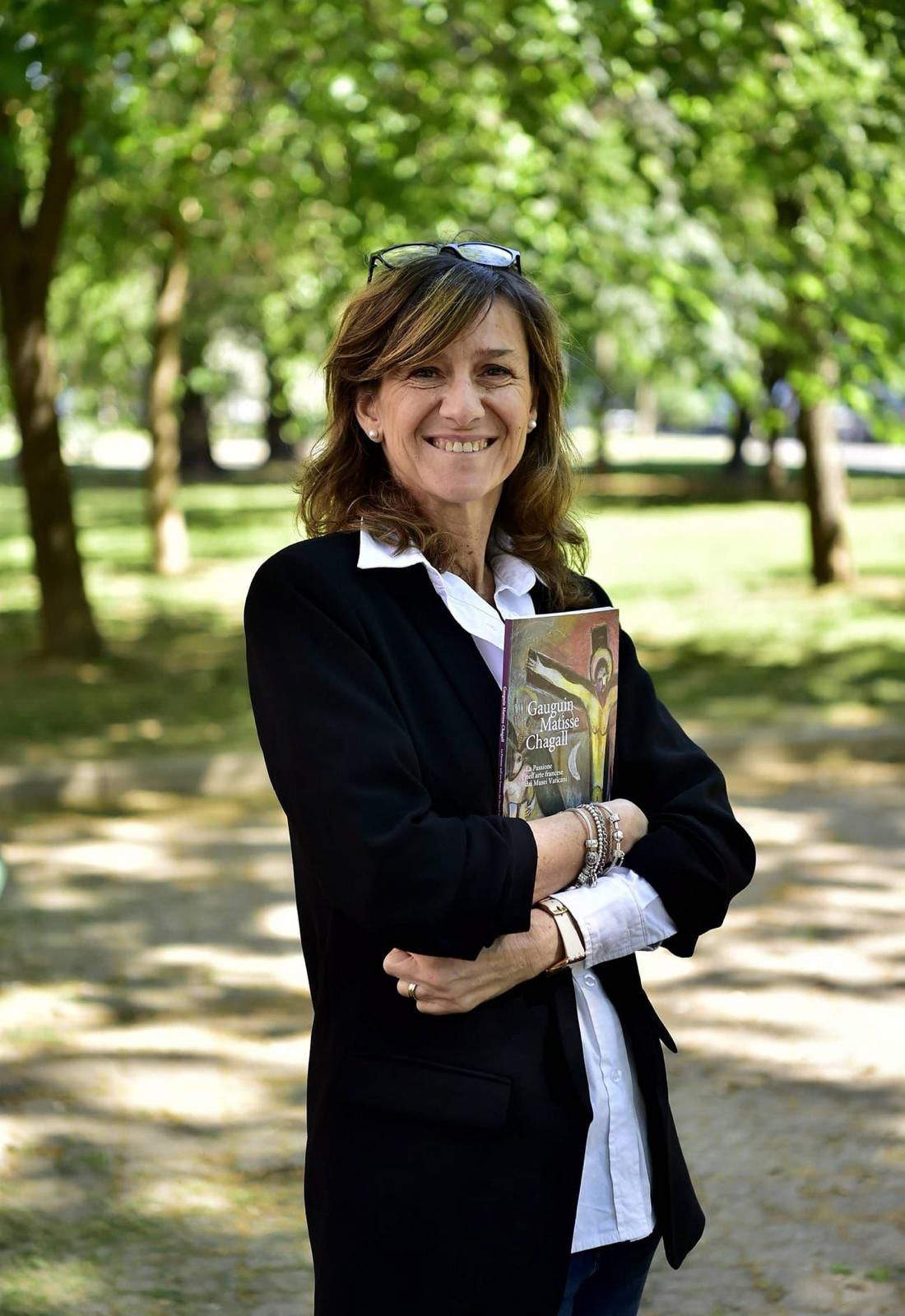
FG. You began your career at the Diocesan Museum when it was just born, even before the permanent collection was defined. How has that work of “building from nothing” shaped your thinking today about a museum that tells not just works but narratives of meaning?
NR. It was first and foremost a most precious opportunity, the kind for which one remains grateful all one’s life to those who made it possible. I started working here in 1998, when the museum did not yet exist in the form in which we know it today: the inauguration would not come until 2001. At that time the director was Paolo Biscottini, who was entrusted with the task of accompanying the birth of the museum and leading it to its opening. The Archbishop’s Picture Gallery already existed as a collection, but it was, so to speak, a picture gallery only in a theoretical sense: the works were located in the offices of the Curia and therefore could not be visited. The foresight of the director, in agreement with Cardinal Martini, was to imagine that those works could finally become visible and, above all, that they could once again tell a story. Not only a history of art, but a broader tradition, a stratified memory of the Ambrosian people. For us it was also an extraordinary season of discovery. And I say “we” because I was working together with a number of fellow art historians, many of whom had been my university classmates: Maria Cristina Terzaghi, Vito Zani, Raffaele Casciaro and Eugenia Bianchi. Each of them brought a different outlook, different expertise, and this made the activity even more fertile. The work began with an initial selection conducted on the diocese’s paper archive, but from there it was then necessary to go to the territory, verify the works, see them, study them. And very often it happened that while looking for something specific, other traces emerged, other unexpected presences. So there was, on the one hand, a very rigorous work from the methodological point of view, which was also born out of the experiences we all had gained in cataloguing works. It was work that was deeply tied to the area: recognizing works, understanding their state of preservation, identifying those that needed restoration or carried with them unlikely attributions. In some cases it really happened to come across rather fanciful attributions. Then of course all this material had to be put in order. It was not a job done by me alone, and I always tend to say that: at that time I was a collaborator, an art historian; the museum, after all, did not really exist yet. However, the dialogue with the director was continuous and very intense. We were constantly questioning each other about what we wanted to tell and what experience could arise from the visit. The difficulty, but at the same time the most fascinating challenge, was precisely in putting together what we really had available. It was a matter of constructing a coherent discourse from what existed, while still trying to create a narrative capable of making people understand where we are and what history we come from.
The Diocesan Museum holds works that originated for worship, but are now exposed to a plural, often non-believing gaze. How does your daily work change the way you tell the story of these works without reducing them to either devotional objects or mere historical documents? And how do you hold together, in your work, ecclesial identity with the need to speak to those who do not identify with any religious affiliation?
Cardinal Martini used to say that this should be a place to which he would bring all young people preparing for confirmation. Put like that it may sound curious, but it actually makes a lot of sense. For the Church, confirmation is the sacrament of confirmation, that is, the moment when a person becomes an adult in the faith: the moment when you are called to really understand who you are, before saying the definitive yes. But this question concerns everyone. It also concerns those who come here as tourists, as visitors, as young people who perhaps no longer have such obvious identity roots. Because to really meet someone who is different from you you have to have some awareness of who you are. This does not mean locking yourself into your own positions: it means having a point from which you can open up. Retracing one’s history and origins is important for this very reason. It means asking yourself: where do I come from, how did I get here, and therefore where can I go. It is a question that belongs to man as such. Every person, young or old, believer or non-believer, sooner or later is confronted with a question of meaning. And basically it is also the point from which we start when we narrate the works in the museum. They are images born for worship, within a specific tradition, but that does not mean that they speak only to those who share that faith. Our task is not to turn them into mere devotional objects, nor to reduce them to historical documents. It is rather to try to restore the human question that generated them. When this happens, the work returns to speak even to those who do not identify with a religious affiliation. Because those images are not just about a doctrine: they are about pain, hope, death, that is, experiences that run through everyone’s life. That’s why we don’t think of the museum as a place that has to give answers, but rather as a space that raises questions. And when a work succeeds in putting a question inside the viewer, even just a small woodworm that continues to work over time, then it has already accomplished something extremely important. The ecclesial identity of the museum, in this sense, is not a limitation to dialogue but the point from which to start in order to truly encounter the other. Because only when you know where you put your feet can you open up to those who are different from you. And at that point the work becomes a place of encounter: between different stories, different gazes, but crossed by the same question.
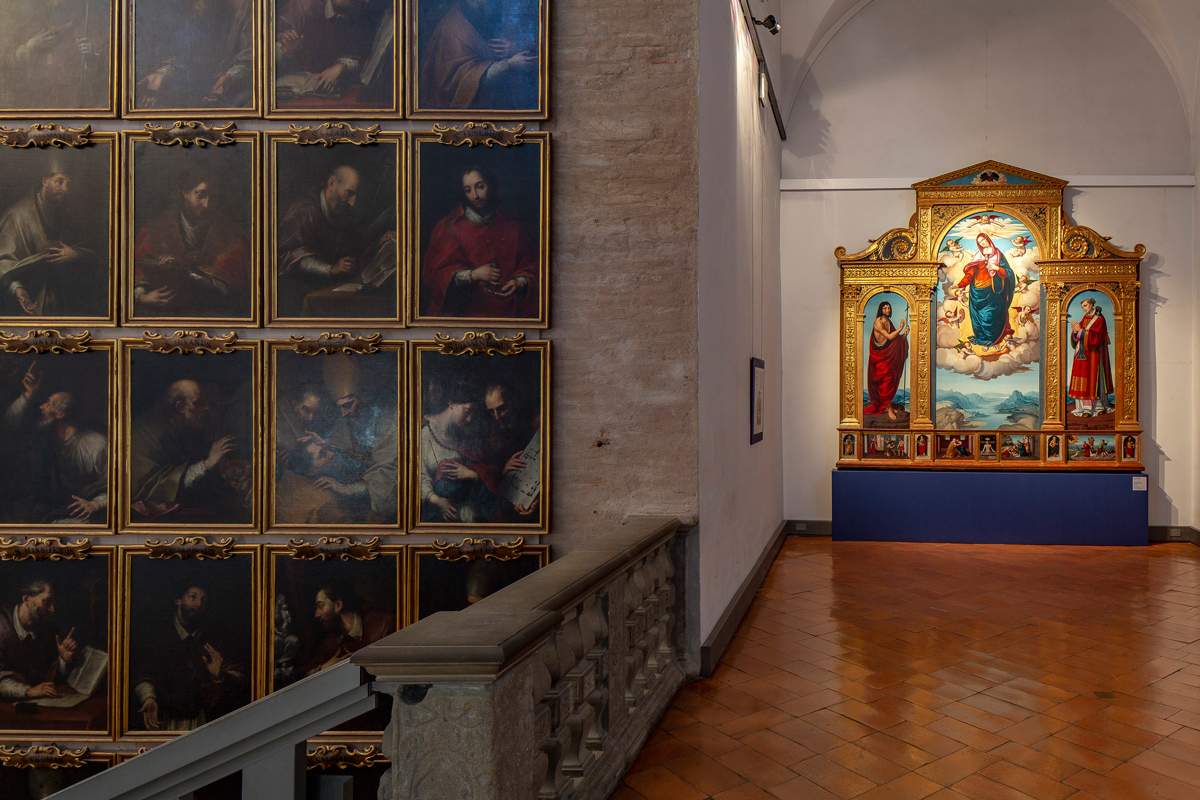
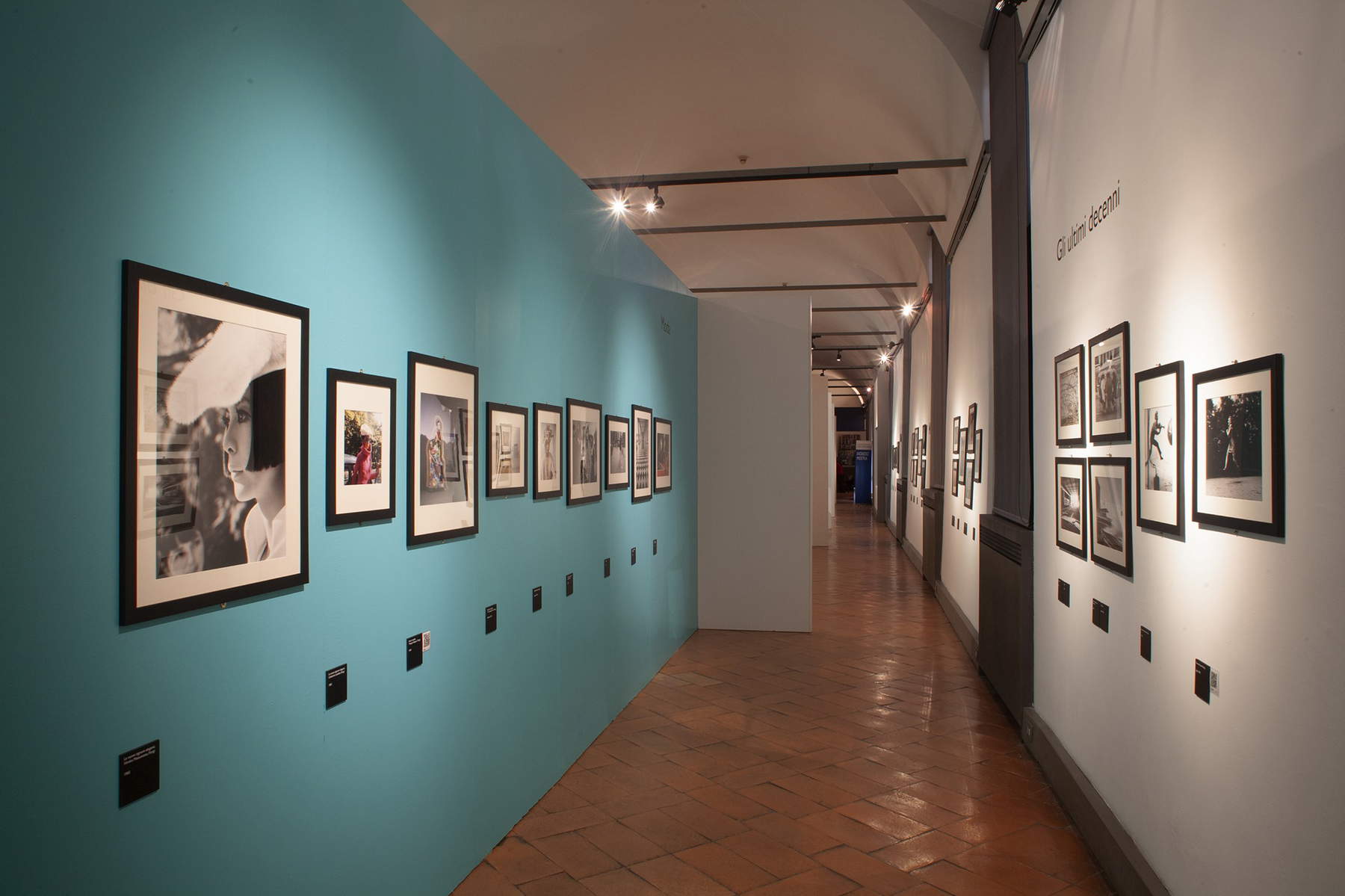
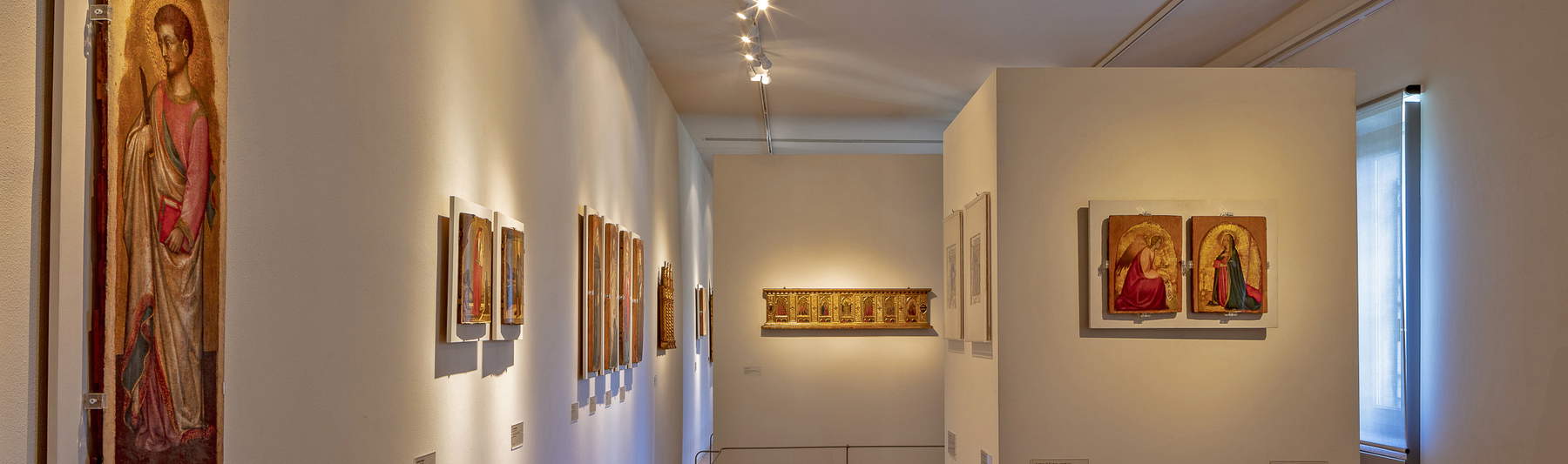
The Museo Diocesano has been playing with the tension between history, spirituality and contemporaneity for years. How would you define today the role of a museum of sacred art in a city like Milan, perceived as increasingly international?
The problem is that we live in a society that runs very fast and often invites us to stop on more immediate satisfactions: success, career, entertainment. All of these are legitimate, of course, but they do not exhaust the deeper question of existence. Sooner or later, if one is serious with oneself, that question emerges: what do I really desire? What can make me happy? Is there a meaning to life or does it all end there? I believe that the task of culture lies right here. Not in providing forced answers, but in reopening the questions. This applies to a museum as it does to literature, music or theater. There are works that, when you really encounter them, force you to stop and ask yourself where that beauty leads, what it is trying to tell you. In this sense, even a diocesan museum, in an international city like Milan, can have a very specific role: that of being a place where you allow yourself time to question. Not necessarily to all arrive at the same conclusions, but to reactivate that dimension of research that belongs to man as such. And it is precisely this that allows us to speak to many; because when we entrench ourselves in closed identity positions, we no longer engage in dialogue. At the same time, however, identity should not be erased. If you know where you put your feet, if you know what story you come from, it becomes much easier to really meet the other person. Then there is an aspect of faith that is often forgotten. People think that faith only gives answers, when in fact it also teaches how to ask questions. If a person does not ask questions, faith itself becomes something empty. And so the museum can become just that: a place where those questions come up again, within an aesthetic experience that speaks to anyone, believer or not.
Is there a work in the permanent collection that, over time, has taken on a different meaning for you, perhaps a more complex or more problematic one, in part because of the ongoing confrontation with the public?
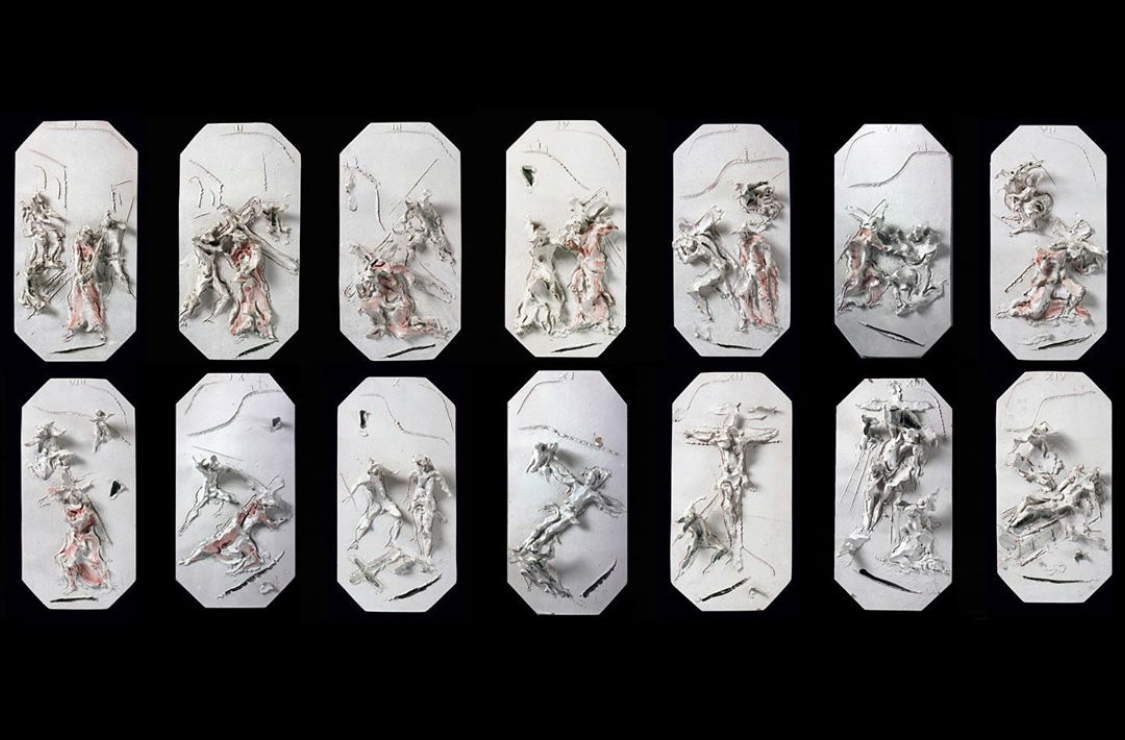
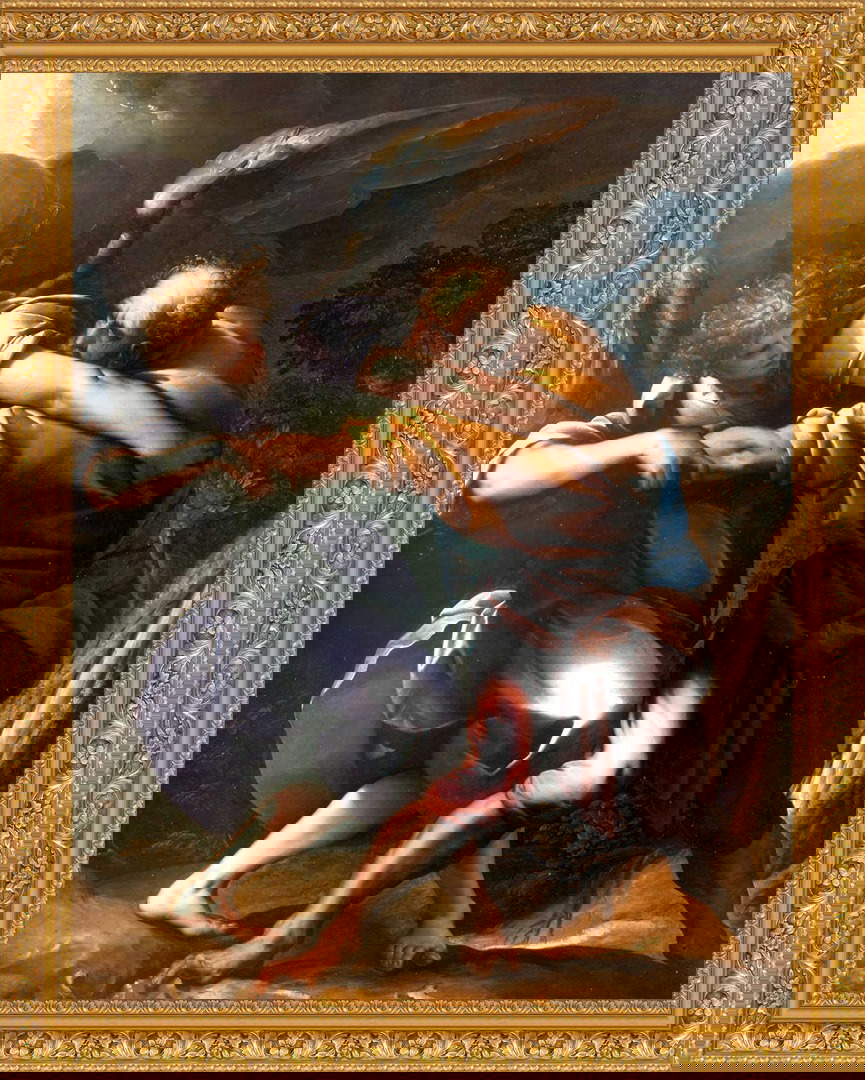
Can I name two? Because for me they are both works that also represent an ongoing challenge, works that over time have seemed more and more complex to me. The first is Lucio Fontana’s Via Crucis, which I love very much. It is a work that constantly questions me. Fontana is not a religious man in the confessional sense of the term, yet he finds himself confronted with the theme of the sacred, which is still one of the great themes with which artists measure themselves. In that Stations of the Cross he begins to introduce the very sign that would later become his most famous legacy: the cut. When we received the work and exhibited it for the first time I was very struck by this aspect. Those cuts, which in art history have become his best-known gesture, are not just a spatial idea or a formal experiment. They are also the idea of an opening, of a gash that hints at something beyond the material. We return once again to that question that runs through all art. We don’t know what is beyond, but maybe there is something. As he himself said, they are holes and that’s where the light comes in. The fact that Fontana introduced this sign just as he was working on the theme of the Stations of the Cross has always struck me very much. It is something I keep wondering about and about which I don’t have a definitive answer. He never explicitly stated that he was doing it for this reason. But it is interesting to note that those first sharp marks are inserted as traces of the ground beneath Christ’s walk. It is a detail that opens up many questions. Beneath the path of one who dies, but who for those with faith did not really die, appears this mark that suggests the possibility of a beyond. That cut seems to say that perhaps there is more. Another work I love very much is Morazzone’s Jacob’s Struggle with the Angel, which was on loan until March 15 at Fiera Milano for the Olympics. Morazzone is one of the greatest Lombard artists of the seventeenth century, and Lombard painting of that century naturally has a very important weight within our collections as well. That canvas is extraordinary. Roberto Longhi called it a tango step, and Gregori wrote beautiful pages about it, talking about the light, the snow, the tension that runs through the scene. It is a work that on the one hand brings together a whole tradition, with Leonardo and Gaudenzian echoes, but on the other hand introduces with extraordinary force a biblical episode that many people today no longer recognize. The story is that of Jacob returning from exile. During the night, as he crosses the ford of a river after his family has already passed, he is confronted by a stranger with whom he struggles throughout the night. Only at the end does he realize that the man is God. It is an incredible episode because it tells the idea of a man struggling with God. Eventually that struggle marks him, wounds him and changes his name. It is a very powerful image: a man who reaches to the bottom of the truth of himself through a challenge and through that very struggle is transformed. The idea that a struggle may not lead to destruction but to change is a very strong thought. Morazzone depicts it with an extraordinary dynamic, with a physical tension and a very powerful light. It is a painting that I love very much because it tells just that. A man who, when he is really a man, can engage in any struggle and come out not defeated but changed.
What has been the most difficult moment of your experience as director and what has been the most rewarding? In particular, is there an exhibition or publishing project that you feel marked a turning point in the life of the Museum?
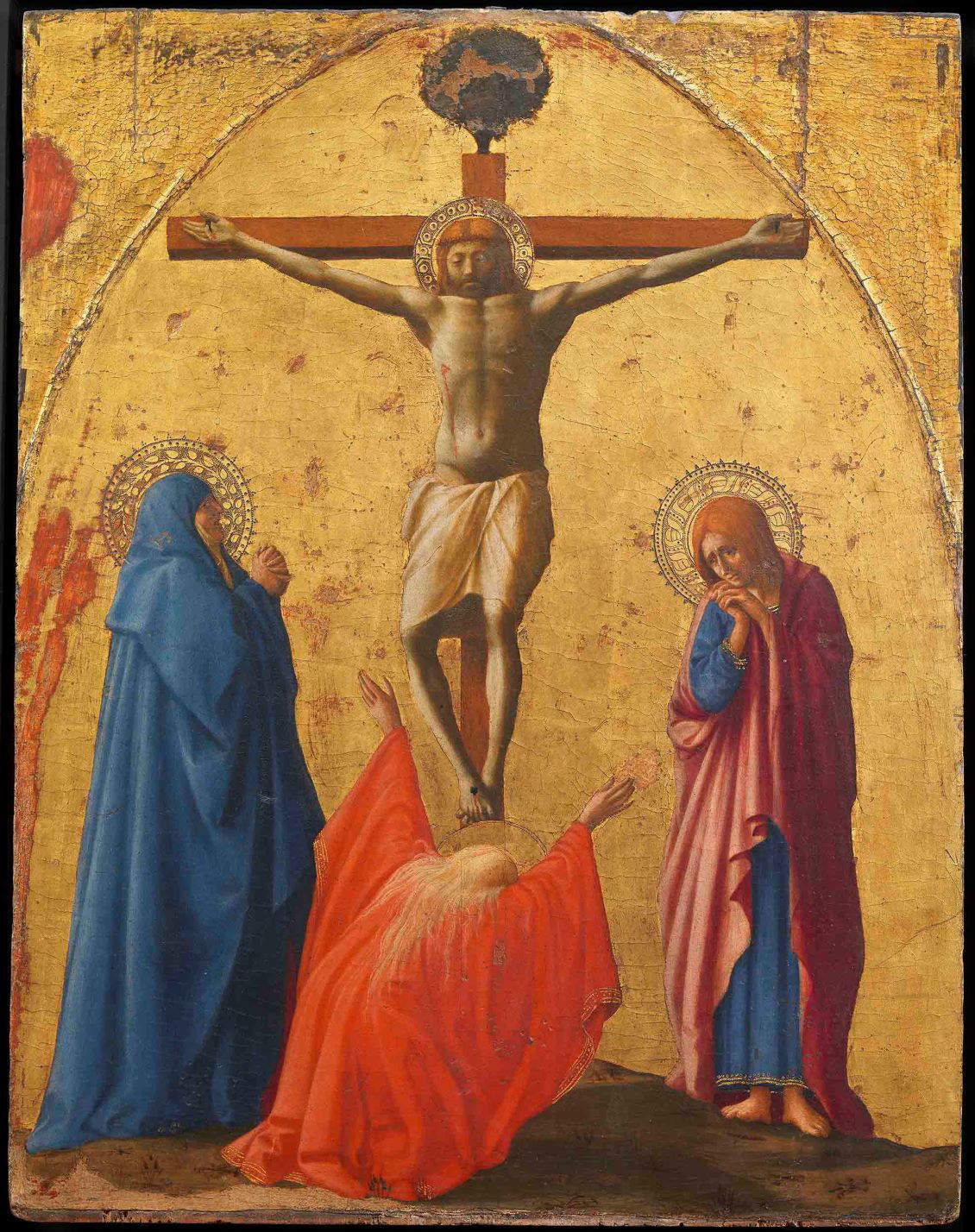
The most difficult moment? Without hesitation I would say the Covid period. Not so much for an abstract reason, but because it came just when the museum was finally entering a phase of full maturity. I became director in 2017, and the first programming I really set up was in 2018. We were coming from a complex period for a number of reasons, and so the work of the first few years had mainly been a reconstruction job: rebuilding a relationship with the public, getting ongoing programming back on track, getting sponsors back, giving the museum back some stability. In 2020 we had a very real sense that that work was finally bearing fruit. That was the year when we thought we could exceed some important goals, including in terms of visitors. Then, like everyone else, we stopped in February. Suddenly. The feeling was really to see a process that seemed to have just entered its most promising phase come to an abrupt halt. It was a very hard year. However, paradoxically, it was also one of the most significant moments of my experience. It may sound strange to say, but that very sudden interruption forced me to ask myself a very radical question: what, after all, should the task of a museum be? What does it really mean to run a cultural institution? At that moment I understood more clearly that the museum cannot simply be a place of preservation or exhibition, but must fully assume a service function. And then the question became another: what can a museum do for people even when its doors are closed? A number of initiatives have emerged from this reflection, but above all, our way of thinking about museum work has changed. And the interesting thing is that this attitude did not end with the end of the health emergency. Somehow it remained, simply taking different forms. That is why I would say that the most difficult moment was, at the same time, also one of the most fruitful. It was a halt that forced us to really stop, to reconsider our priorities and to question more deeply the meaning of what we were doing. As for a project or exhibition that marked a turning point in the life of the museum, however, it is always difficult to point to just one. Every exhibition leaves a trace, every project opens a path. However, if I have to think of a particularly significant moment, the exhibition dedicated to Masaccio comes to mind. Also because each of us inevitably has our own works of the heart, and Masaccio’s Crucifixion has always been among mine. My background is very much related to the Renaissance, and so having the opportunity to host that work was for me one of those really extraordinary moments that, in the life of a museum, rarely happen. Of course over the years we have had many loans of the highest caliber, but in that case there was a special circumstance. Masaccio was exhibited alone, but in the exhibition itinerary (we were in the centenary of Giovanni Testori) we had decided, together with Giuseppe, to place at the exit of the room the text that Testori had dedicated to Magdalene. The piece occupied an entire wall. That choice turned out to be decisive. I would observe the behavior of the visitors: they would read the text and then return to look at the painting. At that moment something very strong happened; people were moved, some even came to tears. It was at that moment that I had a kind of intuition. I thought that if a contemporary mind like Testori’s could touch so deeply the hearts of people looking at an ancient work, then maybe it was worth trying to build more such dialogues. Involving not only art historians, but also writers, contemporary artists, thinkers. In a way, the challenge was born there. From that moment we started to work more and more on the idea that a work can become the center of a constellation of different readings. Not only art-historical, but also literary, theatrical, philosophical. On that occasion, for example, we had organized two theatrical moments in which Walter Malosti read Testori’s texts dedicated to Magdalene. Even today we continue to move in this direction. This year, for example, we will return to intersect art and literature with a lecture by Don Paolo Alliata, who will address the theme of death through a text by Tolstoy. The idea, after all, is always the same: to recognize that around a work there is never only one level of interpretation. One work can become the starting point for many different narratives, and it is precisely from this interweaving that comes the depth of insight that a museum should seek to offer its audience.
Not too long after, you began working on exhibitions that juxtapose ancient works with contemporary proposals, as in the very recent case of Hans Memling and artists of today. What are the main curatorial challenges in preserving a sense of sacredness without making everything merely comparative?
We do a lot of work on the subject of the contemporary, especially at Easter exhibitions, but always in relation to an ancient work. What we are interested in is whether an artistic sensibility of today can help us enter even more deeply into the meaning of those images. Artists who possess a true sensibility, and therefore also a great heart, often carry within themselves very radical questions and, in many cases, also deep wounds. This is precisely why they are able to go deep into the human. When this happens, the dialogue with the ancient work becomes not just a formal confrontation, but a real challenge. The curatorial difficulty lies precisely here. The risk, when juxtaposing works from different periods, is that the juxtaposition remains superficial: a merely aesthetic suggestion, a similarity of forms. Instead, we are interested in understanding whether the contemporary artist is willing to really let himself be questioned by the masterpiece in front of him. From this point of view, one can almost always do interesting work on a great masterpiece. The real question is finding the right artists. It is an ongoing research work, and in recent years we have worked a lot with Stefano Raimondi Frangi, who knows deeply the work of many contemporary artists. He is the one who identifies and proposes the figures with whom to start this dialogue. Then together we consider whether that artist can really relate to the ancient masterpiece, allowing himself to be questioned by that image and the theme it carries. When this happens something very interesting happens. The artist does not try to imitate the past (which would be impossible, because the same cultural coordinates no longer exist today) but reacts to that image from his own sensibility, his own history, his own time. And then each contemporary work opens a different question within the same theme. It is as if a “theme within a theme” is generated: each artist enters the heart of the subject and goes through it according to his or her own experience. For me this has always been very fascinating, first of all as a personal experience, and I hope it is also fascinating for those who visit the exhibitions. Because in this way the ancient masterpiece does not remain something distant or museum-like, but returns to being a living question that continues to question us today.
An important part of contemporary philosophy (I am thinking of Jean-Luc Nancy or Paul Ricoeur) has reflected on an idea of the sacred that is not dogmatic, linked to relationship and limitation. Does it seem to you that the museum, more than the church, has become one of the places where this form of sacredness can still be traversed?
If we understand the sacred as something that exceeds what we can reach, but at the same time gives meaning to reality, then yes, the question becomes very interesting. It must also be said, however, that Church and Museum have different functions and cannot replace each other. In this case the sacred can be thought of as a limit, but not as a sharp, defined limit: rather as a fuzzy threshold, something that points to a beyond. I am reminded, as we said earlier, of Fontana’s cut. That gesture that suggests that something exists behind the surface that we do not see, that remains mysterious. Perhaps, rather than speaking of the sacred, we could speak of mystery. A mystery that, however, is not separate from reality: it lies beyond, but continues to deal with it. And this is, after all, the most interesting point; for it would seem to be a contradiction: either something is outside of reality, or it belongs to it. Instead, here it is really about holding both dimensions together. It is a beyond that nevertheless continues to question us within the concrete experience of reality. In this sense, the museum, through art, can certainly become one of the places where this question manifests itself. Art has always had the ability to open up this questioning space: to suggest that there is something that exceeds the visible and yet deeply concerns our experience of the world. This also happens in the case of sacred art understood as iconography. The museum makes it possible to rediscover a tradition and to question a fundamental question: why has man, for centuries, felt the need to produce these images? Why has he commissioned works, built places, thought of art as an inseparable dimension of his own life? And inevitably from here another question arises: why do we struggle so much more today to conceive of art in this way? What has changed in our experience of the world? In what sense is our time marked by greater fragmentation? I think the task of the museum is precisely to facilitate this reflection. Not so much to accompany people toward a spiritual passage, because that passage inevitably remains personal, but to create the conditions for this question to emerge and be shared. In this sense, yes, the museum can be one of the places where this questioning continues to happen. Not as a definitive answer, but as an open space for research and awareness. Terence said “homo sum: humani nihil a me ali̯enum puto” or “I am man: nothing that is human is foreign to me.” It is a sentence that, in my opinion, should be carved in stone. I, somehow, really feel it as something that should always be kept before my eyes, and it is impressive to think that the person who wrote it did so a hundred and sixty years before Christ. Yet within that sentence is a truth that continues to speak to us with extraordinary force. There is nothing that is really foreign to man, nothing that does not relate in some way to his deepest experience. For man carries within himself a question that never ceases to resurface: a question of meaning, of significance, of orientation. It is a question that belongs to man in a radical way. You can offer him all forms of entertainment, all possibilities of distraction, all that contemporary life is capable of producing, and yet there always remains something that continues to disturb him. A question that cannot be silenced. If one is honest with oneself, that question remains. It remains like a silent woodworm, something that keeps working deep within. And that is where, after all, the search comes from: philosophy, art, religion, all the forms through which man tries to give form to that original restlessness. For nothing that is human, really, is foreign to us.
Many museums (including ecclesiastical ones) choose the path of reassurance between beauty and pacification. The Museo Diocesano in Milan, on the other hand, has often worked on harsh images, on wounded bodies, on non-reconciling themes. Is this a choice or an inevitable consequence of the present?
Today we say less and less about “the public” and more and more about “audiences,” and in my opinion it is right. A museum cannot think of addressing a single, ideal interlocutor: there are different people, different sensitivities, different histories. The attempt should be to try to talk to everyone. Otherwise we risk talking only among ourselves. And when we talk only among ourselves, in the long run we don’t even grow anymore. One remains locked inside a self-referential circuit that does not really produce confrontation. Having said that, however, dialogue becomes possible only if we start from a clear identity, and on this I continue to insist a lot because dialogue does not mean becoming a weather vane that turns with the wind. It does not mean that everything goes the same way. It means starting from what you believe in, from a value system that you recognize as your own, from something that you feel is solid. Then, of course, on many things you can dialogue, you can question nuances, interpretations, but there is also a core that remains firm. If one is a person of faith, the core of one’s faith is not questioned: one continually questions it, verifies it, but it remains a firm point. And that is precisely what makes the encounter possible. Because if I know where I start from, then I can really meet the other. The other person interests me because his heart beats exactly like mine. When one starts from this awareness it becomes possible to deal with even difficult images, hard topics and wounded bodies. Not to provoke or to disturb gratuitously, but because those dimensions are part of the human experience. In this sense, photography for our Museum has been a very important tool. Photography has a special ability: it forces us to look at today. When you exhibit very strong photographic works (I am thinking, for example, of war images or works that tell of social fragilities) you inevitably wonder what is happening in the world now. It is easy to look at the past with distance and judge what has happened. It is much more difficult to recognize similar dynamics when we are immersed in contemporary history. That’s why in recent years we have been working on exhibitions that also address very complex issues: I’m thinking of the work on the homeless, on prisoners, or the new Alzheimer’s exhibition. Some might ask why a museum should deal with these realities, but the answer is that these images pose questions. When you look at a person with Alzheimer’s disease, for example, you wonder what it means to stand in front of someone who no longer recognizes you. Has that person become someone else or is that person still the same person, simply changed? These are very deep questions that touch the heart of the human experience. And in the end, that is always where you return: to that mystery that inhabits every person and remains, even when memory fades or when life becomes fragile. Perhaps the museum can be one of the places where we try to do this: not sugarcoat reality, but really look at it, and at the same time create a space where those who enter can feel welcomed, free to confront those questions.
In recent years, the Museum has opened with evening formulas and appointments such as the Cloister Bistro aperitif. How do you assess the effectiveness of these experiments in making art accessible without trivializing it?
The idea of evening openings and appointments at the Chiostro Bistrot also stems from a very concrete consideration: a museum has to stand. It has to do so culturally, of course, but also from the point of view of sustainability, and that means questioning audiences, city times, and how people experience spaces. By simply looking at the data we had noticed that in the summer months our audiences were decreasing very noticeably. And it was understandable: a large part of regular visitors are the more institutional audiences, schools or organized groups, which naturally disappear in the summer. At that point we asked ourselves how to intercept a different audience. Perhaps younger, or at any rate people who experience the city at other times and with other habits. The idea was to use a seemingly simpler, more immediate language, closer to the forms of sociability that attract this kind of audience. But there was also another intuition. Milan in the summer changes pace: people like to go out more in the evening, when it is less hot and the city relaxes a bit. So we thought the museum could become a space to be experienced at that time as well. The cloister, of course, lent itself very well to this kind of experience. If there is a beautiful place to stop, sit, have dinner, have an aperitif and maybe come back the next day with other friends, then that place begins to be perceived almost as a home. I notice it myself when I happen to be there. I see people coming back, making appointments, using the museum as a meeting space, and even the activities we organize during the summer such as lectures, meetings and debates are born with this very intention: to invite people to come back. Some people come to hear a lecture, some to see an exhibition, some simply to meet and be together. And slowly the museum becomes one of the places people consider when they think about what to do in the city. In terms of effectiveness, the results are very positive. The cloister remains open about five months a year, and it is because of these activities that the summer audience has stabilized a lot. Today, the monthly average of visitors in the summer months has become quite comparable with that of other times of the year. Of course, some initiatives work more than others. There are guests that attract more audiences, evenings that go better, others a little less. And then there are very simple variables, like the weather: if it rains, attendance inevitably drops. It’s part of the life of a museum, as of any place that tries to stay alive within the city. In the end, the idea is also very simple. With the formula of an aperitif in the cloister, one can see an exhibition and stop for a drink while spending an amount that, in Milan, is often that of a single spritz. So maybe a person thinks: instead of just having an aperitivo, I’ll also go into the museum. If he comes back another time with friends, or decides to see another exhibition, it means that the museum has really started to become a place that people feel is also a little bit theirs.
From your observation of the world, how has the public’s view of art changed in recent years? Do you notice a greater superficiality, or a different hunger, perhaps more confused but more urgent?
In general, I have the impression that there is a different hunger today. A desire for beauty that is somehow re-emerging. I seem to sense it somewhat at all ages, and it is not just a personal feeling. Even looking at the data, listening to colleagues and looking at the numbers reported by many museums (I am thinking for example of civic museums) there really seems to be a renewed demand for art. This makes our work more interesting but also more challenging, because if there is such a desire, then you have to have the courage to make proposals that live up to that desire. In a sense it also means being able to raise the bar. For us, for example, the decision to take back the Masterpiece for Milan and to build some more ambitious exhibitions, I’m also thinking of the Easter exhibitions, was just that. An attempt to raise the level of the proposal. It was not at all a foregone conclusion. At the beginning I also had some fears, wondering if the public would really grasp the sense of the work we were doing or if they would think of one of those dialogues between ancient and contemporary constructed in a somewhat superficial way, where the juxtaposition remains only formal. The risk always exists. Sometimes the dialogue between works from different eras is limited to an aesthetic similarity and does not really get to interrogate the deeper meaning of the images. The question was just that. Will the audience understand that the proposal here is about meaning and not simply about form? My impression is that this passage has been understood. Of course, one can never be absolutely certain, but it seems to me that the audience’s response has been very attentive. In parallel, we have also tried to broaden our gaze to new audiences. Photography, for example, was one of the first tools in this direction. The museum was no stranger to photography even before my direction, even the previous director had put on some exhibitions, but in recent years this language has helped us intercept different sensibilities and even younger generations. Then there is another area that has become increasingly central for us, that of fragilities. We didn’t tackle it right away. It was a path we started when we realized we could support it with greater awareness. I am talking about social frailties but also about different forms of disability. In this sense, the project carried out with Fondazione Alia Falck, which allowed us to make some works in the permanent collection accessible through different languages, was very important. Today a dozen works are accompanied by reading tools designed for different audiences, such as content in LIS, Descrivedendo, easy to read and alternative augmentative communication. These are essential tools for people with sensory disabilities or cognitive difficulties. Alongside this, we also tried to address another very real issue, the possibility of getting people who cannot afford a ticket into the museum. This is not an obvious issue, because a museum still has to support itself financially. Sponsorships are important but they are not enough; ticketing remains a necessary component of the institution’s balance. Thanks to the support of the Alia Falck Foundation, we are able to welcome several groups every year for free, groups that we intercept or that arrive upon request. I am thinking of groups followed by Caritas, the Community of Sant’Egidio, the terminally ill or schools from more fragile backgrounds. For us it means trying to remove a filter that is often invisible but very strong: the economic filter, which is always also a social filter, and trying to make sure that the museum can really be a place open to everyone.


The author of this article: Francesca Anita Gigli
Francesca Anita Gigli, nata nel 1995, è giornalista e content creator. Collabora con Finestre sull’Arte dal 2022, realizzando articoli per l’edizione online e cartacea. È autrice e voce di Oltre la tela, podcast realizzato con Cubo Unipol, e di Intelligenza Reale, prodotto da Gli Ascoltabili. Dal 2021 porta avanti Likeitalians, progetto attraverso cui racconta l’arte sui social, collaborando con istituzioni e realtà culturali come Palazzo Martinengo, Silvana Editoriale e Ares Torino. Oltre all’attività online, organizza eventi culturali e laboratori didattici nelle scuole. Ha partecipato come speaker a talk divulgativi per enti pubblici, tra cui il Fermento Festival di Urgnano e più volte all’Università di Foggia. È docente di Social Media Marketing e linguaggi dell’arte contemporanea per la grafica.Warning: the translation into English of the original Italian article was created using automatic tools. We undertake to review all articles, but we do not guarantee the total absence of inaccuracies in the translation due to the program. You can find the original by clicking on the ITA button. If you find any mistake,please contact us.



















 IT
IT FR
FR DE
DE ES
ES CN
CN


