




by Redazione 04/12/2025


Categories: Market / Disclaimer
Christie's Classic Week London opens with a historic moment: the Fabergé Winter Egg is sold for £22.895 million, setting the third world record for the work. The auction, which includes Fabergé and Old Masters works, totals more than 40 million pounds.

Christie ’s Classic Week in London kicked off yesterday with an event destined to go down in the history of the international art market thanks to the sale of TheWinter Egg by Fabergé, which sold at auction for 22,895,000 pounds, equivalent to 26,008,720 euros, a record for a Fabergé egg. It is also the third world record set by this work at three separate times in its history, all of them achieved, moreover, at Christie’s. The hammer blow on the sum elicited spontaneous applause in the hall, confirming the historical and artistic importance of this masterpiece that has captured the imagination of collectors, experts and the international public. The opening of Classic Week closed with an evening total of 40,515,964 pounds, or 46,026,135 euros.
The Fabergé section totaled £27,803,964, selling 92 percent of the lots and 98 percent of the total value. Notable pieces included an extremely rare hardstone model created by model maker Boris Fredman Cluzel in 1916, which sold for 1,514,000 pounds. In addition, an extremely rare album from Henrik Wigström’s workshop, dated 1911-1916, collecting drawings and designs from Fabergé’s last years, sold for £508,000. The sale of these lots is not only a testament to the creativity and technical mastery of the Maison’s craftsmen, but also confirms collectors’ interest in documents and objects of great historical importance.


Margo Oganesian, head of Christie’s Fabergé and Russian Works of Art department, commented on how the auction house is honored to have handled for the third time the sale of the Winter Egg described as one of the finest examples of Fabergé production on both a technical and artistic level. Oganesian stressed the uniqueness of the occasion, considering that only six other imperial eggs are currently in private hands, a circumstance that helped make the sale a historic event and one of great international interest.
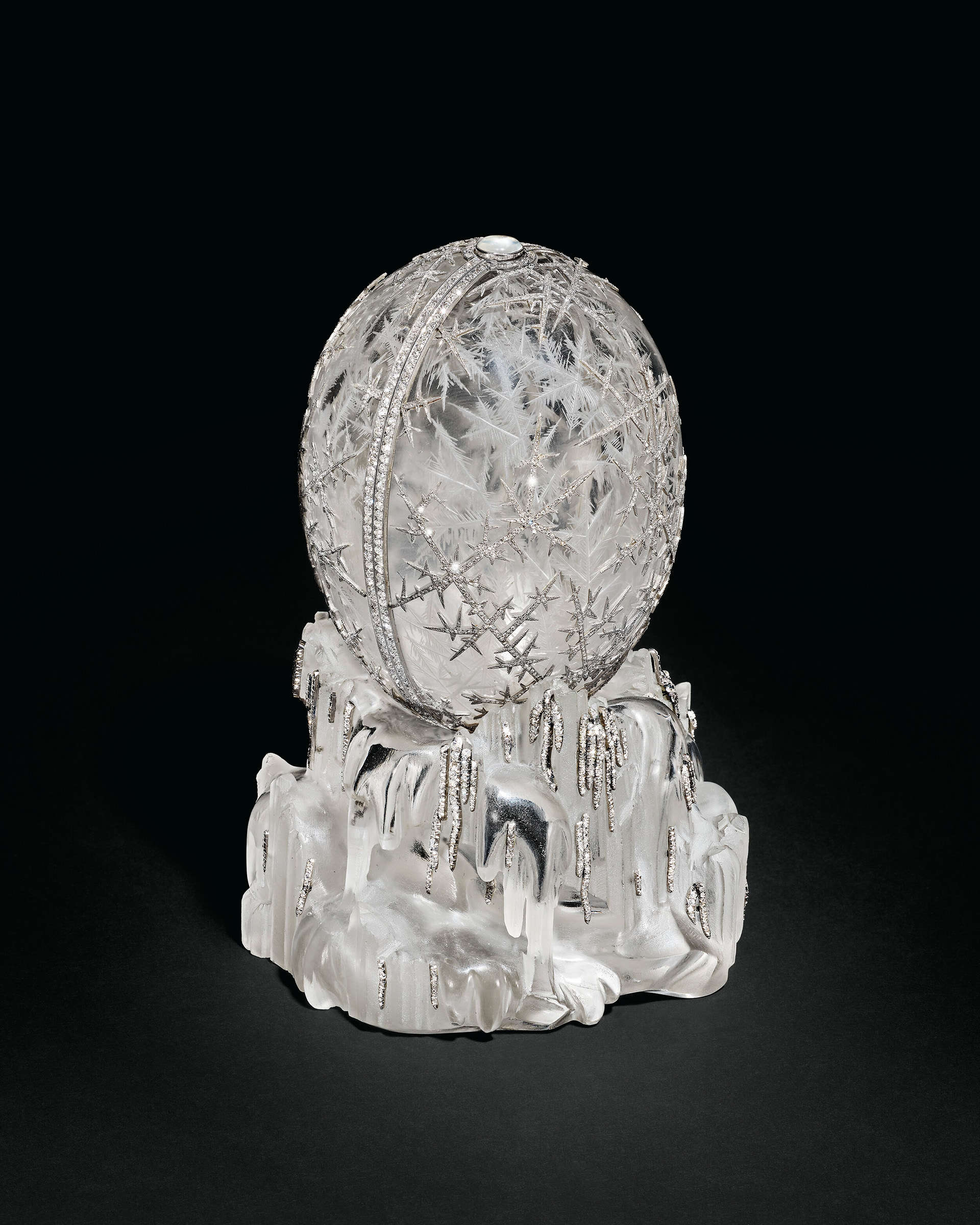
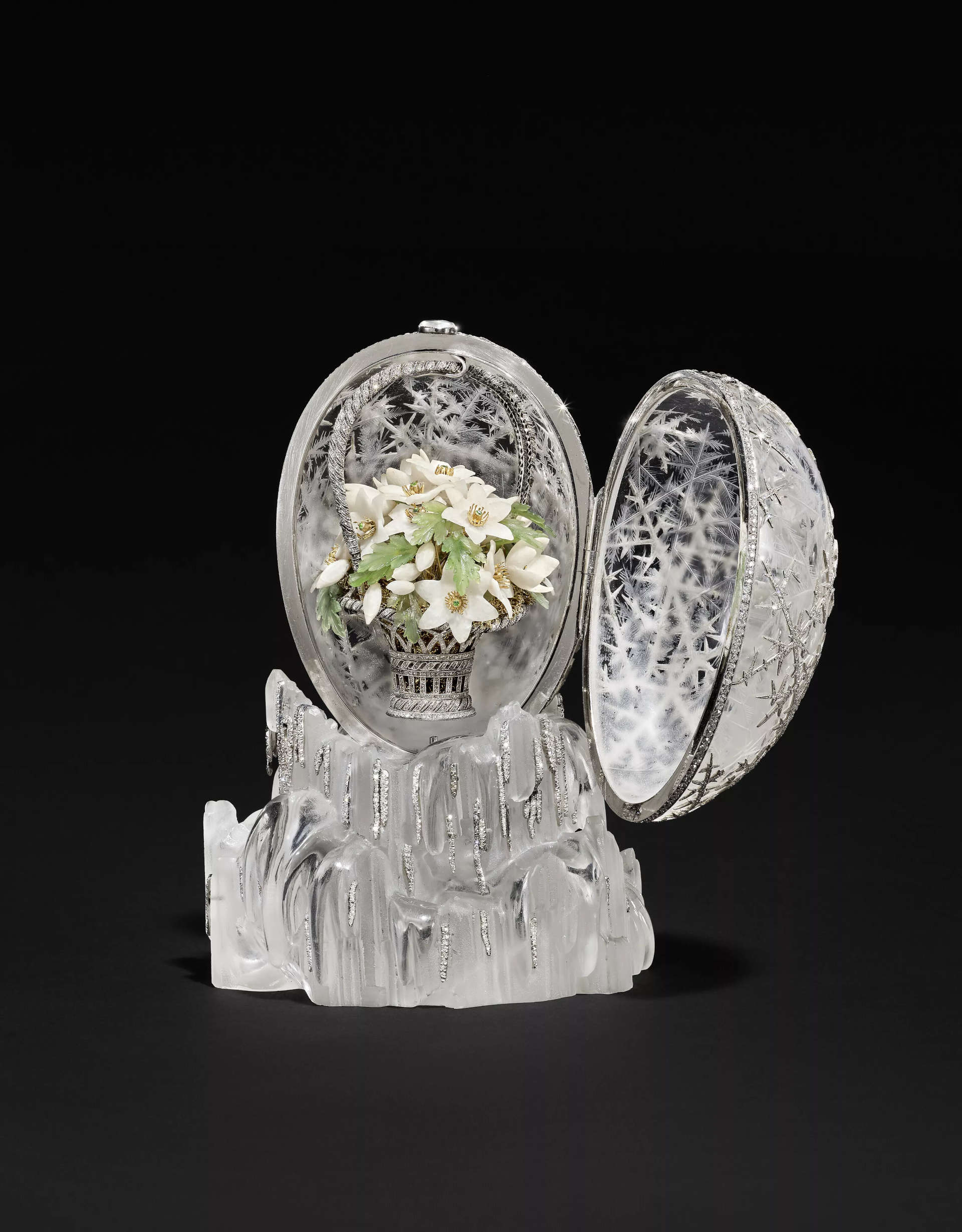
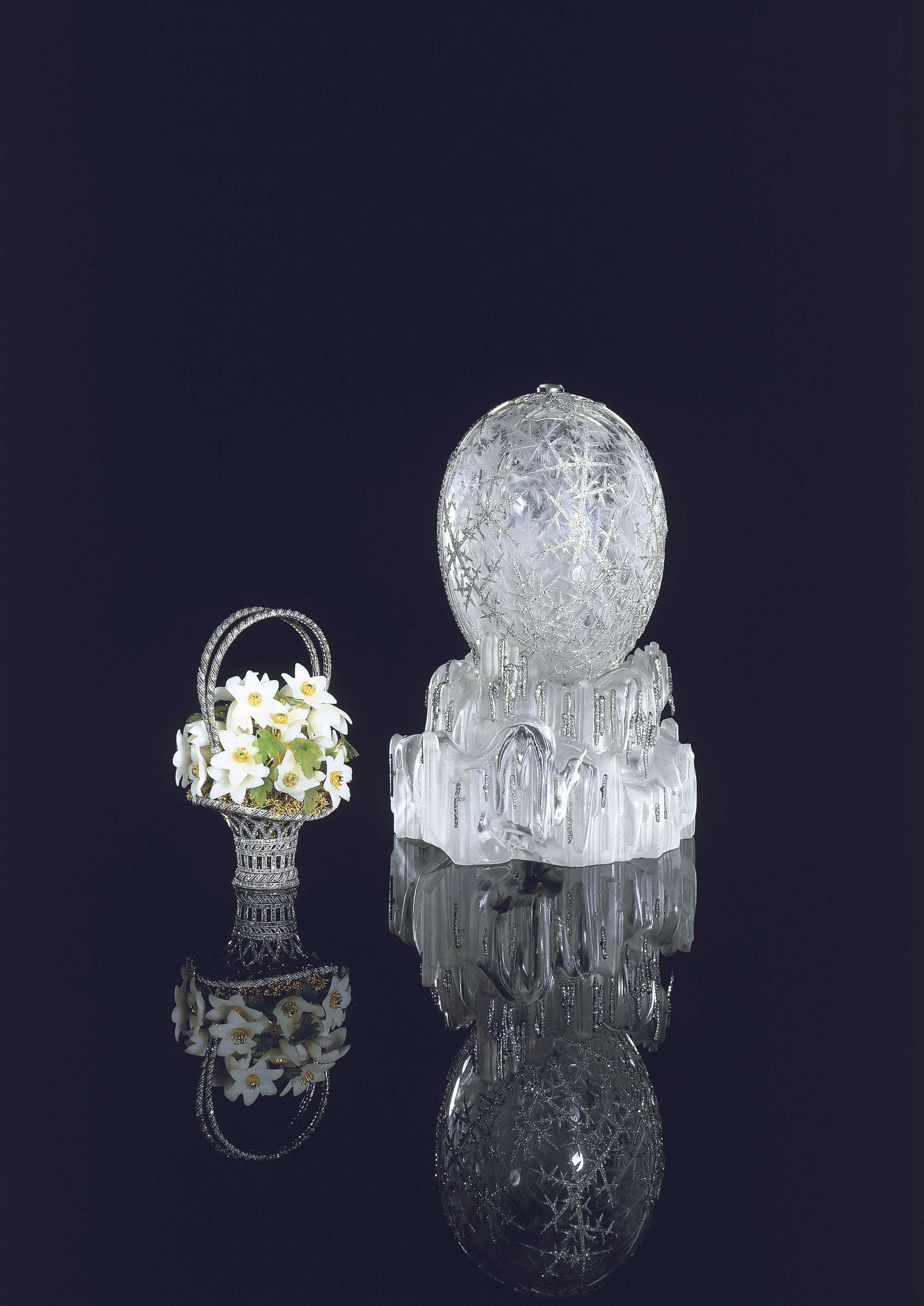
The Winter Egg commissioned in 1913 by Tsar Nicholas II as an Easter gift for his mother, Grand Duchess Maria Feodorovna, represents one of the most original and luxurious creations of the Maison Fabergé. Designer Alma Theresia Pihl, among the few women to work for Fabergé, conceived the idea, which was executed by her uncle, master Albert Holmström. The egg, carved from rock crystal with engraved ice motifs on the inside, is adorned on the outside with platinum snowflakes studded with pink diamonds and vertical edges also in platinum with diamonds, concealing a side hinge. A moonstone cabochon bears the date 1913. The rock crystal base simulates a block of melting ice, decorated with diamond-studded platinum rivulets, in the center of which is a platinum plug supporting the egg. Inside, suspended from a platinum hook, is the so-called “surprise”: a double-handled basket made of platinum treillage studded with pink diamonds, filled with carved white quartz anemones, with gold wire stems and stamens, nephrite leaves and demantoid garnet centers. The base of the basket bears the engraving “FABERGÉ 1913.” The work was commissioned at an exceptional cost of 24,600 rubles.
The work symbolically embodies Easter and the concept of rebirth, and symbolizes the transition from winter to spring. Designer Alma Pihl, born in 1888, came from a family of Finnish jewelers, with close connections to the Maison Fabergé. Her career began in the workshop of her uncle Albert Holmström, where she made life-size watercolors of the maison’s designs as well as her own creations, including the 1914 Winter Egg and Mosaic Egg, now in the British Royal Collection. The idea for snowflakes was born while observing ice crystals from the window of his workshop, resulting in a motif that would become iconic in the history of imperial work.
Fabergé eggs, produced between 1885 and 1916, established the house’s worldwide fame. A total of fifty were made, including ten during the reign of Alexander III, given to the tsar’s wife, and forty by Nicholas II for his mother and wife. Currently, 43 of these masterpieces are preserved in major museums, while only seven, including the Egg of Winter, remain in private collections. Documentation by Franz Birbaum, Fabergé’s chief designer, testifies to the complete artistic freedom given to the artisans: each egg required almost a year’s work, beginning immediately after Easter and ending only at Holy Week the following year.
The provenance of the Winter Egg is among the best documented of all imperial eggs. After the 1917 Revolution it was transferred to the Kremlin Armory, from where it was sold in the 1920s by the Soviet government to European and U.S. collectors and dealers, often at prices far below its true value. Purchased by Wartski of London in the 1920s or 1930s for £450, it passed to Napier Sturt, third Baron Alington, in 1934 for £1,500, and later entered the collection of Sir Bernard Eckstein, only to be sold at auction in London in 1949 for £1,700. After disappearing in 1975, the egg was rediscovered in 1994 and sold by Christie’s in Geneva, setting the first world record for Fabergé at 7,263,500 Swiss francs. Eight years later, in 2002, it was beaten again at Christie’s New York, setting a new record at $9,579,500.
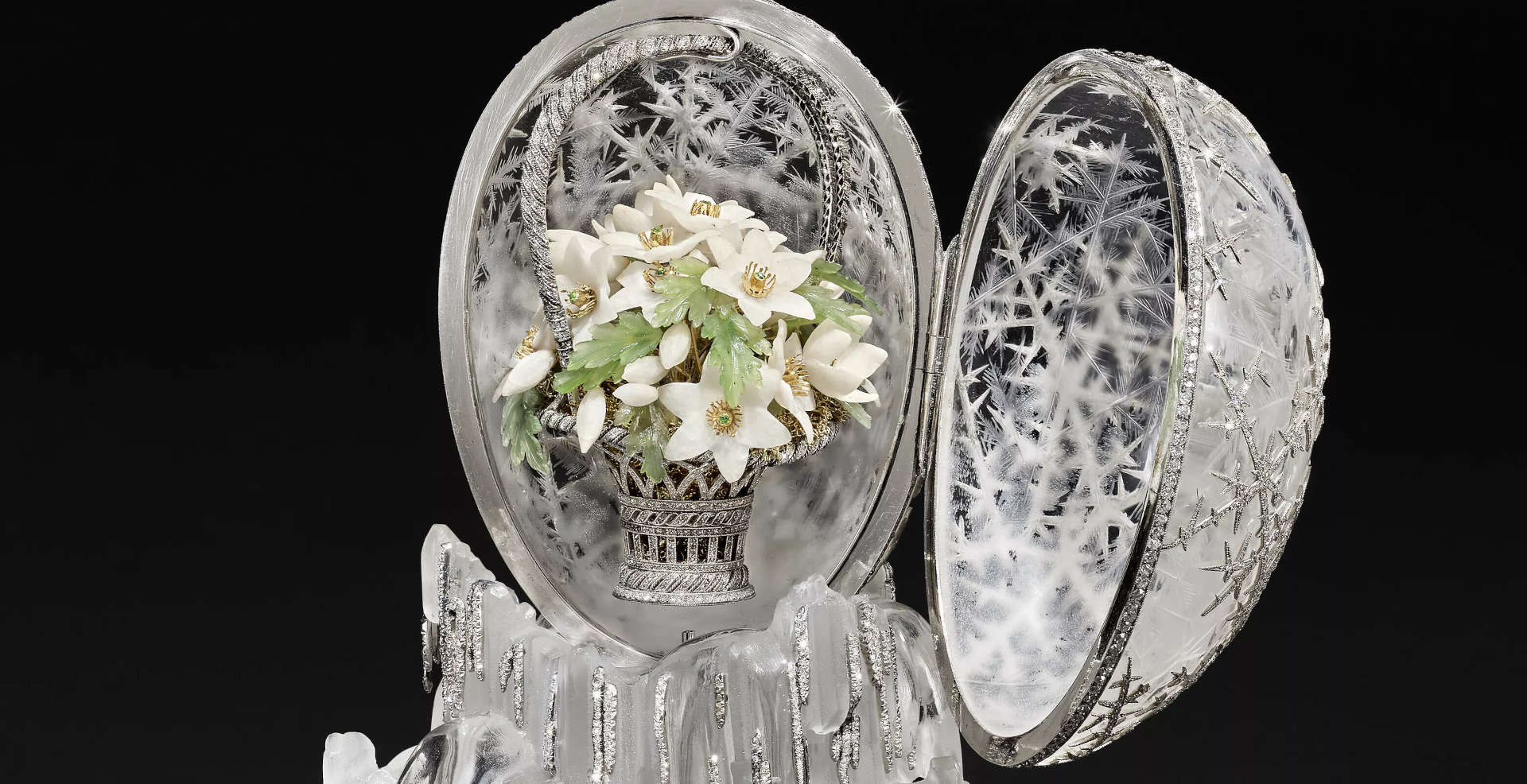 |
| Fabergé's Winter Egg sold for £22 million at Christie's, it's a record |
Warning: the translation into English of the original Italian article was created using automatic tools. We undertake to review all articles, but we do not guarantee the total absence of inaccuracies in the translation due to the program. You can find the original by clicking on the ITA button. If you find any mistake,please contact us.