



by Redazione 12/03/2026



Categories: Museums / Disclaimer
After the exhibition dedicated to Beato Angelico, the Museo di San Marco in Florence renews its exhibition itinerary and presents a new layout of the Sala dell'Angelico. The museum also welcomes a nucleus of works by Mark Rothko in dialogue with the frescoes of the monastery cells.
A dialogue between Beato Angelico and Mark Rothko kicks off in the halls of the Museo Nazionale di San Marco in Florence. Meanwhile, a premise: at the end of the exhibition dedicated to Beato Angelico(here is our review), the Museo di San Marco in Florence embarked on a significant phase of transformation that led not only to the refurbishment of the Sala dell’Angelico, but to a broader redevelopment of the entire visit itinerary. The project involved different aspects of the museum experience, with the aim of updating the scientific reading of the works and at the same time improving the accessibility and enjoyment of the spaces by the public.
Now, visitors entering the museum on the occasion of the new exhibition dedicated to Mark Rothko at Palazzo Strozzi will therefore find a profoundly renewed environment, in which the most recent acquisitions of art-historical studies dialogue with a layout designed to offer a clearer and more modern visit. The museum’s management has worked to translate the acquisitions that have emerged in recent years into the new exhibition arrangement, including some chronological and interpretive clarifications that have helped redefine the reading of the works. This process has led to a more coherent arrangement of the masterpieces and a more immediate narrative of the museum itinerary. Among the most significant examples of the new exhibition approach is the decision to present theArmadio degli Argenti without the early 20th-century frame that had long accompanied it. The removal of this element now allows a sharper view of the work and enables the public to grasp its structure and artistic value more clearly.


The renovation of the Angelico Room represents one of the central interventions of the project. The space holds thirty-three panel paintings by the famous friar painter, constituting the world’s largest and most important collection of panel works by the Dominican master. The new layout allows this heritage to be enhanced through an updated arrangement that takes into account the most recent studies and new critical interpretations.


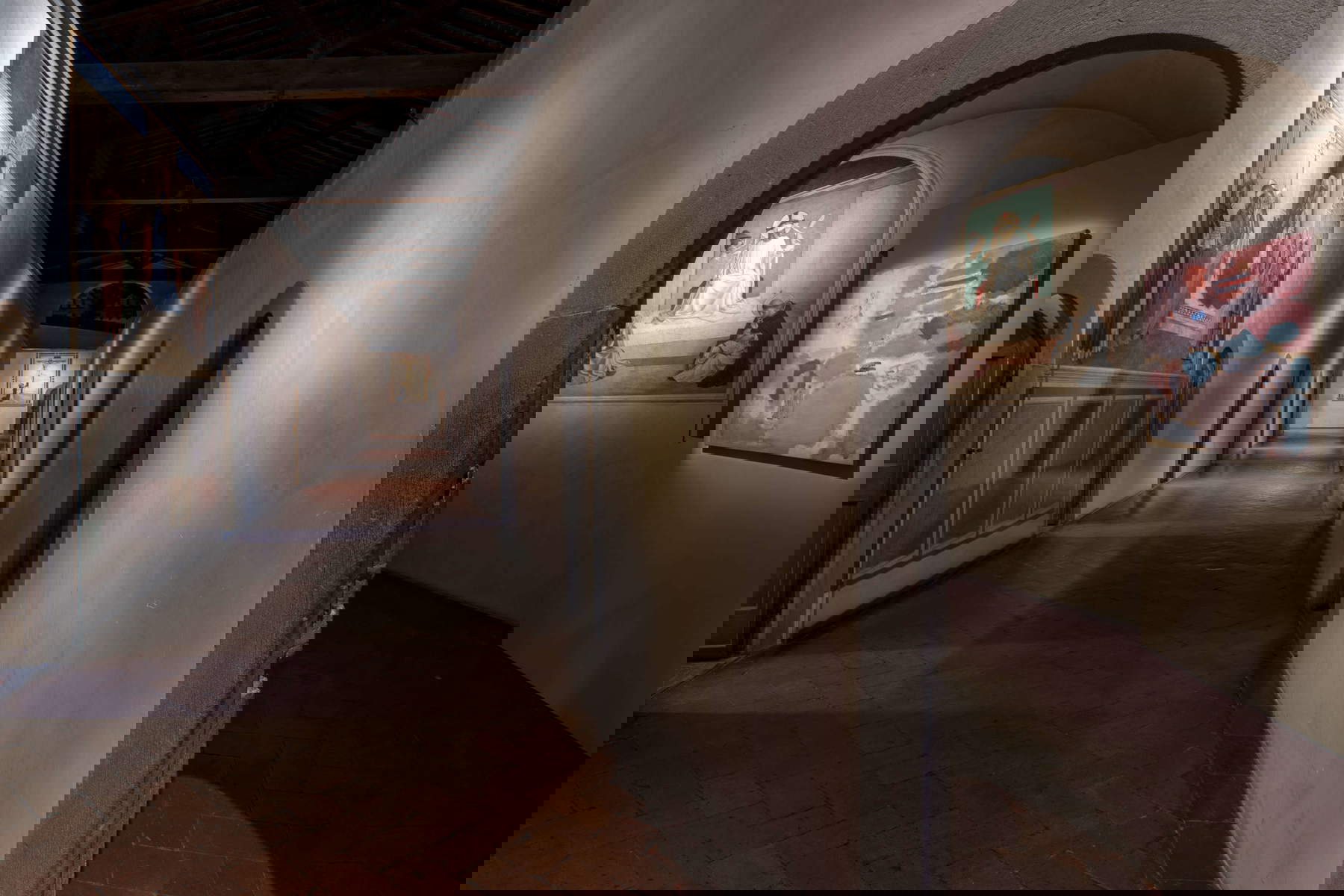
Among the most notable new works are some that had never been exhibited to the public before the recent exhibition dedicated to Fra Angelico. Prominent among them is the Franciscan Triptych of the Compagnia di San Francesco in Santa Croce, now reassembled in its entirety after restoration by the Opificio delle Pietre Dure. The restoration work has restored the work to its original configuration, allowing it to be presented alongside the shaped cross that recent studies have traced back to the master’s early production.
It is in this context of renewal that the presence of a nucleus of works by Mark Rothko from important international collections is inserted. The special section brings into dialogue five small-format works created by the American artist using different techniques and belonging to different moments of his production with five frescoes painted by Beato Angelico in the cells of the Dominican convent.
The choice of the works was guided by chromatic, material and, above all, spiritual affinities, with the intention of creating a comparison between two artistic languages distant in time but united by a profound contemplative tension. The dialogue between Rothko’s works and Angelico’s frescoes is developed along a path that passes through some of the most significant cells of the complex.
The route begins in Cell 1, where the Noli me tangere fresco is located, depicting the encounter between the risen Christ and Mary Magdalene in the Garden of Resurrection. The episode represents a moment of transition between the earthly and spiritual dimensions, evoked by the words spoken by Christ to Mary Magdalene. Alongside this fresco will be Mark Rothko’s 1958 work Untitled , on loan from the Collection of Christopher Rothko.
The visit continues in Cell 3, decorated with theAnnunciation with St. Peter the Martyr. The encounter between the angel Gabriel and the Virgin Mary marks the beginning of salvation history, while the presence of the Dominican saint recalls the spiritual dimension of the monastic community. Rothko’s 1954 work Untitled , from a private collection, will be exhibited in this space.
The tour continues in Cell 4, where Angelico depicted the Crucifixion in the presence of St. Dominic and St. Jerome. The scene places Christ’s sacrifice at the center and invites the viewer to meditation on the Passion. In dialogue with this fresco will be the 1958 work Untitled granted by the Collection of Kate Rothko Prizel and Ilya Prizel.
The next stage leads to Cell 6, decorated with the Transfiguration. The episode depicts the revelation of Christ’s divine nature through the manifestation of the light of glory, in the presence of the apostles Peter, James and John, the prophets Moses and Elijah, and the figures of Our Lady and St. Dominic. On display in this room will be the work Gethsemane, created by Rothko in 1944 and from the Collection of Kate Rothko Prizel and Ilya Prizel.
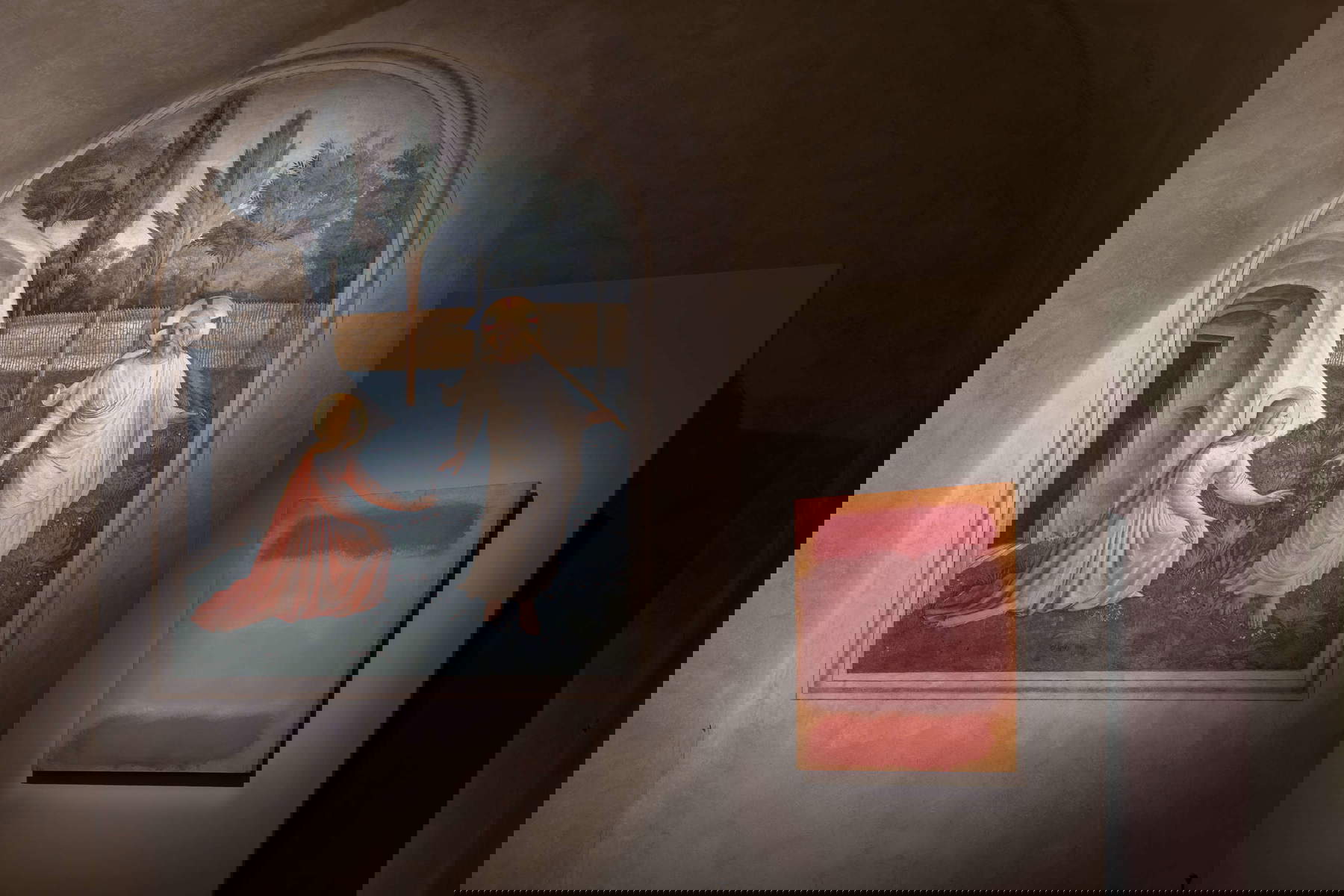
The tour ends in Cell 7, where Angelico painted Christ Mocked in the presence of the Virgin and Saint Dominic. The image recalls the meditation on Christ’s suffering and humiliation during the Passion. This space will feature the 1947 work No. 21 Untitled, granted by the Collection of Christopher Rothko.
The dialogue between Rothko’s works and Angelico’s frescoes is therefore part of a profoundly renewed museum, where the scientific reinterpretation of the collections, the attention to accessibility and the presence of a confrontation with contemporary art contribute to redefine the visiting experience, offering the public new keys to the interpretation of one of the most significant places in Florentine art history.
In addition to the new exhibition format, the museum now has a greater focus on inclusivity. The interventions were carried out thanks to funding from the National Recovery and Resilience Plan and have enabled a pathway to break down physical and cognitive barriers. New features include new access ramps, renovation of restrooms, and new dedicated signage, currently under construction, designed to make it easier for visitors to find their way around the museum spaces. The goal of making the museum increasingly accessible is also accompanied by an enhancement of the cultural offerings. In fact, the Educational Services have developed a new program of activities aimed at different types of audiences, from adults to families and schools. Through educational paths and dedicated initiatives, visitors will be accompanied to discover the museum’s masterpieces throughout the duration of the temporary exhibition, with the intention of offering a richer and more participatory visitor experience.
|
| Florence, San Marco renovates Beato Angelico Hall and welcomes dialogue between Angelico and Rothko |
Warning: the translation into English of the original Italian article was created using automatic tools. We undertake to review all articles, but we do not guarantee the total absence of inaccuracies in the translation due to the program. You can find the original by clicking on the ITA button. If you find any mistake,please contact us.