





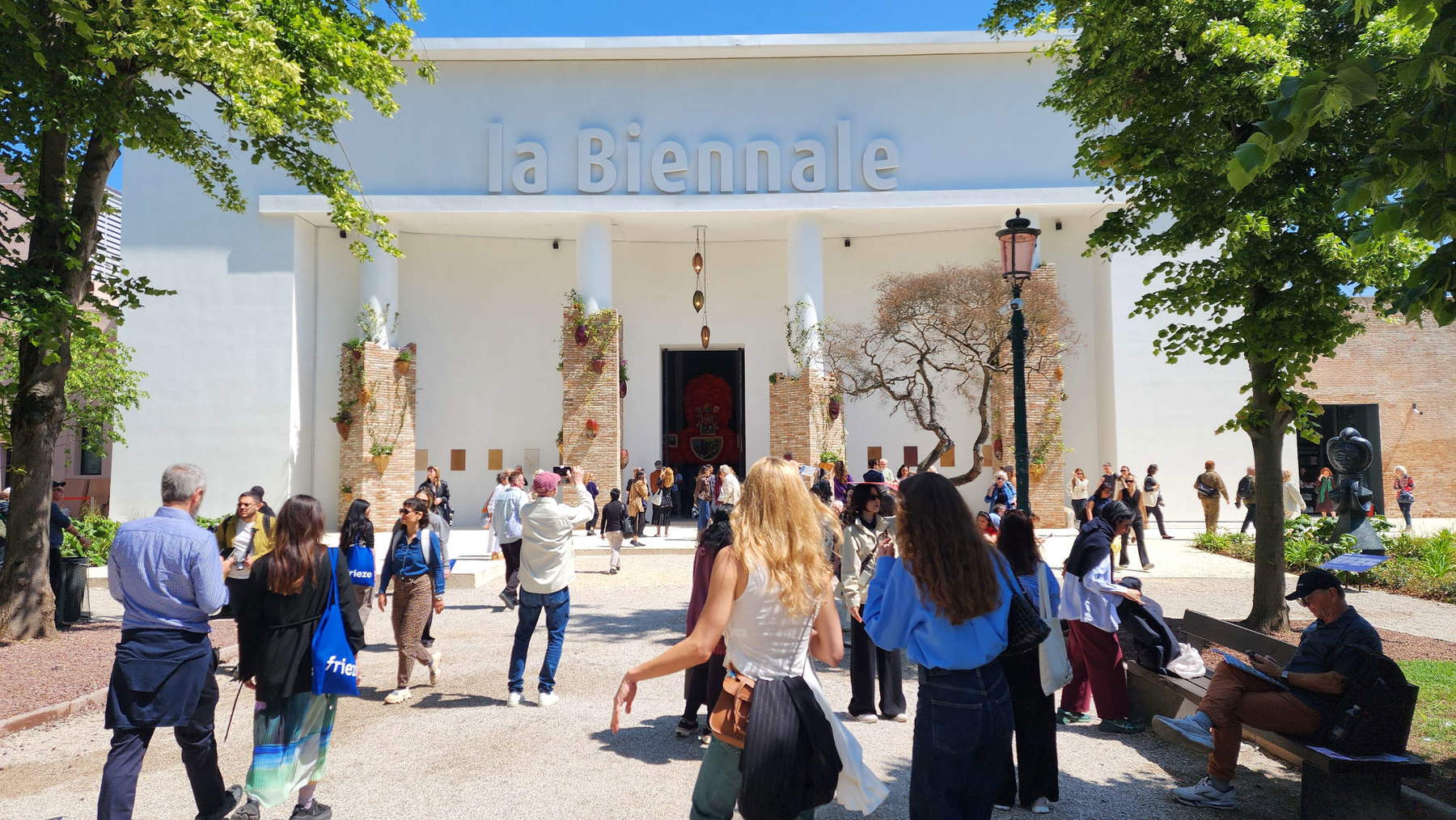
The 61st edition of the Venice Art Biennale starts today, May 9, 2026, and will run until November 22, 2026. The In Minor Keys project, conceived by director Koyo Kouoh before her passing in May 2025, has been brought to fruition by her team to honor her memory and curatorial practice based on relationships and openness to the unexpected. The international exhibition is joined this year by some 100 national pavilions: the editorial staff of Finestre sull’Arte, partly moved to Venice for the occasion, during the days of the preview for press and trade operators walked through the spaces of the Giardini, the Arsenale and the historic center to return you a first selection of what this edition, a less brilliant edition than others at least as far as the quality proposed by the national pavilions is concerned, offers of most significant among the various participations. This is not an in-depth selection, nor is it a review: however, it can be considered a list of pavilions without seeing which a visit to the exhibition would probably be incomplete. If you are looking for insights and suggestions on national pavilions from which to begin your visit, then perhaps this list might be for you. We offer them below, in alphabetical order.
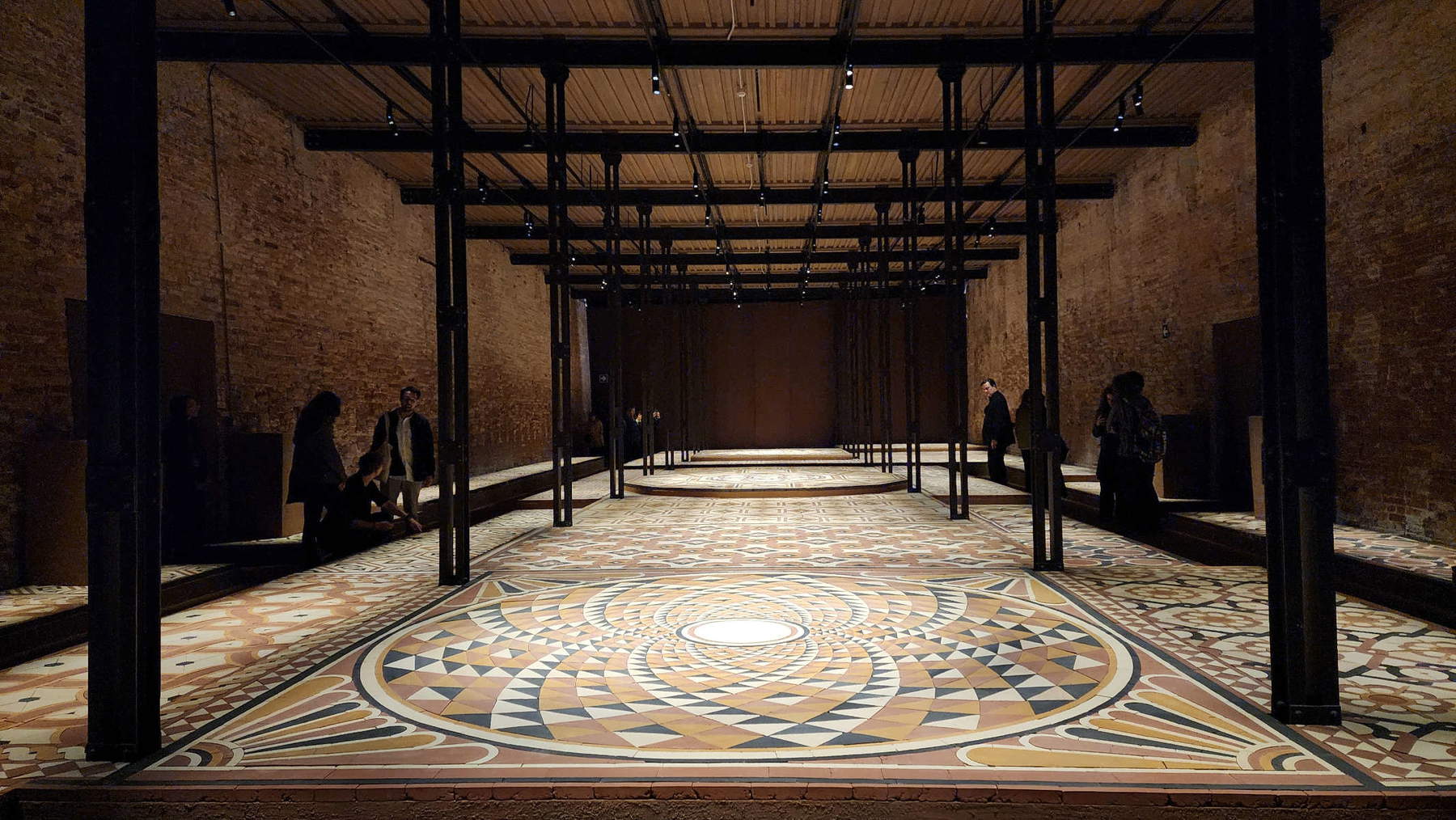
At the Saudi Arabian Pavilion, Dana Awartani, who is among the leading names of this Venice Biennale, presents Never Dry the Tears You Cry on Stones, a monumental installation composed of more than 29,000 clay bricks. The floor work is inspired by Arab mosaic motifs linked to millennia-old cultural sites now threatened by conflict. Each brick was handcrafted from clays of different natural colors from across the Kingdom, fired under the Riyadh sun. The radical choice not to use binders causes cracks to appear over time, symbolizing the fragility of material heritage and the danger of cultural oblivion. The visitor is invited to walk through this imaginary archaeological site, understanding that the care and repair of what has been lost requires the joint effort of “several hands” and a co-creation that spans generations. Stones are never just such when they are in the ruins. It is certainly not the most original project (even Dana Awartani does not shy away from delving into archaeological imagery, as so many artists do these days), but it is among the most interesting and best staged.
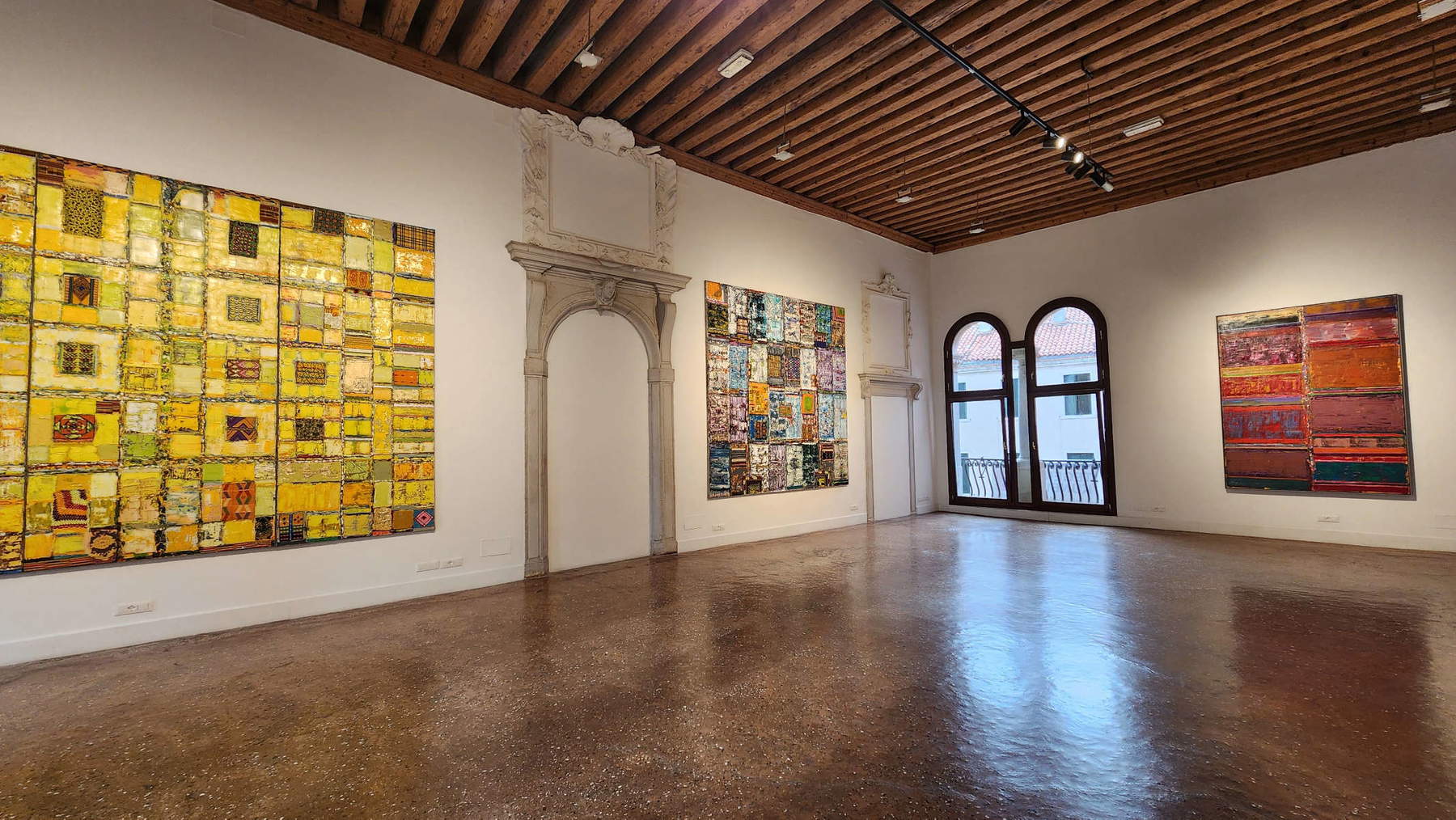
At Palazzo Bollani, the Ethiopia pavilion presents Shapes of Silence, where artist Tegene Kunbi explores silence not as a void, but as a social and political condition dense with meaning. Kunbi, who is a painter, uses painting as a layered archive, integrating her mother’s handwoven textiles, industrial fabrics and sacred vestments to represent the cultural diversity of her country. In Ethiopia, silence is an ambivalent virtue: it can indicate wisdom or lead to exclusion. Kunbi’s works, in keeping with the Biennale’s “minor tones,” give material form to marginal voices and submerged narratives, resisting immediate translation into words. Abstraction thus becomes, in the artist’s idea, a practice of resilience, a way to gradually invite the world into the canvas through layers of matter and color that recall the Ethiopian earth, vegetation and sky.
Architect and artist Andreas Angelidakis transforms the Pavilion of Greece into an immersive environment titled Escape Room, which reimagines the Platonic cave in the age of post-truth. The installation analyzes the very history of the building, which opened in 1934, a year marked by the meeting in Venice between Hitler and Mussolini and the beginning of Nazi persecution. Angelidakis interprets the Giardini’s national pavilions as “frozen colonial and fascist caves,” created to convey specific political agendas. Through a language that blends real and virtual, the artist challenges the visitor to escape not only from the room, but from propaganda narratives and nationalist populisms. The pavilion becomes a critique of nationalism but not only that: one can read into it a critique also of the “selling out” of Greece by mass tourism and much more. It seems moreover that the pavilion’s couches are very comfortable....
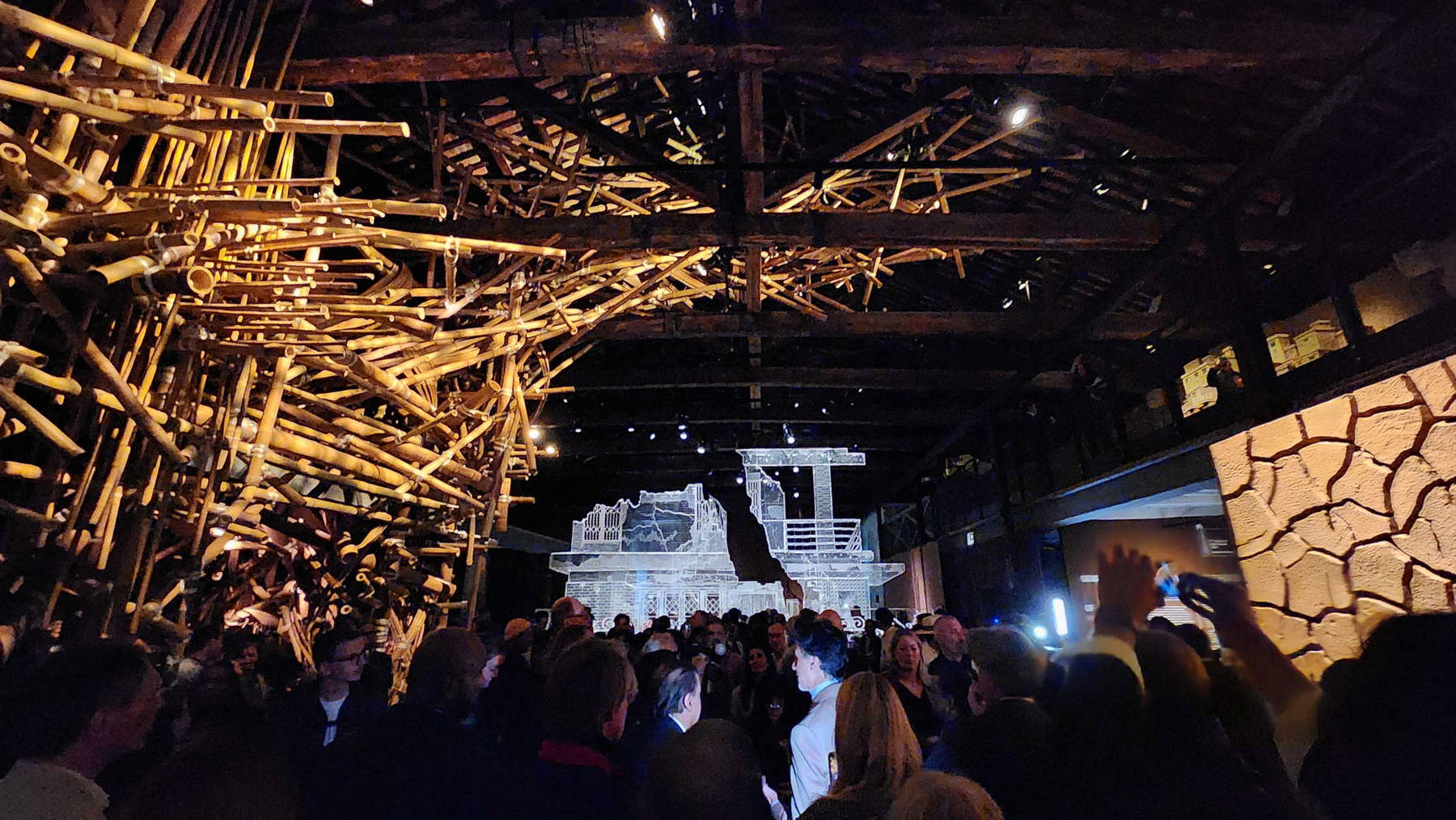
The Pavilion of India, at the Arsenale, investigates the concept of “home” when the place of origin disappears or is far away. Through the work of five artists, the project Geographies of Distance, surely one of the most scenic of this Biennale, uses traditional materials such as soil, wire and bamboo to reconstruct personal and collective memories. Sumakshi Singh recreates her grandparents’ demolished house in Delhi using thin white threads that hang in the void, making the solid architecture a ghostly apparition made of embroidery. Alwar Balasubramaniam presents works in fractured earth, where natural cracks created by evaporation become symbols of separation and resilience. Ranjani Shettar offers sculptures inspired by flora that seem to defy gravity, while Skarma Sonam Tashi evokes Ladakh houses in fragile papier-mâché. Finally, Asim Waqif uses bamboo scaffolding to reflect on the instability of contemporary urbanization.
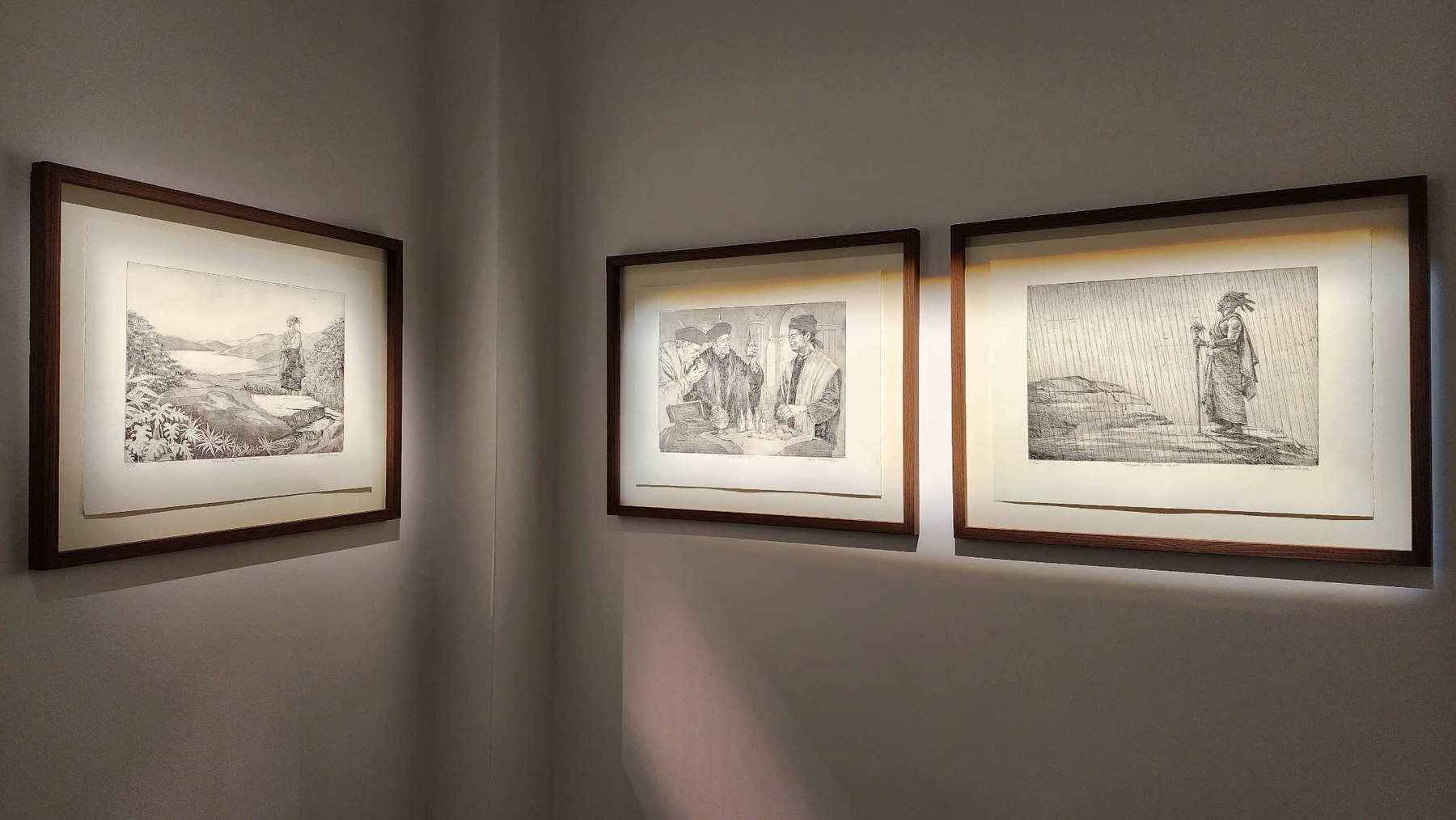
In collaboration with the International School of Graphics, Indonesia transforms its pavilion into a living laboratory where seven artists from different generations created works on site. The project Printing the Unprinted is inspired by a 15th-century manuscript documenting an epic 14-year imaginary journey from Sumatra to Venice. This narrative challenges the idea that global exploration was exclusive to Europe, highlighting the advanced maritime and astronomical knowledge of Southeast Asian societies. Printmaking becomes a shared language for processing historical trauma and building resilience. The artists (Agus Suwage, Syarizal Pahlevi, Nurdian Ichsan, R.E. Hartanto, Theresia Agustina Sitompul, Mariam Sofrina, and Rusyan Yasin) explore collective identity and memory through techniques ranging from woodcut to drawing, seeking to “print the unseen” of global history. The artists also created some works together with young Indonesians from disadvantaged backgrounds who had the opportunity to travel from their country to Venice: they are displayed in a special room in the Pavilion. It is certainly the Pavilion that has worked best to bring the artists into dialogue with the Venetian fabric.
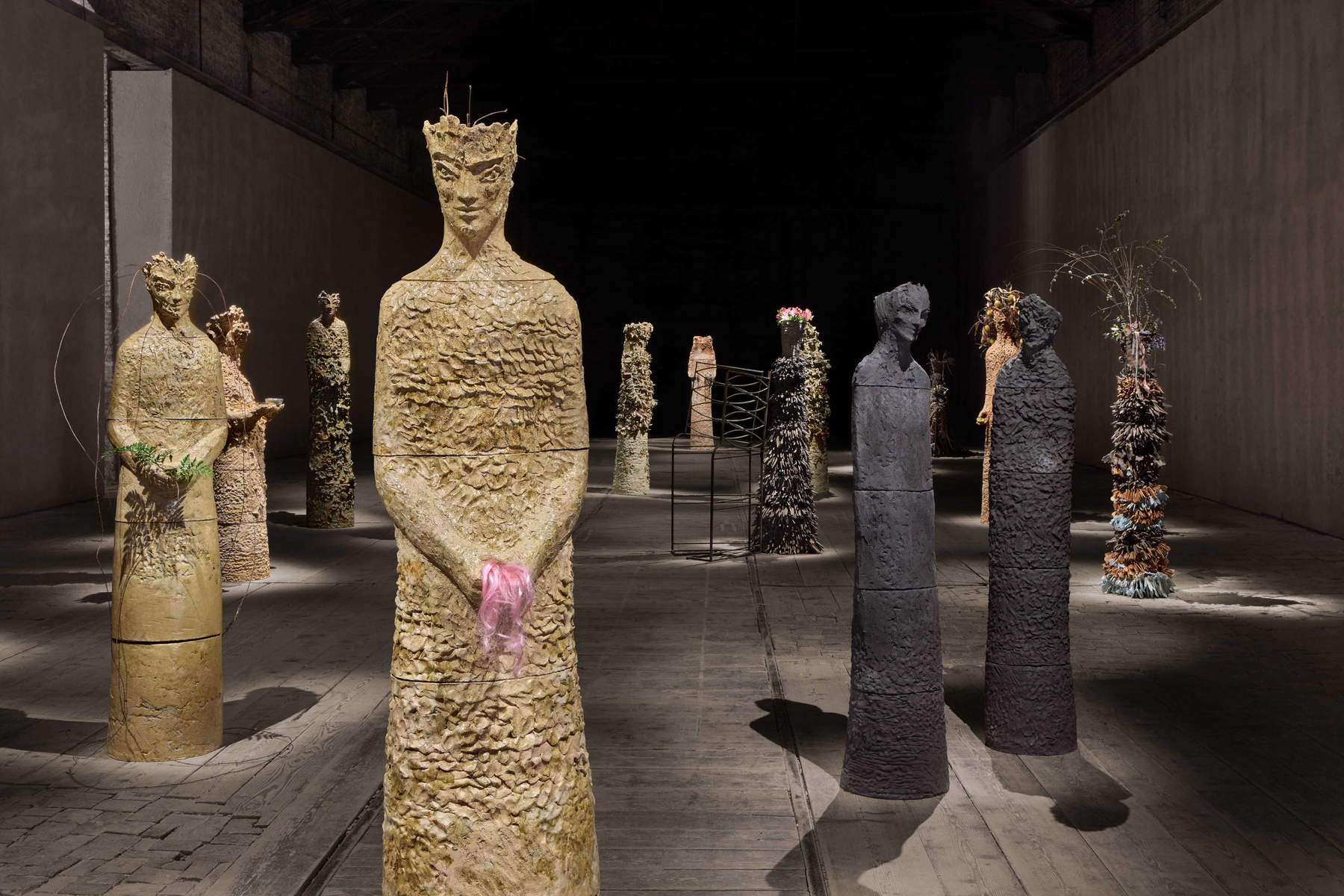
The Italyn Pavilion, hosted at the Tese delle Vergini, welcomes visitors with Con te con tutto, a project by Chiara Camoni curated by Cecilia Canziani. A project divided into two distinct halves: in the first, anthropomorphic ceramic sculptures, little taller than a human being, dialogue with the audience in a penumbra that evokes an ancestral world. These figures, called Sister or Daimon, are made from clay and enriched with natural materials and plastic scraps collected near the artist’s studio (an invitation to find beauty even in what is discarded). The second part of the exhibition, on the other hand, is a domestic architecture made of recombined furniture that hosts dialogues with works by past masters such as Felice Casorati, Luciano Fabro, Fausto Melotti, and Mario Merz, and contemporary artists (such as Luca Bertolo, Franco Corradini, and Alessandra Spranzi). The first part succeeded better than the second, and very much in line with what one sees at the international exhibition: no sharpness from Camoni, who brings to the Biennale a work quite similar to the one presented at his large solo show at Pirelli HangarBicocca, but it is nevertheless one of the pavilions that will be discussed most.
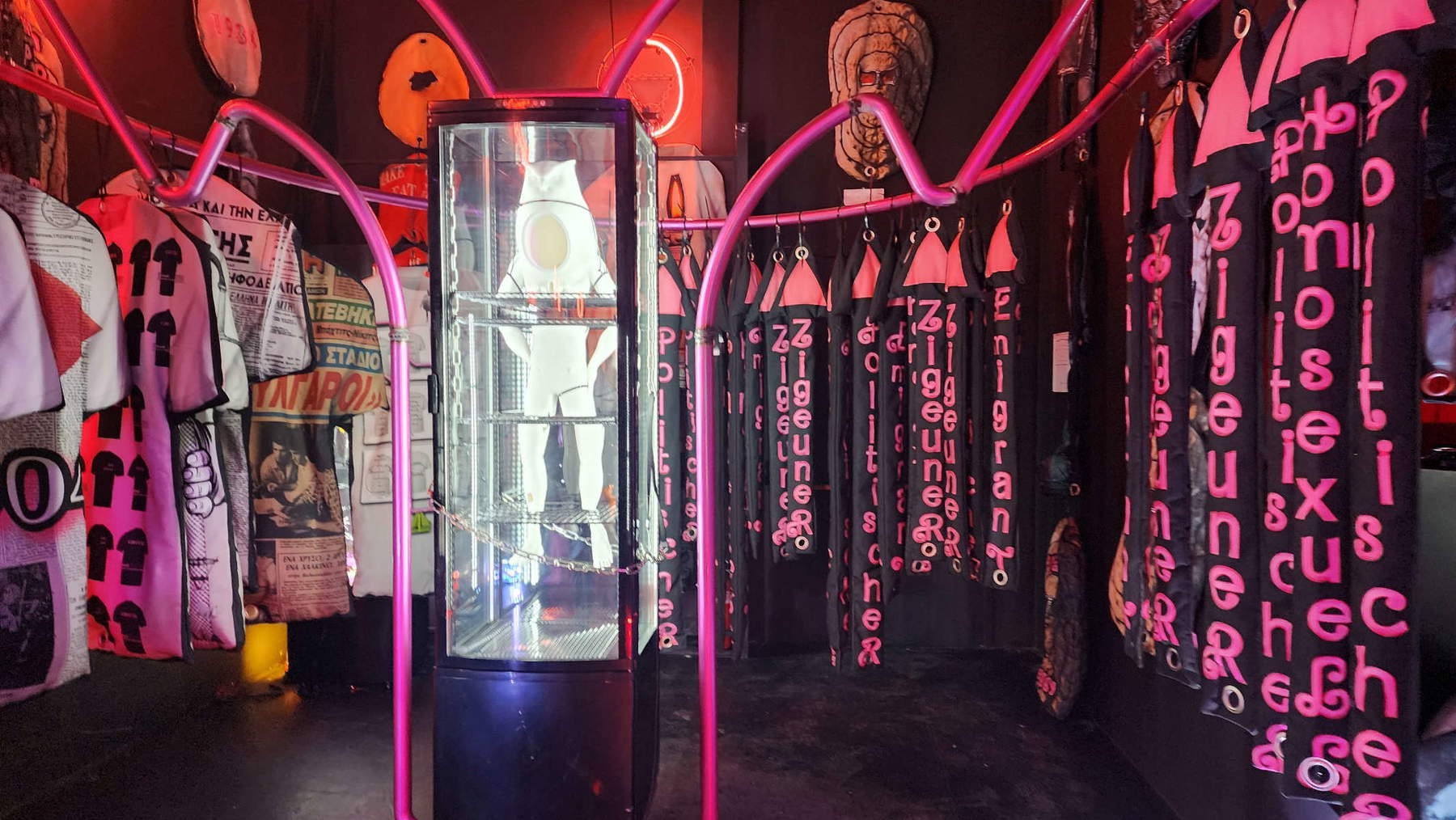
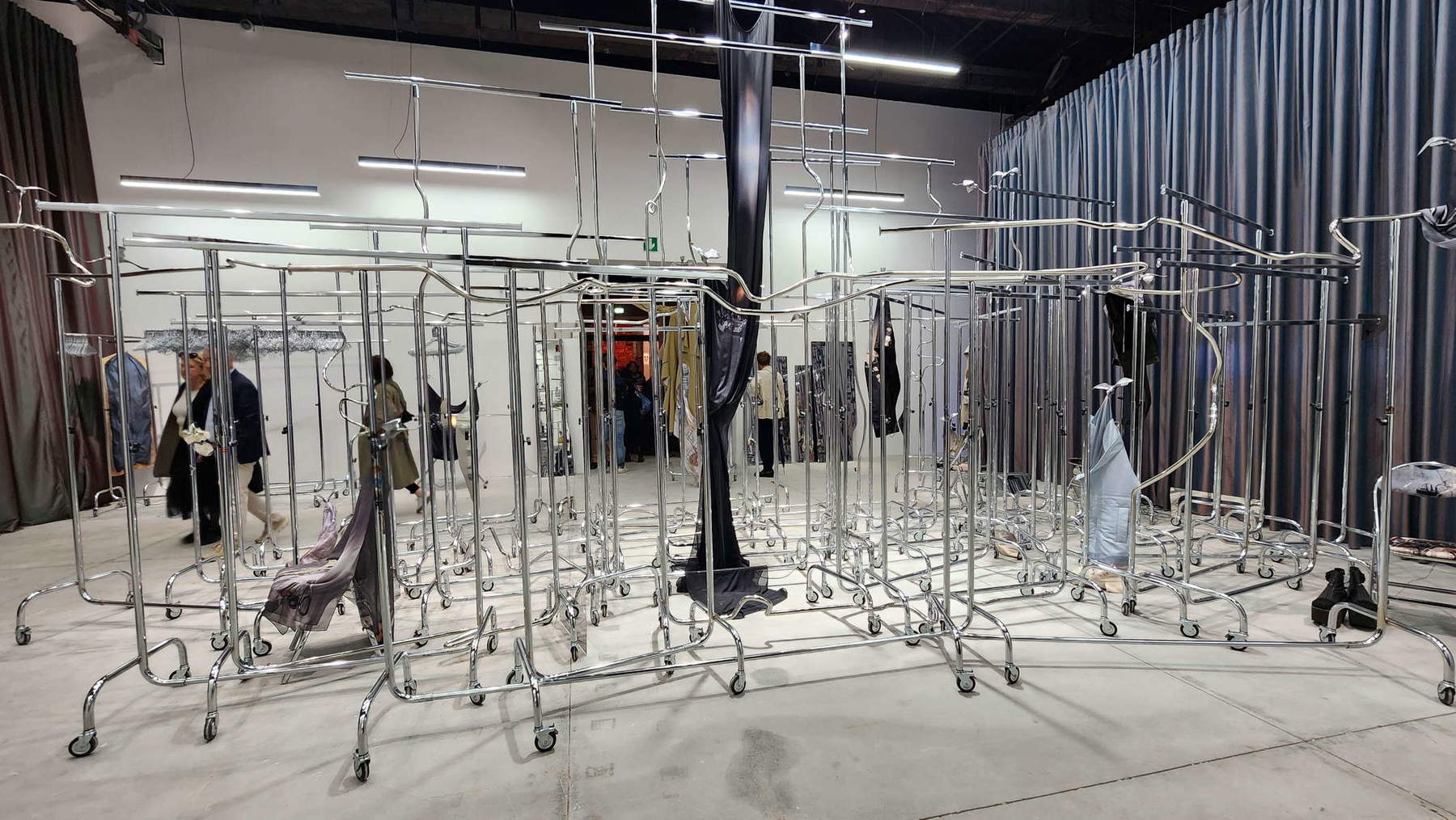
The Latvia Pavilion at the Arsenale presents Untamed Assembly-Backstage of Utopia, a dialogue between the art duo MAREUNROL’S and fashion designer Bruno Birmanis. The exhibition traces the legacy of the Untamed Fashion Assemblies, experimental events held in Riga in the 1990s in a climate of post-Soviet euphoria and a search for political freedom. The installation is conceived as a backstage, invisible space of preparation and human connection, where the coat rack becomes narrative architecture. Through textile sculptures, archival footage, and costumes that challenge social norms, the pavilion explores how the collective imagination can flourish in moments of transition. The body and dress are tools for negotiating new identities in a temporary avant-garde center that brought together international celebrities and Baltic students. We point this out because in a Biennale that, despite everything, is strongly geopolitical, the Latvian artists’ statement is strong and decisive.
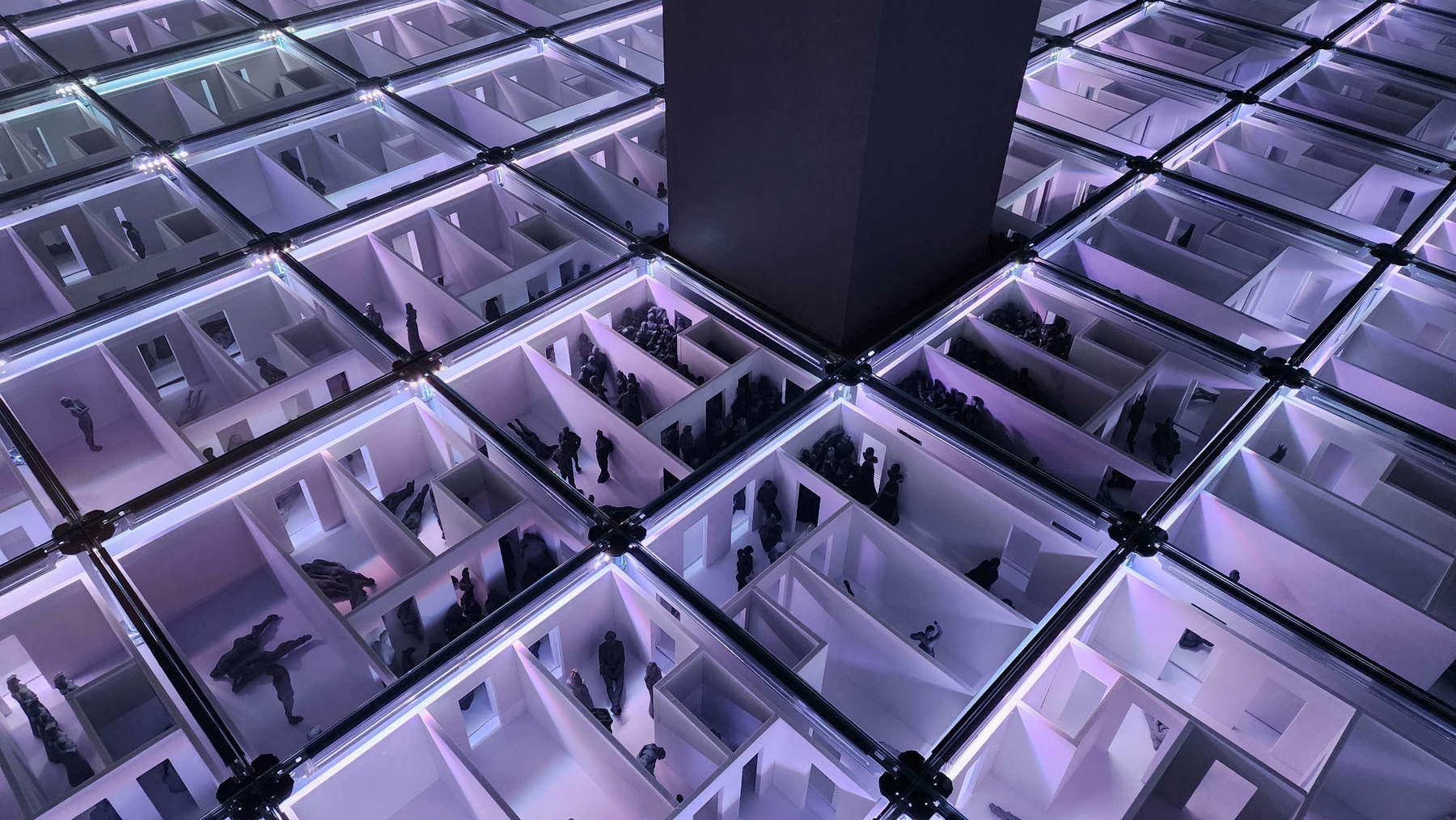
Out of the Blue, I’m Swept Away is Siniša Radulović’s multimedia installation that contrasts a claustrophobic “underground” zone with an ethereal, fluid upper one. In the lower part, the floor plan of the artist’s living space multiplies into a dystopian grid inhabited by asexual replicants, a mirror of our social alienation. Beyond this glassy surface, the viewer encounters moving images of body fragments vibrating in paleovenetian light, offering a state of sensory drift. Radulović also uses analog photographs on glass plates and ambient sounds to create a refuge against the proliferation of digital images. The project seeks to “stitch together” the registers of compression and dispersion, finding the sublime in the transient, represented by the flickering image of a cherry blossom branch. A work of impact.
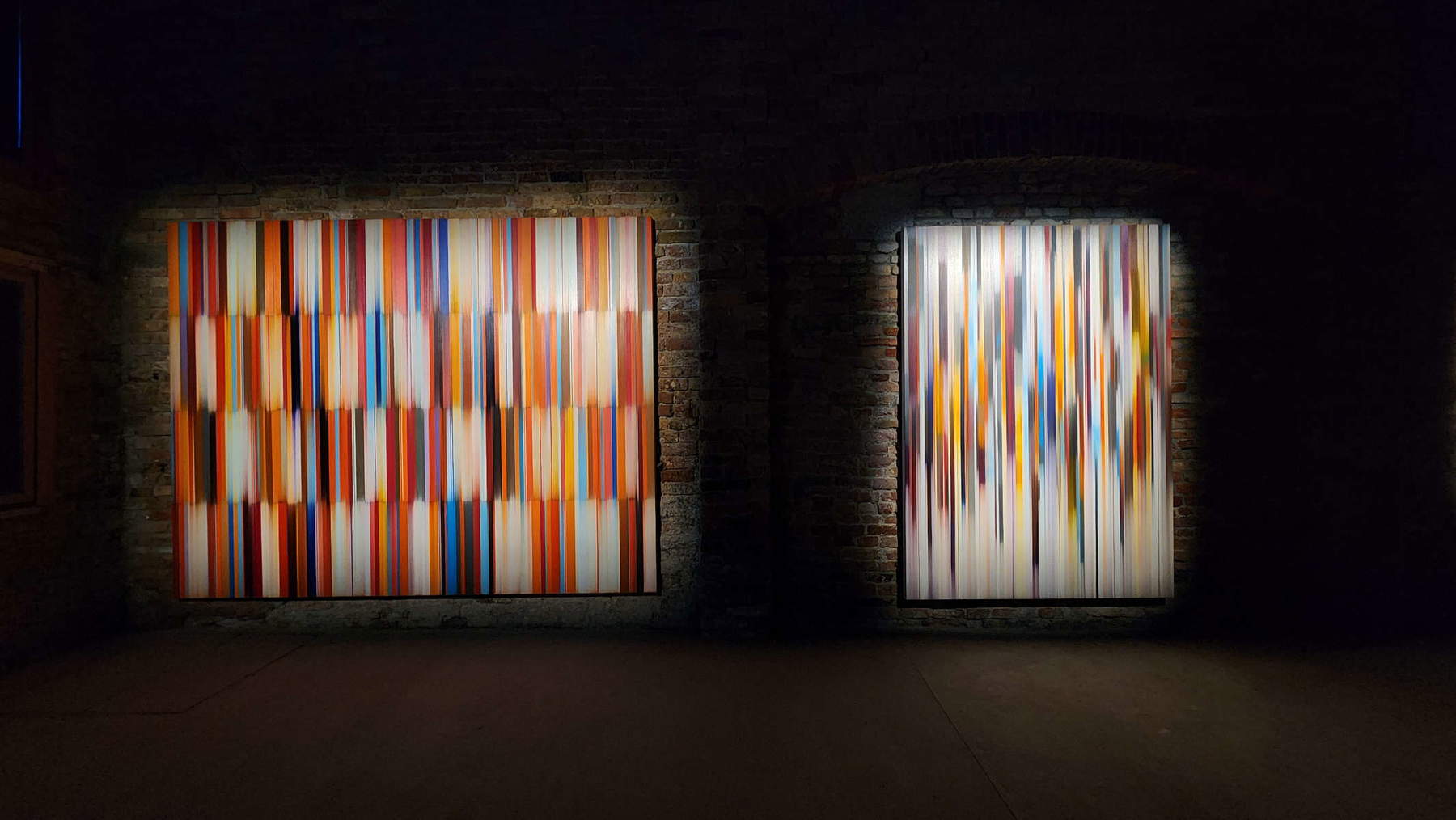
The Republic of San Marino relies on Northern Irish artist Mark Francis for its Sea of Sound project, a synaesthetic investigation into the relationship between art, sound and science. Francis’ abstract canvases, characterized by banding of color, laid out in a very precise, almost manic manner, reflecting acoustic frequencies, seem to “sing” as the viewer’s gaze moves over the surface. The pavilion includes the film Listening Field, the artist’s first and so far only moving work made for this occasion, which immerses the viewer in a sound atmosphere devoid of melody devised by composer Marco Genovesi. Francis’ research makes the invisible visible, capturing the buzzes and low frequencies that constantly surround us, in perfect resonance with Kouoh’s “minor tones” theme. San Marino’s three towers ideally become privileged listening points above this vast ocean of vibrations. Francis is among the best painters to be seen in this Biennale.
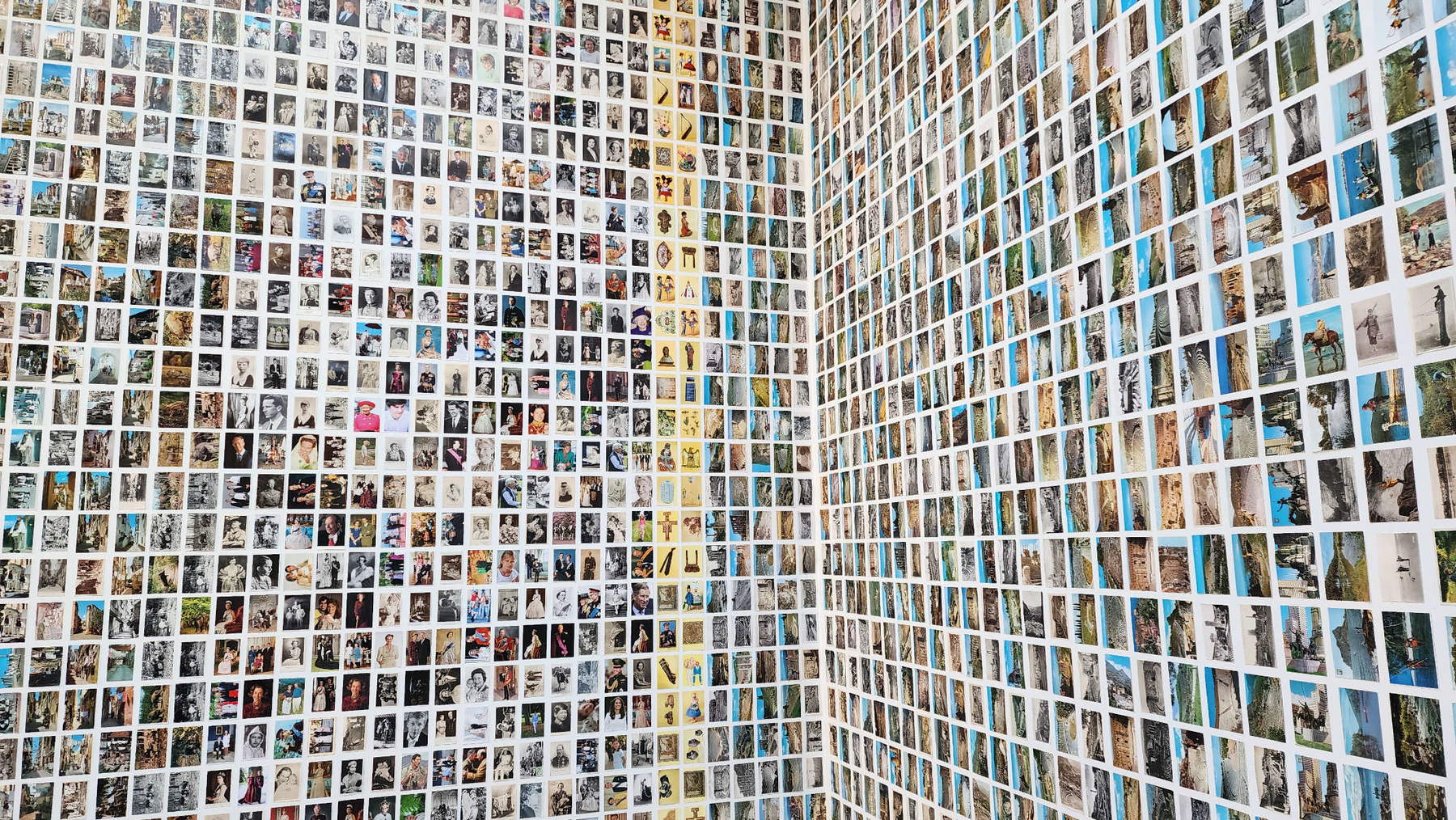
Oriol Vilanova transforms the Spanish Pavilion into a temporary “anti-museum” entitled Los restos. The work, enveloping, almost capable of stunning the visitor, is based on an obsessive accumulation of thousands of postcards collected by the artist in flea markets over a 20-year period. By reassembling these images in a display devoid of hierarchies and taxonomic classifications, Vilanova activates the postcards as unstable documents of a memory that eludes official narrative. Collecting is understood here as an affective and enduring act that questions the institutional value of the object. The project extends outside the Gardens with unannounced performative interventions, proposing an alternative economy of attention grounded in contingency and the curation of fragments of the past.
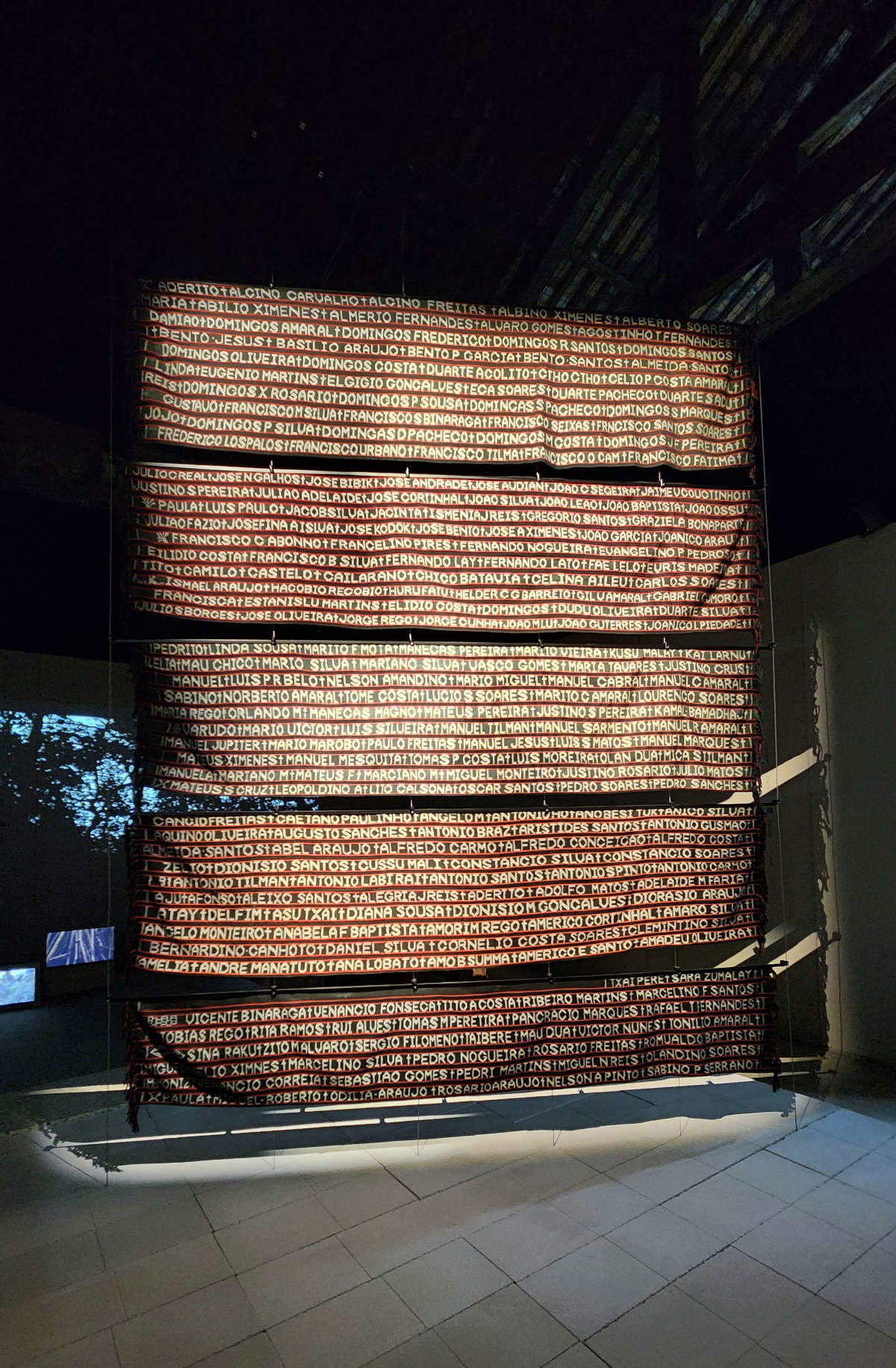
For its second participation in the Biennale, East Timor presents Across Words, an exploration of oral memory as a generative force of a young nation. The pavilion brings together artists of different generations to show how national cohesion emerges not from a single language, but from a multiplicity of ancestral dialects and dialects. At the heart of the exhibition is Tais Don, a 1994 textile work by Verónica Pereira Maia that commemorates the victims of the 1991 massacre (when 250 inhabitants of the capital Dili were murdered by Indonesian troops-East Timor was not independent at the time) through a phonetic transcription of their names. Alongside this historical relic, video and sound installations by young Etson Caminha and Juventino Madeira reflect the transformation of a post-conflict society leaning toward modernity. One of the few projects that speaks of colonialism and occupation without rhetoric.
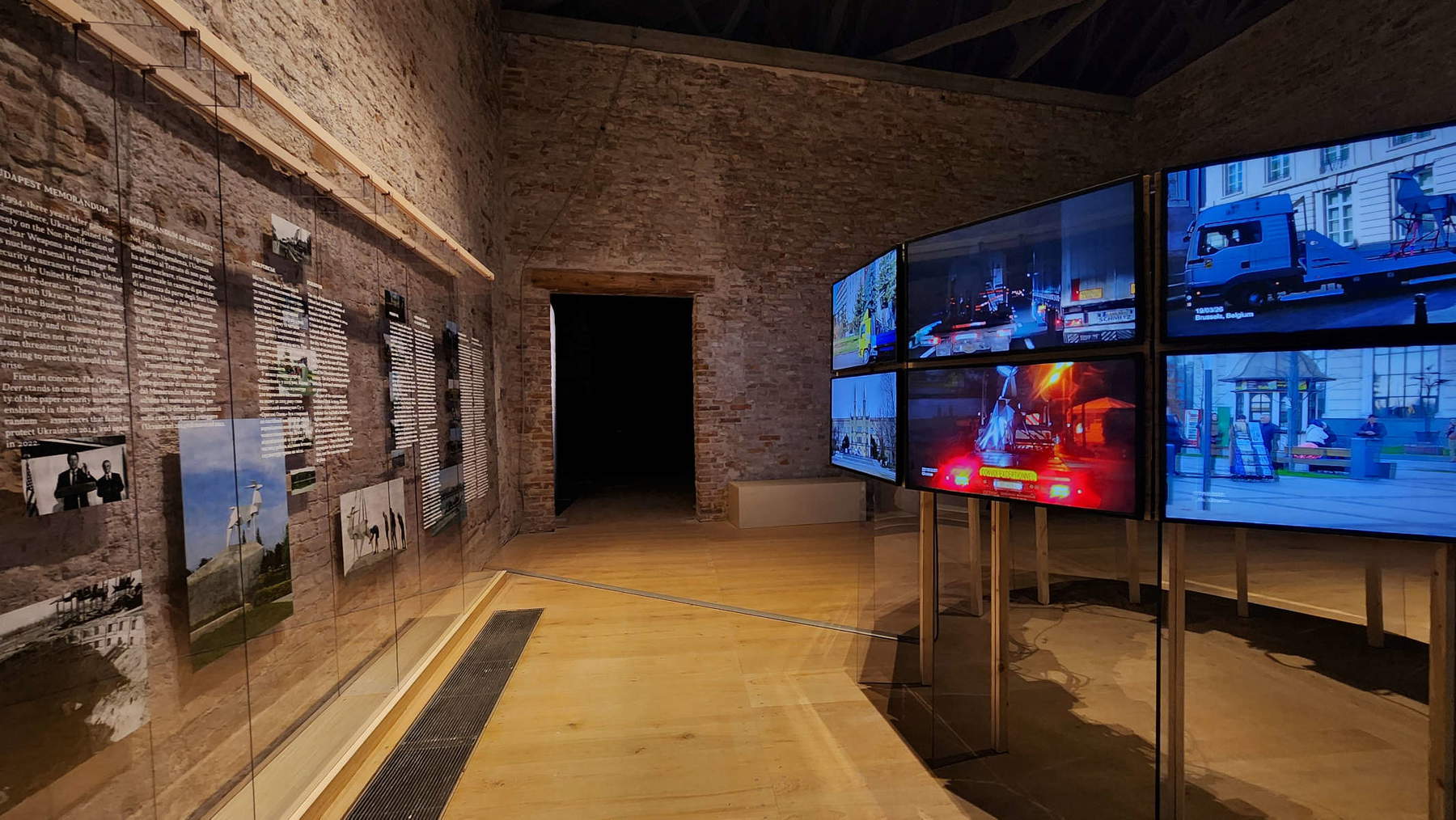
The Ukraine Pavilion’s Security Guarantees project addresses the dramatic theme of broken promises. At the center of the exhibition stands Zhanna Kadyrova’s The Origami Deer, a sculpture that traces the folds of a paper deer but is made of much heavier materials. The work was originally located in Pokrovsk, on the site of a former Soviet nuclear plane, but was evacuated in 2024 under fire from Russia’s war of aggression. Suspended from a crane in the Biennale Gardens, the sculpture symbolizes the uncertainty and forced displacement of the Ukrainian people. The metaphor is powerful: just as the guarantees of the Budapest Memorandum (by which Ukraine renounced nuclear power) were only paper, so this fragile deer represents the vulnerability of a nation left without equal means of defense. A pavilion, then, split in two: at the Giardini you can see the sculpture, at the Arsenale the videos documenting its journey, as well as informational material on the war and the Budapest Memorandum.
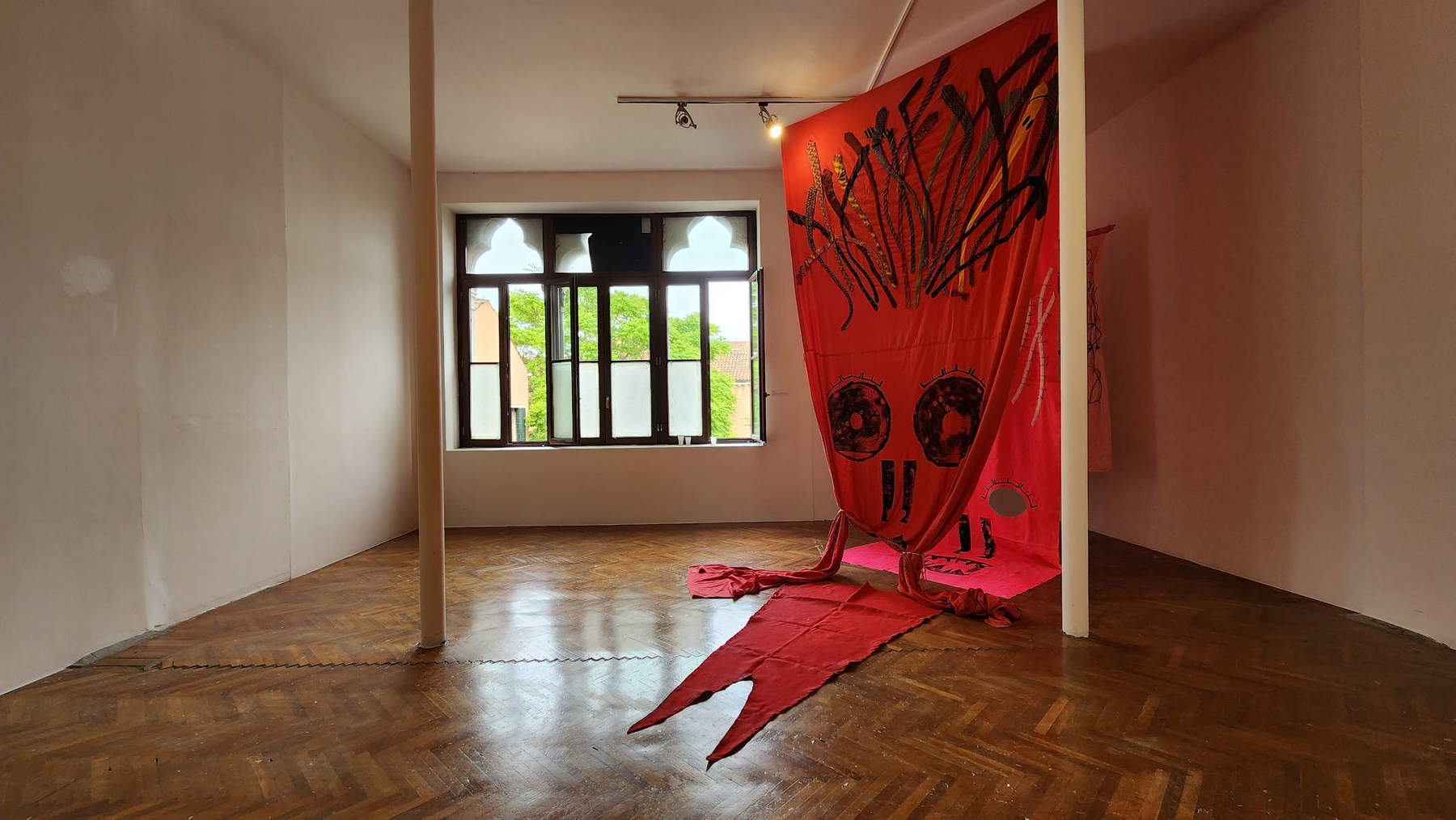
The Zimbabwe Pavilion presents Second Nature | Manyonga, a reflection on neuroplasticity and the human brain’s ability to reorganize itself in the face of technology and crisis. The artists involved (Eva Raath, Felix Shumba, Franklyn Dzingai, Gideon Gomo, and Pardon Mapondera) ask what remains of the human when machine logic becomes “second nature.” Through installations that explore digital culture but also works made with traditional media (we feel like saying that Felix Shumba’s huge Wheel-telegram-east-window-line-145XV7-lower paper, six meters wide by almost two meters high, is among the four to five best in the entire Biennale), the project aims to be a kind of interface to perceive how our reflexes and autonomy are now intertwined with technological systems.

Warning: the translation into English of the original Italian article was created using automatic tools. We undertake to review all articles, but we do not guarantee the total absence of inaccuracies in the translation due to the program. You can find the original by clicking on the ITA button. If you find any mistake,please contact us.





















 IT
IT FR
FR DE
DE ES
ES CN
CN


