





The identity of Banksy, the world’s most famous and mysterious street artist, has been the subject of speculation for decades. Now, a lengthy investigation by Reuters, authored by journalists Simon Gardner, James Parson and Blake Morrison, with photographs by Corinne Perkins and Jeremy Schultz, illustrations by Catherine Tai and editing by Blake Morrison and Michael Williams, has attempted to solve the riddle by following a trail that started in a war-torn village in Ukraine and went all the way to London and Manhattan, reconstructing the artist’s history, his career and the complex economic system that revolves around his name. Behind Banksy’s identity, then, would be an Englishman born in 1973, Robin Gunningham, who was born in Bristol and whose name had also long been speculated about in the past, at least since 2008.
Despite his global fame, the artist’s true identity has remained secret.Anonymity is an integral part of his myth. Over the years, the British press has published numerous inquiries attempting to unveil it, but Banksy and his entourage have always maintained silence and strict secrecy. Some collaborators have signed confidentiality agreements; others prefer not to speak out of loyalty or fear of consequences. At the center of the system is Pest Control Office, the company that authenticates the artist’s works and decides who can buy his work. In short, a system specifically made to armor the artist’s name.
The Reuters investigation begins in late 2022, when an ambulance pulls up in front of a destroyed building in the village of Horenka, just outside Kyiv. Three people get out of the vehicle: two are wearing hoodies, hats, and masks covering their faces, while the third is easily recognizable because he has one arm and two prosthetic legs. The two masked men pull out cardboard stencils and spray cans and within minutes create a surreal mural on a wall left standing in the rubble: a bearded man immersed in a bathtub while washing his back. The work is attributed to Banksy, the British artist known for his simple but politically and socially charged stencils. Over the years his works have generated sales in the tens of millions of dollars. Once considered a vandal by the authorities, Banksy has become something of a British national treasure. In one poll he was found to be more popular than painters such as Rembrandt and Monet, while his famous work Girl with Balloon was voted Britain’s favorite work of art.
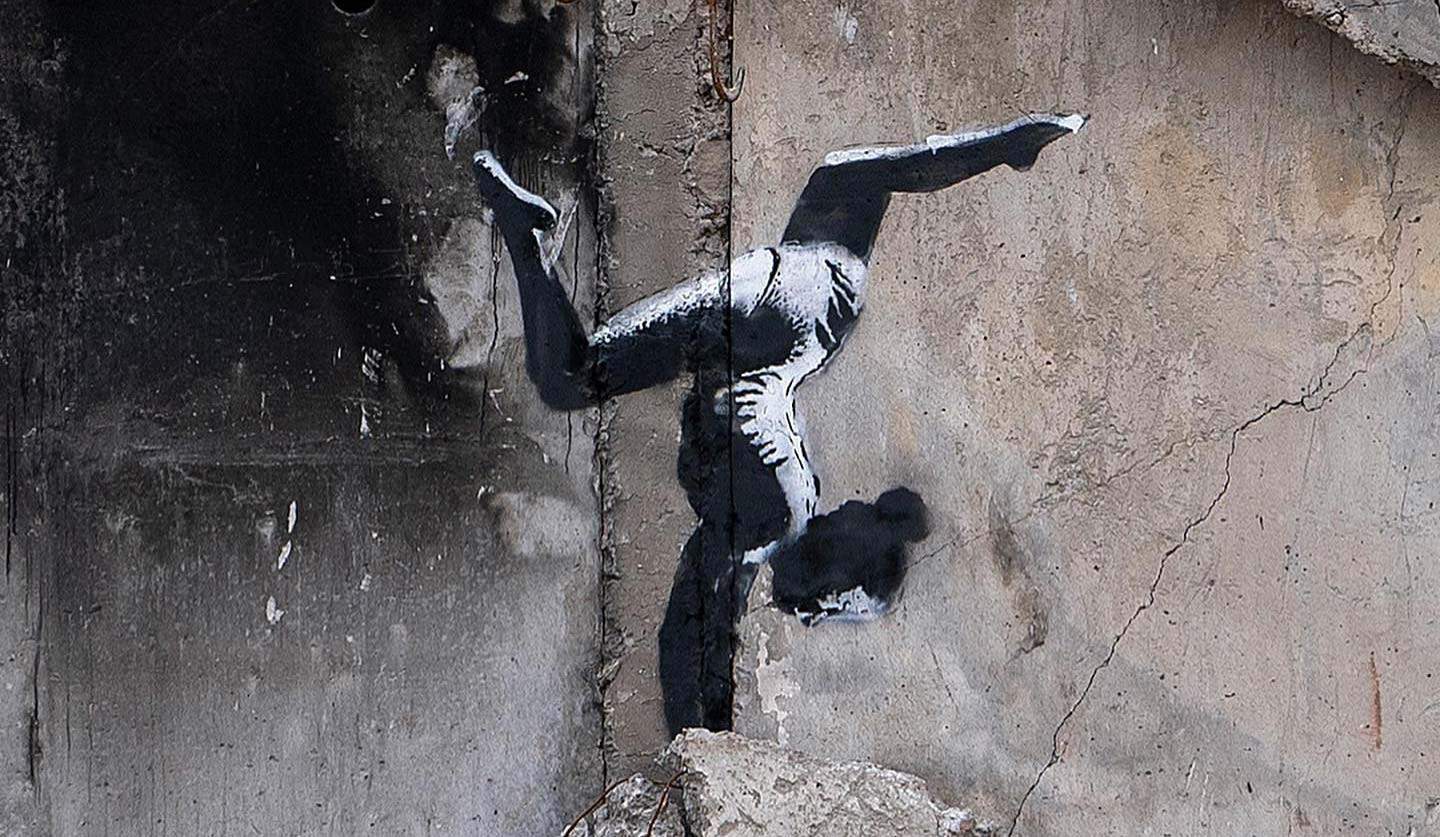
When Banksy’s murals appear in Ukraine in 2022, just a few kilometers from Bucha, a city where hundreds of civilians had been found killed by Russian forces a few months earlier, Reuters decides to figure out how the artist made those works in an area recently the scene of fighting. Reporters return to Horenka with a series of photographs of artists often referred to as possible Banksy. They show the images to villagers to see if anyone recognizes any of the painters. Meanwhile, rumors emerge about the presence in Kyiv of a well-known British musician often listed as a candidate for the artist’s identity. Reuters interviews a dozen experts and people close to Banksy’s world. None agree to comment openly on the artist’s identity, but many provide details about his life and career. The journalists analyze photographs in which the face is hidden but which contain useful clues. They also uncover previously unpublished U.S. court documents and police reports. Among them is a handwritten confession by the artist in connection with an old misdemeanor crime of public disorder. That document undoubtedly reveals the real name of the man behind the Banksy pseudonym and helps reconstruct how and why his identity disappeared from public records more than a decade ago.
Reuters presented its findings to the man identified as Banksy, but received no response. The company Pest Control said the artist “decided not to say anything.” His longtime attorney, Mark Stephens, wrote to Reuters arguing that many details of the investigation would be incorrect and urging the agency not to publish the report, arguing that revealing the artist’s identity would violate his privacy and endanger his safety.
According to Stephens, Banksy has been the subject of obsessive behavior and threats over the years. He also argued that anonymity has social value because it protects freedom of expression and allows artists to criticize political power and institutions without fear of retaliation. However, Reuters felt that there is a strong public interest in understanding the identity and career of a figure who has had such a profound influence on culture, the art market, and international political debate. Banksy’s anonymity, according to the agency, has become part of his brand and economic success.
A recent example of Banksy’s ambiguous relationship with British authorities is a mural that appeared last September on the facade of the Royal Courts of Justice in London. The work depicted a wig-wearing judge striking an unarmed protester with a hammer. The artistic intervention came just days after the British government banned the pro-Palestinian group Palestine Action and arrested some nine hundred protesters. The mural was quickly removed by authorities, but it is unclear whether the artist received any sanctions. The Ministry of Justice said it spent more than 23,000 pounds to erase the work and that cleanup work continues with laser technologies. Some street artists question whether Banksy enjoys special treatment compared to other graffiti artists, for whom such actions often result in fines or arrests. Besides, the economic value of his art continues to grow anyway. According to art market analyses, his actions in public space help keep collectors’ attention and demand high. In 2025, a Banksy work sold at Sotheby’s for 4.2 million pounds.
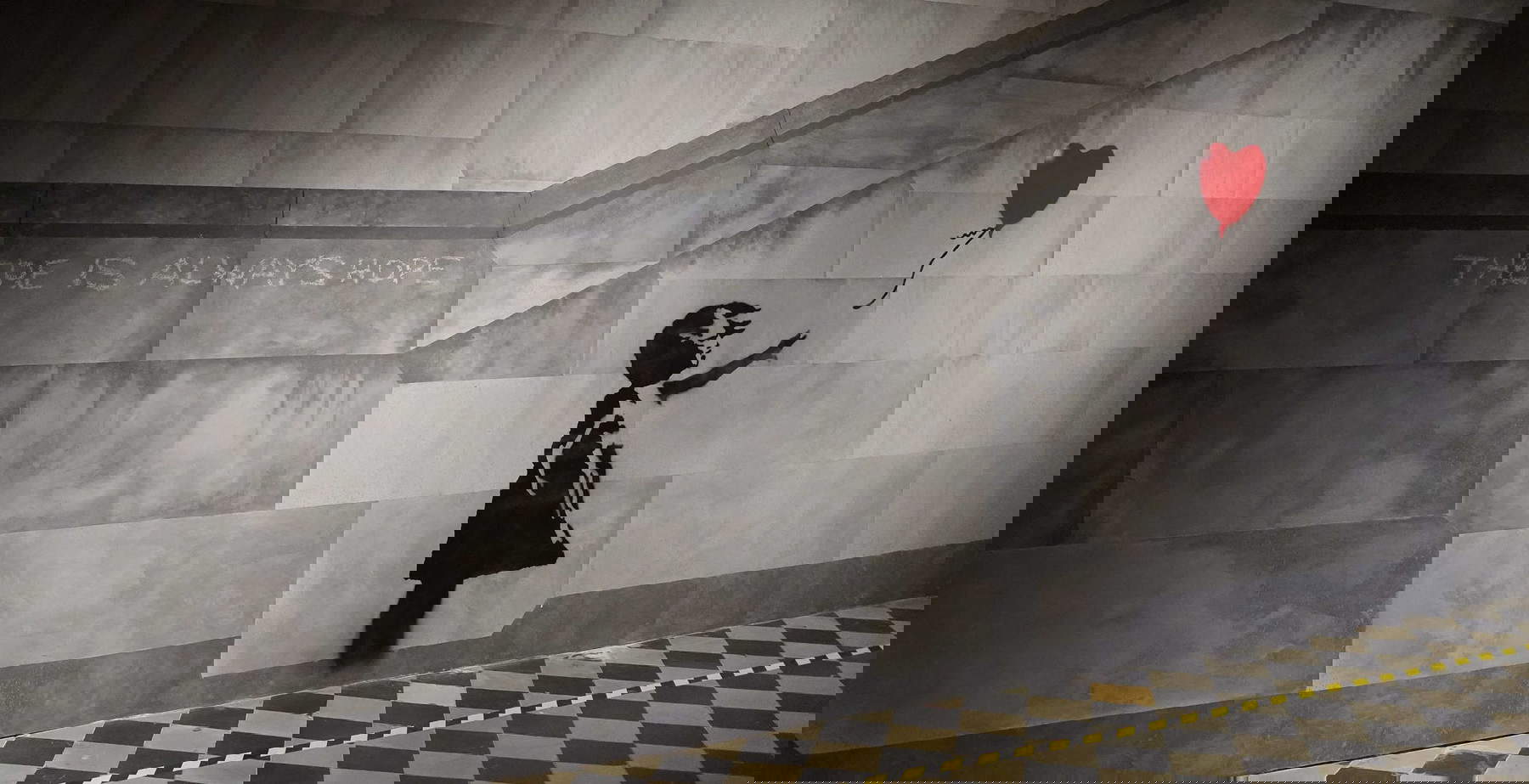
Meanwhile, Reuters’ investigation goes on to reconstruct the path leading to one of the key moments in the artist’s story: an arrest in New York City in September 2000. On that occasion, a man was caught by police modifying a fashion billboard on the roof of a building in Manhattan’s Meatpacking District. Police records indicate that the man was arrested at 4:20 a.m. while he was altering a Marc Jacobs brand billboard. Because the damage exceeded $1,500, officers initially attempted to charge him with a misdemeanor. A handwritten confession appears among the documents in which the perpetrator admits defacing the advertisement. The name listed in the documents is Robin Gunningham. The case ended with the charges being reduced to a misdemeanor charge of disorderly conduct. The man paid a fine and performed five days of community service.
That signature became a decisive piece of evidence for the investigation. Back in 2008, as anticipated, the British newspaper Mail on Sunday claimed that Banksy was indeed Robin Gunningham, a Bristol-born artist born in 1973 and a student at Bristol Cathedral School. Analyzing photographs and testimonies, Reuters concludes that Banksy is indeed Gunningham. However, another element emerges: in 2008 the artist allegedly legally changed his name to make it even more difficult to track him down. According to former manager Steve Lazarides, who worked with Banksy until 2008, the identity change was arranged precisely to protect the secret. Lazarides told reporters that the name Robin Gunningham “no longer exists” and that looking him up in public records would be futile.
Cross-referencing corporate documents and public records, Reuters comes to the conclusion that Gunningham would take the name David Jones, one of the most common names in the United Kingdom. Immigration records would show that a person with this name and the same birth date as Gunningham entered Ukraine on Oct. 28, 2022, along with photographer Giles Duley and musician Robert Del Naja, frontman for Massive Attack and himself often referred to as a possible Banksy. Del Naja, an artist and musician also born in Bristol, was one of the pioneers of stencil graffiti in Britain and an acknowledged influence of Banksy himself. Border records would show that he and the person identified as David Jones left Ukraine on the same day, November 2, 2022.
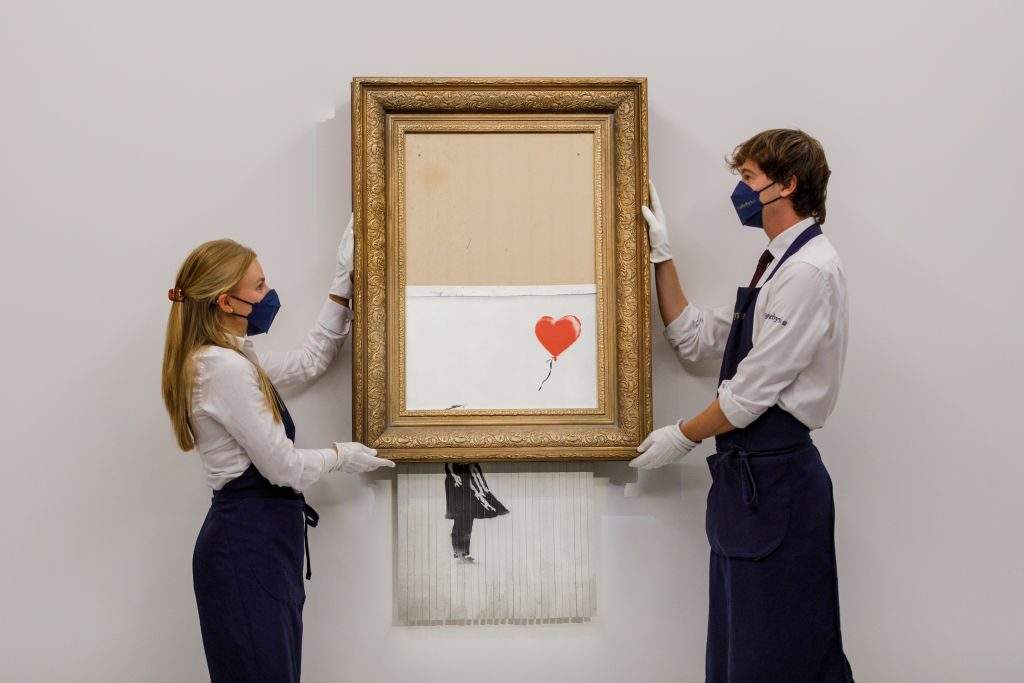
The reconstruction thus suggests that Banksy was born as Robin Gunningham and later adopted another legal identity. Del Naja would not be Banksy, but he may have collaborated with him on at least some occasions. Meanwhile, the artist’s myth continues to grow. One of the most famous episodes of his career remains the 2018 auction at Sotheby’s in London. Immediately after the sale of Girl with Balloon for about $1.4 million, a mechanism hidden in the frame began to destroy the work by sliding it into a built-in shredder. The work, renamed Love is in the Bin, was resold three years later for about $25 million.
A real economy now exists around the name Banksy. According to research firm ArtTactic, secondary market sales of his work have generated nearly $250 million since 2015. The artist operates through a network of U.K. companies and through Pest Control, the organization that authenticates the works and manages commercial activities.
In parallel, Banksy has also used his notoriety to fund numerous social and humanitarian initiatives. Over the years he has supported environmental campaigns, projects for Palestinian youth, British hospitals, and migrant rescue missions in the Mediterranean, such as the ship Louise Michel. Despite the revelations of the inquiry, the mystery surrounding Banksy remains a key part of his public persona. The artist himself has repeatedly stated that he has no interest in revealing his identity. After all, in an oft-remembered quote of his, he wrote that no one listened to him until he stopped letting people know who he was.
|
| Banksy, a Reuters investigation reveals his real name |

Warning: the translation into English of the original Italian article was created using automatic tools. We undertake to review all articles, but we do not guarantee the total absence of inaccuracies in the translation due to the program. You can find the original by clicking on the ITA button. If you find any mistake,please contact us.

















 IT
IT FR
FR DE
DE ES
ES CN
CN


