




by Redazione 04/12/2025



Categories: News / Disclaimer
The Swiss gallery has reportedly finalized the purchase of the historic building in Palermo's Kalsa district. The deed was signed in mid-November, but the deal remains subject to pre-emption by the Sicilian Region and the Ministry of Culture.

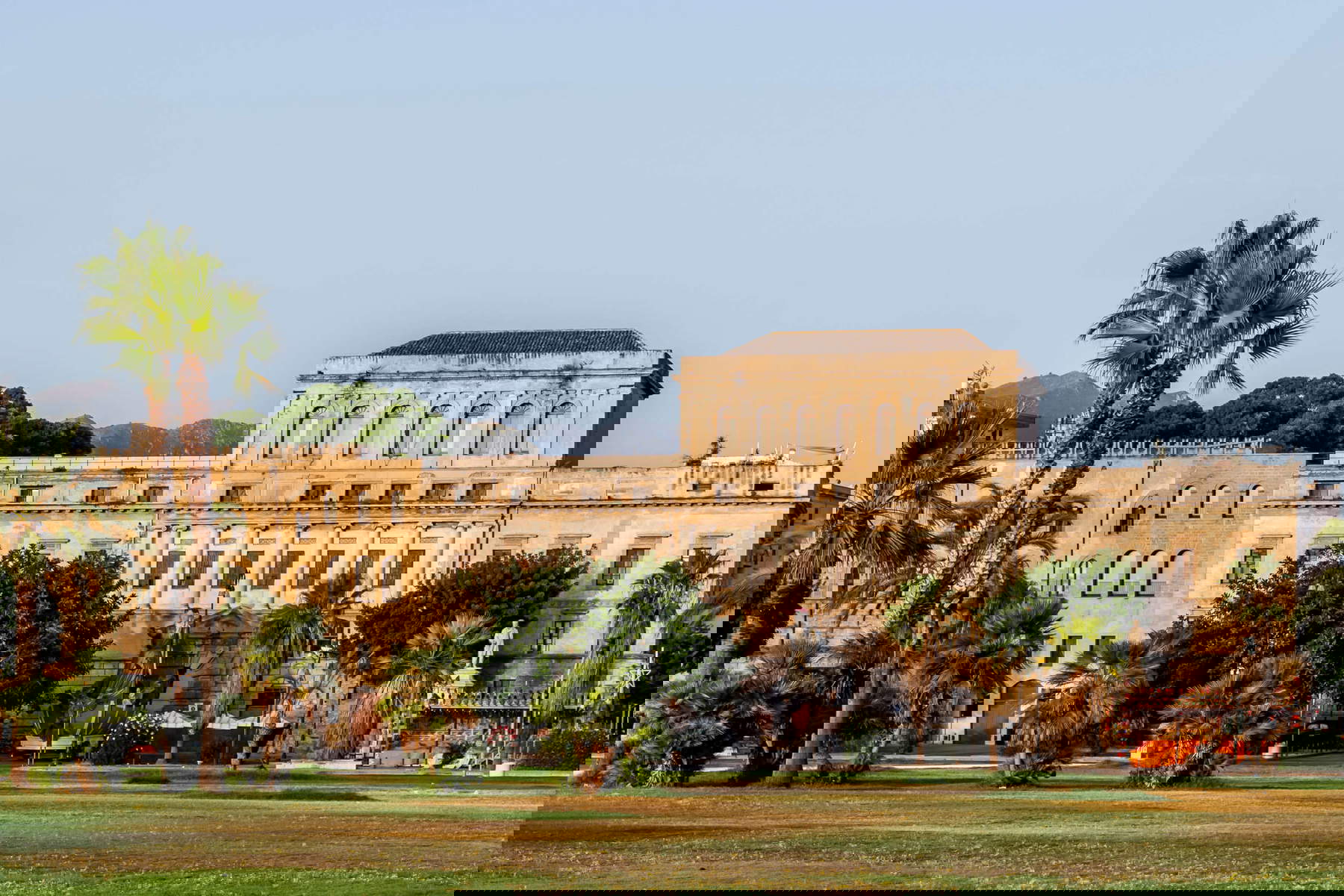
Hauser & Wirth, one of the most influential art galleries on the international scene, has acquired Palazzo De Seta, a historic building located in the center of the Kalsa district in Palermo. The deal, according to a report by Repubblica Palermo, was formalized in mid-November with the signing in front of a notary public and would represent the first Italian settlement for the Swiss giant, which has offices in Europe, the United States and Asia. At the moment, however, the property is under historical-monumental constraint and the Sicilian Region, together with the Ministry of Culture, has sixty days to exercise its right of pre-emption. In fact, the gallery’s interest in Palermo is not new. Back in 2018, as Artslife writes instead during the months of Manifesta, a biennial traveling exhibition of contemporary art, rumors had circulated about a possible negotiation for Palazzo Costantino, at the Quattro Canti. That dialogue was not followed up, but it did not discourage the gallery from continuing to consider establishing a venue in the Sicilian capital. The acquisition of Palazzo De Seta would thus mark the concretization of that prospect, just a few steps away from Palazzo Butera, the major cultural operation carried out by collector Massimo Valsecchi.

Palazzo De Seta had been one of Manifesta’s exhibition venues, among the most visited at the biennial, and its state of fascinating decay had attracted attention for its ability to accommodate contemporary interventions without losing its original character. The structure covers about two thousand square meters, comprising the main floor, the wing facing the current NH Hotel, the area connected to the Porta dei Greci, and a building that will be used for administrative functions. Despite the sale, ANCE, the Palermo Association of Building Contractors, which has owned the building since 2003, will retain some of the space. The association has managed consolidation, renovation and maintenance work on the complex over the past two decades.


The history of Palazzo da Seta
Palazzo Forcella De Seta is considered one of the most outstanding examples of19th-century eclecticism in Palermo. It originally constituted the seaside casina of the Bonanno, princes of the Cattolica, in charge of the surveillance over the Vega bastion of the city walls. Damage sustained during the revolutionary uprisings of 1820 necessitated a comprehensive redesign. In 1833 ownership passed to Enrico Forcella, marquis of Villalonga, who involved leading architects such as Nicolò Puglia and Emmanuele Palazzotto. The central part and the facade facing the sea were redesigned according to the canons of neoclassicism, with a double order of half-columns and Ionic pilasters. The interior featured three distinctive rooms: the so-called Alhambra room, the octagonal room, and the Mosaic room. The first two spaces echoed the Moorish style, with arabesque decoration in polychrome stucco, marble inlay floors, and a fountain inspired by the gardens of the Alhambra. The Mosaic Hall, on the other hand, echoed the decorative tradition of Arab-Norman royal palaces, particularly King Roger’s Hall at the Royal Palace. These interventions were complemented by the contribution of architect Giuseppe Patricolo, who redesigned the elevation on Piazza Kalsa according to a neo-Gothic language, introducing archiacuate openings. In the early 20th century the palace passed to Marquis Francesco De Seta, prefect of Palermo, who commissioned the painter Onofrio Tomaselli to fresco the Triumph of Spring in the neoclassical hall. The building became one of the busiest social places of Palermo’s Belle Époque. Between 1937 and 1940 it housed the Mediterranea gallery directed by painter Lia Pasqualino Noto, and then was used as a gambling hall and later as the seat of the Council of Administrative Justice.

The arrival of Hauser & Wirth, if confirmed after the preemption expires, would insert Palazzo De Seta into a global network that includes New York, Los Angeles, London, Somerset, Zurich, St. Moritz, Gstaad, Basel, Menorca, Chillida Leku, Munich, Paris and Hong Kong. For Palermo, therefore, it would represent a new chapter in the transformation of the Kalsa district.
|
| Hauser & Wirth acquires Palazzo De Seta in Palermo: toward a new Italian outpost |
Warning: the translation into English of the original Italian article was created using automatic tools. We undertake to review all articles, but we do not guarantee the total absence of inaccuracies in the translation due to the program. You can find the original by clicking on the ITA button. If you find any mistake,please contact us.