





Redefining the very concept of the exhibition pavilion, removing it from the centrality of physical space and transferring it to the domestic dimension. It is on this premise that In Home Pavilion, a project by the collective led by Luca Rossi, is based, which after its first activation during the 2024 Venice Biennale returns for the 2026 edition with a new configuration and a theoretical framework that insists on redefining contemporary exhibition models.
The starting idea is clear: the best Biennale pavilion can coincide with one’s home. A location that is structured as an operational device. If in 2024 participation involved the purchase of a video tutorial suggesting home activation methods to access Luca Rossi’s Hidden Works, in the new edition the system is simplified and reformulated. Instructions are now conveyed through a PDF file that takes on the function of a ticket to the pavilion, transforming a digital medium into the symbolic and operational threshold of the artistic experience.
“In 2024,” says the collective led by Luca Rossi, "despite a fair amount of communication, we were not satisfied with the number of people who chose to participate in the project, and since these issues, still, are very topical, we decided to propose it in a different guise and proposing works by Luca Rossi that are completely different from 2024. IN HOME PAVILION addresses the issues of environmental sustainability for events such as the Venice Biennale, our ability to train new eyes, and what the value of art can concretely be for our lives."
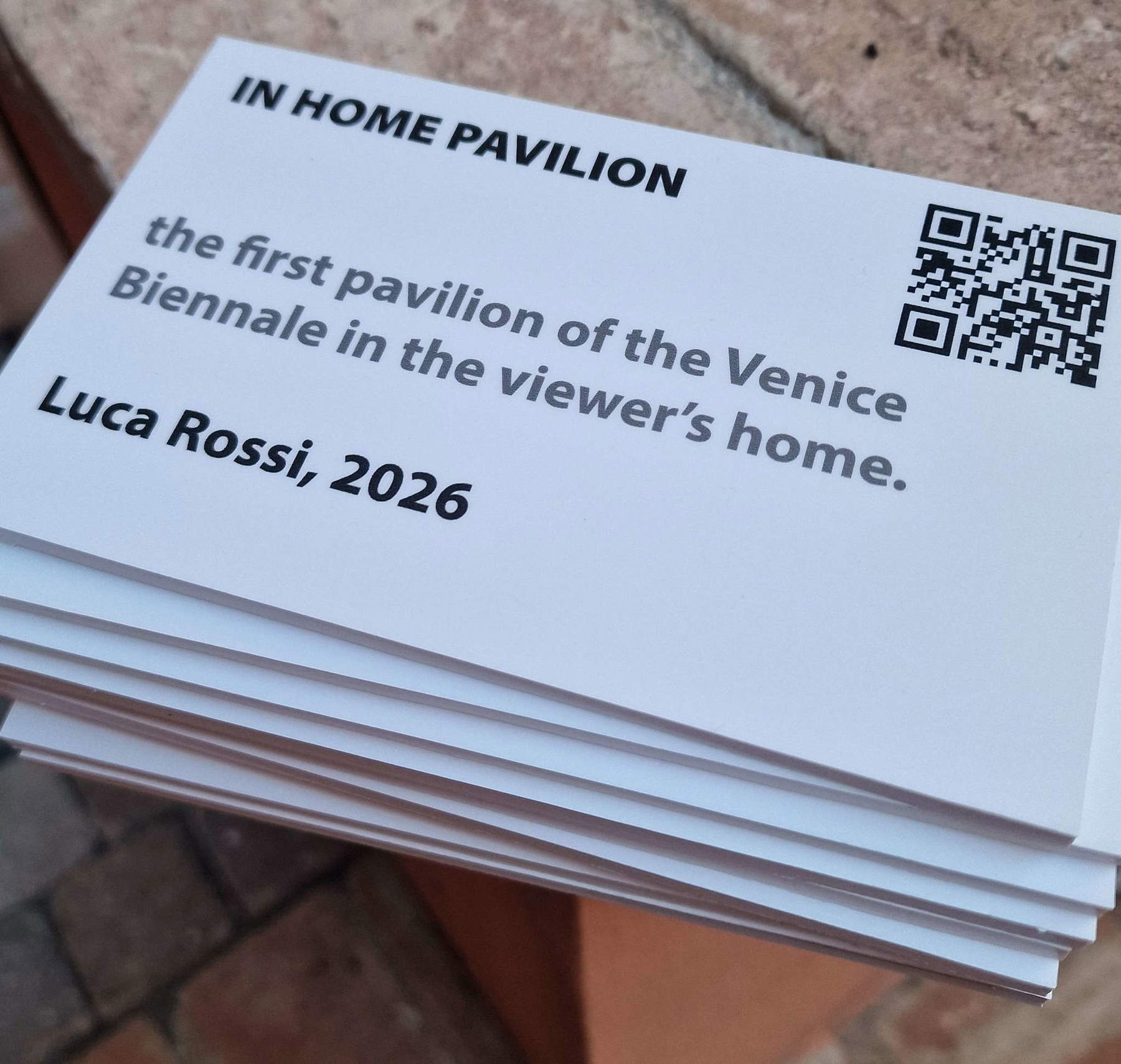
According to the collective, the role of the viewer, does not coincide with that of a curator or artist. The activation required remains circumscribed to a set of precise directives, allowing fifteen works by Luca Rossi to be visible within the domestic space. Each work is configured as a point of intersection between multiple modern and contemporary artists, following a logic already present in Hidden Works. If in the latter the works were hidden, or protected, in the new configuration it is the home itself that performs a protective function, offering a context of fruition that contrasts with the overcrowded conditions typical of institutional exhibitions or the dispersion of the online experience. The idea of a more intimate and concentrated fruition is part of a critique of how art is consumed. Home viewing becomes, in this sense, an alternative to the chaotic dimension of museums and digital platforms, proposing a more direct and less mediated relationship with the work. This reflection is accompanied by a critical stance on the role of the curator in the contemporary system.
“The curator,” the collective adds, “would have an essential role in enhancing and optimizing the artist’s practice but in recent years, in the face of a weakness and homogenization of artists, the curator has inevitably taken over going to eat the artist who remains a kind of color on the curator’s palette. This is most serious because it is as if Wimbledon were played not by Alcaraz and Sinner but by the tournament directors, umpires, and ball-rappers. It would mean losing everyone, exactly as is happening.”
Parallel to the In Home Pavilion project, Rossi plans a series of actions in the Venetian urban space. The main intervention, as the artist says, consists of a special version of the monologue-dialogue about the paper ball, already presented in such contexts as the Quadriennale, Artissima and Arte Fiera. The action is scheduled for May 8 and will take place in the vicinity of the Biennale’s ticket offices and then in a gondola, traversing the city. The performative approach is characterized by a direct and overtly provocative mode. The intention is to intercept a dispersed audience, typical of the biennial context, through a gesture that breaks the neutrality of the exhibition space.
“The time of the cynical escape, of the Catholic ’I’ll be right back’ is over. I will start by shouting that if a work of art has no value for our lives we can do without it, we can do without the Biennale,” says Luca Rossi.
The outcome of the action remains, in Rossi’s words, unpredictable. Indeed, the context is described as chaotic, but it is precisely in this condition that the possibility of intervention lies. Reference to the thought of economist Nicholas Taleb introduces the idea of an ability to thrive in disorder, assuming uncertainty as a structural element and not as a limitation. The action also includes an explicit reference to the Italian cultural tradition. Rossi declares his intention to open his speech with quotations from Manzoni, Leopardi and Dante, and then questions the present through a hypothetical question: what would happen if the entire history of Italian art was suddenly erased. The call is part of the debate over the low presence of Italian artists in the Biennale’s main exhibition, interpreted by some as a crisis of representation. On a systemic level, the Biennale is questioned as a possible supreme tribunal of artistic value.
"The dictatorship of quality juries is ending; it still resists because of a boringly speculative art market. But audiences and collectors need to wake up, because this is all about their lives.
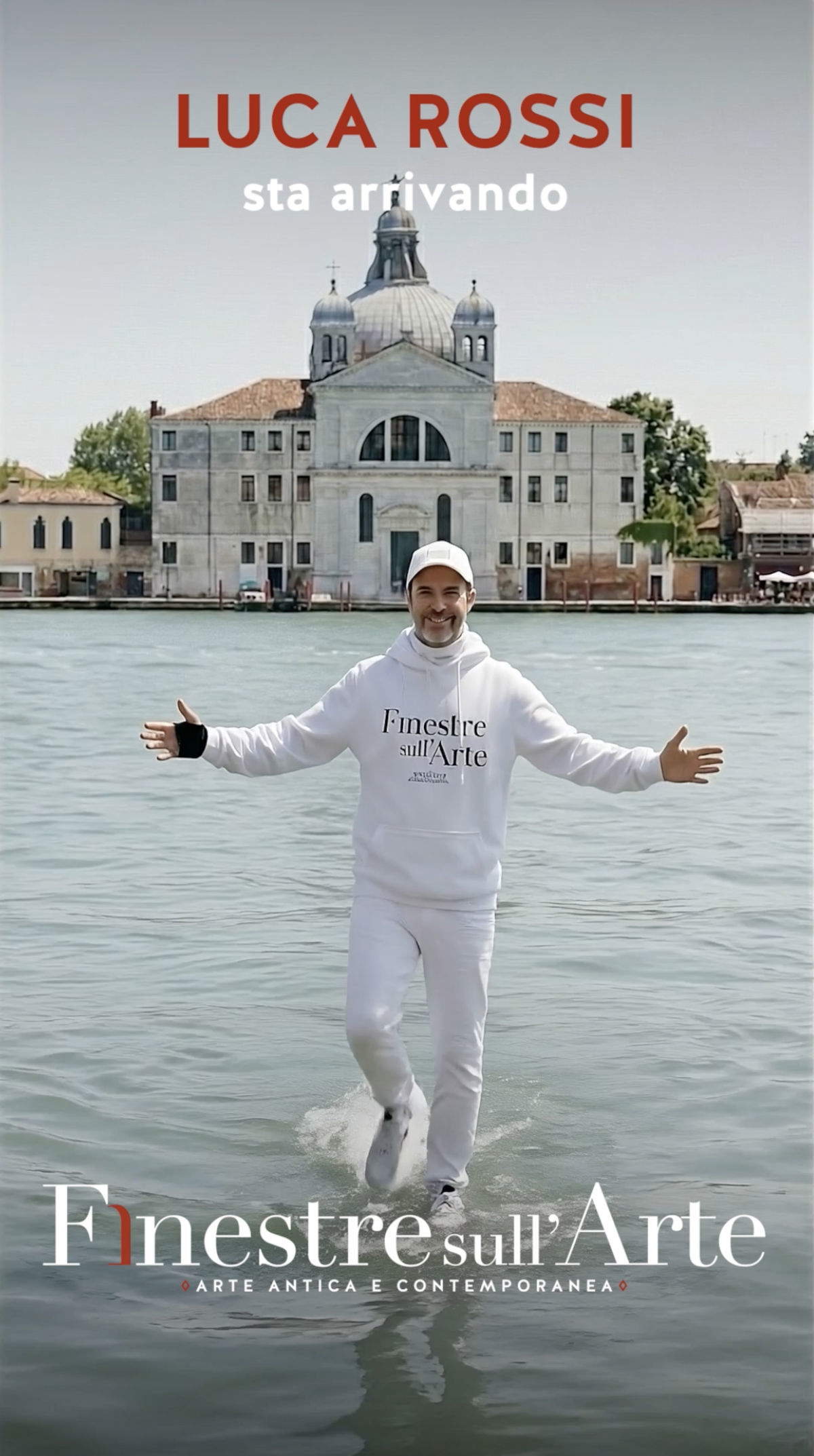
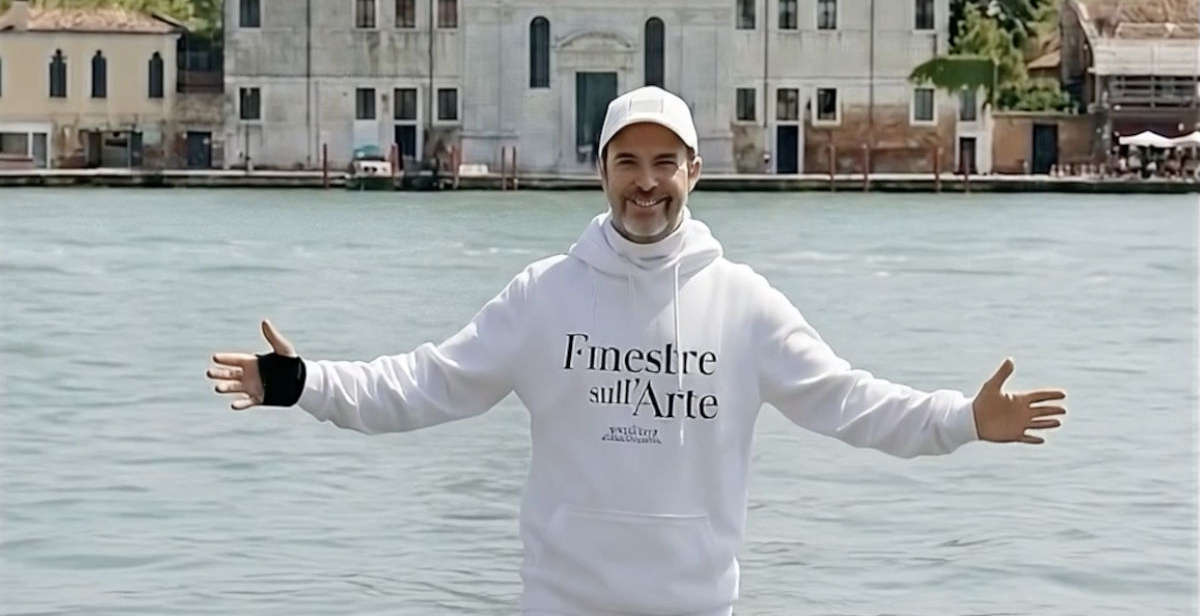
Rossi also introduces a passage with an ironic tone about his own role within the art system, referring to a video circulated in previous days on Finestre sull’Arte ’s profiles in which he appears walking on water, an image that symbolically recalls the size of the Messiah.
“I don’t know if I’m a messiah, but certainly for the past 17 years the treatment of me by the art world shows how bad we are, and how many good artists and curators, beyond Mr. Rossi, have been killed and marginalized professionally.”
The In Home Pavilion project and the actions planned in Venice are thus part of a reflection on the forms of contemporary exhibition and the devices through which art is produced, distributed and legitimized. The shift of the pavilion into domestic space, along with the intervention in urban space, contributes to questioning the centrality of exhibition institutions and the role of mediators in the art system.
 |
| Luca Rossi returns to Biennale as "water messiah" and moves pavilion in house |

Warning: the translation into English of the original Italian article was created using automatic tools. We undertake to review all articles, but we do not guarantee the total absence of inaccuracies in the translation due to the program. You can find the original by clicking on the ITA button. If you find any mistake,please contact us.

















 IT
IT FR
FR DE
DE ES
ES CN
CN


