




After fifty years of being closed to the public, the church of Santa Caterina dei Funari in Rome , one of the city’s most beautiful, is finally accessible again thanks to the efforts of the ASP Istituto Romano di San Michele and its president Giovanni Libanori. The reopening last Nov. 25 returned a place of great historical, artistic and spiritual value to Rome.
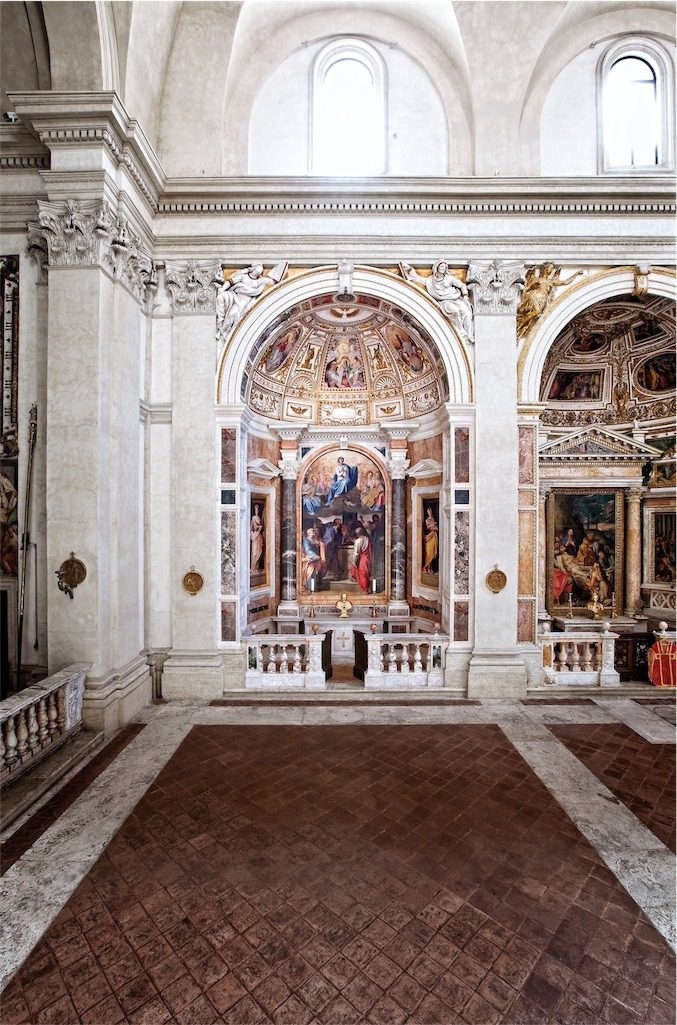
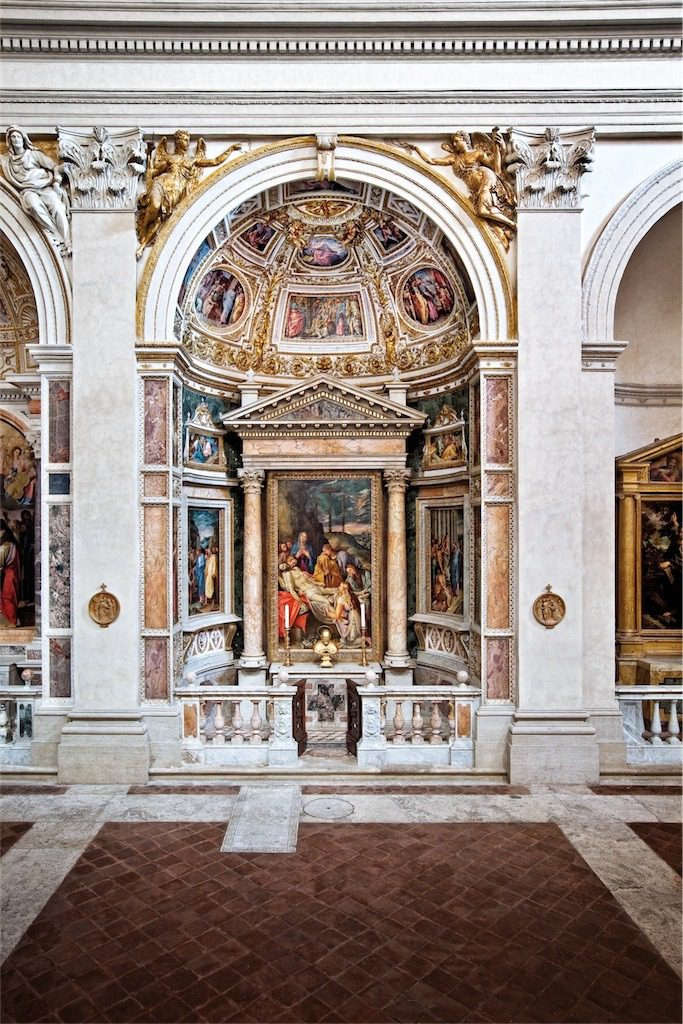
The Church of Santa Caterina dei Funari stands between Via dei Funari and Via Michelangelo Caetani, in the heart of the city’s historic fabric. Its medieval origins are intertwined with the late Renaissance architectural layout defined between the end of the 16th century and the first decades of the next. Dedicated to St. Catherine of Alexandria, a central figure in Christian spirituality, the church preserves fine works by some of the leading figures in Roman art of the late Renaissance. Prominent among them are Marcello Venusti, a collaborator and interpreter of Michelangelo’s language, Girolamo Muziano, among the greatest representatives of Counter-Reformation painting, and Annibale Carracci, who precisely between Rome and Bologna elaborated a style capable of blending naturalism and classicism. Canvases, frescoes and decorations constitute a unified corpus that makes Santa Caterina dei Funari a small treasure chest of art, in which spiritual instances merge with refined pictorial research.

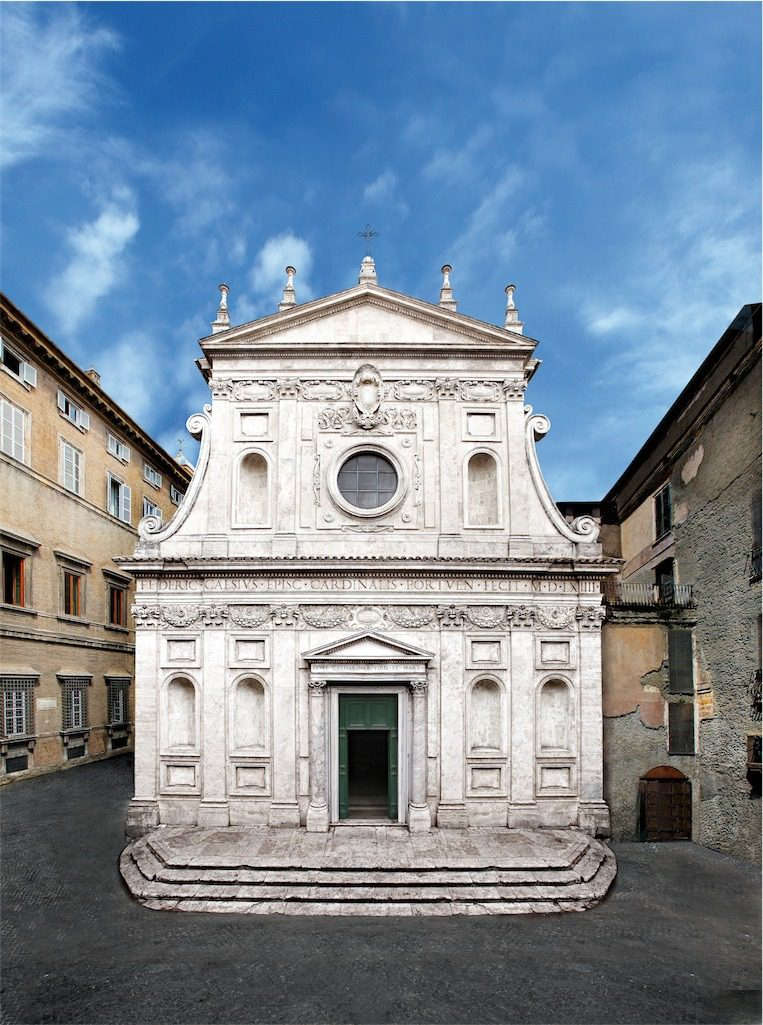

The reopening after half a century takes on a significance that goes beyond the recovery of a monument, as it returns to the community a place of worship and meeting that, for conservation and structural reasons, had remained inaccessible to several generations. The complex thus returns to being a living space, intended for prayer, visitation and contemplation, and once again part of the city’s cultural and religious itinerary. Many of Rome’s citizens have never had the opportunity to cross its threshold, and rediscovering it today means recovering an essential piece of urban memory.
ASP San Michele President Giovanni Libanori stressed the profound significance of this moment, calling the reopening a gift to the city. In his words, returning a place of such artistic and spiritual value is equivalent to reactivating a valuable part of the collective identity. Libanori also expressed special thanks to Don Paolo Nicolini, Rector of the Church of Santa Caterina dei Funari, acknowledging the fundamental role he played in the path that led to the reopening. Institutional and pastoral collaboration made it possible to complete a work that combines heritage protection, care of the sacred space and responsibility to the community.
The reopening of the church is part of a broader path of enhancement promoted by the ASP Istituto Romano di San Michele, which in recent years has launched a systematic project to protect its historical and artistic heritage. As Libanori recalls, this achievement represents a stage in a commitment destined to continue over time in order to return spaces and testimonies of great cultural and spiritual relevance to the community. The role of the ASP is thus confirmed as essential in safeguarding a widespread heritage that tells the story of the city and its religious, welfare and cultural institutions.
The return of Santa Caterina dei Funari to the public is not only an operation of architectural recovery, but an action that involves identity, memory and community. This place, located in one of the most stratified areas of the city, represents an important piece in the understanding of the Roman historical fabric, in which the signs of the Renaissance overlap with medieval pre-existences and the transformations of the following centuries. The reopening, guided by the desire to enhance a common good, represents a concrete act of protection and an invitation to rediscover an important part of Roman history.
 |
| Rome, the Church of Santa Caterina dei Funari reopens after fifty years |

Warning: the translation into English of the original Italian article was created using automatic tools. We undertake to review all articles, but we do not guarantee the total absence of inaccuracies in the translation due to the program. You can find the original by clicking on the ITA button. If you find any mistake,please contact us.













 IT
IT FR
FR DE
DE ES
ES CN
CN