





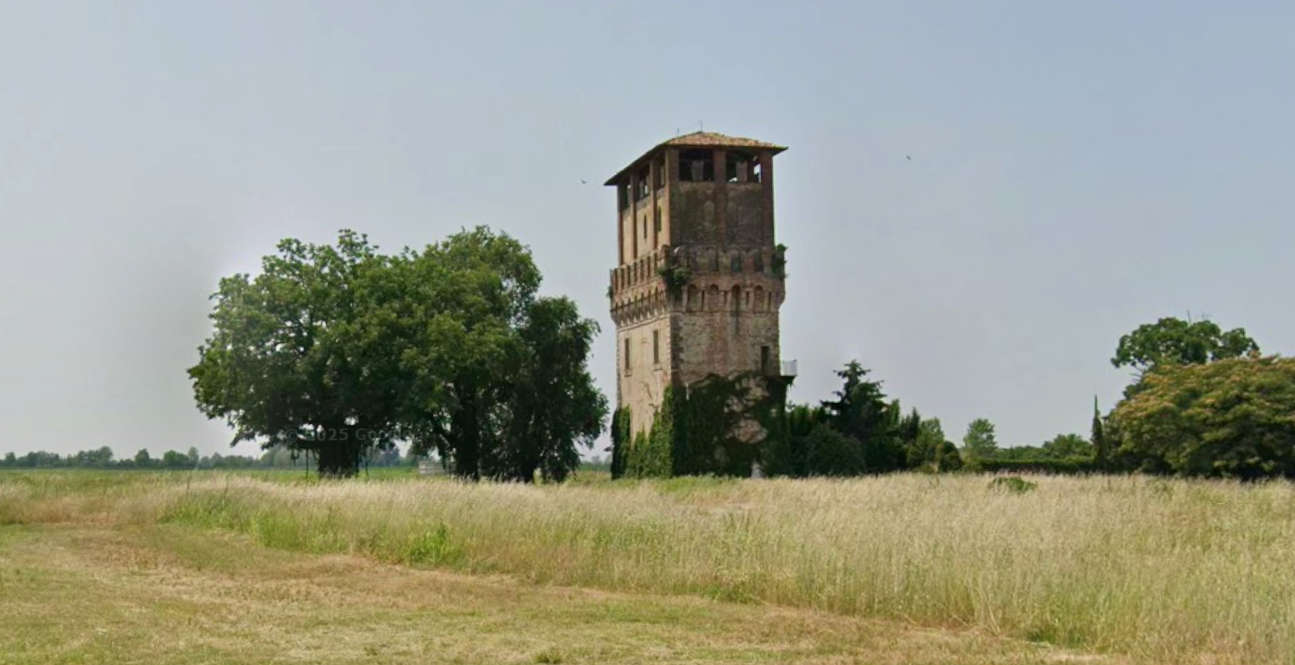
The extremely precarious condition of the Azzano Tower, located in the municipality of Torlino Vimercati (Cremona, Italy), is of increasing concern. The building, an asset of considerable historical and artistic significance dating back to medieval times, represents a fundamental element for the Cremasque area, being closely linked to the events of the Battle of Agnadello that took place in 1509. Despite its value, the structure is currently in a state of neglect and degradation that threatens its overall stability, raising fears of possible and imminent structural failure.
This is hardly a new case: as early as 2021, the local community was already reporting problems with the tower. And now the case has come to the attention of the Chamber of Deputies through a written question submitted in December 2025 by Congressman Devis Dori of the Green and Left Alliance. The document, addressed to the Ministries of the Interior and Culture, highlights how the private ownership of the artifact has not ensured over time the maintenance necessary to preserve its integrity. The dangerous situation has been further confirmed by local news reports and complaints from various political formations that have pointed out the need for timely intervention to prevent the irreparable loss of a heritage that belongs to the collective memory of the territory.
Architecturally, the Azzano Tower stands out for its peculiar configuration in the panorama of Lombard fortifications. Characterized by a rectangular plan with unequal sides, the structure is interpreted by some experts as a tower-house or a casaforte, originally conceived as a defense outpost. The building rises about twenty-six meters above the surrounding plain and clearly manifests the different phases of its historical evolution. An early section, dating from after the year 1000 and culminating in Ghibelline swallowtail battlements, merges with interventions after the battle of 1509 and with 19th-century remodeling that introduced elements of neo-Gothic taste.
The value of the site is not limited to the exterior architecture alone, but extends to the interior decorative apparatus. According to documented evidence, the second floor of the tower originally housed valuable Renaissance frescoes, attributed by some sources to the 16th-century painter Aurelio Buso. These works depicted mythological scenes, figures of satyrs, nymphs and bucolic themes, as well as floral decorations that adorned the rooms. Although some of this heritage has been lost over time, what remains of such artistic evidence heightens the urgency of securing it to prevent the ultimate destruction of what remains.
Locally coordinated political action involved several administrators from neighboring municipalities, including representatives from Pandino, Agnadello and Vaiano Cremasco. During a meeting held at the Visconti castle in Pandino, a willingness emerged to set up a permanent working table to explore the financing avenues necessary to purchase the property from private parties. The economic estimate for the acquisition operation would be around 120 thousand euros, a figure that the municipality of Torlino Vimercati alone would not be able to sustain independently due to limited budget availability, a situation also reiterated by Dori in the parliamentary question. In fact, the MP pointed out that the mayor stated that the municipality “has its hands tied not having the economic strength to purchase and that a previous attempt to participate in a ministerial call for bids failed,” with the consequence that the“urgency of an intervention is dictated by the need to safeguard a historical and artistic heritage that, in case of collapse, would represent an irreparable loss for the territory and for the potential development of art and nature tourism also linked to the adjoining fountains.”
The mayor of Torlino Vimercati, Giiseppe Figoni, clarified that the local authority has already tried in the past to access ministerial bids for the recovery of the tower, without, however, achieving the hoped-for success. Currently, the administration is exploring the possibility of using local lending institutions to raise the resources, but coordination with higher institutional levels remains essential for the subsequent restoration and enhancement phase. The goal shared by territorial entities is to transform the tower into a cultural garrison, hypothesizing the creation of a museum dedicated to the Battle of Agnadello, an event that saw the forces of the Republic of Venice and those of the League of Cambrai clash in the very vicinity of the site.
The urgency of action is also dictated by climatic and environmental factors. Representatives of Europa Verde pointed out that the building has obvious cracks and is partially overgrown with weeds, conditions that make the structure vulnerable to accidental loads such as any winter snowfall. The competent Superintendence for the provinces of Mantua, Cremona and Lodi has already placed the tower under protection as a cultural asset, formally recognizing its public interest, but this measure alone does not guarantee the financial resources for consolidation.
In addition to the historical and artistic dimension, the restoration project aims to integrate the tower into an art and nature tourism circuit that also involves the adjacent fountains and historic agricultural structures in the surrounding area. It envisions the creation of educational and tourist routes linking the castle of Pandino with the Tower of Azzano, providing economic and cultural development opportunities for the entire area. This strategic vision is also supported by ANCI Lombardia, which has been following the development of the matter for some time to provide technical and administrative support to the municipalities involved.
The Tower of Azzano has also been the object of attention by citizens through the census of the Places of the Heart promoted by the FAI, obtaining over time several reports and votes that testify to the affective bond of the population towards this monument, even if the monument has not obtained enough votes to obtain funds for restoration.
The parliamentary question therefore asks the government what urgent steps it intends to take, in synergy with local authorities, to facilitate the transfer of the property to public ownership and ensure its preservation. It is emphasized that the collapse of the tower would not only constitute a material loss, but would deprive the territory of a fundamental element of its national and local history, thwarting the efforts made by communities to enhance their past. Technical cooperation and the financing system remain the central knots that need to be unraveled to ensure a future for this 15th-century testimony, before the worsening degradation makes any form of recovery impossible.
|
| Saving the Tower of Azzano (Cremona): case reaches Parliament to prevent collapse |

Warning: the translation into English of the original Italian article was created using automatic tools. We undertake to review all articles, but we do not guarantee the total absence of inaccuracies in the translation due to the program. You can find the original by clicking on the ITA button. If you find any mistake,please contact us.































 IT
IT FR
FR DE
DE ES
ES CN
CN