





It used to be an underground gesture, an illegal act, a visual urgency that broke into the urban fabric to contest, to disturb, to dialogue. Today, street art fills the pages of art magazines, is commissioned by public administrations, attracts tourist flows, enters museums. It has become respectable. But in this shift from marginality toinstitution, has it lost or gained? Is it still art that interrogates social space, or has it become just high-stagrammable urban decoration? This is a complex question, because the term “street art” has become increasingly broad, fuzzy, ambiguous. Under the same label we find murals made by local artists to upgrade suburbs and small towns, large works signed by international names and produced with industrial facilities, the still illegal graffiti that multiplies in the liminal areas of metropolises, but also participatory projects, community experiences, hybrid forms that use the street as a laboratory. The question is: What is the function of street art today? What kind of look does it propose on the present? Is it still, as it once was, a language of resistance, or has it turned into an extension of urban marketing?
The trajectory of street art over the past two decades has been rapid and partly unexpected. Born as a form of expression often hostile to authority-think of the graffiti writing of the 1980s, the use of the stencil as a vehicle for a political message, the nocturnal raids on trains or walls-it has gradually become a recognizable genre, appreciated by the general public and accepted by the art system. Banksy is the most emblematic case of this transformation. A faceless artist, born in illegality, became a global phenomenon, with sky-high quotations, exhibitions blocked by the courts, works peeled off walls and sold at auction. But his success had a contagious effect: he paved the way for hundreds of artists, festivals, collectives who found in the street a stage and in visibility a new form of legitimacy.
Today, every city has its own street art festival. Entire neighborhoods are "regenerated" through the intervention of mural artists. Public administrations promote calls to “enhance the territory” through urban art. In many cases, these are sincere, participatory, carefully constructed projects. But there is no shortageof ambiguity: street art is also used to cover the cracks in a struggling social fabric, to make gentrification processes acceptable, to transform protest into decorum. The most critical aspect is precisely this: how “uncomfortable” has street art remained? When it is planned, approved, financed, institutionalized, can it still be a voice out of the chorus? Or does it turn into a form of aestheticization of dissent?
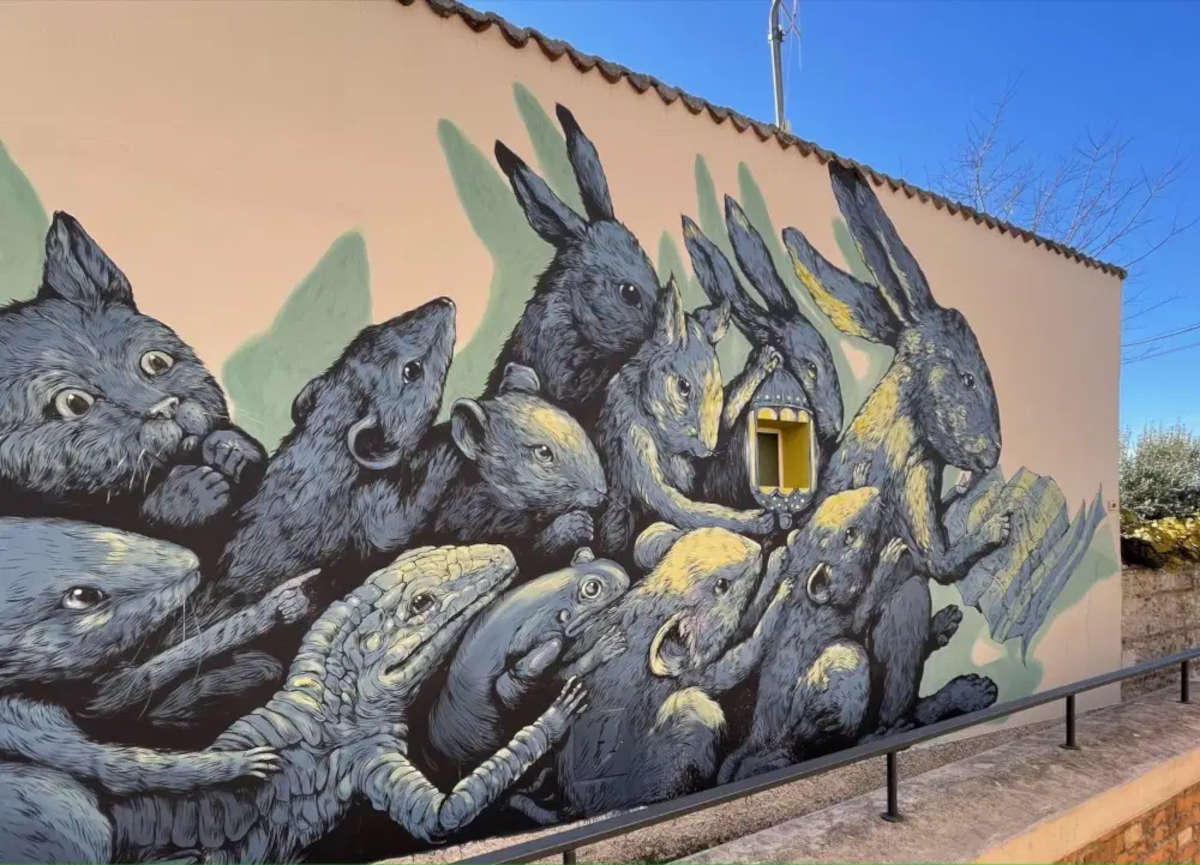
Many murals today seem more like posters than provocations: reassuring images, easily readable iconography, figures celebrating diversity, hope, memory, beauty. Nothing wrong with that, in itself. But the risk is that everything becomes too neutral, too pacified. Language adapts, cleanses itself, becomes suitable for everyone and no longer bothers anyone.At one time, urban art was annoying. Today it is liked. And this transformation raises no small question: the effectiveness of an artistic gesture is also measured by its ability to generate conflict, to challenge the dominant gaze. If, instead, it becomes a decorative frill, even the most formally valid work risks losing political force.
In Italy, street art has experienced a real boom in recent years, both in terms of the quality of the artists involved and the territorial extension of the phenomenon. From Bologna to Rome, from Turin to Palermo, to small villages in the Apennines or industrial suburbs, walls have been transformed into public canvases. Artists such as Blu, Ericailcane, Alice Pasquini, Gio Pistone, Hitnes, Tellas, and Millo have developed personal languages, deeply rooted in places. But here, too, the debate opens up. Projects such as FAME Festival, Outdoor, Urban Memories, Cheap, Mural Park, have shown how it is possible to build a serious relationship between art and territory. But the success of these models has prompted many administrations to multiply interventions, not always with the same focus. The risk is that of a forced “muralization” of urban centers, which uses street art as an aesthetic maquillage instead of a critical tool. What happens when public art becomes urban “wallpapering”? And what is the difference today between a work by Blu that explicitly criticizes the art system and a mural commissioned by a fashion brand?
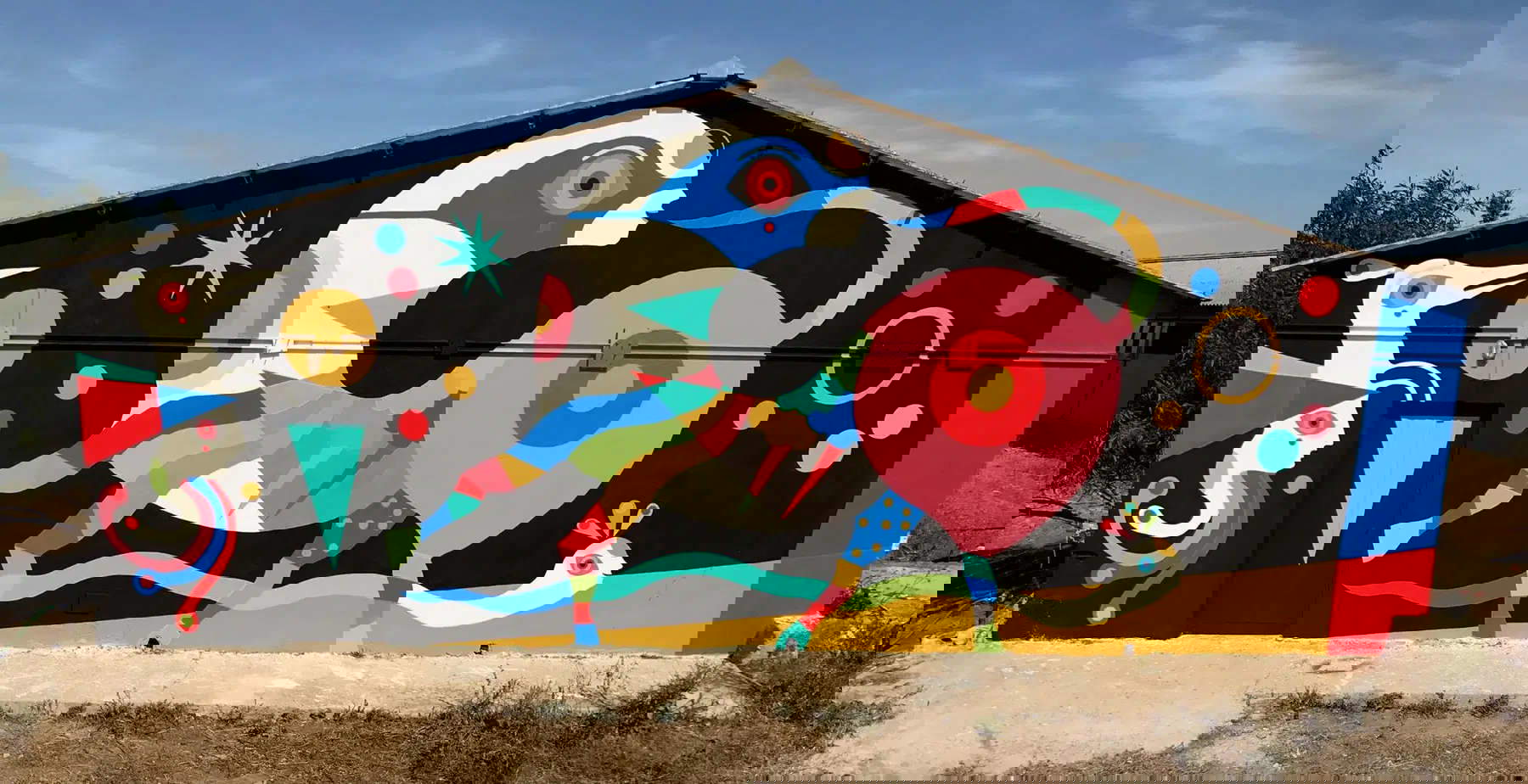
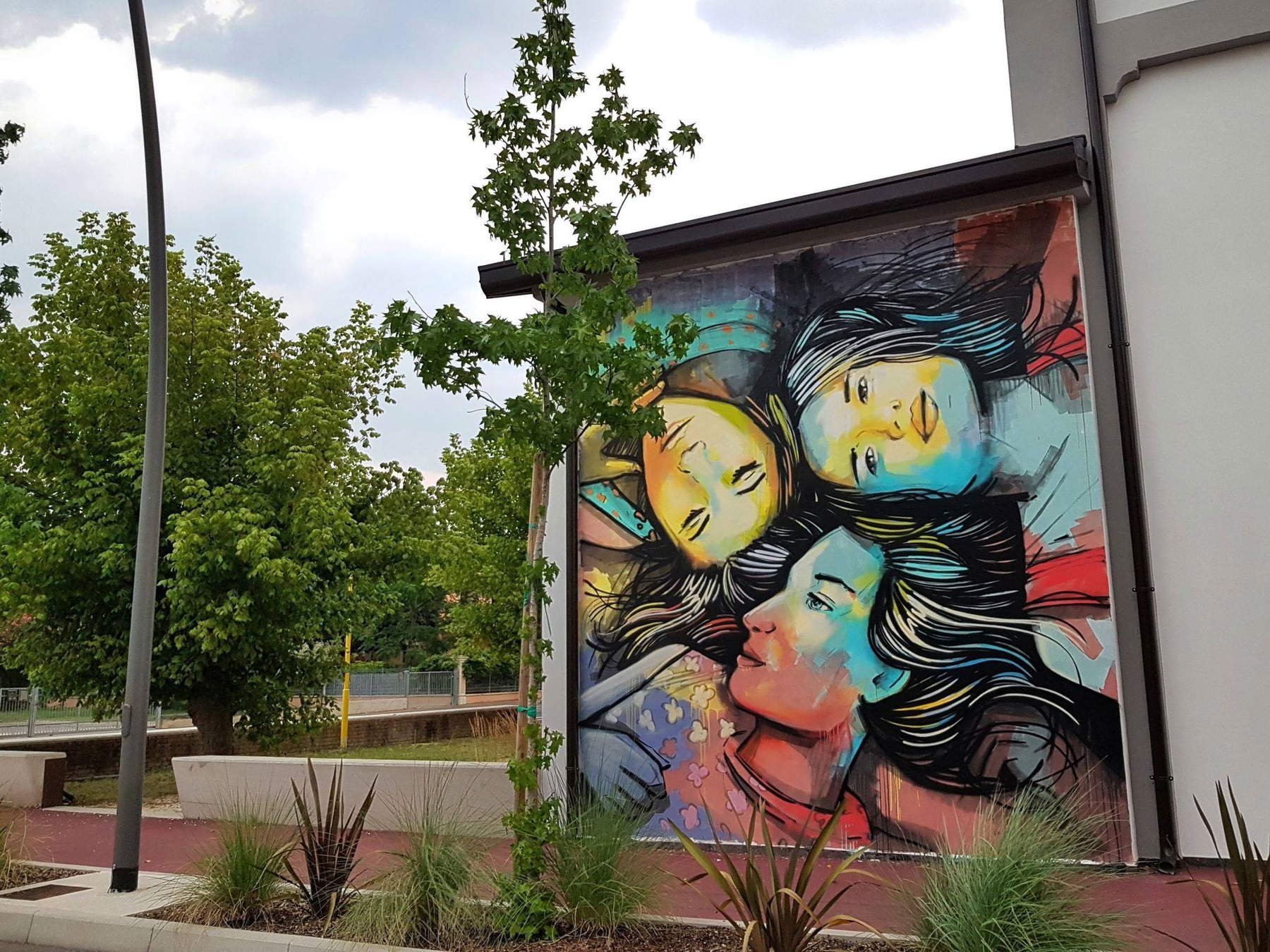
Despite these questions, street art continues to be one of the most vital contemporary languages. No longer just mural painting, it is an expanded practice that crosses architecture, landscape, technology, and performance. Some artists work on abandonment and the invisible (see Elfo), others use the urban context as a space for error and irony (such as Fra Biancoshock or Exit Enter), and still others integrate digital and interactive elements to activate new forms of narrative.
The real challenge today is this: being able to keep alive the dimension of urgency, the ability to read context, to work on conflict, identity, memory, without becoming a tool of consensus or marketing. The street remains a privileged place of direct communication. But for it to really work, it must be traversed by questions, not just images. That street art has come out of the margins is a fact. It has entered museums, books, tourist maps. But has it brought the original spirit with it, or has it sacrificed it for visibility? Is it still a language of rupture, or has it become a pacified surface? In a world traversed by environmental crises, social tensions, accelerated urban change, street art can still be a tool of critique, storytelling, and community. But it must know how to renew itself, avoid complacency, recover the courage of the unauthorized gesture, of doubt, of complexity. Perhaps this is its new challenge: to never stop disturbing, even when everyone seems to be applauding.


The author of this article: Federica Schneck
Federica Schneck, classe 1996, è una giornalista specializzata in arte contemporanea. Laureata in Storia dell'arte contemporanea presso l'Università di Pisa, il suo lavoro nasce da una profonda fascinazione per il modo in cui le pratiche artistiche operano all’interno, e in contrapposizione, alle strutture sociali e politiche del nostro tempo. Si occupa delle trasformazioni del sistema dell'arte contemporanea, del dialogo tra ricerche emergenti e patrimonio culturale, del mercato, delle istituzioni e delle fiere internazionali. Alla scrittura giornalistica affianca quella critica, con testi per artisti, gallerie e collezioni private.Warning: the translation into English of the original Italian article was created using automatic tools. We undertake to review all articles, but we do not guarantee the total absence of inaccuracies in the translation due to the program. You can find the original by clicking on the ITA button. If you find any mistake,please contact us.
























 IT
IT FR
FR DE
DE ES
ES CN
CN


