





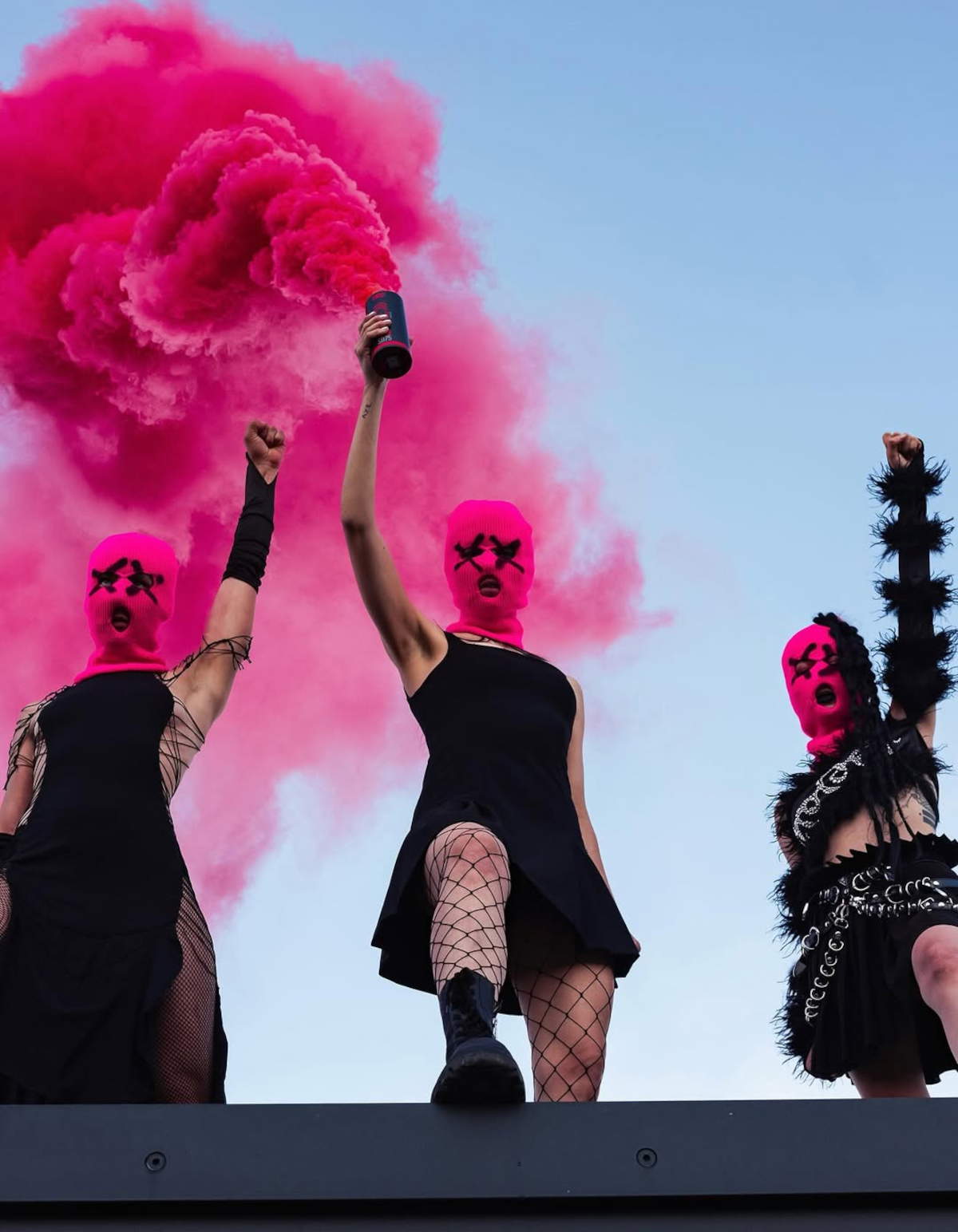
On the day of the pre-opening of the Venice Art Biennale 2026, the Pavilion of Russia was at the center of a protest organized by the Pussy Riot collective, which staged a demonstration action against Russian President Vladimir Putin. As reported by the newspaper Vanity Fair, the action took place in a context already marked by high political and institutional tensions, in a demonstration that also involved the security measures prepared by the police, who were present with a reinforced control device at the entrance to the pavilion.
According to reports, the action developed in ways typical of the Russian collective: shouting, performances with a provocative character, the use of smoke bombs and the display of the Ukrainian flag. Some members of the group presented themselves in a simulated musical performance, with guitars and noisy interventions that contributed to the atmosphere of strong visual and aural impact. Slogans against Putin, including references to a “free Russia,” were chanted during the protest, while there was also an attempt to forcibly approach the entrance to the pavilion.
As the newspaper reports again, the Russia Pavilion had recently been reopened amid protests and controversy. The decision to maintain the Russian presence within the event has fueled a debate that has also extended to Israel’s participation, both of which have come under criticism in relation to their respective war contexts and ongoing international tensions. The handling of the two countries’ participation has helped define a climate of growing friction around the 2026 edition.
The situation was further complicated following the international jury’s decisions. On April 22, it had been announced that the awards would not take into account pavilions from countries whose leaders are recipients of International Criminal Court warrants, with implicit reference to Vladimir Putin and Benjamin Netanyahu. This position had a direct impact on the internal balance of the event. Indeed, on April 30, the five members of the international jury resigned en bloc. All women, the jurors left their posts, opening an institutional crisis without recent precedent in the Biennale’s history.
In response to the situation, the Biennale confirmed its line on the participation of the countries involved, reaffirming the principle of inclusion and the role of art as a space for confrontation even in the presence of geopolitical conflicts. In any case, the choice entailed a change in the prize-giving system: no prizes will be awarded by a traditional jury during the opening days. Instead, a new mode of recognition, based on public voting, has been introduced. The two new awards, called the Visitors’ Lions, will be given directly by visitors and will be awarded in November.
Pussy Riot’s protest fit into this already complex picture, overlapping with diplomatic and organizational tensions. During the action, as Vanity Fair reports, the noise of the performance and smoke bombs also covered the electronic music played inside the pavilion, contributing to a temporary disruption of planned activities in the area. The episode further highlighted the centrality of geopolitical issues within the 2026 edition of the Biennale, which opened against a backdrop marked by resignations, protests and redefinitions of the award system.
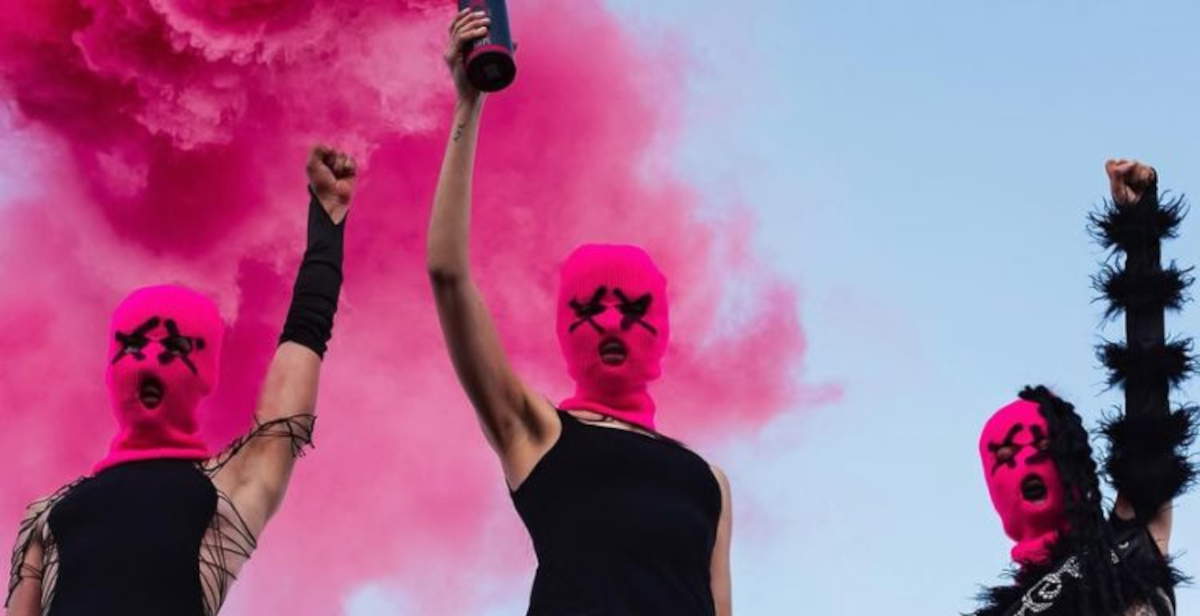 |
| Venice Biennale, Pussy Riot protest in front of Russian pavilion against Putin |

Warning: the translation into English of the original Italian article was created using automatic tools. We undertake to review all articles, but we do not guarantee the total absence of inaccuracies in the translation due to the program. You can find the original by clicking on the ITA button. If you find any mistake,please contact us.

























 IT
IT FR
FR DE
DE ES
ES CN
CN