





The history of one of Andy Warhol ’s (Pittsburgh, 1928 - New York, 1987) masterpieces, namely the Ladies and Gentlemen series, which was first exhibited in its entirety right here at the Palazzo dei Diamanti between October and December 1975 (and is back here, on its 50th anniversary, for the exhibition Andy Warhol. Ladies and Gentlemen, curated by Chiara Vorrasi, from March 14 to July 19, 2026). The series has its roots in the mid-1970s, and represents a moment of profound transformation in Andy Warhol’s creative trajectory. The project officially began in May 1974, when gallery owner and art dealer Luciano Anselmino traveled to Turin to propose an unprecedented commission to the American artist concerning a series of large-format prints and pictorial works. Anselmino’s original idea was to persuade Warhol to portray figures emblematic of New York transvestism, but initially the artist was skeptical, arguing that the drag queen phenomenon was outmoded by the times. Anselmino insisted by proposing historical names associated with the Factory such as Candy Darling, Jackie Curtis, or Holly Woodlawn, but Warhol pragmatically objected: Candy Darling, for example, had recently passed away, and the artist feared that the other female collaborators would demand ever higher fees as soon as the works were sold. So it was at that moment that the Turin art dealer suggested a conceptual variation that would prove decisive: not to portray subjects who tried to appear perfectly feminine, but rather figures who exhibited the obvious traits of their native gender, such as beards or marked male features.
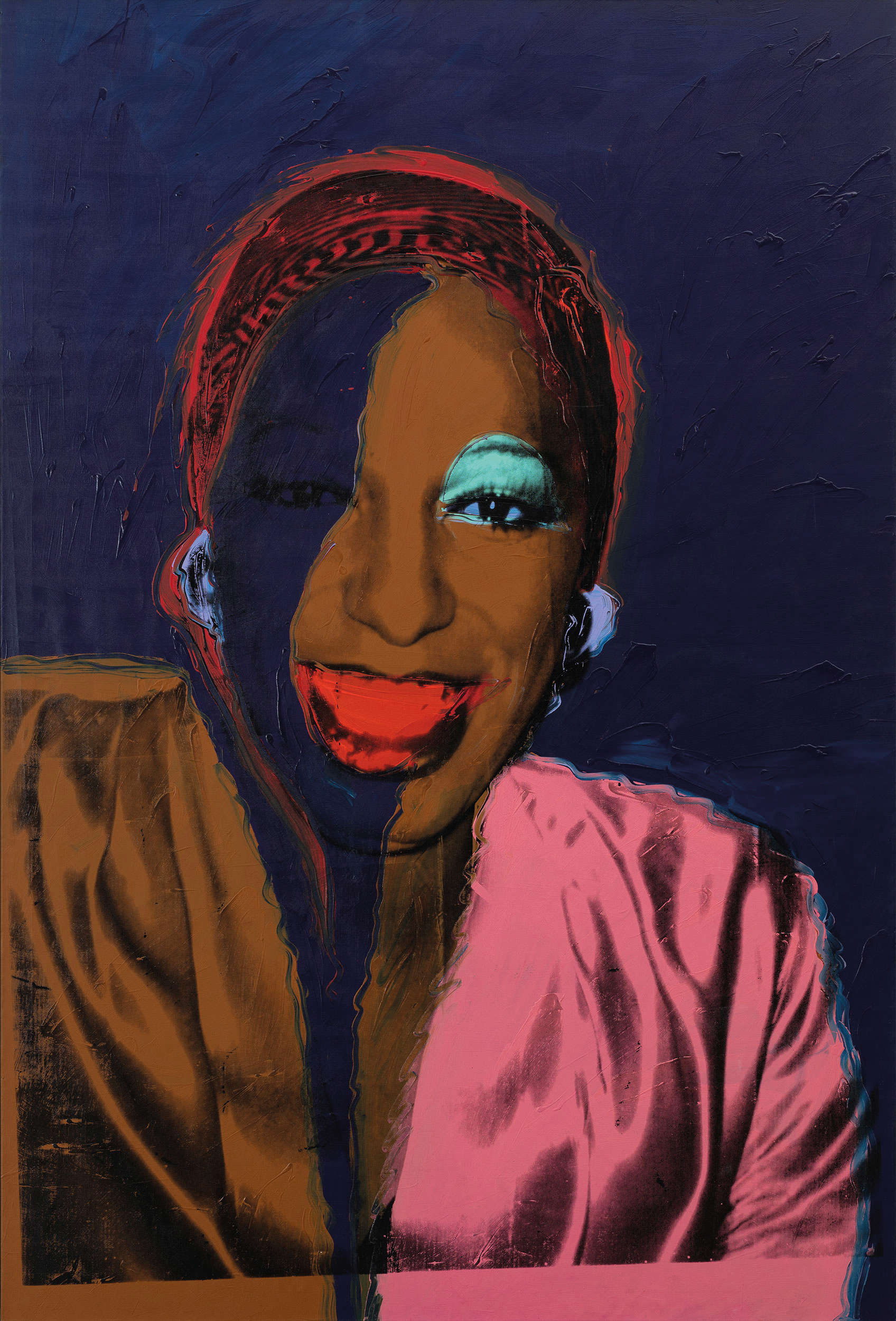
Overcoming initial resistance and after a few unconvincing attempts to photograph his assistants in women’s clothing, Warhol accepted the challenge and entrusted his closest collaborators with the task of recruiting models. Bob Colacello, Ronnie Cutrone, and Vincent Fremont began frequenting the Gilded Grape, a nightclub located near Times Square and known to be a landmark for the African American and Latino queer community. The approach was direct and almost bureaucratic: potential subjects were offered a $50 fee for a thirty-minute photo session at the Factory. The models, often unaware of the identity of the photographer, who remained protected by a certain anonymity, would show up at the studio where Warhol would shoot hundreds of Polaroids, capturing their exuberance and innate theatricality. Thus, between 1974 and early 1975, the artist collected more than five hundred photographs of fourteen different models, including such figures as Marsha P. Johnson and Wilhelmina Ross, who later became among the most recognizable icons of the series.This production also marked a significant economic shift in the management of Warhol’s work, as Anselmino secured funding of several hundred thousand dollars, supported by Venetian collector Carlo Monzino.
Technically, Ladies and Gentlemen represented a departure from the cold mechanical reproducibility that had characterized Warhol’s earlier work. The artist returned to using brushes and fingers to spread color, creating textural and vibrant surfaces where the screen-printed photographic base was literally submerged in layers of dense, gestural acrylic paint: this approach, which critics of the time described as a form of “passionate activism” (so La Stampa reported), aimed to enhance the performative component of the subjects, transforming ordinary and marginalized people into icons endowed with a new media sacredness.
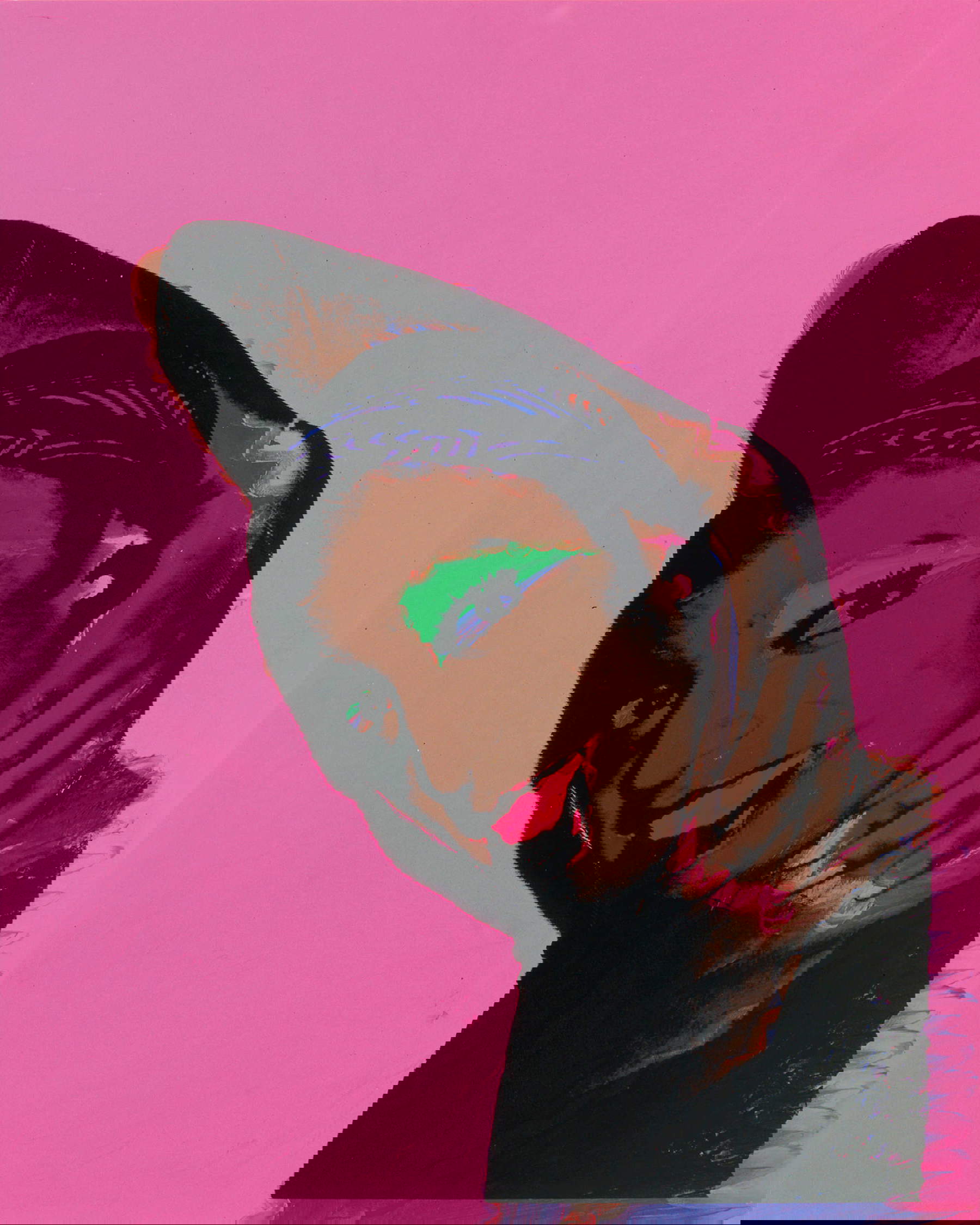
The culmination of this journey was precisely the exhibition organized at the Palazzo dei Diamanti in Ferrara in October 1975, under the far-sighted direction of Franco Farina. The Ferrara one was not just a simple exhibition, but a revolutionary review that presented for the first time in an Italian museum setting one hundred and five works from the series as a world premiere. The event attracted the attention of the international press and a large young audience: an eloquent reflection of the climate of cultural renewal that animated Italy in those years. Warhol personally participated in the opening, creating a singular happening: in fact, the set-up called for the passages between the rooms to be closed off by layers of posters that the artist had to physically tear open to allow the public to enter. “At first,” Farina would have recounted, “he was puzzled, he was a shy person, plus he had a slender build and it took some energy to break through the layers of posters that had hardened overnight, but then he understood the game, and even the hint, he seemed amused and also very impressed to see his works on the walls. As he proceeded, people followed him and entered the rooms, there was a great euphoria in the air.” This symbolic gesture of rupture, combined with the sight of monumental canvases alternating with small formats, created a striking scenographic effect that multiplied the faces of the protagonists along the walls of the Renaissance palace.
During his stay in Ferrara, Chiara Vorrasi reconstructs in the essay that accompanies the 2026 exhibition, Warhol proved fascinated by the local reality: he visited the Giovanni Boldini Museum, being impressed by the Ferrara master’s female portraits, and went to the Video Art Center, where he showed a growing interest in the potential of communication from below and in the medium of television. It was precisely at that time that the artist theorized the idea of a program entitled Nothing Special, in which he would film ordinary people engaged in ordinary conversations, renouncing any authorial intervention. The Ladies and Gentlemen series thus became the visual manifesto of this new philosophy, capable of ennobling the ordinary individual through the lens of art and transforming marginality into a form of aesthetic resistance in the face of the standardization of consumer society
In Italy, the critical reception of Ladies and Gentlemen offered insights that intertwined pop aesthetics with the political and ideological instances of the period. One of the most relevant and dramatic contributions came from Pier Paolo Pasolini (Bologna, 1922 - Ostia, 1975), who dedicated one of his last writings to Warhol’s work shortly before his violent death in November 1975. “The impression,” Pasolini wrote, “is of being in front of a fresco [sic] from Ravenna representing isocephalous figures, all, it is understood, frontal. Iterated to the point of losing their identity and of being recognizable, like the twins, by the color of their dress [...] The ’Different’ in his permissive New York ghetto can triumph as long as he does not step out of a behavior that makes him recognizable and tolerable.” In other words, according to the Friulian poet, the obsessive repetition of the image led to the loss of the individual identity of the subjects, confining them to a permissive ghetto where diversity was accepted only if it remained recognizable and therefore tolerable to the dominant society. That is, Pasolini saw in these works the confirmation of a repressive homogenization operated by consumer power, even though he shared with Warhol a profound interest in reality filmed without filters.
In contrast to the Pasolinian vision, the curator of the Ferrara exhibition, Janus (pseudonym of Roberto Gianoglio), proposed a Marxist reading, interpreting the paintings as an act of denunciation against the social marginality and exploitation of the African American community. For Janus, Vorrasi explains, “the disguise embodied the extreme manifestation of centuries-old racial oppression by the hegemonic white bourgeoisie, and Warholi’s unprecedented stylistic impetuosity sealed the indictment.” And again according to Janus, Warhol’s painterly impetuosity and his fiery flows of color represented a metaphor for a social plague openly defined as a form of modern slavery. Warhol, however, consistently rejected these political interpretations, reiterating his famous surface philosophy. “If you want to know everything about Andy Warhol, you only have to look at the surface: of my paintings, my films and my person. That’s where I am. There is nothing behind it”: a 1966 thought of his that, Vorrasi reconstructs, Warhol had manifested during the exhibition’s press conference. For the artist, truth resided entirely in the skin of the canvas, and he rejected any psychological or sociological depth.
However, a key aspect to understanding the aesthetics of Ladies and Gentlemen is the reference to camp culture and theuse of the mask. Warhol was fascinated by those who actively worked to construct their own ideal femininity, seeing drag queens as living archives of Hollywood myths. “One example for all,” Vorrasi writes, “is offered by the ’dances in drag’ that flourished in New York in the 1920s as part of the African American cultural and identity ferment of the Harlem Renaissance, alongside the literary, poetic and musical experiments of the New Negro movement: Investigated with concern by medical-criminological literature, stigmatized as ’perversions’ by white middle-class gender norms, the dances were condemned by the African American middle-class itself, which ascribed them to white corrupting influence, reading them as a dangerous hindrance to the integration process.”
This inclination toward artifice and the theatricalization of existence led him into dialogue with the great tradition of modernism. Indeed, many scholars have pointed out how the artist may have carefully studied works such as Pablo Picasso’s Les Demoiselles d’Avignon, recalling their sculptural essentiality and use of masks evoking ritual and magical symbolism. However, Warhol operated an urban recontextualization of these elements, using marked makeup and gaudy wigs to create media masks capable of challenging stereotypes. Model Wilhelmina Ross became the emblem of this transformation, appearing in dozens of variations that captured her charismatic personality through formats ranging from the monumental to the intimate. The series also gave visibility to historic figures in civil rights activism, such as Marsha P. Johnson, founder of the revolutionary transgender street movement. Although Warhol initially sought to maintain the models’ anonymity for economic reasons, the work ended up operating a deconstruction of normative models of beauty, prefiguring a fluid and hybrid aesthetic.This interest in the construction of identity through performance also found a parallel in the portraits made during the same period for Mick Jagger, where the artist investigated the rock star’s transgressive sex appeal through body details and studied poses. In both cases, Warhol used painting and silkscreen printing to elevate the subject to a supernatural dimension, transforming the ephemeral of everyday life into something eternal and universal.
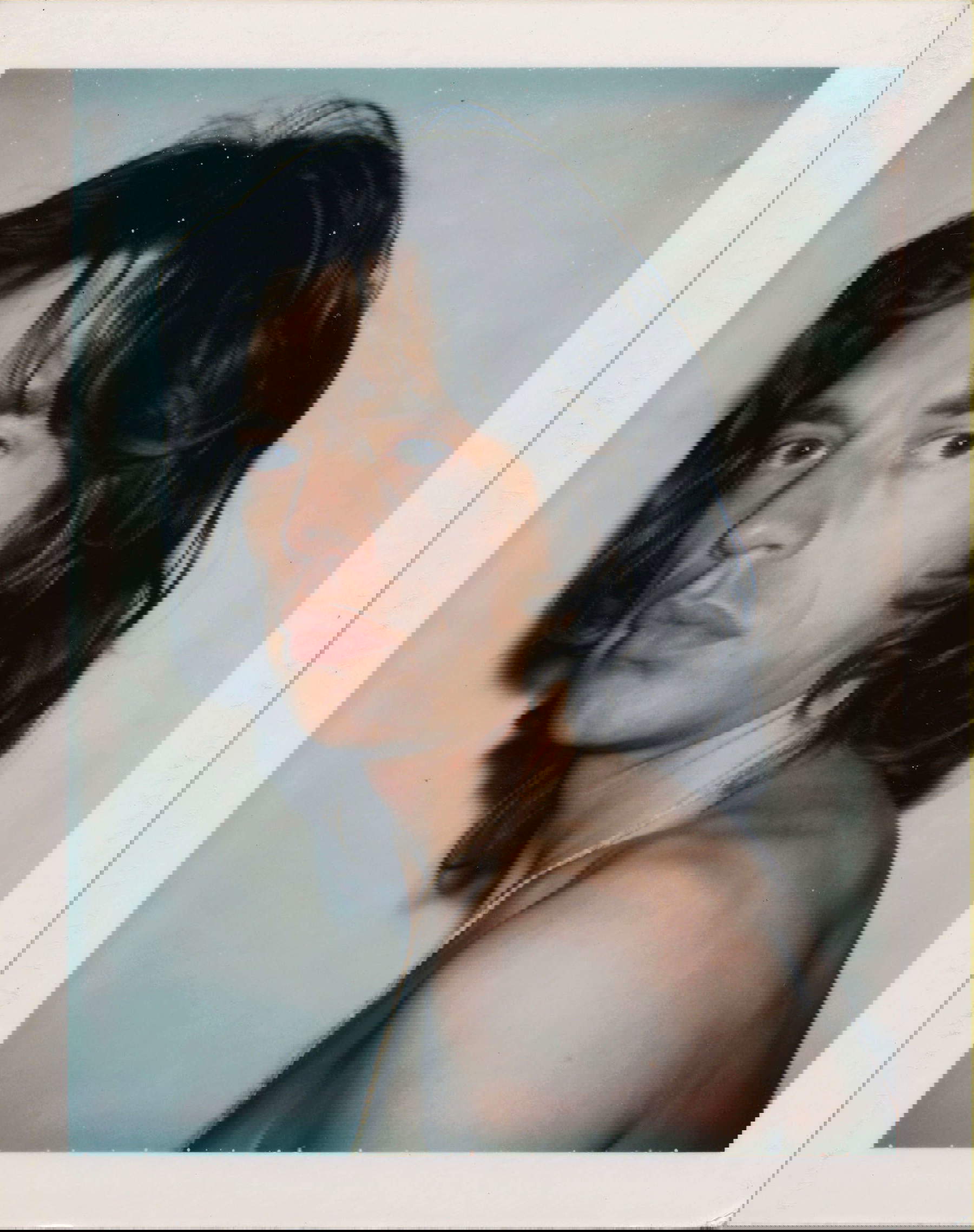
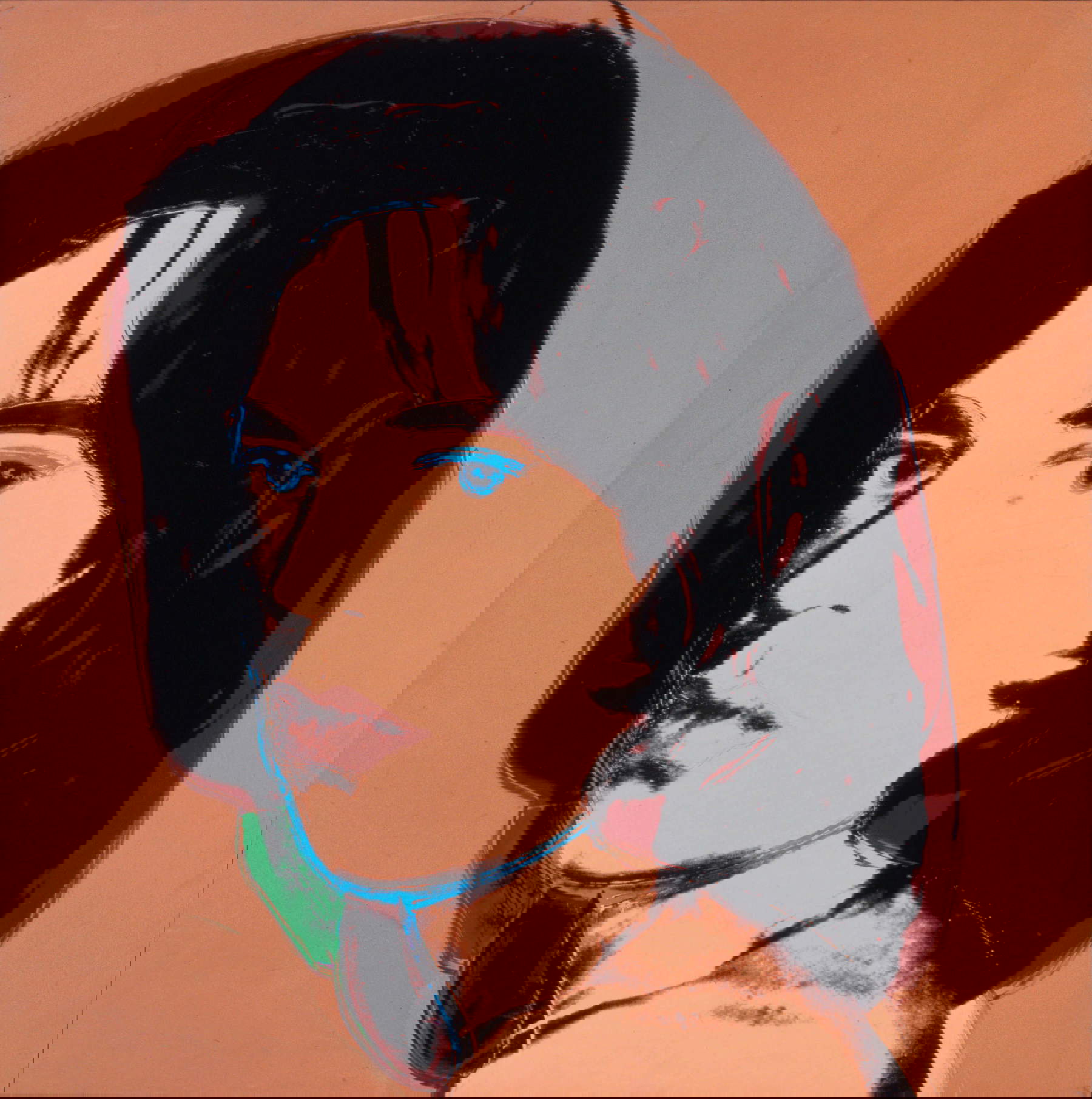
In addition to the Picasso influence, Ladies and Gentlemen reveals sympathies with the chromatic and decorative research of Henri Matisse, Vorrasi noted. Indeed, Warhol adopted procedures close to the collage and color saturation typical of the French master, seeking to extract beauty even from the vulgarity of mass society through what some critics called a cosmetic operation of art. This strategy of oscillation between presence and absence, between the graphic sign and the photographic trace, allowed Warhol to redefine the status of the portrait in a postmodern sense: that is, the artist demonstrated that “if there is a society of the spectacle, there is also the spectacle of a certain society, and finally the spectacle of the individual” (so Alessandro Del Puppo).
The legacy of Ladies and Gentlemen continues to resonate in contemporary artistic production, since it has influenced generations of authors working on the limits of identity construction, as well as the visibility of marginalized communities. The series has opened spaces for a multicultural and nonbinary narrative that goes well beyond the threshold of the new millennium. Although born from a poetics of empty space and apparent superficiality, Warhol’s work in Ladies and Gentlemen manages to convey an individual energy that transcends time, demonstrating how masquerade and artifice can become tools of profound human and social truth. The cycle presented for the first time in Ferrara thus represents not only a return to painting, but a definitive reflection on the individual’s freedom to escape pre-established definitions through the magic of the image.

Warning: the translation into English of the original Italian article was created using automatic tools. We undertake to review all articles, but we do not guarantee the total absence of inaccuracies in the translation due to the program. You can find the original by clicking on the ITA button. If you find any mistake,please contact us.




























 IT
IT FR
FR DE
DE ES
ES CN
CN


