





In Milan, in the spaces of Pirelli HangarBicocca, the retrospective dedicated to Rirkrit Tiravanija (Buenos Aires, 1961), entitled The House That Jack Built, opens on March 26, 2026. The exhibition, which can be visited until July 26, is curated by Lucia Aspesi and Vicente Todolí and offers a broad reinterpretation of the research developed by the artist over more than 30 years. The exhibition project focuses in particular on the spatial and architectural dimensions of Tiravanija’s practice, bringing together for the first time an extended nucleus of works that reflect his interest in architecture as a relational platform. The title of the exhibition recalls the famous nineteenth-century English nursery rhyme “The House That Jack Built,” constructed as a cumulative and repetitive narrative that, while evoking a house, does not directly tell its story, but rather reveals its connections to its surroundings.
This reference becomes central to understanding the artist’s approach to the theme ofauthorship. Tiravanija conceives of buildings not as closed or accomplished objects, but as open structures whose meaning is determined by their use and the people who inhabit them. In this perspective, architecture loses its purely formal dimension to become a space of relationship, in which the work is constructed through shared experience.
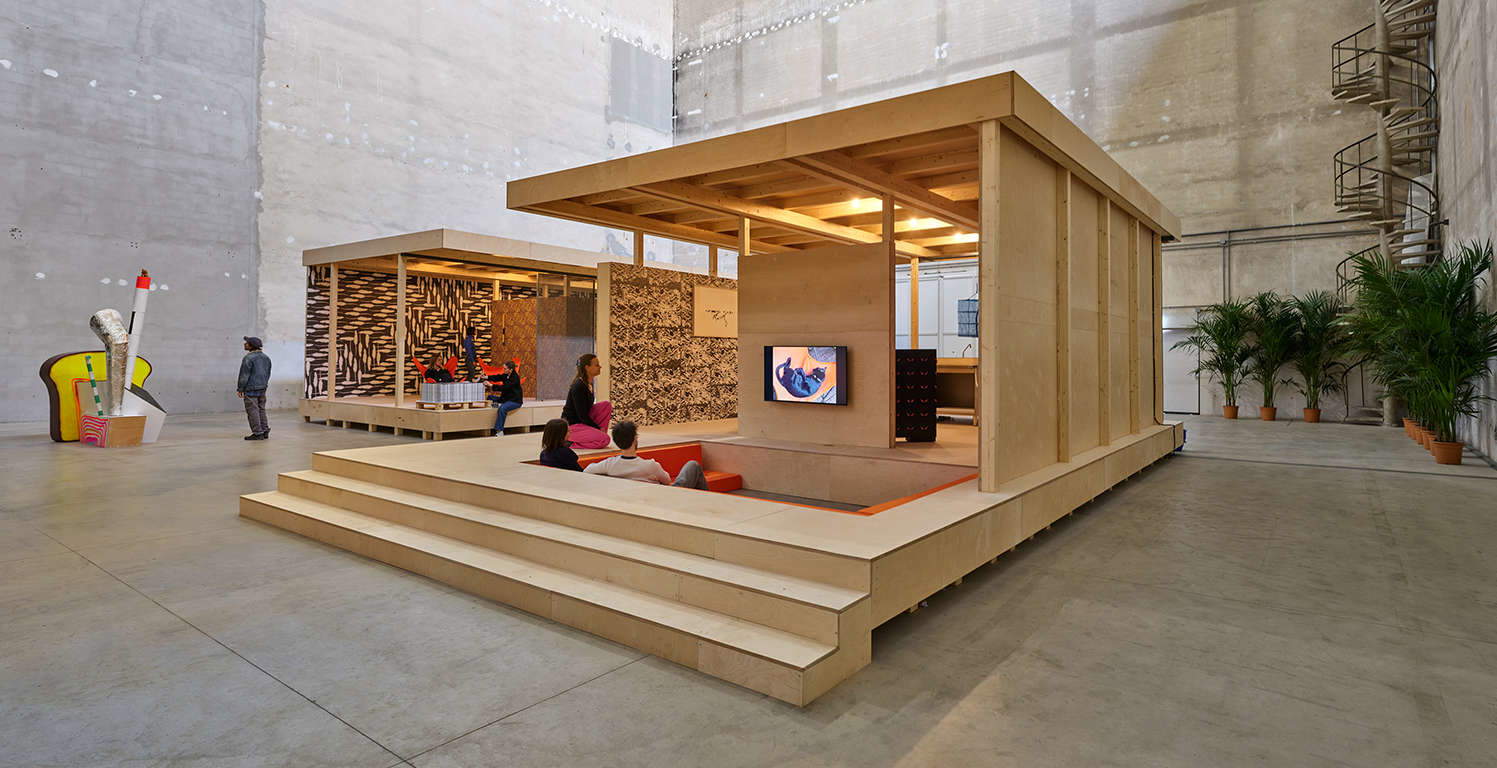
The exhibition brings together a wide selection of architectural works created over the years, many of which are inspired by iconic Modernist buildings signed by figures such as Le Corbusier, Sigurd Lewerentz, Rudolf Michael Schindler, Frederick Kiesler, Jean Prouvé and Philip Johnson. Through these quotations, Tiravanija reinterprets 20th-century icons, modifying their original function and placing them in new contexts in which they become active devices of interaction.
The artist’s intervention is not limited to a formal reinterpretation, but introduces a collective dimension that aims to radically transform the meaning of the works. The structures are activated through the presence of the audience, which is called upon to participate and contribute to the construction of the experience. In this way, the work is configured as an open process, constantly changing, rather than as a defined object.
Born in 1961 in Buenos Aires, Tiravanija lives and works between New York, Berlin and Chiang Mai. Since the 1990s, he has profoundly influenced the way contemporary art is understood, questioning the traditional boundaries of the work and promoting practices based on interaction and participation. His work is developed through installations, performances, photographs, films, sculptures and drawings that transcend conventional categories and redefine the role of the viewer.
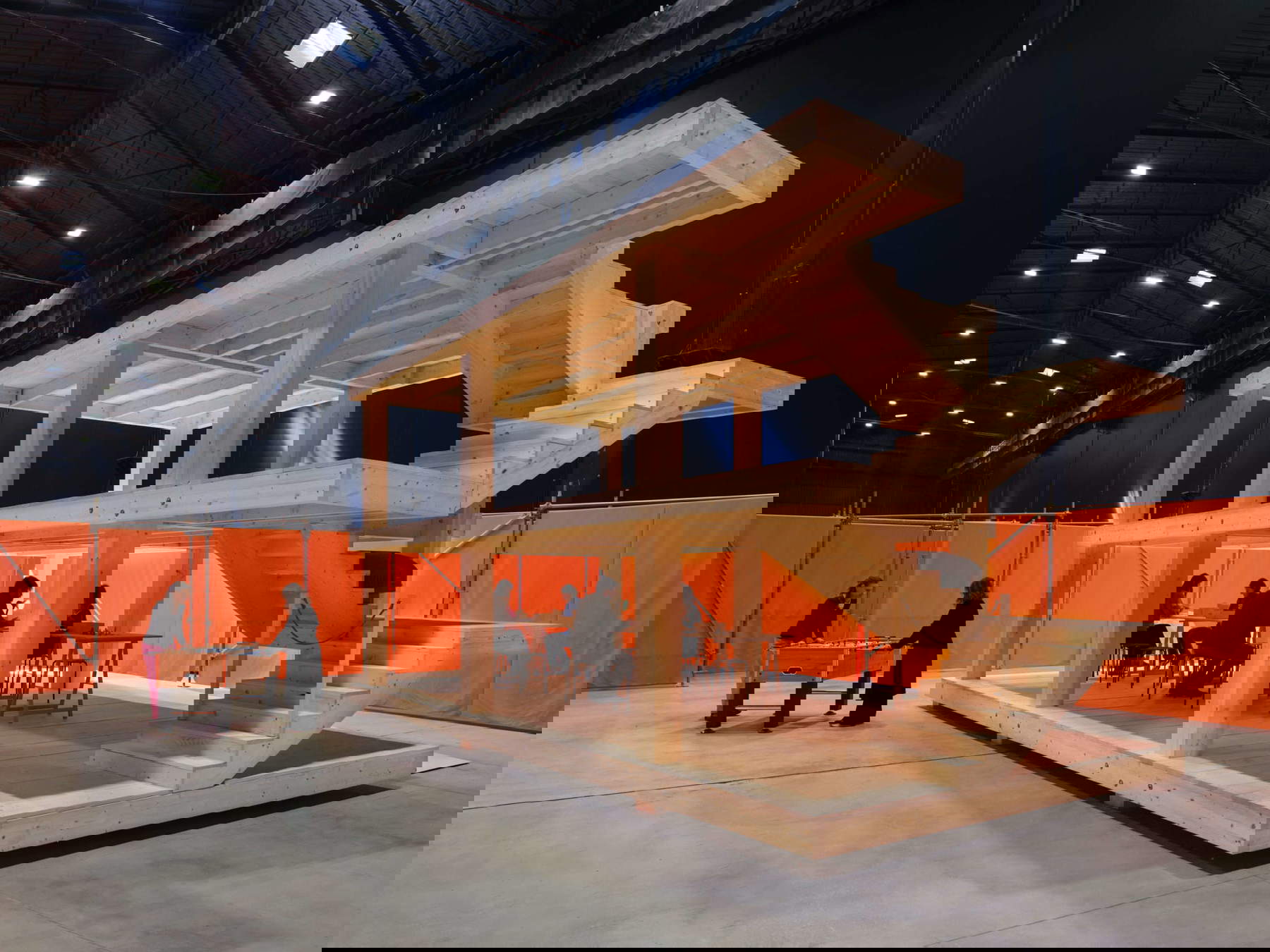
Central to his research is a reflection on cultural identity and the global structures that traverse places. His projects arise from an in-depth investigation of contexts and aim to question the dynamics between reality and imagination, between physical space and symbolic construction. Through the reproduction of everyday activities such as cooking, eating, sleeping or playing, Tiravanija transforms the exhibition space into a lived environment, removing it from any idealization.
This approach results in a critique of the mechanisms of Western art institutions, which are often responsible for defining and legitimizing knowledge through codified modes of exhibition. The artist intervenes in these devices by proposing alternative forms, in which objects and spaces are reactivated and restored to a vital dimension. Emblematic is the use of food as an artistic tool, which introduces a community and relational dimension capable of challenging traditional hierarchies between work and audience.
The retrospective at HangarBicocca is part of an international exhibition itinerary that has seen Tiravanija featured in leading institutions, including Gropius Bau in Berlin, MoMA PS1 in New York, Centre Pompidou in Paris and the Solomon R. Guggenheim Museum. He has also been a constant presence in major international events, from the Venice Biennale to the Whitney Biennial, from the Shanghai Biennale to the Gwangju Biennale.
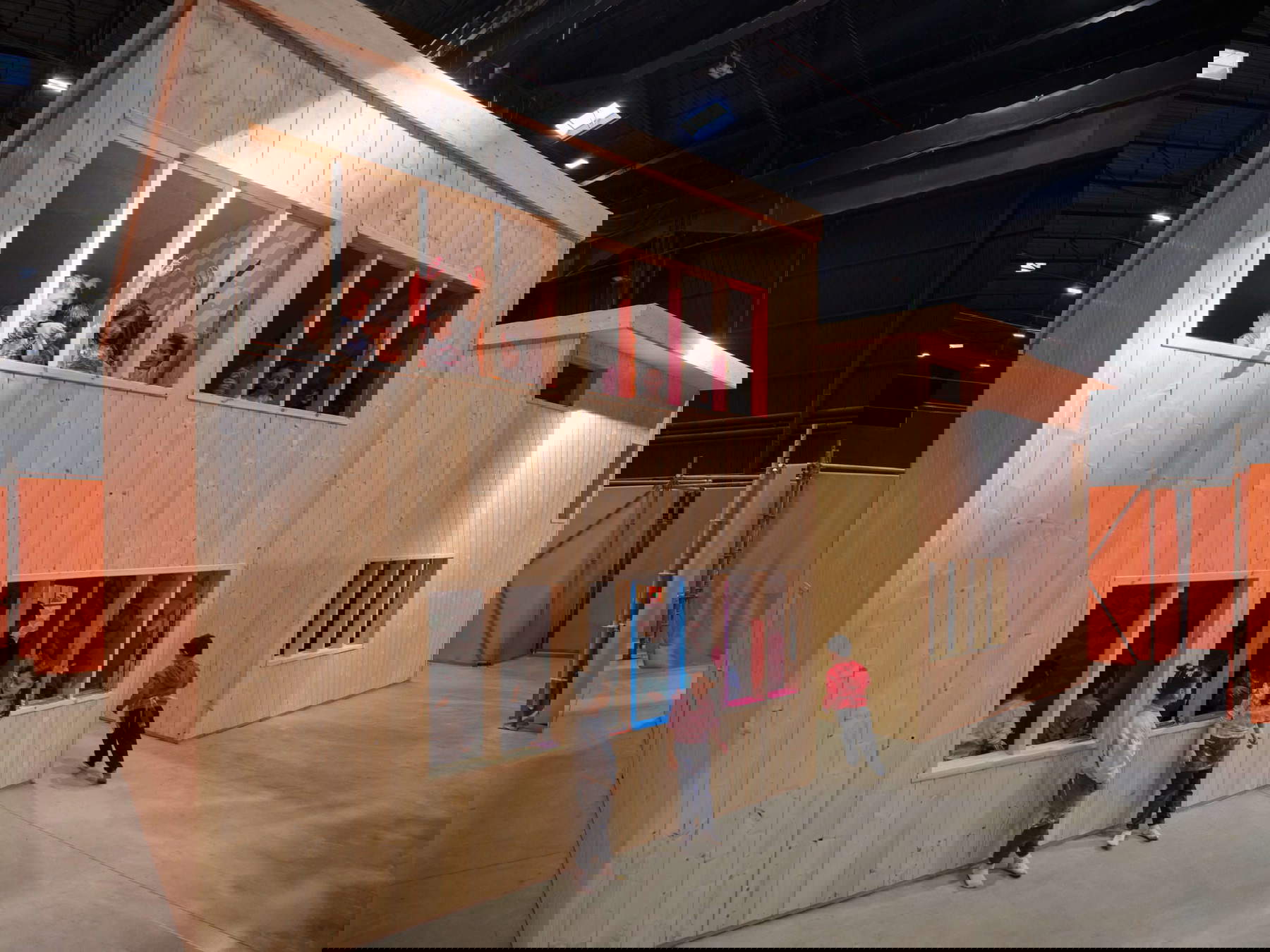
In the context of the Milan exhibition, the works are conceived as sequences that unfold along the exhibition space, in a kind of visual and environmental narrative. The path unfolds as a succession of scenarios in which the visitor takes a central role, becoming an integral part of the work. Indeed, in many of the installations the words “a lot of people” appear among the materials needed to make them, emphasizing how human presence is a constitutive element of the work.
Relying on “lots of people” means accepting the unpredictability and openness of the artistic process. The works can be interrupted, modified or transformed by what happens in the space, in a dynamic that makes each experience unique and non-replicable. In this sense, the exhibition distances itself from the idea of a retrospective as a static collection of historical works, offering itself instead as an active device, in which forms are continually reactivated by new presences and new circumstances.
The House That Jack Built is thus intended to be an investigation into the relationship between art, architecture and community, in which the work is never final, but is constructed over time through interaction. A project that emblematically reflects Tiravanija’s research and that, in the context of Pirelli HangarBicocca, offers the public an experience that focuses on participation and sharing as fundamental elements of contemporary artistic practice.
|
| Milan, Rirkrit Tiravanija on display at HangarBicocca |

Warning: the translation into English of the original Italian article was created using automatic tools. We undertake to review all articles, but we do not guarantee the total absence of inaccuracies in the translation due to the program. You can find the original by clicking on the ITA button. If you find any mistake,please contact us.


















 IT
IT FR
FR DE
DE ES
ES CN
CN