





Thanks to the acquisition in 2025 by the Ministry of Culture of two missing panels, Antonio Rimpatta ’s Mormile Polyptych has now been reassembled almost in its entirety, thus returning to the public a work of considerable importance. The two panels depicting St. Peter and St. Sebastian, recognized in 2022 as works of significant cultural interest, were identified and purchased on the Milanese antiques market in 2025, to be destined for the Regional Directorate National Museums Tuscany and relocated to the Cenacolo del Fuligno in Florence, where the main nucleus of the polyptych was already preserved.
Created in 1501 by Antonio Rimpatta, a Bolognese artist who was also active in southern Italy, the altarpiece was originally commissioned by the Neapolitan noblewoman Maddalena Mormile for the Dominican women’s monastery of Saints Peter and Sebastian in Naples, which no longer exists. The commissioner, prioress of the convent, appears kneeling in the center of the composition, dressed in the monastic habit, as is also confirmed by the inscription bearing the date 1501 and the names of the artist and the donor.
The layout of the work has the Madonna and Child in the center flanked by Saints Dominic and Peter Martyr, while Magdalene Mormile is depicted in the act of being presented to the Virgin. On either side are St. Catherine of Alexandria and St. Mary Magdalene, the latter a namesake of the donor. In the upper part appears the Coronation of the Virgin, accompanied by Saints Peter and Sebastian and surmounted by the figure of the Blessing Eternal, as well as two lunettes with the Annunciation.
The two recently acquired panels, depicting full-length Saints Peter and Sebastian against a landscape background of Umbrian matrix, are reinserted in the second lateral register, restoring the compositional balance of the entire complex. Instead, the predella, which was most likely part of the original work but of which there are no traces, still remains missing. Already Leone de Castris had pointed out in his studies (1987, 2005) an imbalance in the upper part of the polyptych in the then known reconstruction; however, it was Marco Fagiani in 2021 who recognized the two panels as original elements of the polyptych. More recently, Orazio Lovino (2025) has deepened the reconstruction of the polyptych from a typological point of view.
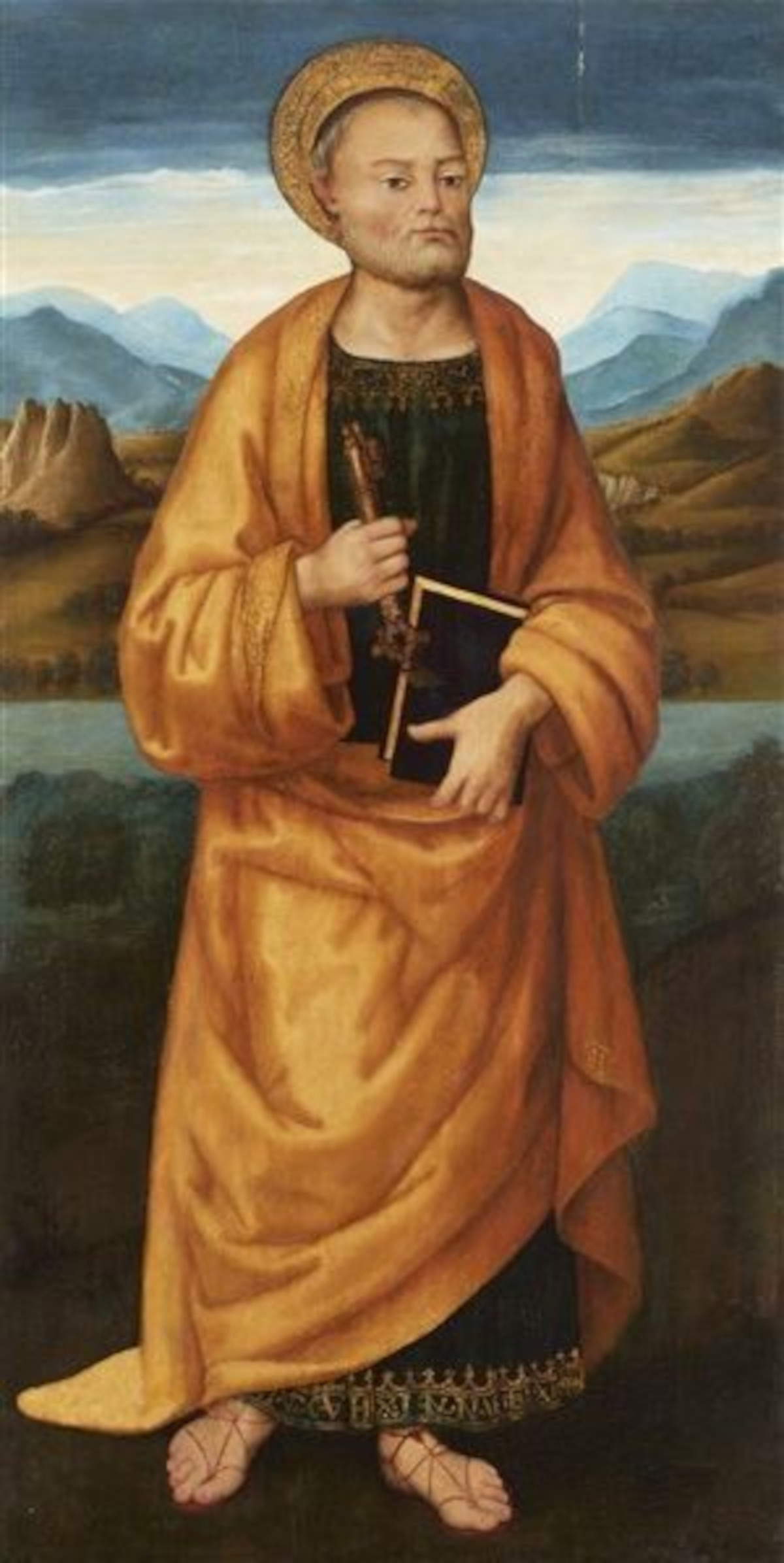
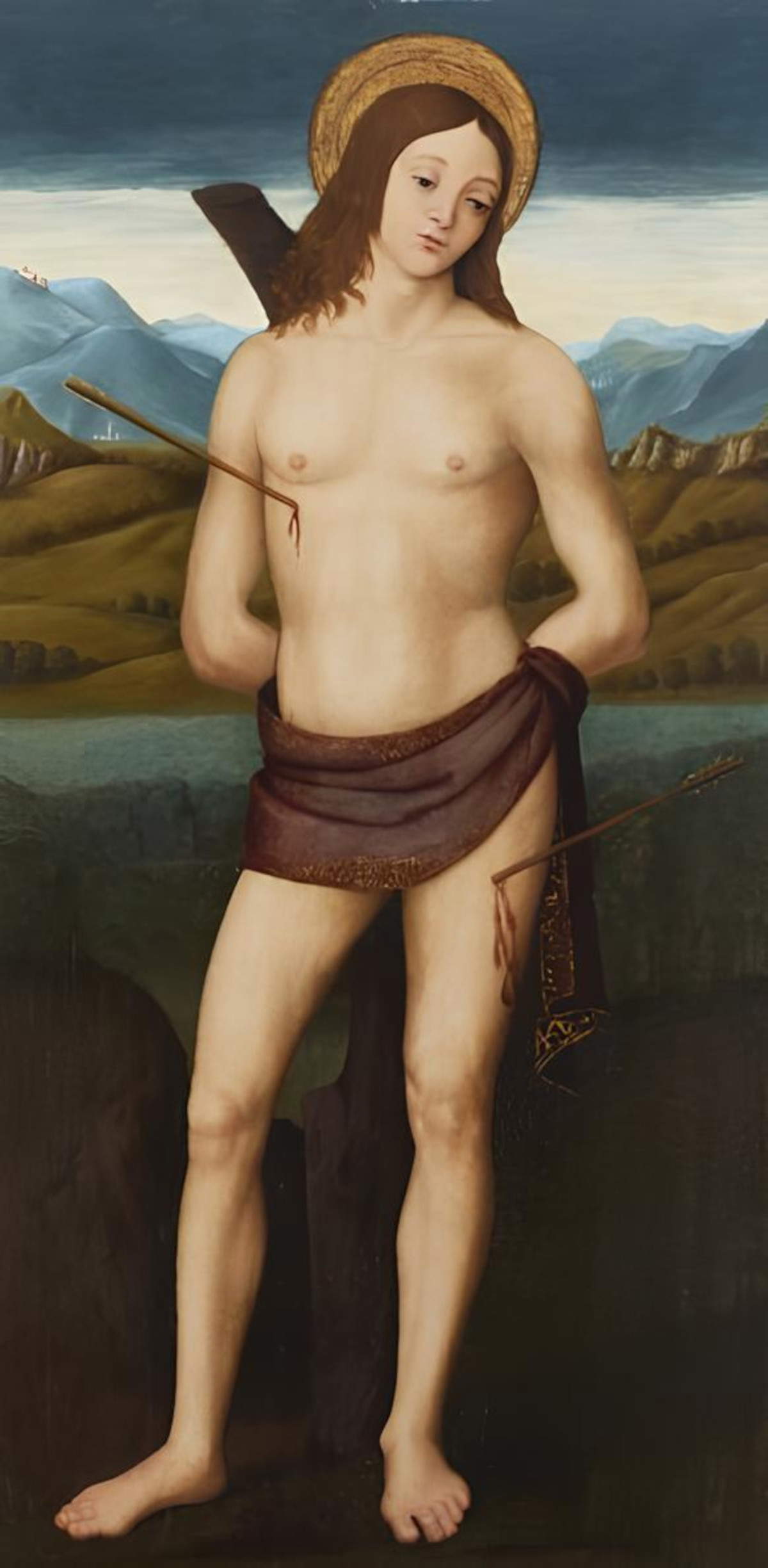
The story of the Mormile Polyptych is characterized by a complex history: documented in Naples until 1971, in 1978, when it belonged to the Istituzione Pubblica di Assistenza e Beneficenza IV gruppo Opere Pie, it was sold and illegally exported. Reappearing in 1986 in Switzerland in a Sotheby’s auction, with attribution to Rimpatta due to the signature, it was seized by the Carabinieri’s Nucleo Tutela Patrimonio Culturale and brought back to Italy. As the original Neapolitan context was no longer available, the work was entrusted to the Superintendency of Florence.
The decision to place the polyptych at the Cenacolo del Fuligno responds to a precise museographic strategy: to enhance an artist whose language is stronglyinfluenced by Perugia. The museum, located in the former refectory of the Franciscan tertiaries of Sant’Onofrio, founded in 1419 and linked to Blessed Angelina da Foligno, has as its centerpiece the great fresco of the Last Supper painted by Pietro Perugino in the 1480s. Around this masterpiece is developed an exhibition itinerary dedicated to the spread of the Umbrian master’s style between the 15th and 16th centuries. In this context, Rimpatta’s work plays a significant role in understanding the spread of Perugino’s language in southern Italy, as also demonstrated by the altarpiece created by the artist in 1509 for the church of St. Peter’s ad Aram in Naples, now preserved at the National Museum of Capodimonte.
A versatile and itinerant artist, Rimpatta trained in Bologna under Francesco Francia and Lorenzo Costa, then brought himself up to date in early 16th-century Rome, marked by the experiences of Perugino and Pinturicchio and open to the innovations introduced by Raphael. The Mormile Polyptych represents a testimony of this path and offers an interesting comparison between Perugian classicism and its reworking in the southern context.
The new exhibit will be officially unveiled on Friday, April 24, 2026 at 11:30 am. During the unveiling, the stages of the acquisition and attributive studies will be explained by Carlotta Paola Brovadan, regional director of the National Museums of Tuscany, together with Stefano Casciu, former head of the same directorate, Marco Mozzo, director of the Museo di San Marco and Cenacoli, and Sara Ragazzini, curator of the Cenacolo del Fuligno.
Opening hours: Thursday, Friday, Saturday, 9 a.m. to 1 p.m. Saturday, April 25, the Cenacolo will be open free of charge, 9 a.m. to 1 p.m.
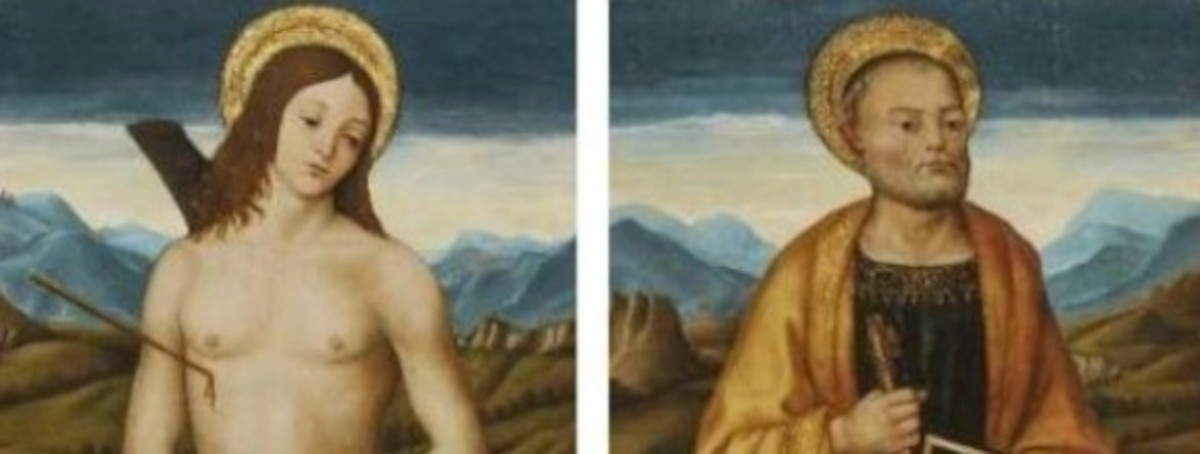 |
| Florence, the Mormile Polyptych returns to view reassembled almost in its entirety at the Cenacolo del Fuligno |

Warning: the translation into English of the original Italian article was created using automatic tools. We undertake to review all articles, but we do not guarantee the total absence of inaccuracies in the translation due to the program. You can find the original by clicking on the ITA button. If you find any mistake,please contact us.














 IT
IT FR
FR DE
DE ES
ES CN
CN


