





Forlì is the epicenter of a critical reflection on one of the densest seasons in European history with the exhibition entitled Baroque. The Grand Theater of Ideas, hosted at the Museo Civico San Domenico from February 21 to June 28, 2026, curated by Cristina Acidini, Daniele Benati, Enrico Colle, Andreas Dehmer, Fernando Mazzocca and Francesco Petrucci. This exhibition, which brings together some two hundred masterpieces from the most prestigious international institutions, aims to propose an interpretation of the seventeenth century that goes beyond the boundaries of artistic style to take the form of an analysis of an integrated cultural system. The Baroque is not understood here as a simple aesthetic category, but as a complex machine of vision in which faith, science, power and spectacle come together to orient the collective consciousness. In this historical period, the image ceases to be a measure of Renaissance order and transforms itself into live energy, becoming a strategic instrument of government and persuasion. The fulcrum of this transformation was the city of Rome, which in the late sixteenth and early seventeenth centuries became the heir of the Caesars and the laboratory of the new religious orders born out of the climate of the Catholic Reformation.
From the Rome of the popes to the courts of Europe, the seventeenth century redefined the visible, leaving a legacy that shapes our modernity. To understand the essence of the Baroque, it is necessary to look beyond the simple definition of artistic style and immerse oneself in what was the predominant cultural dimension of an entire century. The seventeenth century did not merely produce images, but used the image itself as a strategic and conscious tool, transforming art from a mere representation of reality into a device for constructing it. In this period, space expands, architecture seems to breathe, and light ceases to be an accessory and becomes living, active matter. The Baroque work of art is not a static object to be observed with detachment, but an immersive experience that aims to engage, convince, and orient the viewer.
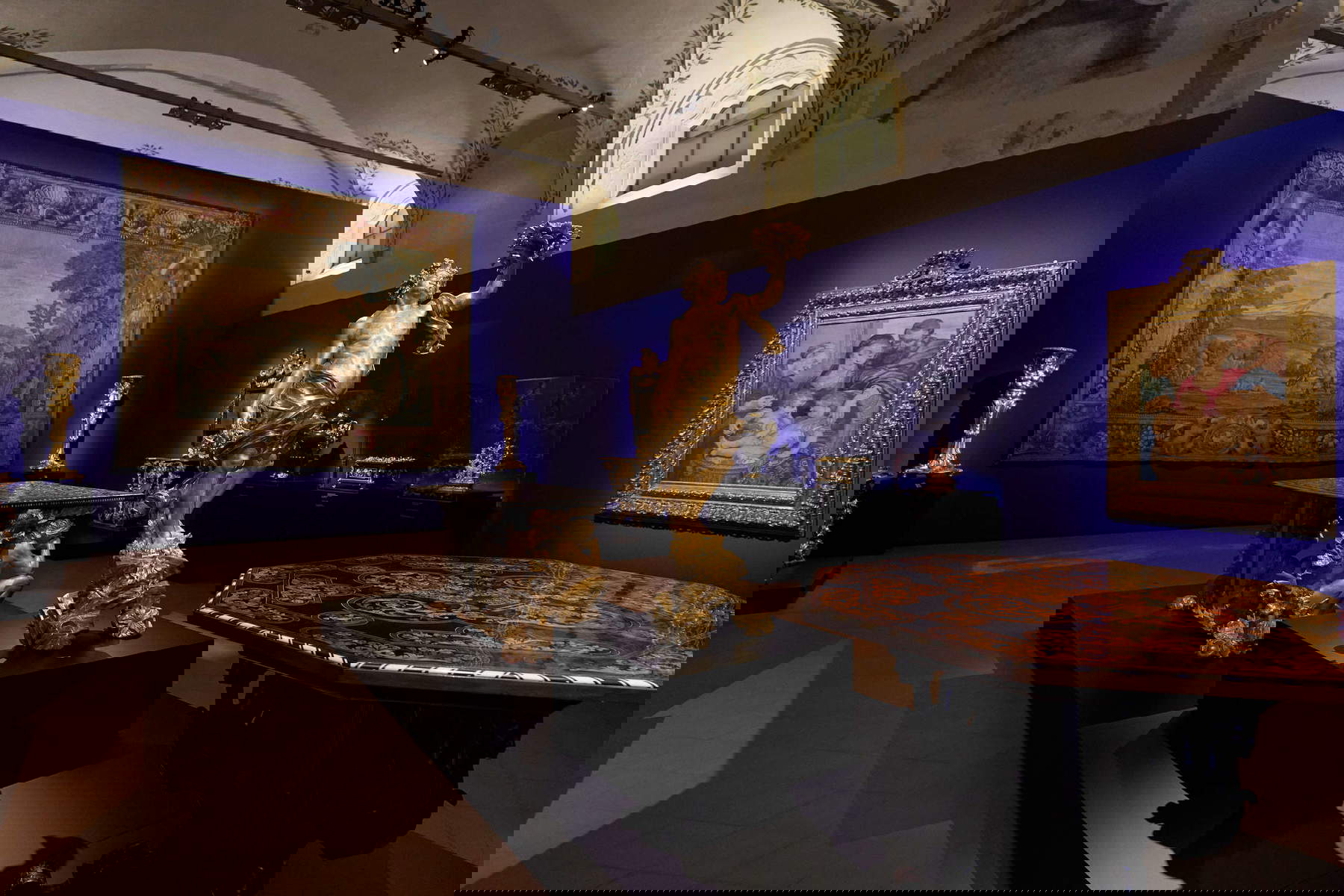
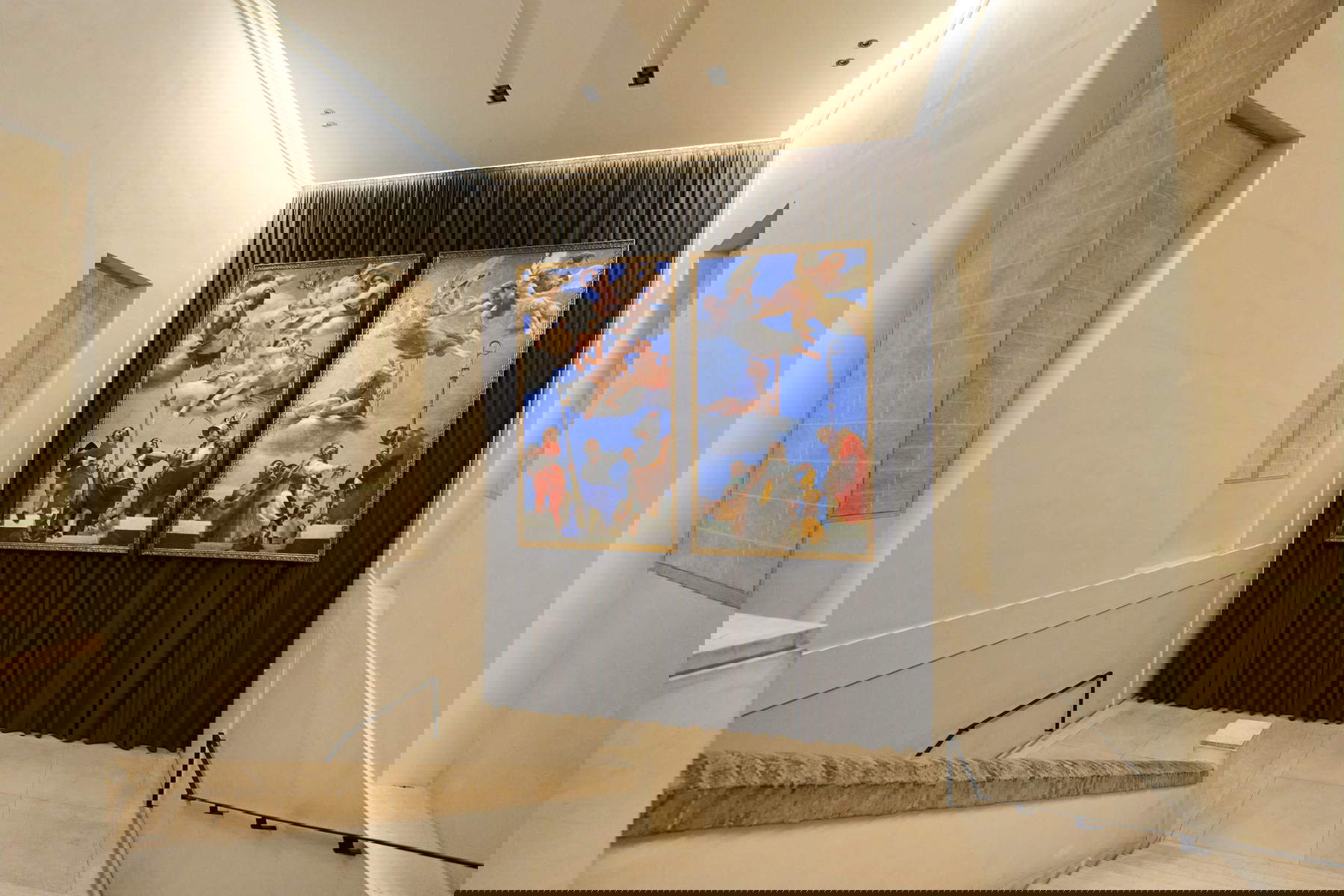
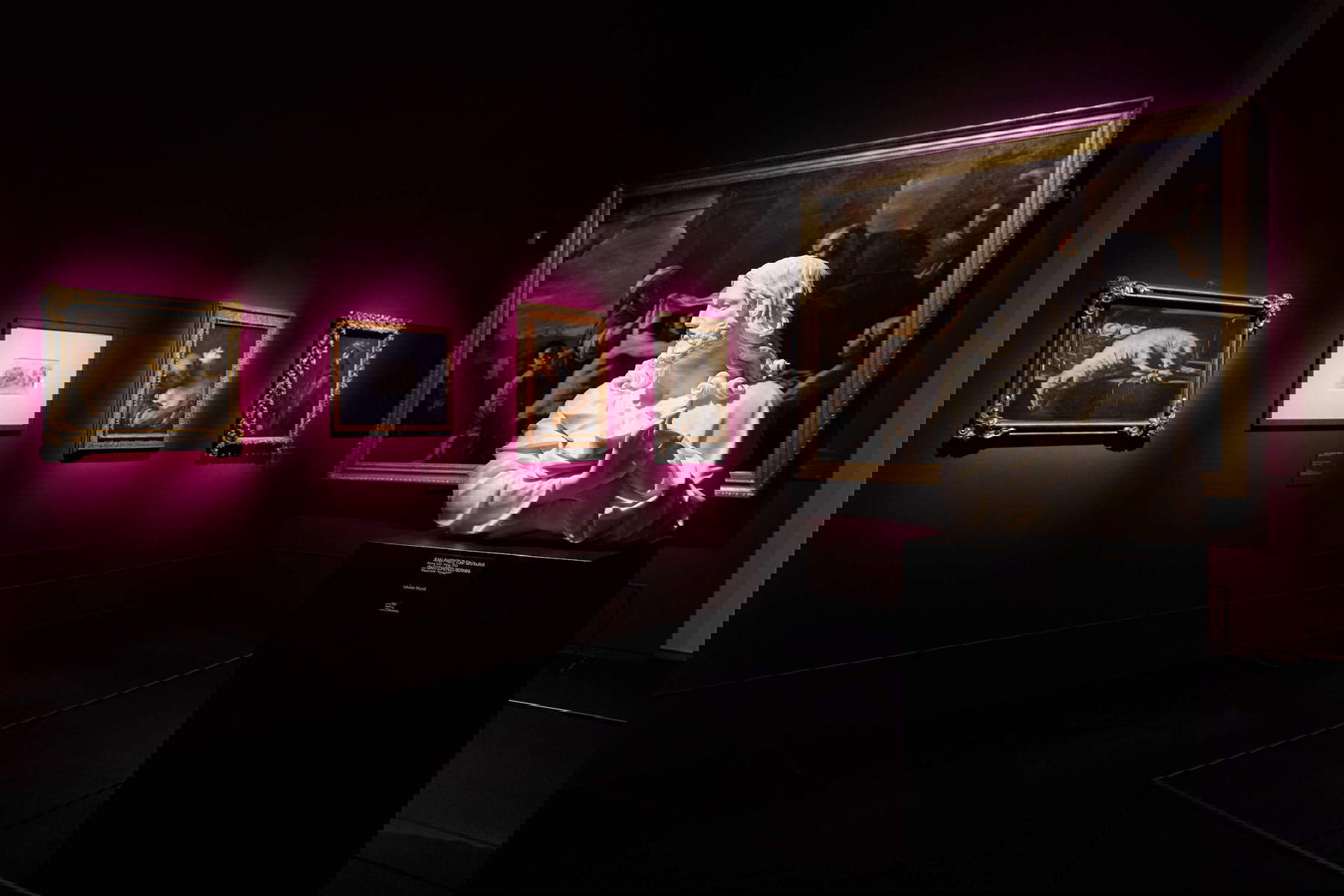
The beating heart of this revolution was Rome, the city that in the late 16th and early 17th centuries inherited the prestige of the Caesars under the aegis of the Popes. In a climate marked by the reorganization of the Catholic Reformation and Counter-Reformation following the Council of Trent, the Church identified art as the preferred language for the spiritual reconquest of Christendom. What was initially defined with a derogatory tinge as extravagant or irregular (the etymon of the term “baroque” refers to these adjectives) actually became the symbol of a system in which faith, political power, scientific discoveries and everyday life were inextricably intertwined. Rome became the building site of history, attracting the best minds of the time, from Lombard and Emilian talents to artists from all corners of Europe.
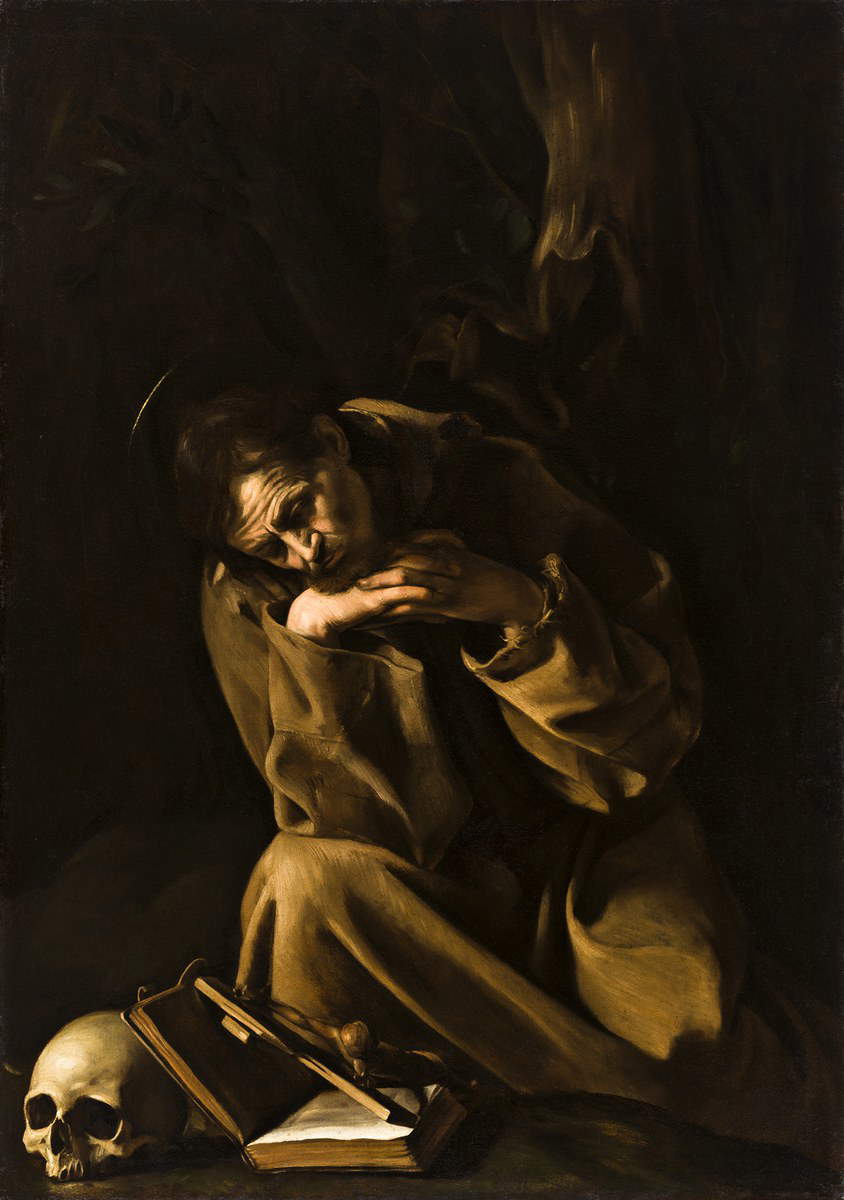
One of the fundamental pillars of the Baroque language is the management of light. Seventeenth-century light is not only a natural phenomenon, but an expressive medium charged with theological and symbolic meanings, capable of shaping forms and guiding the eye to the focal points of the scene. Artists have unscrupulously manipulated real light to generate wonder and awe, concealing light sources to make their creations appear as miraculous visions. This “theology of light” is rooted in Christian mysticism but evolves into a scenographic tool that defines volumes and atmospheres, creating smooth transitions between chiaroscuro and deepest darkness.
Parallel to light, curvature is the other major distinguishing element. The Baroque repudiated the rigidity of the Renaissance straight line in favor of the spiral, theellipse, and the polycentric curve. This “poetics of the curve” found its greatest expression in the architecture of Francesco Borromini, who bent classical geometry by creating undulating surfaces where concavity and convexity alternate, giving the illusion of a fluid organism in perpetual motion. The baldachin of St. Peter’s Basilica is considered the starting point of this new expressive system, where sculpture, architecture and decorative arts merge into a single dynamic vision.
However, the Baroque was not only magniloquence and religious celebration. An irreversible rupture was introduced by Caravaggio, who tore away the veil of idealization to show a stark, often bleeding reality. His figures emerge from the darkness as tangible physical presences, marked by imperfections of body and flesh. This search for the “real” led to the creation of stories without heroes, where the life of the working classes and street scenes entered the artistic repertoire permanently, observed with a gaze that combines psychological precision and attention to the everyday. Caravaggesque naturalism thus created a constant tension between realistic form and the inner motion of the soul, making the works subjectively restless.
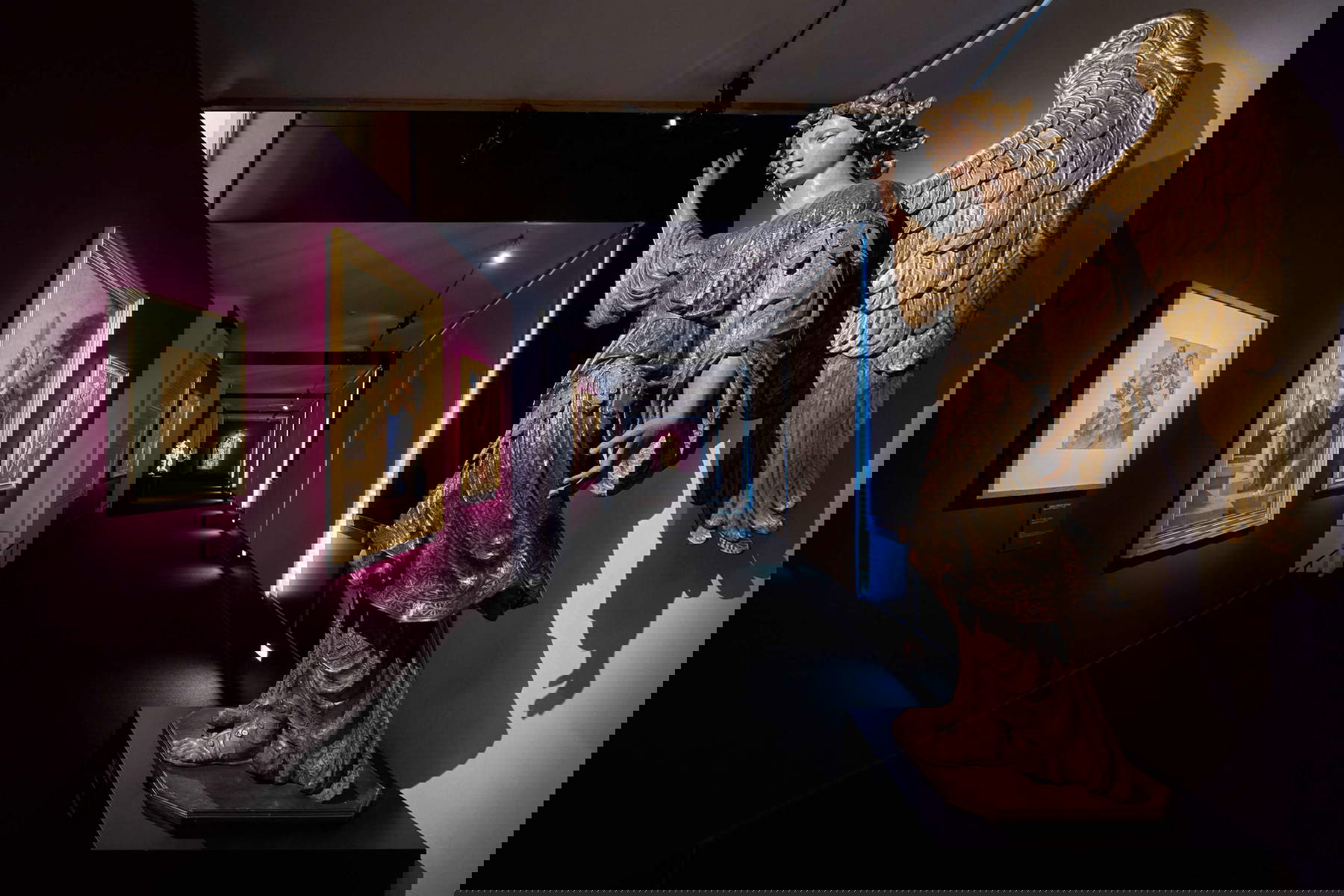
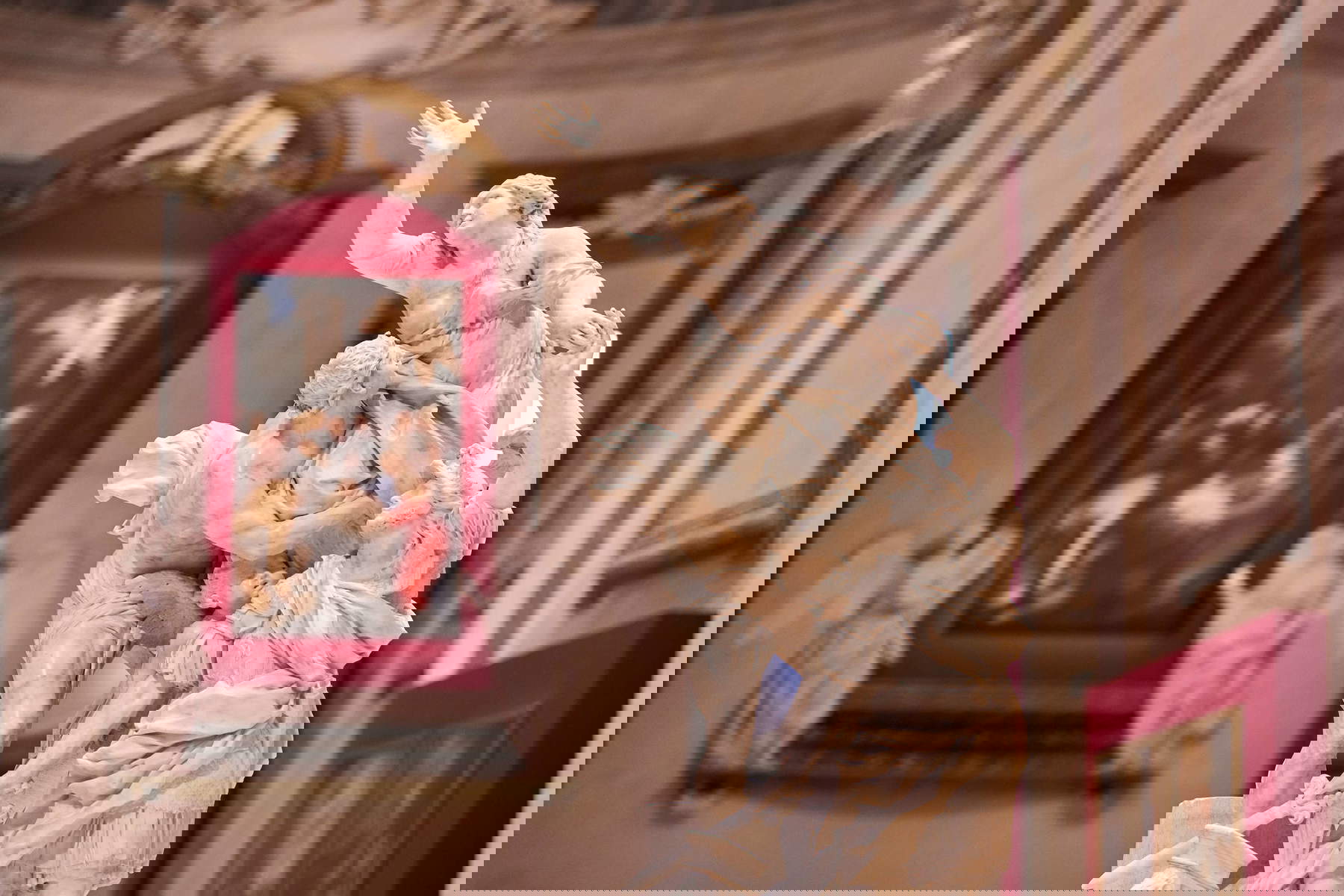
The scenographic dimension of the seventeenth century also invested the sphere of power. Popes, sovereigns, and aristocrats understood that the image was a fundamental political language to assert authority and build the public identity of great families, such as the Barberini, Pamphilj, or Chigi. Official portraits became documents of prestige as the whole city was transformed into a permanent theater through ephemeral apparatuses created for festivals, canonizations, and solemn entrances. In this “grand theater of the world,” the distinction between being and appearing became blurred, and the illusion of perspective, taken to incredible heights by artists such as Andrea Pozzo, sought to dissolve the boundary between physical space and the opening to the infinite.
Science also played a crucial role in the Baroque sensibility. Galileo Galilei’s discoveries and the development of the telescope expanded the cosmic horizon, while the microscope revealed previously invisible worlds. This new confidence in direct observation fueled the creation of the Wunderkammer, rooms of wonder where natural and man-made objects coexisted in an aesthetic and scientific order. Decorative painting absorbed this knowledge, populating ceilings with centrifugal skies that seemed to reflect the infinite worlds of modern astronomy. Even still life became a meditation on the transience of time and the mutability of human vision.
The spiritual experience of the period was characterized by a vertical narrative of transcendence, where the contact between the human and the divine was translated into images of intense emotional and physical participation. Mystical ecstasy, made famous by Bernini’s inventions, showed the body as the place where the invisible is manifested through the abandonment and transport of the senses. Faith was no longer just a doctrine to be followed, but a sensitive experience that called the faithful to share in the pathos of the sacred scene. Corporeality became central: half-closed gazes, open hands and dramatic twists became the signs of an inner transformation made tangible to the viewer.
The Baroque language, born in the Roman center, spread rapidly throughout Europe, adapting to local contexts. In France it took on a monumental and celebratory character linked to monarchical absolutism, while in Spain it was charged with a luminous drama and a particular mystical intensity. In Florence, although more reluctant to break away from the rigor of the Renaissance, the Baroque penetrated interiors through sumptuous cycles of frescoes and the virtuosity of decorative arts in pietre dure. In a center like Bologna, the lesson of the Carracci sought a synthesis of classicism and naturalism, influencing generations of artists like Guido Reni and Guercino, who explored ideal beauty and chromatic fullness.
It is precisely the artistic and cultural axis between Rome and Emilia that represents one of the fundamental engines of seventeenth-century Europe, a ceaseless dialogue that transformed the city of the Popes into the greatest building site of modernity. If Rome was the “showcase” and the supreme professional opportunity, Emilia was the laboratory where the ideas destined to unhinge late Mannerism were born to arrive at a new system of expression.
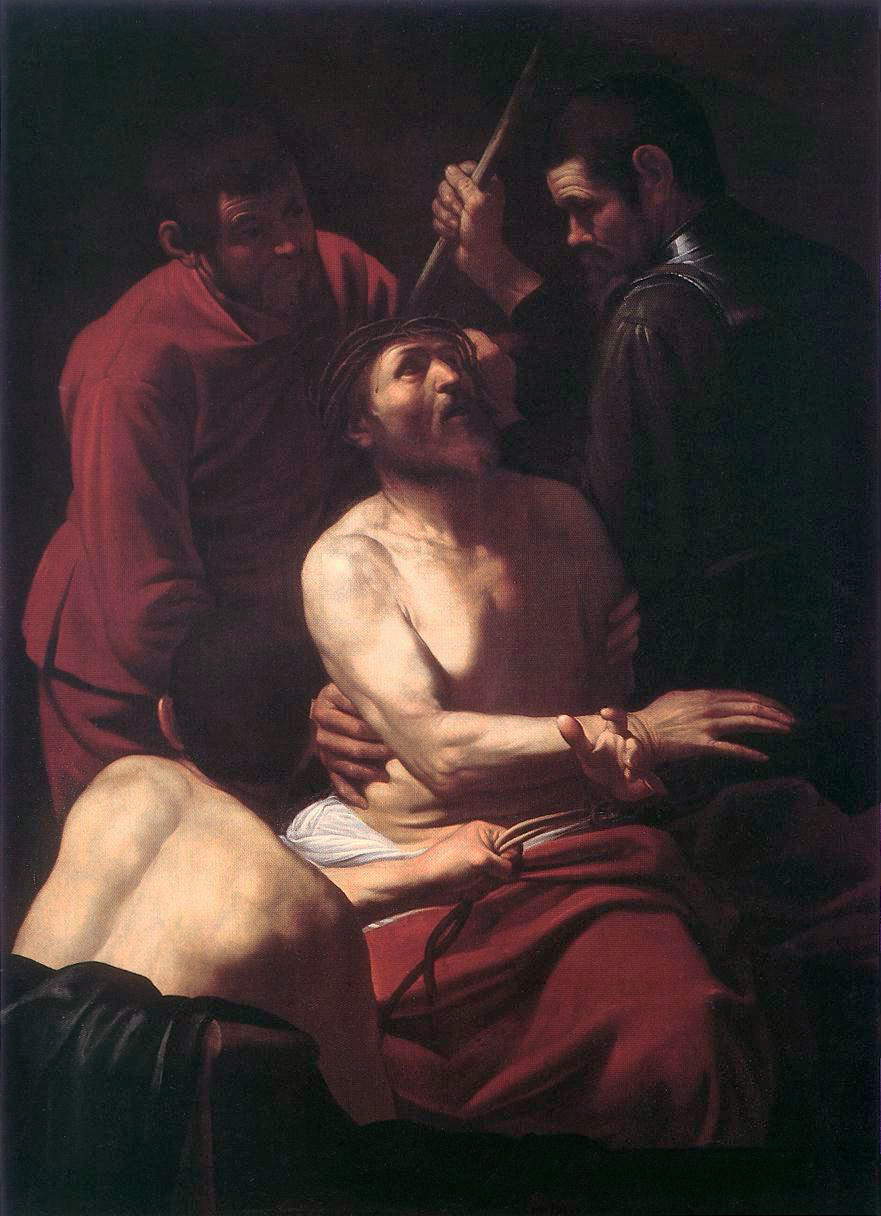
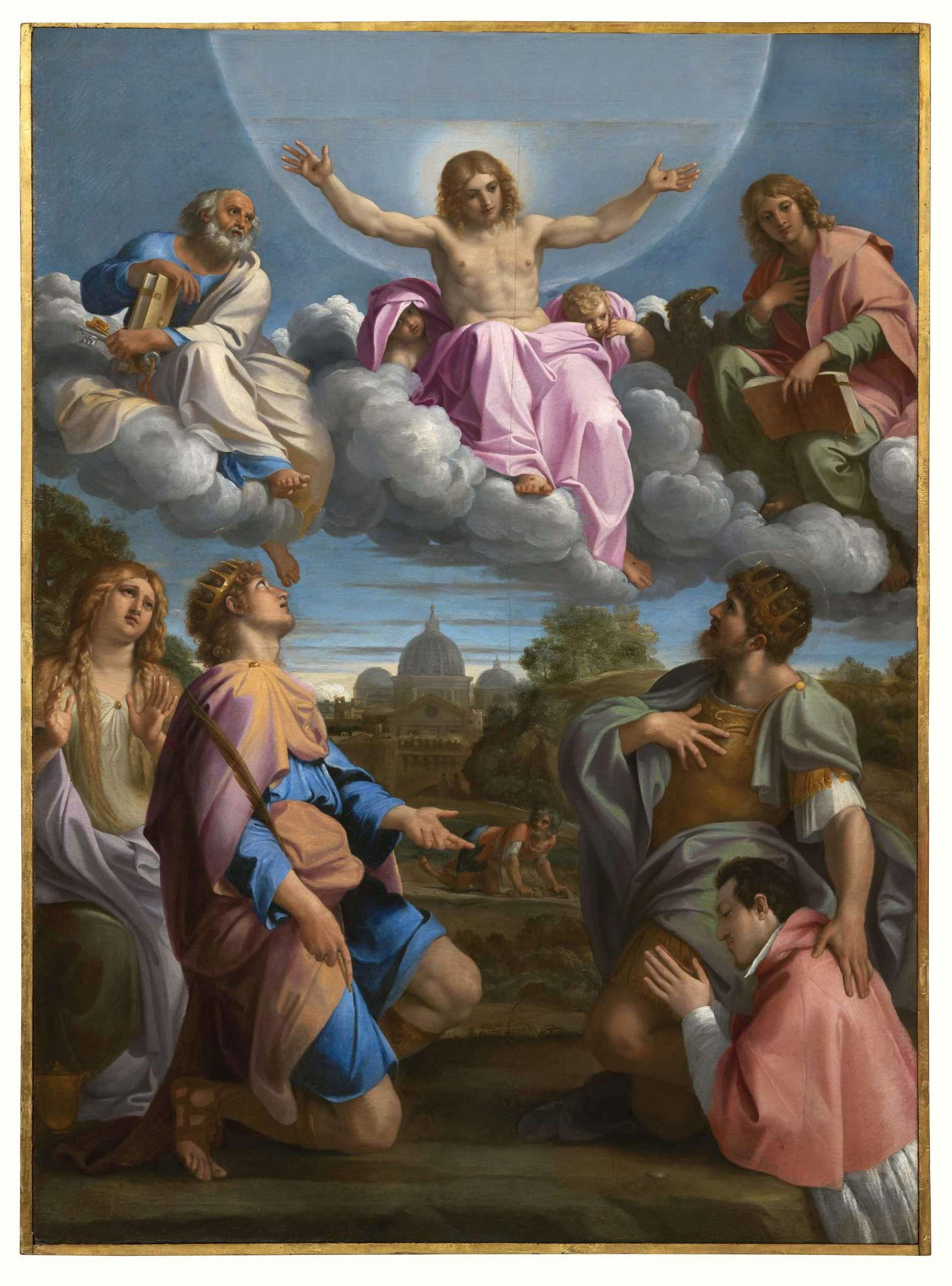
The fundamental breaking point is marked by the Bolognese school, led by the Carracci. It is Ludovico Carracci who opens the Baroque season, inscribing in the DNA of painting a new morality and emotional intensity that aims to involve the public directly. Alongside him, his cousin Annibale pursued a natural objectivity that, after moving to Rome in 1595, would find its apotheosis in the Galleria Farnese. Here, Annibale reactivates the legacy of Raphael and the antique, but enhances it with a scenic monumentality that blends fidelity to the real and classical celebration.
Rome thus becomes the irresistible pole of attraction for Emilian talents, who arrive in successive waves: Guido Reni, Guercino, Lanfranco, Domenichino, Albani, and Alessandro Algardi. Each of them brought to the Urbe a different declination of the Po Valley “natural,” confronting Hellenistic vestiges and the other great pole of Roman painting: the realism of Caravaggio.
Guido Reni embodies the quest for ideal perfection. Having arrived in Rome under the protection of important cardinals, Reni developed a style that, while starting from the natural datum, aspired to an “ancient beauty with a Christian soul.” His comparison with Caravaggio is emblematic: if Merisi resolves the sacred in the everyday through stark realism, Reni seeks to show its metaphysical cause, transforming martyrdom into pure contemplation and divine beauty. His “airs of heads” and the suavity of his brushwork make him the “divine” celebrated by the poets of the time.
Of opposite sign is the experience of Giovanni Francesco Barbieri, known as Guercino. Arriving from Cento with a reputation as a “monster of nature” granted him by an admiring Ludovico Carracci, Guercino introduced to Rome a chromatic fullness of Venetian and Correggio matrix. During the brief but very intense pontificate of Gregory XV Ludovisi, he produced masterpieces such as Aurora or the gigantic Seppellimento e gloria di santa Petronilla for St. Peter’s, a work that marks his landing place in an excited Baroque, based on large spatial trajectories and vibrant color. Unlike Reni, Guercino maintains a tangible physicality: his saints and heroines have an “acted” concreteness that never forgets the lesson of the natural.
At the same time, Giovanni Lanfranco brought the lesson of Correggio’s domes to Rome, developing an illusionistic decorative painting that paved the way for the great season of Baroque frescoes. While Domenichino specialized in idealized landscapes, combining classical rigor and romantic emotion, contributing to the definition of “history” painting.
Emilia was not only a land of “export” for Rome, however. The Baroque language, once codified in the Urbe, returned to influence local schools through a continuous circulation of models and artists. Centers such as Bologna, Modena, Parma, and Forlì developed autonomous and often eccentric variants. A prime example is Guido Cagnacci, a restless “sensualist” who, after his Bolognese apprenticeship and Roman travels following Guercino, fused Caravaggio’s truth with a mystical intensity and an almost modern sensuality. His spandrels for the dome of the Madonna del Fuoco in Forli Cathedral represent one of the peaks of Baroque painting in the region, displaying a pathos that seems to anticipate Bernini’s ecstasy.
In Bologna, the scene of the second half of the seventeenth century saw the radicalization between the followers of Rhenish idealism and the proponents of Carraccian naturalism filtered through Francesco Albani. This polarity between Raphael and Correggio kept the artistic debate vital, allowing the city to respond to the Roman solicitations of artists such as Pietro da Cortona or Baciccio with original solutions, as in the case of Domenico Maria Canuti. Other Emilian courts also participated in this system: in Modena, Duke Francesco I d’Este called artists such as Bernini’s Bartolomeo Avanzini for the ducal palace, while in Parma and Piacenza the glory of Lanfranco continued to exert a lasting influence. This network of influences shows that the Baroque was not a single style, but a “Grand Theater of Ideas” fueled by conflicting tensions: truth and wonder, rule and movement, flesh and spirit.
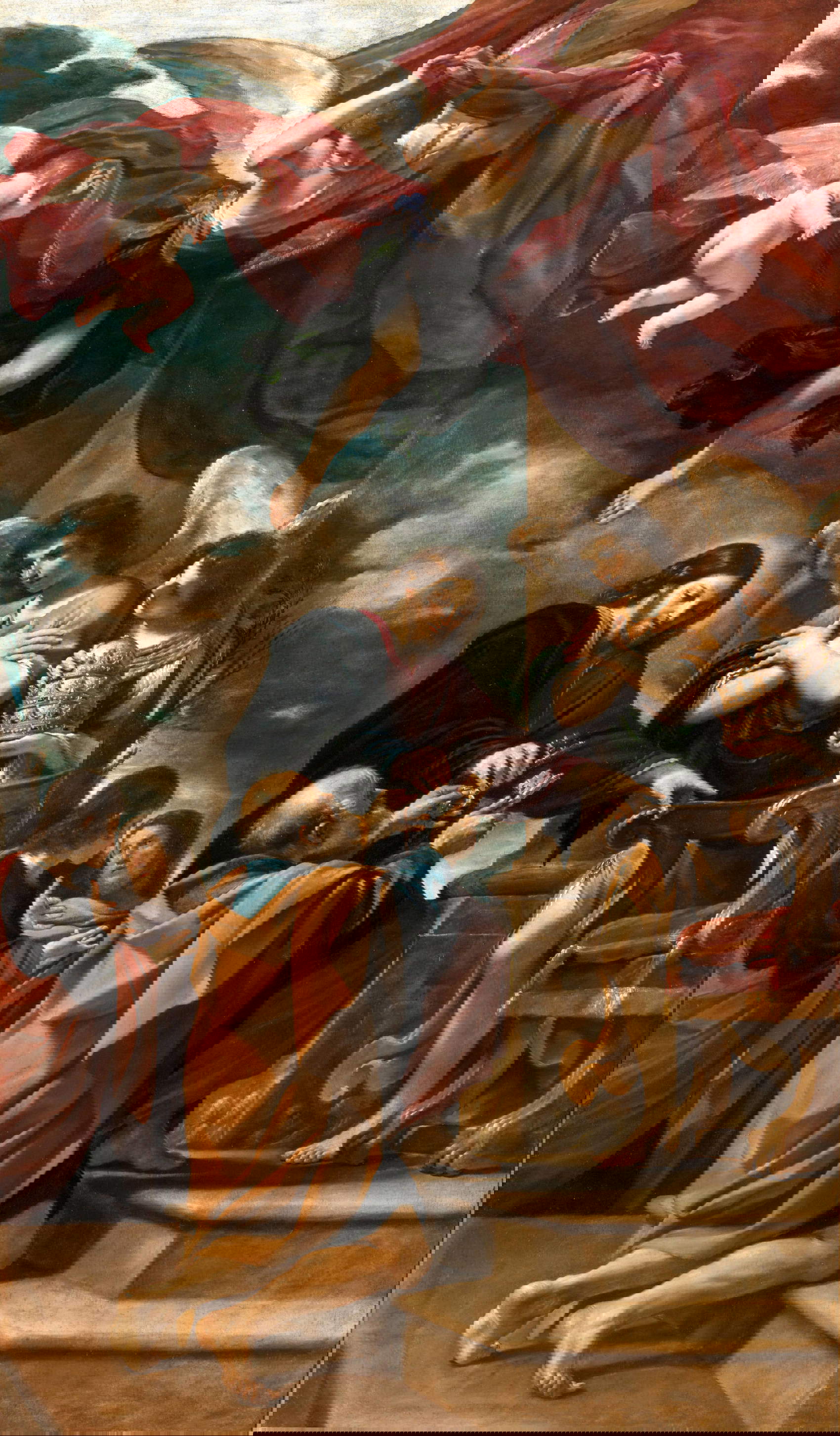
Despite the political crisis of the papacy and the economic decline of some Mediterranean centers, the 17th century continued to be perceived as a laboratory of modernity. The Baroque image demonstrated art’s ability to shape the world rather than merely mirror it. This system of signs and allegories, open to multiple interpretations, reflected the fragmentation and uncertainty of human life, themes that found deep resonance in twentieth-century critical thought. The rediscovery of the Baroque in the last century, initiated by art historians such as Roberto Longhi and culminating in the great Florentine exhibition of 1922, marked the end of a purely negative view of this era.
Twentieth-century artists looked to the seventeenth century not as a stylistic repertoire to be copied, but as a source of vital and restless formal energy. The spatial dynamism of Umberto Boccioni, the plastic experiments of Lucio Fontana, and the existential anxieties expressed by Francis Bacon through his reinterpretation of papal portraiture show how relevant the Baroque lesson still is. Even in contemporary art, the dialogue with the past continues to produce forms capable of interpreting the anxieties of the present and the relationship with the sacred. The Baroque remains, therefore, a decisive stage in Western visual culture, a moment when the image acquired full awareness of its communicative and political power.
|
| Forlì and the Grand Baroque Theater on display at the San Domenico Museums |

Warning: the translation into English of the original Italian article was created using automatic tools. We undertake to review all articles, but we do not guarantee the total absence of inaccuracies in the translation due to the program. You can find the original by clicking on the ITA button. If you find any mistake,please contact us.



















 IT
IT FR
FR DE
DE ES
ES CN
CN


