





Two rare terracotta portraits by Tuscan sculptor Giovanni Gonnelli, known as the Cieco di Gambassi (Gambassi, 1603 - Rome, 1656), are presented by Rob Smeets Gallery at TEFAF Maastricht 2026, one of the most prestigious international fairs dedicated to art and antiques. The works by the Tuscan artist ( detailed background on him here) depict Ferdinand II de’ Medici, fifth grand duke of Tuscany, and François de Clermont-Tonnerre, count-bishop of Noyon, peer of France and state adviser to Louis XIV. The presence of these busts at the Dutch fair is a significant opportunity to bring attention back to a sculptor whose surviving production is extremely rare. Giovanni Gonnelli, who was born in 1603 and died in 1656, was a pupil of Pietro Tacca and gained singular notoriety in seventeenth-century Florence and Rome for his extraordinary ability to model portraits despite having lost his sight at the age of twenty-seven.
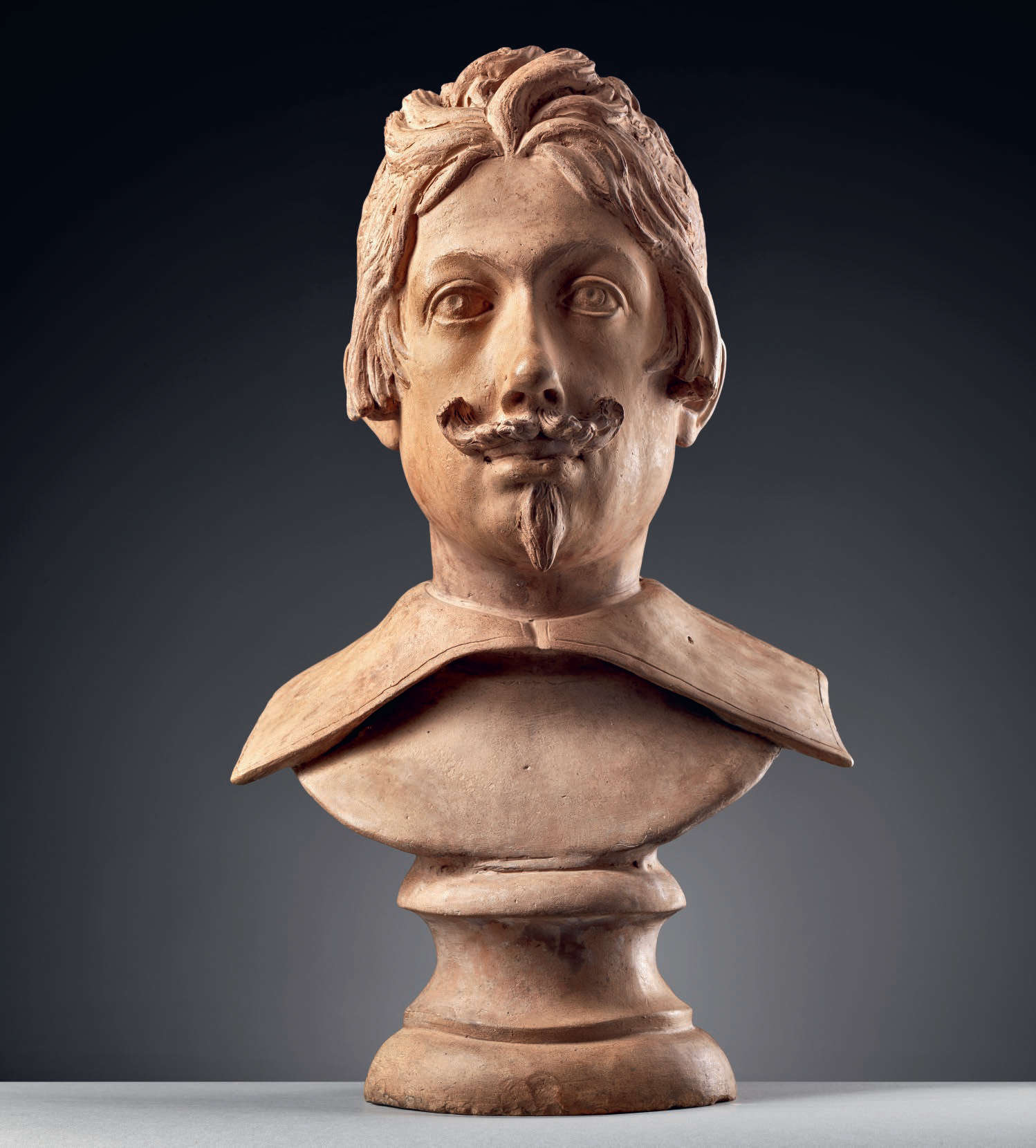
The loss of sight did not mark a hindrance to his career, but paradoxically contributed to the sculptor’s fame. Indeed, Gonnelli became famous for his ability to “work without light,” relying solely on touch to translate the features of his models into clay. His hands, guided by direct contact with the faces of the effigies or by intermediate models, were able to restore the physical and psychological presence of the subjects with surprising immediacy. In the course of his activity Gonnelli received prestigious commissions from princes, cardinals and grand dukes, becoming one of the most sought-after portrait painters between Florence and Rome. The two works presented in Maastricht by the Swiss gallery are among the most important examples of his production and are the subject of a dedicated catalog produced by art historian Gerardo Moscariello and published by Mandragora on the occasion of the fair. The first bust depicts Ferdinand II de’ Medici (Florence, 1610 - 1670), fifth grand duke of Tuscany. The work, datable between 1640 and 1645, is made of terracotta and measures 51 by 40 by 26 centimeters. The ruler is depicted in contemporary armor and wears a broad starched collar that projects beyond his shoulders.
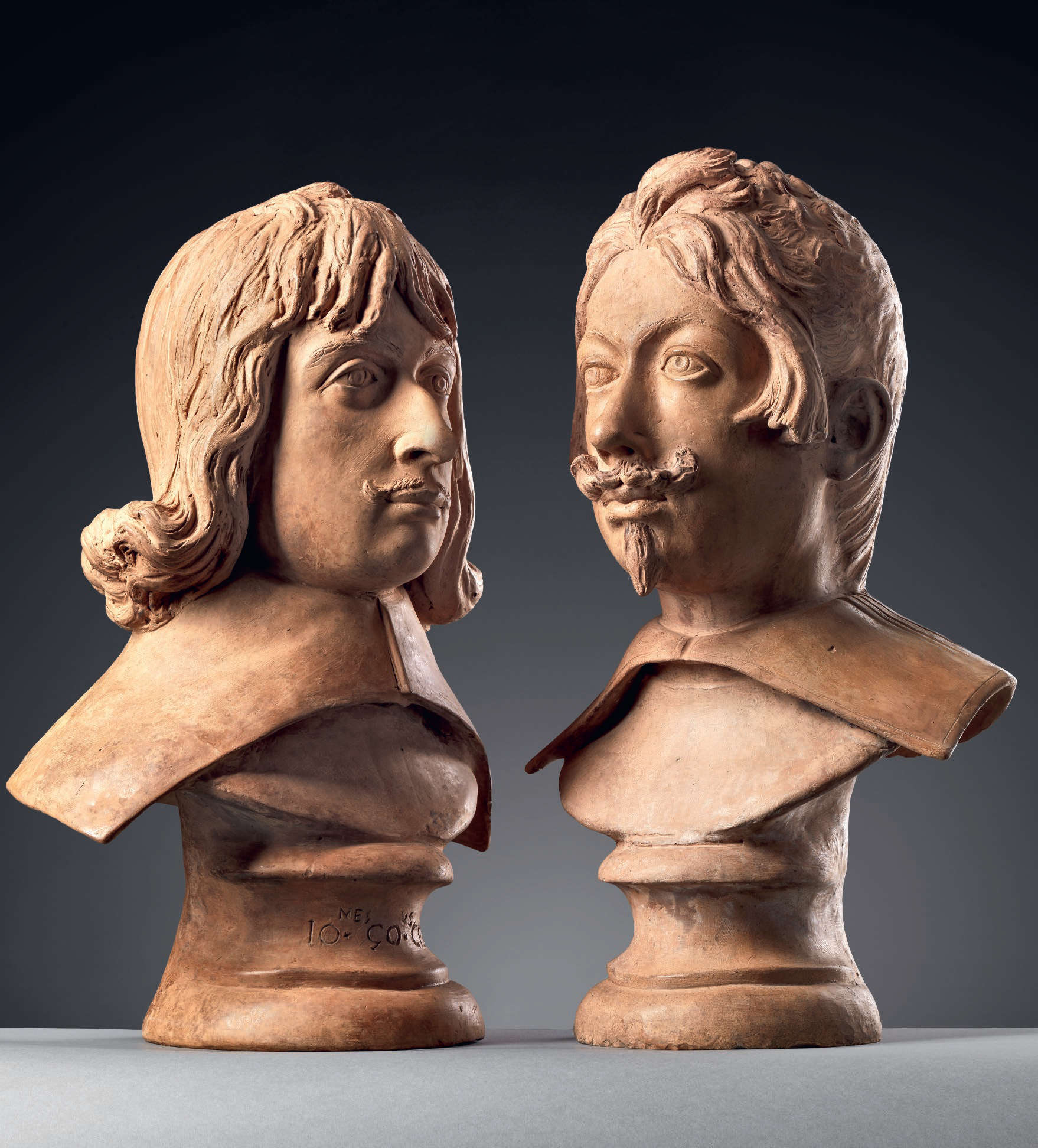
The identity of the effigy has sometimes been confused in the past with that of his father Cosimo II de’ Medici, but comparison with the pictorial portraits of the young grand duke allows for more accurate recognition of Ferdinand II. Particularly significant is the juxtaposition with an octagonal painting preserved at the Kunsthistorisches Museum in Vienna and attributed to Justus Suttermans, which can be dated to the same period. Suttermans’ work, from which numerous replicas made by the painter or his workshop derive, displays physiognomic features very similar to those of Gonnelli’s bust. Among the distinctive elements appears the elaborate hair that the grand duke sported in his younger years, also visible in other sculptural and numismatic portraits of the period. Useful comparisons for understanding the iconography of Ferdinand II include the metal profile found in a medal made by Gaspero Mola, a terracotta bust modeled by Pietro Tacca around 1627, and a marble portrait executed by Antonio Novelli around 1640 for one of the niches in the facade towards the Santa Trinita bridge of the present-day Palazzo della Missione in Florence. These references allow us to place the making of Gonnelli’s bust in the early 1640s, a period when the sculptor had returned to Florence after an initial stay in Rome that began in 1636. His travels in the papal city continued in the following years, however, until his death in Rome itself.
Stylistically, the portrait presents typical characteristics of the production of the Gambassi Blind Man. The composition is dominated by the centrality of the head of the effigy, modeled in continuity with a torso that is not very developed in length and with a pedestal with a reel-like shape. This compositional structure, combined with the strict frontality of the figures, suggests the vantage point envisioned by the sculptor for his works. The soft rendering of the complexions, the simplification of the facial planes , and the vibrant modeling of the beard and hair reveal the artist’s expert hand and his skillful use of the splint with which he etched the surface of the clay.
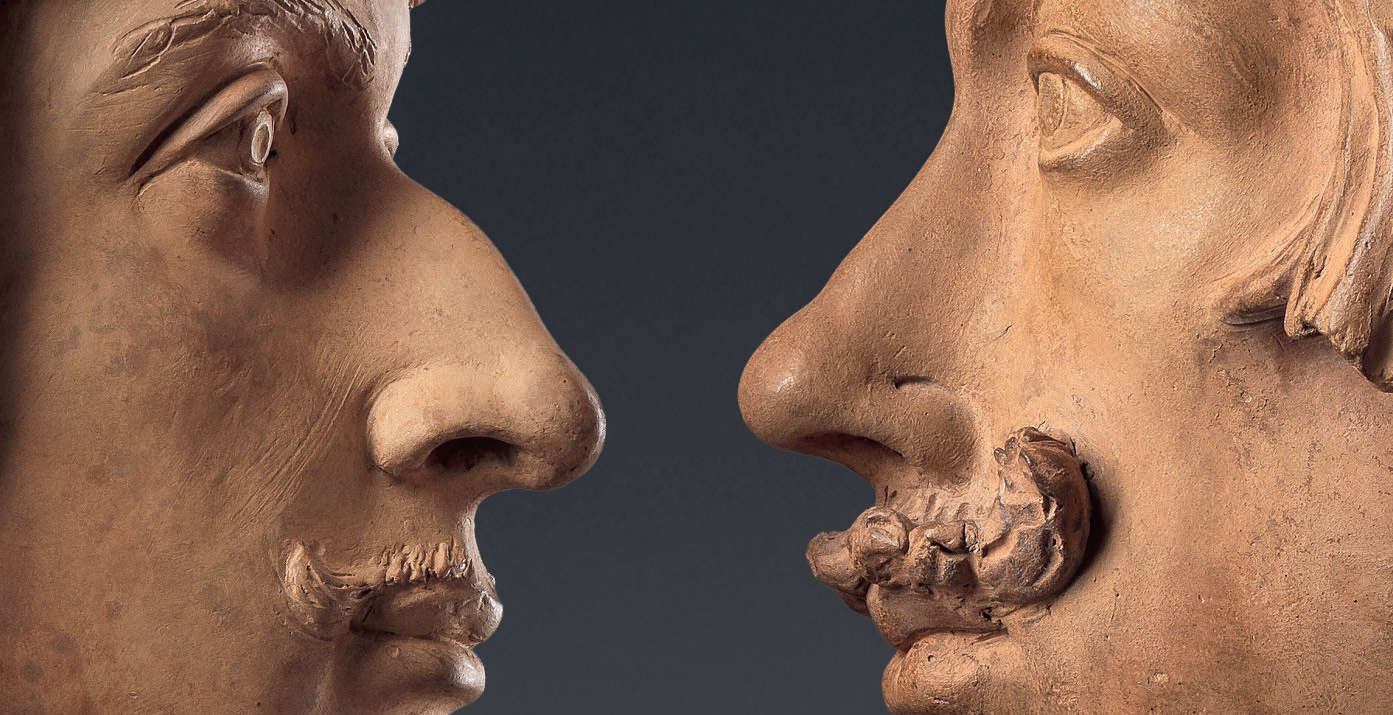
A recurring feature in Gonnelli’s portraits concerns the construction of the eyes. The pupils are not incised but obtained by pressing into the clay a small concave cavity, probably made with the convex end of a tool similar to the “certain straw” remembered in the sources. The result is a slightly misaligned gaze that gives the figures a special expressive intensity.
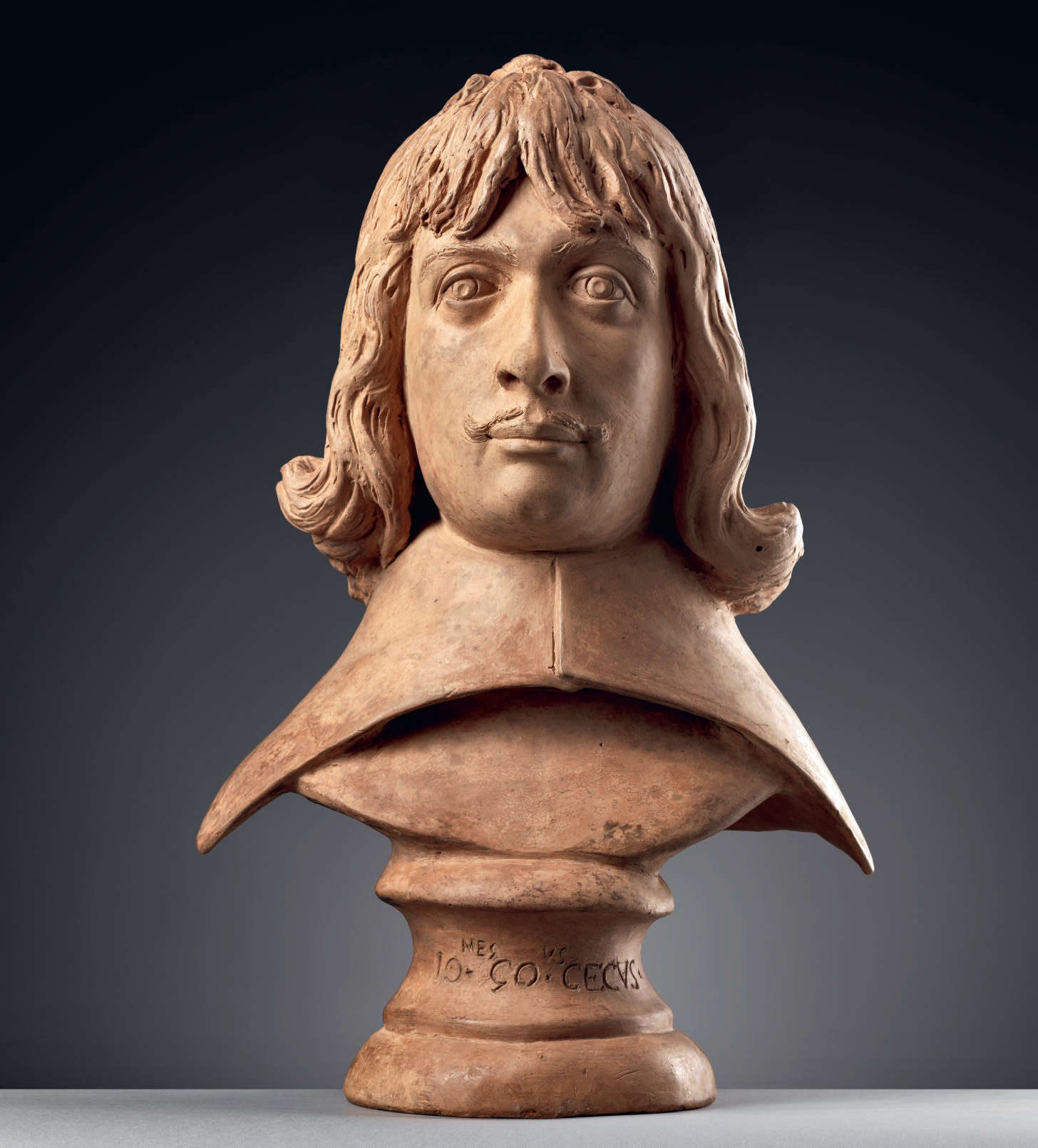
The second bust presented at TEFAF depicts François de Clermont-Tonnerre and can be dated around 1655. The sculpture, also in terracotta, measures 50 by 34 by 28 centimeters. The personage was count-bishop of Noyon, peer of France and state adviser to Louis XIV. François de Clermont-Tonnerre, born probably in 1629 and appointed bishop in 1661 during the pontificate of Alexander VII Chigi, was known for his strong personality and a vanity considered unwavering by his contemporaries. Chronicles also recall the opulence of his residences and a lifestyle that placed him in open competition with the papal court. Identification of the character is based on a physiognomic comparison with an engraved portrait made in 1655 by Robert Nanteuil (the similarity between the engraving and the terracotta bust suggests that the two works may depict the same individual). Further comparisons have been identified in a drawing attributed to Flemish painter Jan van Ravesteyn, now in the Städel Museum in Frankfurt.
Although there are no documented travels to Italy by Clermont-Tonnerre in the 1750s, the hypothesis of a contact with Gonnelli is not considered impossible, given the French nobleman’s social position. In any case, it is known that the sculptor made a portrait on at least one occasion without direct knowledge of the effigy. This is the case with the lost bust of Nicolas-Claude Fabri de Peiresc, a French scholar and collector who died in 1637. The work was commissioned by antiquarian Francesco Gualdi, who organized a complex process to obtain a portrait of his friend. An image of Peiresc’s face was in fact first translated into a sculpture by an anonymous artist and then sent to Gonnelli, who used it as a model to make his terracotta version. This method testifies to the prestige of the works of the Gambassi Blind among seventeenth-century collectors. His sculptures were considered extraordinary objects, capable of arousing wonder because of their artistic quality and the exceptional conditions under which they were made.
Historical sources, including accounts by art historian Filippo Baldinucci, also provide valuable details on the working techniques adopted by Gonnelli. The sculptor was in the habit of emptying the internal mass of his terracottas and temporarily filling the void with rags, which were then removed before firing (in fact, terracotta must always be emptied before it goes into the kiln, because otherwise the internal moisture would be trapped and, not finding an outlet, would risk causing the work to explode). This expedient with the use of rags facilitated the drying of the clay and reduced the risk of breakage while in the kilns, allowing for hollow, lighter sculptures. Once fired and cooled, the portrait was not delivered to the client with the natural appearance of terracotta. In fact, according to Baldinucci, Gonnelli applied a special greenish tint to his works, similar to the patina of ancient bronze statues. The surface was slightly shiny and reminiscent of the shade called purpurin by painters of the time.
The two sculptures presented at TEFAF Maastricht thus represent valuable evidence of the production of a sculptor who was able to transform a condition of blindness into a distinctive element of his art. Working exclusively through touch, Giovanni Gonnelli succeeded in creating portraits of extraordinary vitality, capable of capturing not only the features but also the psychological presence of his models.
 |
| Two rare portraits of the Blind Man of Gambassi presented at TEFAF Maastricht |

Warning: the translation into English of the original Italian article was created using automatic tools. We undertake to review all articles, but we do not guarantee the total absence of inaccuracies in the translation due to the program. You can find the original by clicking on the ITA button. If you find any mistake,please contact us.

















 IT
IT FR
FR DE
DE ES
ES CN
CN