





Rediscovering a historical space according to the original perceptual modes related to the light and environmental conditions of the Renaissance. This is the approach behind the 3D viewer dedicated to the virtual restitution of the First Tiburtine Hall of the Villa d’Este in Tivoli, developed as part of the CHANGES Project - CUP B83C22005060006, with the support of CdE-DTC Lazio and the scientific direction of Carmelo Occhipinti.
The project is part of a research path that interweaves advanced digital technologies and art-historical study, with the aim of reconstructing the material appearance of environments and the original perceptual conditions. The system was developed by Haltadefinizione and Memooria, both tech companies of the Panini Cultura Group, starting with a digitization campaign curated by Haltadefinizione.
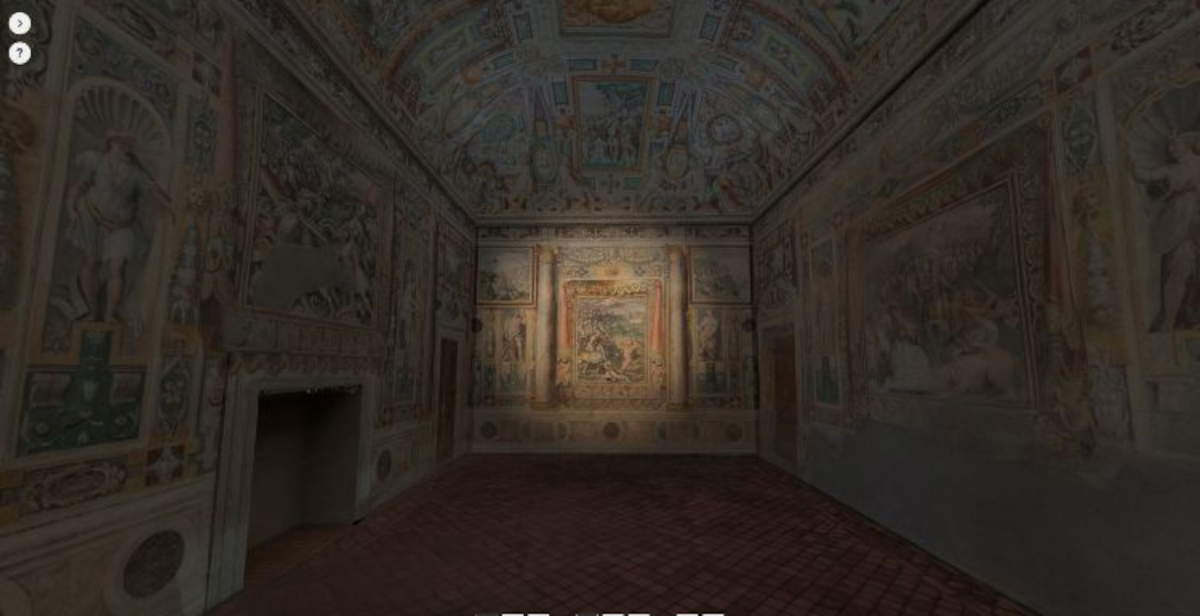
The result is a three-dimensional model accessible via browser, obtained by high-precision terrestrial laser scanning and subsequent integration into an interactive environment. Within that environment, light takes on a central, interpretive role. Indeed, the user can explore the Tiburtine Hall by simulating different lighting conditions, with the goal of approaching a perception consistent with that of the 16th century, when the space was enjoyed in dim conditions and illuminated by unstable sources such as candles and candelabra.
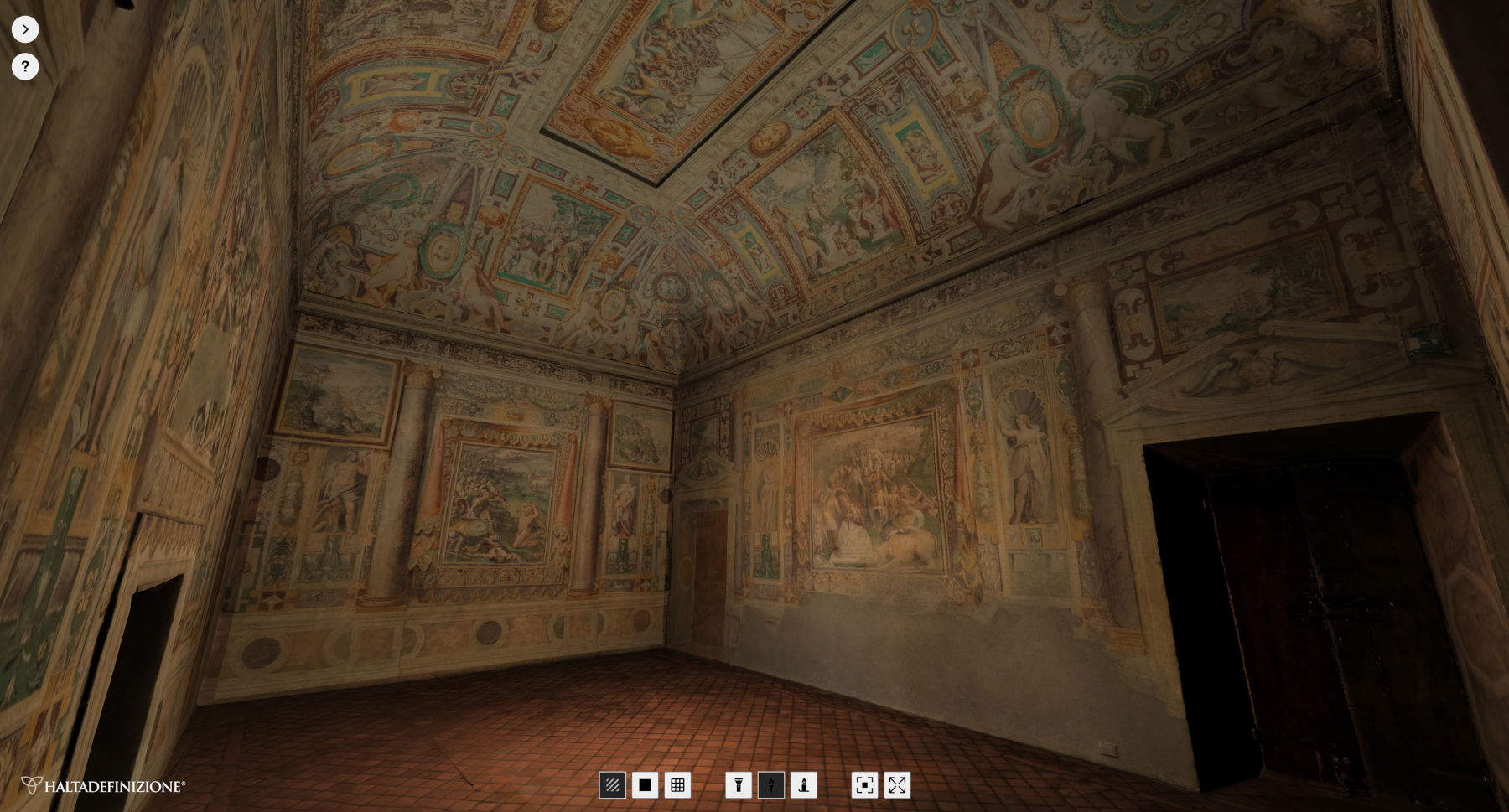
The system provides three main modes of lighting. Torch mode introduces a warm, oscillating light that simulates the presence of a portable light source. Candle mode limits the field of view and reproduces a progressive and partial perception of space, related to the irregular spread of light. The flashlight mode, on the other hand, allows a punctual analysis of painted surfaces through a directional beam, useful for reading pictorial and decorative details.
The project also integrates the Coosmo service, developed by Haltadefinizione as a Digital Asset Management system, aimed at the management and enjoyment of gigapixel images and additional digital assets. This infrastructure enables advanced consultation of visual content, functional for both research and heritage enhancement.
Underlying the entire work is an in-depth art-historical study. The analysis of archival sources and descriptions coeval with the realization of the hall allowed reconstructing the original conditions of use of the space. The decoration of the First Tiburtine Hall, created by 1569 by a heterogeneous team of anonymous artists led by Cesare Nebbia, was part of a complex visual system designed for viewing in reduced light conditions.
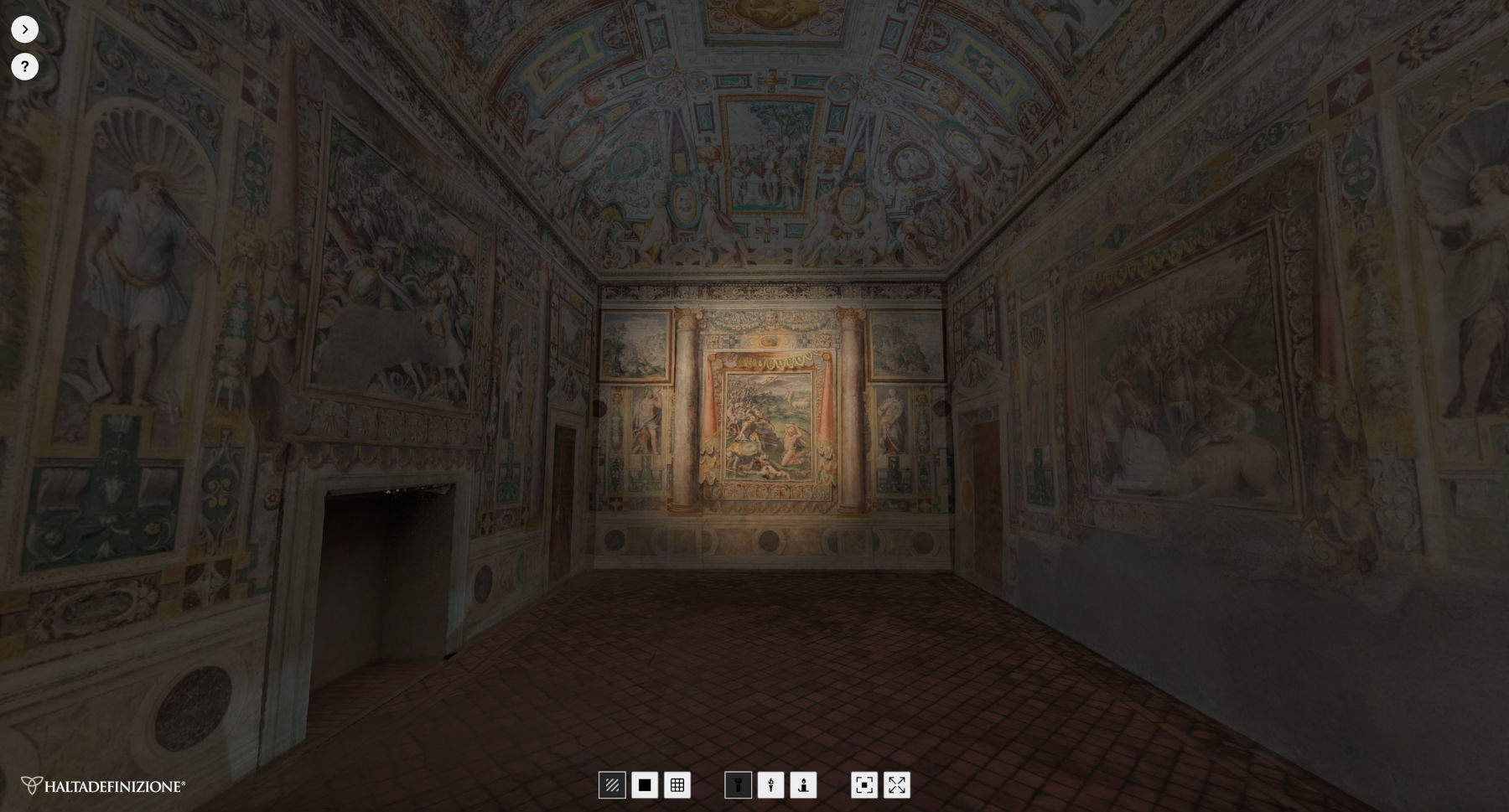
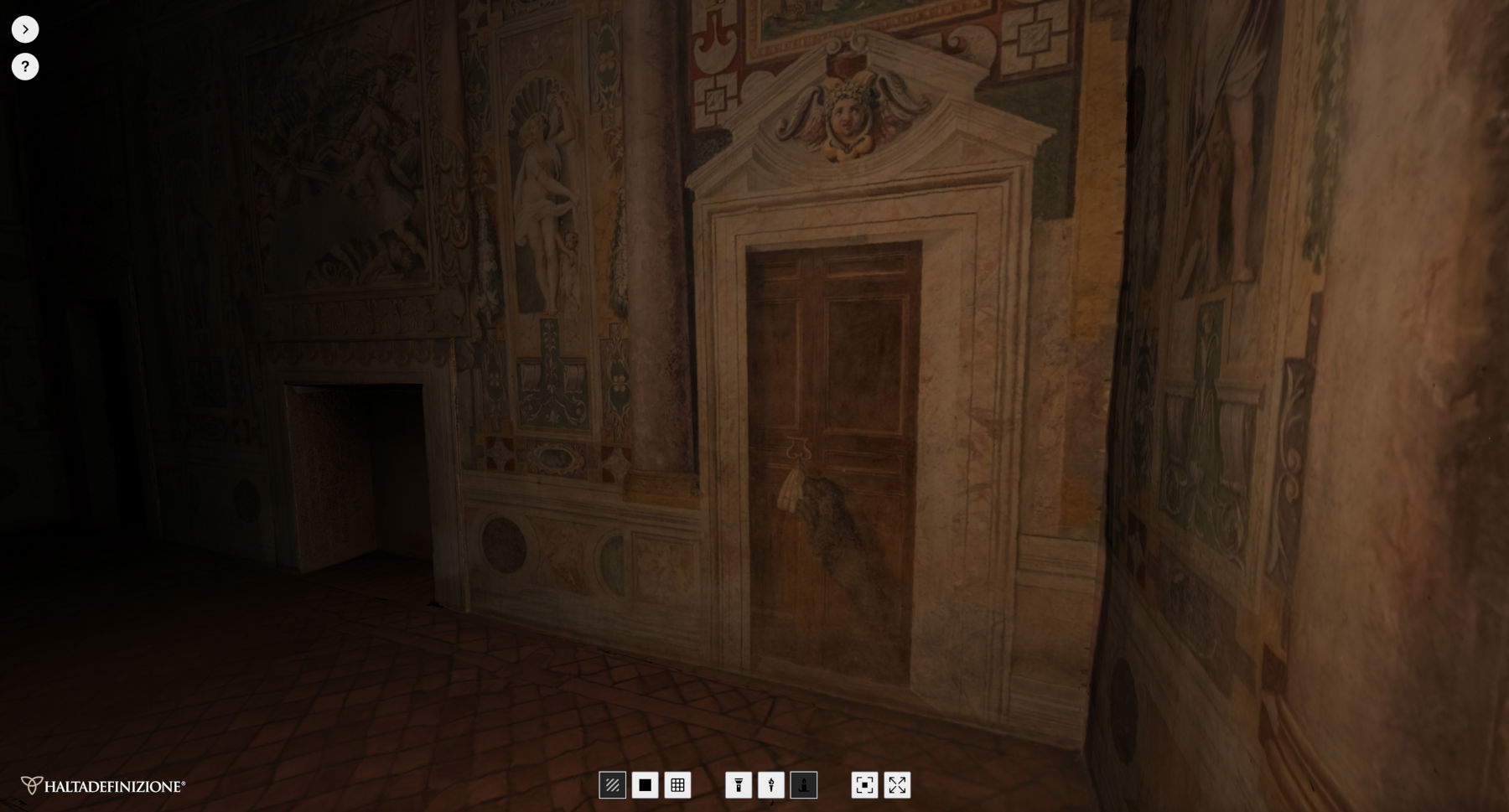
In this context, the frescoes were combined with decorative elements that are no longer present or greatly altered today, such as precious fabrics, illusionistic marble surfaces, gems and stuccoes. This ensemble contributed to the construction of a highly scenic environment, characterized by a layered perception of space and images.
A review of the artistic literature relating to Tivoli, with particular reference to the writings of Pirro Ligorio and Marco Antonio Nicodemi, also made it possible to specify the iconographic layout of the room. The decorative cycle is dedicated to the mythical history of the city of Tivoli, in which figures and narratives related to Hercules, considered a central element in the symbolic construction of Este power, can be recognized, as well as the founders Tiburto and Catillo and the events of their heirs.
The Tiburtine Hall is thus configured as a complex device in which architecture, pictorial decoration and mythological narration are closely integrated. The technological intervention developed within the CHANGESproject allowstoday to reconsider this balance through a digital reconstruction that introduces perceptual variables related to light. In this framework, the simulation of 16th-century lighting conditions an interpretative tool that modifies the legibility of surfaces and iconographic relationships. Indeed, the variation of illumination makes it possible to highlight otherwise unperceivable details and to restore the original complexity of the decorative environment.
 |
| Villa d'Este, Tiburtina Hall reborn in 3D: simulated Renaissance light |

Warning: the translation into English of the original Italian article was created using automatic tools. We undertake to review all articles, but we do not guarantee the total absence of inaccuracies in the translation due to the program. You can find the original by clicking on the ITA button. If you find any mistake,please contact us.






















 IT
IT FR
FR DE
DE ES
ES CN
CN


