





A discovery destined to impact studies in papyrology and funerary archaeology comes from the site of al-Bahnasa, Egypt, identified with ancient Oxyrhynchus. The archaeological mission of theUniversity of Barcelona and theInstitute of the Ancient Near East, led by Maite Mascourt and Ester Ponce Melado, found inside a Roman-era mummy, a fragment from Homer’sIliad (we covered it here). But what elements have emerged so far about the papyrus?
It is, according to the university’s release, the first-ever attestation of a Greek literary text being deliberately included in the embalming process. The discovery came as part of the Ossirinco Archaeological Mission, sponsored by the Institut del Pròxim Orient Antic of the University of Barcelona. During the campaign conducted between November and December 2025, the team led by Núria Castellano identified, in tomb 65 of sector 22, a mummy dated to about 1,600 years ago. The unexpected element involved the presence of papyrus placed on the abdomen of the deceased, an integral part of the embalming ritual.
Previous campaigns at the same site had already documented Greek-language papyri associated with mummies and placed in similar positions. In all cases, however, these were texts of a magical or ritual nature. The identification of a literary text thus represents a significant element of discontinuity, which opens up questions about the cultural and symbolic practices in use in Greco-Roman Egypt.
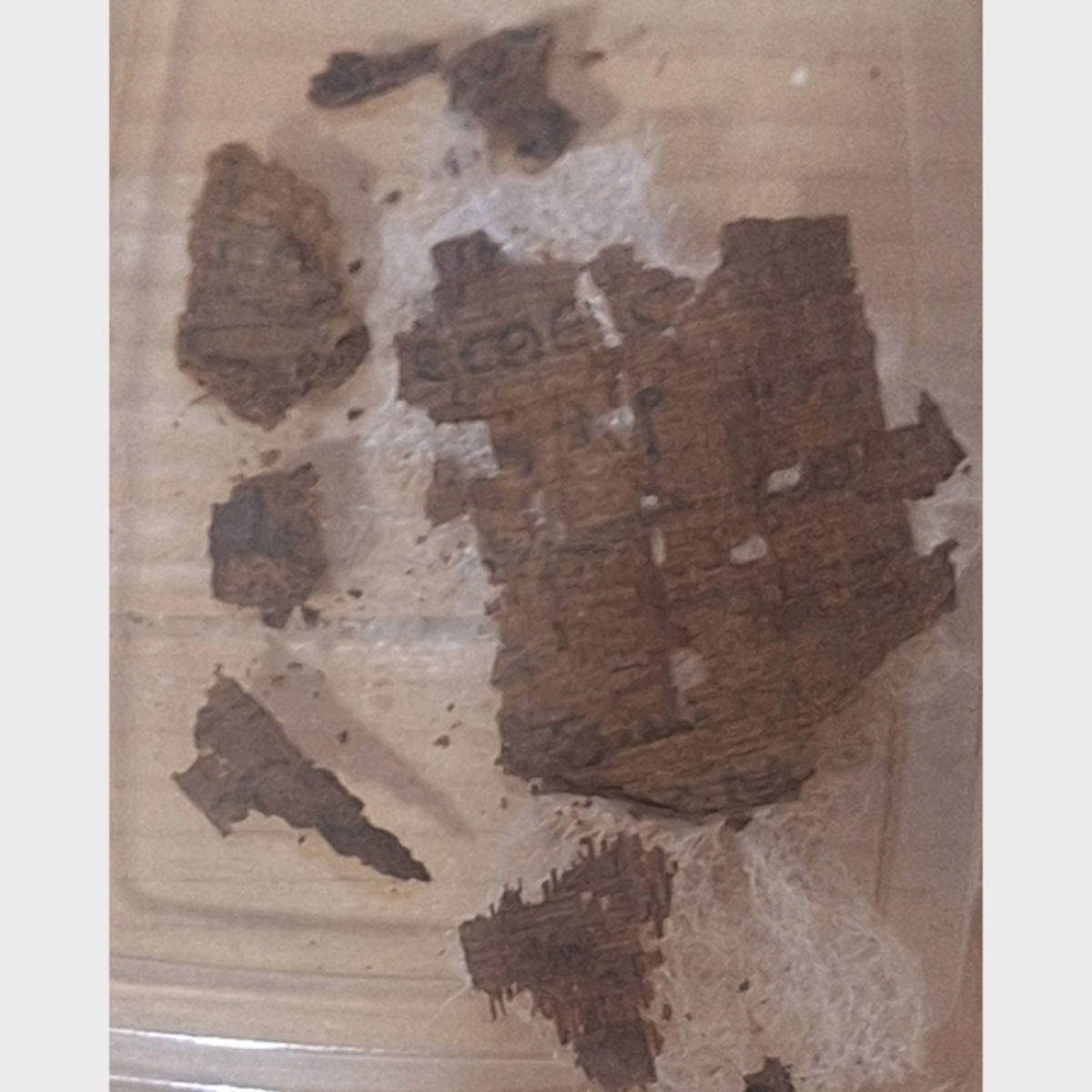
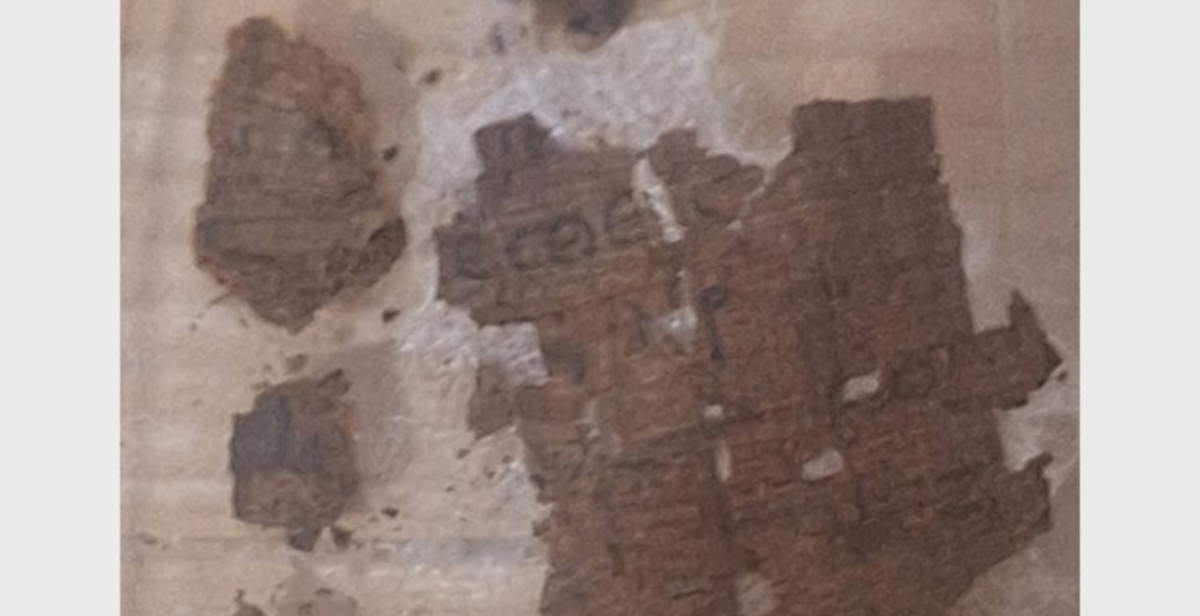
Analysis of the find was conducted during the following campaign, between January and February 2026, by restorer Margalida Munar, researcher Leah Mascia, and classical philologist Ignasi-Xavier Adiego, a professor in the university’s Department of Classical, Romance and Semitic Philology and director of the project. Thanks to Mascia’s reading, Adiego was able to identify the text as part of the so-called catalog of ships, contained in the second canto of theIliad, the passage that enumerates the Greek forces arrayed before Troy.
“This is not the first time that Greek papyri have been found packaged and sealed within the embalming process of a mummy, but until now they were mainly texts of a magical nature,” argues philologist Ignasi-Xavier Adiego. “On the other hand, it should be remembered that since the end of the 19th century, a huge amount of papyri, including important Greek literary texts, have been found in Oxyrhynchus, but the real novelty is the discovery of a literary papyrus in a funerary context.”
Gianluca Miniaci, associate professor of Egyptology at theUniversity of Pisa, also speaks on the function of the fragment, and in a video from the Pisan university’s Office of Communication, published and relaunched by ClassiCult, reconstructs the context of the find. "Inside a Greco-Roman-era mummy in the necropolis of Oxyrhynchus, in an area close to the site of Zawyet Sultan where the University of Pisa mission has been working since 2015, a small fragment of the Iliad was found, relating to the second canto describing the ships of the Greeks about to confront the Trojans. Contrary to what one might assume, the fragment does not reflect the intention to accompany the deceased with a part of the text in the funerary journey, but it fulfills a practical function: it was employed within a set of papyri to support the abdomen of the body during mummification."
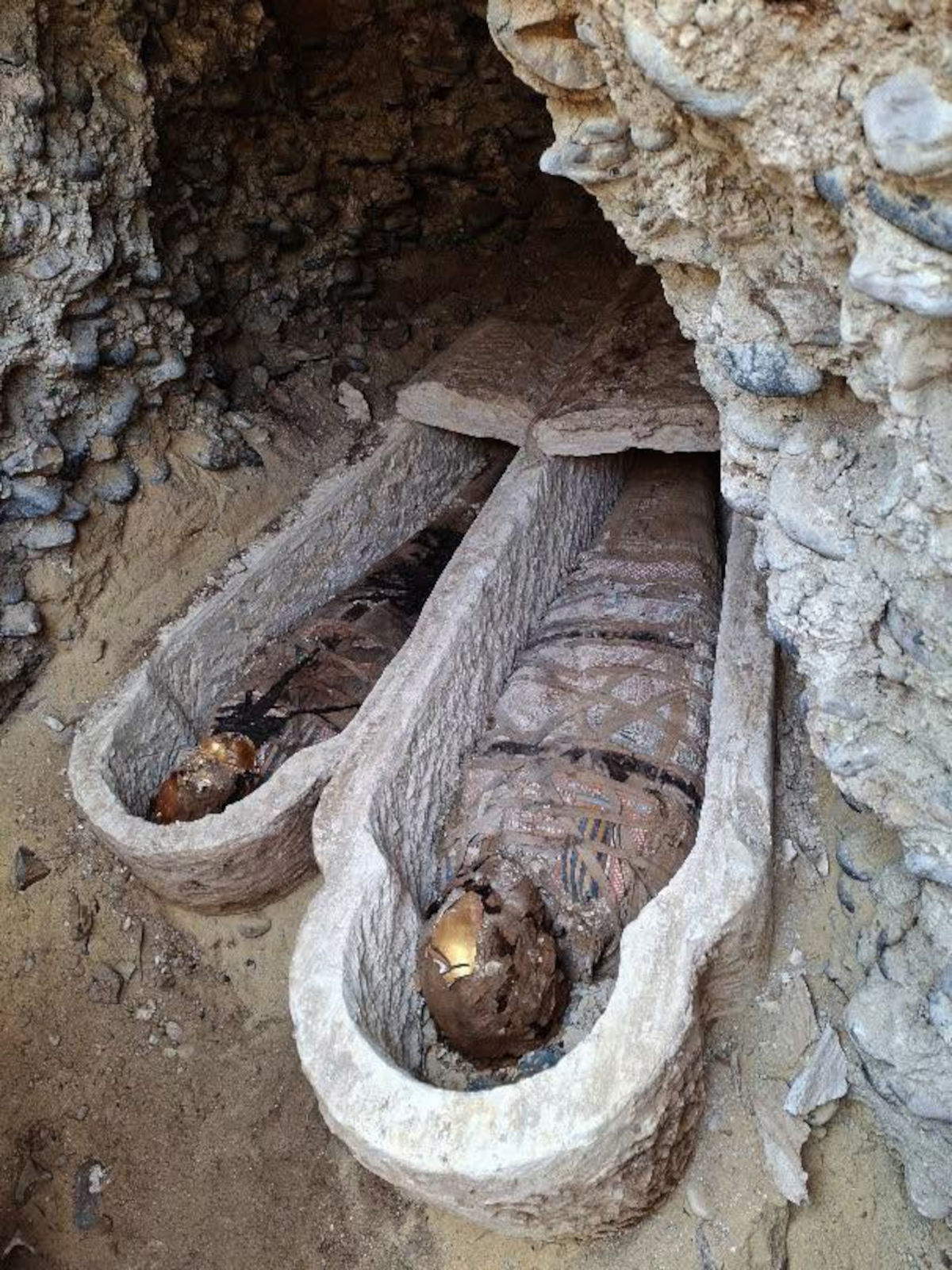
The context of the find is the necropolis of al-Bahnasa, located about 190 kilometers south of Cairo along the Bahr Yussef, a branch of the Nile. The area corresponds to one of the most significant cities in Greco-Roman Egypt. Excavations have also uncovered a funerary structure consisting of three limestone chambers, inside which Roman-era mummies and decorated wooden sarcophagi have been found. Many of these artifacts appear to have been damaged due to looting in earlier eras.
The Ossirinco mission, launched in 1992 under the direction of Josep Padró, represents one of Spain’s longest-running archaeological initiatives in Egypt. The project, now led by the Institute of the Ancient Near East (IPOA ), concluded its last campaign, carried out between November 2025 and February 2026, with results defined as being of considerable historical and archaeological significance. The mission’s activities are carried out with the support of the Spanish Ministry of Culture, the University of Barcelona, the Palarq Foundation, the Catalan Society of Egyptology and AIXA Serveis Arqueològics, as well as the collaboration of the Egyptian Supreme Council of Antiquities and Cairo University.
 |
| A papyrus of the Iliad in a Roman mummy: here's what emerges from discovery in Egypt |


The author of this article: Noemi Capoccia
Originaria di Lecce, classe 1995, ha conseguito la laurea presso l'Accademia di Belle Arti di Carrara nel 2021. Le sue passioni sono l'arte antica e l'archeologia. Dal 2024 lavora in Finestre sull'Arte.Warning: the translation into English of the original Italian article was created using automatic tools. We undertake to review all articles, but we do not guarantee the total absence of inaccuracies in the translation due to the program. You can find the original by clicking on the ITA button. If you find any mistake,please contact us.

























 IT
IT FR
FR DE
DE ES
ES CN
CN


