





The world of museums is going through a phase of profound redefinition that touches the very foundations of the institution, starting with the management andgrowth of its collections. It is in this context that the presentation of the volume entitled Museum Acquisitions: ethics, practices and visions, edited by Valeria Arrabito and Ilaria Navarro, whose release is the result of the collaboration between ICOM Italy and the Lombardy Region, is inserted. The work, which will be illustrated to the public on December 17, 2025 at the Palazzo Lombardia in Milan, Italy, does not merely provide a technical manual, but aspires to offer a broad, multidisciplinary look at what it means today for a museum to decide to welcome a new asset into its collections. The publication stems from the need to systematize the reflections that emerged during a number of webinars held in the previous December, responding to the need for professionals in the field to have up-to-date tools to orient themselves in a landscape that has become increasingly complex in legal, administrative and ethical terms.
The starting point of the survey is purely theoretical and concerns the very evolution of the museum concept. As highlighted in the text, the definition of museum approved by ICOM in Prague in 2022 introduced semantic changes that reflect a new vision of the relationship between institution and heritage. Compared to the previous 2007 formulation, which used the term “acquires,” the new definition opted for the verb “collects.” This lexical variation is not a mere exercise in style, but implies a paradigm shift: whereas acquires refers to a formal act of transfer of ownership, collects evokes a broader, dynamic and relational cultural process that is not exhausted in material possession but includes research, interpretation and dialogue with communities. Collections are no longer seen as static repositories of objects, but as living organisms that evolve in relation to societal transformations.

This perspective requires museums to have clear and structured acquisition policies. It is no longer a matter of accumulating objects, but of consciously selecting what is functional to the institution’s mission. Ilaria Navarro points out that the drafting of a policy document on acquisitions is now a standard required even by the Uniform Levels of Quality of the Italian National Museum System. Such a document must answer crucial questions: what to collect, but more importantly what not to collect, in order to avoid duplication and ensure management sustainability in the long run. The risk of so-called “over-collecting,” or uncontrolled accumulation that saturates spaces and resources, is a real threat to the scientific functionality of museums. In this sense, the acceptance of donations and bequests, often considered a zero-cost resource, can turn into an unsustainable burden if constrained by rigid clauses, such as the obligation of permanent display, that limit curatorial freedom and the ability to update exhibition itineraries.
The Italian regulatory framework within which these dynamics move is precisely outlined in the volume. Gabriele Torelli recalls how public museums in Italy perform an essential public service and how the goods they hold belong to the cultural state property, a condition that determines their absolute inalienability, except for rare authorized exceptions. This legal status guarantees enhanced protection of heritage, removing it from the logic of the market and ensuring its collective enjoyment. However, the augmentation of public collections does not occur only through donations or direct purchases. The legal system provides specific protection tools that allow the state to intervene in the buying and selling of cultural property. Paola Strada illustrates the mechanism of preemption, through which the Ministry of Culture can take the place of the private buyer in a purchase and sale of listed assets, paying the same agreed price. Even more incisive is the institution of compulsory acquisition, which can be exercised when an asset is presented to the Export Offices to leave the national territory: in this case, the state can block the export by purchasing the asset for its own collections, if it recognizes its pre-eminent cultural interest.
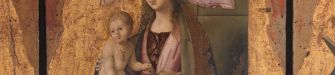
State acquisition dynamics are supported by the work of advisory bodies such as the Technical and Scientific Committee for Fine Arts. Caterina Bon Valsassina reports concrete examples of interventions carried out in the three-year period 2022-2025, which have made it possible to secure works of great significance to the public heritage, often intended to fill specific gaps in national museums. Cases cited include the coercive purchase of works by Maria Lai or ancient panels such as that of Giovan di Piermatteo Boccati, destined for the Galleria Nazionale delle Marche. These interventions show how protection is not a merely defensive action, but can turn into an active strategy of enriching the public heritage, combining the needs of conservation with those of valorization.
The volume also offers an interesting comparison with the U.S. museum system, advanced by Giuditta Giardini, which highlights profound structural differences. While in Italy the public paradigm and the inalienability of assets prevail, in the United States museums are predominantly private nonprofit entities, which operate thanks to a tax system that incentivizes donations through significant deductions. One of the most pronounced differences concerns the practice of "deaccessioning," or the ability of American museums to sell works from their collections. Although regulated by strict ethical codes that require proceeds to be reinvested in new acquisitions or collection care, this practice is substantially foreign to the Italian legal tradition, where public museum holdings are considered inalienable. However, the U.S. system also pays great attention to the provenance of works, adopting strict standards to avoid the acquisition of assets that are the result of illicit trafficking or spoliation, in line with international conventions.
The ethical dimension cuts across all the contributions in the book. Luca Zamparo and Adele Maresca Compagna insist on the importance of "due diligence," or the duty to conduct thorough checks on the history and provenance of each object before acquiring it. Museums cannot risk becoming unwitting accomplices in illicit trafficking or clandestine excavations. ICOM’s Code of Ethics is the fundamental compass in this regard, stipulating that no object should be acquired unless one is certain of the validity of its title and the lawfulness of its provenance. This ethical rigor also extends to the relationship with the art market. Valeria Arrabito analyzes how the entry of a work into a museum legitimizes its value not only culturally but also economically, creating an interdependence between public institutions and commercial dynamics that must be handled with extreme caution and transparency to avoid conflicts of interest.
The book also devotes ample space to analyzing the territorial context of Lombardy, offering a historical perspective on regional cultural policies. Pietro Petraroia reconstructs the season between 1995 and 2000, characterized by the councillorship of Marzio Tremaglia, during which Regione Lombardia pursued a policy of “anti-museum” acquisitions. The goal was not to establish a centralized regional collection, but to save significant heritages from dispersion and then to entrust them for management to local institutions, foundations or civic museums already operating in the territory. Emblematic examples of this strategy are the purchase of Giovanni Sacchi’s collection of design models, deposited at the Milan Triennale, or the rescue of Federico Patellani’s photographic archive. A symbolic work of this season is Titian Vecellio’s Portrait of Giulio Romano, chosen as the book’s cover image: purchased in 1996 with the contribution of Fondazione Cariplo, the painting was destined for the Museo Civico di Palazzo Te in Mantua, returning to the territory a masterpiece linked to its history.
Going into the details of local realities, Laura Aldovini presents the case of the Civic Museums of Pavia, whose collections are the result of a long history of legacies and donations, starting with the founding one of Marquis Luigi Malaspina in the 19th century. However, the management of donations is not without critical issues. The author cites examples such as the Morone donation of 2000, which brought 19th- and 20th-century masterpieces to the museum but with the constraint of a dedicated display, or the more complex Strozzi donation, which required years of study to verify the provenance of the works, some of which were found to be of illicit origin and returned. These cases demonstrate how acquisition is never a neutral act, but involves management, conservation and verification responsibilities that burden the institution for decades.
Finally, the book emphasizes the role of documentation as an indispensable support for museum policies. Valeria Arrabito and Maria Elisa Nobili illustrate the function of documentation centers, such as ICOM Italy’s CEDOM, housed at the “Marzio Tremaglia” Library of the Lombardy Region. These specialized archives collect the historical memory of museum institutions and practices, offering valuable materials for the training of operators and for scientific research. Even the Tremaglia Library itself, as recounted by Donadini, Guzzetti and Ogliari, has undergone a recent reorganization to enhance its role as a reference hub for library and archival studies, confirming the Region’s commitment not only to the protection of objects, but also to the preservation of the knowledge about them.
Museum Acquisitions: ethics, practices and visions thus stands as a fundamental text for understanding the complexity of contemporary museum work. Through the interweaving of theory, legal analysis, and practical cases, the volume demonstrates how the act of acquisition is not simply an administrative operation to increase assets, but a precise cultural choice that defines the identity of the museum and its relationship with society. Whether acquiring a Renaissance masterpiece or saving a business archive, each new addition to the collection represents a taking of responsibility towards future generations, which requires expertise, transparency and a rigorous ethical vision. The museum, then, is not a passive container, but an active player that, through its collecting choices, builds collective memory and interprets the transformations of the present.

Warning: the translation into English of the original Italian article was created using automatic tools. We undertake to review all articles, but we do not guarantee the total absence of inaccuracies in the translation due to the program. You can find the original by clicking on the ITA button. If you find any mistake,please contact us.






















 IT
IT FR
FR DE
DE ES
ES CN
CN


