



by Redazione 05/11/2025



Categories: Contemporary art / Disclaimer
Maurizio Cattelan is the winner of the Preis der Nationalgalerie, a major German prize that will give him the opportunity to hold a major exhibition at the Nationalgalerie in Berlin in 2026. The prize traditionally recognized young artists, this year for the first time it goes instead to a big name in international art.
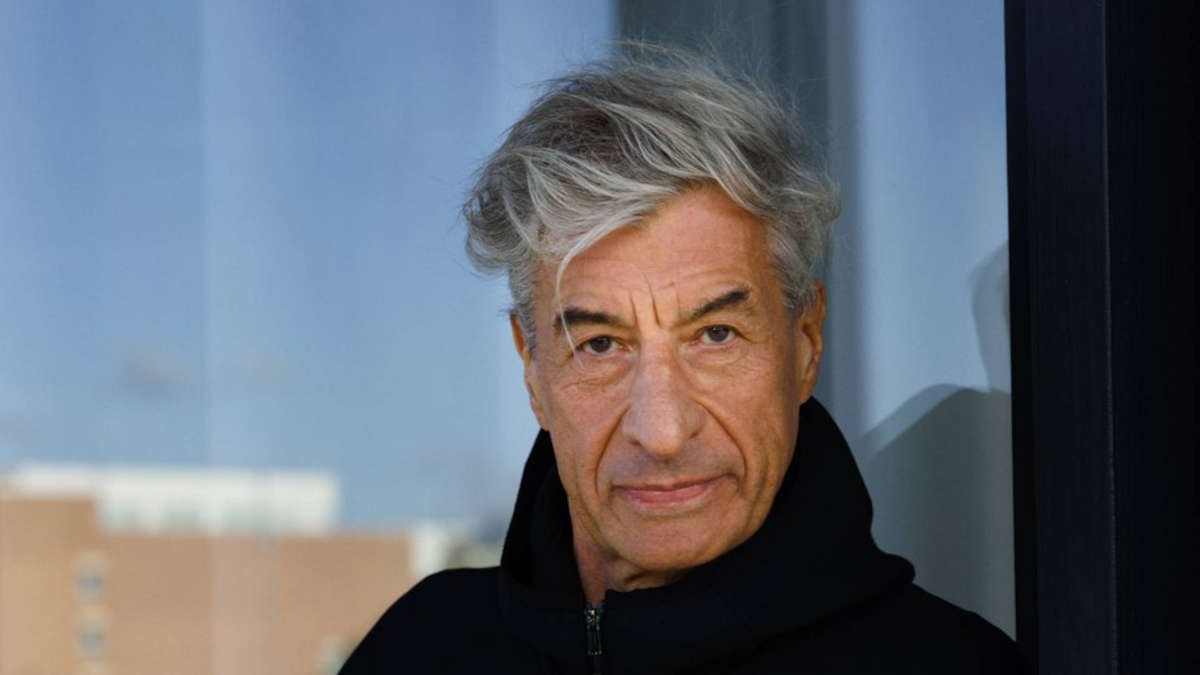
Going to Maurizio Cattelan (Padua, 1960) is the 2026 edition of the Preis der Nationalgalerie, the prize that the Berlin museum awards every two years: the novelty is that, if previous editions (the prize has existed since 2000) tended to reward young artists, this year, for the first time, in the wake of a rethinking of the prize, the award goes to a well-known name in international art, always with the discriminating factor of never having had a major exhibition in the German capital. The prize, in fact, also gives the opportunity to organize an exhibition, and Cattelan’s will be his first solo show in Germany.
The expert jury for the Preis der Nationalgalerie 2026 consists of international museum directors Emma Lavigne (Director of the Pinault Collection, Paris), Sam Keller (Director of the Fondation Beyeler, Basel) and Klaus Biesenbach (Director of the Neue Nationalgalerie). In addition to the expert jurors, Nationalgalerie curators and members of the Friends of the Nationalgalerie association were also eligible to submit nominations.


Here is the motivation for the award: “With his co-curatorship of the fourth Berlin Biennale, Maurizio Cattelan made a decisive contribution to the international positioning of Berlin as a center of contemporary art nearly two decades ago. Today, 20 years later, a solo exhibition at the Neue Nationalgalerie offers an opportunity to reflect on this formative influence in a new social and cultural context. Cattelan’s work is characterized by themes such as power, religion, death, humor and memory, themes that are particularly relevant to Berlin, with its complex history. As an Italian artist working internationally, he offers a distinctly European perspective to questions of identity, responsibility and collective memory. His works invite viewers to reflect on history in provocative, critical and poetic ways. Particularly in Germany, where the forms of memory are currently being renegotiated-between the last generation directly linked to the Nazi era or shaped by the postwar decades and a younger generation that brings with it global perspectives-Cattelan’s work acquires a particular and topical relevance. His iconic gestures, which oscillate between exaggeration, irony, and pain, question the rituals of memory, evoke history and stories, and open new perspectives on our social discussions and debates. In an era of increasing political polarization, his art can help us understand memory not as an obligation or duty, but as a vibrant and relevant engagement with the present and the future. His ironic questioning of authority and ’truth’ gains renewed relevance today. At a time when institutions-museums, politics, media-have to redefine their credibility and social role, Cattelan confronts power relations within and outside the art system, always without moralizing. His works encourage reflection on personal responsibility, the representation of history, and the limits of criticism and institutional authority. In a climate of political and social exacerbation, Cattelan’s subversive humor acts as a liberating force. It shows that provocation and comedy are not simply expressions of cynicism, but forms of resistance and constructive reflection. Especially in the German context, where social debates are often charged with moral tension, his art opens up new spaces for reflection beyond indignation and polarization. Cattelan is not an artist of certainty. His strength lies in enduring ambivalence, making contradictions visible, and posing new questions. It is precisely this thinking in the in-between that can generate productive irritation and reminds us that ambiguity is not a weakness but a prerequisite for critical awareness. The Neue Nationalgalerie, with its iconic Mies van der Rohe building, is intended to be a place that straddles modernism, the 20th and 21st centuries and the present, to show Cattelan’s work in all its complexity, as a mirror and commentary on our time.”


The Maurizio Cattelan exhibition will be held in the upper room of the Mies van der Rohe building and will be curated by Lisa Botti, curator of the Neue Nationalgalerie, with Klaus Biesenbach, director of the Neue Nationalgalerie. It will open September 2026 during Berlin Art Week with the awarding of the Preis der Nationalgalerie.
|
| Germany, Maurizio Cattelan wins the Preis der Nationalgalerie 2026 |
Warning: the translation into English of the original Italian article was created using automatic tools. We undertake to review all articles, but we do not guarantee the total absence of inaccuracies in the translation due to the program. You can find the original by clicking on the ITA button. If you find any mistake,please contact us.