





The design of the Italian Pavilion for the 61st International Art Exhibition of the Venice Biennale was presented at the Ministry of Culture. The pavilion, titled Con te con tutto (With you with everything), is entrusted to artist Chiara Camoni under the curatorship of Cecilia Canziani. The initiative was illustrated during a press conference held this morning in the Ministry’s Sala Spadolini in Rome, in the presence of the Commissioner of the Italian Pavilion and Director General of Contemporary Creativity Angelo Piero Cappello, the curator and the artist, as well as Biennale President Pietrangelo Buttafuoco. The proceedings were introduced by a video message from Culture Minister Alessandro Giuli.
In his speech, the minister stressed the symbolic value of the Italian Pavilion in the context of the Venice Biennale, which is defined as one of the main events dedicated to contemporary art at the international level. Giuli recalled that he appreciated Chiara Camoni’s artistic research even before her name appeared in the trio of finalist proposals to represent the country. The artist, Giuli explained, was also chosen for her ability to relate art and nature, for her attention to twentieth-century decorative forms, and for her use of cultural references that evoke the ancient world, with particular attention to Etruscan suggestions. According to the minister, his work succeeds in combining symbolic dimension and legibility, offering a language that is both accessible and layered.
In his message, Giuli also addressed the issue of the relationship between art and freedom, arguing that artistic production can fully express itself only within political contexts that guarantee its autonomy. The minister said that Italy considers culture one of the fundamental expressions of a community’s plural identity and that the country intends to value all artistic forms, including critical or dissident ones. During his speech he also referred to the presence of the Russian Federation pavilion at the Biennale, recalling that its reopening is due to an autonomous choice of the Biennale Foundation, although not shared by the Italian government.
After the minister’s speech, Angelo Piero Cappello took the floor, explaining the project selection process. The director general recalled that the Italian Pavilion represents one of the main tools with which the Ministry of Culture supports the national contemporary scene. In addition to a direct economic investment of about 800,000 euros, the pavilion is the culmination of a system of calls and support programs aimed at artists and curators, including theItalian Council, through which many Italian professionals have been able to develop international projects and relationships.
Project selection took place through a two-stage procedure. The committee chaired by Cappello himself initially identified ten proposals deemed consistent with the guidelines of the Biennale 2026 curator, Koyo Kouoh. The ten projects were then asked for further documentary review. At the end of the second phase, the committee selected three finalist proposals, which were then submitted to the Minister of Culture for evaluation, who chose the project submitted by Cecilia Canziani with Chiara Camoni.
Cappello also highlighted an element considered relevant: for the first time, the Italian Pavilion will be entrusted to an all-female team on both curatorial and artistic levels. The project was considered to be in line with the general approach of the Biennale, described by the international curator as oriented toward a careful look at the smaller, intimate and relational dimensions of artistic practice. In Camoni’s case, Cappello explained, this dimension emerges through a dialogue between tradition and contemporaneity, in which materials such as ceramics coexist with elements from industrial waste. The combination of different materials and forms constructs a language that recalls the history of sculpture but at the same time introduces a contemporary approach. In his speech, the director general also mentioned that the Italian presence at the Biennale is part of a framework of cultural relations that the Ministry is developing with Mediterranean countries and the African continent. The goal, he explained, is to promote a cultural dialogue based on equal relations and a postcolonial perspective that recognizes the plurality of cultural identities.
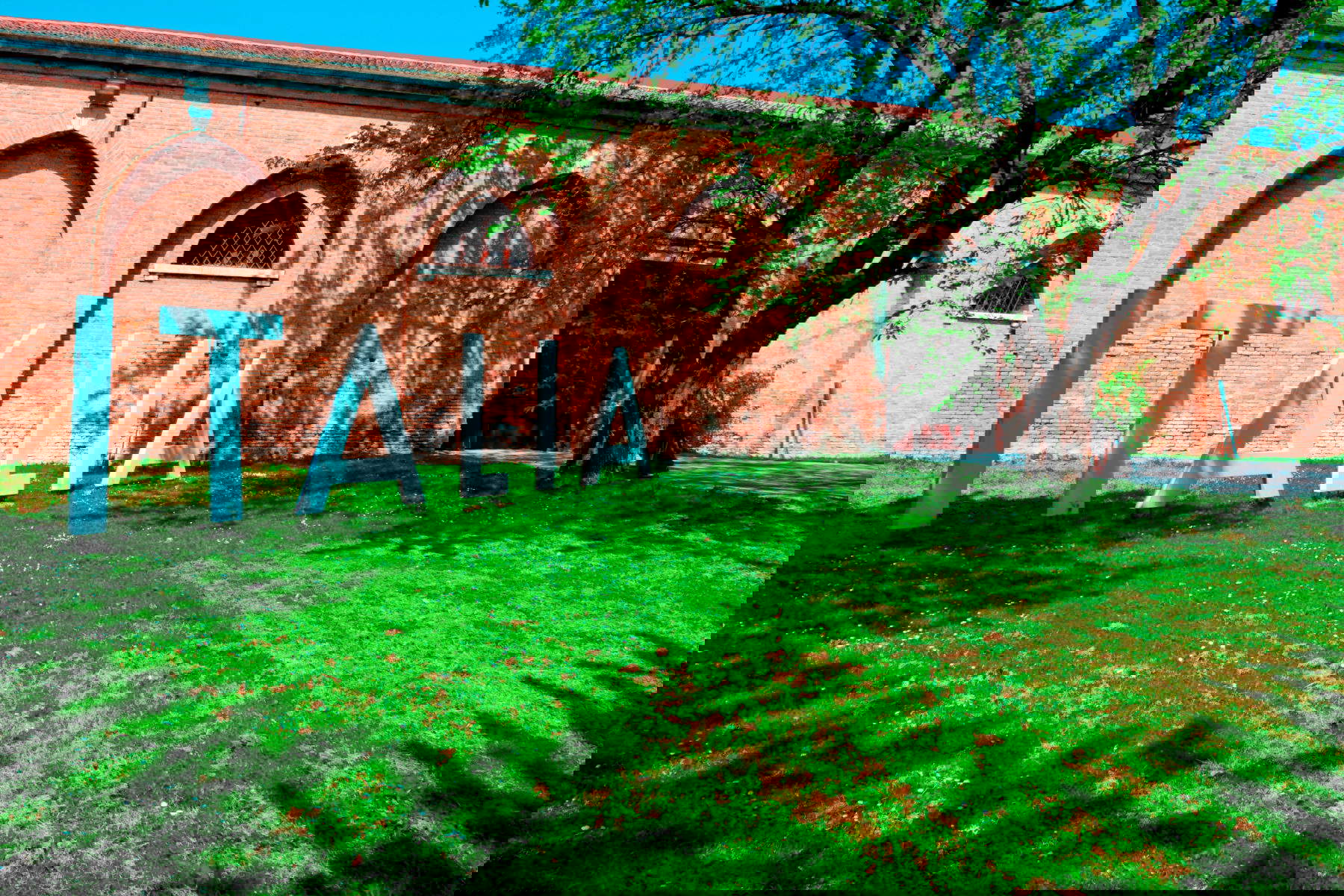
Curator Cecilia Canziani then explained the exhibition project Con te con tutto. According to Canziani, the title expresses the idea of a pavilion conceived as a collective space. The exhibition is conceived as a kind of public convocation in which the works become instruments of relationship between people and with the surrounding world. The curator recalled that she has been working with Chiara Camoni for many years and has developed a shared path with the artist on both a professional and personal level. The project is articulated as a large installation that will occupy the two Tese at the Venice Arsenal. The entire space will be transformed into a unified environment, built from Camoni’s artistic practice and the context in which his work is developed. Canziani explained that one of the main challenges is to transfer within an institutional place the dimension of the artist’s studio, considered as a space of relationships, exchanges and creative processes.
The first part of the installation will present a series of sculptures arranged as a kind of forest of figures. The works will be made mainly of ceramics and constructed through traditional techniques such as columbine work. The sculptures will have human dimensions and will be placed directly on the floor, without any supporting elements or display structures. The intent is to create a direct confrontation between the visitor’s body and that of the sculptural figures. In contrast, the second part of the installation will introduce a more horizontal and domestic dimension. The space will be organized as a kind of habitable architecture reminiscent of the studio environment. Within it will be objects, works and materials from different contexts, including natural elements and industrial components. The aim is to reflect on the contemporary landscape, understood as a link between nature and transformations produced by human activity. A central element of the project is the collective dimension. Canziani emphasized that Chiara Camoni’s work is often developed through collaboration with a community of people that includes friends, artists, students and collaborators from different generations. The exhibition aims to bring this shared dimension inside the pavilion, thus transforming artistic practice into an open process.
Within the exhibition there will also be a section entitled Dialogues, curated with LuciaAspesi and Fiammetta Griccioli. The project will include works and objects by other artists, placed in relation to Camoni’s sculptures. Planned interventions include a performance and a video work created for the occasion. A public program, visual identity and a project dedicated to accessibility, entrusted to the Lungomare collective, will be developed alongside the exhibition. The public program will be structured around three main themes: theWild, the Dreamy and the Disastrous,Diverse Forms of Intelligence andVocal Practices in Collective Narratives. The activities will be carried out in collaboration with several Venetian institutions, including theAcademy of Fine Arts, Microclima and Nice.
Special attention has also been paid to the issue ofaccessibility. The pavilion team has developed tools and strategies to enable different audiences to enjoy the exhibition. The project was implemented with the support of the National School of Heritage and Cultural Activities and with the collaboration of social organizations. Among the planned initiatives is a program sponsored by the Amplifon Foundation that will allow about thirty thousand people housed in assisted living residences in Italy and abroad to virtually visit the pavilion. The exhibition catalog will be published by Nero Editions and will collect texts commissioned for the occasion, as well as contributions dedicated to Camoni’s work and the studio context in which his practice is developed.
Later in her talk, artist Chiara Camoni explained that the title Con te con tutto represents a statement of openness to others and to the world. The artist described the project as the result of an artistic practice that over the years has turned into an increasingly shared process. Camoni recounted how his work often began in domestic contexts, between home and garden, involving family, friends and occasional visitors. Over time this collective dimension has expanded to become a structural component of artistic practice. The artist explained that the works are subjects capable of establishing relationships and dialogues with space and other works.
Finally, Biennale President Pietrangelo Buttafuoco concluded the presentation by emphasizing the coherence of the project with the general approach of the Biennale Arte 2026. In commenting on the Italian Pavilion project, Buttafuoco related Chiara Camoni’s work to the general approach of the Biennale curated by Koyo Kouoh, emphasizing how the exhibition project fits into the theme of intersection and relationship between individuals, works and cultural contexts. To describe this dimension, he recalled a term from the Italian literary tradition, “intuarsi,” which Dante Alighieri uses to indicate mutual recognition between subjects. According to the president of the Biennale, Camoni’s project develops precisely this idea of relationship, summarized in the title Con te con tutto, which indicates a simultaneous relationship with the other and with the world.
According to Buttafuoco, Camoni’s work also recalls an ancestral dimension related to the transformation of matter and the relationship between human beings and the environment. Buttafuoco also reiterated the Biennale’s institutional autonomy in its curatorial and organizational choices, recalling that the foundation operates according to established procedures and norms that guarantee independence in artistic decisions. The president also reiterated the role of the Italian Pavilion as a central element of national participation in the Venetian event.
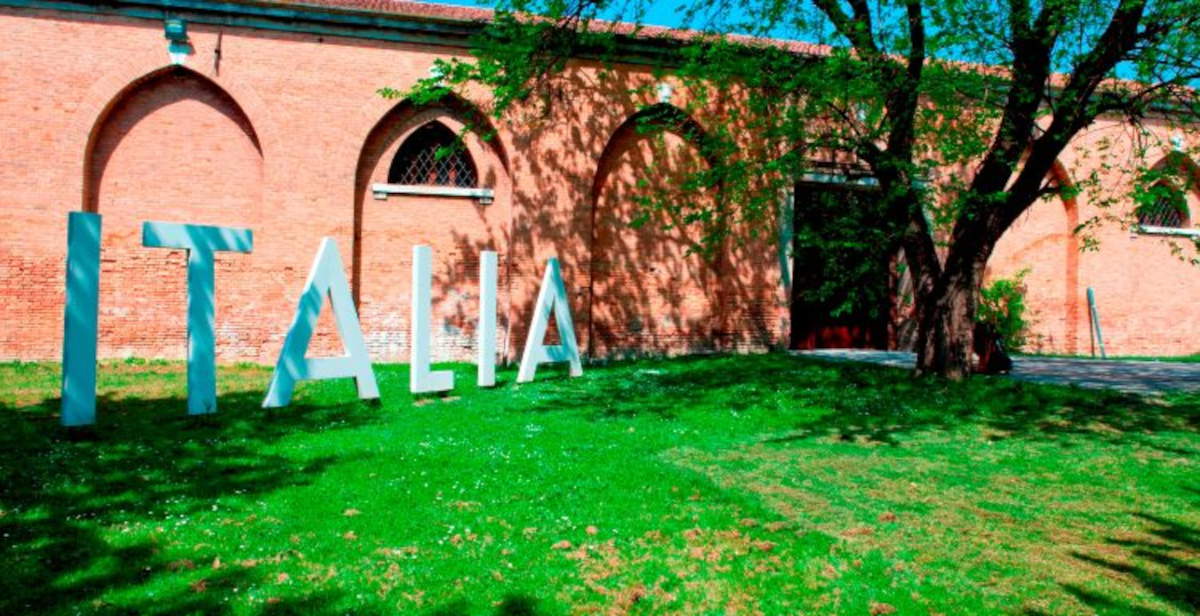 |
| Venice Biennale, what the Italian Pavilion will look like: Chiara Camoni brings "With you with everything" |

Warning: the translation into English of the original Italian article was created using automatic tools. We undertake to review all articles, but we do not guarantee the total absence of inaccuracies in the translation due to the program. You can find the original by clicking on the ITA button. If you find any mistake,please contact us.
























 IT
IT FR
FR DE
DE ES
ES CN
CN


