




by Redazione 07/01/2026



Categories: Events / Disclaimer
Three exhibition projects, an artist residency, and numerous public activities make up Kunst Meran Merano Arte's 2026 program, which interweaves contemporary art, architecture, and participatory practices, with an ongoing focus on social, political, and gender issues.

Kunst Meran Merano Arte presented its cultural program for 2026, outlining a calendar that moves between contemporary art, architecture, curatorial research and public engagement practices. The new season consists of three exhibition projects, an artist residency, and an extensive program of public events, aiming to explore social, political, and gender issues while maintaining a constant dialogue between local dimensions and international perspectives.
Programming continues along two main lines. On the one hand, it continues the critical investigation of the narratives that have contributed to construct the idea of Europe as a monolithic entity, questioning its historical and cultural assumptions through comparisons with tricontinental and diasporic research. On the other hand, the program opens spaces for reflection dedicated to the city of Merano, considered as an urban and social context in transformation, observed through the interweaving of historical memory and analysis of the present. The new cycle of exhibitions kicks off at the end of the current exhibitions, Franz Wanner - Suspended Presences. Images of an Exploitation, curated by Kristina Kreutzwald and Martina Oberprantacher, and AlpiTypes: letters images traces, curated by Antonino Benincasa, Massimo Martignoni and Anna Zinelli, which can be visited until Jan. 18, 2026. Workshops and guided tours are scheduled until that date, accompanying the conclusion of the current exhibition season.


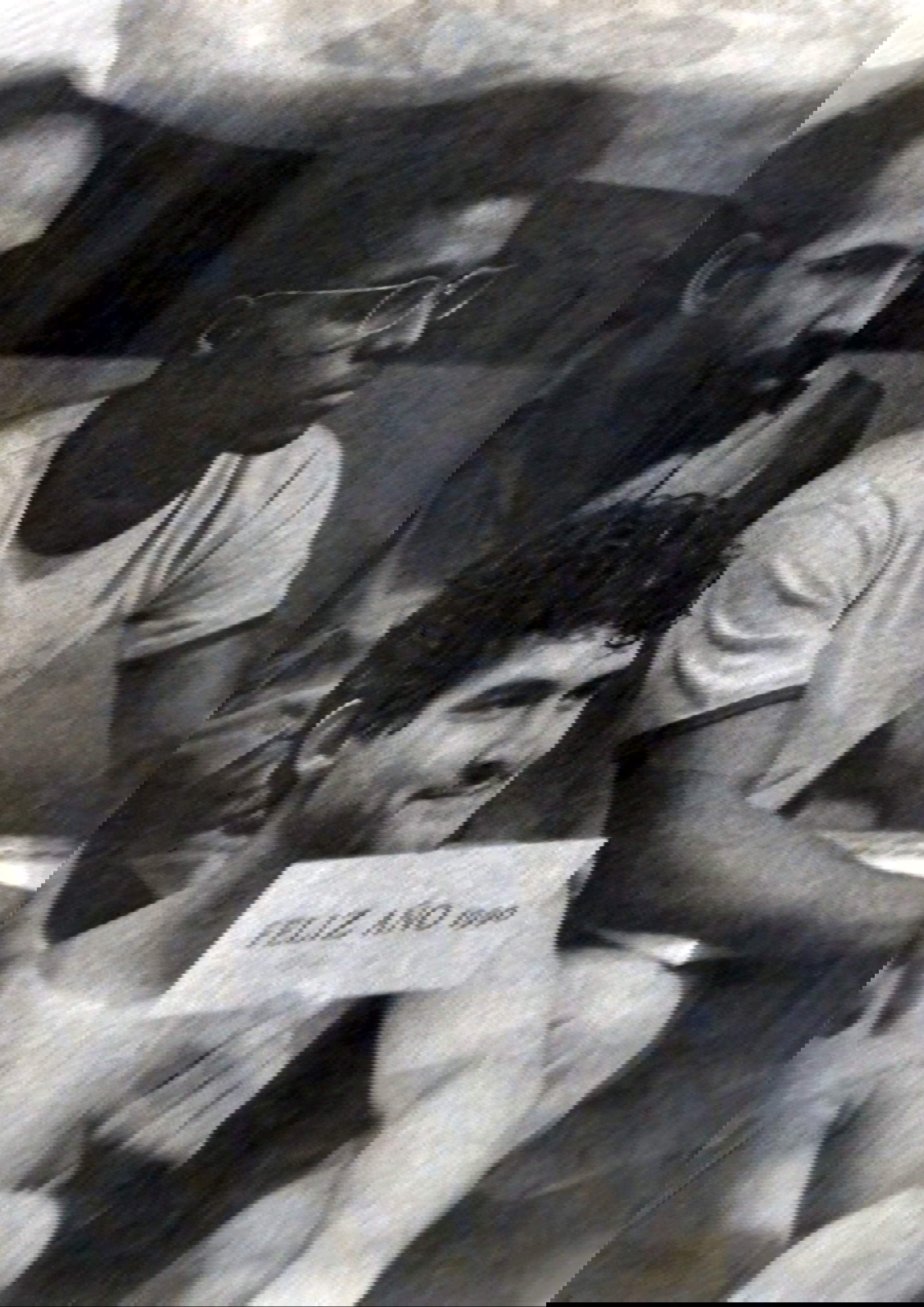
Opening the 2026 program will be the exhibition Cómplice, the first solo show in Italy by Cuban artist René Francisco, on view from Feb. 21 to May 25. Born in 1960 in Holguín, Cuba, and active for many years between Latin America and Europe, where he lives and works in Madrid, Francisco is considered a leading figure in contemporary Cuban and international art. The exhibition is part of the three-year program The Invention of Europe, conceived and curated by Lucrezia Cippitelli and Simone Frangi, which reflects on the ways in which Europe has been narrated and represented over time. In particular, Cómplice concludes the second year of the project, dedicated to the relations between Europe and Abya Yala, a term used to refer to the Americas from a decolonial perspective. The exhibition traces more than four decades of the artist’s work, presenting an articulated set of large-scale installations, films, drawings, paintings and pedagogical projects. Central to the exhibition is the concept of complicity, understood as a non-hierarchical form of relationship that crosses social, political, educational and affective spheres. Collaboration, participation, friendship, critical pedagogy and community activation emerge as structural elements of Francisco’s practice, which has constantly interrogated the role of art in collective contexts.
On the occasion of the exhibition, the artist will create a new participatory project in Merano, developed in collaboration with the social cooperative Ginko and CoWorking della Memoria. Also planned is a collaboration with Festival Sonora for a musical evening related to the themes addressed in the exhibition, expanding the dialogue between visual arts and performance practices.
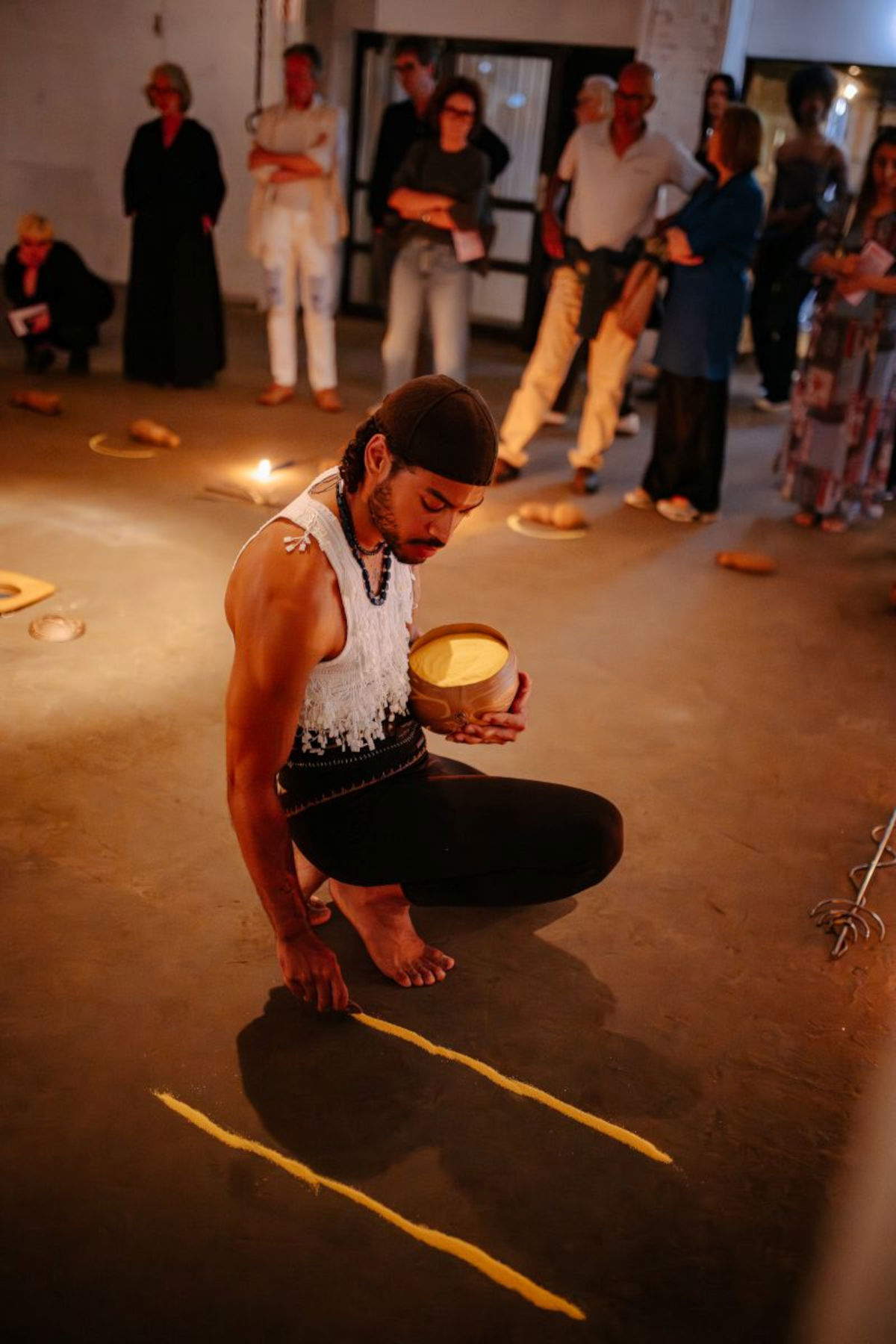
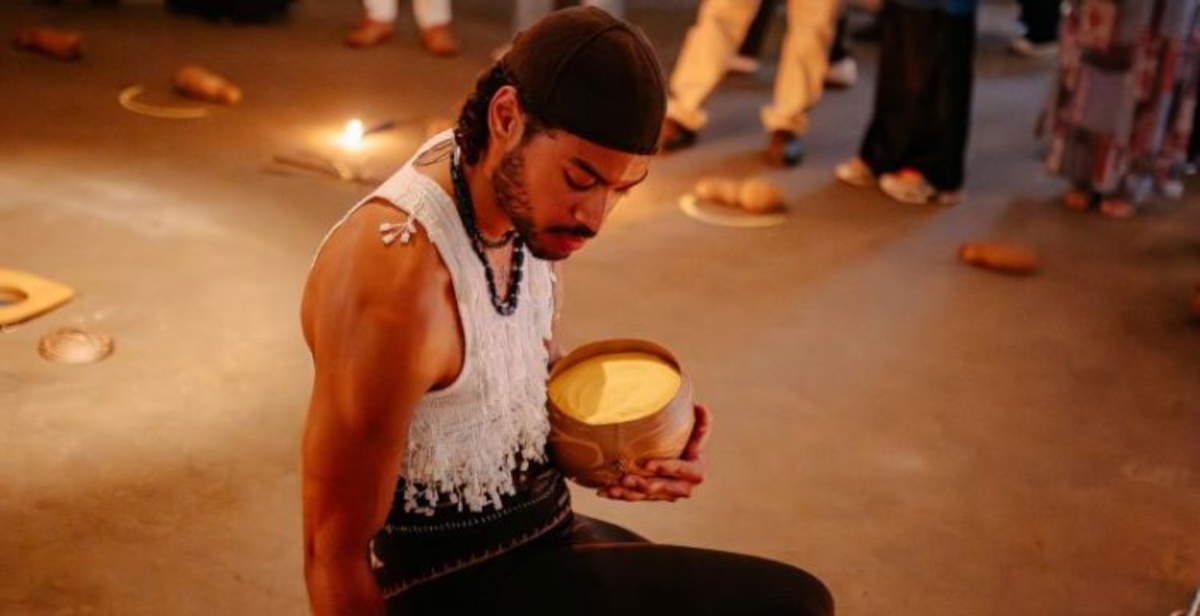
Parallel to the Cómplice exhibition, from April 24 to May 8, Kunst Meran will host the residency of Italian-Domenican artist Raziel Perin. Born in 1992 in Hato Mayor del Rey, Dominican Republic, Perin will develop in Meran the performance project Vitruvian Man, which will be presented to the public at the end of the residency period. The work addresses the theme of the representation of masculinity in familiar and cultural settings, comparing Italian and Dominican contexts. The research focuses on the deconstruction of images of toxic masculinity and their connections to phenomena of violence, persecution and transgenerational trauma, with particular reference to the African diaspora and the Dominican Republic. The project is supported by the General Directorate for Contemporary Creativity of the Ministry of Culture as part of the Italian Council program, now in its fourteenth edition in 2025, and is among the initiatives dedicated to the international promotion of Italian contemporary art.
From June 7 to October 11, 2026, the third and final year of The Invention of Europe, focusing on the interconnections between Europe and Asia, kicks off with the exhibition Animacies. The exhibition project offers a comparative look that relates the modern history of Asian nations to cultures prior to their encounter with Europe, highlighting continuities, ruptures and processes of transformation. The exhibition will feature Asian works and objects from various Italian museums, alongside contemporary productions by artists of Asian descent living in Europe, as well as works by European artists with family histories connected to the Asian continent. The project aims to give visibility to regions that are often marginalized in dominant narratives about Asia and, at the same time, to bring out stories connected to the Trentino and South Tyrolean context, paying attention to themes such as community, family structures and gender roles. The exhibition is being held in dialogue with the MAO - Museum of Oriental Art in Turin and Centrale Fies in Dro, Trentino.
The 2026 program concludes with the exhibition Merano, Urban Space - Yesterday, Today, Tomorrow?, scheduled from October 24, 2026 to January 17, 2027 and curated by Andreas Kofler. The project is dedicated to the urban transformations of the city of Merano, analyzed through a look that interweaves past, present and future perspectives. The exhibition reflects on the city’s possible evolutions towards more inclusive forms of development, taking into account the needs of different linguistic, cultural and generational communities, which include historical residents, new citizens and visitors. The investigation focuses on the need to identify new ways of coexistence capable of responding to contemporary challenges, including climate change. The exhibition addresses these issues through a multifaceted analysis that touches on different areas of urban development, including landscape, social, housing, open, economic, mobility and cultural space. As part of the project, the publication of an issue of Turris Babel, the magazine of the South Tyrol Architecture Foundation, devoted entirely to Merano is planned. The exhibition is also part of a network of collaborations and is accompanied by the Merano Arte group of architecture specialists.
Alongside the exhibition program, Kunst Meran Merano Arte also confirms in 2026 a multifaceted proposal for art education and mediation, which will extend to public spaces and accompany the entire exhibition calendar. The institution also announces an expansion of its opening hours: starting in 2026, every Thursday the exhibition space will remain open until 8 p.m. Hours on other days will remain unchanged, with Tuesday through Saturday open from 10 a.m. to 6 p.m., Sundays and holidays from 11 a.m. to 6 p.m., while Mondays remain the closing day.
 |
| Kunst Meran Merano Arte's 2026 program between exhibitions, residencies and urban reflection |
Warning: the translation into English of the original Italian article was created using automatic tools. We undertake to review all articles, but we do not guarantee the total absence of inaccuracies in the translation due to the program. You can find the original by clicking on the ITA button. If you find any mistake,please contact us.