








Anaesthetics of the laceration in which intimacy and dramaturgy, monumentality and maniacal attention to detail, references to the (especially Flemish) masters of the past and crude actuality coexist: these are the hallmarks of the sculptural practice that Berlinde De Bruyckere (Ghent, 1964) has developed over the years from sentient auscultation of the metamorphoses of the quartered and decomposing body. Growing up in the isolation of a nuns’ boarding school, she has never left the district of Muide, a poor and densely populated area of her hometown where her father ran a butcher shop and where for decades, on the same street, the artist has shared a studio, located in a former school building, with her husband Peter Buggenhout, considered one of Belgium’s most singular and radical sculptors. Berlinde De Bruyckere’s work interprets the human yearning for transformation, the need for transcendence, and the impossible attempt to reconcile with death: by overlaying existing stories with new narratives suggested by contemporary world events, the artist has succeeded in shaping a disturbing mythology of our contemporary times, which is strengthened rather than weakened by the passage of time.
The artist delves into the ancestral fears of the human being, taps into the triggers of the repressed and twists objective reality into disorienting metamorphoses. His universe is populated by solitary figures, seductive and disturbing in their naked physicality ambiguous between life and death, which become powerful somatizations of the vulnerability and psychological distress that plague our age. His most recent sculptures, the result of a refined search for combinations of ductile and sensual materials such as wax, horse skin, blankets and velvets, are complex structures made from real referents that carry marked archetypal and iconic implications (the horse, the tree or the human body) that are in the first instance reproduced in their exact likenesses through the practice of casts. The instinctive agnition that thunders the viewer in the presence of these forms, subsequently dismembered into individual components then reassembled and reinforced from the inside with iron and synthetic resins, is at the origin of the uncanny sensation of familiarity aroused by the final assemblages, even in the plastic emphasis of their compositional aporias. Today, the artist’s sculptural vocabulary is complemented by a highly sought-after palette of colors obtained by superimposing multiple layers of individually painted pigmented wax, which are then blended in transparency and draped into the desired shapes on the supporting structures while still warm and malleable. These mixtures, different for each work, load the embryonic mental image with stories and meanings, making it grow with organic progression along with the doubt that in the underlying layers might reside the unsolved mystery of our tragic being in the world. The surface (always understood in Berlinde De Bruyckere as skin) is the container of the soul, and the mimetic outcroppings that at times render the flicker of a muscle, the blue of a vein or the dark shadow of a hematoma, can be seen as symptoms of a biological need for transcendence stronger than any compulsion. The alienating deformations of each subject, always isolated in an indeterminate spatial and temporal dimension, lay bare its most intimate and truthful essence, namely the impossible consolation for the intolerable loss from which every creature suffers from the moment of birth.
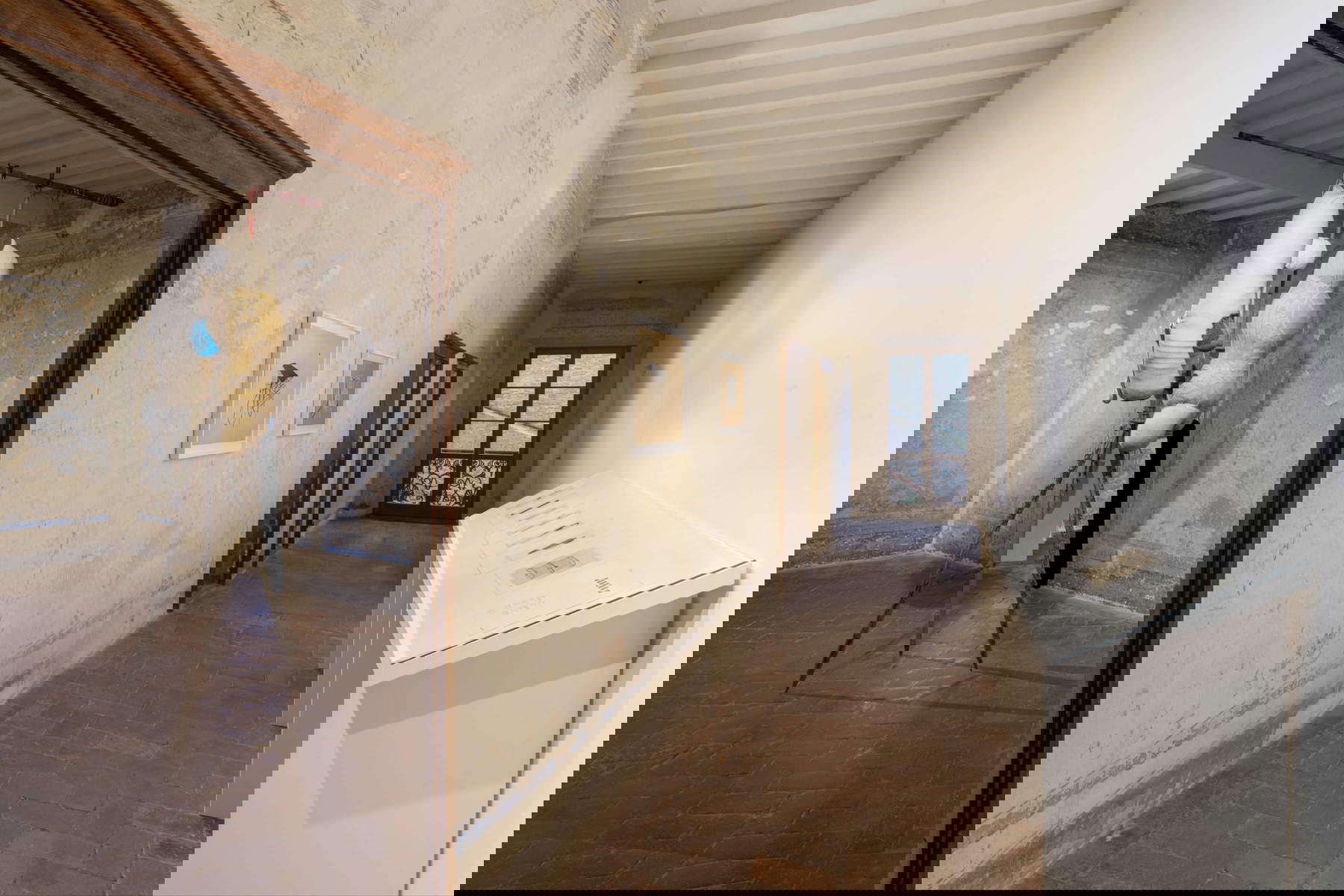
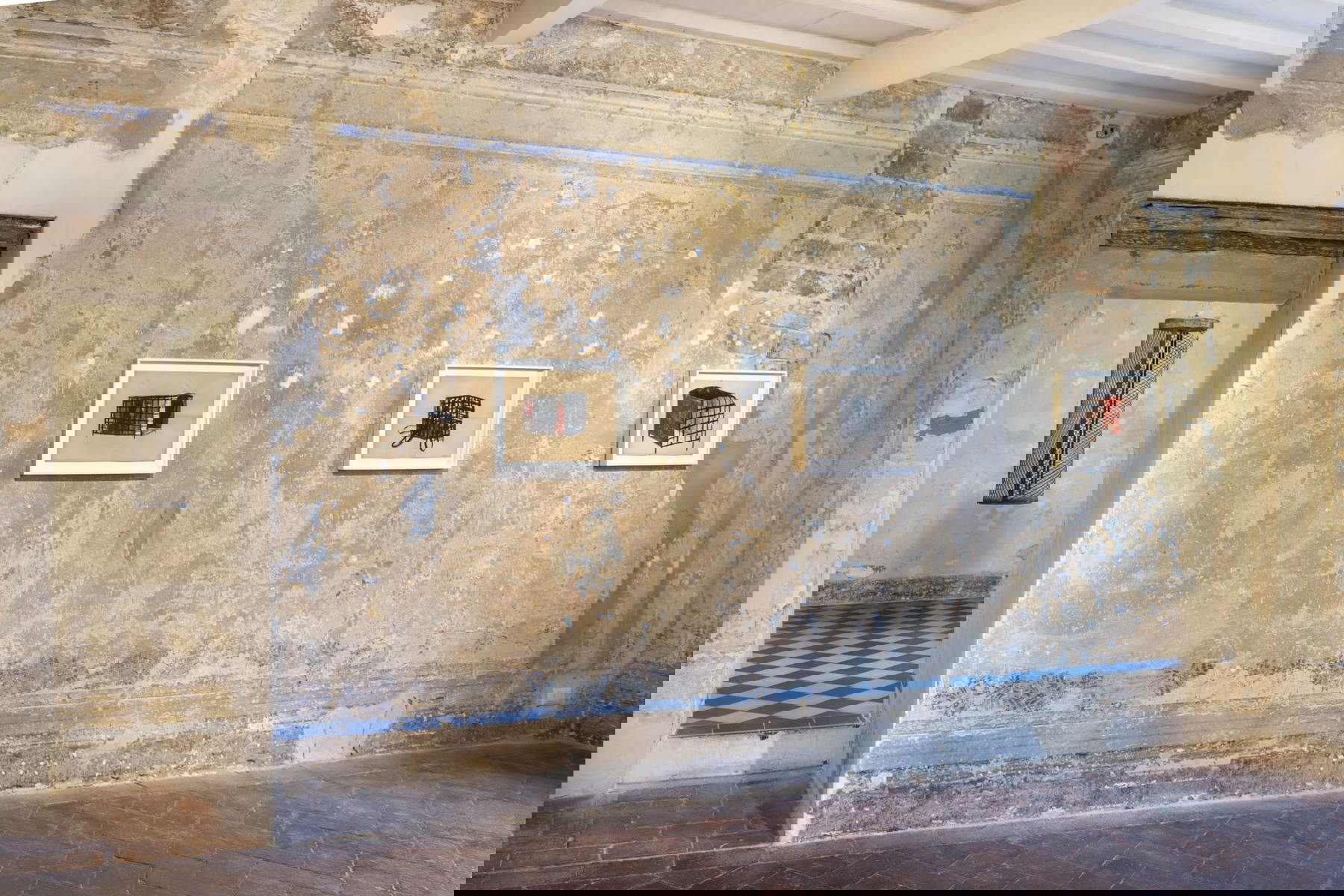
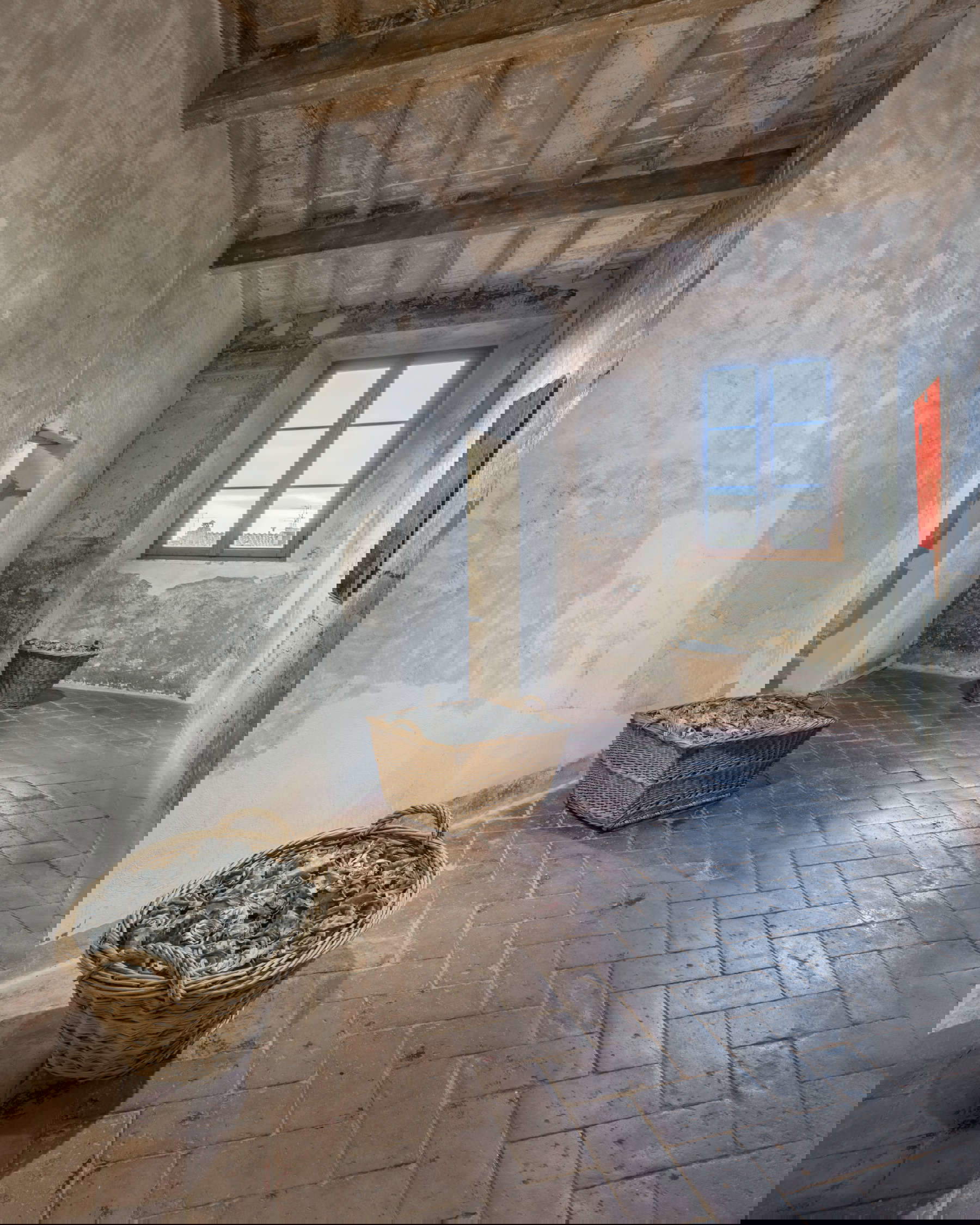
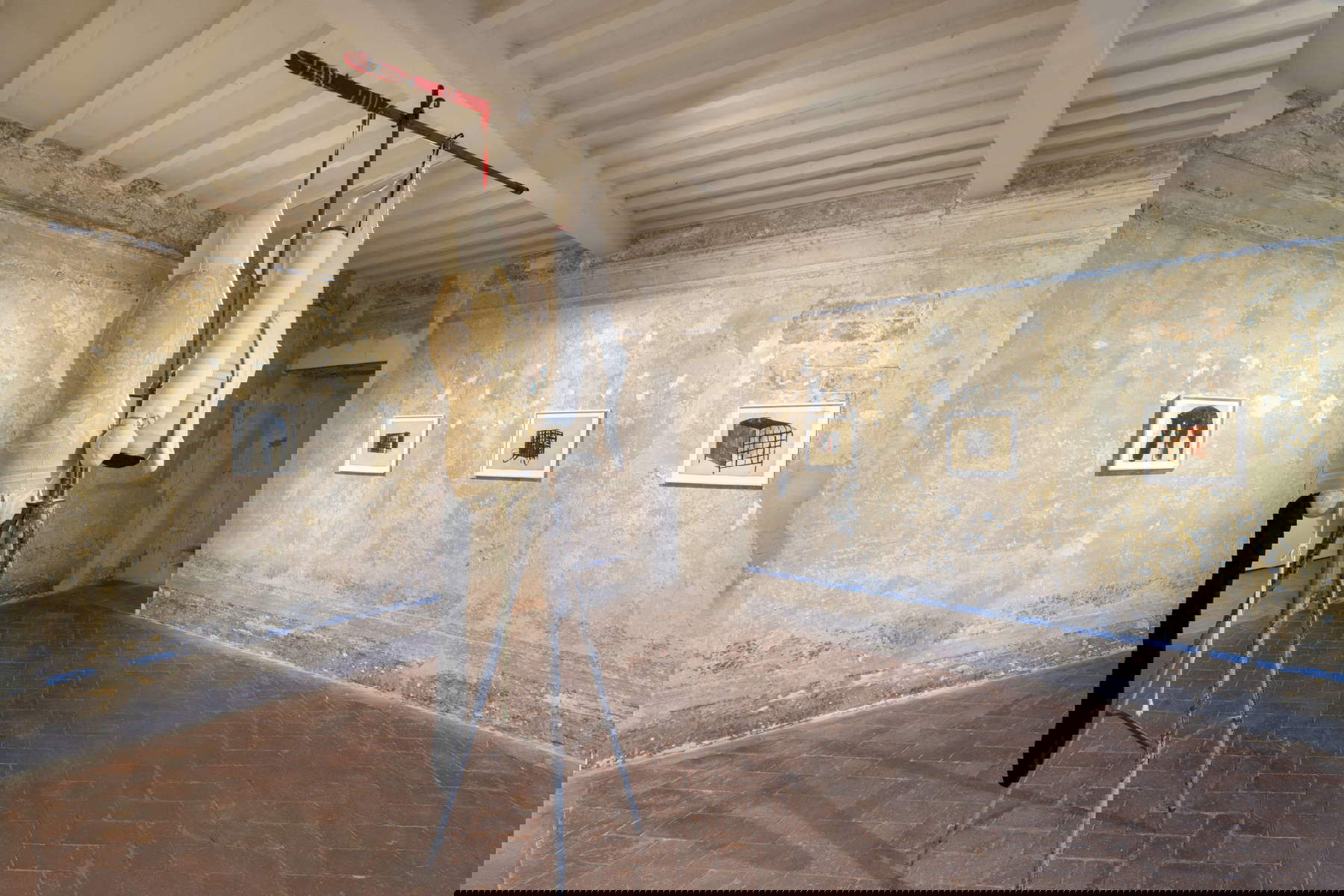
The sinister physicality of the characters materialized by the artist, universal in their placing themselves naturally at the crossroads of multiple cultural and aesthetic referents, irresistibly catalyzes the gaze and emotion, arousing an almost visceral need to go deep (literally, layer by layer) to understand. A valuable opportunity to delve into the meanderings of the imagination of this epochal artist and a useful tool to understand the path that led her to elaborate her unmistakable stylistic signature is offered in these months by the exhibition Same Old, Same Old organized in San Gimignano by Galleria Continua, by which Berlinde De Bruyckere is represented in Italy. The exhibition project, hosted in the rooms of the apartment on the top floor of the building in which the Leon Bianco hotel is housed, overlooking the main square of the medieval town, is an evocative ambient (and environmental) re-edition of the historical works of theartist presented by the gallery at the last edition of Frieze Masters (Regent’s Park, London, Oct. 15-19, 2025), a prestigious annual fair dedicated to the relationship between historical art and contemporary practice, in which exhibitors are invited to propose works made before the year 2000 in complementary relationship with the concurrent sister fair Frieze London, focused on more recent art trends and the work of living artists. The exhibition itinerary takes the form of an exciting excursus through a significant nucleus of the artist’s early works, some of which she rediscovered with surprise in her warehouses while preparing for the London show. The selected works prove in retrospect to be more seminal than ever with respect to her most iconic production, as they hold in nuce its fundamental generative instances, such as the idea of the cage or cell ofisolation, the centrality of biomorphic suggestions, the wound that lends integrity to pain, the blanket/wing that mercifully wraps what little is left of a deconstructed body, and the tragic angelicness.
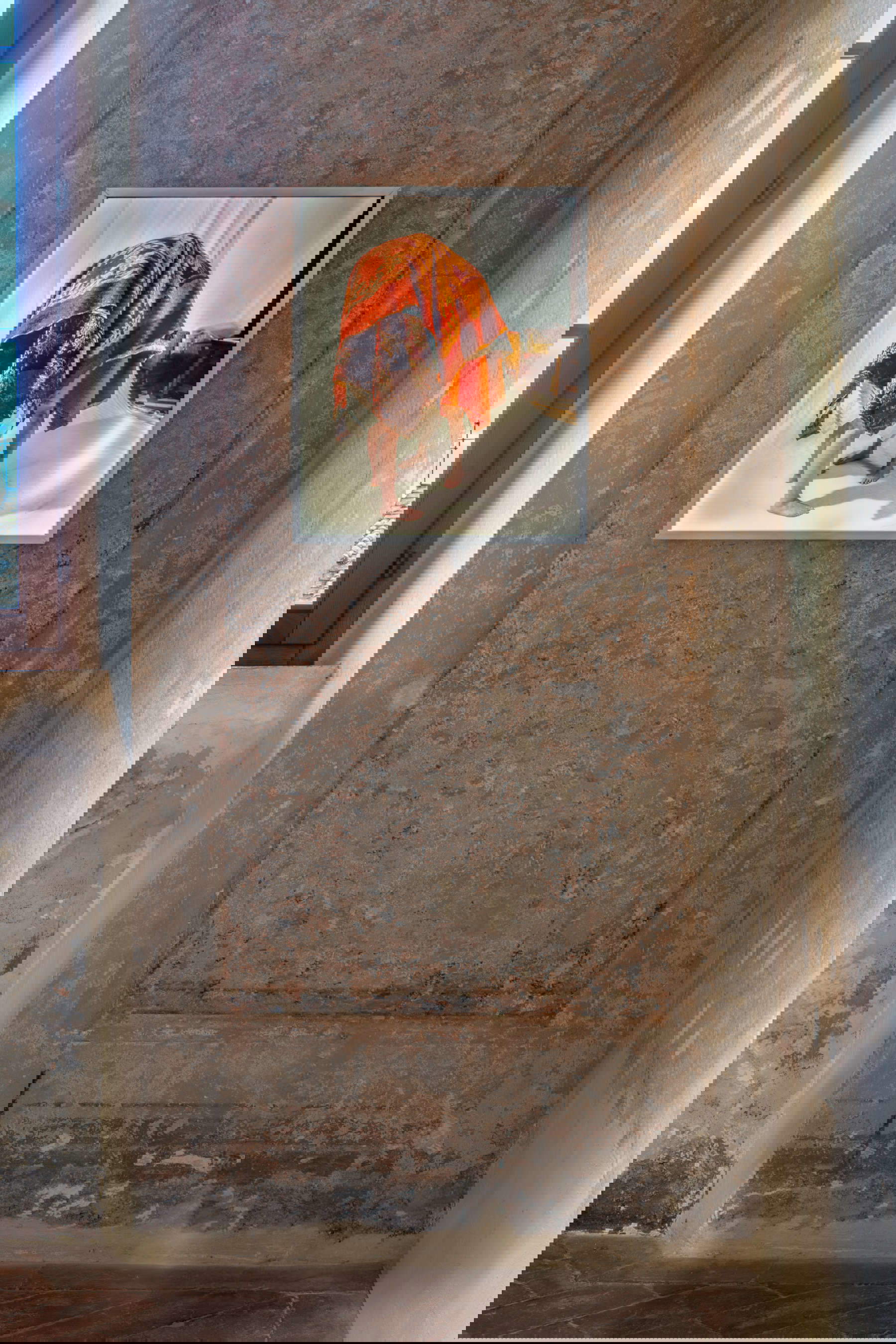
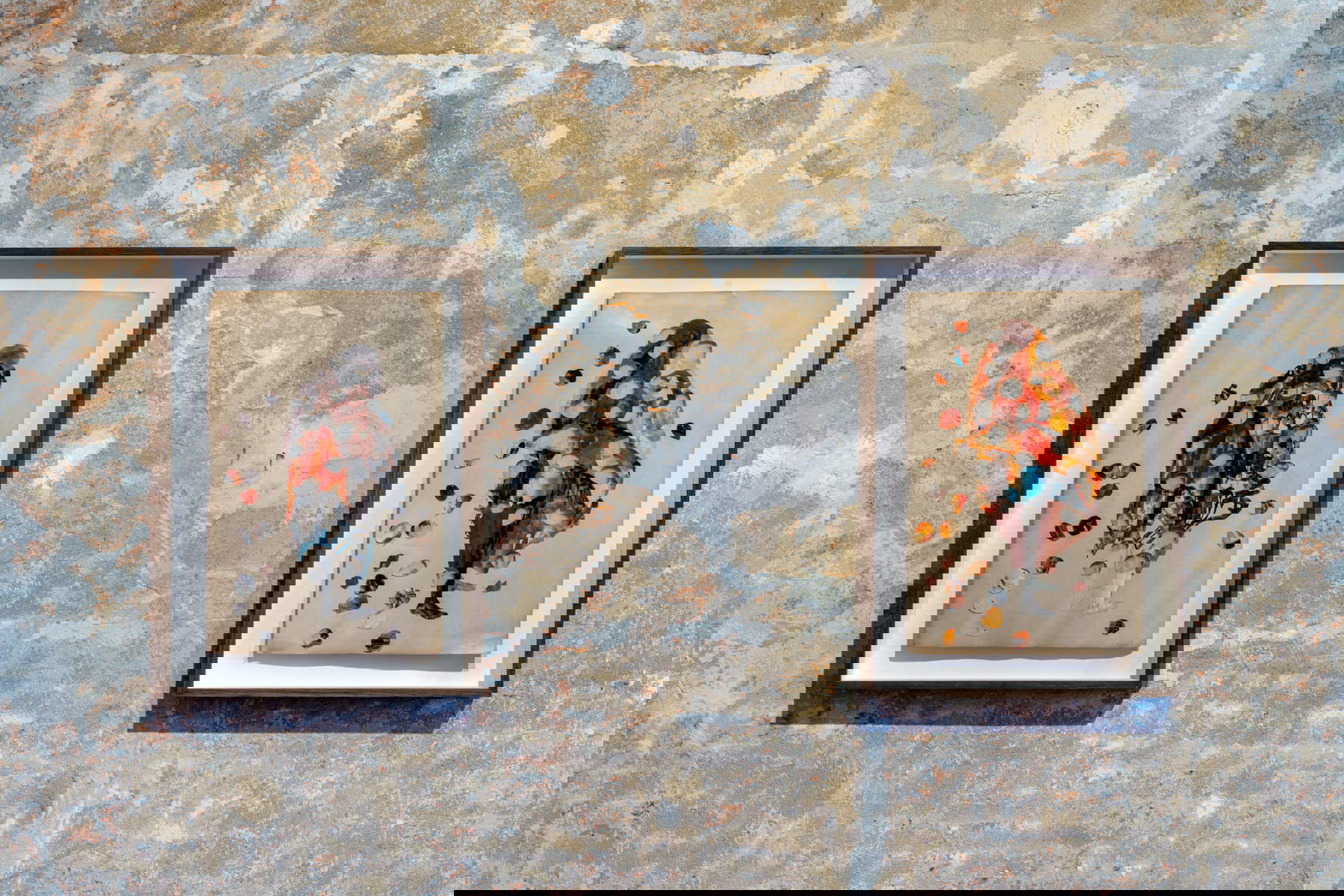
The small, uninhabited rooms of the apartment prove to be the ideal alcove for this project of “excavation” into the artist’s creative biography because of the dimensions gathered as an incubator and the profound harmony between the palimpsest of plaster and exfoliated wallpaper whose traces are still preserved on the walls and the attitude to layering at the root of her work. In the display case bordering the corridor, a series of black ink drawings (dated 1987) appear as synthetic outbursts of the founding ideas of his poetics, destined to be developed in with different declinations throughout his career in articulated installations, whose atmosphere they manage to condense a priori while still being ascetically sober in their means of expression. From the very first room, a fundamental junction is made explicit, namely, the identification between body and refuge in a sculptural sense, first and foremost in the lightbox Spreken (1999), in which we see the photographic image of two standing models facing each other as if seeking refuge and understanding, both of them overhung by a single pile of colored blankets that allows only a glimpse of the end of their legs. The importance of blankets in her expressive vocabulary goes back to the trauma in her aroused by the vision of some images leaked by the media, then much less pervasive than today’s, of the genocide in Rwanda in 1994, when hundreds of corpses anonymized by death were wrapped in precisely the kind of blankets she had begun to introduce into her work as a vehicle for existential reworking. The research at that time centered on the question of how she could create an intimate space of protection, a kind of house-cover that in the gouaches posted in the same room appears riddled with holes, materializing in the paper a premonition of the cage into which the house would often be transformed in other works. In the sculptures Zonder Titel (1989) and Zonder Titel II (2000-2025), on the other hand, we see the suggestion of an indefinable man-animal made of padded cloth elements dangling from rudimentary iron supports, ambiguous between the hanger and the cross.
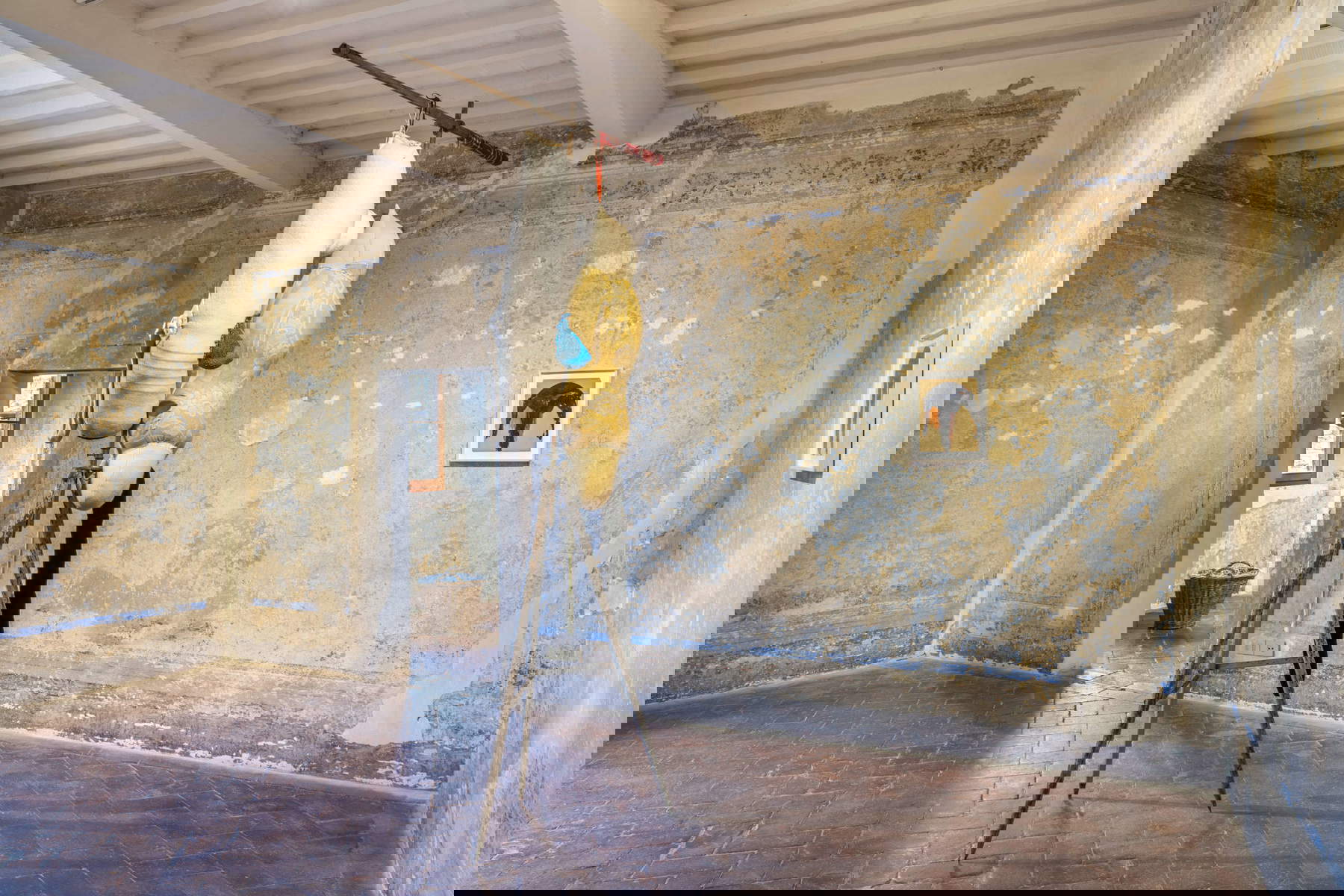
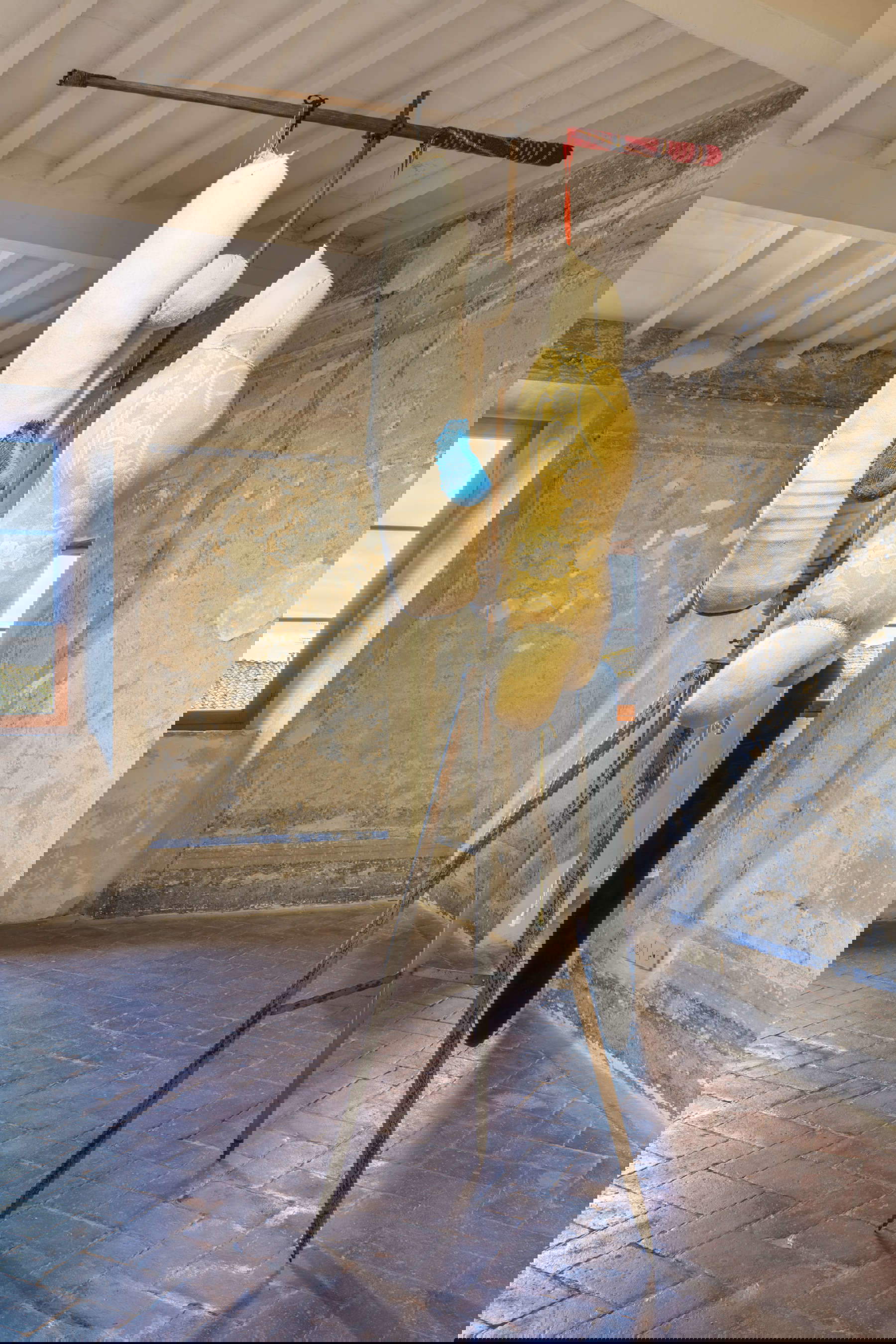
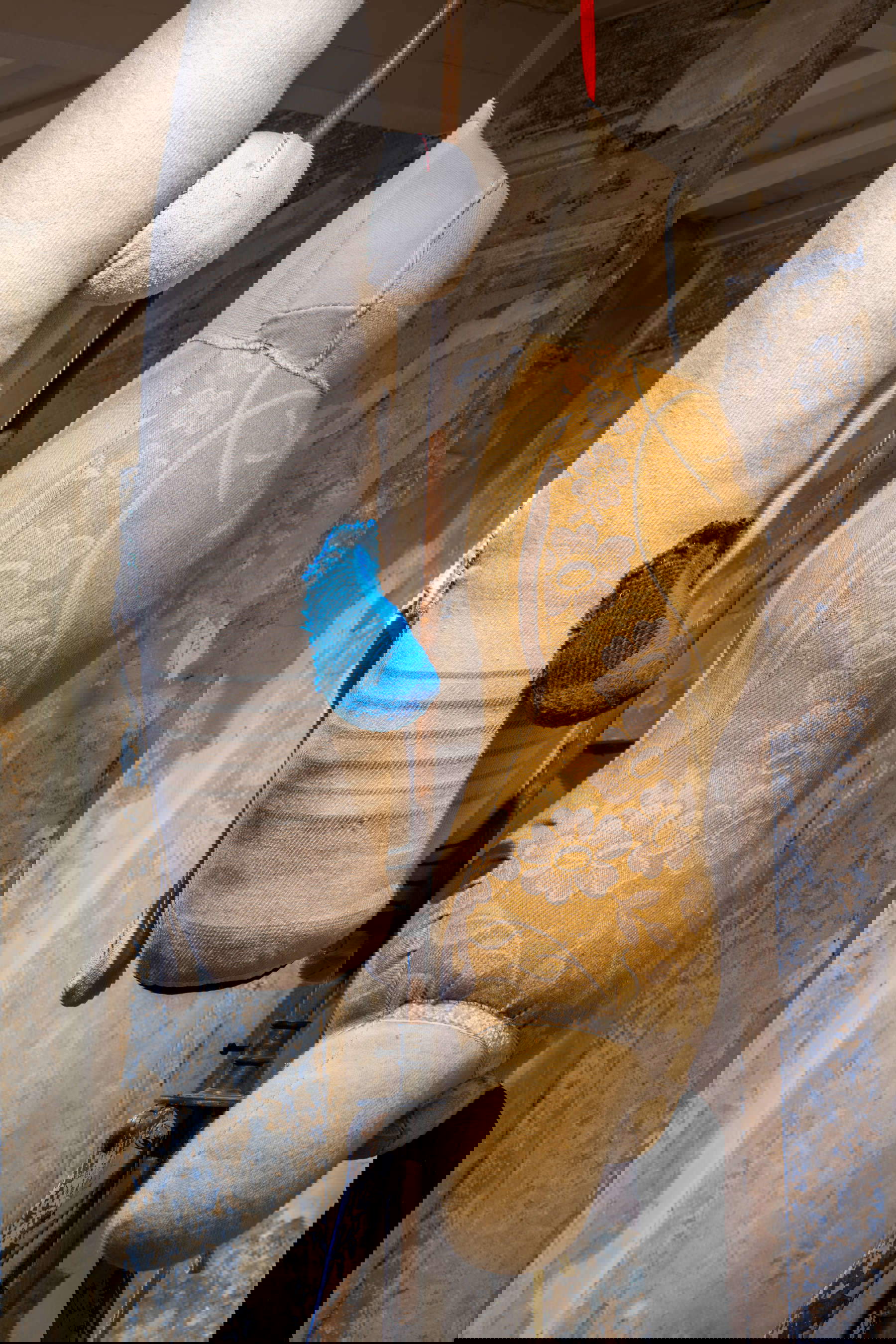
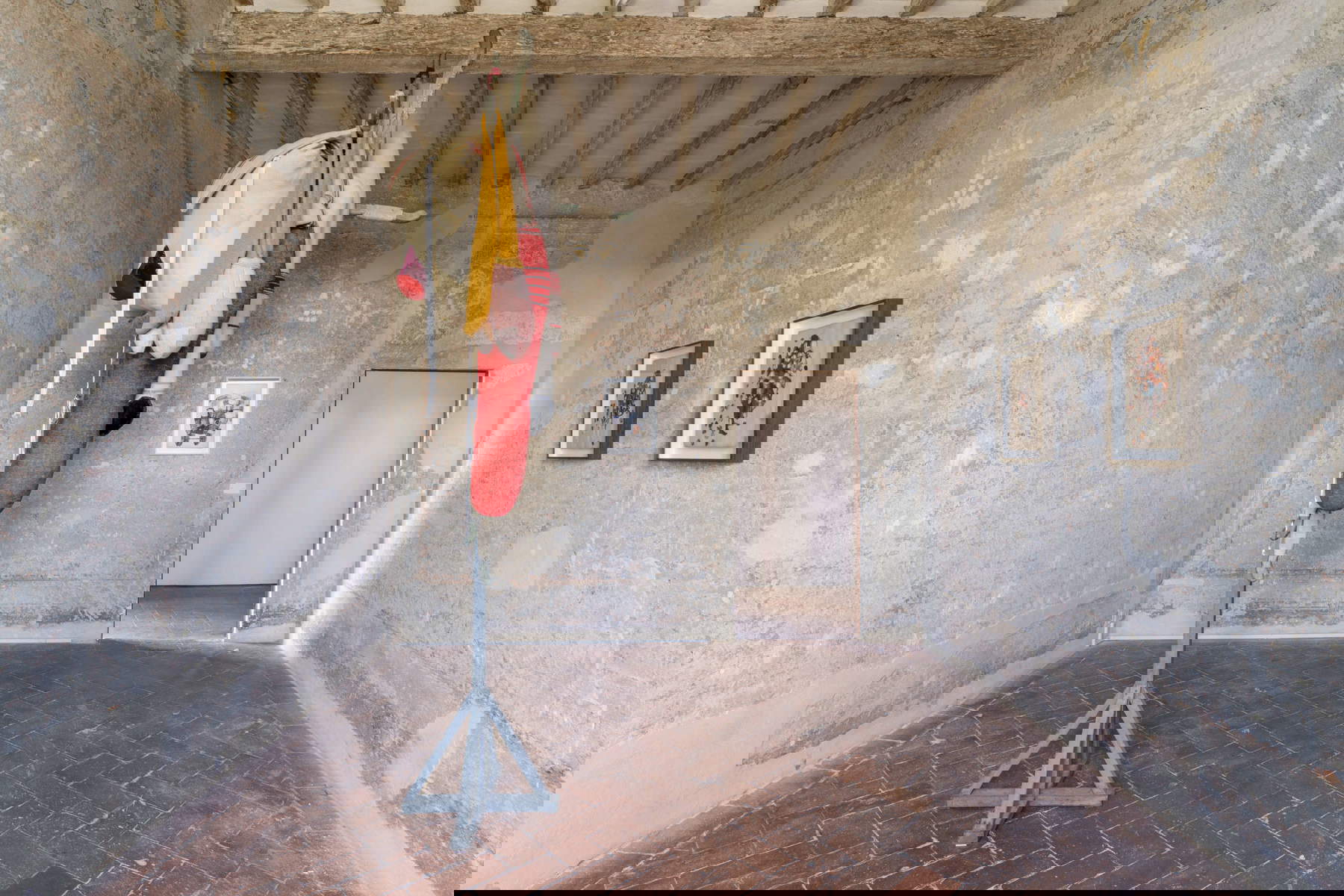
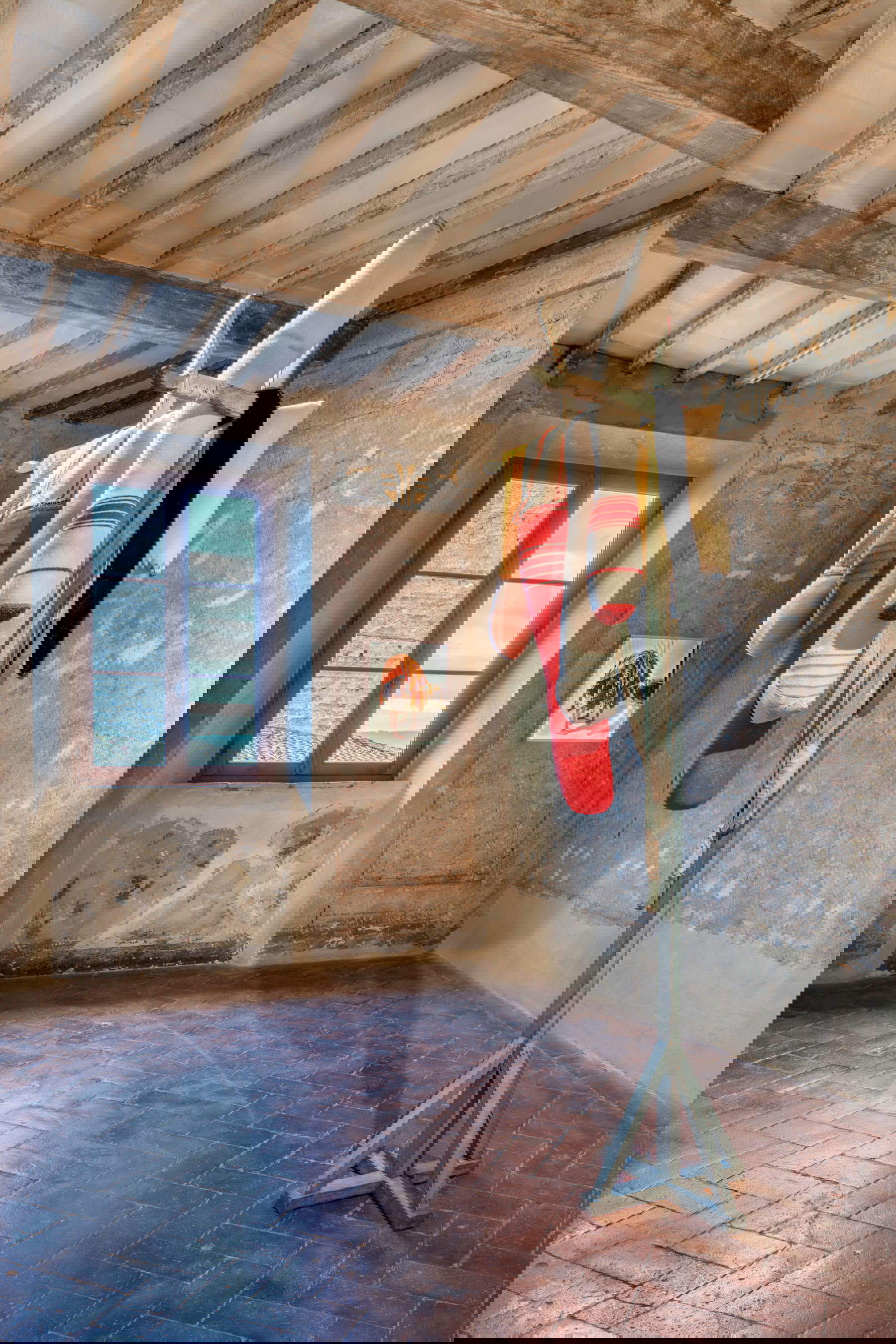
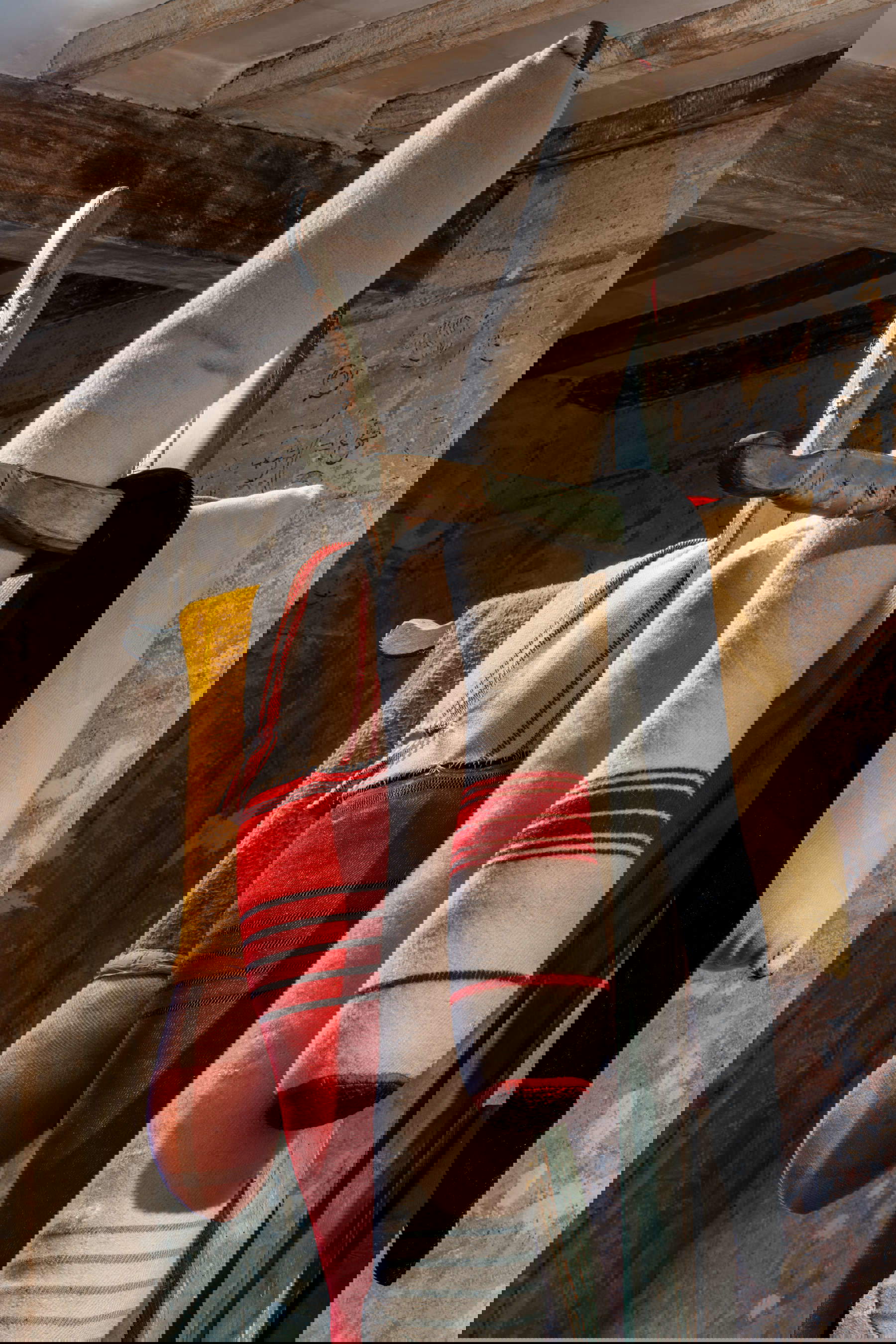
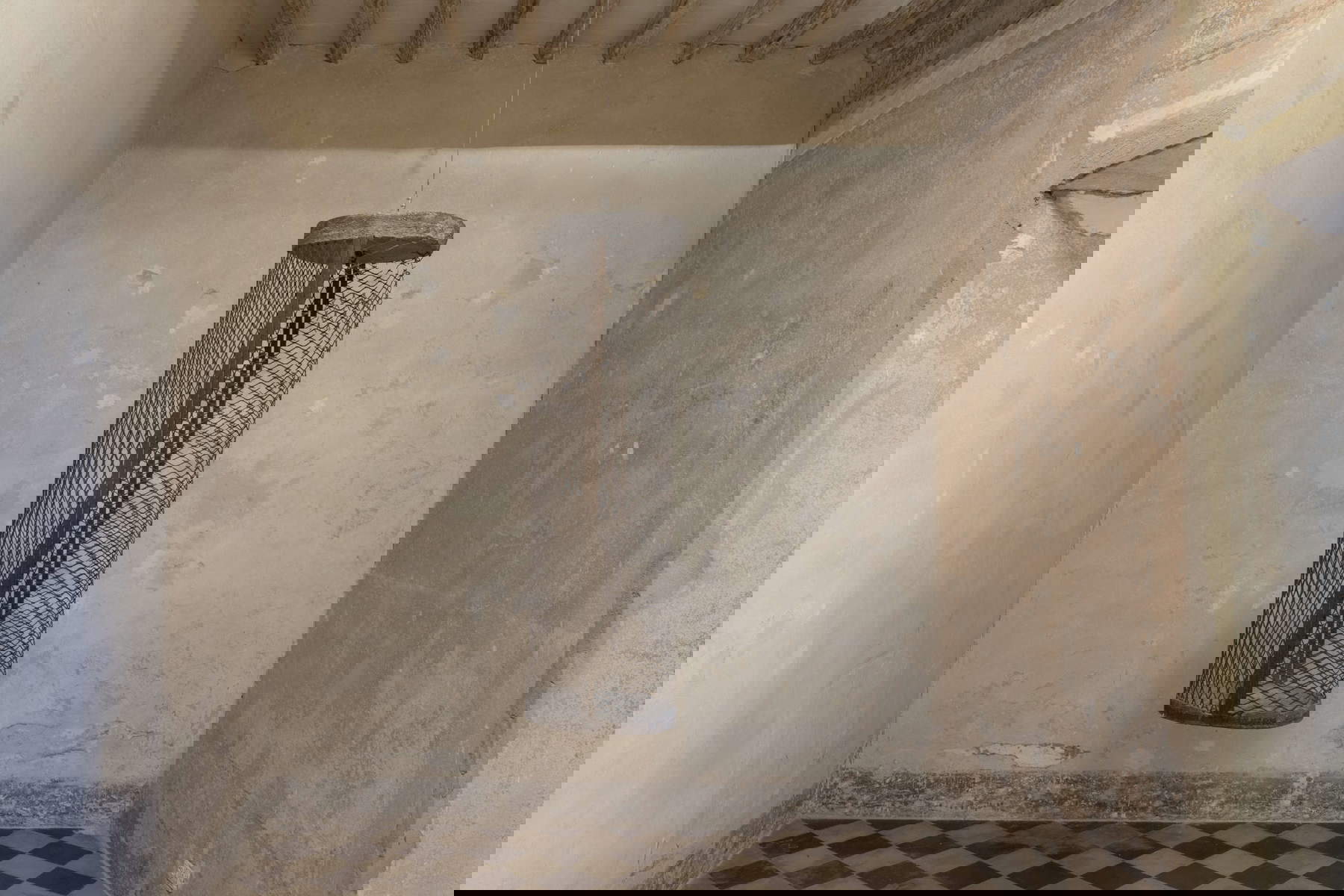
In the works to come, Berlinde De Bruyckere comes to merge the mental images underlying the lightbox and the sculptures through experimentation with wax, used to mimic the limbs that, in the sculptures on view in San Gimignano, only come to mind as instinctive anthropomorphic projections. The second room is dedicated to the project I never promised you a rose garden (1992), a large installation first made in Ghent with baskets and buckets filled with lead roses stacked and frozen like an archive of memories on the occasion of Zij-Sporen-Kunst op het spoor, a traveling art festival in Belgium dedicated to the enhancement of the railway heritage through paths among contemporary artworks, installations and performances on disused stretches of railroad track. The thin sheets of lead, a material as ductile as it is toxic, folded to form the corollas of roses, also seem to resemble protective blankets or rolls of medical bandages, the accumulation of which takes on a funereal connotation that overrides the rose’s amorous symbolism. In the next room, the Kooi series (1989) graphically reasons about the motif of the cage as a claustrophobic degeneration of the house-shelter, but also as a structure suitable for transporting and displaying bodies and blankets. These sketches, in addition to representing the design phase of some of the sculptures she later made, highlight the kinship with the sideboards (also a kind of grid) and urns (made from the glass of the sideboard without the grid) in which the artist is now used to display her creatures, of which those structures can be considered an early Brutalist version. Same title and same year of creation for the naked cylindrical aerial sculpture that then faces the gaze, where the rusty mesh of the grid has been in some places torn apart by mechanical violence. The physical presence of this worn real or artifactual aviary seems intended to make explicit the cipher message contained in the title, a word that seems to be a surname or proper name of Dutch or Frisian origin, where kooi means “cage” or “enclosure,” often referring to a place to trap wild ducks. The visit concludes with Slaapzaal IV (2000), an element from an installation made in a disused railway carriage for Le Fil Rouge at the third Louvain-la-Neuve Biennial in Belgium. A rickety trestle topped with a pile of blankets evokes the idea of a bed-bare, whose intimacy is violated by perforations through the layers of cloth revealing the otherwise invisible underlying layers that appear exposed as open wounds.
The youthful works collected in this exhibition guard in embryonic form the thematic obsessions and formal strategies that Berlinde De Bruyckere would develop in the following decades, but they also reveal deviations from the mature production. The continuity manifests itself in the constant presence of certain foundational conceptual cores: the blanket as ambiguous protection that can turn into a shroud, the cage as a degeneration of the house-shelter, the fragmented or hidden body that eludes the gaze, and material lay ering as a metaphor for existential stratification. Even the attention to color, though still limited in sculpture to the patterns of fabrics and the leaden gray of metal, heralds that chromatic research which in recent works achieves extraordinary technical virtuosity in imitating the shades of living skin with pigmented wax. The most obvious differences are found, however, on the level of bodily presence and sculptural technique. In the early works, the human body manifests itself by subtraction or suggestion: the sculptures Zonder Titel (1989) and Zonder Titel II (2000-2025) evoke anthropomorphic figures without resorting to mimetic reproduction of anatomical parts, and the cages in the Kooi series contain the idea of an imprisoned body without materializing it. In the tactile hyperreality and adherence to the biological datum of the mature works, on the other hand, the body is exhibited in its wounded nudity, in its quartered and reassembled anatomy, forcing the viewer to directly confront the materiality of suffering without the concealments offered by textiles. The expressive register has also undergone a significant transformation.
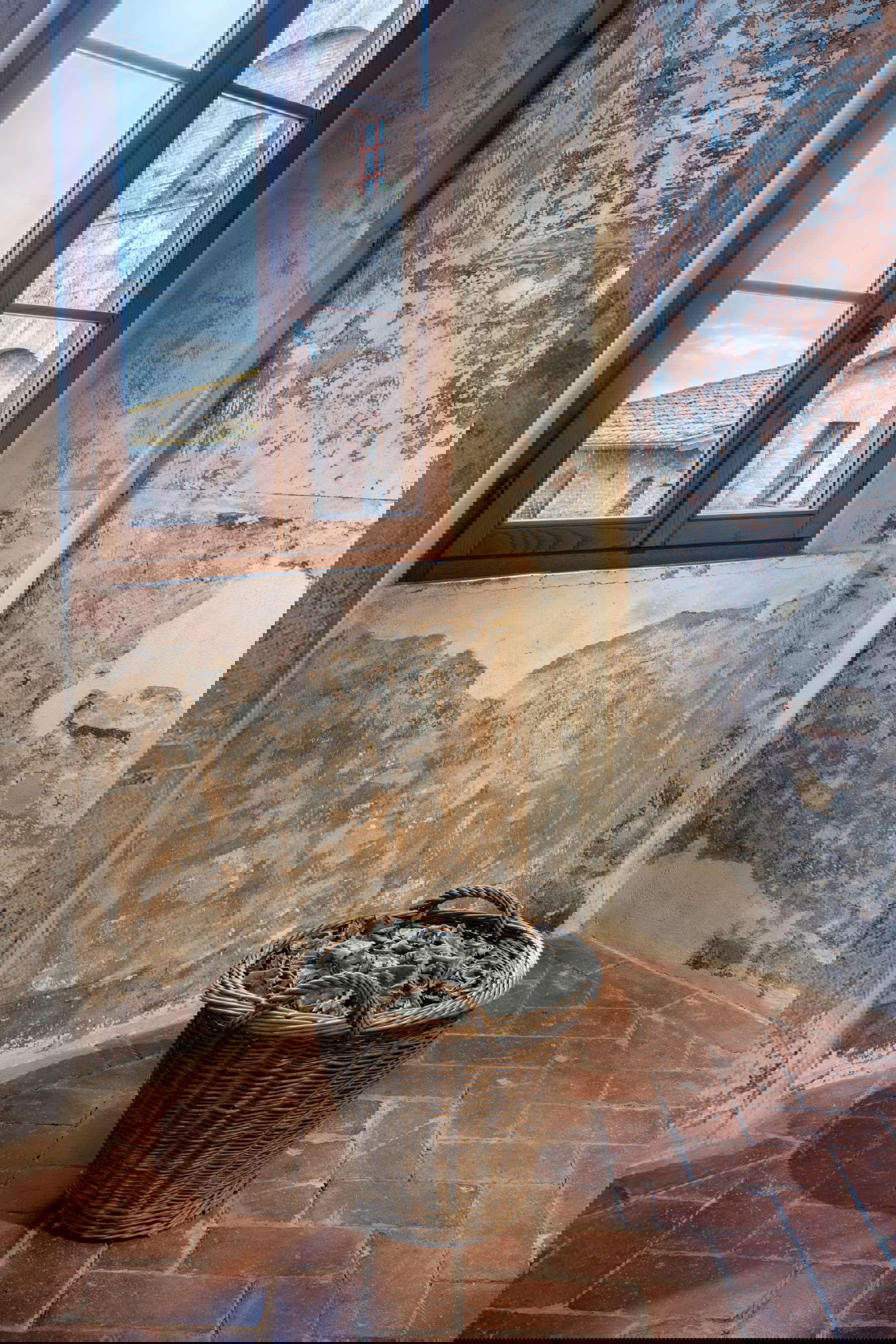
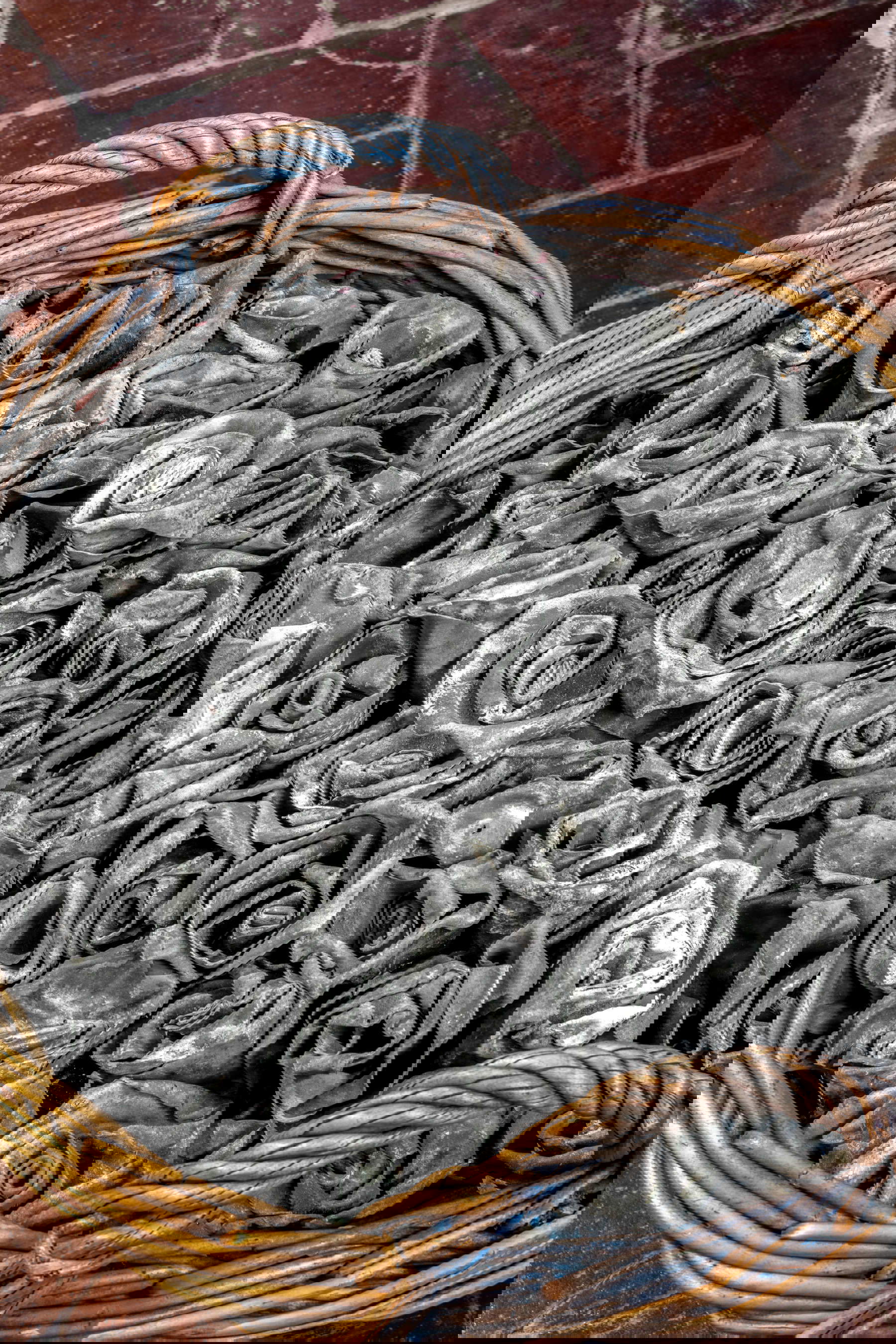
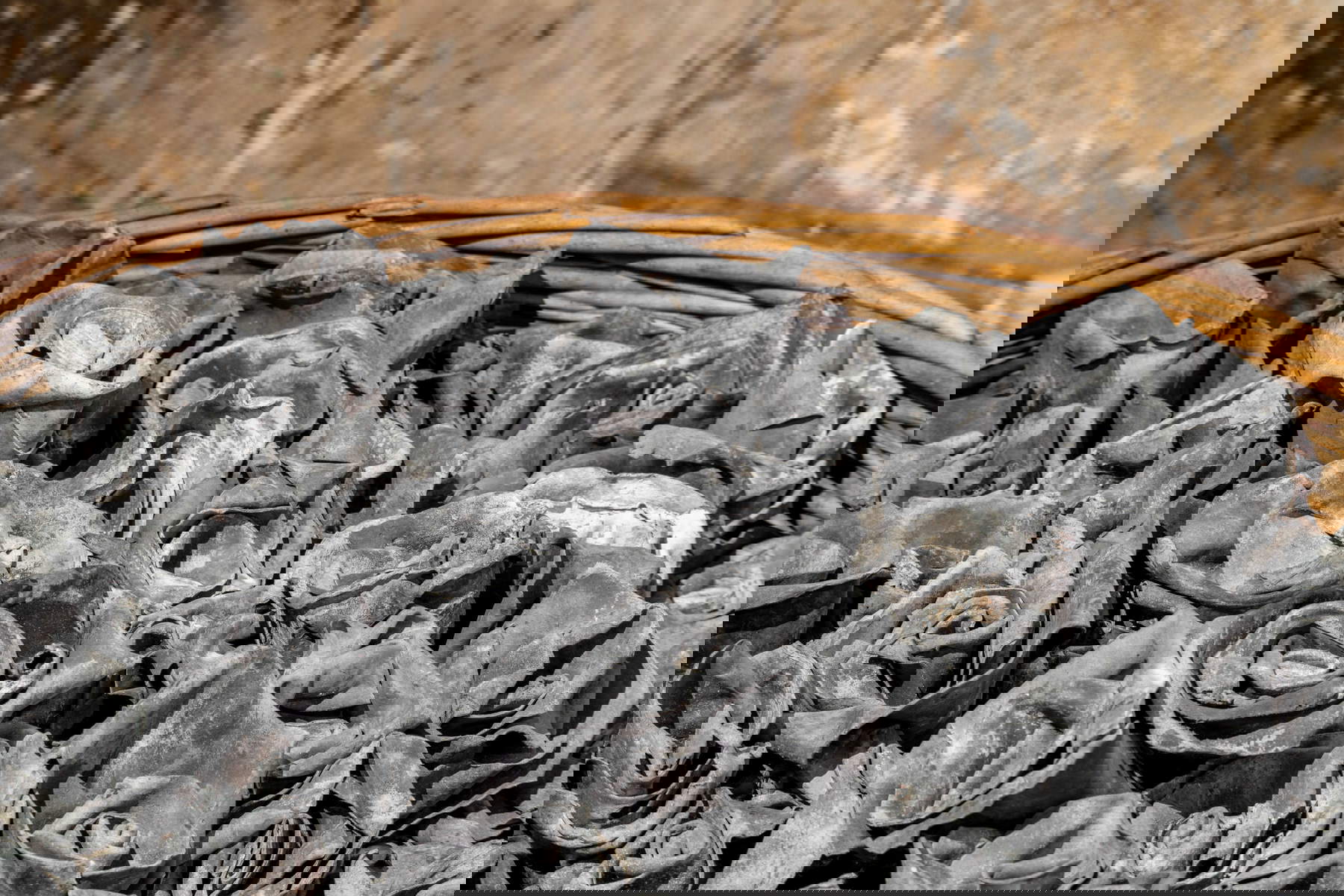
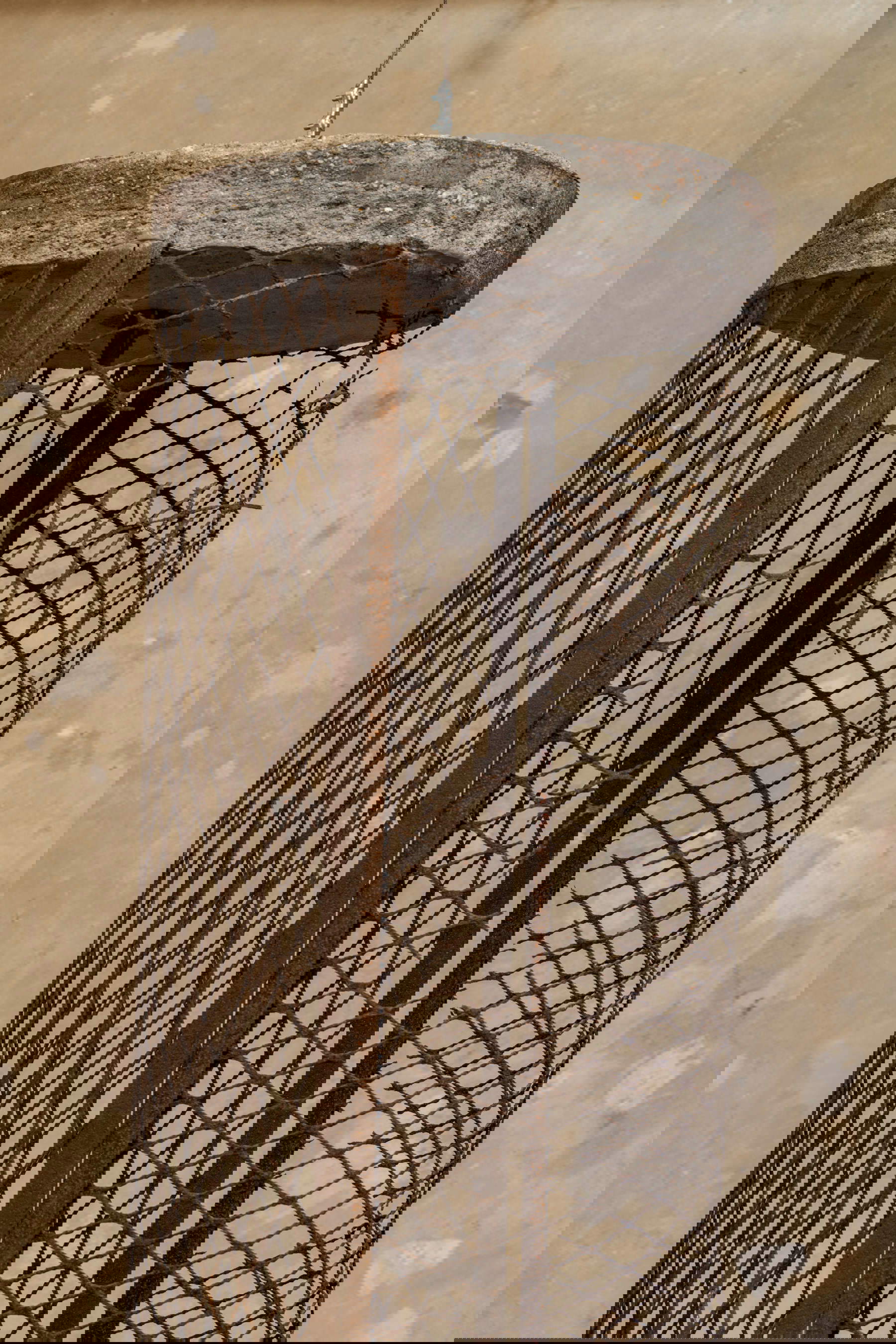
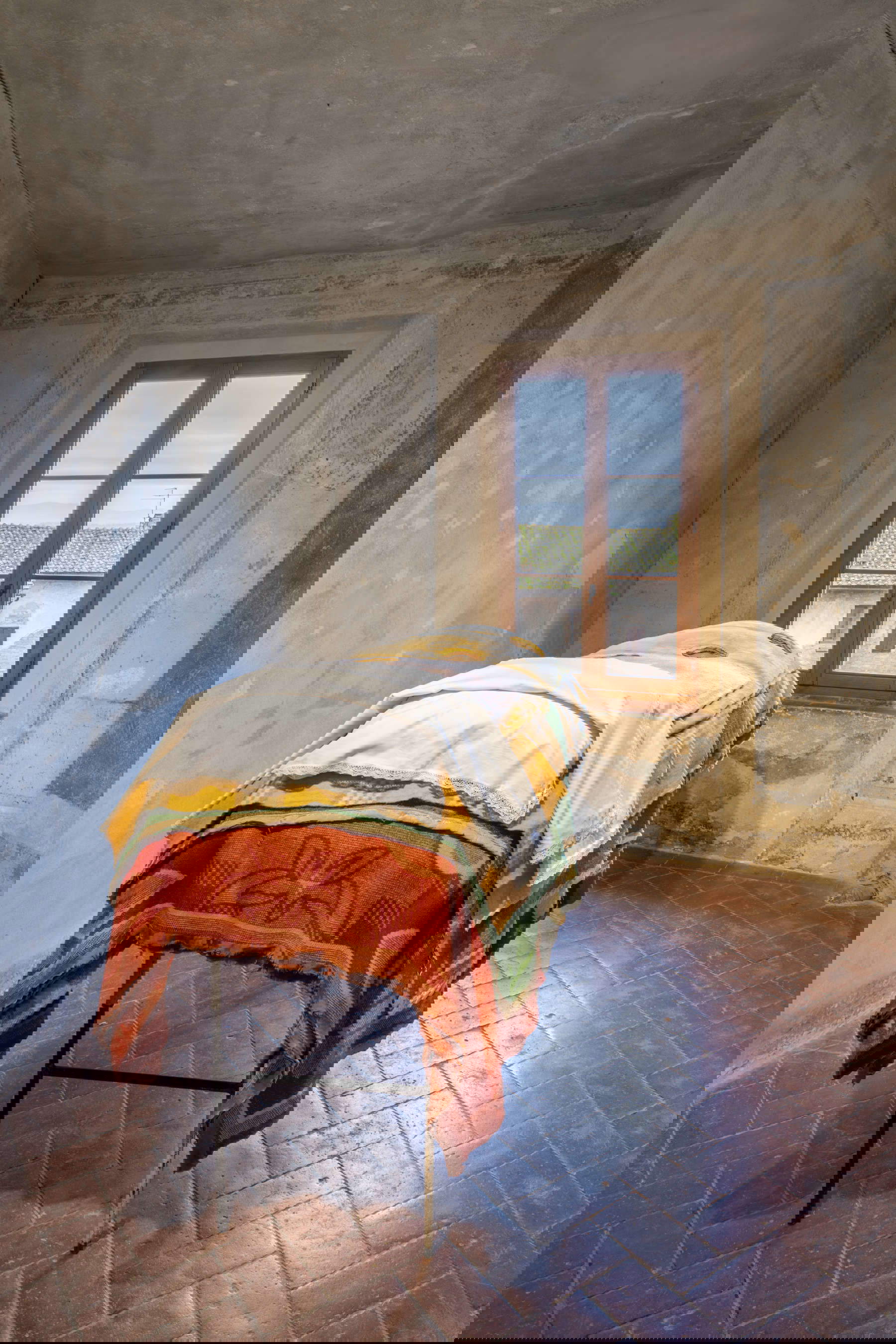
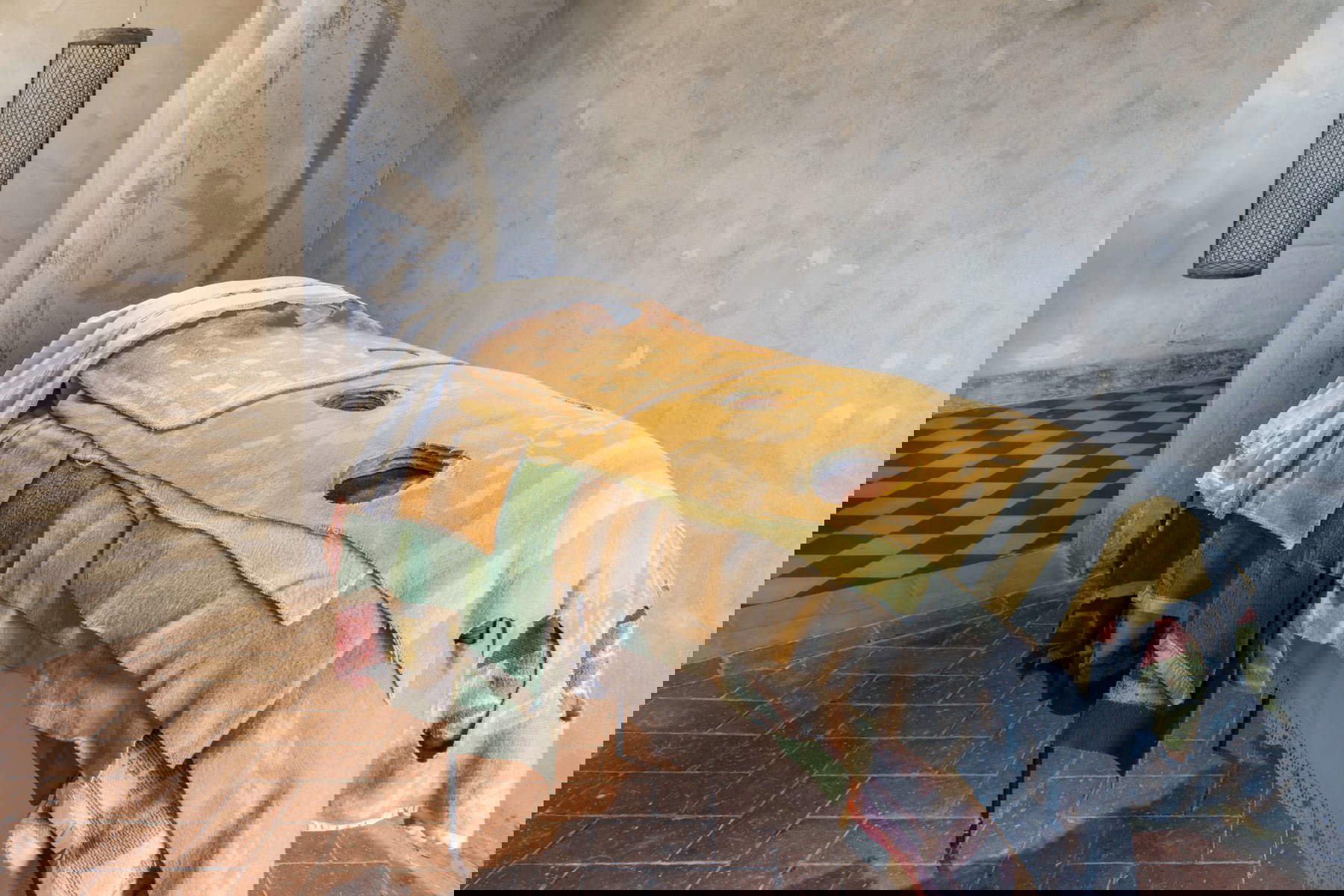
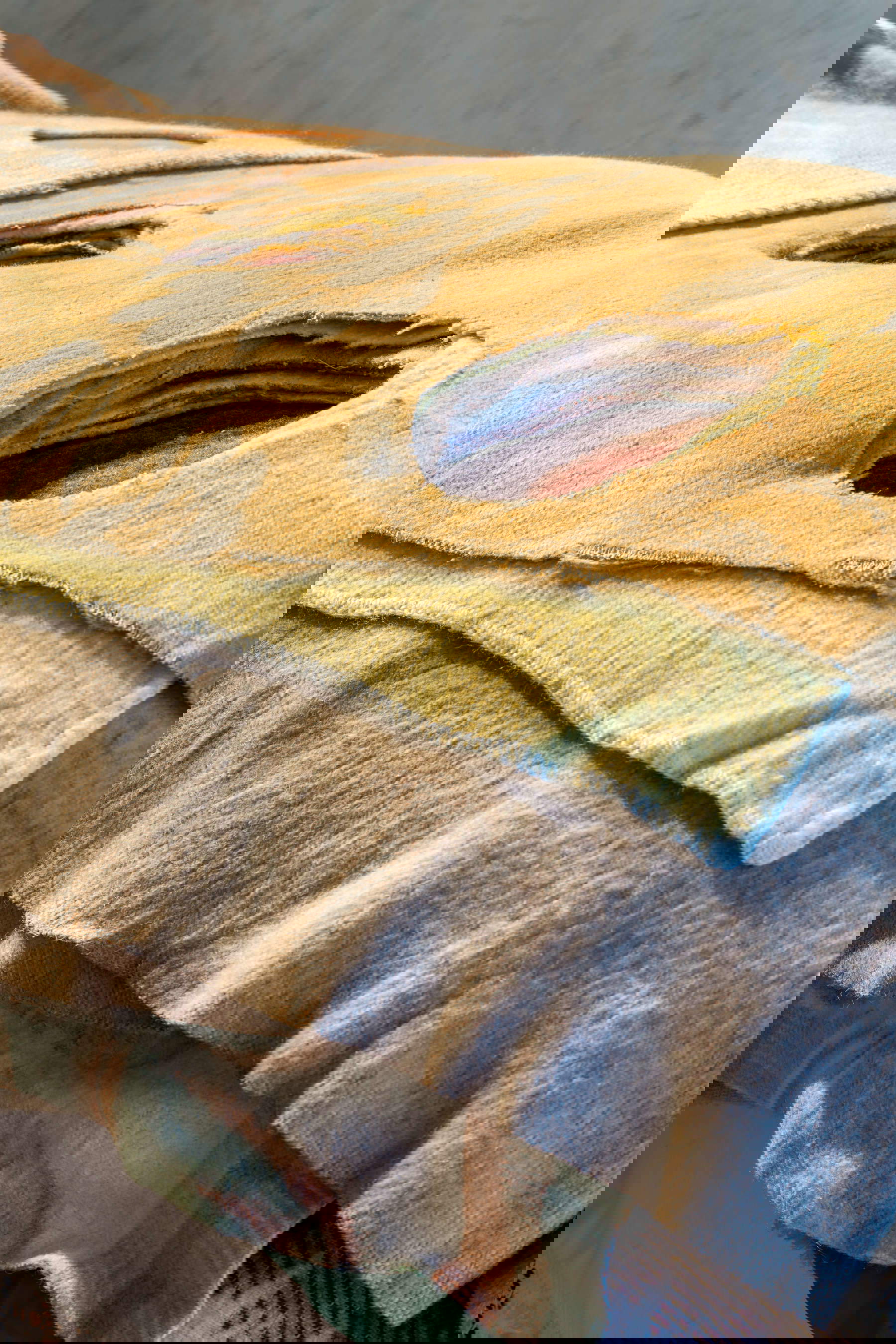
The works on view in San Gimignano maintain a more restrained, almost domestic dimension in the scales and poor materials used (fabric, lead, rusted iron) that give the works an intimist character and a certain formal harshness devoid of seductive concessions. The recent sculptures, on the other hand, combine the same conceptual rigor with a refinement of execution capable of arousing that contradictory fascination that makes them so powerful: layered wax produces surfaces of a painterly chromatic beauty that contrasts violently with the horror of the anatomical deformations depicted, creating an unresolved tension between aesthetic attraction and moral repulsion. Another substantial difference concerns the relationship with metamorphosis. In the early works, transformation remains predominantly metaphorical or potential: the lead roses of I Never Promised You a Rose Garden, for example, allude to a process of stiffening and death, but retain their recognizable plant form. In the mature works, however, the metamorphosis becomes literal and visionary: bodies merge with trees in monstrous hybridizations, horses assume human postures, and blankets weld to skin in organic symbioses that defy categorization. The influence of Ovid’s Metamorphoses , central to the artist’s poetics, is only fully manifested when the layered wax technique allows her to materialize that fusion of different realms that her youthful works could only evoke through symbolic juxtapositions.
However, the most profound change concerns the relationship with contemporary history and the representation of collective suffering. As the artist herself has stated, her approach to the body has become progressively more cruel and direct in response to the media overexposure to violence that characterizes our age. If in the 1990s images of the Rwandan genocide arrived filtered and rarefied through newspapers and television, allowing for a more thoughtful and distanced reworking that resulted in works where the body remained hidden or only evoked, today the uninterrupted flow of images of suffering bodies from wars and catastrophes has made that protection of the gaze impossible. Recent works, therefore, no longer conceal the body with blankets or disguise it behind metal grids, but expose it in its unbearable vulnerability, forcing one to look at what one would prefer to avoid. Same Old, Same Old allows us to reconstruct an emotional and formal archaeology that retrospectively illuminates the artist’s mature choices, revealing how his most iconic works represent a radical intensification of insights already present from his early days. The path that leads from the empty cages of the 1980s to the exposed and deformed bodies of the recent works does not mark a reversal of course, but a gradual rapprochement to the unacceptable truth that the youthful work still held at a safe distance, as if it had taken the artist decades to find the courage and technical tools necessary for the full materialization of the visions that inhabited her from the beginning.

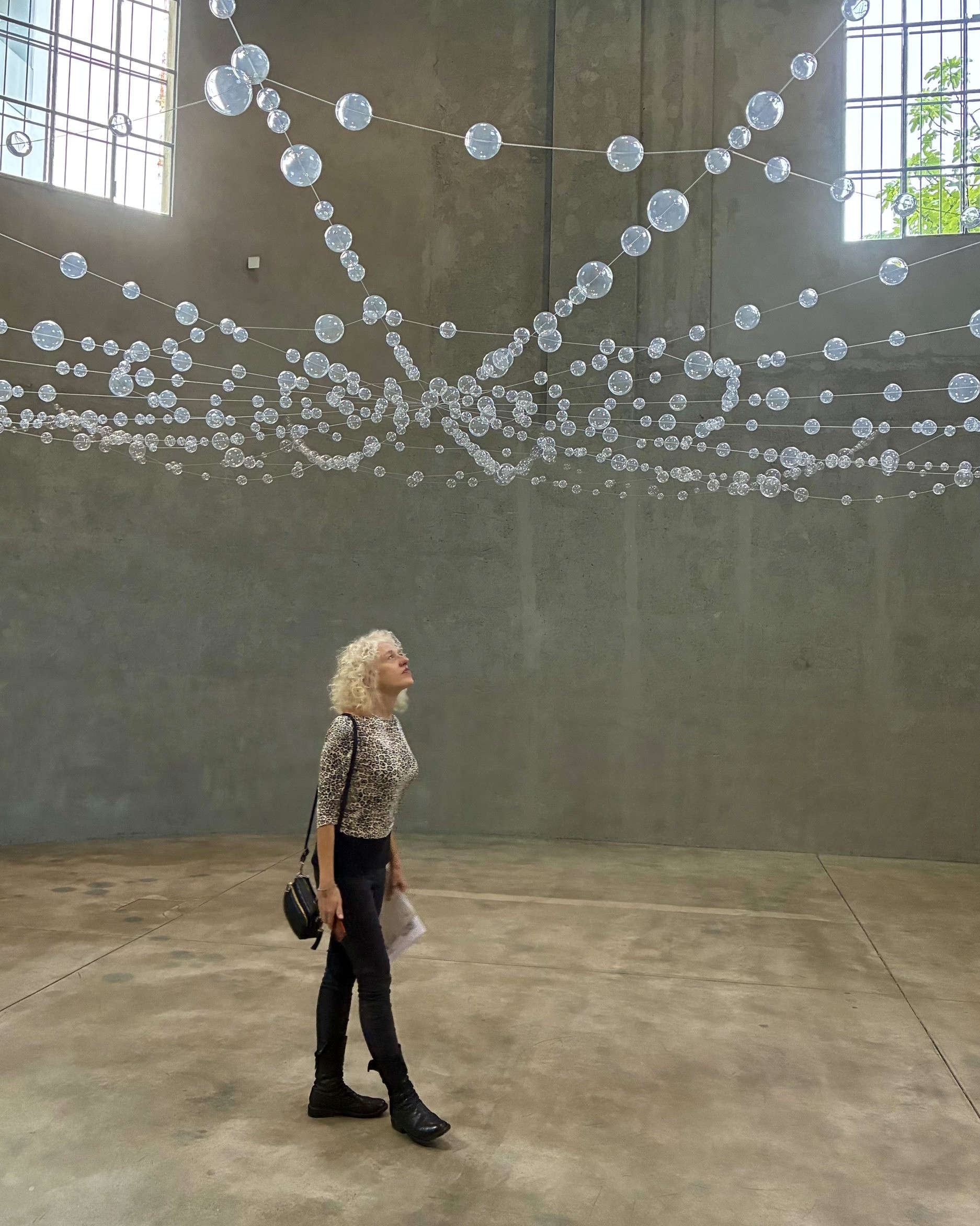
The author of this article: Emanuela Zanon
Laureata in Discipline dell’Arte, della Musica e dello Spettacolo all’Università di Bologna, città dove ha continuato a vivere, si è specializzata in Beni Storico Artistici all’Università di Siena. Curiosa e attenta al divenire della contemporaneità, crede nel potere dell’arte di rendere più interessante la vita. È direttrice editoriale di Juliet Art Magazine online.Warning: the translation into English of the original Italian article was created using automatic tools. We undertake to review all articles, but we do not guarantee the total absence of inaccuracies in the translation due to the program. You can find the original by clicking on the ITA button. If you find any mistake,please contact us.














 IT
IT FR
FR DE
DE ES
ES CN
CN