





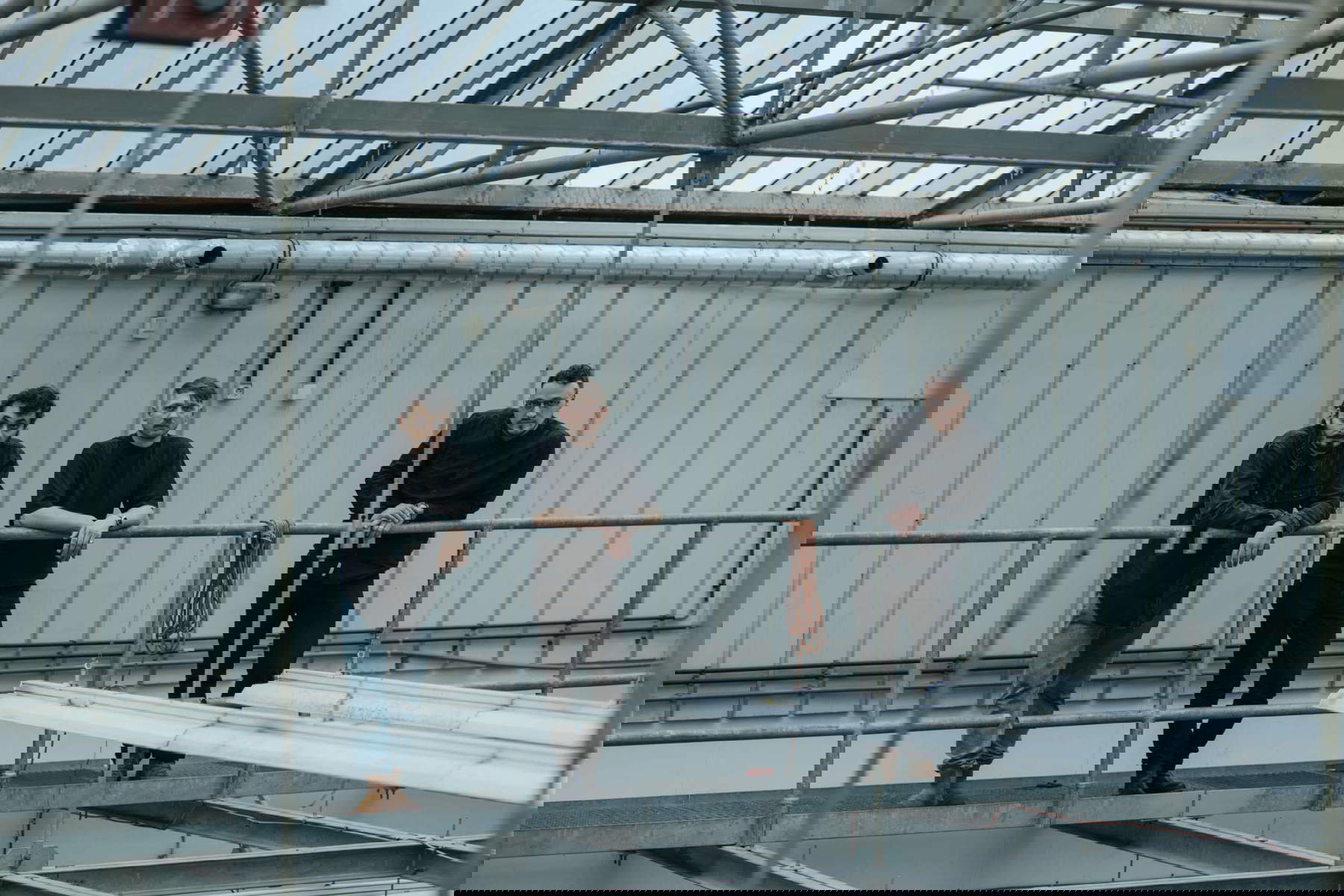
Many will have been impressed by the Poland Pavilion at the 2024 Venice Biennale, featuring the participatory video installation Repeat after me II by the Open Group collective (Yuriy Biley, Pavlo Kovach, Anton Varga). The protagonists of the two videos were Ukrainian civilians, war refugees who imitated with onomatopoeic sounds the sounds of armaments they had learned to recognize, inviting the audience to repeat them after them in a destabilizing karaoke. Bullet discharges, cannon shots, alarms, sirens and explosions were being raised to the universal language of militarized humanity, the terminal idiom of a future subjugated to nationalist and imperialist policies. That installation, which stood out for its urgency and effectiveness in an exhibition flattened on a generalized post-colonialist mea culpa, sanctioned the presence in the international limelight of the Ukrainian collective Open Group, which moreover already had a Venetian participation to its credit, the curatorship of their national pavilion at the 2019 Art Biennale. Again, this was an open and interactive situation with a high political temperature. The project centered on the passage over Venice, at noon on the first day of pre-opening to professionals before the official opening, of the world’s largest aircraft, the Antonov An-225 Mriya, which would fleetingly fly over the Biennale Gardens, carrying a digital archive of all living Ukrainian artists. The reflection centered on claiming the full inclusion of Ukrainian artists in the context of global contemporary art and denouncing the political and historical reasons to which the collective ascribes their current peripheral location. The questions meandering through the work (“Has Ukrainian art been hidden in the shadows of Europe? Or has contemporary art discourse been unable or unwilling to consider Ukraine’s complex history? Without a parallel written and documented canon, can our mythologies respond to the most celebrated stories in Western contemporary art?”) were suggested by an informational fictional narrative, orally transmitted by a group of performers present in the Ukrainian Pavilion at the Arsenal. Their voices were also entrusted with the narrative of the passage of the great plane, moreover named Dream and designed in the USSR as an ironic augmentation of the contradictory nature of the notion of cultural heritage, proposed as a national founding myth in its uncertain verifiability.
Open Group’s hallmark, then, is that of making sided art that intimates the viewer to take a position with a frontality rare in contemporary art. Of the many works in the current scene that call themselves political (and in this mental reconnaissance we consider only those that really have some title to be able to declare it), few come out of the canons of a generalized condemnation of capitalism, post-colonialism, oppression of minorities, cultural erasure and all the other issues invisible to the democratic imperative of political correctness with which Western society has erected itself as the engine and measure of world ethical and cultural progress. Still less do they ask the viewer for a choice, preferring to act in a muffled comfort zone quiescent between the two tension-free poles of emotional solidarity with the victims and outrage at the ruthless dynamics of history and geopolitics highlighted from time to time. Of paramount importance, moreover, is the question of the ability to formalize such reflections in a way that satisfies a viewer in search of an artistic experience, without forcing him or her, as is often the case, to the laborious decipherment of installation graphics, documents and artifacts or even academic lectures .
It is very difficult (or perhaps not the intention of many) to be able to make art from current events while taking into account all these aspects, to which are added the mechanisms of control and normalization of a system of ’art that, while displaying a thirst for intensity and “special effects,” paradoxically rejects what does not conform to its own internal canons, to the point of hinging contestation into a genre endowed with rules and recurrences on par with others. Not to mention then the incongruity inherent a priori in considering critical thought an artistic product that draws sap from what it rails against and that has ended up acquiring an official consecration (including financially) in the system. On this treacherous terrain Open Group moves by scorning any possibility of diplomatic indeterminacy, understood in both political and artistic meanings: there are no caveats or doubts about the position advocated, and the art media are not granted any “civil” autonomy that would distract them from the militant (and militarized) mission. The works want to get straight to the point and to do so they activate sometimes brutal sometimes poetic modes of engagement, aiming at the universal as only those with a faith can aspire to do.
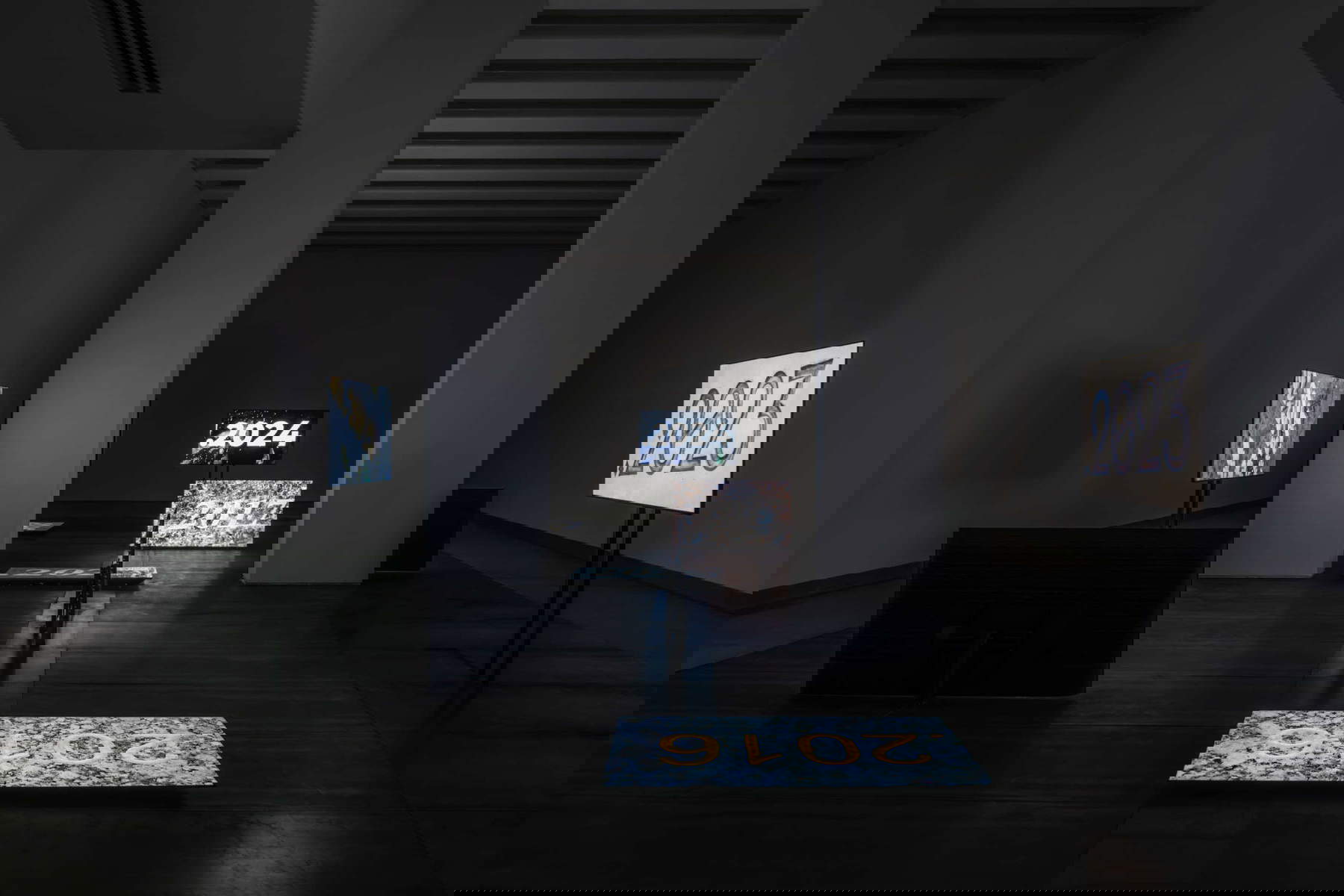
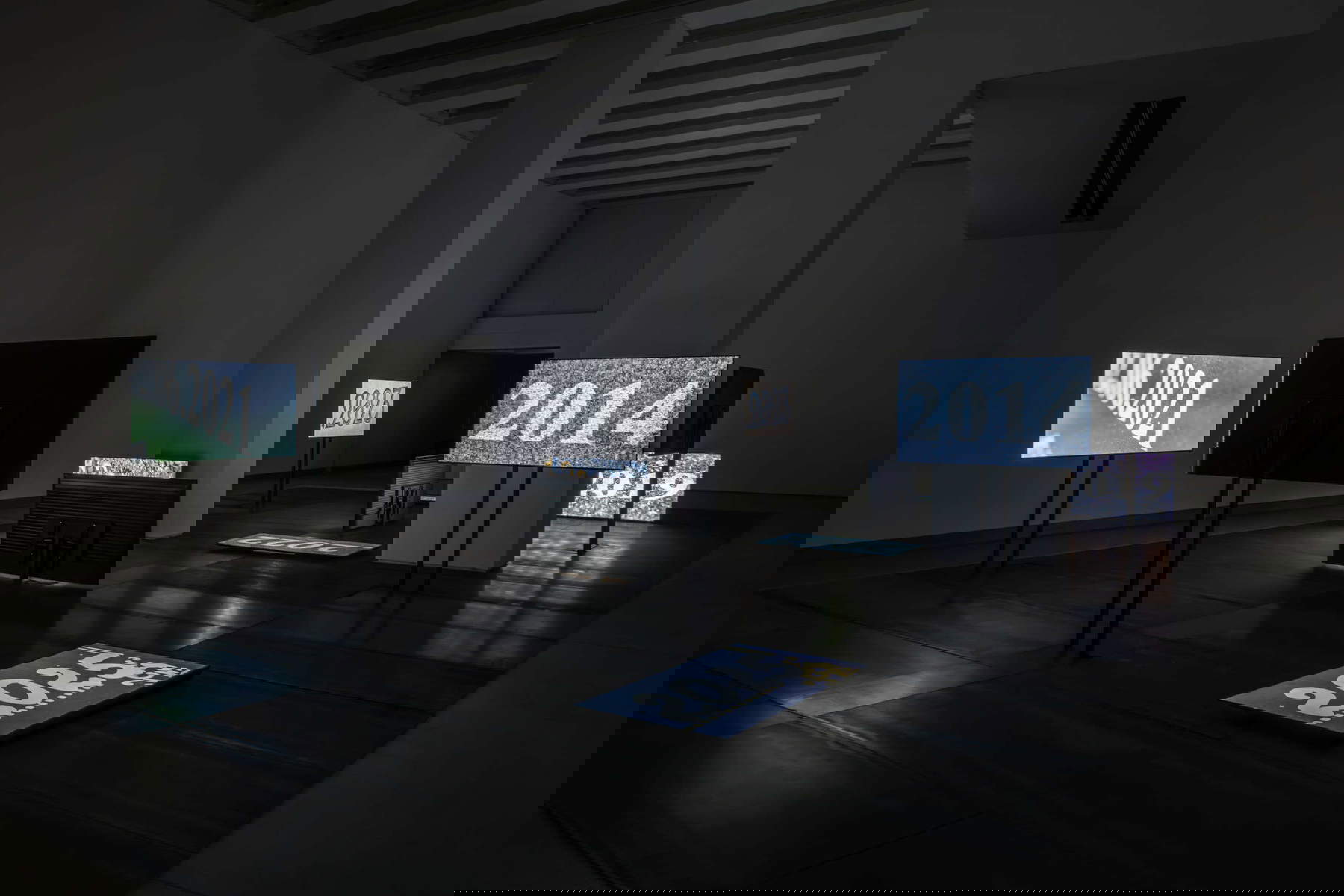
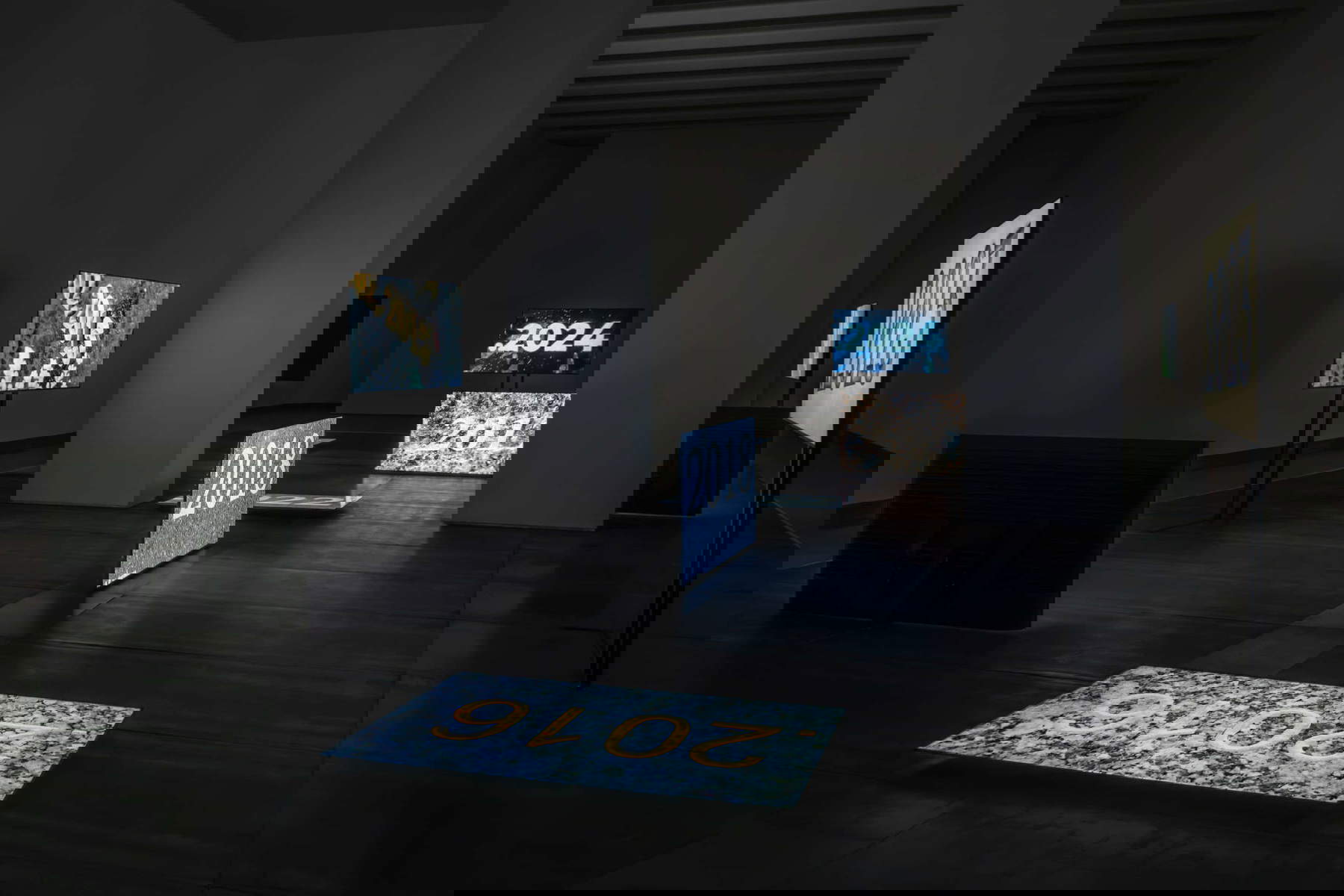
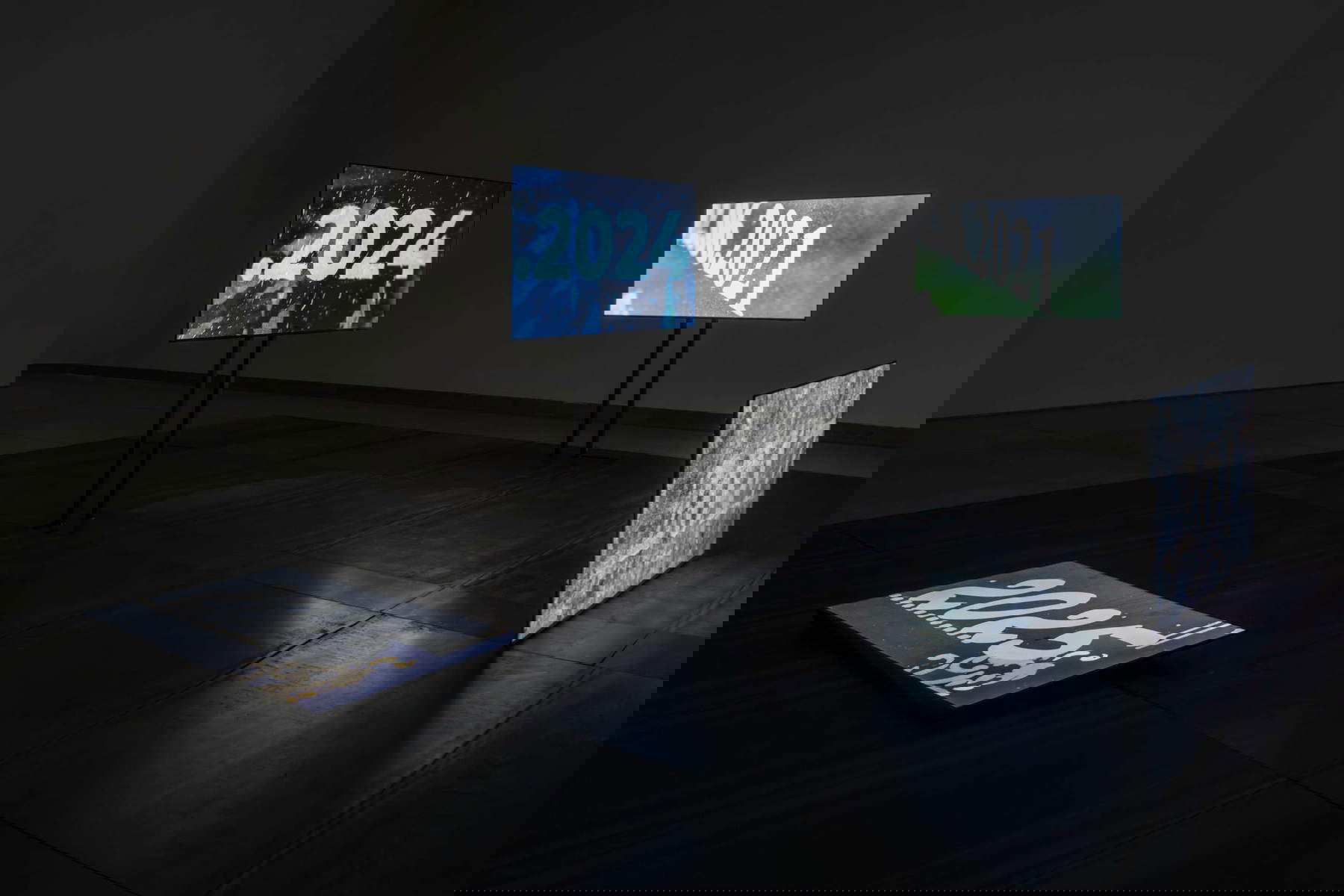
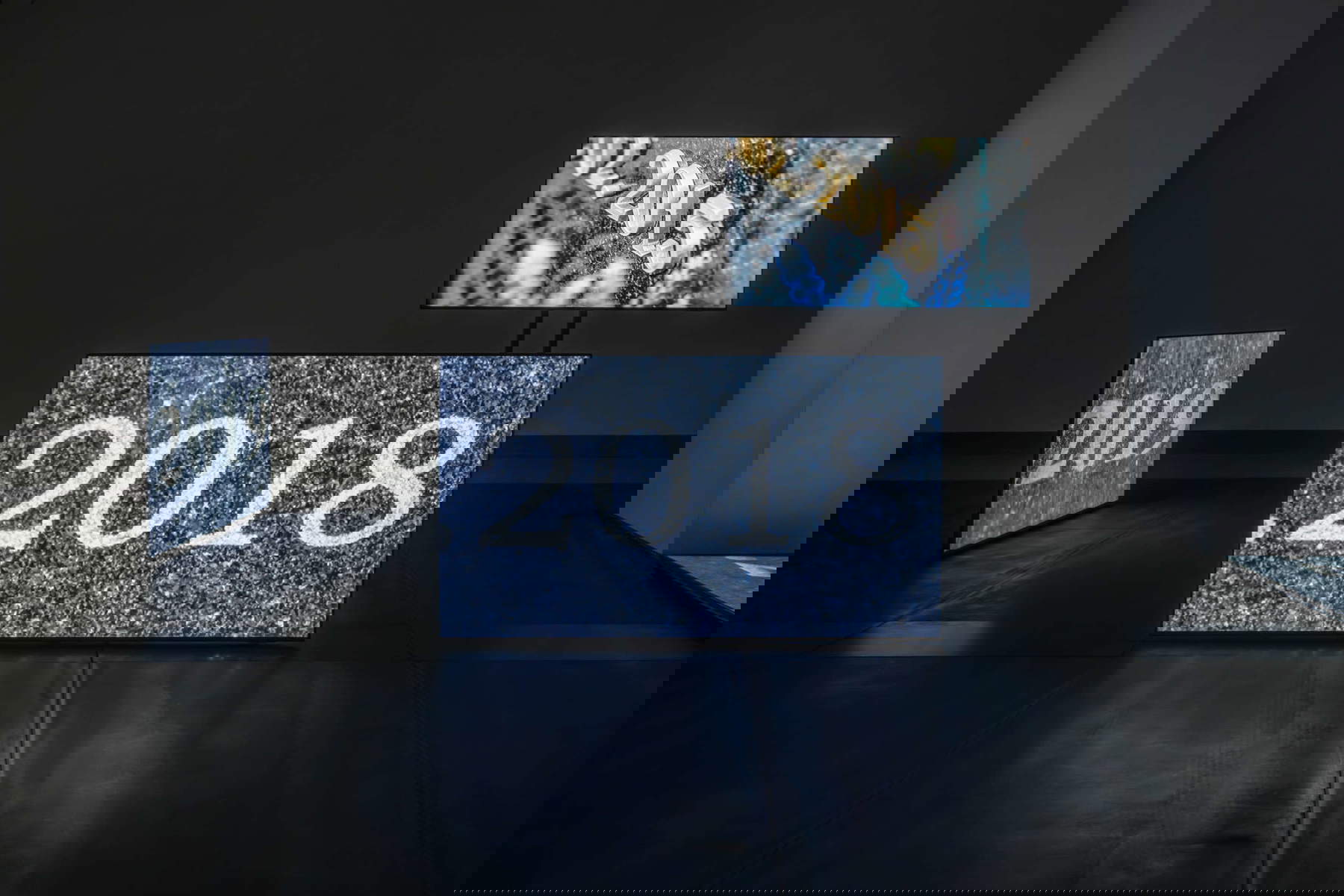
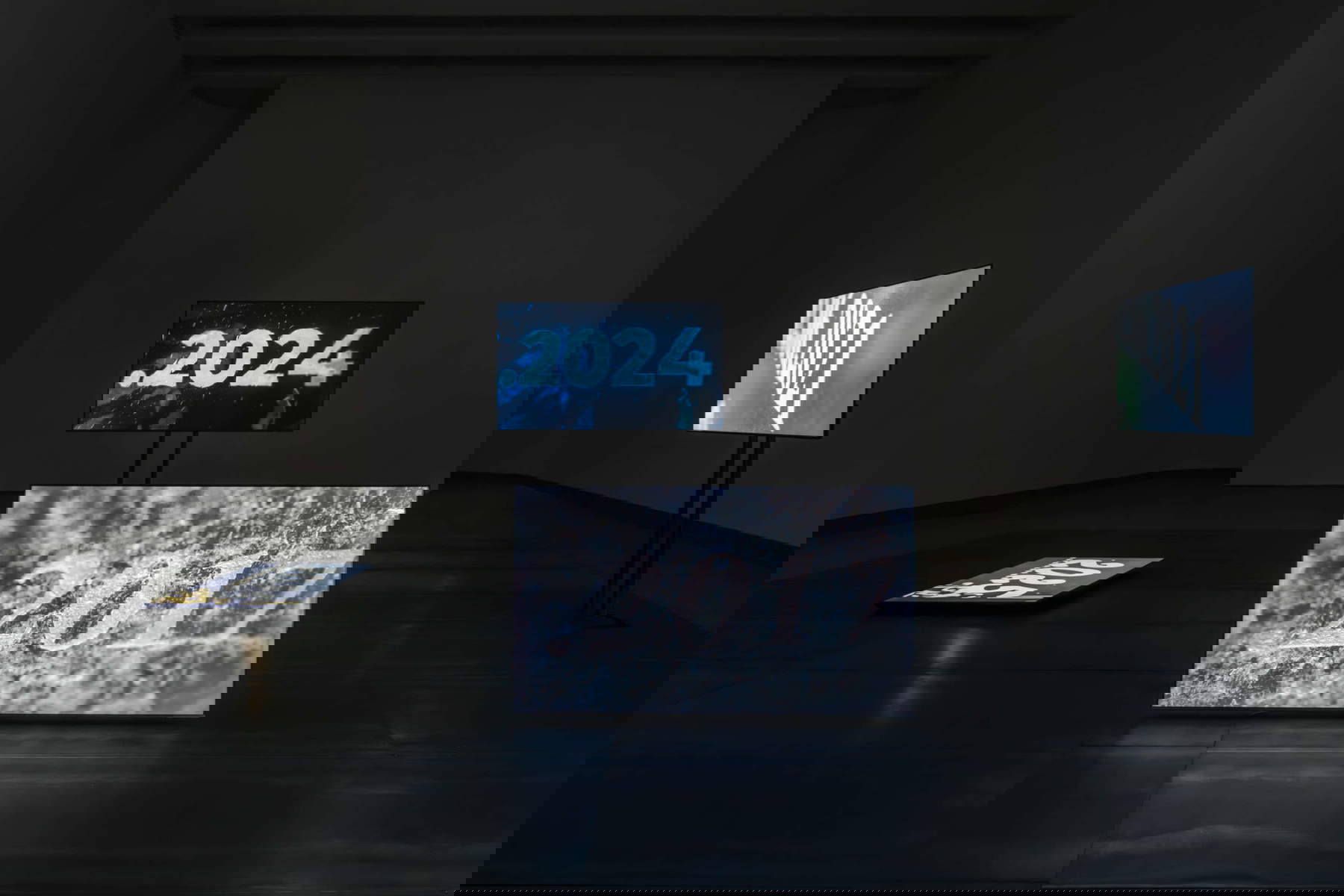
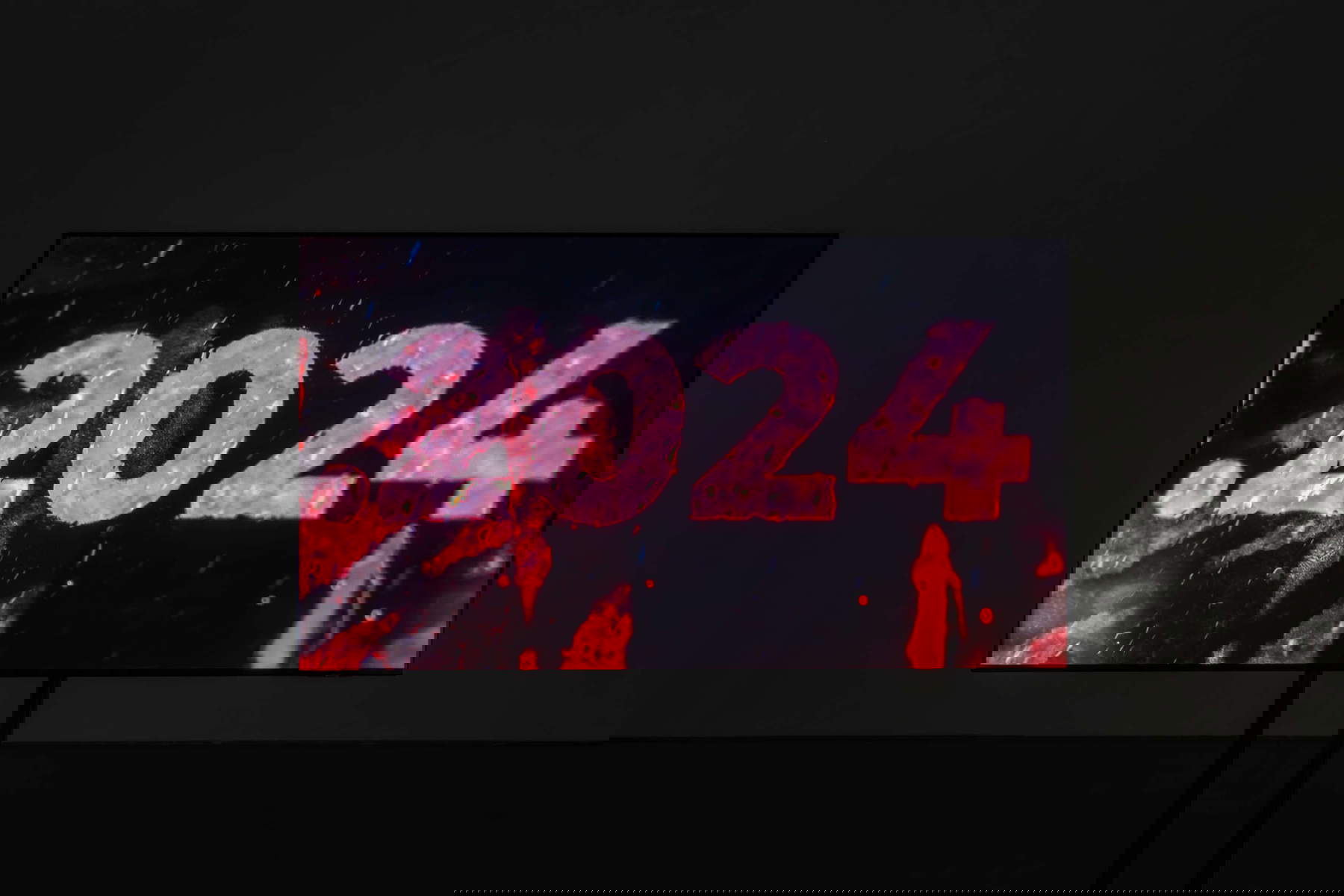
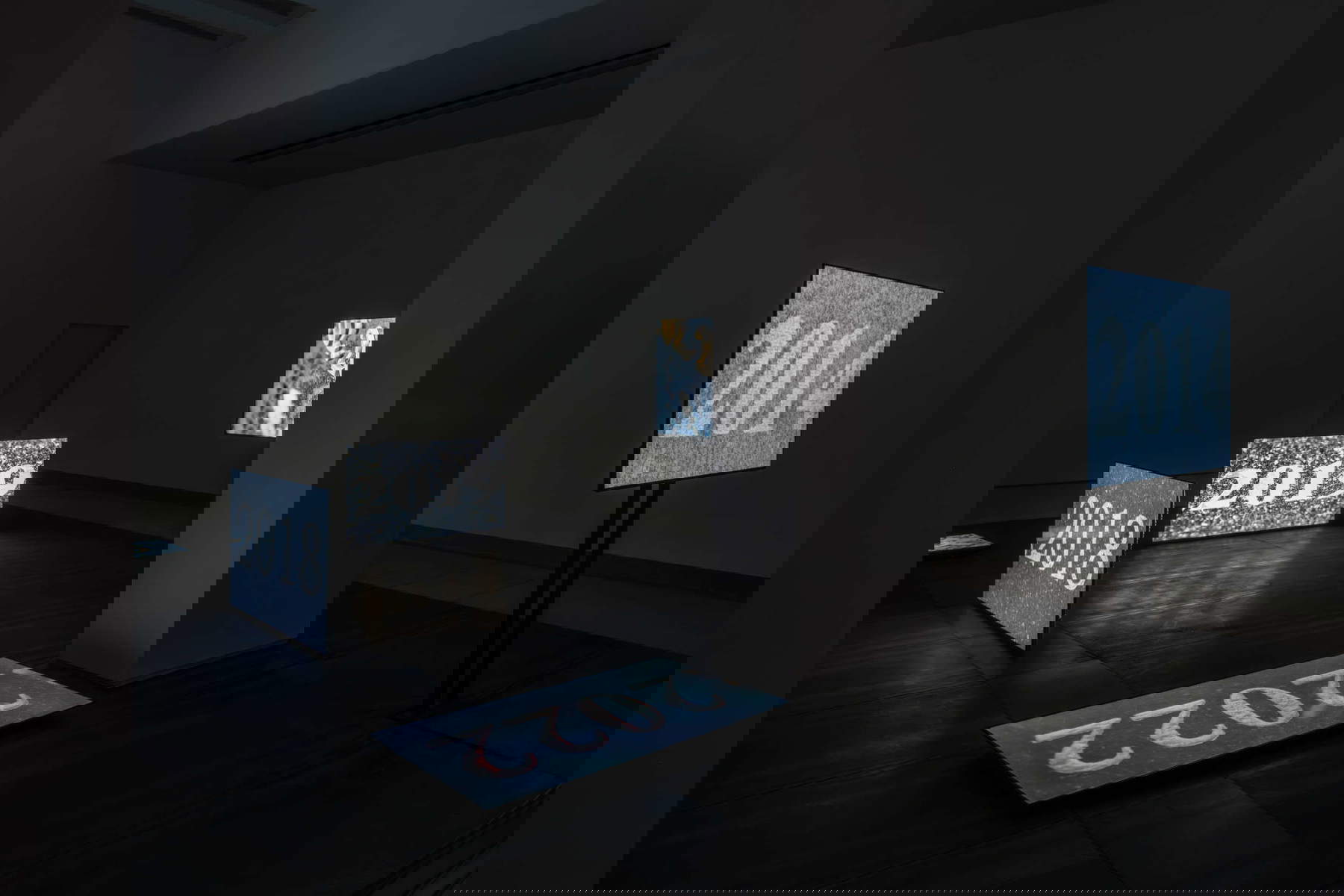
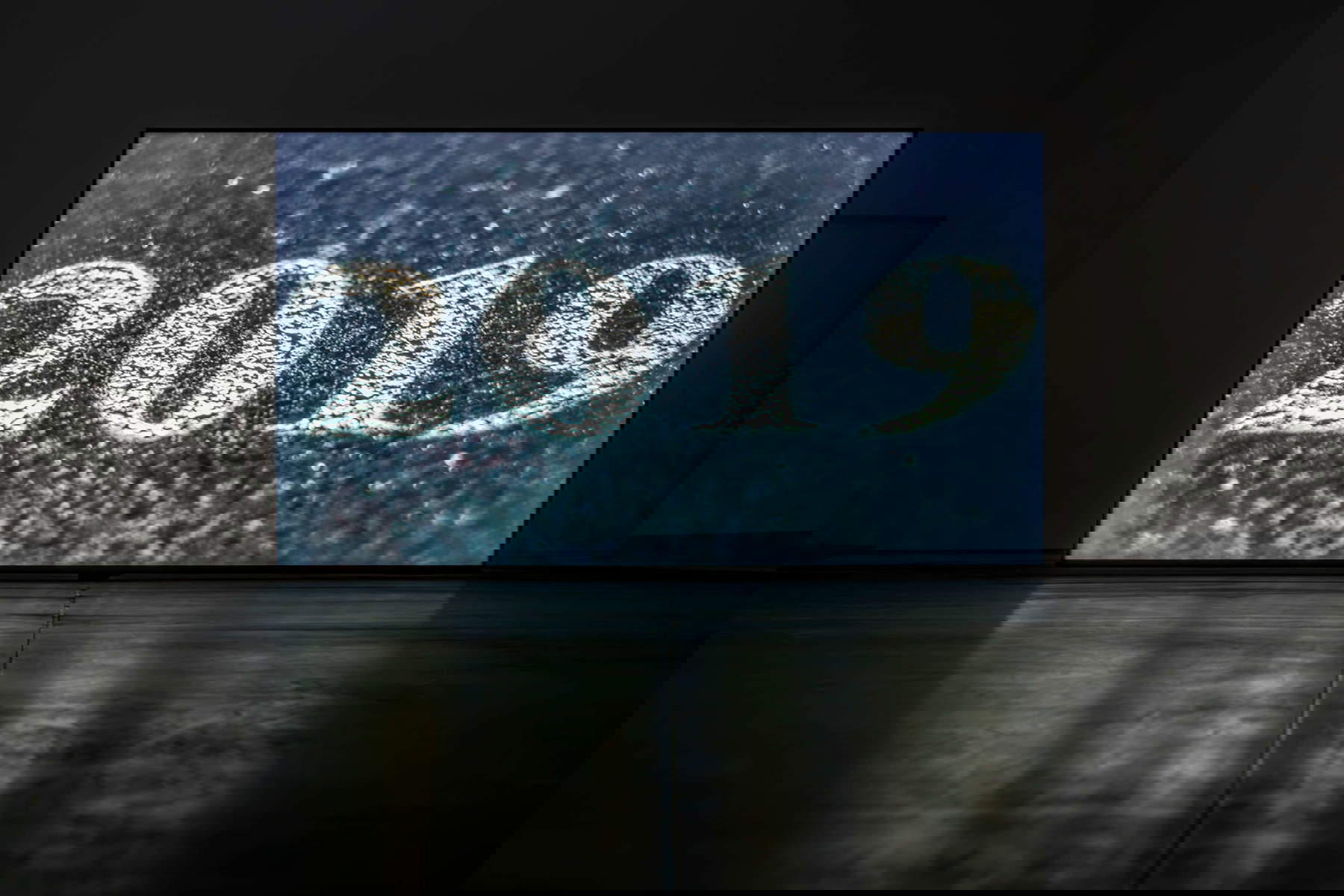
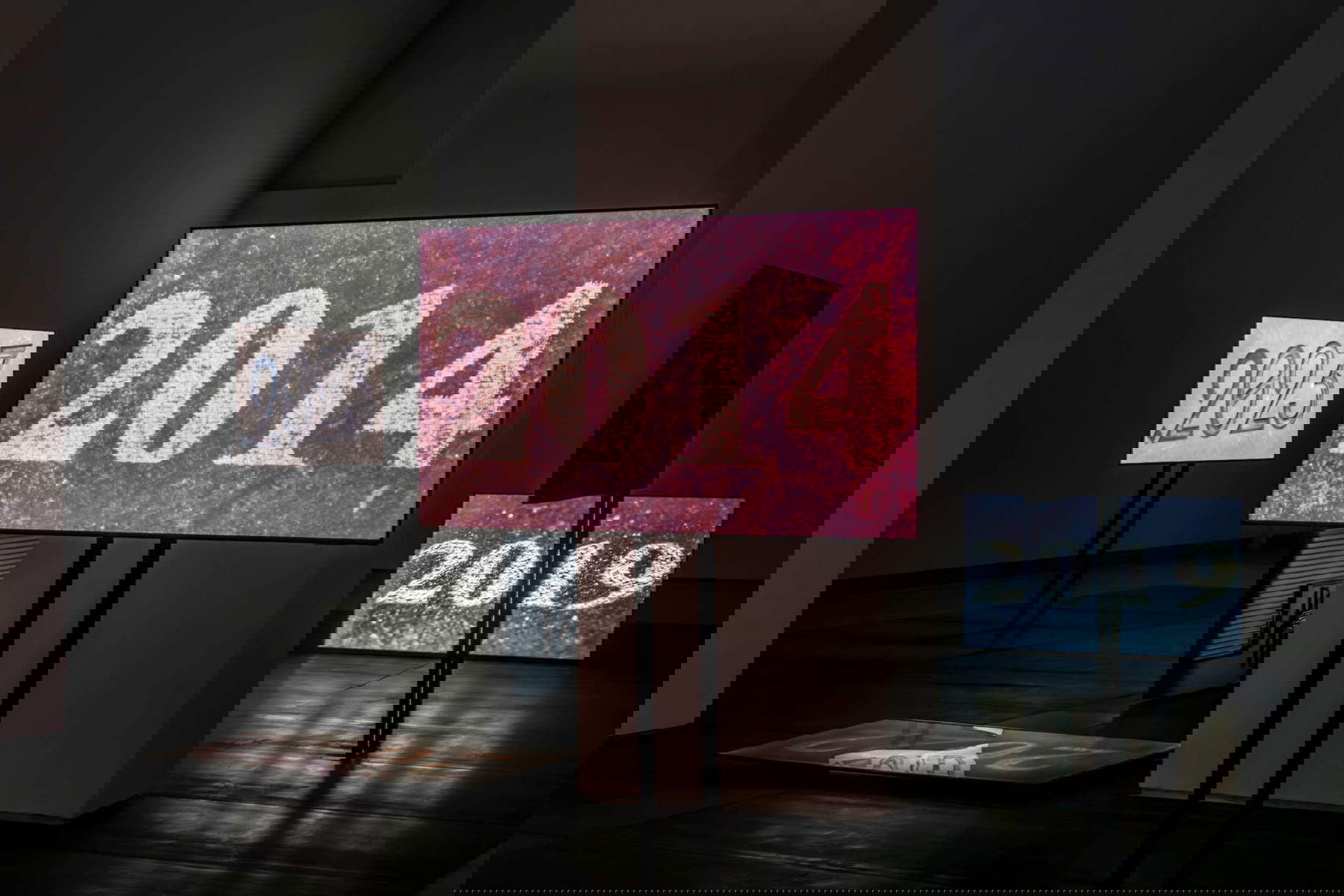
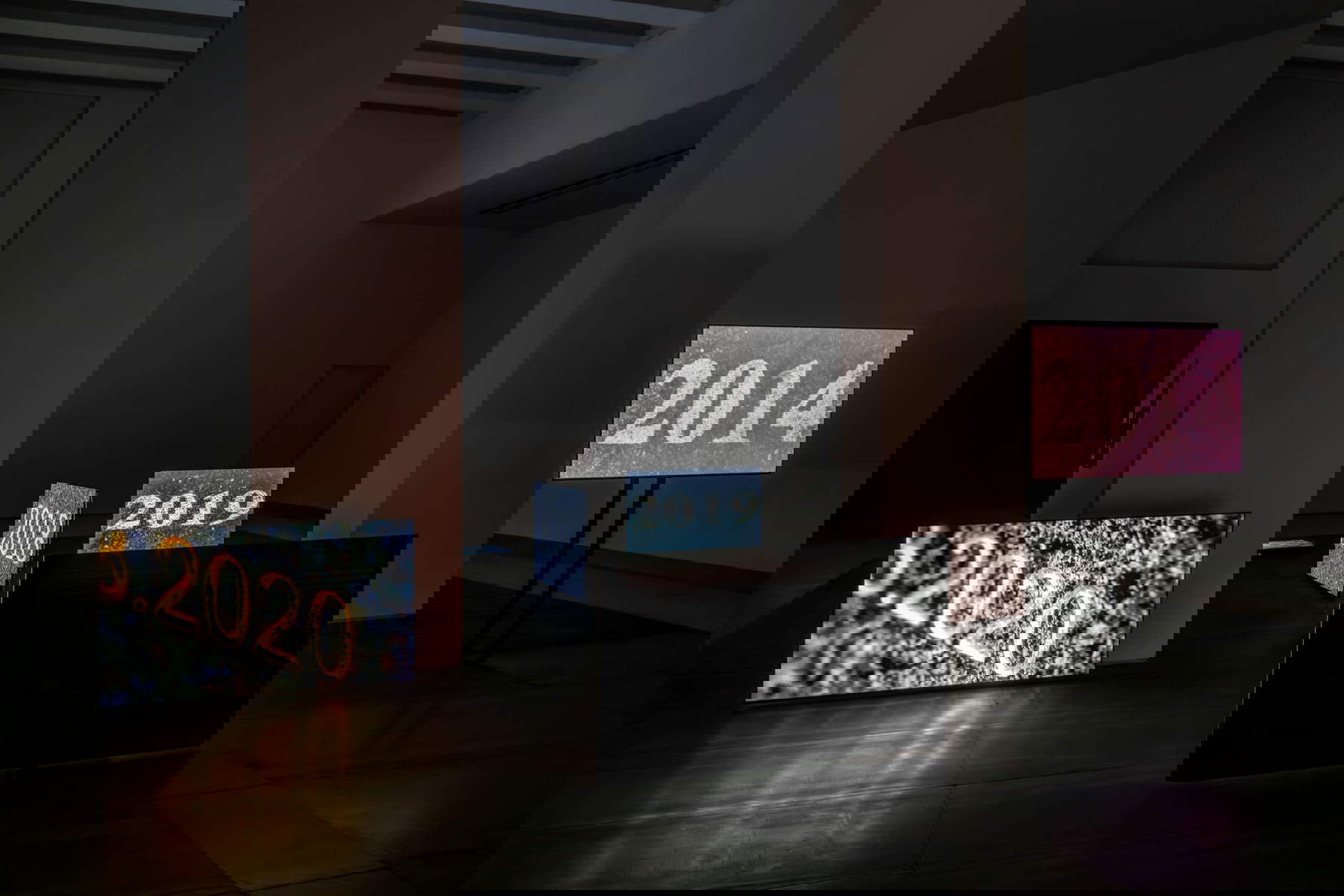
This approach returns in a form that could be described as “radicalized” in the collective’s new Italian exhibition, Years, a site-specific project conceived for the spaces of the Tenuta dell’Associazione Culturale Dello Scompiglio in Vorno (Capannori, Lucca), a valuable cultural incubator in the Tuscan countryside. The large room dedicated to permanent exhibitions has been transformed by the artists into a kind of digital burial ground: immersed in darkness, it is marked by twelve monitors placed in various positions like cemetery tombstones, on each of which appears a figure between 2014 and 2025. The images appear to be still, but as we pause, we discover that they are footage from a fixed camera framing the detail of the year on various memorial plaques (one is quick to think of deceased) placed outdoors. The rigor mortis of the stamped numbers is touched by almost imperceptible environmental changes, such as the liquefaction and flowing of a condensation of moisture on a glass or some reflection of light on marble, but this only asseverates their irreparable inertia. And then the noises of everyday life recorded at the same time as the images: some pattering of footsteps in the gravel, fragments of conversation, the barking of dogs, engine roars of heavy vehicles, a rooster crowing, rain or an alarm siren.
The existence that transpires from the sound is as rough as the raw recording that challenges the visitor to stay and hear if anything happens. It becomes clear at this point that the numbers are also clues, from which those who follow international current events closely can recognize a chronology afferent to the various phases of the conflict between Russia and Ukraine, beginning with the ignition of hostilities in 2014 over the disputed annexation of Crimea by Russia. Indeed, the dates framed to mark time are those of the deaths of twelve Ukrainian fighters (born between 1974 and 1999), who were linked by military ties of acquaintance and friendship. In this way, the seemingly cold succession of dates, which at first seems to want to freeze the visitor in a universal mourning for those killed in the war, is transformed into a ritual pulse aimed at celebrating those erased lives, with a proud sense of belonging.
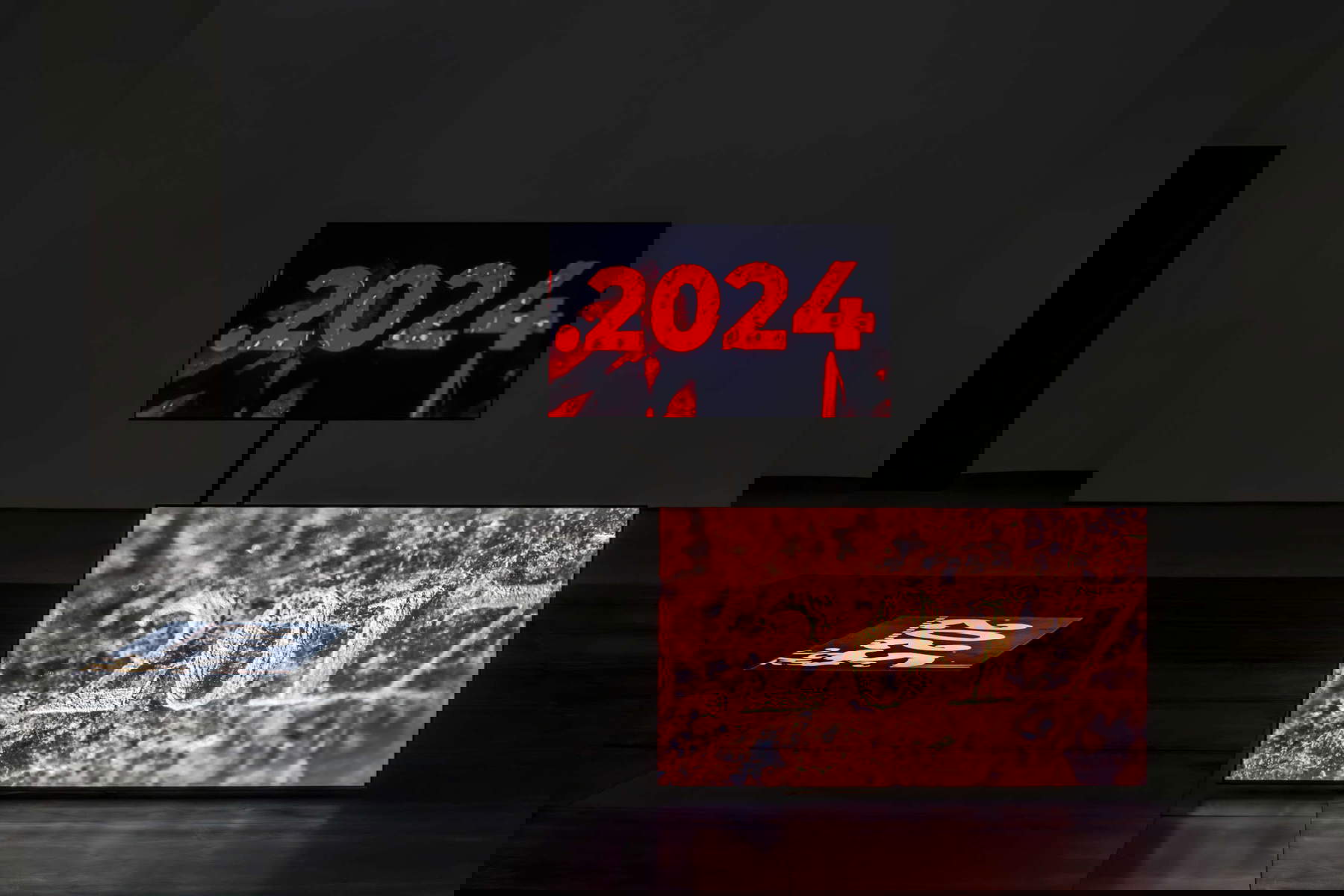
Significantly, the exhibition’s dissemination flyer does not, as is usually the case, offer an anticipation of what one will see when visiting it, but takes the form of a crude chronicle that traces the various stages of a war that is still going on against an identified enemy. Open Group in this work has decided to experiment with a reduction to the bare minimum that leaves uncovered an irreducible geographic and political specificity, claiming the need to name the conflict, to situate it historically, to take a position with respect to its dynamics. The friction between the almost rough minimalism of the formal language adopted and the testimonial urgency that animates it rips open any contemplative distance calling to action, urging the assumption of responsibility in the face of a present that continues to produce victims while the art system risks metabolizing even war as yet another exhibition theme.
Beyond the adherence or otherwise to the Ukrainian cause, the most interesting aspect raised by the collective’s practice, never so manifest as in this latest installation, is whether it is possible to make war art without propaganda, whether militancy can coexist with the complexity of critical thinking, whether the urgency of denunciation can respect the autonomy of artistic language. Years’ answer to these questions is a subtle strategy of tension, aimed at making palpable the proximity of a conflict that the uninterrupted flow of news risks turning into background noise. The collective’s choice is to avoid both spectacularization and documentary didacticism in order to focus on a minimal visual syntax designed to short-circuit the mechanisms of collective removal.
Although the introductory statement unambiguously makes the artists’ position explicit, the work does not propose unambiguous interpretations or guided emotional paths and leaves the viewer naked before an inescapable patriotic mortuary monument, forcing him or her to work out a response independently. Finally, the experimentation operated by the collective of expressive forms reduced to the bone to bear the weight of the emergency is configured as a drastic questioning of the resilience of artistic language tout-court in the face of the irruption of violence in history. Open Group’s view in this regard is by no means consolatory, suggesting that such language can exist only in the form of a permanent laceration, a formal wound that does not heal but remains open and painful. Years ultimately testifies to the possibility of an art that, rather than representing conflict, incorporates its devastating logic into its formal structure, turning itself into a symptom even before it becomes a diagnosis.

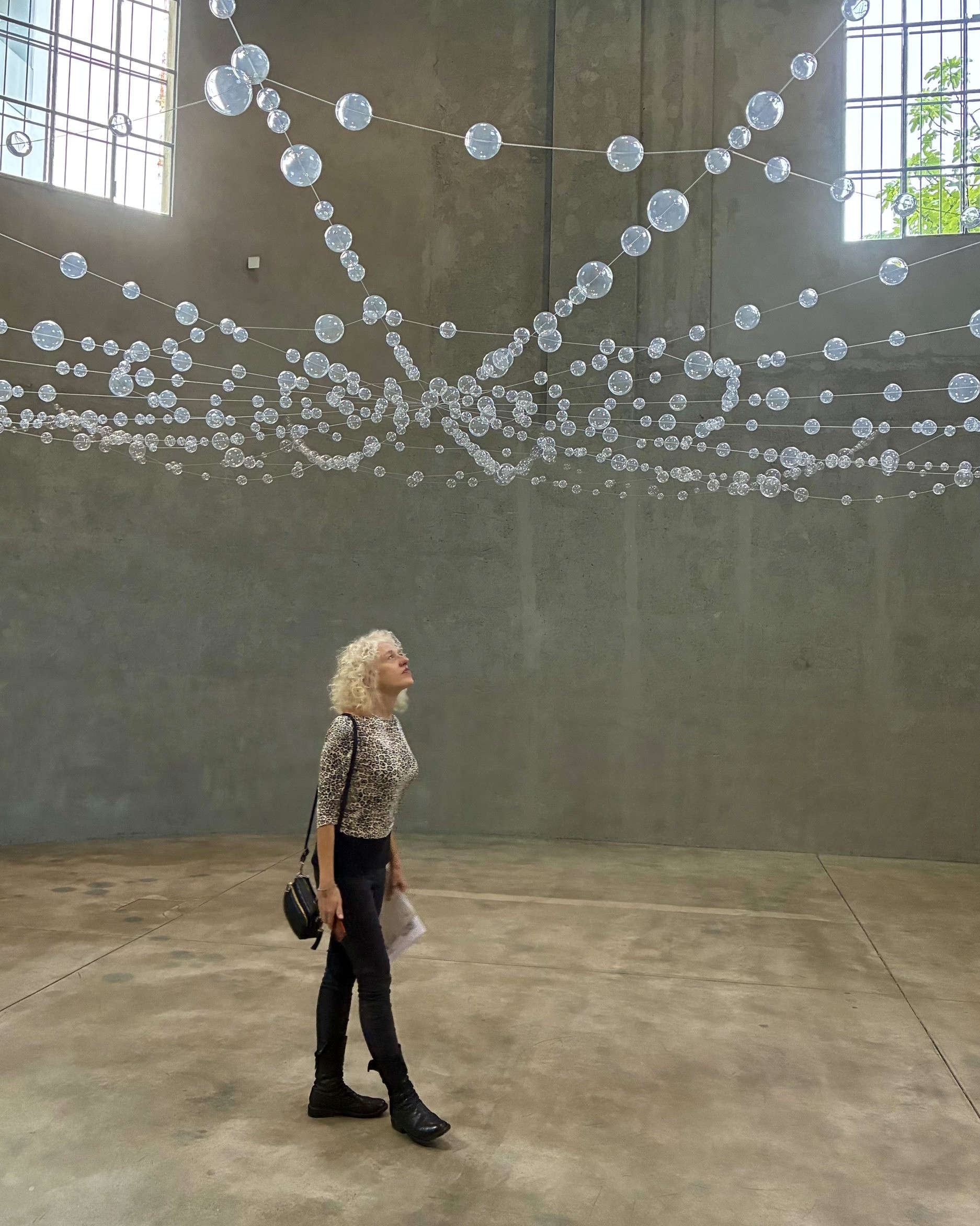
The author of this article: Emanuela Zanon
Laureata in Discipline dell’Arte, della Musica e dello Spettacolo all’Università di Bologna, città dove ha continuato a vivere, si è specializzata in Beni Storico Artistici all’Università di Siena. Curiosa e attenta al divenire della contemporaneità, crede nel potere dell’arte di rendere più interessante la vita. È direttrice editoriale di Juliet Art Magazine online.Warning: the translation into English of the original Italian article was created using automatic tools. We undertake to review all articles, but we do not guarantee the total absence of inaccuracies in the translation due to the program. You can find the original by clicking on the ITA button. If you find any mistake,please contact us.
















 IT
IT FR
FR DE
DE ES
ES CN
CN


