



by Redazione 24/04/2026



Categories: Exhibitions / Disclaimer
From April 24 to September 27, 2026, MAXXI will dedicate to Andrea Pazienza the exhibition "Andrea Pazienza. You Don't Always Die," the second chapter of the exhibition project for the 70th anniversary of Andrea Pazienza's birth, featuring more than 500 plates, archival materials and a large restored mural.

From April 24 to September 27, 2026, MAXXI in Rome hosts Andrea Pazienza. You Don’t Always Die, an exhibition curated by Giulia Ferracci and Oscar Glioti that constitutes the second chapter of the exhibition project dedicated to the artist on the 70th anniversary of his birth. The exhibition picks up the baton of La matematica del segno (The Mathematics of Sign), set up at MAXXI L’Aquila and dedicated to the author’s formative years and early experiments, with the aim of completing the narrative and returning an overall vision of his production.
The project is part of the path by which the museum renews its commitment to the enhancement of figures who marked the culture of the Italian 20th century and anticipated issues still central to contemporary artistic research. Indeed, Andrea Pazienza, who died in 1988, continues to be a reference figure for a vast visual and cultural imagination that spans art, literature and communication languages.
The title of the exhibition comes from a long interview Pazienza gave in 1988 to British radio and television host Clive Griffiths, shortly before his death. On that occasion the artist uttered the phrase “you don’t always die,” chosen as the interpretive key to the entire project. The expression restores the sense of a presence that continues through the works and still maintains a strong capacity for dialogue with the public. The exhibition itinerary covers Pazienza’s entire career, from his formative years to his last works, articulating itself in thematic and chromatic rooms that follow the evolution of his research. At the center of the layout is a nucleus of more than five hundred comic book plates, traversing the author’s most famous characters and reconstructing his narrative and graphic complexity.


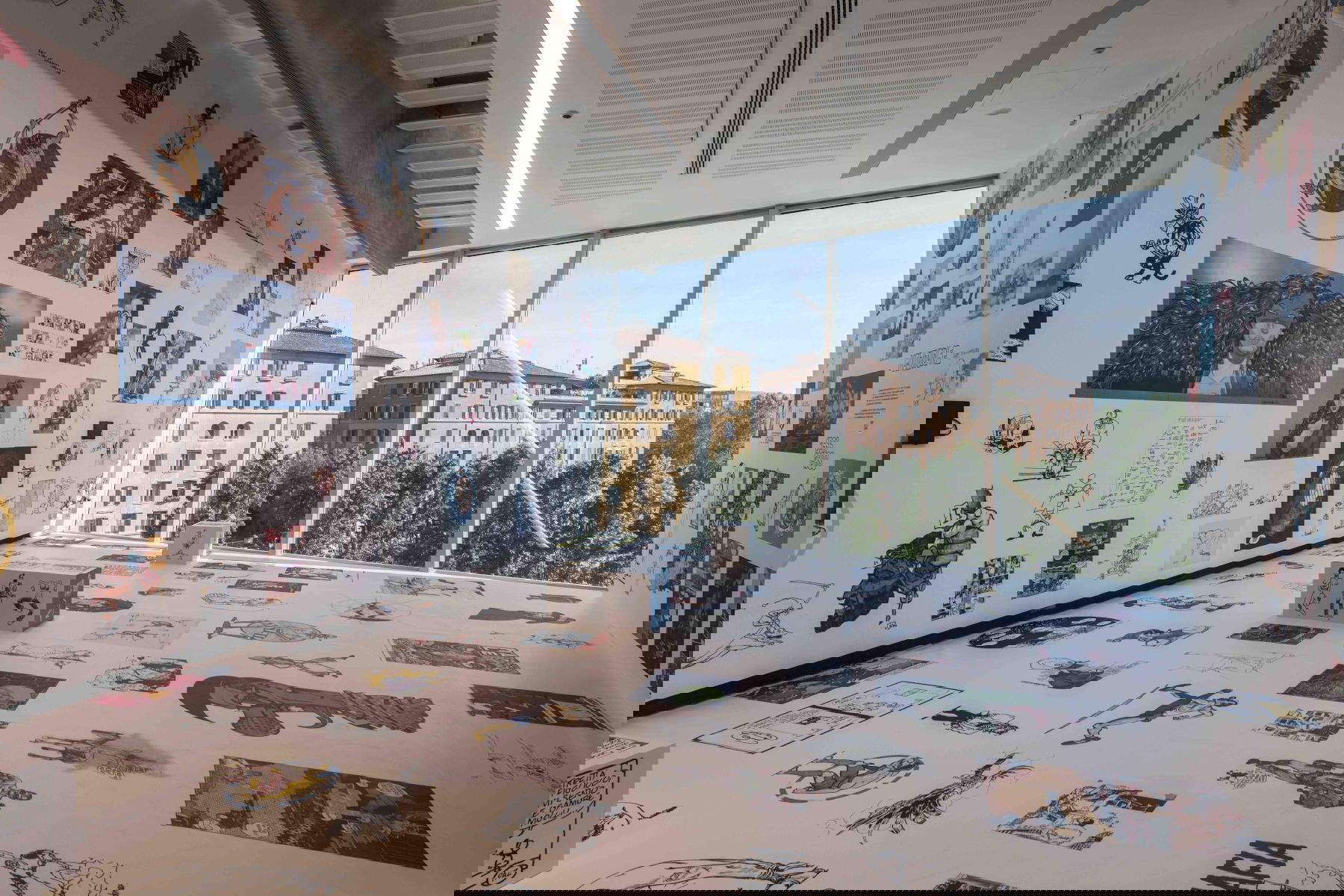
The protagonists include Pentothal, the character with whom Pazienza came to the attention of the public and critics; Zanardi, constructed as an embodiment of the cynicism and contradictions of the 1980s; Pertini, the “missionary partisan president”; and Pompeo, considered the author’s artistic testament, in which one of the most intense overlaps between biography and narrative fiction is accomplished. Alongside these, there is room for many other minor characters who make up a vast human repertoire of caricatures, confessions and masks that tell without mediation the time in which they were born.
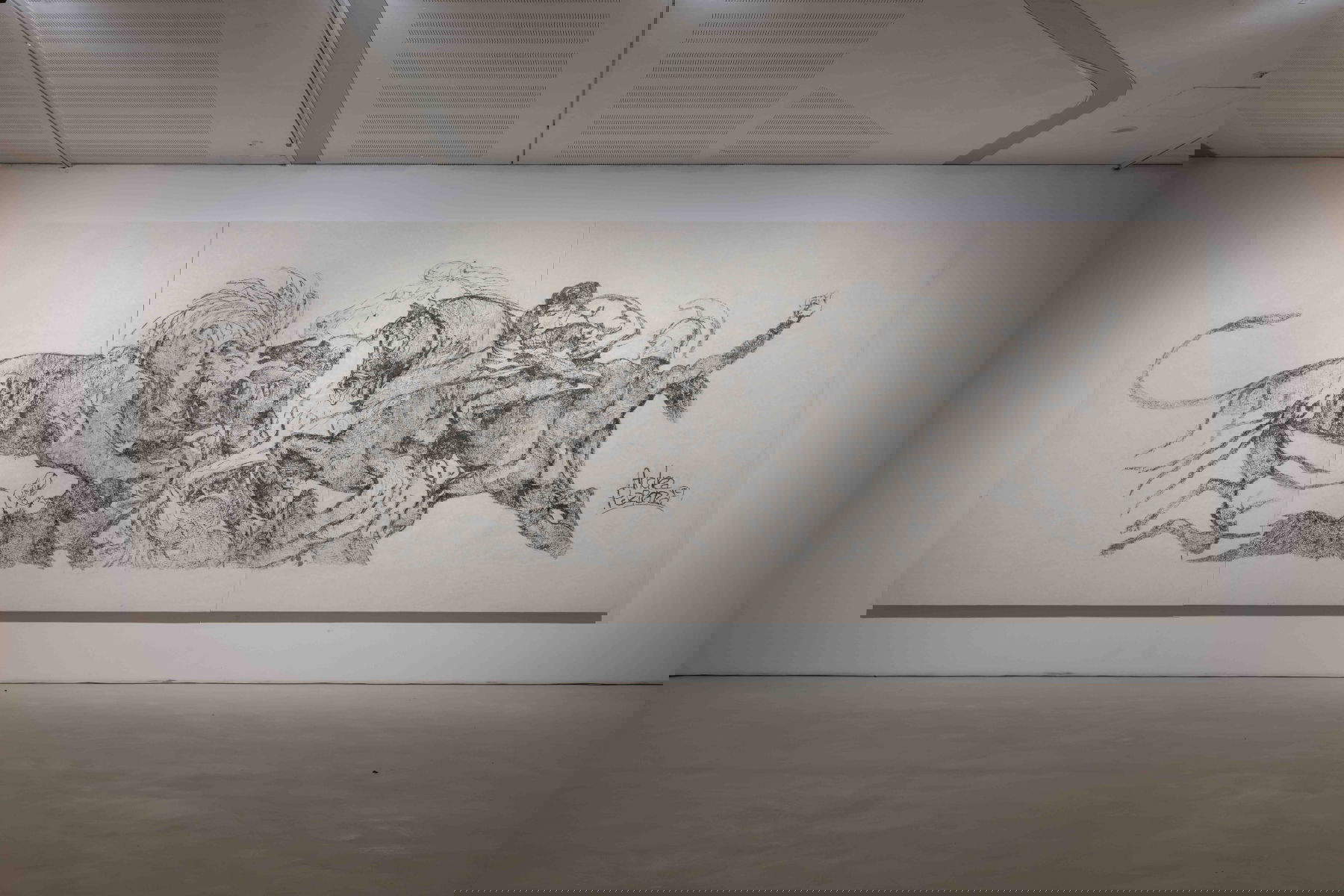
Among the most eagerly awaited works appears the large mural created by Pazienza live in 1987 at the Mostra d’Oltremare in Naples, during the fourth Comics Fair. The work, executed in just three hours, measures eight meters long by two and a half meters high and depicts a venatio, a combat scene between warriors and animals set in a context of classical antiquity. It was precisely during those years that the classical world was becoming one of the artist’s main interests, as evidenced by the later History of Astarte, which remained unfinished due to his death. The mural is presented for the first time in a museum context thanks to a restoration funded by MAXXI and aimed at its enhancement. Its presence in the exhibition contributes to restoring a broader image of Pazienza as an artist capable of dealing with different languages and formats.
The second chapter of the exhibition also pays special attention to the relationship between word and image, a central element in the author’s production. Pencil sketches, preparatory studies, color illustrations and original plates dialogue with notes, poems, private letters and prose texts, offering a closer reading of the creative process. The interweaving of graphic sign and writing restores the complexity of a research that continuously crossed different registers and disciplines. To complete the itinerary, a wide selection of archival materials includes photographs, Super 8 films, audio recordings and reproductions of works whose originals are missing or could not be exhibited.
The exhibition is accompanied by a public program and a catalog published by Coconino Press - Fandango, publisher of all Andrea Pazienza’s works. The volume collects texts by Oscar Glioti, Giulia Ferracci, Francesca Alinovi, Rossana Campo, Enrico Beniamino de Notaris, Giacinto Di Pietrantonio, Emi Fontana, Cinzia Leone, Maicol & Mirco, Domenico Migliaccio, Michele Mordente, Vincenzo Mollica, Veronica Raimo, Alessio Trabacchini and Nicoletta Verna.
Statements
“MAXXI doesn’t just host Pazienza’s work: it celebrates him,” says Maria Emanuela Bruni, President Fondazione MAXXI. “His work dialogues with the same intensity with the art world, with the young creatives who are discovering his visual power today and with those who find fragments of their own experience in his plates. Reaching different audiences does not mean simplifying, but expanding the possibilities of access to beauty. The MAXXI is a space where generations meet, contaminate and question each other: a place where those accustomed to the geometries of Zaha Hadid’s architecture can be surprised by Zanardi’s vibrant stroke or Pentothal’s disorienting one, characters who come to life in Pazienza’s plates. His art remains an ever-living spark, capable of continuing to ignite over time and reminding us, as he himself taught us, that we do not always die.”
“Pazienza is a multitude: each work redefines the rules, each panel is language and at the same time rupture, each character a device that deforms and amplifies the real,” stresses Francesco Stocchi, MAXXI Artistic Director. “He traverses a convulsive time, interweaving political, existential and linguistic dimensions, without merely recounting it but incorporating its contradictions. His work remains a living tool for reading the present. The exhibition at MAXXI is an invitation to pause in this complexity, without reducing it, and to recognize in Andrea Pazienza an artist capable, even today, of opening new gazes and generating questions.”
“Pazienza’s works,” adds Giulia Ferracci, curator of the exhibition, “are windows open on a time that does not want to stand still, in an exhibition designed for atmospheres, where fullness alternates with emptiness, as in his plates, where the sign never fills the space out of habit, but inhabits it with a compositional awareness that has few equivalents in the history of Italian comics. Paz’s work does not leave the viewer out but drags in, allowing emotions experienced at stellar intensities to seep out in gestures, words and artwork. The sign always comes out beyond the edge, the word always beyond the necessary, the life always beyond the reasonable. And that is what does not pass. Not legend, not early myth, not crystallized youth. In a time that rewards those who can dose and endure, Patience chose to burn entirely and, in burning, shed more light than many have done by saving.”
“This exhibition project, the largest and most comprehensive ever dedicated to Andrea Pazienza, also marks an important step: the institutionalization of the comics medium, for the first time in the main body of the MAXXI museum, with the artist who most contributed to its clearance,” concludes Oscar Glioti, curator of the exhibition. “Pazienza is still alive: in the masterpieces that do not wane, in the unpublished sheets that continue to surface, in the plates that do not stop speaking to the present. He is alive in the lucid gaze with which he traversed his time and imagined ours.”
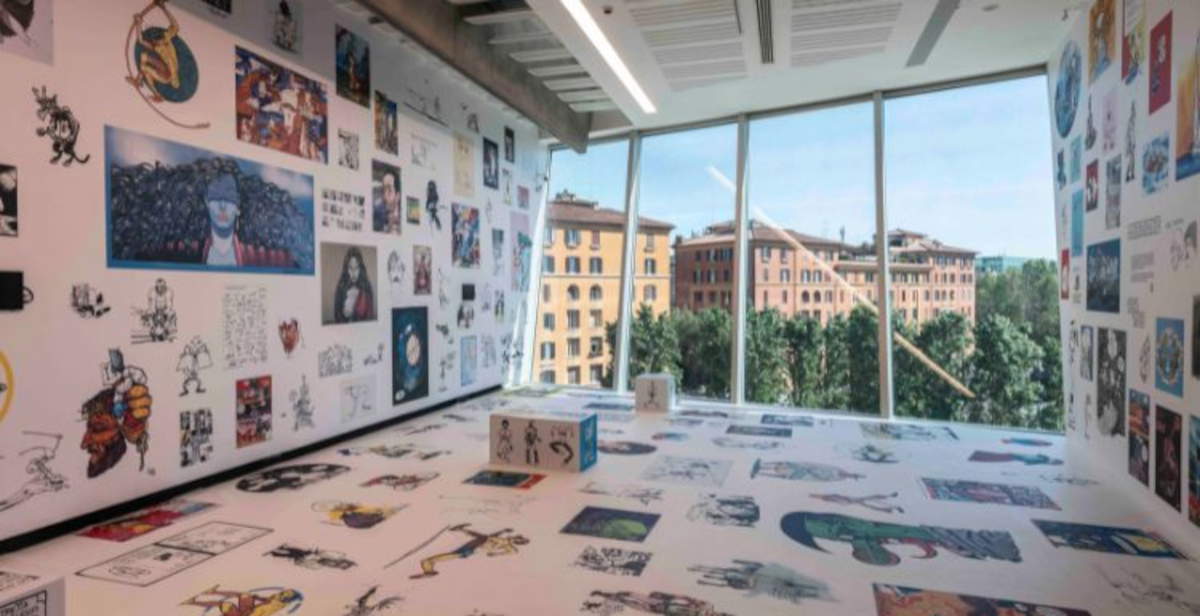 |
| At MAXXI in Rome, the second chapter of the exhibition on Andrea Pazienza |
Warning: the translation into English of the original Italian article was created using automatic tools. We undertake to review all articles, but we do not guarantee the total absence of inaccuracies in the translation due to the program. You can find the original by clicking on the ITA button. If you find any mistake,please contact us.