





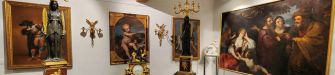
At the Paolo Antonacci Gallery in Rome, the exhibitionPanorami ritrovati. Una raccolta di acquarelli di Salomon Corrodi e di fotografie diRoma del XIX secolo, dedicated to a collection of watercolors by Salomon Corrodi and a considerable nucleus of photographs of 19th-century Rome, opens to the public from Dec. 16, 2025 to Jan. 17, 2026. The exhibition, which can be visited in the spaces of Via Alibert 16a, offers a direct comparison between painted and photographic images that restore some of the most emblematic places of the city at a crucial stage of its urban transformation. The origin of the exhibition is linked to two distinct finds that occurred in private collections.
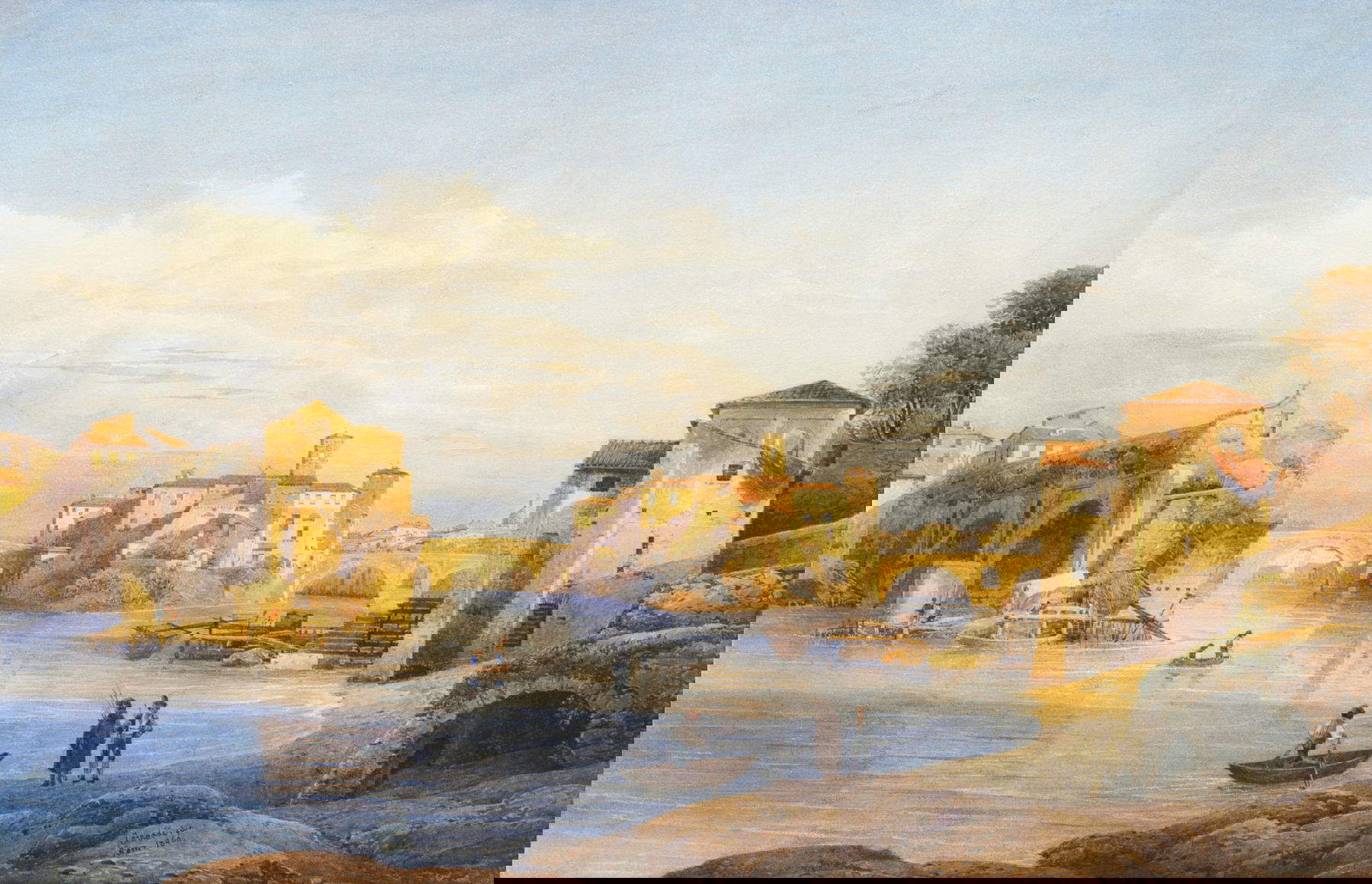
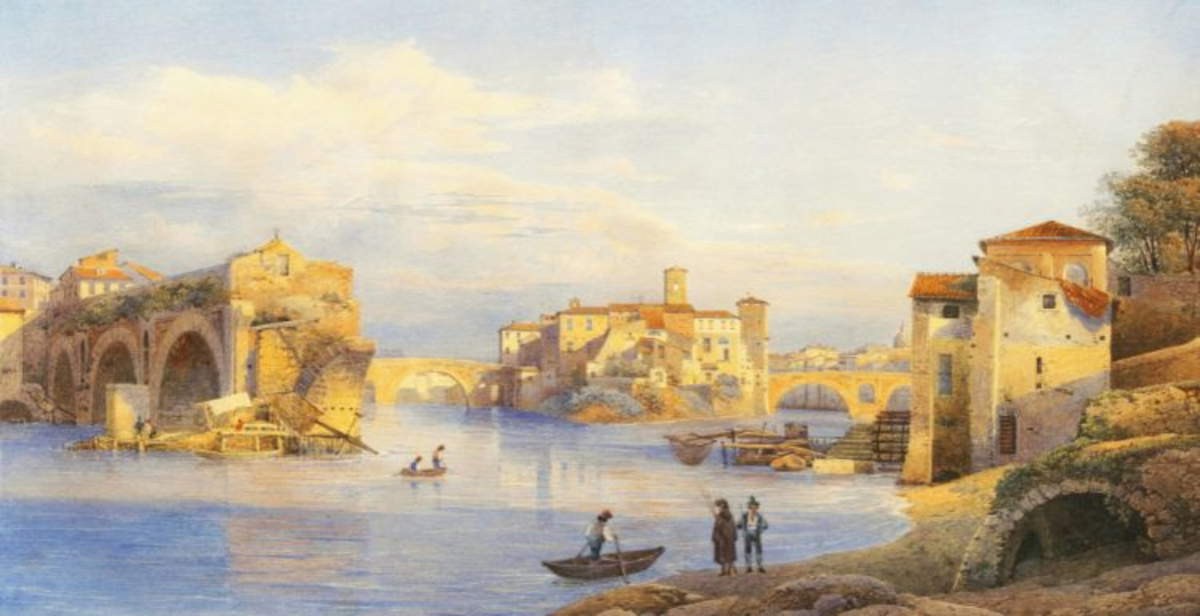
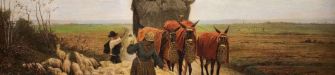
The first concerns a group of five watercolors by Salomon Corrodi, a Swiss painter naturalized Roman, long active in the capital and known for his views characterized by a careful rendering of landscape and atmosphere. Among the works on display are two rare panoramas of Rome seen from Monte Mario, dated 1873 and made in large format (49 x 73 cm). Presented alongside the works are a View of Rome from the Baths of Caracalla dated 1865, a View of the Tiber Island with the Broken Bridge dated 1840, and a glimpse of the Via Appia Antica dated 1867, documenting different vantage points and moments of the nineteenth-century city.
The second find, however, concerns the world of photography. At a collector of historical images, a vast photographic panorama of Rome dated 1914, also taken from Monte Mario, has surfaced. The work takes up, almost forty years later, the same point of view adopted by Corrodi in his watercolors. It is a large panorama produced by the Photographic Section of the Italian Army Corps of Engineers, composed of nine photographic plates printed with silver bromide gelatin, (each measuring 29 x 36 cm), with a total length of about 325 centimeters, mounted on canvas.
The juxtaposition of the pictorial and photographic cycles makes it possible to observe continuities and differences in the representation of the city, as well as highlighting the evolution of the visual language between the 19th and early 20th centuries. The exhibition also includes seven rare photographs by the D’Alessandri brothers, dated around 1887, documenting the earthworks on the left bank of the Tiber and the construction of the Prati district. The images are part of a series commissioned by the City of Rome to record the state of the riverbanks before and during the construction of the embankments, offering direct testimony to one of the most significant urban interventions in post-unification Rome. Alongside the main cores, the exhibition presents about forty old photographs of Rome, along with drawings and watercolors from the 19th century. Some of the best-known names in Roman photography of the second half of the 19th century are represented, including Gioacchino Altobelli and partner Pompeo Molins, Tommaso Cuccioni, active with his store in Via Condotti, James Anderson, and Adriano De Bonis. The authors were among the protagonists of the so-called School of Painters-Photographers, also known as the Circolo del Caffè Greco, which played a central role in spreading the photographic image of Rome internationally.
Panorami ritrovati can be visited Monday through Friday from 10 a.m. to 1 p.m. and 3 p.m. to 7 p.m., and on Saturdays from 10 a.m. to 2 p.m.
 |
| Panoramas rediscovered in Rome: watercolors and photographs of the city between the 19th and early 20th centuries |

Warning: the translation into English of the original Italian article was created using automatic tools. We undertake to review all articles, but we do not guarantee the total absence of inaccuracies in the translation due to the program. You can find the original by clicking on the ITA button. If you find any mistake,please contact us.


















 IT
IT FR
FR DE
DE ES
ES CN
CN


