




by Redazione 03/12/2025



Categories: Exhibitions / Disclaimer
The Ponti Art Gallery presents fifteen paintings that reconstruct the image of Rome between the seventeenth and twentieth centuries, from the ancient streets towards Ponte Milvio to the construction sites of Via dei Fori Imperiali, offering a broad picture of the city's urban and social transformations.

From December 5 to 23, 2025, the Ponti Art Gallery in Rome will host Views of Rome through the Centuries, a selection of fifteen paintings dedicated to views of the city. The exhibition brings together works created between the seventeenth and twentieth centuries, offering a historical traversal that highlights changes in the urban fabric and daily life observed through the eyes of Italian and foreign artists.
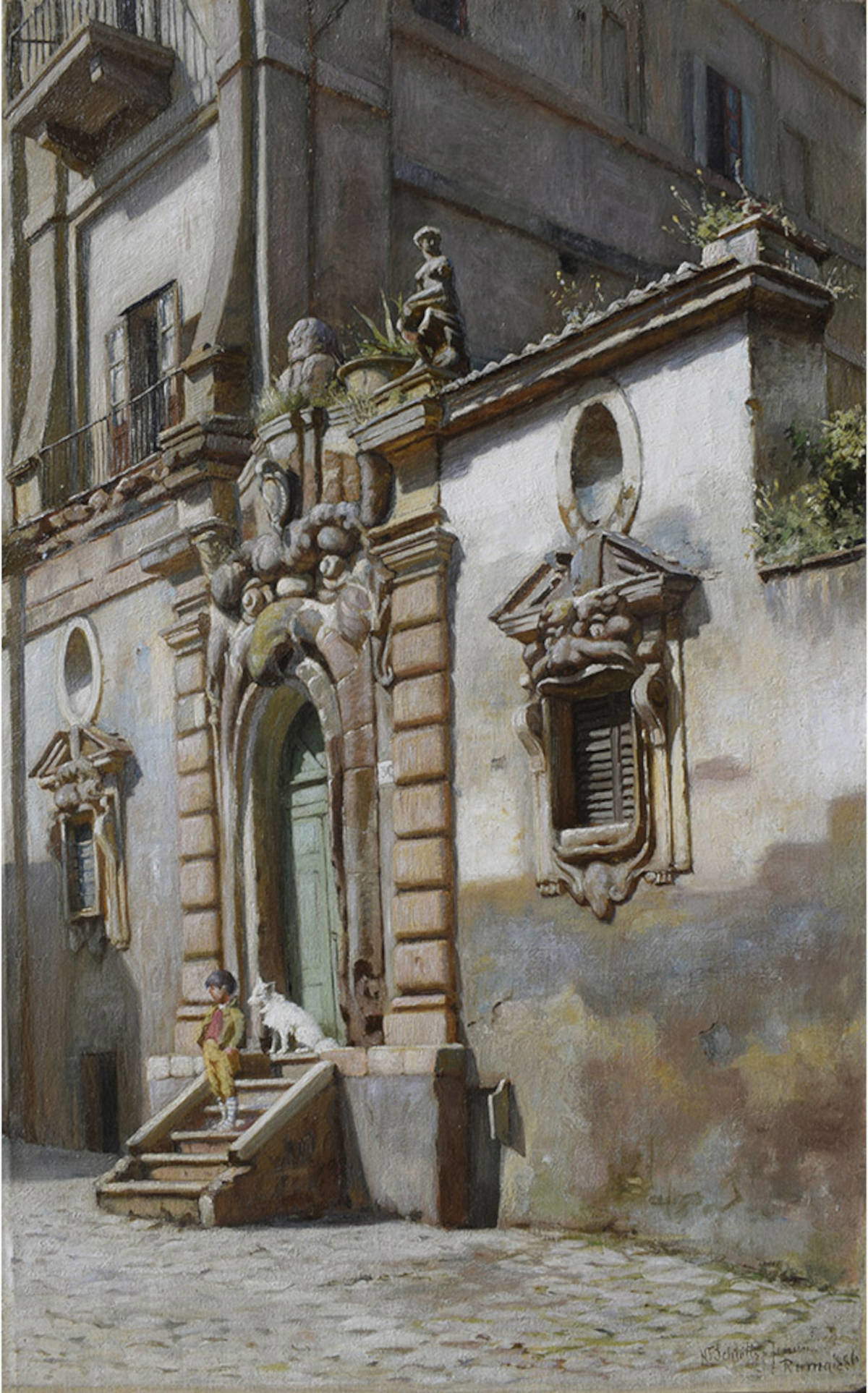
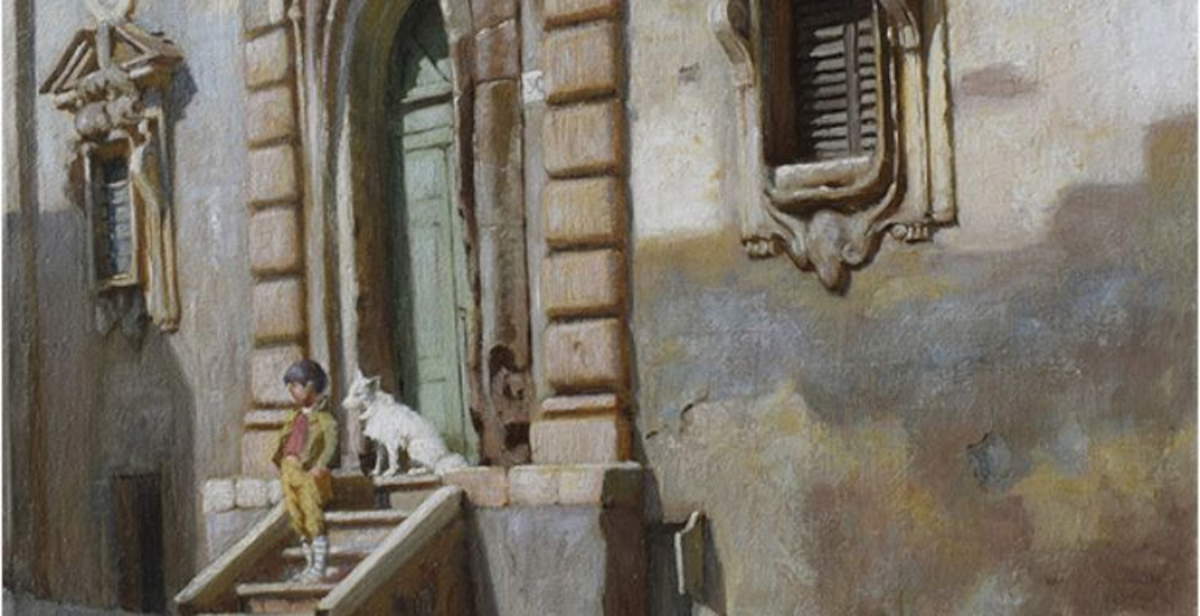
The itinerary opens with a seventeenth-century painting depicting Ponte Molle, a place of passage for horsemen and livestock along the city’s northern routes. The scene records a moment of ordinary activity, useful in restoring the bridge’s strategic role as a transit hub well before the area’s modern growth. Next to it, a view of Ponte Milvio executed by Vincenzo Giovannini shows the passage of the papal caravan at Tor di Quinto. The painter focuses attention on the procession led by Pius IX, portrayed as he leans out of the carriage window. The kneeling crowd at the roadside introduces an element of popular participation that documents the ceremonial and political dimensions of papal travel. The nineteenth century emerges strongly in the view of Piazza Colonna made by Ippolito Caffi. The image recounts a central area of the city still far from the urban interventions of the end of the century. In the background appears the palace that would later pass to the banker Wedekind, depicted in its state prior to the 1879 alterations. The work makes it possible to observe the original architectural situation, before the installation of the present clock, which replaced two separate devices set on Italian and French time, respectively. In a different register is the 19th-century view of Via Gregoriana signed by Danish painter Niels Frederik Schiøttz-Jensen. The painting focuses on the mask that decorates the entrance to Palazzo Zuccari, characterized by monstrous features. A young man accompanied by his dog walks without apparent fear, a detail that introduces an everyday dimension capable of counterbalancing the scenographic aspect of the structure.


The review continues with a glimpse of the Orangery fountain at Villa Borghese painted by Enrico Coleman. The work documents a corner of the park before the twentieth-century transformations, noting the artist’s attention to natural atmospheres and the relationship between architecture and vegetation. Of a different tone is the view of Via Flaminia entrusted to Pio Joris, which depicts the road immersed in morning fog. Of particular historical interest is the view of Vico Jugario painted by Francesco Trombadori, as it documents buildings demolished in 1937 during the major gutting of the area between the Capitol and the Roman Forum. The painting preserves the memory of a vanished area, restoring an urban layout that would be erased in the years immediately following. To the same season belongs the depiction of the opening of Via dei Fori Imperiali made by Edmondo Poletti in 1933. The itinerary closes with a rare view of Via Rubens at Monti Parioli, painted in the 1930s by Lia Dall’Oglio Sicher. The image offers a useful reference to the building history of the area, which was then undergoing rapid expansion. A 1904 Divisionist painting by Giovan Battista Crema, dedicated to the Fountain of the Naiads at Dawn, also appears in the exhibition. The luminous rendering of the scene and the pointillist technique adopted by the artist introduce a different way of observing the city, linked to early 20th century pictorial experimentation. The group show proposed by the Ponti Art Gallery allows us to retrace four centuries of urban representations, noting how Roman views have recorded architectural changes, but also the changing behavior and habits of its inhabitants.
 |
| Rome on stage at Ponti Art Gallery: four centuries of views between streets and squares |
Warning: the translation into English of the original Italian article was created using automatic tools. We undertake to review all articles, but we do not guarantee the total absence of inaccuracies in the translation due to the program. You can find the original by clicking on the ITA button. If you find any mistake,please contact us.